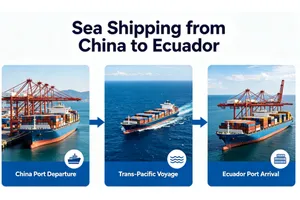
If you are arranging shipping from Guangzhou to Ecuador and your plan is built on a "30-day" quote plus a 12% IVA you read somewhere online, you are already short. The container will leave Nansha on time, cross the Pacific on time, and then sit at Guayaquil for eleven days while your real tax bill — 15%, not 12% — and a 420 km inland leg that nobody quoted quietly absorb your margin.
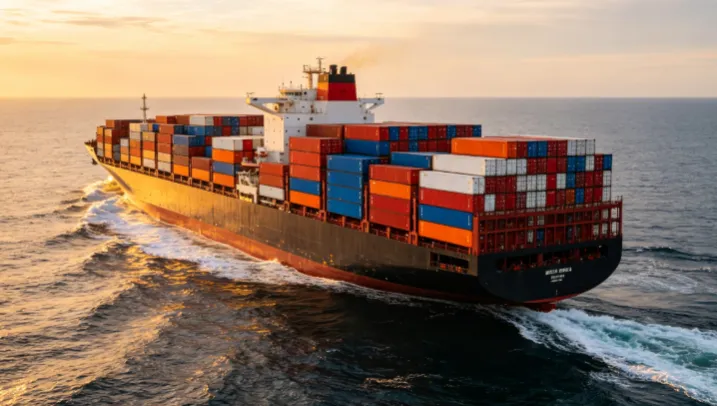
Guangzhou is where a large share of Ecuador's Chinese imports are actually bought, and it is the one origin city most "China to Ecuador" guides never break down. Nansha and Huangpu are different terminals with different sailing frequencies, trucking costs and cut-off times. Below you will find the 2026 rate board for the whole lane, port-to-port versus door-to-door transit tables, a four-question decision tree, a full landed-cost walk-through on a 40ft container to Quito, the SENAE clearance and Form F rules that decide whether you pay 0% or 15% duty, and the demurrage, insurance and typhoon-season risks that cost Guangzhou shippers the most money. If you have not yet settled on an origin port, our shipping from China to Ecuador hub compares Guangzhou with Shanghai, Ningbo and Yiwu on the same trade.
Shipping from Guangzhou to Ecuador at a Glance: 2026 Rates and Transit Times
Most importers want two numbers before they read anything else: what does it cost, and when does it arrive. Here is the entire lane on one screen. Treat the ranges as planning figures — ocean rates move with GRI and PSS announcements, so confirm pricing on the day you book.
The 2026 Guangzhou to Ecuador Rate Board
| Mode | Rate (USD) | Transit | Best for |
|---|---|---|---|
| Sea LCL (shared container) | $110–$190 per CBM | 38–52 days door to door | Trial orders, under ~12 CBM |
| Sea FCL – 20ft | $2,400–$4,000 | 28–36 days port to port | 15–28 CBM, or heavy dense cargo |
| Sea FCL – 40ft / 40HQ | $3,200–$5,100 (+ $150–$400 HQ premium) | 28–36 days port to port | 28–58 CBM, regular replenishment |
| Air freight, 100–300 kg | $5.2–$8.0 per kg | 5–9 days | Urgent, high-value, light cargo |
| Air freight, 500 kg and up | $4.8–$7.0 per kg | 4–8 days | Consolidated air cargo |
| Express courier (DHL / FedEx / UPS) | $9–$15 per kg | 4–7 days | Samples, documents, e-commerce |
| Door-to-door DDP (sea leg) | Quoted per shipment | ~38–52 days | Buyers who want one invoice |
Guangzhou is one of the most competitively priced origins on this corridor: Nansha books roughly 5–10% below Shanghai and Ningbo on the same sailing, and well below Qingdao or Tianjin. Sea rates above cover freight, surcharges and origin and destination terminal handling to Guayaquil or Posorja, but exclude Ecuadorian import charges, which we calculate in section seven. For a full line-by-line view of what a container costs on this corridor, see Cost of Shipping a Container from China to Ecuador.
Port-to-Port vs Door-to-Door: The Two Clocks You Must Compare
Almost every quote you will receive mixes these two clocks, and the difference is a week or more. Build your inventory plan on the second column, never the first.
| Stage | FCL (direct) | LCL | Air freight |
|---|---|---|---|
| Guangzhou pickup and export declaration | 1–2 days | 1–2 days | 1 day |
| Consolidation at origin | — | 3–7 days | — |
| Main leg, Nansha to Guayaquil / Posorja | 28–36 days | 30–38 days | 3–6 days |
| SENAE clearance at destination | 2–4 working days | 2–4 working days | 1–2 days |
| Inland trucking to Quito | 1–2 days | 1–2 days | 1 day |
| Total to your warehouse | ~34–44 days | ~38–52 days | ~7–12 days |
Our industry insight: We quote every Guangzhou shipment with both clocks printed side by side, because the dispute we resolve most often is not a late vessel — it is an importer who budgeted the port-to-port number. One customer in Quito planned a container of home appliances on a "30-day" quote and had to rent temporary storage for nine days. The freight was never late. The quote was incomplete.
Four Questions That Decide Everything
You do not need a rate table to choose a mode — you need four answers, in this order.
| Order | Question | Your answer points to |
|---|---|---|
| 1 | How many CBM are you shipping? | Under 12 CBM → LCL. 12–15 CBM → run the crossover math in section four. Over 15 CBM → FCL. |
| 2 | How fast do you need it? | Under 12 days → air or express. 4–6 weeks is acceptable → sea. |
| 3 | What is the cargo value per CBM? | Above roughly $8,000 per CBM → air freight usually pays for itself in working capital and avoided stock-outs. |
| 4 | Do you have a RUC and a customs broker in Ecuador? | Yes → FOB Nansha with your own clearance can be cheaper. No → DDP door-to-door removes an entire category of risk. |
How to Read a Guangzhou to Ecuador Freight Quote
Two quotes for the same container can differ by $900 without either forwarder lying. The gap is almost always in the surcharges and in what "all-in" actually includes. Ask for a line-item breakdown, then check it against this list.
| Line item | What it means | Watch for |
|---|---|---|
| THC (Terminal Handling Charge) | Terminal moves the box | Charged at both ends — confirm both are quoted |
| BAF / EBS | Fuel and emergency fuel surcharge | Fluctuates monthly; a quote older than 30 days is stale |
| PSS / GRI | Peak season and general rate increases | Announced 2–4 weeks ahead; can add $200–$600 per box |
| DOC / SEAL / VGM | Documentation, seal and verified weight filing | Small, but routinely omitted from "all-in" prices |
| D/O / EIR | Destination delivery order and equipment handover | Must be paid before pickup — a classic hidden cost |
| Free time (demurrage & detention) | Days included at destination | Ask for the exact number; 5 days is not 14 |
Our industry insight: "Hidden fees" are rarely hidden — they are simply not quoted. When we send a Guangzhou quote, every line above is listed with a "who pays" column, and we flag the items that are outside our control, such as a carrier's mid-voyage PSS. An importer who can see the whole bill ahead of time can negotiate; an importer staring at a five-line quote can only pay.
Sea Freight from Guangzhou to Ecuador: Nansha (CNNSA) vs Huangpu
Ocean freight carries the overwhelming majority of Guangzhou's exports to Ecuador, and the first decision is not which carrier — it is which terminal. For lane-level rates across all Chinese origins, start with our Sea Shipping from China to Ecuador page. Guangzhou is not one port; it is a port cluster, and the two terminals that matter most for Ecuador-bound cargo behave very differently. Getting this wrong can cost you $300–$600 per container and a week of schedule flexibility.
Nansha Port (CNNSA): Guangzhou's Deep-Sea Gateway
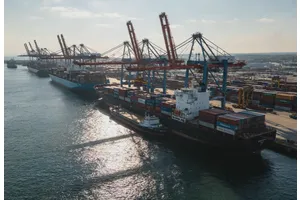
Nansha is where Guangzhou's ocean freight to Ecuador actually happens. The port's fourth-phase fully automated terminal handles the deep-sea mainline services that call South America's west coast, which means fixed-day weekly sailings, direct vessel options, and the widest choice of carriers including COSCO, OOCL, MSC, CMA CGM, Maersk, Hapag-Lloyd, ONE, Evergreen and Wan Hai. If you are shipping more than 15 CBM, or anything on a regular monthly rhythm, Nansha is the default. The same deep-sea network carries our other South China export lanes, including Shipping from Guangzhou to USA and Shipping from Guangzhou to Canada.
The trade-off is inland distance. Nansha sits at the southern tip of the city, roughly 60–90 minutes by truck from the Foshan and Zhongshan manufacturing belts and about two hours from Dongguan. That trucking cost is real, which is why some shippers consolidate at a nearby warehouse rather than dragging a half-empty truck down the delta.
Huangpu and Xingang: Barges, Near-Sea and Project Cargo
Huangpu and neighboring Xingang are the older, upstream port area. They are closer to the city center and to the Pearl River Delta's smaller factories, and they are excellent for barge feeder consolidation, near-sea services and breakbulk or out-of-gauge cargo that a big container terminal handles awkwardly. What Huangpu does not give you is the same deep-sea schedule density to Ecuador — many boxes still need a feeder move to Nansha or Shenzhen before they begin the ocean voyage, and that extra move costs time and money.
| Factor | Nansha (CNNSA) | Huangpu / Xingang |
|---|---|---|
| Deep-sea services to Ecuador | Direct and transshipment options, weekly fixed-day | Mostly via feeder to Nansha or Shenzhen |
| Trucking from Foshan / Zhongshan | 60–90 minutes | 30–60 minutes |
| Trucking from Dongguan | ~2 hours | ~1.5 hours |
| Cut-off timing (CY, VGM, SI) | Tighter, fixed vessel deadlines | More flexible, local barge windows |
| Best suited to | FCL over 15 CBM, LCL consolidation, regular programs | Barge consolidation, near-sea, breakbulk, project cargo |
| Typical cost impact | Lower ocean rate, higher inland | Higher total cost once the feeder leg is added |
Direct Sailing vs Panama Transshipment — and the Rollover Risk
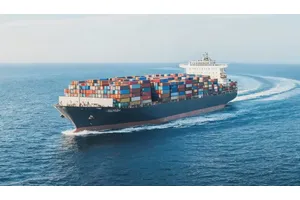
Very few services run straight from Nansha to Guayaquil without a stop. The standard pattern is a transshipment at Balboa or Manzanillo in Panama, which adds four to eight days and, more importantly, introduces rollover risk: if your box misses the connecting vessel, it waits for the next one — usually a full week. Rollovers cluster in peak season, when hubs are congested and carriers blank sailings to protect rates.
You cannot eliminate rollover, but you can price the risk. Book the earliest feasible cut-off, avoid services with a short connection window at Balboa, ask whether a direct or a single-carrier through-service is available for your sailing week, and keep 7–10 days of buffer in your inventory plan for any transshipped container. Because Balboa and Manzanillo feed the entire west coast of South America, buyers who distribute beyond Ecuador usually read our Shipping From China to Panama and Shipping From China to Colombia guides next.
What Ships Best from Guangzhou: A Cargo-Type Playbook
Guangzhou's export base is unusually broad, and each product cluster has a mode that suits it. This is the practical map we use when a new Ecuadorian importer tells us what they buy.
| Cargo type (main sourcing cluster) | Recommended mode | One thing that decides success |
|---|---|---|
| Consumer electronics, small appliances (Dongguan) | FCL, or air for launches | Lithium batteries need proper declaration and carrier approval |
| Garments, fabrics, home textiles (Zhongda fabric market) | LCL for trial, FCL for repeat | Duty still phasing under the FTA; classify the HS line carefully |
| Furniture, ceramics, building materials (Foshan) | FCL 40HQ | Volume-heavy and low density — you pay for air, not weight |
| Lighting and fixtures (Zhongshan) | FCL or LCL | Often needs INEN conformity documentation |
| Leather goods (Baiyun) | LCL | Brand authorization paperwork if goods carry trademarks |
| Auto parts and machinery | FCL, or breakbulk for oversized | Heavy, dense — 20ft often beats 40ft |
| Personal effects, household moves | LCL | Detailed packing list and proof of residency status at destination |
| Temperature-sensitive goods | Reefer container | Pre-trip inspection and temperature setting must be in the booking |
Canton Fair Cargo: Consolidating Multiple Suppliers in Guangzhou
Twice a year, in April–May and October–November, Guangzhou becomes the sourcing capital of the world, and Ecuadorian buyers arrive with five or six suppliers and no idea how to combine their orders. The mechanics are straightforward: we receive each supplier's cartons at our Guangzhou warehouse, check quantities against the packing lists, add or correct labels, then load everything into a single FCL or an LCL consolidation.
Our industry insight: The Canton Fair creates a specific, predictable trap. Orders placed in the final week of the fair are ready around the same time as everyone else's, so space on the first sailings after the show sells out three to four weeks ahead. Buyers who wait until their factory confirms "goods ready" pay peak-season rates and accept rolled bookings. Reserve your space when you place the order, not when the container is full.
FCL Shipping from Guangzhou to Ecuador: 20ft, 40ft and 40HQ Costs
If your shipment is over roughly 15 CBM, a full container is almost always the better economics — and the cheapest per-unit way to move goods on this lane. Full container load (FCL) means the box is yours alone: no consolidation handling, no de-consolidation at destination, and one set of terminal charges instead of two.
Choosing the Right Box
| Container | Practical volume | Payload | Best for |
|---|---|---|---|
| 20ft GP | 28–33 CBM | ~28,000 kg | Dense cargo: machinery, tiles, auto parts, liquids |
| 40ft GP | 58–67 CBM | ~26,000 kg | Light, bulky cargo where weight is not a constraint |
| 40HQ (high cube) | 68–76 CBM | ~26,000 kg | Furniture, appliances, cartons — the default for volume shippers |
| 40ft OT / FR | Special | Varies | Over-height or over-width machinery |
| Reefer | 20–28 CBM | ~25,000 kg | Temperature-controlled cargo |
The 40HQ premium of $150–$400 over a standard 40ft buys you roughly 10 additional CBM. If your cargo is light — furniture, cartons, textile goods — that is usually the best margin on the entire quote, which is why so many Ecuador-bound shipments from Foshan leave in a high cube. For national benchmarks on that box size, see High cube shipping container cost from China.
Where the Money Actually Goes
Before you compare forwarders, understand the shape of the bill. On the Guangzhou–Ecuador lane the destination side, not the ocean leg, is where most of your money is spent.
| Stage | Typical line items | Rough share of total |
|---|---|---|
| Origin (Guangzhou) | Trucking to Nansha, export declaration, origin THC, DOC, SEAL, VGM | 5–10% |
| Main leg | Ocean freight, BAF, PSS, GRI | 20–30% |
| Destination (Ecuador) | Destination THC, D/O, customs broker, FODINFA, duty, IVA, inland trucking | 60–70% |
That last row is why a "cheap" quote can be the most expensive one you receive. The China-side price is the visible tip of a bill that is decided at the port of discharge.
Guangzhou-Specific Cost Factors
Three things move the Guangzhou number more than anything else. Trucking distance: a container from a Foshan factory to Nansha runs 60–90 minutes, while Dongguan sits at roughly two hours — a difference of $100–$250 per box. Barge versus truck: consolidating several suppliers' cartons at a delta warehouse and moving one full load beats dragging three half-empty trucks. Season: from September through November, and again in the rush before Chinese New Year, rates rise 10–20% and space tightens, so booking three to four weeks ahead holds standard pricing.
Worked Example: One 40HQ of Furniture, Foshan to Quito, DDP
Here is the full equation, line by line, on a shipment we would see any week: a Foshan furniture maker's order, $32,000 goods value, one 40HQ, delivered DDP to a warehouse in Quito with a valid Form F in hand.
| Line item | Amount (USD) |
|---|---|
| Goods value (FOB Nansha equivalent) | $32,000 |
| Pickup trucking, Foshan factory to Nansha | $320 |
| Export declaration and China customs | $120 |
| Origin THC, DOC, seal, VGM | $180 |
| Ocean freight incl. surcharges, Nansha to Guayaquil | $3,800 |
| Marine cargo insurance (All Risks, CIF × 110%) | $120 |
| CIF value (customs base) | $35,920 |
| FODINFA (0.5% of CIF) | $180 |
| Import duty — 0% with a valid Form F | $0 |
| IVA (15% of CIF + duty + FODINFA) | $5,415 |
| Destination THC and D/O | $350 |
| Customs broker and SENAE handling | $200 |
| Inland trucking, Guayaquil to Quito | $1,100 |
| Total invested to put the goods in your warehouse | ≈ $43,800 |
Read the table again: the ocean freight is only about 9% of what you actually spend. Taxes and the destination side together come to roughly $7,200 — more than the freight itself. And if that same container had arrived without a Form F, at a 10% duty rate, the extra duty plus the IVA it triggers would have added about $4,100. No freight negotiation on earth saves you that much.
Two FCL mistakes we see most often: comparing a China-side price against a door-to-door price as if they were the same product, and booking a 20ft for light bulky cargo when the 40HQ would have carried twice the volume for a few hundred dollars more.
LCL Shipping from Guangzhou to Ecuador: Per-CBM Rates and the FCL Crossover
Below roughly 15 CBM, LCL — less than container load — is the sensible sea option. Your cartons share a container with other Ecuador-bound freight and you pay only for the volume you use. All-in rates from Guangzhou currently run $110–$190 per CBM to Guayaquil or Posorja, so an 8 CBM trial order costs about $1,200 in freight at a mid-range $150 per CBM.
Two rules catch people out. A minimum billable volume applies — usually 1 CBM or 1,000 kg — so a small sample order still pays for a full unit. And because loose cargo is loaded, unloaded and reloaded at both ends, packing must survive extra handling; LCL freight carries meaningfully higher damage risk than a sealed container.
How to Calculate Your CBM
Measure each carton in centimeters, multiply length × width × height, then divide by 1,000,000 to get cubic meters. Add up every carton, then add pallets as their full outer dimensions — not the footprint of the goods on them. If your total is 9.4 CBM, quote on 10; forwarders round up, and under-declaring leads to re-measurement charges at the port of loading.
The 12–15 CBM Crossover
The formula is simple: divide your FCL all-in price by the LCL rate per CBM to find your crossover volume.
| Your volume | Recommended mode | Why |
|---|---|---|
| Under 8 CBM | LCL | Minimum charges make FCL uneconomic |
| 8–12 CBM | LCL in most cases | Rate per CBM still competitive |
| 12–15 CBM | Run the math both ways | The crossover usually lands here once handling is counted |
| Over 15 CBM | FCL | Per-unit cost drops sharply, transit is faster and damage risk is lower |
A 20ft at $3,200 divided by an LCL rate of $150 per CBM suggests a theoretical crossover near 21 CBM — but that ignores double handling, the extra 3–7 days of consolidation, and the higher claims risk. In practice, most Guangzhou shippers move to a full container between 12 and 15 CBM, and they rarely regret it.
Air Freight from Guangzhou to Ecuador: CAN Rates, Routing and the No-Direct-Flight Reality
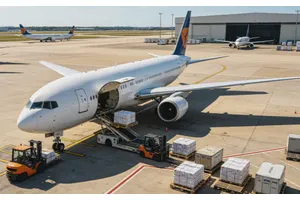
Baiyun International Airport (CAN) is South China's air cargo hub, but no freighter flies direct from Guangzhou to Quito or Guayaquil. Every air shipment transits a third country, and the routing you accept shapes both your transit time and your rate.
| Routing via | Typical transit | What it suits |
|---|---|---|
| Miami (MIA) | 4–7 days | Deepest capacity; strong for consolidated cargo |
| Panama City (PTY) | 5–8 days | The natural gateway for Ecuador; good onward feed |
| Madrid (MAD) | 5–9 days | Competitive on European carrier capacity |
| Doha (DOH) | 5–8 days | Strong for heavier consignments |
| Bogotá (BOG) | 5–8 days | Often the cheapest, with occasional connection delays |
Rates run $5.2–$8.0 per kg in the 100–300 kg bracket and $4.8–$7.0 per kg above 500 kg, dropping as weight grows. Cargo lands at Quito (UIO) for the sierra or Guayaquil (GYE) for the coast.
Chargeable Weight Decides Your Bill
Air carriers bill the higher of actual and volumetric weight: length × width × height in centimeters, divided by 6,000. A carton measuring one cubic meter that weighs 100 kg is billed as 167 kg. Bulky, light goods are therefore far cheaper by sea — and this single rule explains most air freight quotes that surprise importers.
Guangzhou (CAN) versus Hong Kong (HKG)
Hong Kong often has more capacity and lower per-kilo rates on long-haul lanes, but you pay for trucking the cargo across the border, plus a day or two of transit, plus tighter documentation around mainland-origin goods. For most Guangzhou suppliers, CAN wins on total door-to-door time; HKG wins on very large, very price-sensitive consignments.
Air, Express or Sea: Choosing by Urgency
| Option | Cost | Door-to-door time | Choose it when |
|---|---|---|---|
| Air freight (CAN, via hub) | $4.8–$8.0 per kg | 7–12 days | 100 kg and up, urgent but not instant |
| Express courier (DHL / FedEx / UPS) | $9–$15 per kg | 4–7 days | Under ~50 kg, samples, documents |
| Sea FCL | From $3,200 per 40ft | 34–44 days | Planning ahead; cost per unit is 5–10× lower |
Air freight is the only answer for a product launch, a stock-out, Canton Fair samples that must be approved before mass production, or high-value low-volume goods where the working capital tied up in a slow shipment costs more than the air premium. If you are weighing the two fastest options against each other, Air Freight vs Express: Which Is Faster and More Cost-Effective from China to USA runs the same comparison line by line.
Door-to-Door DDP Shipping from Guangzhou to Ecuador: One Invoice, One Risk Owner
DDP — Delivered Duty Paid — means one party buys the freight, files the Ecuadorian declaration, pays duty, FODINFA and IVA, and delivers to your address. You receive one invoice and one delivery note. For a first-time importer, or any buyer without a RUC and a licensed customs broker, that single invoice removes most of the risk from the shipment. The full mechanics of a one-invoice delivery — pickup, export declaration, clearance and final delivery — are set out in our Door to Door Shipping from China to Ecuador guide.
| Incoterm | Who books the ocean leg | Who clears Ecuador customs | Who pays duty and IVA | Choose it when |
|---|---|---|---|---|
| EXW Guangzhou | You | You | You | You already have your own China-side agent |
| FOB Nansha | You | You | You | You have a broker in Ecuador and want control of the rate |
| CIF Guayaquil | Seller or forwarder | You | You | You want the seller to cover freight and insurance only |
| DDP to your door | Forwarder | Forwarder | Forwarder | You want a landed price and no customs exposure |
Choosing between these terms is really a question of who carries the customs risk, and DDP vs FOB: Which Option Saves Time and Reduces Hassle sets out exactly where each one shifts cost and control.
The inland leg is where budgets break. Guayaquil to Quito is 420 km of Andean highway — normally 8–10 hours and $600–$1,400 per container depending on size, weight and season — and the route can close for hours after a landslide in the rainy months. Warehouses in Cuenca, Ambato, Riobamba or Loja add a further domestic move on top of that.
For e-commerce sellers the situation is specific: Amazon does not operate fulfillment centers in Ecuador. "FBA preparation" for this market therefore means either delivering to a private warehouse for Mercado Libre or local fulfillment, or shipping to a US hub for onward placement into the FBA network. Either way, the labeling and documentation work has to be done at origin, in Guangzhou — not discovered after arrival.
Our industry insight: DDP sounds risk-free, and it is not. A forwarder who quotes DDP but does not clear customs is reselling another company's license, and you only find out who really holds it when SENAE raises a query — a missing INEN certificate, an HS code the inspector disagrees with. Ask any DDP provider two questions before booking: who is the customs broker of record in Ecuador, and who pays if the duty classification changes. We answer both in writing.
Ecuador Customs Clearance: SENAE, ECUAPASS, IVA 15% and the China–Ecuador FTA
Ecuador's customs authority is SENAE, and every import is declared electronically through ECUAPASS, the national single window. A licensed agente de aduana files the declaration (DAE) on your behalf — older guides that mention a "DUA" are describing a system Ecuador has replaced. Documents are submitted before the vessel berths, which is why a clean file clears in 2–4 working days while a file with a question attached can take two weeks.
Three charges make up almost the entire tax bill:
| Charge | Base | Rate | Notes |
|---|---|---|---|
| Arancel (import duty) | CIF value | 0% with a valid Form F, otherwise 5–20% by HS line | The single biggest lever on this lane |
| FODINFA | CIF value | 0.5% | Child development levy, charged on essentially all imports |
| IVA (VAT) | CIF + duty + FODINFA | 15% | Raised from 12% in April 2024 — a guide still quoting 12% is out of date |
Form F: A Certificate Worth Thousands
Under the China–Ecuador Free Trade Agreement, in force since May 1, 2024, roughly 60% of Chinese tariff lines entered Ecuador duty-free, with the remainder phasing down over a schedule of up to ten years. The benefit is claimed with a Form F certificate of origin, issued in China by the customs authority or the CCPIT and naming your Ecuadorian consignee.
Three rules decide whether it works. It must be requested before the goods are loaded, because it cannot be issued retroactively once the container has cleared. The HS code on the certificate must match the declaration exactly. And the goods must satisfy the FTA's origin rules — a Chinese-issued invoice is not enough on its own. Get it right and your duty line is zero; miss it and the same container pays 5–20% duty plus the IVA that duty triggers. On the 40HQ worked example earlier in this guide, that gap was roughly $4,100 — more than the entire inland trucking bill.
Documentation and Pre-Shipment Permits
Some products cannot clear on paperwork alone. Electrical goods and electronics typically need an INEN conformity certificate; food, cosmetics and pharmaceuticals sit with ARCSA; radio and telecoms equipment requires ARCOTEL approval; and plant, agricultural or animal products need Agrocalidad inspection. Wooden packaging must be ISPM-15 heat-treated or fumigated and visibly stamped — untreated pallets remain a common cause of held containers.
| Document | Issued by | Needed when |
|---|---|---|
| Form F certificate of origin | China Customs or CCPIT | To claim 0% duty under the FTA |
| Commercial invoice and packing list | Supplier | Every shipment |
| Bill of lading or air waybill | Carrier or forwarder | Every shipment |
| RUC and importer registration | Ecuadorian consignee | Every commercial import |
| Insurance certificate | Insurer | CIF and DDP terms |
| INEN conformity certificate | INEN-accredited body | Electrical, mechanical and textile goods |
| ARCSA registration | ARCSA | Food, cosmetics, medical products |
| ARCOTEL homologation | ARCOTEL | Radio and telecoms devices |
| Agrocalidad permit | Agrocalidad | Plants, seeds, animal products |
| ISPM-15 stamp | Packing supplier | Wooden pallets and crates |
| Broker authorization | Importer | Every clearance, filed in ECUAPASS |
Choosing a Destination Port and Avoiding Delays: Guayaquil, Posorja and Manta
Ecuador has more ports than most buyers realize, and the one on your bill of lading shapes your inland cost and your schedule.
| Port | Strength | Weakness | Use it when |
|---|---|---|---|
| Guayaquil | Around 80% of the country's container imports; best inland connections | River access limits drafts; peak-season congestion | Default for most cargo, especially to Quito and the sierra |
| Posorja (DP World) | Deep water, faster vessel turnaround | Fewer weekly services than Guayaquil | Large volumes and tight schedules |
| Manta | Closest major port to the sierra | Requires a feeder leg, typically $100–$300 per container extra | Regional projects and cold-chain cargo |
| Puerto Bolívar | Reefer gateway for bananas and agriculture | Limited container infrastructure | Temperature-controlled cargo |
| Esmeraldas | Northern access | Sparse container service | Northern destinations |
Some importers use an Ecuadorian gateway as the entry point for a wider Andean distribution plan. If your goods also move south, Door to Door Shipping from China to Peru covers the same door-to-door structure on the neighboring lane.
Free Time, Demurrage and Detention
Free time is the number of days a container may sit at the terminal (demurrage) or stay in your hands (detention) before the carrier starts charging. Five days looks generous until you count a two-day clearance, a weekend, a bank document release and a trucking slot — suddenly the free clock has expired. Charges start modestly, commonly $80–$150 per box per day in the first week, and escalate from there.
The fix happens on the Guangzhou side, before the vessel even sails. Send the full document set early, pre-file the declaration in ECUAPASS while the box is still at sea, and book the trucking slot for the day clearance is released.
Two Risks That Belong in Your Plan
| Risk | Season | What it costs | Mitigation |
|---|---|---|---|
| Typhoons in South China | June–October | 3–7 days of delay, port closures, rolled bookings | Book 3–4 weeks ahead of cut-off |
| Peak-season PSS and GRI | September–November and pre-Chinese New Year | 10–20% higher rates, tight space | Reserve space when you place the order |
| Panama transshipment rollover | Year-round, worst at peak | 7–10 days | Favor services with longer connection windows |
| Rainy-season road closures | December–May | 1–3 days on the Quito leg | Build buffer into the inland leg |
Marine cargo insurance deserves its own line in the budget. LCL cargo is handled several times before it reaches you, and a container that shifts in heavy weather is not a hypothetical. Cover on ICC (A) terms, arranged at CIF value plus 10%, costs a fraction of a percent of the cargo value — about $120 on the $32,000 shipment in our worked example. For coverage benchmarks across Chinese export lanes, see Shipping container insurance cost for shipments from China.
FAQ: Shipping from Guangzhou to Ecuador
How much does shipping from Guangzhou to Ecuador cost in 2026?
In September 2026 a 20ft container runs $2,400–$4,000, a 40ft or 40HQ $3,200–$5,100, LCL $110–$190 per CBM, and air freight $4.8–$8.0 per kg — all before Ecuadorian import charges, which add duty (0% with a Form F), FODINFA at 0.5% and IVA at 15%.
How long does shipping from Guangzhou to Ecuador take?
Port to port, allow 28–36 days for a full container and 30–38 days for LCL. Door to door, plan on 34–44 days for FCL, 38–52 days for LCL and 7–12 days by air. Transshipment through Panama can add four to eight days.
Is Guangzhou cheaper than Shanghai or Yiwu for Ecuador-bound cargo?
Nansha generally books 5–10% below Shanghai and Ningbo on the same sailing, and well below northern Chinese ports. But the real saving is inland: if your suppliers are in Guangdong, shipping from Guangzhou avoids trucking goods 1,200 km north only to bring them back south to the sea.
Do I need a customs broker in Ecuador?
Yes. Ecuadorian law requires a licensed agente de aduana to file the declaration in ECUAPASS. Unless you import regularly and hold a RUC, a door-to-door DDP service that includes the broker is usually cheaper than building the capability yourself.
What is a Form F, and how much does it save?
It is the FTA certificate of origin that claims Ecuador's duty preference for Chinese goods. On lines that qualify, duty falls to 0%. On our 40HQ furniture example, shipping without a Form F would have added about $4,100 between duty and the IVA it triggers.
Can I ship door to door from Guangzhou to Quito?
Yes — that is the standard DDP service on this lane. It includes pickup in Guangdong, export declaration, ocean or air freight, SENAE clearance, duty, IVA, and trucking the 420 km from Guayaquil to Quito.
Should I choose LCL or FCL?
Below about 12 CBM, LCL is usually cheaper despite a higher rate per CBM. Between 12 and 15 CBM, run the math both ways. Above 15 CBM, FCL wins on cost per unit, transit time and damage risk.
When does air freight make sense from Guangzhou?
When the cargo is worth roughly $8,000 or more per CBM, when a stock-out would cost more than the air premium, or when the goods must be in Ecuador within two weeks. Bulky, light goods almost never justify air freight because of the ÷6,000 volumetric rule.
What are the most common reasons a Guangzhou shipment is delayed?
In order of frequency: an incomplete document set, a missing Form F or INEN certificate, a rolled booking at a Panama transshipment hub, peak-season space shortages, and typhoon closures in South China between June and October.
What risk should I insure against most?
Loss and damage in transit, first of all — cover on ICC (A) terms at CIF plus 10%. The second is demurrage, which insurance will not pay, and which is avoided by pre-clearing the declaration before the vessel arrives.
Conclusion: Getting the Guangzhou–Ecuador Lane Right
Three things decide whether this shipment makes money.
Compare the right clocks. A port-to-port quote and a door-to-door service are different products. Plan your inventory on 34–44 days for FCL, not the 30 days on a marketing page.
Treat the paperwork as the biggest cost lever. A Form F is worth thousands per container, an INEN or ARCSA permit can hold a shipment for weeks, and IVA at 15% — not the 12% still printed in older guides — has to be inside your landed cost from day one.
Choose a partner who prices the destination side openly. The cheap quote on this lane is almost always the one that stops at the port of discharge, leaving demurrage, inland trucking and the customs broker to you. The wider case for working through a forwarder rather than booking direct is covered in The Strategic Role of Freight Forwarders in Modern Supply Chains.
That is precisely where DTFU Logistics works. Founded in Shenzhen in 2014, we hold FIATA and IATA accreditation, contract directly with carriers on the South China–South America west coast trade, and run door-to-door DDP from Guangzhou to Quito, Guayaquil and Cuenca on one invoice — pickup, export declaration, freight, SENAE clearance, duty, IVA and final delivery. Every quote lists each line with a "who pays" column, every shipment files its own Form F paperwork, and a named account manager tracks the container from the Nansha gate to your warehouse door. Talk to our team at DTFU Logistics before you book your next container from Guangzhou.