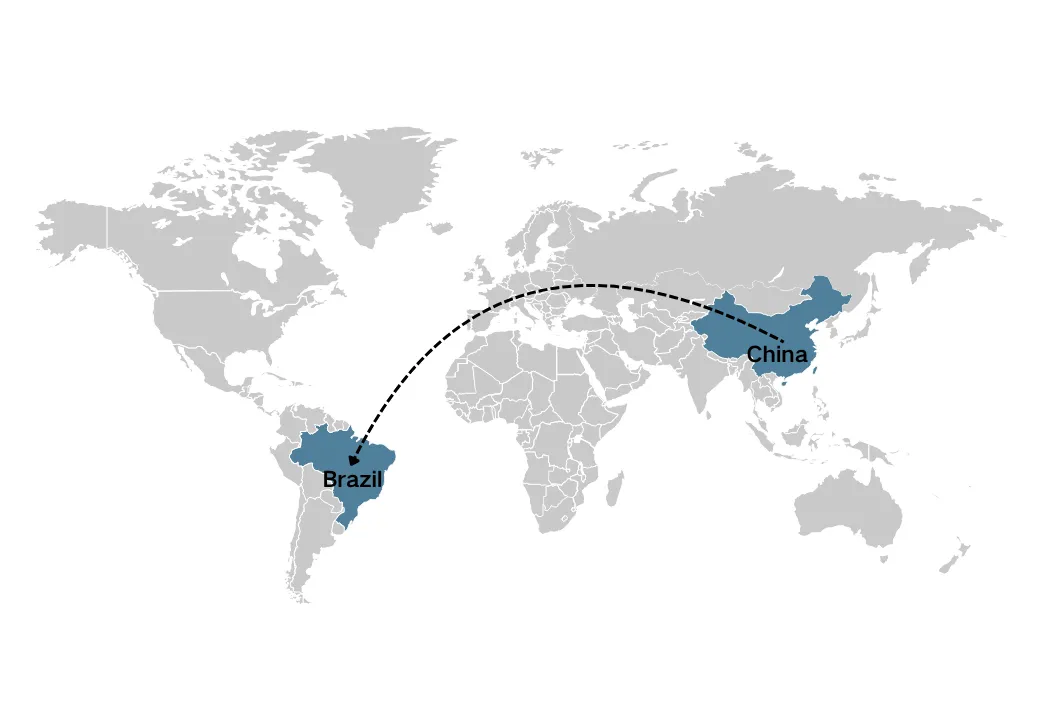
We make shipping from China to Brazil simple, reliable, and cost-effective
Competitive Rates
Best shipping rates with no hidden fees. Save up to 40% compared to other forwarders.
Fast Transit
Reliable delivery times with express options available for urgent shipments.
Safe & Secure
Full cargo insurance and secure handling throughout the entire shipping process.
24/7 Support
Dedicated customer support team available around the clock for all your needs.
Are you tired of unpredictable transit times, skyrocketing freight costs, and the notorious complexities of Brazilian customs holding up your supply chain? You are not alone. In our 10+ years of managing the China-Brazil trade lane at DTFU International Logistics, we've seen first-hand how strict Receita Federal (Federal Revenue) regulations and high import duties can turn a profitable shipment into a logistical nightmare. A single misclassified NCM code (Mercosur Common Nomenclature) or a missing RADAR license can cost you thousands of dollars in demurrage, delays, and fines.
Whether you are an Amazon FBA seller launching in Brazil, an Alibaba buyer sourcing electronics, or a large-scale distributor moving heavy machinery, this comprehensive guide provides the exact strategies, real-world cost estimates, and transit times you need to import profitably and predictably into the Brazilian market.
Sea Shipping from China to Brazil (September 2026)
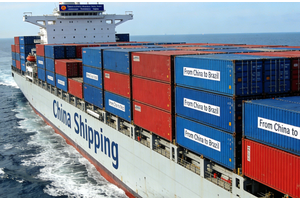
Sea freight is the lifeblood of China-Brazil trade, handling over 90% of the cargo volume. It is the most cost-effective method for transporting large volumes of goods. However, congestion at major hubs like the Port of Santos is a frequent reality, often exacerbated by seasonal agricultural export surges. We always advise our clients to build a 7-10 day buffer into their supply chain planning during peak seasons (Q3 and Q4).
Crucial Experience: Brazilian customs clearance is notoriously slow. A common trap for new importers is failing to negotiate extended Demurrage and Detention (D&D) free days. We routinely secure 21 to 30 free days for our FCL clients to prevent catastrophic port storage penalties while navigating Receita Federal inspections.
When choosing ocean freight, importers have two main options depending on their cargo volume: FCL and LCL.
FCL (Full Container Load)
FCL means you rent an entire 20ft or 40ft container for your goods alone. This is the most secure and economical option if your shipment volume exceeds 15 cubic meters (CBM). Because the container is sealed at the factory in China and only opened upon arrival at the bonded warehouse in Brazil, the risk of damage or loss is minimal. For instance, we recently helped a heavy machinery distributor cut their per-unit shipping cost by 35% by optimizing payload distribution for 40ft High Cube (HQ) containers, ensuring strict adherence to Brazil's VGM (Verified Gross Mass) regulations to prevent origin-port roll-overs.
LCL (Less than Container Load)
If your cargo is smaller (typically between 1 CBM and 15 CBM), LCL is the way to go. Your goods will share container space with other importers' shipments. While the cost per CBM is slightly higher than FCL due to the consolidation and deconsolidation process (CFS fees), it is much cheaper than air freight.
Expert Tip: If your LCL cargo requires wooden pallets, you must use ISPM-15 certified treated wood and ensure it is clearly stamped. Non-compliant packaging will be immediately flagged by MAPA (Ministry of Agriculture), resulting in cargo quarantine, mandatory fumigation, and hefty fines at your expense.
Air Shipping from China to Brazil (September 2026)
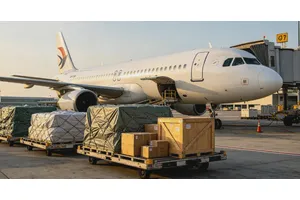
Air freight is the fastest and most secure shipping method, typically delivering goods from China (e.g., Shenzhen, Shanghai) to major Brazilian airports (like Guarulhos - GRU or Viracopos - VCP) in just 3 to 7 days. It is the perfect solution for high-value electronics, medical devices, or time-sensitive inventory.
However, "direct" flights from China to Brazil are virtually non-existent; most cargo transits via Europe or the Middle East (e.g., via Qatar Airways or Emirates). Air cargo is generally charged based on the chargeable weight (actual weight vs. volumetric weight, whichever is greater).
The Hidden Cost Risk: Brazilian airport storage fees (Armazenagem), calculated by Infraero or private airport concessionaires, are exorbitant and compound daily based on a percentage of the CIF value. If your documentation (Commercial Invoice, Packing List, AWB) isn't pre-validated before wheels-up in China, your cargo might get stuck in the 'Red Channel' (Canal Vermelho), wiping out your profit margins in storage fees alone. We mitigate this by ensuring all NCM classifications and Siscomex entries are bulletproof before departure.
Door to Door Shipping from China to Brazil (September 2026)
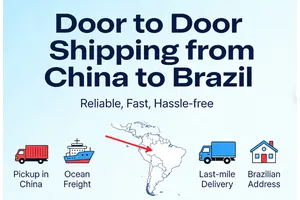
True door-to-door logistics in Brazil requires a highly synchronized operation due to the country's strict protectionist policies. Because true DDP is not permitted for commercial imports, foreign sellers cannot simply prepay all duties and deliver to a local address.
Instead, we orchestrate a seamless DAP (Delivered at Place) operation or utilize compliant Trading Company frameworks (Importação por Conta e Ordem). This involves a flawless handover between our Chinese export teams and our licensed Brazilian Despachantes Aduaneiros (Customs Brokers).
We manage the origin pickup, ocean/air freight, and coordinate directly with your local entity to handle the Import Declaration (DI). Once cleared, we execute the inland logistics (Cabotagem or road freight), ensuring your goods reach your distribution center or Mercado Livre warehouse without you having to juggle multiple local transport vendors or risk ICMS tax compliance gaps.
Major Shipping routes from China to Brazil
The primary shipping routes connect major Chinese manufacturing hubs to key Brazilian ports. Choosing the right route impacts both transit time and inland delivery costs.
Here is a breakdown of the major ports involved in this trade lane, based on our daily routing data:
Origin Ports (China)
Destination Ports (Brazil)
Key Characteristics
Shanghai (CNSHA)
Santos (BRSSZ)
The busiest route. Santos handles the majority of Brazil's container traffic. Subject to occasional labor strikes.
Shenzhen (CNSZX)
Paranaguá (BRPNG)
Excellent for electronics from Southern China; Paranaguá is a major hub for southern Brazil's agricultural and tech sectors.
Ningbo (CNNGB)
Rio de Janeiro (BRRIO)
Ideal for heavy machinery and bulk goods destined for the central-eastern coastal region.
Guangzhou (CNCAN)
Itajaí (BRITJ)
Frequently used for textiles and consumer goods; Itajaí generally offers more efficient customs processing than Santos.
Hong Kong (HKHKG)
Manaus (BRMAO)
Specialized route for the Manaus Free Trade Zone (Zona Franca de Manaus), offering significant tax incentives.
Shipping cost from China to Brazil (September 2026)
Shipping costs vary widely based on the chosen mode of transport, seasonal demand (like the pre-Chinese New Year rush), fuel surcharges (BAF), and the specific nature of the cargo. Sea freight is generally calculated per container or CBM, while air freight is calculated per kilogram.
Below is an estimated cost breakdown based on recent market averages. Note: Rates fluctuate daily based on global market conditions.
Shipping Method
Estimated Cost Range
Best For
Sea Freight (FCL - 20ft)
$1,800 - $3,500 per container
Large volume shipments (>15 CBM)
Sea Freight (FCL - 40ft)
$2,500 - $4,800 per container
Very large volume shipments (>30 CBM)
Sea Freight (LCL)
$80 - $150 per CBM
Medium shipments (1 - 15 CBM)
Air Freight
$6.50 - $12.00 per kg
Urgent, high-value, or lightweight goods
Express (DHL/FedEx/UPS)
$10.00 - $18.00 per kg
Small parcels, samples, documents (<50kg)
For exact, up-to-date pricing tailored to your specific cargo and NCM classification, it is always best to request a customized quote from your freight forwarder.
Shipping time from China to Brazil (September 2026)
Transit times range from a rapid 3-7 days for air freight to a much longer 30-45 days for sea freight. This timeline is heavily influenced by whether you choose a direct route or one with transshipments (often via Singapore or South Africa), as well as the efficiency of the "Canal de Parametrização" (Customs Channeling) upon arrival.
Here is a typical transit time matrix for planning your supply chain:
Shipping Method
Estimated Transit Time
Factors Influencing Speed
Air Express (Courier)
3 - 5 Days
Customs clearance speed, direct vs. indirect flights
Standard Air Freight
5 - 10 Days
Consolidation time, airline schedules, GRU/VCP backlog
Sea Freight (FCL)
30 - 40 Days
Direct port-to-port routing, weather conditions
Sea Freight (LCL)
35 - 45 Days
Additional 3-5 days required for CFS deconsolidation
Door-to-Door (Sea)
40 - 55 Days
Inland trucking schedules, final mile delivery efficiency
Import duty from China to Brazil: The "Custo Brasil" (September 2026)
Brazil applies a complex, cumulative tax structure on imports, commonly referred to as part of the "Custo Brasil" (Brazil Cost). The total tax burden can easily range from 60% to over 100% of the CIF (Cost, Insurance, and Freight) value of your goods. Never under-declare your commercial invoice value; the Receita Federal frequently audits shipments and applies severe penalties (up to 100% of the difference) for fraud.
The primary import taxes in Brazil include:
II (Imposto de Importação): The basic federal import duty, typically ranging from 10% to 35% depending strictly on the 8-digit NCM Code.
IPI (Imposto sobre Produtos Industrializados): Tax on industrialized products, usually between 0% and 15%.
PIS & COFINS: Social integration and social security contributions, generally totaling around 9.25% to 11.75%.
ICMS (Imposto sobre Circulação de Mercadorias e Serviços): A state-level value-added tax that varies between 17% and 25% depending on the destination state (e.g., São Paulo vs. Santa Catarina). Note: ICMS is calculated inside its own base, making the math complex.
Important Compliance Note: To clear commercial goods through customs, the importing company in Brazil must possess a valid RADAR license (Siscomex tracking system). There are three limits: Express (up to $50k/6 months), Limited (up to $150k/6 months), and Unlimited. Furthermore, specific goods may require pre-shipment authorization from agencies like ANVISA (health/cosmetics) or INMETRO (electronics/safety).
Shipping process from China to Brazil
The shipping process involves multiple coordinated steps. Understanding this workflow helps you anticipate requirements and avoid bottlenecks.
Quote, Booking, and NCM Verification: Provide your freight forwarder with the cargo details. Crucially, we verify your NCM codes before shipping to ensure accurate tax forecasting and check for any required ANVISA/INMETRO licenses.
Cargo Pickup and Consolidation: The forwarder arranges pickup from the Chinese supplier's factory and transports it to the departure port warehouse.
Export Customs Clearance (China): The forwarder handles all Chinese export documentation.
International Transit: The cargo travels via ocean vessel or cargo plane across the globe.
Import Customs Clearance (Brazil): Upon arrival, the goods are assigned a customs channel (Green, Yellow, Red, or Gray). The customs broker submits the Import Declaration (DI), pays the cumulative duties, and navigates any physical or document inspections by the Receita Federal.
Final Delivery: Once the "Desembaraço Aduaneiro" (customs clearance) is issued, the goods are loaded onto domestic trucks and delivered to your final warehouse or fulfillment center.
Your Trusted Freight Forwarder for Alibaba & Amazon Shipments to Brazil
Importing into Brazil does not have to be a logistical nightmare. At DTFU International Logistics, we specialize in simplifying complex, high-barrier trade routes. With over a decade of hands-on experience navigating the nuances of Brazilian customs and global supply chain management, we provide end-to-end solutions tailored specifically for Alibaba buyers, Amazon FBA sellers, and enterprise importers.
We leverage preferential contract rates and deep carrier relationships to offer you shipping solutions that are consistently below market average, without ever compromising on service quality.
Why Choose DTFU?
Deep Regulatory Expertise: We don't just move boxes; we audit your NCM codes, advise on RADAR limits, and pre-clear your compliance strategy to prevent seizures at Santos or Guarulhos.
Transparent Pricing: We model your total landed cost (including II, IPI, PIS, COFINS, and ICMS) upfront. No hidden fees, no surprise invoices.
Stable Transit Times: We secure premium space allocations to ensure your goods arrive predictably, mitigating the impact of peak season roll-overs.
Trading Company Mastery: We legally navigate Brazil's complex Importer of Record rules through our network of compliant trading partners, offering you a seamless door-to-door experience.
Ready to streamline your supply chain and conquer the Brazilian market? Let us handle the heavy lifting. Contact DTFU International Logistics today for a customized, benefit-driven shipping strategy that protects your margins and accelerates your growth.
Related Articles
Discover more insights about shipping from China to Brazil
Get answers to common questions about shipping from China to Brazil
Shipping costs vary widely based on the method. On average, Sea Freight FCL costs between $1,800 and $3,500 per 20ft container. LCL (shared container) ranges from $80 to $150 per CBM. Air freight is significantly more expensive, typically costing between $6.50 and $12.00 per kilogram. Prices fluctuate based on seasonal demand, fuel surcharges, and port congestion.
Brazil applies a cumulative tax structure known as the "Custo Brasil". The total tax burden usually ranges from 60% to over 100% of your cargo's CIF (Cost, Insurance, and Freight) value. This includes the Import Duty (II), Industrialized Products Tax (IPI), Social Contributions (PIS/COFINS), and a state-level VAT (ICMS).
Transit times depend entirely on the mode of transport. Air freight is the fastest, taking 3 to 7 days. Sea freight takes much longer due to the distance, typically ranging from 30 to 45 days port-to-port. Door-to-door sea freight can take 40 to 55 days once inland transportation and customs clearance are factored in.
Shipping a 40ft container from China to Brazil typically takes 40 to 55 days, depending on the port of destination and the distance between the two.
Shipping a 20ft container from China to Brazil typically costs between $1,800 and $3,500. LCL ranges from $80 to $150 per CBM. Air freight is significantly more expensive, typically costing between $6.50 and $12.00 per kilogram. Prices fluctuate based on seasonal demand, fuel surcharges, and port congestion
Ready to Shipping From China to Brazil?
Get your instant quote today and experience the difference of working with a professional freight forwarder.
5000+
Successful Shipments
98%
Customer Satisfaction
Get Your Free Quote
Response within 2 hours • No obligation • Free consultation
We use cookies to enhance your browsing experience and analyze site traffic. By continuing to use our site, you consent to our use of cookies. Learn more in our Cookie Policy.