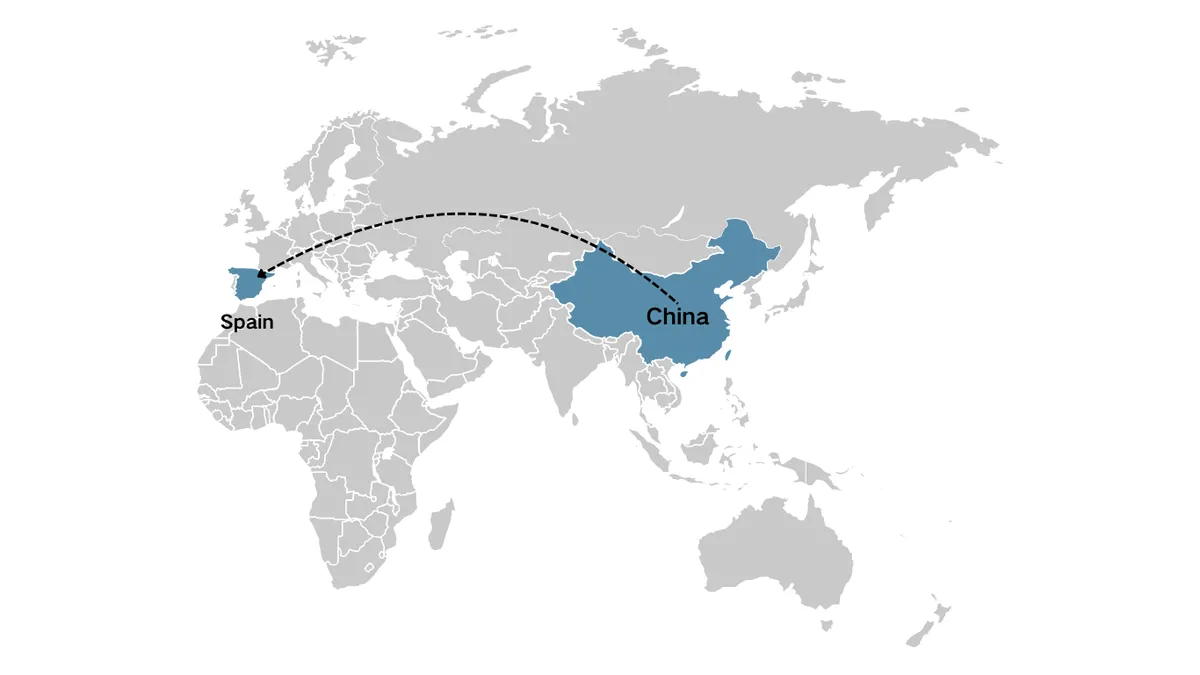
Shipping from China to Spain? DTFU Logistics offers expert sea, air & multimodal solutions, efficient customs & extensive distribution across the Iberian Peninsula. Reach Valencia, Barcelona, Madrid with competitive rates, flexible services & dedicated support for your Spanish cargo. Request your quote!
We make shipping from China to Spain simple, reliable, and cost-effective
Competitive Rates
Best shipping rates with no hidden fees. Save up to 40% compared to other forwarders.
Fast Transit
Reliable delivery times with express options available for urgent shipments.
Safe & Secure
Full cargo insurance and secure handling throughout the entire shipping process.
24/7 Support
Dedicated customer support team available around the clock for all your needs.
Are you facing difficulties with shipping from China to Spain? Or perhaps you're confused about the best shipping methods, cost control, and delivery schedules. This article will comprehensively detail the methods, costs, and timeliness of sea freight, air freight, and door to door shipping between China and Spain in September 2026. It will also cover major ports, shipping processes, tariff conditions, and DTFU logistics services to help you resolve shipping issues.
Sea shipping from China to Spain (September 2026)
In the current trade scenario between China and Spain, sea shipping remains a dominant mode for large-volume cargo transportation. Despite various global economic fluctuations, the demand for sea freight between the two regions has been steadily growing, driven by the continuous expansion of bilateral trade in sectors such as textiles, electronics, and furniture.
There are two main sea shipping methods available for Shipping From China to Spain:
FCL (Full Container Load): This is highly suitable for large shipments that can fill an entire container. FCL offers advantages such as lower unit costs as the container is solely dedicated to your cargo. It also allows for direct transit in many cases, reducing the risk of damage due to less handling. However, it requires a significant amount of cargo to be economically viable.
LCL (Less than Container Load): Ideal for smaller shipments where the goods are not enough to fill a whole container. LCL provides flexibility as multiple shippers' goods are consolidated in one container. But it comes with a relatively higher unit cost, and the transit time may be longer due to the processes of consolidated freight shipping and deconsolidation at various points.
Shipping Type
Cost (September 2026)
Transit Time
Suitable for
FCL (20-foot container)
$1,800 - $2,500
28 - 38 days
Medium to large shipments (able to fill the container)
FCL (40-foot container)
$3,000 - $4,000
28 - 38 days
Large-Volume shipments (able to fill the container)
LCL
$10 - $20 per CBM
30 - 45 days
Small shipments (insufficient to fill a container)
In September 2026, the sea freight market between China and Spain is showing signs of stability after a period of volatility. The freight rates have been gradually adjusting based on the balance between supply and demand. The increase in new shipping capacity in recent months has somewhat alleviated the tight supply situation, leading to a potential moderation in rate hikes. However, factors such as the upcoming peak shopping seasons in Spain, like the pre-Christmas period, may cause a temporary increase in demand and subsequent rate fluctuations. It is advisable to plan your shipping in advance and engage with reliable freight forwarders or shipping companies to secure favorable rates and shipping space.
As of September 2026, with the approaching holiday seasons in Spain and the concurrent growth of e-commerce activities in both China and Spain, the air freight market between the two countries is experiencing a significant upswing in demand. This increased demand has exerted upward pressure on freight rates, with a rise of approximately 8% - 12% compared to the previous month. The current state of air freight is as follows:
Major route
Cost per KG (September 2026)
Transit Time
Shanghai → Madrid
$4.50 - $6.00
2 - 5 days
Guangzhou → Barcelona
$5.00 - $6.50
2 - 5 days
Beijing → Valencia
$5.50 - $7.00
3 - 6 days
Shenzhen → Bilbao
$4.50 - $6.00
2 - 5 days
Air freight is particularly favored for high-value, time-sensitive goods such as luxury goods, high-tech electronics, and perishable items. The relatively short transit time ensures that these goods reach the Spanish market in a timely manner, enabling businesses to meet customer demands promptly and capitalize on market opportunities.
Door to door shipping from China to Spain (September 2026)
For importers in Spain seeking maximum convenience and a completely hassle-free shipping experience, Door to Door Shipping from China to Spain is the ultimate option. This all-encompassing service takes care of every single step of the shipping journey, starting from your supplier's factory in China and ending at your warehouse or your customer's doorstep in Spain.
Unlike traditional freight methods that require you to manage multiple individual segments (such as pickup, export customs clearance in China, ocean freight or air freight, import customs clearance in Spain, and final delivery), door to door shipping services streamline all these complex processes under one single point of contact and provide a single all-inclusive quote. This significantly reduces the administrative burden, minimizes the potential for delays caused by miscommunication between different parties involved in the shipping process, and often offers more predictable shipping rates from China to Spain.
Shanghai Port: Renowned as one of the world's busiest container ports, Shanghai Port has extensive and frequent maritime connections with major Spanish ports. It serves as a key departure point for a wide range of Chinese exports to Spain, including high-tech electronics, machinery, and precision instruments. The port's state-of-the-art terminal operations and advanced logistics infrastructure ensure the seamless flow of trans-Eurasian cargo.
Shenzhen Port: Located in South China, Shenzhen Port has close trade linkages with Spanish ports, especially those on the Mediterranean coast. It is a major source of Chinese consumer goods, apparel, and light industrial products bound for the Spanish market. The port's multiple terminals are highly efficient in handling the large volume of shipments, facilitating quick turnaround times.
Ningbo-Zhoushan Port: This deep-water port, boasting the world's largest cargo throughput, plays a crucial role in China's trade with Spain. It is actively involved in shipping bulk commodities such as iron ore (which is used in industries that supply the Spanish market) and also handles a significant amount of containerized goods destined for various Spanish cities. Its strategic location and excellent connectivity contribute to strengthening the trade ties between China and Spain.
Qingdao Port: As a major port in northern China, Qingdao Port has strong route advantages to Spanish ports via routes that also connect to other European countries. It handles a diverse range of cargo, including chemicals, building materials, and automotive parts, which are in high demand in the Spanish market. The port's well-developed logistics network and efficient handling capabilities make it an important link in the China-Spain trade corridor.
Main Ports in Spain
Port of Valencia: The largest container port in Spain, Valencia Port is equipped with advanced facilities and operates with high efficiency. It serves as a major destination for cargo from Chinese ports, handling a significant portion of Chinese imports such as textiles, furniture, and consumer electronics. The port's extensive inland transportation connections enable the seamless distribution of goods across Spain and other parts of Europe.
Port of Barcelona: A prominent Mediterranean port, Barcelona Port handles a wide variety of cargo and serves as a vital gateway for goods entering Europe from China. It has strong trade links with Chinese ports and plays a crucial role in the import of Chinese products, including high-value items, machinery, and specialized equipment. The port's strategic location and modern infrastructure make it an attractive choice for shipping companies operating between China and Spain.
Port of Algeciras: Strategically positioned near the Strait of Gibraltar, Algeciras Port is a crucial transshipment point in the Europe-Asia trade route. It receives a substantial amount of cargo from Chinese ports and is a key entry point for goods destined for Spain and other European countries. The port's large capacity and efficient handling of different types of cargo, including containers, bulk cargo, and roll-on/roll-off vehicles, contribute to its importance in the international shipping network.
Port of Bilbao: Located in northern Spain, Bilbao Port is essential for trade with the rest of Europe and has significant trade connections with China. It specializes in handling industrial goods, such as steel products, machinery, and heavy equipment, which are imported from China. The port's proximity to industrial regions in Spain and its well-connected transportation network make it an important hub for the distribution of Chinese goods in the northern part of the country.
Shipping process
Booking: Initiate the process by confirming with freight forwarders or carriers. Provide detailed information about the ports of origin and destination, cargo details (including weight, dimensions, and type), and select the appropriate shipping type (FCL/LCL for sea freight, or air courier/regular air for air freight).
Documentation: Prepare essential documents such as the commercial invoice, which details the value and description of the goods, the packing list that provides information about the packaging and contents of each package, and the customs declaration forms. These forms must comply with both Chinese export regulations and Spanish import regulations.
Cargo Pickup & Inspection: Goods are collected from the shipper’s location. Before shipping, they are inspected to ensure compliance with safety standards and customs requirements. This inspection helps prevent any issues during transit and customs clearance.
Customs Clearance in China: Submit the prepared documents to the Chinese customs authorities for export approval. Once approved, the goods are loaded onto the designated ships or planes for transportation.
Transportation: In the case of sea freight, the cargo sails along established routes connecting Chinese ports like Shanghai and Shenzhen to Spanish ports such as Valencia and Barcelona. For air freight, the planes fly directly or via transit hubs to Spanish airports.
Spanish Customs Clearance: Carriers or their agents in Spain handle the import clearance process. They pay any applicable duties and taxes (if not covered by a DDP - Delivered Duty Paid arrangement). The customs authorities in Spain review the documents and inspect the goods to ensure compliance with local regulations.
Delivery: For sea freight, after the cargo arrives at the Spanish port, it is transported to the consignee’s address using various inland transportation methods. In the case of air freight, the goods are delivered door to door or to the designated pick-up points as per the shipping agreement.
Shipping cost from China to Spain (September 2026)
In September 2026, the shipping cost landscape between China and Spain is influenced by several factors. The ongoing trade relations, fluctuations in fuel prices, and the balance between supply and demand in the shipping market all contribute to the cost structure.
Transportation Method
Specific Type
Cost
Air Freight
Regular Air
$4 - $8 per kg
Sea Freight
FCL (20ft container)
$1800 - $2800 per container
Sea Freight
FCL (40ft container)
$3000 - $5000 per container
Sea Freight
LCL
$10 - $20 per kg
In addition to these basic shipping costs, there are several additional fees to consider:
Customs Fees: These are calculated based on the value of the goods. In Spain, the import duties can vary depending on the type of goods, ranging from 0% to 15% in many cases. There is also a Value Added Tax (VAT) of 21% applied to the CIF (Cost, Insurance, and Freight) value of the goods.
Terminal Handling Charges: For FCL shipments, the terminal handling charges are typically around 150 - 400 euros per container. In the case of LCL, it is charged on a per - unit or per - cubic - meter basis, approximately 15 - 60 euros per cubic meter.
Documentation Fees: These fees cover the cost of preparing essential shipping documents such as bills of lading, commercial invoices, and certificates of origin. They usually range from 60 - 120 euros per shipment.
Fuel Surcharges: Given the volatility of fuel prices, shipping companies levy fuel surcharges. This is often calculated as a percentage of the basic freight. Currently, it may be around 8% - 18% of the base shipping cost.
Understanding import tax and duties (September 2026)
As of September 2026, the tariff system for Chinese exports to Spain is relatively complex and is subject to various international trade agreements and regulations. Here are the key aspects:
Most-Favored-Nation (MFN) Tariff Rates: These rates typically range from 0% to 10%, depending on the type of goods. For example, certain raw materials and essential food items may have a 0% MFN tariff, while some manufactured goods may be subject to a 5% - 10% tariff.
EU - Specific Tariffs: As a member of the European Union, Spain applies EU-wide tariffs on imports from China. Some products, such as certain textiles and footwear, may be subject to additional tariffs to protect the EU's domestic industries. These tariffs can range from 5% - 15% in some cases.
Anti-Dumping and Countervailing Duties: In cases where it is determined that Chinese products are being sold in the Spanish market at unfairly low prices (dumping) or are being subsidized by the Chinese government, anti-dumping and countervailing duties may be imposed. These duties can be quite high, sometimes exceeding 50% of the value of the goods, depending on the specific investigation findings.
Sustainable and Environmental Tariffs: In line with the growing global focus on sustainability and environmental protection, there are discussions in the EU about introducing new tariffs on goods that do not meet certain environmental standards. While not fully implemented as of September 2026, importers should be aware of the potential impact of such future regulations on their shipping costs.
Shipping transit time from China to Spain (September 2026)
Here is a breakdown of the typical transit times for different shipping methods as of September 2026:
Shipping Method
Transit Time
Air Freight
3 - 7 days
Sea Freight
- Mediterranean Ports (e.g., Valencia, Barcelona): 28 - 38 days - Northern Ports (e.g., Bilbao): 30 - 40 days
Door - to - Door (Combined Services)
- Express Courier: 4 - 8 days - Sea + Air (Combined Modal): 10 - 20 days
Based on the current shipping situation in September 2026, here are some practical suggestions:
Plan Ahead: Considering the potential for delays due to factors like port congestion, customs inspections, or unforeseen weather events, especially during peak shipping seasons, it is highly recommended to plan your shipments well in advance. If your goods are time-sensitive, such as those for seasonal sales or special events, calculate the transit time carefully and add a buffer of at least 3 - 5 days to account for any unexpected circumstances.
Choose the Right Shipping Partner: Select a logistics provider with a solid reputation and a proven track record of on - time deliveries. Look for companies that offer real - time tracking services, allowing you to monitor the progress of your shipment at every stage. A reliable partner will also be able to provide accurate and timely information about any potential delays and offer effective solutions to mitigate them.
Stay Informed About Route Conditions: Keep a close eye on any disruptions to major shipping routes, such as port strikes, adverse weather conditions affecting ports, or changes in customs regulations. By staying informed, you can adjust your shipping plans accordingly to avoid unnecessary delays and ensure the smooth transportation of your goods.
How Do Freight Forwarders Work with Alibaba to Streamline Your Shipping Needs?
Sourcing products from Alibaba is just the initial step; ensuring their efficient delivery is where a professional freight forwarder becomes invaluable. DTFU Logistics acts as your dedicated logistics partner, simplifying the entire shipping process from your Alibaba supplier to your destination in Spain.
Here's how DTFU streamlines your Alibaba imports:
Seamless Supplier Coordination: We take charge of direct communication and arrange pickup from your Alibaba supplier(s), whether it's a single order or multiple items that require consolidated freight shipping to optimize costs.
Optimized Shipping Solutions:DTFU conducts a comprehensive analysis of your cargo characteristics and urgency. Based on this, we select the most efficient shipping method from China to Spain (such as sea freight, air freight from china to spain) and the best - suited routes. This approach ensures optimal cost of shipping from china to spain while also meeting your desired transit times.
Expert Documentation & Customs Clearance: Navigating the complex landscape of international trade paperwork and Customs Clearance can be extremely challenging. Our team manages all the required documents, understands the tariff regulations in both China and Spain, and ensures that your shipment moves smoothly through customs without any unnecessary delays.
End-to-End Visibility & Support: From the moment the goods leave the supplier's location in China until they reach your doorstep in Spain, you will have clear tracking and proactive updates. Our dedicated team is always on standby to resolve any issues promptly, providing you with peace of mind throughout the shipping process.
Partnering with DTFU Logistics means transforming the complex logistics of Alibaba - sourced goods into a simple, reliable door to door shipping experience. We offer A Highly Professional, Cost-effective And High-quality, One-Stop International Logistics Service Provider For global traders.
Related Articles
Discover more insights about shipping from China to Spain
We use cookies to enhance your browsing experience and analyze site traffic. By continuing to use our site, you consent to our use of cookies. Learn more in our Cookie Policy.