Are you looking for a seamless way to move goods with door to door shipping from China to Peru? Navigating customs at the Port of Callao, choosing the right shipping methods, and managing costs can be daunting for both businesses and individuals. In this comprehensive guide, we’ll unravel the key features, advantages, transit times, and cost breakdowns of door to door shipping. Drawing on our extensive operational experience in 2026, we empower you to make informed decisions and ensure smooth international logistics every step of the way.
What is Door to Door Shipping from China to Peru?
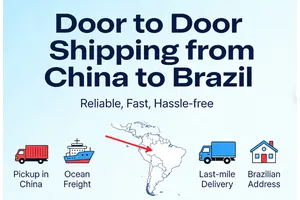
Door to Door Shipping from China to Peru refers to a comprehensive logistics solution where the freight forwarder arranges the entire shipment process—from picking up goods at the supplier’s factory in China to delivering them directly to the consignee’s warehouse or address in Peru. This service covers all intermediate steps, including international freight, customs clearance at both origin and destination, inland transportation, and final delivery.
Key Features:
- End-to-End Service: The logistics provider manages every stage—including pickup, ocean or air transport, customs clearance with SUNAT, and last-mile delivery.
- Single Point of Contact: Clients communicate with one provider (such as DTFU International Logistics) for the entire shipment, simplifying coordination.
- All-Inclusive Pricing: Quotes typically include all costs (freight, documentation, customs fees, inland transport), making budgeting easier and avoiding hidden terminal handling charges (THC).
- Risk Reduction: The freight forwarder handles complex procedures, reducing risks of delays, document errors, or compliance issues.
In our daily operations, we see that whether you are shipping a full container (FCL), a few pallets (LCL), or small parcels (courier/express), Door to Door Shipping streamlines the supply chain, offering greater convenience and transparency.
Advantages of Door to Door Service
Choosing Door to Door Shipping provides several distinct benefits for both business clients and individual shippers:
| Advantages | Description |
|---|---|
| Time-Saving | We handle all port procedures and SUNAT filings, freeing you to focus on your business. |
| Predictable Costs | Transparent, all-in-one quotes help manage budgets and avoid unexpected storage fees at Callao. |
| Reduced Risk of Delays | Professional handling of the China-Peru Free Trade Agreement (CPFTA) documentation lowers the risk of cargo being held at borders. |
| Professional Support | Expert guidance on packing, insurance, and local Peruvian compliance. |
For importers, exporters, and e-commerce sellers, door to door service simplifies international trade and reduces stress in the growing China-Peru trade corridor.
Essential Incoterms® for Door to Door Shipping: Who Pays What?
When requesting a door-to-door quote, the final price depends heavily on the Incoterms® you negotiated with your Chinese supplier and how you wish to handle Peruvian taxes. Understanding these terms solves the two biggest problems for importers: avoiding hidden origin fees and optimizing tax credits (IGV).
Buying from China: EXW vs. FOB
These terms define where your forwarder takes over the cargo in China:
-
EXW (Ex Works): Your supplier simply manufactures the goods and leaves them at their factory. DTFU picks up the cargo directly from the factory floor in China and handles the export customs.
- Best for: Importers buying from multiple suppliers who want to consolidate goods into one container, giving you complete control over local Chinese logistics costs.
-
FOB (Free on Board): The supplier covers the cost of transporting the goods to the Chinese port (e.g., Shenzhen or Ningbo) and pays for export clearance. DTFU takes over from the port to your door in Peru.
- Best for: Single large orders. Chinese factories often have cheaper local trucking rates than foreign buyers, making FOB a highly cost-effective choice for the origin leg.
Receiving in Peru: DAP vs. DDP
These terms dictate how customs duties and the 18% IGV (General Sales Tax) are paid upon arrival in Peru. Choosing the wrong term here can cost your business thousands of dollars in lost tax credits.
-
DAP (Delivered at Place): We deliver the cargo straight to your warehouse in Peru, but you (the importer) pay the import duties and the 18% IGV directly to SUNAT using your RUC.
- The Business Advantage: This is the highly recommended method for registered Peruvian businesses. By paying the IGV directly to SUNAT under your own RUC, you can legally claim that 18% as a tax credit (crédito fiscal) against your local domestic sales, effectively neutralizing the tax cost.
-
DDP (Delivered Duty Paid): We handle absolutely everything, including paying all Peruvian import duties and taxes on your behalf before delivering to your door.
- The Trade-off: While it is the most hands-off approach, you cannot claim the IGV tax credit because the tax was paid by the forwarder's agent, not under your company's RUC.
- Best for: Individuals importing personal goods, sending product samples, or companies without an active RUC who prioritize convenience over tax optimization.
Popular Shipping Methods for Door to Door Delivery
At DTFU International Logistics, we offer a range of door to door shipping solutions tailored to specific shipment needs and timelines based on current 2026 routing capacities.
Sea Freight: FCL vs. LCL Door to Door Solutions
Sea Freight remains the most cost-effective choice for large shipments moving from major Chinese ports (such as Shanghai, Shenzhen, or Ningbo) to Peruvian ports, primarily Callao and Paita.
-
FCL (Full Container Load): Ideal for larger cargo volume that fills an entire container.
- 20FT Container: Capacity ~28CBM (Best for heavy machinery or dense goods).
- 40HQ Container: Capacity ~68CBM (Best for high-volume, lighter goods like textiles or furniture).
- Benefits: Lower per-cubic-meter costs, less risk of cargo contamination, and faster customs clearance since the container is sealed until it reaches your facility.
-
LCL (Less than Container Load): For smaller shipments that share container space.
- Benefits: Flexible for lower volumes, cost-sharing among multiple shippers.
- Considerations: Requires 3-5 extra days for consolidation in China and deconsolidation at the Callao warehouse.
Expert Insight: In 2026, sea freight from Shanghai Port to Callao Port typically takes 30–38 days port-to-port, plus an additional 5–10 days for customs and inland delivery to cities like Lima or Arequipa.
Recommended read: If you want to know more about regional sea shipping, check out our Sea Shipping from China to Peru guide.
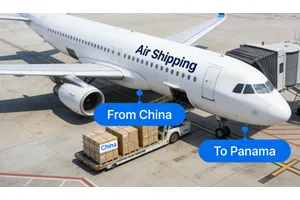
Air Freight: Fast and Reliable Door to Door Delivery
Air Freight is the best choice for urgent, high-value, or time-sensitive shipments. Major airports in China (Shanghai Pudong (PVG), Guangzhou Baiyun (CAN)) connect via transshipment hubs (often in the US or Europe) to Jorge Chávez International Airport (LIM) in Lima.
Key Features:
- Speed: Air freight delivers goods door-to-door in 5–10 days.
- Security: Lower risk of damage due to shorter transit and fewer handling points.
Courier & Express Shipping: When to Choose for Small Parcels
For small parcels (under 100kg), sample shipments, or urgent documents, Courier & Express Shipping (via DHL, FedEx, UPS) offers the fastest option.
Features:
- Speed: Typical transit time is 3–7 days door-to-door.
- Customs: Couriers often use expedited clearance processes for low-value goods (under $2,000 USD de minimis in Peru, though taxes still apply over $200).
Choosing the Optimal Method:
For full containers and bulk, sea freight is the most economical. For urgent shipments, air freight or express courier is recommended. By leveraging preferential contract rates, DTFU International Logistics provides tailored solutions that keep your logistics spend below the market average.
Step-by-Step Door to Door Shipping Process
Booking and Documentation Requirements
The door to door shipping process requires meticulous documentation. Based on our experience clearing thousands of shipments, missing paperwork is the #1 cause of delays at Peruvian customs.
-
Booking the Shipment: We reserve cargo space and select optimal routing based on 2026 carrier schedules.
-
Documentation Preparation:
- Commercial Invoice (Must be in Spanish or English, detailing exact unit prices).
- Packing List
- Bill of Lading (B/L) or Air Waybill (AWB)
- Certificate of Origin (Form R for CPFTA): Crucial for claiming reduced or zero tariffs under the China-Peru Free Trade Agreement.
Customs Clearance Procedures in China and Peru
Customs Clearance in China (Export):
- Export Declaration: Handled by your forwarder through China Customs.
- Inspection and Quarantine: Required for certain goods (e.g., agricultural products requiring a CIQ certificate).
Customs Clearance in Peru (Import):
- SUNAT Declaration: Upon arrival, the customs broker files a Declaración Aduanera de Mercancías (DAM) with SUNAT.
- Duties and Taxes: Importers must pay the IGV (General Sales Tax) of 16% plus a 2% Municipal Promotion Tax (IPM), totaling 18%. Import duties range from 0% to 11% depending on the HS code, though many Chinese goods enter at 0% due to the CPFTA.
- RUC Requirement: The Peruvian consignee must have an active Registro Único de Contribuyentes (RUC) to import goods for business purposes.
Pro Tip: We highly recommend utilizing Peru's Despacho Anticipado (Advance Clearance) system. By submitting documents before the vessel arrives, we consistently clear cargo within 48 hours of discharge at Callao.
Last Mile Delivery
Once cleared by SUNAT, goods are transported via local trucking networks from Callao or Lima to your final address, with proof of delivery obtained.
How Much Does Door to Door Shipping from China to Peru Cost?
Factors Affecting Rates
- Shipping Method: Air is faster but pricier; sea freight is cost-effective for volume.
- Cargo Volume/Weight: Airlines charge based on the greater of actual or volumetric weight.
- Customs Duties: Varies by HS code and CPFTA eligibility.
Typical Cost Breakdown (2026 Estimates)
A transparent cost breakdown helps businesses plan better. Here are illustrative estimates for shipping from major Chinese cities to Lima, Peru (as of 2026):
| Shipping Mode | Container/Weight | Estimated Cost (USD) | Transit Time (Days) | Inclusions |
|---|---|---|---|---|
| Sea (FCL) | 20FT (28CBM) | $2,800 - $3,500 | 30-38 | Pickup, export/import customs, delivery |
| Sea (FCL) | 40HQ (68CBM) | $4,200 - $5,200 | 30-38 | Pickup, export/import customs, delivery |
| Sea (LCL) | 1 CBM (Min. 2 CBM) | $150 - $220/CBM | 32-45 | Consolidation, customs, local delivery |
| Air Freight | 100kg+ | $6.50 - $9.50/kg | 5-10 | Pickup, customs, airport-to-door |
| Courier | <30kg | $10 - $15/kg | 4-7 | End-to-end express, customs, home delivery |
Note: Rates fluctuate with fuel prices, Panama Canal transit surcharges, and local Callao handling fees. Always request a current quote.
Money-Saving Tips
- Leverage the CPFTA: Always ensure your supplier provides a valid Certificate of Origin to avoid unnecessary import duties.
- Consolidate shipments: Combine multiple LCL orders into one FCL shipment if you order frequently.
- Work with a trusted partner: At DTFU International Logistics, we secure preferential contract rates that fall below the market average, passing the savings directly to our clients without aggressive sales pitches.
Related article: See our Door to Door shipping From China to Chile guide for more insights.
Transit Times for Door to Door Shipping from China to Peru
When planning your inventory, understanding realistic 2026 transit times is crucial:
| Shipping Method | Typical Transit Time | Best Use Cases | Notes |
|---|---|---|---|
| Sea Freight (FCL) | 30 – 40 days | Large, bulky shipments | Main Peruvian port: Callao |
| Sea Freight (LCL) | 35 – 45 days | Small to medium shipments | Longer due to deconsolidation at Callao |
| Air Freight | 5 – 10 days | Urgent or valuable cargo | Main airport: Jorge Chávez (LIM) |
| Courier/Express | 3 – 7 days | Samples, small parcels | Premium rates, fastest delivery |
Tips to Shorten Transit Time:
- Pre-Clearance: Use SUNAT’s Despacho Anticipado.
- Accurate HS Codes: Prevent customs holds by ensuring your HS codes match Peruvian classifications exactly.
For more information, see our insights on Shipping time from China to Chile.
Essential Documents and Peruvian Import Regulations
Understanding Peruvian Import Regulations
Peruvian Customs (SUNAT) strictly oversees all imports. Based on recent 2026 policy enforcement, here is what you need to know:
- Importer Registration (RUC): All commercial receivers must have an active RUC.
- Taxes and Duties: Expect an 18% IGV/IPM on the CIF value (Cost, Insurance, Freight). Duties vary but are often 0% for Chinese goods if a CPFTA Certificate of Origin is provided.
- Restricted Items (Mercancías Restringidas): Products like cosmetics, medical devices (DIGEMID), and telecommunications equipment (MTC) require prior authorization. Importing these without permits will result in immediate confiscation at Callao or LIM.
How DTFU Can Help: Our team stays updated on the latest Peruvian import regulations. We provide one-stop customs clearance, ensuring compliance and preventing costly storage fees at the destination.
Choosing the Right Freight Forwarder
Selecting the right freight forwarder is a crucial decision. A trustworthy partner ensures efficient delivery and provides peace of mind. Here are key points to consider:
1. Expertise and Track Record
Look for a forwarder with proven experience in China-Peru routes. Understanding both the origin and destination markets—especially SUNAT regulations and Callao port operations—is essential.
2. Service Portfolio
A leading forwarder offers comprehensive services:
- Sea Freight & Air Freight
- Warehousing & Consolidation
- One-stop Customs Clearance
3. Benefit-Oriented Value
Rather than focusing solely on base rates, look for forwarders who offer holistic value. DTFU International Logistics secures preferential contract rates and provides expert guidance that ultimately lowers your total landed cost, optimizing your logistics spend over the long term.
Common Challenges and How to Avoid Them
Customs Delays
Challenge: Cargo held at Callao due to valuation disputes or missing permits. Solution: Ensure the commercial invoice reflects the true transaction value. SUNAT actively cross-references values with a database of similar imports to catch under-invoicing.
Cargo Insurance
Challenge: Damage during long ocean transits or rough handling. Solution: For door to door shipments, opt for all-risk cargo insurance. DTFU offers customizable insurance solutions, covering your goods from the factory floor in China to your door in Peru.
FAQs
Q1: What is the typical transit time for door to door shipping from China to Peru in 2026?
A: Sea freight generally takes 30–40 days, while air freight takes 5–10 days door-to-door.
Q2: Which documents are required for customs clearance in Peru?
A: The commercial invoice, packing list, bill of lading/air waybill, and importantly, the CPFTA Certificate of Origin to claim duty exemptions. The importer must also have an active RUC.
Q3: Can DTFU handle restricted items like electronics or cosmetics to Peru?
A: Yes, provided the consignee holds the correct permits (e.g., MTC for telecom, DIGEMID for cosmetics). We guide you through the compliance process before the cargo leaves China.
Q4: Are there hidden local fees or unexpected storage costs when shipping door-to-door to Peru?
A: A true door-to-door quote should be all-inclusive, but importers sometimes overlook Peruvian port storage (almacenaje) at Callao if customs clearance is delayed. In our experience, utilizing SUNAT’s Despacho Anticipado (Advance Clearance) system is the best way to bypass these costly local fees, keeping your landed costs predictable.
Q5: How can I reduce my import taxes and overall shipping costs from China to Peru?
A: You can significantly lower your logistics spend by leveraging the China-Peru Free Trade Agreement (CPFTA). By ensuring your Chinese supplier provides a valid Form R Certificate of Origin, the standard Ad Valorem duty (which can be up to 11%) is often reduced to 0%. While you still pay the 18% IGV/IPM, eliminating the base duty optimizes your total landed cost.
Q6: Does your door-to-door service cover inland deliveries to cities outside of Lima, like Arequipa or Cusco?
A: Yes. While most sea freight arrives at Callao and air freight at Jorge Chávez (LIM) in Lima, our service includes comprehensive inland trucking (transporte terrestre). Transporting cargo through the Andes requires experienced local carriers to navigate altitude and infrastructure challenges. We partner with vetted Peruvian trucking networks to ensure safe, end-to-end delivery across the country.