As an importer bringing goods from China to Peru, managing your logistics budget and securing reliable transit times are your top priorities. Over our 10+ years managing South American trade lanes at DTFU International Logistics, we've seen firsthand how the launch of the new Chancay megaport has revolutionized the trans-Pacific trade route, drastically cutting transit times.
However, navigating ocean freight costs, the China-Peru Free Trade Agreement (FTA), and SUNAT's strict customs regulations can still be complex. This guide breaks down exactly what you need to know about sea shipping from China to Peru in 2026, providing the latest actionable cost estimates for April, real-world operational insights, and step-by-step processes to protect your profit margins.
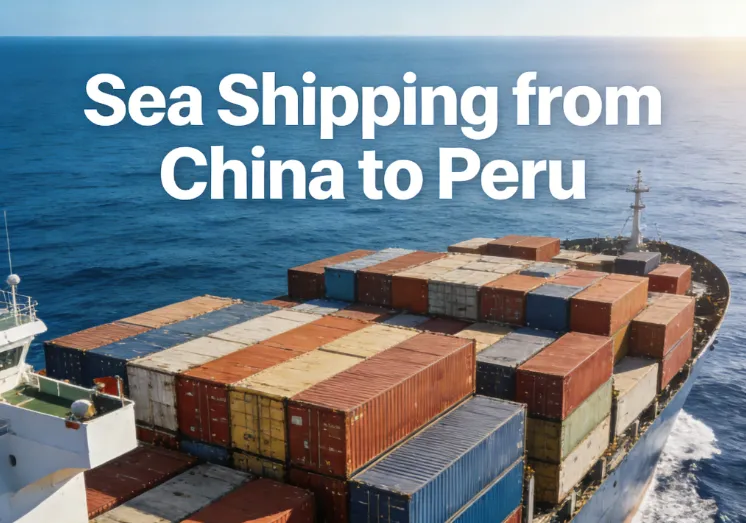
What Are the Main Sea Shipping Routes and Ports from China to Peru?
The main sea shipping routes from China to Peru connect major Chinese export hubs with the Peruvian coastline. Historically, almost all cargo funneled through Callao, but the new Chancay port now offers faster, direct trans-Pacific alternatives.
Key Chinese Origin Ports (Shanghai, Shenzhen, Ningbo)
For exports to South America, the most efficient origin ports in China are Shanghai, Shenzhen, and Ningbo. Shanghai and Ningbo handle the bulk of goods from eastern China, offering high sailing frequencies. Shenzhen serves southern China's manufacturing sector, particularly electronics and consumer goods, providing excellent direct route options.
Major Peruvian Destination Ports (Callao and the New Chancay Port)
- Port of Callao: Callao is Peru's primary commercial port (managed by DP World and APM Terminals), handling over 70% of the country's ocean cargo. While highly equipped, we frequently see severe truck congestion around Avenida Faucett, which can delay inland delivery by 24 to 48 hours.
- Port of Chancay: Inaugurated recently and located about 80 km north of Lima, Chancay is designed specifically as a hub for trans-Pacific trade with Asia. It accommodates ultra-large container vessels and bypasses intermediate stops in Mexico or Colombia. However, importers must factor in the slightly longer inland drayage via the Panamericana Norte highway to reach warehouses in Lima.
Popular Sea Freight Routes and Average Transit Times
Most traditional routes from China to Callao involve transshipment in Manzanillo (Mexico) or Buenaventura (Colombia). With the opening of Chancay, direct routes are now the premium choice.
- Traditional Transshipment Route (Callao): 35 to 45 days.
- Direct Route (Chancay): 23 to 28 days.
How Much Does Sea Shipping Cost from China to Peru?
Sea shipping costs from China to Peru depend heavily on container size, current market demand, and the chosen port. As of April 2026, following the Q1 market adjustments, importers should budget between $2,600 and $4,200 for a standard 40-foot container.
Current FCL Container Rates (April 2026: 20ft & 40ft to Callao/Chancay)
Full Container Load (FCL) offers the best value for large shipments. Below are the estimated average market rates for port-to-port shipping from major Chinese hubs as of April 2026.
| Origin Port | Destination Port | 20ft Container (USD) | 40ft Container (USD) |
|---|---|---|---|
| Shenzhen | Callao / Chancay | $1,850 - $2,400 | $2,800 - $3,900 |
| Shanghai | Callao / Chancay | $1,950 - $2,500 | $2,900 - $4,100 |
| Ningbo | Callao / Chancay | $1,950 - $2,500 | $2,900 - $4,100 |
Note: April typically offers competitive contract rates due to the post-Chinese New Year lull, but rates may increase as we approach the Q3 peak season. These estimates do not include local Peruvian destination charges.
LCL Shipping Costs for Smaller Cargo Volumes
If your cargo is under 15 cubic meters (CBM), Less than Container Load (LCL) is the most cost-effective option.
- Average LCL Rate (April 2026): $65 to $125 per CBM.
- Operational Reality: LCL shipments require consolidation at origin and deconsolidation at the destination. In Callao, deconsolidation can take 3 to 5 days, and destination terminal handling charges (THC) for LCL are often proportionately higher than FCL. Always ask your forwarder for a breakdown of destination fees before booking.
Main Cost Components: Freight Rates, Surcharges, and Hidden Fees
Your total shipping invoice includes more than just the base ocean freight. We advise our clients to account for:
- Ocean Freight: Base rate + BAF (Bunker Adjustment Factor).
- Origin Charges: Export customs, local trucking in China, and terminal fees.
- Destination Charges in Peru: THC, Visto Bueno (document release fee charged by the carrier's local agent), and inland drayage from Callao/Chancay to your facility.
Factors Influencing Sea Freight Prices & How to Get the Best Rates
Working with an experienced freight forwarder like DTFU International Logistics allows you to access negotiated contract rates that are often below the spot market average. Currently, during the April 2026 post-Chinese New Year lull, carriers are offering highly competitive rates to fill capacity—making it an ideal time to secure favorable pricing before the summer peak.
How Long Does Sea Freight Take to Reach Peru?
Sea freight from China to Peru typically takes between 23 and 45 days. However, transit time on the water is only part of the equation; local port and customs efficiency dictate when you actually receive your goods.
Port-to-Port Transit Times (Shanghai/Shenzhen to Callao)
Traditional port-to-port transit to Callao involves stops along the way.
| Origin Port | Destination Port | Transit Time (Days) | Route Type |
|---|---|---|---|
| Shenzhen | Callao | 32 - 38 Days | Transshipment |
| Shanghai | Callao | 35 - 42 Days | Transshipment |
| Ningbo | Callao | 35 - 42 Days | Transshipment |
The Impact of the New Chancay Port on Shipping Times
The Chancay Port is a game-changer. By establishing a direct maritime corridor between Shanghai/Shenzhen and Peru, ocean transit times are slashed by 10 to 12 days. This means your goods can arrive in roughly 23 to 28 days, drastically improving inventory turnover for Peruvian retailers and manufacturers.
Managing Delays: The SUNAT Channel System
Delays often occur not on the water, but at the port. SUNAT (Peru's customs agency) uses a risk-based channel system:
- Green Channel (Canal Verde): Cleared immediately.
- Orange Channel (Canal Naranja): Document review required.
- Red Channel (Canal Rojo): Physical inspection of goods.
- Expert Tip: In our experience, first-time importers or shipments with vague commercial invoices almost always hit the Red Channel, adding 3 to 7 days of delays and extra storage costs.
Step-by-Step Process: How to Ship by Sea from China to Peru
Shipping from China to Peru requires meticulous planning to survive the 30+ day trans-Pacific journey and clear strict South American customs.
Booking Your Shipment: FCL vs. LCL Explained
Determine your cargo volume. If you have enough goods to fill a 20ft container (approx. 25-28 CBM), book FCL for better security and speed. For smaller volumes, book LCL. We recommend booking space at least 2-3 weeks in advance, especially before the Q4 holiday rush.
Cargo Packing, Labeling, and Container Loading
Ocean transit across the equator means high humidity and rough seas.
- Moisture Control: We strongly advise using industrial desiccants (silica gel bags) inside the container to prevent "container rain," which can ruin textiles or electronics.
- Labeling: Ensure all cartons are clearly labeled with the importer's details, handling instructions, and "Made in China" marks to comply with Peruvian customs regulations.
Shipping Insurance and Risk Mitigation
Never ship to South America without comprehensive cargo insurance. The carrier's liability is limited by international maritime law. "All-Risk" marine insurance costs a fraction of your cargo's value (typically 0.1% to 0.3%) and covers damage, loss, or General Average declarations.
Navigating Peru Customs and the China-Peru FTA
To successfully clear customs in Peru, you must provide precise documentation and leverage the China-Peru Free Trade Agreement (FTA). Peru has strict compliance laws, and SUNAT is unforgiving regarding document discrepancies.
Leveraging the FTA for Zero Tariffs
Under the China-Peru FTA, the majority of Chinese exports enter Peru tariff-free. To claim this, you must obtain a valid Certificate of Origin (CO) issued by authorized Chinese bodies (like CCPIT or China Customs) before the goods arrive. Without a perfectly matching CO, you will pay standard Peruvian import tariffs (typically 6% to 11% Ad Valorem).
Essential Documents: The DAM and Despacho Anticipado
Clearance requires a flawless document packet:
- Bill of Lading (B/L): The transport contract.
- Commercial Invoice: Must clearly state the FOB value, freight, and insurance costs. SUNAT heavily scrutinizes under-invoicing.
- Packing List: Detailed breakdown of weights and dimensions.
- DAM (Declaración Aduanera de Mercancías): The official customs declaration.
- Crucial Rule: Peru mandates Despacho Anticipado (Advance Clearance). You must file your customs declaration before the vessel arrives at Callao or Chancay. Failing to do so can result in fines and mandatory physical inspections.
Importer Requirements: RUC Status
Before importing, the Peruvian buyer must have an active RUC (Registro Único de Contribuyentes). SUNAT requires your RUC status to be both "Activo" (Active) and "Habido" (Found/Verified Address). If your RUC status is suspended, your cargo will be blocked at the port.
Essential Tips for Smooth Sea Shipping to Peru
Best Practices for Documentation and Compliance
Inconsistency is the enemy of customs clearance in Peru. Ensure that product descriptions, HS codes, weights, and values match perfectly across your Commercial Invoice, Packing List, and Bill of Lading. A single typo or a mismatched HS code can trigger a SUNAT fine (often calculated as a percentage of the cargo value).
Inland Security in Peru
When trucking goods from Callao or Chancay to warehouses in Lima, security is a legitimate concern. For high-value goods (electronics, branded apparel), we highly recommend arranging a resguardo (armed escort) for the inland transit via the Pan-American Highway to mitigate the risk of theft.
Why Choose DTFU International Logistics for Your Peru Shipments?
Choosing the right freight forwarder is critical for maintaining a competitive edge in the South American market. DTFU International Logistics provides the local expertise and network necessary for seamless China-to-Peru shipping.
Preferential Contract Rates with Top Ocean Carriers
Through high-volume partnerships with major carriers like COSCO, Maersk, and MSC, DTFU International Logistics secures preferential contract rates. This allows us to provide you with highly competitive, benefit-oriented pricing solutions that protect your margins.
Deep Expertise in SUNAT Compliance
Our team understands the nuances of the China-Peru FTA and SUNAT's Advance Clearance requirements. We proactively audit your commercial invoices and Certificates of Origin before your cargo leaves China, ensuring you avoid the Red Channel and costly terminal demurrage.
Cargo Tracking and Real-Time Shipment Visibility
From the moment your cargo leaves the factory in China to its arrival at Callao or Chancay, our dedicated cargo tracking team keeps you updated, ensuring you can manage your inventory and customer expectations with confidence.
FAQs
What is the cheapest month to ship from China to Peru?
The cheapest months to ship are typically March to May, immediately following the post-Chinese New Year lull. Demand is lower, and carriers often offer more competitive rates.
How long does a cargo ship take from Shenzhen to Callao?
A standard transshipment route from Shenzhen to Callao takes approximately 32 to 38 days. However, utilizing the new direct Chancay route can reduce this transit time to roughly 23 to 28 days.
What is Despacho Anticipado in Peru?
Despacho Anticipado (Advance Clearance) is a mandatory SUNAT regulation requiring importers to file their customs declaration (DAM) before the vessel arrives at the Peruvian port, aimed at reducing port congestion and clearance times.
How much does a 40ft container cost from China to Peru?
As of April 2026, port-to-port ocean freight for a 40ft container from China to Peru averages between $2,800 and $4,100, depending on the origin port, carrier, and seasonal demand.
Can DTFU handle door-to-door delivery within Peru?
Yes, DTFU International Logistics can arrange comprehensive door-to-door solutions, managing the ocean freight, SUNAT customs clearance, and final inland delivery (including security escorts if needed) to your warehouse in Lima or other Peruvian cities.