As an importer, procurement manager, or e-commerce seller, knowing the exact sea shipping cost from China to Saudi Arabia is absolutely critical to maintaining your profit margins. Over my 10+ years managing Middle East trade lanes at DTFU International Logistics, I've seen countless buyers fall into a common trap: they budget only for the base port-to-port ocean freight rate. Upon arrival, they are shocked by unexpected destination port charges, strict Saudi customs duties, complex SABER certification fees, and potentially crippling demurrage costs—which can quickly escalate to $150+ per day if clearance is delayed.
In this comprehensive 2026 guide, based on our real-world operational data and the latest Zakat, Tax and Customs Authority (ZATCA) regulations, I will break down the true landed cost. I will expose the hidden fees you need to watch out for, and provide actionable strategies from a senior freight forwarding perspective. By the end of this article, you will have a complete, transparent framework to budget and execute your sea freight shipments from China to the Kingdom of Saudi Arabia (KSA) without any costly surprises.
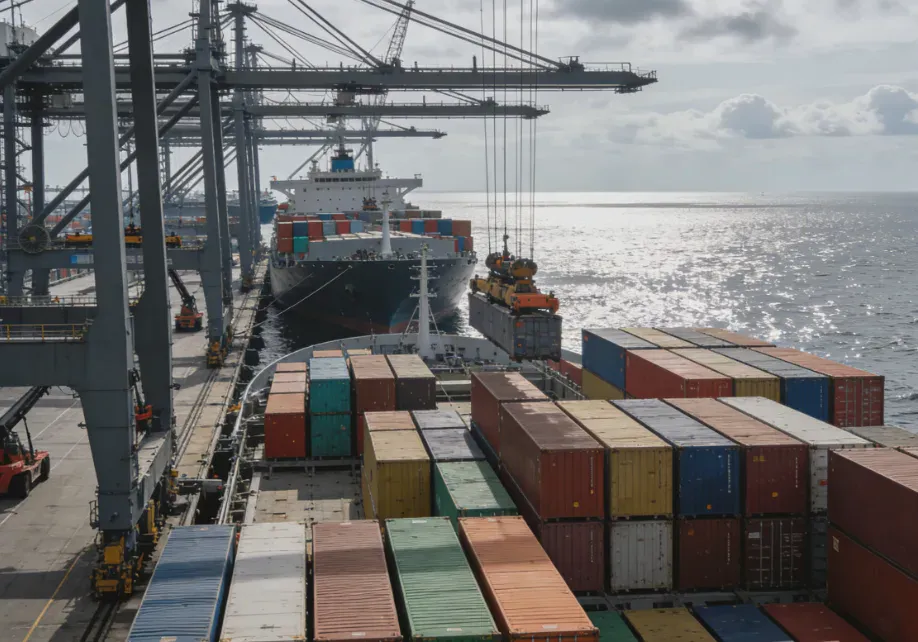
Quick Answer: Average Sea Freight Costs in 2026
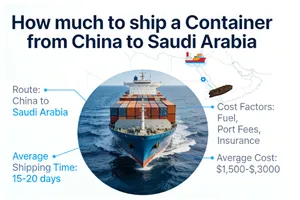
If you are looking for a direct baseline, the average sea shipping cost from China to Saudi Arabia (to major ports like Jeddah or Dammam) currently ranges from $2,500 to $3,500 for a 40ft container (FCL), and approximately $100 to $180 per CBM for LCL (Less than Container Load) shipments.
Author's Note on Rate Volatility: These are baseline estimates based on our recent Q1 2026 bookings. Final costs will fluctuate due to carrier blank sailings, bunker adjustment factors (BAF), seasonal demand spikes (like the pre-Ramadan rush), and geopolitical factors affecting Red Sea transits. For accurate budgeting, always request a live quote valid for 14-21 days before finalizing your shipment.
Complete Breakdown of Sea Shipping Costs
Understanding the logistics quote is the first step to taking control of your budget. A standard freight invoice is rarely just a single line item. It is composed of origin charges, the main ocean freight, and destination fees. Let us dismantle these costs piece by piece so you know exactly what you are paying for when shipping to the Kingdom of Saudi Arabia.
FCL Rates: 20ft vs. 40ft Containers (Shanghai to Jeddah/Dammam)
Full Container Load (FCL) is the most cost-effective method if your cargo volume exceeds 15 CBM. By renting the entire container, you benefit from a flat rate, which significantly lowers the cost per unit of your goods. Furthermore, FCL offers better security since the container is sealed at the factory in China and remains unopened until it reaches your warehouse in Saudi Arabia. This minimizes the risk of damage or theft.
Here is a look at the estimated port-to-port Containers Shipping Cost from China to Saudi Arabia for 2026 from major Chinese ports to the two primary Saudi gateways: Jeddah Islamic Port (West Coast) and King Abdul Aziz Dammam Port (East Coast).
| Origin Port (China) | Destination Port (Saudi Arabia) | 20ft Container (USD) | 40ft / 40HC Container (USD) |
|---|---|---|---|
| Shanghai / Ningbo | Jeddah Islamic Port | $1,800 - $2,300 | $2,600 - $3,200 |
| Shenzhen / Guangzhou | Jeddah Islamic Port | $1,750 - $2,200 | $2,500 - $3,100 |
| Qingdao / Tianjin | Jeddah Islamic Port | $1,850 - $2,350 | $2,650 - $3,300 |
| Shanghai / Ningbo | King Abdul Aziz Dammam Port | $1,900 - $2,400 | $2,700 - $3,400 |
| Shenzhen / Guangzhou | King Abdul Aziz Dammam Port | $1,850 - $2,300 | $2,600 - $3,300 |
| Xiamen | King Abdul Aziz Dammam Port | $1,950 - $2,450 | $2,750 - $3,500 |
Pro Tip: Shipping to Dammam often incurs a slightly higher ocean freight rate from China compared to Jeddah, due to the longer routing into the Arabian Gulf. However, if your final buyer is in Riyadh, shipping via Dammam and using the railway to the Riyadh Dry Port is highly efficient and much cheaper than trucking goods all the way from Jeddah.
LCL Rates: Cost per CBM for Smaller Shipments
If you are importing smaller quantities—typically between 1 CBM and 15 CBM—Less than Container Load (LCL) is the practical choice. Instead of paying for a whole container, you share the space and the cost with other importers.
For LCL shipments, freight forwarders charge based on volume (Cubic Meters or CBM) or gross weight, whichever is greater. The general LCL rate from major Chinese ports to Saudi Arabia ranges from $100 to $180 per CBM.
While the pure ocean freight for LCL seems cheap, you must be hyper-aware of destination consolidation and un-stuffing fees. Many novice importers are lured in by a "zero dollar" LCL ocean freight rate, only to be hit with hundreds of dollars in hidden unpacking fees by the destination agent in Saudi Arabia. Always ask your forwarder for a complete origin-to-destination quote to avoid the "LCL trap."
Origin Charges in China (FOB vs. EXW)
Your ocean freight rate is heavily dictated by the Incoterms® 2020 you negotiate with your Chinese supplier. Understanding these terms is crucial to controlling your shipping cost from China to Saudi Arabia.
- FOB (Free on Board): Under FOB terms, your Chinese supplier pays for the truck transport to the Chinese port, export customs clearance, and terminal handling charges (THC) in China. You only start paying from the moment the cargo is loaded onto the vessel. This is the highly recommended term for most buyers, as the supplier handles local Chinese logistics where they have the most leverage.
- EXW (Ex Works): Under EXW, you are responsible for everything from the moment the goods leave the factory floor in China. This means you must pay the local Chinese trucking fees, export documentation, and origin port charges. These origin fees can add anywhere from $300 to $800 to your total logistics bill, depending on the distance from the factory to the port.
- CIF (Cost, Insurance, and Freight): The supplier pays for the ocean freight to the Saudi port. While this seems easy, suppliers often mark up the freight cost or use cheap forwarders who charge exorbitant destination fees in Saudi Arabia to make up the difference.
Destination Port Charges & Hidden Fees to Watch Out For
This is where profit margins go to die. The ocean freight might be paid, but when your container arrives at Jeddah or Dammam, a new set of fees kicks in. These are standard, but they often catch beginners by surprise.
- Terminal Handling Charges (Destination THC): Fees paid to the Saudi Ports Authority (MAWANI) for lifting the container off the ship and moving it to the yard. For a 40ft container in Jeddah or Dammam, this typically ranges from $220 to $350 depending on the carrier.
- Delivery Order (D/O) Fee: An administrative fee charged by the shipping line's local Saudi agent to release the cargo to your customs broker. Expect to pay around $100 to $150.
- Port Storage & Demurrage (The Silent Margin Killer): Saudi ports typically offer a strict 5 to 7 days of free time. If your customs clearance is delayed—often due to missing SABER certificates or HS Code discrepancies—you will be hit with daily Demurrage (for the container) and Port Storage (for yard space). In our experience, these fees compound aggressively, often exceeding $150 to $200 per day once the free period expires. We've seen unprepared importers lose their entire profit margin to two weeks of demurrage.
- Customs Inspection Fees: If ZATCA decides to physically inspect your container, you will be charged for the labor to move the container to the inspection area and unpack/repack the goods.
Saudi Customs, Taxes, and Compliance Costs
When calculating the sea shipping from China to Saudi Arabia, you cannot ignore the regulatory landscape. The Kingdom of Saudi Arabia has one of the strictest customs regimes in the Middle East, overseen by the Zakat, Tax and Customs Authority (ZATCA).
VAT, Customs Duties, and ZATCA Regulations
Almost all goods imported into Saudi Arabia are subject to taxation. You must factor these into your landed cost calculation:
- Customs Duty: The standard duty rate for most general merchandise ranges from 5% to 15%, calculated on the CIF (Cost, Insurance, and Freight) value of the goods. However, certain protective items (like specific textiles, steel, or local manufactured equivalents) can attract duties of up to 20% or more. Always check your exact HS Code before shipping.
- Value Added Tax (VAT): Saudi Arabia currently enforces a 15% VAT on imported goods. This 15% is calculated based on the total sum of the CIF value + the applied customs duty.
Example Calculation: If your CIF value is $10,000 and the duty rate is 5%:
- Duty = $500
- VAT Base = $10,500
- VAT (15%) = $1,575
- Total Tax Liability = $2,075
SABER Certification and SASO Fees Explained
According to the Saudi Standards, Metrology and Quality Organization (SASO), you cannot legally clear regulated commercial goods through Saudi customs without strict compliance via the SABER electronic platform.
As logistics practitioners, we manage SABER compliance daily. The process requires two main certificates, which you must factor into your landed cost:
- Product Certificate of Conformity (PCoC): Valid for one year, this proves your specific product meets SASO technical regulations. You must obtain this through an accredited certification body (like Intertek, SGS, or TUV) before shipping. Costs vary widely based on the product's risk profile and required lab testing, typically ranging from $300 to $800+ per category.
- Shipment Certificate of Conformity (SCoC): Required for every single shipment. This ties your specific commercial invoice to your valid PCoC. The SCoC issuance fee is standard, usually around $100 to $150 per shipment.
Crucial Compliance Warning: If your goods arrive at Jeddah or Dammam without an approved SCoC, ZATCA will absolutely reject clearance. Your cargo will sit at the port accumulating demurrage. Furthermore, ZATCA strictly enforces the "Country of Origin" rule. Your items must have "Made in China" physically engraved, stitched, or permanently affixed to the product itself—removable stickers on the outer carton will result in immediate customs rejection or hefty fines.
Transit Times: How Long Does Sea Freight Take?
Time is money in global trade. While sea freight is vastly cheaper than air shipping from China to Saudi Arabia, it requires careful inventory planning. A delay of one week can mean stockouts on Amazon or missed retail deadlines.
The transit time depends on whether you book a direct sailing or a transshipment (where the container is moved to a second vessel in hubs like Singapore or Port Klang).
Here is a realistic breakdown of average sea freight transit times from China to Saudi Arabia:
| Route / Service Type | Average Transit Time (Days) | Notes |
|---|---|---|
| Port to Port (Direct Vessel) | 18 - 24 Days | Fastest sea option. Best for Jeddah. Minimal handling. |
| Port to Port (Transshipment) | 28 - 35 Days | Often cheaper, but carries higher risk of delays and damage. |
| Door to Door (DDP/DDU) | 35 - 45 Days | Includes origin pickup, sea freight, customs clearance, and final delivery in KSA. |
In our experience as freight forwarders, you should always add an extra 5 to 7 days to your timeline to account for Saudi customs clearance. ZATCA inspections are thorough, and document discrepancies will cause immediate holds.
The Step-by-Step Shipping Process to Saudi Arabia
To ensure a smooth operation, here is the standard workflow you should follow when Shipping from China to Saudi Arabia via sea freight:
- Supplier Negotiation: Agree on Incoterms (preferably FOB) and ensure the supplier understands Saudi labeling requirements (Made in China must be unremovable).
- SABER Registration: Before the goods even leave the factory, initiate the PCoC process through a recognized lab (like Intertek or SGS) via the SABER portal.
- Booking Space: Contact your Freight forwarder from China to Saudi Arabia 2-3 weeks before cargo readiness to secure vessel space, especially during peak seasons.
- Loading and Export: The goods are trucked to the Chinese port (Shanghai, Shenzhen, etc.), export customs are cleared, and the container is loaded onto the vessel.
- SCoC Issuance: Once the final Commercial Invoice and Bill of Lading are issued, log into SABER to generate the SCoC for this specific shipment.
- Ocean Transit: The vessel sails to Jeddah or Dammam. You can track the container using the Bill of Lading number.
- Customs Clearance (KSA): Upon arrival, your Saudi customs broker submits the documents (Invoice, Packing List, BL, Certificate of Origin, SCoC) to ZATCA. Duties and VAT are paid.
- Final Delivery: The container is released from the port and trucked to your final warehouse or fulfillment center.
5 Pro Tips to Reduce Your Shipping Costs to Saudi Arabia
As logistics experts, we see importers leaving money on the table every day. Here are five actionable strategies to aggressively cut your shipping costs and avoid unnecessary fees.
1. Optimize Your Packaging (Beat the CBM Rule)
For LCL shipments, you are billed by volume. If your Chinese supplier uses oversized cartons with excessive empty space (dunnage), you are literally paying to ship air. Work with your supplier to compress packaging. Reducing a shipment from 5 CBM to 3.5 CBM by simply optimizing the master cartons can save you hundreds of dollars in both ocean freight and destination handling charges.
2. Plan Around the Ramadan Rush
The holy month of Ramadan triggers a massive surge in consumer demand in Saudi Arabia. Importers scramble to get their goods on shelves before Ramadan begins. This creates a "peak season" starting two to three months prior, where ocean freight rates spike and vessel space becomes scarce. To secure the best rates, finalize your production and book your shipping space at least three to four months before Ramadan. Also, remember to avoid the Chinese New Year shutdown in January/February.
3. Choose the Right Port (Jeddah vs. Dammam)
Do not just blindly ship to Jeddah because it is the biggest port. Look at your final delivery address.
- If your warehouse is in Jeddah, Mecca, or Medina, ship to Jeddah Islamic Port.
- If your warehouse is in Riyadh, Jubail, or the Eastern Province, ship to King Abdul Aziz Port in Dammam. Shipping to the wrong coast and relying on long-haul domestic trucking across the Saudi desert will entirely wipe out any savings you made on the ocean freight rate.
4. Demand Transparent "Door to Door" Quotes
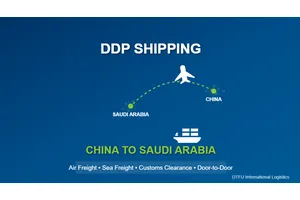
To avoid the shock of hidden destination fees, ask your forwarder for a comprehensive door to door shipping from China to Saudi Arabia quote. A true DDP (Delivered Duty Paid) or DDU (Delivered Duty Unpaid) quote will outline all local charges in Saudi Arabia, including customs broker fees, port handling, and final truck delivery. This allows you to calculate your true landed cost accurately before you even place the manufacturing order.
5. Consolidate Your Shipments
If you are buying from three different suppliers in China, do not ship three separate LCL consignments. You will pay minimum base charges and documentation fees three times over. Use a freight forwarder who offers warehouse consolidation in China. They will collect the goods from all three suppliers, pack them into a single FCL or a single larger LCL shipment, and cut your administrative and handling costs drastically.
Real-World Case Study: Saving $1,200 on a Riyadh Delivery
To illustrate the importance of strategic routing, I want to share a recent scenario involving one of our clients importing home appliances from Shenzhen. Initially, their Chinese supplier quoted them a CIF rate to Jeddah Islamic Port. The base ocean freight looked highly attractive, but the client's final fulfillment center was located in Riyadh.
Had they accepted the CIF Jeddah quote, they would have been trapped paying inflated destination THC in Jeddah, followed by a highly expensive 900+ kilometer cross-country truck transport through the desert to Riyadh.
Our Operational Solution: Our DTFU routing team audited the quote and immediately advised the client to renegotiate to FOB Shenzhen. We re-routed the ocean freight to King Abdul Aziz Port in Dammam instead. Upon arrival in Dammam, we bypassed trucks entirely and utilized the direct Saudi Railway Company (SAR) freight link to the Riyadh Dry Port.
This multimodal sea-to-rail strategy not only avoided the seasonal truck shortages in Jeddah but saved the client over $1,200 in inland transportation costs per 40ft container. Furthermore, it cut their total door-to-door transit time by 4 days, allowing them to stock their Riyadh warehouse ahead of a major promotional campaign.
Why Choose DTFU International Logistics?
Navigating the complexities of Middle Eastern trade routes requires a partner who understands the nuances of the market. At DTFU International Logistics, we pride ourselves on being more than just a booking agent; we are your strategic supply chain consultants.
When you partner with us for your shipments to Saudi Arabia, you gain access to:
- Preferential Contract Rates: Through our long-standing relationships with top-tier ocean carriers (like COSCO, Maersk, and MSC), we secure space and offer pricing structures that sit comfortably below the market average.
- Zero Hidden Fees: We believe in absolute transparency. Our quotes provide a complete, itemized breakdown so you understand your exact logistics investment from day one. You will never be surprised by undisclosed destination handling charges.
- Seamless Customs Clearance: Our dedicated local agents in Jeddah and Dammam are experts in ZATCA regulations and the SABER system. We pre-clear your documents before the vessel even arrives, ensuring stable transit times and eliminating costly port storage penalties.
- End-to-End Solutions: From origin factory pickup in China to final warehouse delivery in Riyadh, we offer comprehensive Customs Clearance and Sea Freight from China services tailored to your specific business model.
We simplify the complex, allowing you to focus on what you do best: growing your sales in the Saudi market.
FAQs (Frequently Asked Questions)
To further clarify the intricacies of importing into KSA, here are the most common questions we receive from our clients.
What is the cheapest way to ship from China to Saudi Arabia?
The absolute cheapest method for large volumes is Sea Freight via FCL (Full Container Load). If your cargo is heavy but low in volume (e.g., machinery parts), standard sea freight remains the most economical choice. However, if your shipment is under 1-2 CBM, an LCL sea freight consolidation is the cheapest route. Never use air freight unless the cargo is extremely time-sensitive or high-value, as it can be 5 to 10 times more expensive than sea shipping.
Who pays the destination port charges in FOB?
Under FOB (Free on Board) terms, the buyer (importer) is strictly responsible for paying all destination port charges. The Chinese supplier's financial responsibility ends the moment the container is loaded onto the vessel at the Chinese origin port. As the buyer, you will pay the ocean freight, the Saudi terminal handling charges (THC), customs duties, and local delivery.
How long does customs clearance take in Jeddah?
If all your documentation is perfectly in order (Commercial Invoice, Packing List, Certificate of Origin, Bill of Lading, and a valid SABER SCoC), customs clearance in Jeddah typically takes 3 to 5 business days. However, if there is a discrepancy in the HS codes, missing SABER approvals, or a physical inspection is triggered, clearance can be delayed by weeks. Preparation is the key to speed.
Do I need a SABER certificate for every shipment?
Yes and No. The SABER system operates in two parts. First, you need the Product Certificate of Conformity (PCoC), which is valid for one year for that specific product line. However, for every single shipment that enters Saudi Arabia, you must log into the SABER system and generate a Shipment Certificate of Conformity (SCoC) linking your commercial invoice to your PCoC. Without the SCoC for that specific voyage, your goods will be blocked.
Is it better to ship to Jeddah or Dammam?
The "better" port depends entirely on your final destination. Jeddah is the commercial hub for the western region (Hejaz) and the main gateway for consumer goods. Dammam is situated on the Arabian Gulf in the east and is closer to the oil, gas, and industrial sectors. If your final delivery is in Riyadh (the central capital), both ports are viable, but many importers prefer Dammam due to the highly efficient direct rail link from Dammam port to the Riyadh Dry Port.
What are the peak seasons to avoid for shipping to Saudi Arabia?
To avoid premium peak season surcharges (PSS) and vessel space shortages, try to avoid shipping right before major holidays. The biggest bottleneck is the pre-Ramadan rush (which shifts by about 11 days earlier each year based on the Islamic lunar calendar). Additionally, the weeks leading up to the Chinese New Year (Late Jan/Early Feb) see massive rate spikes as factories rush to export goods before shutting down for the national holiday. Plan your inventory to ship outside these critical windows to secure the best rates.
Can I ship to Amazon FBA in Saudi Arabia from China?
Yes, absolutely. Amazon FBA Shipping from China to Saudi Arabia (usually fulfillment centers in Riyadh or Jeddah) is very common. The easiest way is to use a door to door shipping from China to Saudi Arabia service on DDP shipping from China to Saudi Arabia terms. Your freight forwarder will handle the sea freight, customs clearance, duties, and make the final appointment delivery to the Amazon warehouse, ensuring all of Amazon's strict pallet and labeling requirements are met.
Ready to optimize your supply chain and eliminate hidden fees? Contact DTFU Logistics today for a free, transparent quote tailored to your business needs.