Are you wondering how much it costs to ship a container from China to Saudi Arabia in February 2026? With fluctuating shipping rates, varying container options like FCL and LCL, and complex customs clearance procedures, calculating your total expenses can be confusing. In this comprehensive guide, we’ll break down the essential factors, cost components, and practical tips to help you confidently estimate and reduce your container shipping costs from China to Saudi Arabia. Dive in to discover smart strategies for a smooth international shipping process!
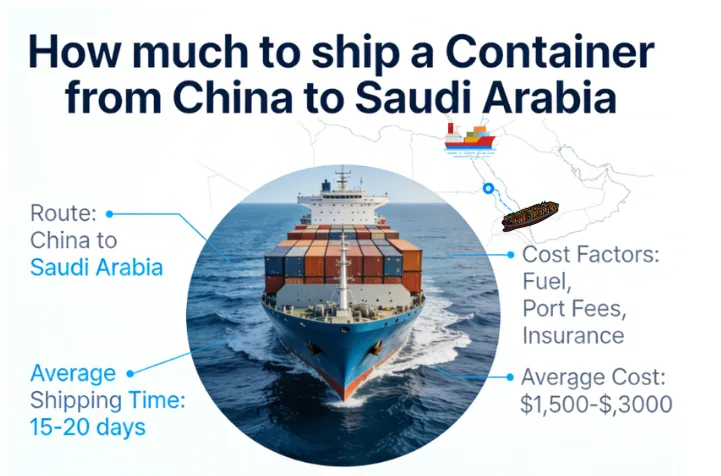
Overview of Shipping Container from China to Saudi Arabia
Shipping a container from China to Saudi Arabia is a core logistics solution for international trade between Asia and the Middle East. Both countries are major trading partners, with strong demand for automotive parts, electronics, textiles, and machinery. As Ivan Chan, Senior Logistics Analyst with over 10 years of experience in the freight forwarding industry, I will guide you through the main considerations for container shipping along this strategic route, providing current insights and actionable advice for 2026.
The process involves multiple stages—booking, stuffing, transportation to the port, customs clearance, ocean transit, destination handling, and final delivery. Making informed decisions about container type, shipping routes, and cost factors is essential to optimize your logistics budget and ensure timely delivery.
Related reading: To understand more about pricing and trends, see Containers Shipping Cost from China to Saudi Arabia.
Key Factors Influencing Container Shipping Costs
Several critical elements determine how much it costs to ship a container from China to Saudi Arabia:
| Key Factor | Description |
|---|---|
| Container Size & Type | Standard sizes include 20FT (28CBM), 40FT (56CBM), 40HQ (68CBM), and 45HQ (78CBM). Larger containers cost more but offer better per-cubic-meter rates. Special equipment (e.g., OOG, refrigerated) impacts cost. |
| Cargo Volume & Weight | Heavier or bulkier cargo can increase freight charges due to weight restrictions and handling requirements. |
| Shipping Mode | FCL (Full Container Load) vs. LCL (Less than Container Load)—FCL is cost-effective for larger volumes; LCL suits smaller shipments but has higher per-unit costs. |
| Origin & Destination Ports | Costs vary between major ports (e.g., Shanghai to Jeddah) and less-frequented routes. Port fees and handling rates differ. |
| Transit Time & Route | Faster routes may incur premium charges. Indirect routes with transshipment can reduce cost but increase delivery time. |
| Seasonality & Market Demand | Rates fluctuate during peak shipping seasons (e.g., pre-Ramadan, Chinese New Year) and global market volatility. |
| Fuel Surcharges & BAF | Changes in bunker fuel prices directly affect ocean freight rates. |
| Customs Duties & Documentation | Saudi Arabian customs clearance fees, import taxes, and required documentation add to the total shipping cost. |
| Value-Added Services | Services like cargo insurance, warehousing, and door-to-door delivery (offered by DTFU International Logistics Co.,Ltd) may be necessary. |
Why Shipping Costs from China to Saudi Arabia Vary
Shipping costs are dynamic and can vary widely due to a combination of global and local factors:
- Geopolitical Events: Disruptions in the Red Sea, port strikes, or conflicts near the Suez Canal can impact transit routes and insurance premiums. For recent developments, check Red Sea Shipping Returns Under Tight Security.
- Regulatory Changes: Updates to Saudi Arabian import regulations, such as the SABER system or VAT adjustments, directly influence customs clearance costs.
- Port Congestion: During high-demand periods, major ports like Shanghai, Ningbo, or Jeddah may face congestion, leading to delays and surcharges.
- Carrier Capacity & Alliances: Availability of vessel space, service frequency, and carrier alliances (such as 2M or Ocean Alliance) impact freight rates.
- Global Supply Chain Resilience: Post-pandemic adjustments and regional stability continue to influence rate structures in 2026.
Staying updated with real-time shipping data and industry trends ensures accurate cost forecasting. At DTFU International Logistics Co.,Ltd, we constantly monitor these variables to provide the most competitive and reliable solutions for our clients.
Container Shipping Options: FCL vs LCL Explained
Choosing between FCL (Full Container Load) and LCL (Less than Container Load) is one of the most important decisions when planning a shipment from China to Saudi Arabia. Your choice will affect not only your total cost but also transit time, cargo safety, and operational efficiency.
What Is FCL (Full Container Load) and When to Choose It
FCL means you book an entire container exclusively for your shipment. Your goods are loaded, sealed at the origin, and not combined with other cargo.
Key Benefits of FCL:
- Cost Efficiency for Volume: If your cargo approaches or exceeds half the capacity of a container (e.g., 14CBM+ in a 20FT, 28CBM+ in a 40FT), FCL offers lower per-unit costs.
- Security: No mixing with other shippers’ goods minimizes risk of damage, loss, or contamination.
- Faster Transit: Less handling at consolidation points and usually direct vessel routing.
- Simplicity: Straightforward documentation and easier customs clearance.
FCL Container Specifications:
| Container Type | Capacity (CBM) | Suitable For |
|---|---|---|
| 20FT | 28 | Small-medium shipments, heavy cargo, limited volume |
| 40FT | 56 | Larger shipments, bulky or voluminous cargo |
| 40HQ | 68 | High-volume, lighter goods needing more space |
| 45HQ | 78 | Oversized cargo, maximum internal capacity |
When to Use FCL:
- You have enough cargo to fill most of the container.
- Your goods are sensitive, high-value, or require special handling.
- You want direct shipping with minimal delays.
What Is LCL (Less than Container Load) and Its Cost Implications
LCL shipping allows you to share container space with other shippers. You pay for the exact volume (measured in CBM) your cargo occupies.
Advantages of LCL:
- Cost-Effective for Small Loads: Ideal for businesses or individuals with limited shipments (often <13CBM).
- Flexibility: Ship smaller quantities without waiting to accumulate full container loads.
- Frequent Departures: More regular sailings due to high consolidation demand.
LCL Cost Considerations:
- Higher Per-Unit Cost: Due to additional handling, consolidation, and deconsolidation, the cost per CBM is higher than FCL.
- Longer Handling Time: More stages (consolidation at origin, deconsolidation at destination) can increase transit times and the risk of damage.
- Additional Fees: LCL shipments may incur extra documentation, handling, and warehousing charges.
Example LCL vs FCL Cost Comparison:
| Shipping Scenario | FCL 20FT (Flat Rate) | LCL (Per CBM) | Total Cost* |
|---|---|---|---|
| 5 CBM Cargo | $1,900 | $90/CBM | $450 (LCL cheaper) |
| 20 CBM Cargo | $1,900 | $90/CBM | $1,800 (LCL cheaper) |
| 28 CBM Cargo | $1,900 | $90/CBM | $2,520 (FCL cheaper) |
*Prices are for illustration. Actual rates vary by season, route, and service provider.
When to Use LCL:
- Your shipment volume is too small to justify an entire container.
- You need to ship frequently in small batches.
- You’re looking for a budget-friendly option for limited cargo.
You might also like: For more on pricing breakdowns and shipping options, visit Container shipping rates from china to Saudi Arabia.
Expert Tip from Ivan Chan
At DTFU International Logistics Co.,Ltd, our experienced team provides both FCL and LCL services, along with value-added options like cargo insurance, door-to-door delivery, and customs clearance. We help you evaluate the most economical and secure shipping option based on your cargo profile and business goals. For a tailored quotation, contact us or use our online shipping calculator to compare real-time rates and transit times.
Main Cost Components When Shipping a Container
Ocean Freight Charges
Ocean Freight Charges represent the base cost for transporting a container by sea from China to Saudi Arabia. These charges are primarily determined by:
- Container Type & Size: Standard options include 20FT (28 CBM), 40FT (56 CBM), 40HQ (68 CBM), and 45HQ (78 CBM) containers.
- Carrier Rates: Shipping lines update rates frequently based on supply/demand, fuel prices, and global market trends.
- Shipping Route & Seasonality: Peak seasons (e.g., pre-Ramadan, Golden Week) see higher rates due to demand surges.
- Service Type: Direct vs. transshipment (with intermediate stops).
Typical Ocean Freight Rates (February 2026):
| Route (China Port → Saudi Arabia Port) | 20FT Container | 40FT Container | 40HQ Container | Transit Time (Days) |
|---|---|---|---|---|
| Shanghai → Jeddah | $850 - $1,150 | $1,650 - $2,100 | $1,700 - $2,150 | 18-23 |
| Shenzhen → Dammam | $900 - $1,200 | $1,700 - $2,200 | $1,750 - $2,250 | 22-27 |
| Ningbo → Riyadh (via Jeddah) | $950 - $1,250 | $1,800 - $2,300 | $1,850 - $2,350 | 24-28 |
Note: Prices fluctuate monthly. For the latest accurate quote, consult an experienced freight forwarder like DTFU International Logistics Co.,Ltd.
Port Charges, Documentation, and Handling Fees
Beyond ocean freight, several local charges apply at both the origin (China) and destination (Saudi Arabia) ports:
- Terminal Handling Charges (THC): Costs for loading/unloading containers at the port.
- Documentation Fees: Includes Bill of Lading (B/L), export customs declaration, and related paperwork.
- Port Security & ISPS Fees: Security-related surcharges.
- Container Cleaning & Inspection Fees: If required at either port.
- Delivery Order (DO) Fees: At the destination for releasing cargo.
Typical Local Charges (per container):
| Fee Type | China (USD) | Saudi Arabia (USD) |
|---|---|---|
| Terminal Handling Charges | $90 - $140 | $110 - $160 |
| Documentation Fees | $35 - $65 | $45 - $75 |
| Port Security/ISPS | $10 - $20 | $10 - $20 |
| Delivery Order Fee | N/A | $40 - $70 |
| Container Inspection/Cleaning | $20 - $45 | $25 - $55 |
Pro tip: Choose a full-service freight forwarder like DTFU International Logistics Co.,Ltd to consolidate and clarify all these fees upfront.
Customs Clearance and Duties in Saudi Arabia
Clearing customs in Saudi Arabia involves several regulated steps and cost components:
- Customs Clearance Fees: Charged by the local agent or customs broker for document processing.
- Duties & Taxes: Most goods are subject to a 5% import duty, though some categories (like luxury or restricted goods) may carry higher rates.
- Value Added Tax (VAT): Standard rate is 15% (as of 2026), applied on CIF value (Cost + Insurance + Freight).
- Inspection & Quarantine Fees: For certain product categories (e.g., food, chemicals, electronics).
- SASO Certificate: Many products require a Saudi Standards, Metrology and Quality Organization (SASO) certificate for compliance.
Estimated Customs Costs (For General Cargo):
| Item | Typical Range (USD) |
|---|---|
| Customs Clearance Fee | $90 - $180 |
| Import Duties | 5% of CIF Value |
| VAT | 15% of CIF Value |
| SASO Certification | $110 - $230 |
DTFU International Logistics Co.,Ltd provides one-stop customs clearance, ensuring full compliance and faster processing at all Saudi ports.
Major Shipping Routes and Transit Times from China to Saudi Arabia
Common Ports of Origin and Destination
China boasts several major export ports for shipments to Saudi Arabia, each offering unique advantages in terms of cost, connectivity, and frequency.
| Origin Ports in China | Destination Ports in Saudi Arabia | Remarks |
|---|---|---|
| Shanghai | Jeddah | Most frequent direct sailings; ideal for East China exports |
| Shenzhen (Yantian/Shekou) | Dammam | Key for South China manufacturing regions |
| Ningbo | Jeddah / Riyadh (via Jeddah) | Competitive rates, high container availability |
| Qingdao, Xiamen, Tianjin | Jeddah, Dammam | Suitable for North/East China shipments |
Jeddah Islamic Port is the main gateway for maritime imports to Saudi Arabia, handling the majority of containerized cargo. Dammam (King Abdul Aziz Port) serves the eastern region and industrial hubs. Riyadh is an inland destination often served via Jeddah by rail/truck.
Typical Transit Times and Their Impact on Cost
Transit times are crucial for planning supply chains and managing costs.
| Route | Transit Time (Days) | Notes |
|---|---|---|
| Shanghai → Jeddah | 18-23 | Direct sailings available |
| Shenzhen → Dammam | 22-27 | May involve transshipment |
| Ningbo → Riyadh (via Jeddah) | 24-28 | Includes inland transport post-arrival |
| Qingdao → Jeddah | 23-28 | Slightly longer due to northern location |
Factors Affecting Transit Time:
- Direct vs. Transshipment: Direct services are faster. Transshipment via Singapore, Colombo, or Dubai can add 2-5 days.
- Port Congestion: Seasonal congestion (e.g., Ramadan, Chinese New Year) can delay clearance.
- Weather & Geopolitics: Suez Canal disruptions or Red Sea tensions impact schedules.
Impact on Cost:
- Faster transit typically commands higher freight rates.
- Delays can increase demurrage, storage, and other ancillary costs.
Ivan Chan’s Insight:
To ensure timely delivery and cost control, always discuss transit time options and backup plans with your freight forwarder. At DTFU International Logistics Co.,Ltd, we leverage robust carrier partnerships and in-house expertise to optimize both routing and pricing for our clients.
Conclusion (for these sections):
Understanding these core cost components and route dynamics is essential for anyone considering container shipping from China to Saudi Arabia. For tailored advice, competitive rates, and seamless end-to-end service, partnering with an industry leader such as DTFU International Logistics Co.,Ltd can make all the difference in your international supply chain.
Further reading: For insights into international routing and costs in the region, check 20ft & 40ft Container Cost from China to Iran.
For real-time quotes, recent shipping trends, or a free logistics consultation, contact our team at DTFU International Logistics Co.,Ltd—your trusted partner for global freight solutions.
How to Calculate Your Total Shipping Cost
When shipping a container from China to Saudi Arabia, understanding your total shipping cost is critical for effective budgeting and supply chain planning. As a Senior Logistics Analyst with over a decade of experience, I will break down the calculation process in a clear, actionable way.
Step-by-Step Guide to Estimating Container Shipping Expenses
-
Determine Your Shipping Mode: FCL or LCL
- FCL (Full Container Load): Reserve an entire container for your cargo.
- LCL (Less than Container Load): Share container space with other shipments, paying only for the space you use.
- Tip: FCL is generally more cost-effective for volumes close to a full container (e.g., 28CBM for 20FT, 56CBM for 40FT, 68CBM for 40HQ, 78CBM for 45HQ).
-
Select Container Size
-
Standard options:
Container Type Capacity (CBM) Recommended For 20FT 28 Small to medium shipments 40FT 56 Medium to large shipments 40HQ 68 Bulky or voluminous cargo 45HQ 78 Oversized or high-volume shipments -
Accurate capacity planning helps avoid under- or over-booking.
-
-
Identify Main Cost Components
- Ocean Freight Charges: The base rate for transporting your container from a Chinese port (e.g., Shanghai, Shenzhen, Ningbo) to a Saudi port (e.g., Jeddah Islamic Port, King Abdullah Port).
- Port Charges & Handling Fees: Include terminal handling charges (THC), documentation fees, and security charges at both origin and destination ports.
- Customs Clearance & Duties: Saudi Arabia imposes import duties, typically 5-15% depending on the product category. Additional taxes (such as VAT) may apply.
- Optional Services: Insurance, warehousing, trucking (inland delivery), and customs brokerage.
-
Calculate Volume/Weight for LCL Shipments
- LCL rates are usually based on the greater of actual weight or volume (CBM).
- Formula: L x W x H (meters) = CBM
- If your cargo is heavy, check if weight surcharges apply.
-
Request Quotes from Freight Forwarders
- Contact reputable companies like DTFU International Logistics Co.,Ltd for transparent, itemized quotations. Provide details: cargo type, volume/weight, preferred route, and special requirements (e.g., Door-to-Door, Cargo Insurance).
- Compare offers to ensure all charges (including destination costs) are included.
-
Estimate Total Cost
-
Add up all components: ocean freight + local charges + customs duties + optional services.
-
Example (for reference):
Cost Item Estimated Range (20FT FCL) Ocean Freight (Shanghai–Jeddah) USD 1,200 – 1,700 Origin Port/Handling Fees USD 140 – 330 Destination Port/Handling Fees USD 180 – 380 Customs Clearance/Duties 5–15% of cargo value + fees Inland Haulage (if needed) USD 100 – 450 Insurance (optional) 0.1–0.4% of goods value -
Note: Rates fluctuate due to market conditions, peak seasons, fuel costs, and global events (e.g., Red Sea disruptions in 2025-2026). Always request updated quotes.
-
-
Review for Hidden or Extra Charges
- Watch for demurrage, detention, storage, or overweight fees.
Comparison Table: Popular Online Shipping Estimation Tools
| Platform | Features | Coverage Area |
|---|---|---|
| DTFU International Logistics | Custom quotes, expert support, all-in-one services | China ↔ Saudi Arabia |
| Freightos | Instant quotes, multi-carrier comparison | Global |
| iContainers | Price comparison, live rates | Global |
| SeaRates | Route planner, cost calculator | Global |
Always verify the final price with a logistics expert before booking, as online calculators may not include all local or special charges.
Tips for Reducing Container Shipping Costs from China to Saudi Arabia
Global shipping costs can be significant, but smart planning can help you optimize your budget. Here’s how you can lower expenses for container shipping from China to Saudi Arabia:
Choosing the Best Shipping Season and Avoiding Peak Times
- Seasonal Cost Fluctuations: Ocean freight rates typically rise during peak seasons—such as Chinese New Year (late January/February), summer peak (July–September), and before major holidays in Saudi Arabia.
- Recommendation: Ship during off-peak months (March–June, October–November) to secure lower rates and greater vessel availability.
- Market Insight: In 2025–2026, global events and logistical challenges around the Red Sea and Suez Canal have impacted transit times and costs. Early booking and flexible schedules can help mitigate risks.
Consolidation, Packaging and Negotiating with Freight Forwarders
- Cargo Consolidation: Combine multiple shipments into one container (LCL or FCL) to maximize space usage and reduce per-unit costs.
- Efficient Packaging: Use quality, space-saving packaging to minimize volume and avoid unnecessary charges. Proper packing also reduces damage risk.
- Negotiate Rates: Partner with a reliable forwarder such as DTFU International Logistics Co.,Ltd, which offers competitive prices, customized solutions, and a wide range of value-added services (including Cargo Insurance, Warehousing, Door to Door, OOG Freight, and Breakbulk Freight).
- Long-term Contracts: For regular shipments, negotiate annual contracts or volume discounts.
- Compare Multiple Quotes: Always request at least 2–3 detailed offers to identify the most cost-effective solution.
Summary Table: Cost-Reduction Strategies
| Strategy | Benefit |
|---|---|
| Off-peak shipping | Lower base rates, less congestion |
| Consolidated shipments | Lower per-unit cost, efficient handling |
| Optimized packaging | Reduced freight charges, improved cargo safety |
| Negotiating with forwarders | Custom solutions, value-added services |
| Comparing multiple offers | Best price transparency, service evaluation |
FAQs
Q1: How long does it take to ship a container from China to Saudi Arabia?
A: Typical ocean transit times are 18–28 days depending on the route and ports. For example, Shanghai to Jeddah averages 22–26 days. Delays can occur during peak times or due to current disruptions in the Red Sea.
Q2: What are the main ports used for shipping between China and Saudi Arabia?
A: Major Chinese ports include Shanghai, Shenzhen, Ningbo, and Qingdao. Key Saudi ports are Jeddah Islamic Port and King Abdullah Port. These ports have regular, direct shipping services and strong cargo throughput, ensuring efficient trade flows.
Q3: What documents do I need for customs clearance in Saudi Arabia?
A: Required documents include the Bill of Lading, Commercial Invoice, Packing List, Certificate of Origin, and any relevant import permits. DTFU International Logistics Co.,Ltd provides one-stop customs clearance services.
Q4: How much does it cost to ship a 20ft, 40ft, and 40HQ container from China to Saudi Arabia?
A: As of February 2026, typical ocean freight rates are approximately:
- 20ft Container: $850 – $1,250
- 40ft Container: $1,650 – $2,300
- 40HQ Container: $1,700 – $2,350 Note: These are estimated ranges. Actual prices depend on the specific route, carrier, and seasonal demand.
Q5: What’s the difference between Door-to-Port and Door-to-Door shipping?
A: Door-to-Port covers delivery from the origin warehouse to the destination port (e.g., Jeddah). Door-to-Door includes the final delivery to your specific address in Saudi Arabia, handling all inland trucking and customs formalities. DTFU International Logistics Co.,Ltd offers both services.
Q6: Should I choose FCL or LCL for my shipment?
A: Choose FCL (Full Container Load) if your cargo volume is over 15 CBM or if you need faster, more secure transit. Choose LCL (Less than Container Load) for smaller shipments (e.g., 1-10 CBM) to save costs by sharing container space.
If you need a tailored quote or further guidance, contact our team at DTFU International Logistics Co.,Ltd. We combine global expertise with local knowledge to deliver cost-effective, reliable solutions for your China–Saudi Arabia shipping needs.