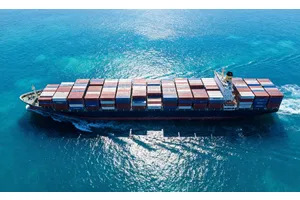
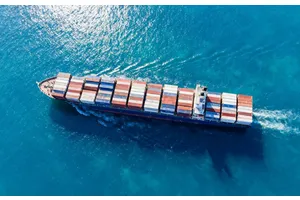
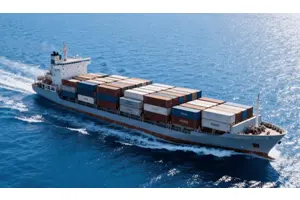
Is the Red Sea finally safe for cargo? This is the burning question for every logistics manager in early 2026. After more than two years of diversions around the Cape of Good Hope, the maritime industry is witnessing a pivotal shift. With the launch of the Gemini Cooperation in February 2026, major carriers like Maersk and Hapag-Lloyd are initiating a "stepwise" return to the Red Sea, escorted by naval forces.
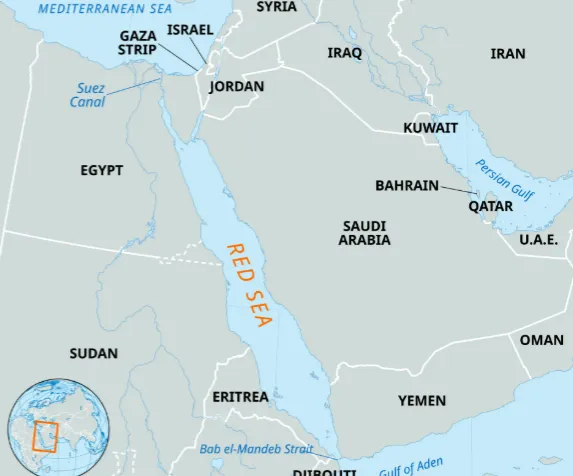
For importers handling shipping from China to Saudi Arabia, UAE, or Europe (e.g., Germany, Netherlands), this development signals a potential return to faster transit times—but not without significant caveats. Red Sea shipping returns under tight security, and understanding the new landscape of risk, cost, and schedule reliability is critical for your supply chain resilience.
Recent Developments in Red Sea Shipping Security
As of February 2026, the security situation in the Red Sea remains complex but manageable under specific conditions. The headline news is the decision by the newly formed Gemini Cooperation (Maersk and Hapag-Lloyd) to resume limited transits.
- Naval Escorts: The return is not a return to "business as usual." Selected vessels, particularly on the IMX service (connecting India/Middle East to the Mediterranean), are now transiting the Bab el-Mandeb Strait under strict naval escort.
- Test Phase: This is a "testing of the waters." Carriers have explicitly stated that the expansion to other key Asia-Europe loops (like AE12 and AE15) depends entirely on the success and safety of these initial voyages.
- Continued Risks: Despite the naval presence, the threat from regional instability persists. Most other alliances continue to route the majority of their fleet via the Cape of Good Hope to guarantee crew and cargo safety.
Why the Red Sea Route Matters for Global and Asia-Linked Trade
The Suez Canal route is the artery of global trade, handling approximately 12-15% of global trade volume and nearly 30% of global container traffic before the crisis. For businesses sourcing from China:
- Speed: It is the shortest path between Asia and Europe/East Coast North America.
- Efficiency: It allows for faster asset turnaround, keeping container availability high in Asian ports.
- Cost: It historically offered lower fuel consumption compared to the long haul around Africa.
The prolonged closure has reshaped global logistics, making any sign of reopening a critical strategic factor for 2026 planning.
Current Status of Red Sea Route Reopenings by Major Carriers
The industry is currently split into two camps: the "Pioneers" and the "Cautious Majority."
| Carrier / Alliance | Current Status (Feb 2026) | Strategy |
|---|---|---|
| Maersk & Hapag-Lloyd (Gemini) | Partial Return | Resuming limited services (IMX) with naval escorts; "Stepwise" approach. |
| Ocean Alliance (CMA CGM, COSCO, etc.) | Mixed | Some ad-hoc transits with French naval support; mostly Cape routing. |
| MSC | Cautious | Continuing Cape of Good Hope diversions for main loops to avoid risk. |
| ONE / Yang Ming | Avoidance | Fully committed to Cape routing until security is guaranteed. |
How Enhanced Security Measures Are Changing Transit Times
The "Return" to the Red Sea does not mean a return to pre-2023 transit times immediately. The security protocols themselves introduce new variables:
- Convoy Formation: Vessels must wait to form convoys for naval escort, which can add 1-3 days of waiting time at entry points.
- Slower Steaming: Convoys often travel at regulated speeds, slower than a commercial vessel's maximum potential.
- Congestion: As more ships attempt the canal, bottlenecking at the Suez and Bab el-Mandeb entry points is increasing.
However, compared to the alternative, it is still faster. A Red Sea transit saves roughly 3,500 nautical miles compared to the Cape route.
Cost Implications of Red Sea Shipping Under Tight Security
Shippers hoping for a drop in freight rates might be disappointed. While the route is shorter, the cost structure has changed dramatically.
- War Risk Insurance: Insurance premiums for Red Sea transits have skyrocketed. They now hover between 0.5% to 1.0% of the hull/machinery value, a massive increase from the pre-crisis 0.0001%.
- Security Surcharges: Carriers are implementing "Emergency Risk Surcharges" (ERS) to cover the cost of security coordination and higher insurance.
- Freight Rates: While fuel costs are lower than the Cape route, the insurance and risk premiums mean the total landed cost might be similar, albeit with faster delivery.
Comparing Red Sea Transits vs. Cape of Good Hope Diversions
For a shipment from Shanghai to Rotterdam, here is the current comparison:
| Metric | Red Sea Route (With Security) | Cape of Good Hope (Diversion) |
|---|---|---|
| Transit Time | ~30-35 Days (Includes convoy wait) | ~40-45 Days |
| Fuel Consumption | Standard | +30% Higher |
| Insurance Cost | Very High (War Risk) | Standard |
| Carbon Emissions | Lower (ETS Savings) | High (Higher ETS Tax) |
| Reliability | Medium (Risk of sudden closure) | High (Stable but long) |
What the Partial Red Sea Recovery Means for Shippers
The partial reopening creates a multi-speed market.
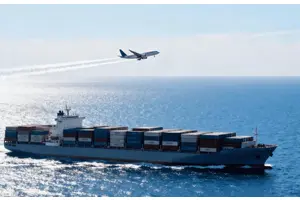
- Express Options: Shippers with high-value, time-sensitive goods may pay a premium for Red Sea slots or consider Air Freight from China to ensure speed.
- Economy Options: Bulk and low-margin goods will likely remain on the Cape route, relying on cost-effective Sea Freight from China despite the longer transit.
Freight Forwarder Insights: Routing, Booking, and Risk Management
At DTFU International Logistics, we are advising our clients to adopt a Hybrid Strategy. Do not put all your eggs in one basket.
- Diversify: Split your shipments. Send urgent stock via Red Sea services (if available) and replenishment stock via the Cape.
- Incoterms Protection: Revisit your contracts. Ensure you are not liable for unexpected "War Risk" surcharges if you are buying CIF, or understand your liability under FOB.
- Booking Flexibility: Be prepared for last-minute "OMIT" notices. If a security threat rises, a Red Sea vessel might divert to the Cape mid-voyage.
Impact on Different Cargo Types and Shipping Priorities: DTFU Team Analysis
Our logistics specialists have evaluated recent booking trends and carrier schedules to determine the best routing strategies for specific industries:
- Perishables: Our analysis confirms that the 10-day saving is crucial for shelf-life. Consequently, our team is prioritizing reefer bookings on the available Red Sea loops for time-sensitive produce.
- Automotive & Heavy Industry: DTFU experts recommend the stability of the Cape route for these sectors. Our risk assessment models show that the potential delay from a security incident in the Red Sea currently outweighs the benefit of speed.
- E-commerce: "Speed is king" remains the dominant data point. We are observing high interest from sellers in the Gemini services to improve inventory turnover, a trend our analysts expect to continue.
Short-Term Market Outlook: Insights from DTFU Experts
Based on our internal market monitoring and direct communications with carrier alliances, the DTFU research team projects the following for Q2 and Q3 2026:
- Volatility is the Norm: Our data suggests freight rates will continue to fluctuate in direct correlation with weekly security reports.
- Capacity Management: Our analysts warn that if the Red Sea fully reopens, a sudden injection of effective capacity (ships returning faster) could soften rates. However, our current assessment of the "slow return" strategy indicates capacity will remain tight.
- ETS Impact: We emphasize that the EU Emissions Trading System (ETS) makes the Cape route expensive in tax terms. Our experts predict this will increasingly push carriers to use the Suez Canal as soon as it is commercially viable.
Strategic Considerations for Future Freight Planning
Drawing from over a decade of crisis management experience, the DTFU senior leadership team recommends the following action plan:
- Buffer Stock: Maintain a safety stock of 2-3 weeks. Our risk models indicate that while the Red Sea route is open, it remains fragile.
- Partner with Experts: Leverage a forwarder like DTFU who possesses real-time visibility on which vessels are actually transiting versus those just scheduled to.
- Check the Surcharges: Our billing specialists advise a thorough audit of quotes. Always verify if the "War Risk" fee is included to avoid hidden costs.
Need help navigating these complex routes? DTFU International Logistics provides real-time routing advice and transparent cost comparisons. Whether you need the speed of the Red Sea or the stability of the Cape, we ensure your cargo arrives safely. Contact DTFU Logistics today for a 2026 routing assessment.