Are high shipping costs eating into your profit margins? If you are importing goods from Southern China to North America, mastering the logistics of shipping from Guangzhou to Canada is critical to your bottom line. Whether you are an Amazon FBA seller, a B2B distributor, or a retail brand, unpredictable transit times and hidden customs fees can quickly derail your supply chain.
As a freight forwarding team that manages hundreds of containers on the China-Canada route every month, we have seen first-hand how a lack of preparation can lead to CBSA holds and skyrocketing storage fees. In this comprehensive 2026 guide, we break down current freight rates, precise transit times, and the exact steps you need to take to ensure your cargo clears the Canada Border Services Agency (CBSA) smoothly.
Quick Answer: Guangzhou to Canada Shipping Overview
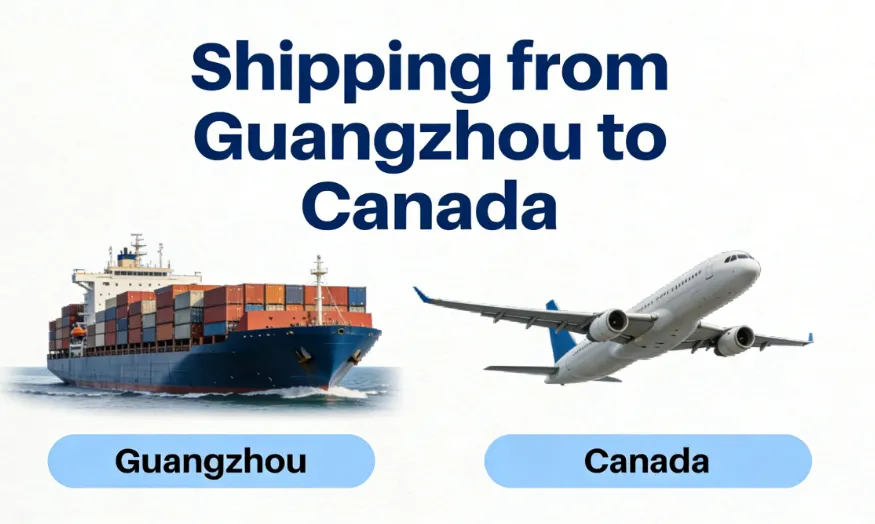
What is the best way to ship from Guangzhou to Canada? The optimal shipping method depends on your cargo's volume and urgency. Air freight is the fastest (3-7 days) but most expensive, ideal for high-value goods over 100kg. Sea freight (FCL or LCL) is the most cost-effective for bulk shipments, taking 15-20 days to the West Coast (Vancouver) and 28-35 days to the East Coast (Toronto/Montreal).
| Shipping Mode | Best For | Estimated Transit Time | Cost Level |
|---|---|---|---|
| Air Freight | Urgent, high-value goods (>100kg) | 3 - 7 Days | High |
| Express Courier | Small parcels, samples (<100kg) | 3 - 5 Days | Highest |
| Sea Freight (FCL) | Large volumes (Containers) | 15 - 35 Days | Low |
| Sea Freight (LCL) | Pallets/Medium loads (1-15 CBM) | 20 - 40 Days | Medium/Low |
How Much Does It Cost to Ship from Guangzhou to Canada?
Shipping costs fluctuate based on seasonality, fuel surcharges, and global capacity. Insider Tip: The cheapest initial quote isn't always the best deal. Many low-ball quotes hide Destination Delivery Charges (DDC) that will hit you once the cargo arrives in Canada.
Sea Freight Rates (FCL & LCL) to Major Canadian Ports
For bulk importers, ocean freight remains the undisputed champion of cost-efficiency. In Q1 2026, we are seeing stabilizing rates after recent global capacity crunches.
Note: These are average port-to-port estimates for Q1 2026 based on our recent bookings and are subject to General Rate Increases (GRI).
| Container Size / Type | Guangzhou to Vancouver (YVR) | Guangzhou to Toronto/Montreal |
|---|---|---|
| 20ft Container (20GP) | $3,500 - $4,100 | $3,600 - $4,400 |
| 40ft Container (40GP/HQ) | $4,300 - $5,000 | $4,500 - $5,500 |
| LCL (Per CBM) | $120 - $150 | $140 - $170 |
Air Freight and Express Courier Costs
If your supply chain demands speed, air freight out of Guangzhou Baiyun International Airport (CAN) is your primary option.
- Standard Air Freight: Generally costs between $4.00 to $5.50 per kg for shipments over 1000kg.
- Express Courier (DHL, FedEx, UPS): Best for small parcels under 100kg. Rates hover around $8.00 to $10.00 per kg, offering door-to-door delivery within days.
Understanding Landed Costs: Customs Duties & Taxes in Canada
To determine if your product will be profitable, you must calculate the Landed Cost. A critical first step is knowing your Incoterms (e.g., EXW vs. FOB). If you buy EXW (Ex Works), you pay for the truck from the Guangzhou factory to the port. If you buy FOB (Free on Board), your supplier covers that local cost. Beyond that, many new importers fail to budget for the following:
- Customs Duties: Determined strictly by the HS (Harmonized System) Code of your product.
- GST (Goods and Services Tax): A flat 5% applied to the duty-paid value of most imported goods.
- HST/PST (Provincial Taxes): Depending on the destination province (e.g., clearing in Ontario triggers a 13% HST).
- CBSA CARM Compliance: With the full implementation of the CBSA Assessment and Revenue Management (CARM) system, Canadian importers must now register on the portal and post their own financial security (customs bond) to clear commercial goods.
How Long Does Shipping Take from Guangzhou to Canada?
Time is money in global trade. Planning your inventory requires precise knowledge of the shipping time from China to Canada, whether your goods will be on the water or in the air.
Sea Freight Transit Times (Port-to-Port vs. Door-to-Door)
Canada’s vast geography means transit times vary wildly depending on whether you are shipping to British Columbia or Ontario.
| Route (Guangzhou to...) | Port-to-Port Time | Door-to-Door Time (Estimated) |
|---|---|---|
| Port of Vancouver (West Coast) | 15 - 20 Days | 22 - 28 Days |
| Port of Montreal (East Coast) | 28 - 35 Days | 35 - 42 Days |
| Toronto (via Rail from West/East) | 22 - 28 Days | 30 - 38 Days |
Our Operational Experience: Goods bound for Toronto usually arrive at the Port of Vancouver and are moved via rail (CP or CN Rail) to inland ramps in Ontario. While efficient, winter weather in the Rockies or rail ramp congestion at Deltaport can occasionally add 3-5 days to this leg.
Air Freight Transit Times (Guangzhou CAN to YYZ/YVR)
Direct and indirect flights from Guangzhou (CAN) or nearby Shenzhen (SZX) to Toronto Pearson (YYZ) or Vancouver (YVR) take approximately 12 to 18 hours of flight time. Factoring in origin warehouse consolidation and destination customs clearance for Air Shipping From China Canada, you should expect a total transit time of 3 to 7 days.
Key Factors That Cause Delays (and How to Avoid Them)
- Customs Holds (Targeted Exams): Incomplete paperwork is the #1 cause of CBSA delays. Furthermore, CBSA frequently targets specific commodities (like textiles or electronics) for random exams. Ensure your Commercial Invoice perfectly matches your packing list to minimize suspicion.
- Wood Packaging Non-Compliance: If you use wooden pallets, they must be heat-treated and stamped with the ISPM-15 mark. We've seen entire shipments denied entry into Canada due to untreated wood.
- Peak Season Congestion: Mid-August through November (pre-holiday rush) and the weeks leading up to Chinese New Year (CNY) will inevitably add 5-10 days to your transit time.
Sea Freight vs. Air Freight: Which is Best for Your Cargo?
Making the right choice between ocean and air transport dictates your profit margins. Here is the decision framework we use with our clients:
When to Choose Ocean Freight (Volume & Cost-Efficiency)
For bulk commodities, Sea Shipping From China Canada is the most cost-effective choice when:
- Your shipment is larger than 2 CBM (Cubic Meters) or over 500kg.
- You have a comfortable lead time of 4-6 weeks before the goods need to hit the shelves.
- Your products have a lower profit margin, making expensive air freight unviable.
When to Choose Air Freight (Speed & High-Value Goods)
- Your shipment is under 2 CBM or less than 300kg.
- You are shipping high-value electronics, fashion apparel, or urgent seasonal samples.
- You are facing an Amazon FBA stockout and need inventory replenished immediately to maintain your search ranking.
Step-by-Step Guide to Canadian Customs Clearance (CBSA)
Navigating the Canada Border Services Agency (CBSA) requires meticulous attention to detail.
Essential Documents (Commercial Invoice, Bill of Lading, Packing List)
To clear customs smoothly, you must provide your broker with:
- Commercial Invoice: Must clearly state the buyer, seller, accurate HS codes, and the true transaction value. (Do not under-declare values, as CBSA aggressively audits this and imposes heavy Administrative Monetary Penalty System (AMPS) penalties).
- Packing List: Detailed breakdown of weights, dimensions, and materials.
- Bill of Lading (B/L) or Airway Bill (AWB): The official transport contract and receipt of cargo.
- Certificate of Origin: If applicable, to claim preferential tariff treatments.
Do You Need a Customs Broker in Canada?
Yes. While technically possible to clear goods yourself, a licensed Canadian Customs Broker is highly recommended. They handle the submission of B3-3 forms, calculate exact duties, ensure CARM compliance, and communicate directly with CBSA, saving you days of potential delays and legal headaches. You can rely on our dedicated customs clearance team to handle this seamlessly.
Why Choose DTFU International Logistics for Your Canada Shipments?
Managing cross-border logistics shouldn't be your full-time job. At DTFU International Logistics, we act as an extension of your supply chain team, bringing over a decade of hands-on experience on the China-Canada route.
Seamless Door-to-Door (DDP) & Amazon FBA Services
We specialize in comprehensive DDP shipping from China to Canada, providing seamless Door to Door shipping services. This means we handle the pickup in Guangzhou, export customs, ocean/air freight, Canadian import clearance, and final truck delivery directly to your warehouse or Amazon FBA fulfillment center. You pay one transparent invoice, and we handle the rest.
Transparent Quotes and Preferential Contract Rates
Thanks to our decades of volume-based partnerships with top-tier ocean carriers (like COSCO, OOCL, and Maersk) and global airlines, DTFU secures preferential contract rates that sit well below the market average. We pass these savings directly to our clients, ensuring your logistics costs remain highly competitive without sacrificing reliability or service quality.
FAQs: Shipping from Guangzhou to Canada
What is the cheapest way to ship from Guangzhou to Canada?
The cheapest shipping method is Sea Freight (LCL) for shipments between 1-15 CBM, or Sea Freight (FCL) if you have enough cargo to fill a 20ft or 40ft container. Ocean freight is significantly cheaper than air freight, though it requires a 4-6 week lead time.
How much does it cost to ship a 40ft container from Guangzhou to Toronto?
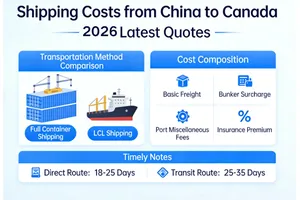
Currently, in 2026, when evaluating the Containers Shipping Cost from China to Canada, shipping a 40ft container (40GP/HQ) from Guangzhou to Toronto typically ranges between $4,500 and $5,500 USD, depending on carrier availability, peak season surcharges, and exact routing (e.g., rail via Vancouver vs. all-water route via the Panama Canal).
What is the best shipping route to the Canadian East Coast (Toronto/Montreal)?
For the East Coast, you have two main options. The fastest is Trans-Pacific to Vancouver + Rail to Toronto/Montreal (approx. 25-30 days total). The alternative is the All-Water route via the Panama Canal directly to the Port of Montreal or Halifax (approx. 30-35 days). Based on our historical data, the Vancouver+Rail option is generally preferred for its balance of speed and reliability.
Can you ship directly to Amazon FBA in Canada?
Yes. Freight forwarders like DTFU offer specialized FBA prep and shipping services. We handle the strict Amazon labeling requirements, palletization, delivery appointments, and clear customs via DDP, ensuring your goods are accepted at Canadian fulfillment centers (like YYZ4, YVR4, or YOW1) without rejection.
How do I track my shipment from China to Canada?
When you book with a reliable Freight forwarder from China to Canada, you will receive a Bill of Lading (B/L) or a specific tracking number. You can use this number on the forwarder's digital tracking portal or the ocean carrier's website to monitor your container's journey in real-time from the Port of Nansha/Guangzhou to its final Canadian destination. DTFU clients can easily monitor their shipments via our Cargo Tracking system.