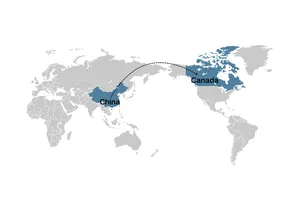
Are you wondering how Air Shipping from China to Canada works, how long it takes, or how much it costs? Navigating international logistics can be complex, but understanding key terms like air freight, tariff rates, and the main airports involved is crucial. In this comprehensive guide, we’ll break down everything you need to know about shipping by air from China to Canada, including costs, timelines, and expert tips for a smooth process.
Main airport in China, Australia and Canada
Main Airports in China
When shipping goods via air freight from China to Canada, choosing the right airport of origin is crucial. China is home to some of the world's busiest and most efficient cargo airports. Here are the primary air cargo hubs:
| Airport Name | IATA Code | Location | Key Cargo Routes | Features |
|---|---|---|---|---|
| Shanghai Pudong International Airport | PVG | Shanghai | North America, Europe, Asia | Largest air cargo hub in China; advanced infrastructure |
| Beijing Capital International Airport | PEK | Beijing | Europe, Americas, Oceania | Extensive international network |
| Guangzhou Baiyun International Airport | CAN | Guangzhou | North America, Europe, SEA | Major gateway for electronics & perishables |
| Shenzhen Bao’an International Airport | SZX | Shenzhen | North America, Europe, Asia | Proximity to major manufacturing regions |
| Hong Kong International Airport | HKG | Hong Kong SAR | Worldwide | World’s busiest international cargo airport |
| Chengdu Shuangliu International Airport | CTU | Chengdu | Europe, Australia | Growing role in western China exports |
| Zhengzhou Xinzheng International Airport | CGO | Zhengzhou | North America, Europe | Rising e-commerce export hub |
China’s air cargo airports are strategically located in major economic zones. They offer robust connectivity, customs clearance efficiency, and are supported by world-class logistics facilities. Selecting the closest or most efficient airport to your production site minimizes inland transport costs and speeds up the process.
Main Airports in Canada
Upon arrival in Canada, goods are typically cleared and distributed through the following key air cargo airports:
| Airport Name | IATA Code | Location | Main Cargo Origins | Features |
|---|---|---|---|---|
| Toronto Pearson International Airport | YYZ | Toronto, Ontario | China, US, Europe | Busiest in Canada; central distribution hub |
| Vancouver International Airport | YVR | Vancouver, BC | Asia-Pacific, US | Closest to Asia, excellent trans-Pacific routes |
| Montréal–Trudeau International Airport | YUL | Montreal, Quebec | Europe, Asia | Key for Eastern Canada & Quebec |
| Calgary International Airport | YYC | Calgary, Alberta | US, Asia | Strong for Western Canada distribution |
| Edmonton International Airport | YEG | Edmonton, Alberta | US, Asia | Expanding cargo facilities |
The choice of destination airport in Canada impacts delivery times and final-mile logistics. Toronto (YYZ), Vancouver (YVR), and Montreal (YUL) are the top three choices for most imports from China, offering advanced customs handling and seamless connections to national transport networks.
How long does air shipping take from China to Canada?
Air shipping is the fastest international freight option for moving goods from China to Canada. However, transit times vary depending on several factors, including airport pairing, carrier schedules, cargo type, and whether the service is direct or consolidated.
Estimated Air Freight Transit Times (2024):
| Origin Airport (China) | Destination Airport (Canada) | Direct Flight Time | Typical Door-to-Door Transit (Business Days) |
|---|---|---|---|
| Shanghai (PVG) | Toronto (YYZ) | ≈ 13 hours | 3–5 days (express); 5–7 days (standard) |
| Guangzhou (CAN) | Vancouver (YVR) | ≈ 11 hours | 3–5 days (express); 5–7 days (standard) |
| Shenzhen (SZX) | Montreal (YUL) | ≈ 13 hours | 4–6 days (express); 6–8 days (standard) |
| Beijing (PEK) | Calgary (YYC) | ≈ 11 hours | 4–6 days (express); 6–8 days (standard) |
| Hong Kong (HKG) | Toronto (YYZ) | ≈ 14 hours | 3–5 days (express); 5–7 days (standard) |
Key Factors Affecting Shipping Time:
- Direct vs. Indirect flights: Direct routes are faster but may be limited in frequency; indirect/consolidated shipments could add 1–2 days.
- Customs clearance: Efficient documentation and pre-clearance can minimize delays.
- Peak season congestion: During high-volume months (e.g., pre-Christmas, back-to-school), expect longer handling times.
- Type of service: Express air freight (priority) typically moves faster than general air cargo.
Pro Tips:
- For time-sensitive shipments, opt for express air freight with pre-booked space.
- Advance electronic customs filing reduces hold-ups at Canadian airports.
- Work with an experienced international freight forwarder like DTFU International Logistics Co.,Ltd for real-time tracking and proactive issue resolution.
Summary:
On average, air shipping from China to Canada takes between 3–7 business days door-to-door, depending on service type and route. By leveraging major cargo airports and professional logistics partners, businesses can ensure reliable and timely delivery, even during peak periods.
For tailored transit time estimates and route planning, contact DTFU International Logistics Co.,Ltd – your trusted partner for global air freight solutions.
Related Reading: Explore more about Shipping Cost from China to Canada for comprehensive cost breakdowns and planning tips.
How much is air freight from China to Canada per kg?
Shipping goods via air freight from China to Canada is a popular option for importers who prioritize speed and reliability. The air shipping cost per kilogram depends on multiple factors, including the type of goods, shipment volume, origin and destination airports, seasonality, and the level of service selected (standard, express, or special cargo).
Key Factors Affecting Air Freight Rates
- Origin and Destination Airports: Major airports such as Shanghai Pudong International Airport (PVG) and Guangzhou Baiyun International Airport (CAN) in China, and Toronto Pearson International Airport (YYZ) and Vancouver International Airport (YVR) in Canada often offer more competitive rates due to higher cargo volumes and flight frequency.
- Cargo Weight & Volume: Air freight is generally charged by the greater value between the actual weight and the volumetric (dimensional) weight.
- Type of Goods: Hazardous, oversized, or temperature-sensitive cargo may incur surcharges.
- Seasonality: High demand periods (e.g., pre-holiday season, global events) can increase rates.
Typical Air Freight Cost Range (2025)
The table below provides an overview of average air freight rates per kilogram from major Chinese airports to key Canadian airports (updated Q2 2024). Please note that these are estimates—actual prices may vary depending on cargo specifics and market fluctuations.
| Origin Airport (China) | Destination Airport (Canada) | Standard Rate (USD/kg) | Express Rate (USD/kg) | Transit Time (Days) |
|---|---|---|---|---|
| Shanghai (PVG) | Toronto (YYZ) | $4.20 – $6.00 | $6.00 – $8.50 | 3–6 |
| Guangzhou (CAN) | Vancouver (YVR) | $4.00 – $5.80 | $5.90 – $8.20 | 3–5 |
| Beijing (PEK) | Montreal (YUL) | $4.40 – $6.20 | $6.50 – $9.00 | 4–7 |
| Shenzhen (SZX) | Calgary (YYC) | $4.30 – $6.50 | $6.80 – $9.20 | 4–7 |
Above rates are for general, non-hazardous cargo above 100kg. Small shipments (below 45kg) or urgent deliveries may attract higher rates.
Other Charges to Consider
- Fuel Surcharges (typically $0.40–$0.70/kg)
- Security Fees
- Customs Clearance Charges
- Inland Transportation (door-to-door delivery)
- Cargo Insurance
Cost Optimization Tips
- Consolidate shipments to reach higher weight brackets for better rates.
- Work with a professional freight forwarder like DTFU International Logistics Co.,Ltd, who can help negotiate competitive rates and advise on the most efficient routes.
- Compare both airport-to-airport and door-to-door options.
As previously discussed, understanding total shipping cost is essential—see our in-depth guide on Door to Door Shipping From China Canada if you require solutions beyond airport-to-airport delivery.
What is the tariff rate for imports from China to Canada?
Understanding tariff rates is crucial for calculating the landed cost of goods shipped from China to Canada. Tariffs (customs duties) are taxes imposed by the Canadian government on imported goods, and they can vary based on product classification, value, and applicable trade agreements.
General Tariff Structure
- Most-Favoured Nation (MFN) Tariff: Since China is a member of the World Trade Organization (WTO), most goods imported from China to Canada are subject to the MFN rate.
- Tariff Classification: Goods are classified according to the Harmonized System (HS) Code. Each HS code corresponds to a specific duty rate.
- Average Tariff Rates: For most industrial and consumer goods, the Canadian MFN tariff rate is between 0% and 9%. Many items, including electronics, machinery, and certain textiles, are duty-free, while others—such as apparel, footwear, and some household items—carry duties.
Sample Tariff Rates for Common Categories (2025)
| Product Category | Average MFN Tariff Rate | Additional Notes |
|---|---|---|
| Consumer Electronics | 0% | Usually duty-free |
| Apparel & Textiles | 16–18% | Varies by material and item type |
| Footwear | 18% | |
| Plastic Products | 6.5% | |
| Toys & Games | 0–8.5% | |
| Household Appliances | 0–8% | |
| Machinery & Equipment | 0–9% | |
| Furniture | 9.5% |
Note: The actual duty payable depends on the HS Code, declared value, and proof of origin. For the most accurate and current rates, consult the Canada Border Services Agency (CBSA) Customs Tariff database or work with a professional customs broker.
Other Import Charges
- Goods and Services Tax (GST): A federal tax of 5% is applied to most imported goods, calculated on CIF value (Cost + Insurance + Freight + Duty).
- Provincial Sales Tax (PST) or Harmonized Sales Tax (HST): Depending on the province, additional taxes may apply.
How to Determine Your Tariff Rate
- Classify Your Product: Identify the correct HS Code.
- Check MFN Tariff Rate: Use the CBSA Customs Tariff online tool.
- Calculate Duties: Multiply the tariff rate by the declared value.
- Factor in GST and Provincial Taxes.
Expert Support for Customs Compliance
Navigating customs duties can be complex. Partnering with an experienced freight forwarder like DTFU International Logistics Co.,Ltd ensures accurate classification, documentation, and compliance. Our One-stop customs clearance service streamlines the import process—minimizing delays, reducing risk, and optimizing your landed cost.
Step by Step Guide to Ship by Air from China to Canada
Shipping goods via air freight from China to Canada is a strategic choice for businesses seeking speed, reliability, and global market access. Below is a comprehensive, professional step-by-step guide based on the latest logistics practices and regulatory requirements.
1. Product and Shipment Preparation
- Classify Your Goods: Identify your product's HS Code and determine if any restrictions or special documentation are needed for export from China or import to Canada.
- Packaging Standards: Use durable, air-freight-compliant packaging. Clearly label all cartons with handling instructions and consignee details.
- Documentation Checklist:
- Commercial Invoice
- Packing List
- Air Waybill (AWB)
- Export/Import Licenses (if applicable)
- Certificates of Origin (for preferential tariffs, if applicable)
2. Choose the Right Air Freight Solution
- Direct Air Freight: Fastest option, suitable for urgent cargo.
- Consolidated Air Freight: Cost-effective, your cargo is combined with others heading to Canada.
- Door-to-Door Air Freight: One-stop solution including pickup, customs clearance, and home/warehouse delivery.
- Express Air Courier Services: For parcels and small shipments, using global integrators like DHL, FedEx, or UPS.
3. Select a Reliable Freight Forwarder
Choosing a professional partner like DTFU International Logistics Co.,Ltd ensures seamless operations and customs compliance. Evaluate forwarders based on:
- Professional Experience
- Network Coverage (main airports in both countries)
- Track Record
- Value-added Services (customs brokerage, insurance, warehousing)
You may also be interested in Sea Shipping From China Canada if you are comparing air and ocean transport options for your business.
4. Quotation and Booking
- Request a Quotation: Provide shipment details – origin/destination airports, cargo weight/volume, commodity type, required transit time.
- Compare Rates: Consider both cost and services included (see sample comparative table below):
| Service Type | Transit Time | Typical Price (USD/kg) | Best for |
|---|---|---|---|
| Direct Air Freight | 2-4 days | $4.50 - $8.00 | Urgent shipments |
| Consolidated Freight | 5-7 days | $3.50 - $6.00 | Cost optimization |
| Express Courier | 1-3 days | $8.00 - $15.00 | Small & high-value cargo |
| Door-to-Door | 5-9 days | $5.00 - $9.00 | End-to-end convenience |
Rates are for reference; actual rates depend on seasonality, space, and cargo type.
All figures are as of Q4 2025, based on market analysis.
5. Cargo Pick-Up and Export Customs Clearance
- Pickup: Organize cargo collection from your facility or supplier’s warehouse.
- Export Customs Declaration: Submit all required documents to China Customs. Your freight forwarder will handle this and pay applicable export duties or taxes.
6. Air Transport and Cargo Tracking
- Flight Booking: Cargo is loaded onto a scheduled flight to Canada (main entry points: Toronto Pearson, Vancouver, Calgary).
- In-Transit Tracking: Use a digital tracking system provided by your freight forwarder to monitor your shipment in real time.
7. Import Customs Clearance in Canada
- Arrival & Customs Declaration: Upon arrival at the destination airport, present documents to Canada Border Services Agency (CBSA).
- Duties and Taxes: Pay applicable import duties, GST, and other taxes. Some products may benefit from reduced tariff rates under special agreements.
8. Final Delivery
- Release and Delivery: After clearance, arrange local delivery to the consignee’s address or designated warehouse.
- Confirm Receipt: Verify the condition and quantity of goods received.
Summary Table: Key Steps and Responsible Parties
| Step | Responsible Party |
|---|---|
| Goods Preparation | Exporter / Shipper |
| Booking & Documentation | Freight Forwarder |
| Export Customs Clearance | Freight Forwarder / Exporter |
| Air Transport | Airline / Forwarder |
| Import Customs Clearance | Forwarder / Importer |
| Local Delivery | Forwarder / Local Carrier |
The Professional Freight Forwarder in International Air Freight
Partnering with the right freight forwarder is crucial for a seamless, cost-effective, and compliant air shipping experience from China to Canada.
Why Choose a Professional Freight Forwarder?
- Expertise: Professionals understand complex international regulations, tariff codes, and documentation. They can navigate sudden policy changes, such as those related to Canada’s Customs Act or recent updates in China’s export controls.
- Global Network: Access to major airports, including Shanghai Pudong (PVG), Beijing Capital (PEK), Guangzhou Baiyun (CAN), and Canadian gateways like Toronto Pearson (YYZ) and Vancouver International (YVR).
- Efficiency: Advanced IT systems for digital documentation, cargo tracking, and exception management.
- Risk Management: Comprehensive insurance options, real-time tracking, and tailored solutions for sensitive or high-value cargo.
Why DTFU International Logistics Co.,Ltd?
As a leading freight forwarder, DTFU International Logistics Co.,Ltd offers:
- Comprehensive Services: Sea Freight, Road Freight, Air Freight, Amazon FBA, Warehouse solutions, Cargo Insurance, One-stop Customs Clearance, Door to Door, OOG (Out-of-Gauge) Freight, Consolidated Freight, Breakbulk Freight.
- Cost-Effective Solutions: Competitive rates with a transparent fee structure, leveraging consolidated shipments and direct contracts with airlines.
- End-to-End Visibility: Real-time status updates and proactive exception management ensure peace of mind.
- Customs Expertise: In-depth knowledge of both Chinese and Canadian customs regulations guarantees compliance and minimizes delays.
- Personalized Support: Dedicated account managers and logistics specialists guide you through every step of your shipment.
Credentials & Industry Trust
- Over 10 Years’ Industry Experience
- Trusted by Global Traders and cross-border e-commerce sellers
- Certified and Accredited by major industry bodies
Key Benefits at a Glance
| DTFU International Logistics | Traditional Forwarder |
|---|---|
| One-Stop Full Service | Limited service scope |
| Latest Tracking Technology | Manual status updates |
| Expert Customs Clearance | Outsourced/brokered process |
| Competitive, Transparent Pricing | Hidden/variable fees |
| Dedicated Support Team | Standardized call center |
Choosing DTFU International Logistics Co.,Ltd is a step toward hassle-free, efficient, and scalable international shipping between China and Canada. For tailored air freight solutions, reach out to our expert team and start optimizing your global supply chain today. If you are considering shipping to other destinations, see our resource on Shipping Cost from China to USA.