If you're importing from China to Ecuador, the first question is always "how much will shipping actually cost?" Getting an accurate shipping cost from China to Ecuador before committing to a purchase order is the difference between a profitable import and an expensive surprise. Rate quotes vary wildly between forwarders, hidden surcharges and port fees blindside newcomers, and Ecuador's import duty plus 12% IVA can add thousands to a bill you thought you already knew.
This guide delivers real 2026 rates for every shipping method from China to Ecuador: 20ft, 40ft, and 40HQ container costs, LCL per-CBM pricing, air freight per-kg rates, DDP door-to-door estimates, and a complete breakdown of Ecuador's import taxes — including the China-Ecuador Free Trade Agreement, which can cut your import duty to zero.
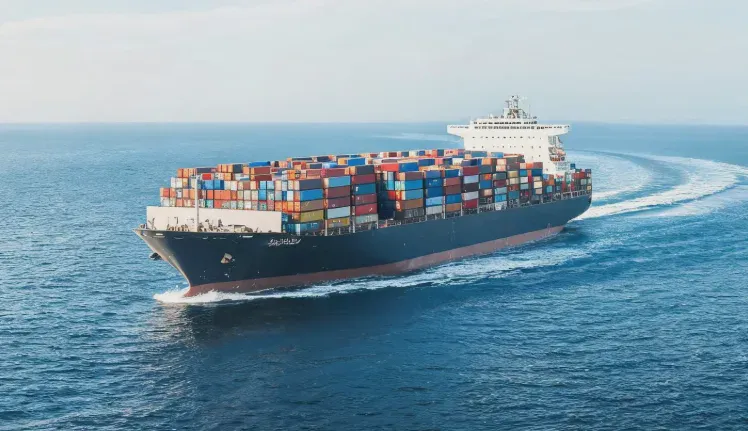
Sea Freight Cost from China to Ecuador: 20ft, 40ft Container & LCL Rates (2026)
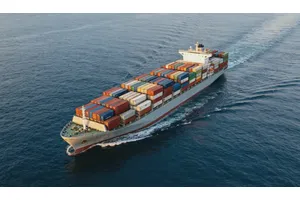
Sea freight is the lowest-cost option for bulk cargo. The rate you pay depends on container size, departure port, destination port, and season.
FCL Container Shipping Rates: 20ft, 40ft & 40HQ by Season
FCL (Full Container Load) means you book an entire container. It's the most cost-effective choice above roughly 12–15 cubic meters. Here is the master pricing table for port-to-port ocean freight as of mid-2026:
| Container Type | Capacity | Weight Limit | Low Season (USD) | Peak Season (USD) | Typical All-In Range* |
|---|---|---|---|---|---|
| 20ft GP | 33 CBM | ~28,000 kg | $800 – $1,800 | $1,800 – $4,000 | $3,000 – $5,500 |
| 40ft GP | 67 CBM | ~26,500 kg | $1,500 – $3,000 | $3,000 – $5,500 | $4,500 – $8,000 |
| 40ft High Cube (HQ) | 76 CBM | ~26,500 kg | $1,800 – $3,500 | $3,500 – $5,500 | $5,000 – $9,000 |
Typical all-in range includes ocean freight + standard surcharges + documentation fees + customs clearance + duties (at standard rates) + inland delivery to major cities. Excludes FTA duty savings.
Why the wide ranges? Ocean freight rates are dynamic:
- Seasonality: Rates spike 30–60% during peak windows (August–October for Christmas inventory, January–February around Chinese New Year, and October–November before Black Friday).
- Spot vs contract rates: Annual contract rates typically run 20–40% below spot market rates. One-off shipments pay the prevailing spot rate, which swings month to month.
- Carrier & alliance: Different shipping lines (Maersk, MSC, CMA CGM, COSCO, Hapag-Lloyd) price the same route differently based on capacity and network.
For a broader overview of the entire shipping process — including customs, documentation, and door-to-door options — see our dedicated guide on Sea Shipping from China to Ecuador.
LCL Shipping Cost from China to Ecuador: Per CBM Rates
LCL (Less than Container Load) lets you share container space, paying per cubic meter. Ideal for shipments under 12–15 CBM:
| Service | Rate | Transit Time | Best For |
|---|---|---|---|
| Sea LCL | $60 – $150 per CBM | 35–50 days | Shipments under 12–15 CBM |
| DDP Sea (LCL) | $80 – $150 per CBM | 40–50 days | All-inclusive door-to-door |
| DDP Air | $5 – $9 per kg | 7–12 days | Urgent, high-value cargo |
The wide LCL range isn't random. Low-end quotes cover base ocean freight only; high-end quotes bundle destination handling charges — the fees Ecuadorian ports charge for unloading and deconsolidation. Always ask: "Does this LCL quote include destination terminal handling?"
FCL vs LCL: Which Is Cheaper for Your Shipment Volume?
Looking at per-unit cost reveals a consistent pattern:
| Container | Low-Season Freight | Cost per CBM | High-Season Freight | Cost per CBM |
|---|---|---|---|---|
| 20ft (33 CBM) | $1,500 | $45.45 | $3,000 | $90.91 |
| 40ft (67 CBM) | $2,500 | $37.31 | $4,500 | $67.16 |
| 40HQ (76 CBM) | $2,800 | $36.84 | $5,000 | $65.79 |
The takeaway: A 40ft container gives you twice the space of a 20ft for roughly 60–70% more cost. If your cargo volume exceeds 20 CBM and weight stays under 26,500 kg, the 40ft is the smarter choice. For voluminous but lightweight goods — furniture, textiles, plastic products — a 40ft High Cube adds 9 extra CBM for a modest premium. Learn more in our guide to High cube shipping container cost from China.
The FCL vs LCL break-even sits around 12–15 CBM: at 15 CBM × $100/CBM = $1,500, matching a 20ft FCL low-season quote of ~$1,500 (plus surcharges ≈ $2,200 all-in port-to-port). Above 15 CBM, FCL is almost always cheaper per unit — plus you get a sealed, exclusive container with faster clearance and no consolidation delays.
Special containers for cargo that doesn't fit standard boxes:
| Container Type | Premium vs Standard | Best For |
|---|---|---|
| Open Top | +15–25% | Over-height machinery |
| Flat Rack | +20–35% | Oversized equipment, vehicles |
| Reefer | +40–60% plus generator fees | Temperature-controlled food/pharma |
Shipping from Shenzhen, Shanghai, Ningbo, Guangzhou & Qingdao to Ecuador
Your departure port directly impacts freight cost and transit time:
| Origin Port | FCL 20ft (Low Season) | FCL 40ft/HQ (Low Season) | Transit to Guayaquil | Typical Transshipment Via | Best For |
|---|---|---|---|---|---|
| Shenzhen (Yantian/Shekou) | $1,000 – $2,000 | $1,800 – $3,500 | 28–39 days | Colón (Panama), Callao (Peru) | Guangdong & Fujian manufacturing |
| Shanghai | $1,100 – $2,200 | $2,000 – $3,800 | 28–40 days | Colón (Panama) | East China; highest sailing frequency |
| Ningbo | $800 – $1,800 | $1,500 – $3,000 | 25–41 days | Colón (Panama), Callao (Peru) | Cost-conscious shippers; often 10–15% cheaper than Shanghai |
| Guangzhou (Nansha) | $1,000 – $2,000 | $1,800 – $3,500 | 30–39 days | Colón (Panama) | Pearl River Delta cargo |
| Qingdao | $1,200 – $2,500 | $2,200 – $4,000 | 30–45 days | Busan (Korea) → Panama or Callao | Northern China (Shandong, Hebei, Beijing-Tianjin) |
Operational insight: In our experience, Ningbo consistently offers the most competitive base rates — often 10–15% below Shanghai. But factor in factory location: a $300 ocean freight saving from Ningbo means little if your Shenzhen factory needs $500 in extra inland trucking.
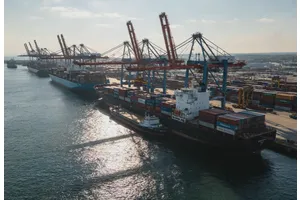
Ecuador destination ports:
| Port | Role | Notes |
|---|---|---|
| Guayaquil (ECGYE) | Primary container gateway — handles ~80% of containerized imports | Most carrier options, fastest customs processing, best inland connectivity |
| Manta | Secondary port; growing deep-water capability | Serves central Ecuador; +2–3 days vs Guayaquil; less congestion |
| Posorja (DP World) | Modern deep-sea terminal near Guayaquil | Newest infrastructure in Ecuador; ideal for project cargo and large vessels |
Sea Freight Transit Time to Guayaquil
| Route | Port-to-Port | Notes |
|---|---|---|
| Shenzhen → Guayaquil | 28–39 days | Via Colón or Callao |
| Shanghai → Guayaquil | 28–40 days | Highest sailing frequency |
| Ningbo → Guayaquil | 25–41 days | Often cheapest |
| Qingdao → Guayaquil | 30–45 days | Longest, via Busan |
Direct sailings from China to Ecuador are rare — typically 1–2 per month. Most containers transship through Colón (Panama), Callao (Peru), or Cartagena (Colombia), adding 3–7 days. For importers sourcing for multiple Andean markets, DTFU also offers dedicated Shipping From China to Peru and Shipping from China to Colombia services. During Ecuador's rainy season (December–April), coastal port operations can slow by 1–3 days.
Air Freight Cost from China to Ecuador: Per Kg Rates & Transit Time
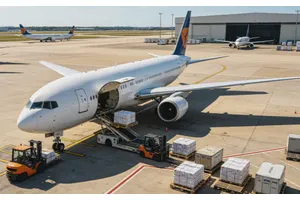
Air freight delivers cargo in days, not weeks — at a premium. Pricing uses a stepped weight-break system:
| Weight Tier | Rate (per kg) | Typical Use Case |
|---|---|---|
| 45–99 kg | $6.50 – $9.00 | Samples, urgent spare parts |
| 100–299 kg | $5.50 – $8.00 | E-commerce restocks |
| 300–499 kg | $5.00 – $7.50 | Mid-volume commercial goods |
| 500–999 kg | $4.50 – $7.00 | Regular shipments |
| 1,000+ kg | $4.00 – $6.50 | Best per-kg rate |
⚠️ Air freight charges on chargeable weight — the higher of gross weight or volumetric weight (L×W×H cm ÷ 6,000). A bulky, lightweight shipment can bill at double its actual weight.
There are no direct flights between China and Ecuador. Cargo routes through U.S. hubs (Miami) or European hubs (Amsterdam, Madrid) to Quito's Mariscal Sucre International Airport (UIO) or Guayaquil's José Joaquín de Olmedo International Airport (GYE).
| Service Type | Door-to-Door | Best For |
|---|---|---|
| Standard Air Freight | 7–12 days | 100+ kg commercial shipments |
| Airport-to-Airport | 4–7 days | You handle customs and delivery |
| Express Courier (DHL, FedEx, UPS) | 3–7 days | Under 100 kg |
| DDP Air Freight | 7–12 days | All-inclusive, $5–$9/kg |
When does air actually save money? For high-value, small-volume, or seasonal/perishable goods, the extra freight cost is often offset by reduced inventory carrying cost and faster time-to-market — the opportunity cost of 40 days at sea. For low-value bulk cargo, sea freight always wins.
Door to Door & DDP Shipping from China to Ecuador
Door-to-door shipping means your forwarder handles everything from factory to your address. DDP (Delivered Duty Paid) is the most comprehensive form — the forwarder bears all costs including import duties, IVA, and customs brokerage.
DDP Sea Freight: Door-to-Door Cost Breakdown
What DDP covers: China pickup → export customs → ocean freight → Ecuador import clearance → duty/IVA payment → inland delivery. A typical cost breakdown for a 40ft container of electronics (CIF value $40,000) from Shanghai to Guayaquil:
| Cost Component | EXW | FOB | CIF | DDP (Sea) |
|---|---|---|---|---|
| Factory → Shanghai port trucking | $400 (you) | $400 (supplier) | $400 (supplier) | Included |
| China export clearance | $150 (you) | $150 (supplier) | $150 (supplier) | Included |
| Ocean freight (Shanghai → Guayaquil) | $3,000 (you) | $3,000 (you) | $3,000 (supplier) | Included |
| Insurance | $150 (you) | $150 (you) | $150 (supplier) | Included |
| Ecuador customs clearance + broker | $400 (you) | $400 (you) | $400 (you) | Included |
| Import duties & taxes* | $4,640 (you) | $4,640 (you) | $4,640 (you) | Included |
| Port → warehouse delivery | $350 (you) | $350 (you) | $350 (you) | Included |
| Total (your out-of-pocket) | $9,090 | $8,540 | $8,540 | $6,500 – $8,000 (flat DDP quote) |
| Control level | Maximum | High | Medium | Minimal |
| Complexity | Very High | Moderate | Moderate | Very Low |
*Duty/tax calculated at 10% duty + 12% IVA without FTA. With FORM R (0% duty), taxes drop to ~$5,280 — and the DDP quote would be lower with FTA savings passed through.
DDP vs FOB vs CIF vs EXW: Which Incoterm Gives the Lowest Total Cost?
| Incoterm | Who Pays Ocean Freight? | Who Pays Insurance? | Who Handles Ecuador Customs & Duties? | Best For |
|---|---|---|---|---|
| EXW (Ex Works) | You | You | You | Experienced importers with an established local broker |
| FOB (Free on Board) | You | You | You | Experienced B2B importers; supplier delivers to Chinese port |
| CIF (Cost, Insurance & Freight) | Supplier | Supplier (minimum cover) | You | Good middle ground — supplier handles international leg |
| DDP (Delivered Duty Paid) | Forwarder handles everything | Included | Included | First-time importers and SMEs — one invoice, zero surprises |
For importers without an established customs broker in Ecuador, DDP is frequently the lowest total-cost option — the forwarder's volume-discounted brokerage and pre-negotiated trucking rates beat retail prices. For a deeper comparison, see our guide on DDP vs FOB: Which Option Saves Time and Reduces Hassle, and explore our door-to-door shipping service.
Customs Clearance in Ecuador: Import Tax, Duties & the China-Ecuador FTA
Understanding Ecuador's import tax structure is essential — duties and taxes can represent 15–35% of your total landed cost, or near zero if you leverage the FTA correctly.
How Import Duties Are Calculated (SENAE)
Ecuador's customs authority, SENAE (Servicio Nacional de Aduana del Ecuador), calculates your import tax bill as follows:
- CIF Value = Cost of goods + Insurance + Freight
- Import Duty = CIF Value × Duty Rate (varies by HS code, typically 5%–30%)
- IVA (VAT) = 12% × (CIF Value + Import Duty)
- FODINFA = 0.5% × CIF Value (applies to certain goods)
Worked example — without FTA: A shipment of furniture (HS Chapter 94) with a CIF value of $25,000 and a 20% duty rate:
| Tax Component | Calculation | Amount |
|---|---|---|
| Import Duty | $25,000 × 20% | $5,000 |
| IVA | 12% × ($25,000 + $5,000) | $3,600 |
| FODINFA | $25,000 × 0.5% | $125 |
| Total tax burden | — | $8,725 (34.9% of CIF value) |
Common HS Codes & Duty Rates for China Imports
| Product Category | HS Chapter | Standard Duty Rate | FTA Rate (with FORM R) |
|---|---|---|---|
| Furniture (wooden/metal) | 94.03 | 20% | 0% |
| Electronics (phones, computers) | 85.17 | 0–10% | 0% |
| Machinery & mechanical appliances | 84.79 | 5–15% | 0% |
| Textiles & apparel | 61–62 | 20–30% | 0% (phased) |
| Auto parts | 87.08 | 5–15% | 0% |
| Solar panels | 85.41 | 0–5% | 0% |
| Building materials (ceramics, stone) | 68–69 | 10–20% | 0% |
| Toys & sporting goods | 95.03 | 15–20% | 0% |
The China-Ecuador Free Trade Agreement: Your Biggest Cost Lever
If you take away only one thing from this guide, make it this: The China-Ecuador FTA, effective May 1, 2024, eliminates or drastically reduces import duties on the vast majority of goods shipped from China to Ecuador.
How it works:
- Your supplier in China applies for a FORM R (Certificate of Origin) from China's customs authority (or CCPIT).
- FORM R certifies that your goods meet the FTA's rules of origin (wholly obtained or substantially transformed in China).
- When your shipment clears Ecuador customs, present FORM R — qualifying goods receive 0% tariff treatment instead of the standard 5–30% duty.
The same furniture shipment, with FTA:
| Tax Component | Calculation | Amount |
|---|---|---|
| Import Duty | $25,000 × 0% | $0 (saved $5,000) |
| IVA | 12% × ($25,000 + $0) | $3,000 |
| FODINFA | $25,000 × 0.5% | $125 |
| Total tax burden | — | $3,125 (12.5% of CIF value) — saving $5,600 |
Common FORM R pitfalls to avoid:
- The HS code on FORM R must exactly match the HS code on your Commercial Invoice
- The declared value must be consistent across all documents
- FORM R must be obtained before the shipment departs China
- Some products (particularly textiles and footwear) have phased tariff elimination — verify your specific HS code's status
Required Documents & Import Restrictions
| Document | Required? | Notes |
|---|---|---|
| Bill of Lading (B/L) or AWB | Yes | Essential shipping document |
| Commercial Invoice | Yes | Spanish or bilingual recommended |
| Packing List | Yes | Must match the invoice exactly |
| Certificate of Origin (FORM R) | For FTA benefits | Obtain before departure from China |
| INEN certificate | Conditional | Regulated consumer goods |
| ARCONET certification | Conditional | Electronics |
| Phytosanitary certificate (SENASA) | Conditional | Agricultural goods |
| DTI/INEC approvals | Conditional | Automotive / pharmaceuticals |
Import restrictions: Ecuador prohibits used clothing and footwear, certain pesticides and chemicals, and cultural artifacts. Agricultural products require a phytosanitary certificate from SENASA. Our customs clearance team handles Ecuadorian clearance with FTA documentation included.
Cheapest Way to Ship from China to Ecuador: Complete Cost Comparison
The "cheapest" method changes depending on your cargo value, volume, and urgency. Here are four real-world scenarios showing what importers actually pay:
Scenario 1: 20ft Furniture — Shenzhen → Guayaquil (FOB, with FTA)
| Item | Cost (USD) |
|---|---|
| Cargo: Furniture (HS 94.03), value $18,000 | — |
| Ocean freight (low season) | $1,500 |
| BAF + THC (origin + destination) | $550 |
| Documentation (B/L, export declaration, FORM R) | $180 |
| Cargo insurance (0.4% of $18,000) | $72 |
| Customs broker + port fees | $500 |
| Import duty: FTA rate (0% with FORM R) | $0 |
| IVA: 12% × $18,000 | $2,160 |
| FODINFA: 0.5% × $18,000 | $90 |
| Inland trucking (Guayaquil → Quito) | $700 |
| Total Landed Cost | $5,752 |
| Cost without FTA (20% duty) | $9,352 |
FTA saves $3,600 on this shipment alone.
Scenario 2: 8 CBM LCL Auto Parts — Guangzhou → Guayaquil
| Item | Cost (USD) |
|---|---|
| Cargo: Auto parts (HS 87.08), value $8,000 | — |
| LCL freight: 8 CBM × $100/CBM | $800 |
| Export documentation + handling | $150 |
| Customs broker (Ecuador) | $250 |
| Import duty: FTA rate (0% with FORM R) | $0 |
| IVA: 12% × $8,000 | $960 |
| Inland delivery (Guayaquil) | $200 |
| Total Landed Cost | $2,360 |
7 Proven Tips to Reduce Your China-Ecuador Shipping Costs
- Book during off-peak windows — March–May and September–October are the sweet spots. Avoid August–November (Christmas peak), January–February (Chinese New Year), and October–November (Black Friday surge).
- Compare multiple departure ports — Ningbo often undercuts Shanghai by 10–15%. If your factory is in Zhejiang or Jiangsu, Ningbo should be your default.
- Maximize container utilization — every empty cubic meter is wasted money. Optimize palletization and stacking; a well-loaded 40HQ fits 10–15% more than a poorly loaded one.
- Leverage the China-Ecuador FTA — if you're not using FORM R for qualifying goods, you're almost certainly overpaying duties by thousands per shipment.
- Use LCL consolidation for sub-12 CBM shipments — paying for an empty 20ft container makes no sense for 8 CBM of goods.
- Negotiate contract rates for regular volume — shipping 3–4+ containers per year? Contract rates run 20–40% below spot.
- Partner with a forwarder with direct carrier contracts — every intermediary adds markup. Direct relationships with Maersk, MSC, CMA CGM, and COSCO eliminate broker layers.
Hidden Costs That Surprise First-Time Importers
Mandatory Surcharges
| Surcharge | Full Name | Typical Cost (per container) | What It Covers |
|---|---|---|---|
| BAF | Bunker Adjustment Factor | $200 – $600 | Fuel cost fluctuation — adjusted quarterly |
| CAF | Currency Adjustment Factor | 2–8% of base freight | Exchange rate risk between USD and CNY |
| PSS | Peak Season Surcharge | $200 – $800 | Applied during high-demand periods (Aug–Nov, Jan–Feb) |
| THC (Origin) | Terminal Handling Charge | $150 – $300 | Container handling at the Chinese departure port |
| THC (Destination) | Terminal Handling Charge | $150 – $350 | Container handling at the Ecuador arrival port |
| HWS | Heavy Load Surcharge | $200+ | For 20ft containers exceeding 20 metric tons (e.g. Maersk, effective April 2026) |
Pro tip: The HWS is new and often overlooked. Shipping dense goods — metal parts, machinery, tiles — in a 20ft container likely triggers it. Always declare accurate cargo weight upfront.
Documentation & Destination-Side Fees
| Fee | Typical Cost (USD) |
|---|---|
| Bill of Lading (B/L) issuance | $50 – $100 |
| Export customs declaration | $80 – $150 |
| Certificate of Origin (FORM R) | $30 – $60 |
| Fumigation certificate (wooden packaging) | $50 – $150 |
| Port maintenance fee | $50 – $120 |
| Customs broker fee | $150 – $400 |
| SENAE inspection fee | $80 – $250 (if inspected) |
| Container detention (per day, after free period) | $50 – $150/day |
| Inland trucking (port → Guayaquil warehouse) | $200 – $400 |
| Inland trucking (port → Quito) | $500 – $900 |
Cargo insurance typically costs 0.3%–0.5% of the declared cargo value — $90–$150 for a $30,000 load. On the Pacific crossing, where vessels face open-ocean conditions year-round, we strongly recommend it. See our full guide on Shipping container insurance cost for shipments from China for coverage details.
How to Choose the Best Freight Forwarder China to Ecuador
What to Look For
- FIATA/IATA certification — proof of professional standards on a route as complex as China-Ecuador
- Direct carrier contracts — not spot-market reselling — for rate stability and guaranteed space in peak season
- Ecuador lane experience — SENAE clearance procedures, FTA/FORM R documentation, and inland delivery across Guayaquil, Quito, Cuenca, Manta, and beyond
- Multi-port China coverage — Shenzhen, Shanghai, Ningbo, Qingdao, Guangzhou — ship from wherever your suppliers are
- Transparent, itemized quoting — line-by-line cost breakdowns, no hidden fees
- 24/7 cargo tracking with milestone notifications at every stage
- A dedicated account manager — not a call center queue
Red Flags
- Quotes without an itemized breakdown ("all-in" one-liners)
- No mention of the China-Ecuador FTA or FORM R
- Vague duty estimates ("5–15%") without asking for your HS codes
- Unusually low rates that don't match current market benchmarks — you'll pay the difference in surcharges
- No physical presence or agent network in Ecuador
Frequently Asked Questions
How much does a 20ft container cost to ship from China to Ecuador in 2026?
$800–$4,000 for port-to-port ocean freight depending on origin port, season, and carrier. All-in (surcharges + duties + delivery): $3,000–$5,500. The China-Ecuador FTA can cut $1,500–$5,000 in duty.
How much does a 40ft container cost from China to Ecuador?
$1,500–$5,500 port-to-port; $4,500–$8,000 all-in landed. A 40ft High Cube (40HQ) costs roughly $300–$500 more than a standard 40ft.
What is the cheapest way to ship from China to Ecuador?
Combine three strategies: (1) ship a 40ft from Ningbo in off-peak season, (2) secure contract rates if you ship regularly, and (3) use FORM R under the China-Ecuador FTA to eliminate duties. Together, these can cut total landed cost by 30–50%.
How long does sea freight take from China to Ecuador?
25–45 days port-to-port depending on departure port and transshipment routing. Shenzhen and Shanghai are fastest (28–39 days); Qingdao slowest (30–45 days). Most containers transship via Colón, Callao, or Cartagena.
How much is air freight from China to Ecuador per kg?
$4.00–$9.00/kg depending on weight tier, with express courier at higher rates. DDP air runs $5–$9/kg all-in, 7–12 days door-to-door.
What are the import duties and taxes from China to Ecuador?
Import duty 5–30% by HS code, plus 12% IVA on (CIF + duty), plus 0.5% FODINFA on certain goods. With the China-Ecuador FTA and FORM R, qualifying goods pay 0% duty — total tax drops to just the 12% IVA.
What documents do I need to import from China to Ecuador?
Bill of Lading, Commercial Invoice (Spanish/bilingual), Packing List, and Certificate of Origin (FORM R) for FTA benefits. Product-dependent: INEN certificates (consumer goods), ARCONET (electronics), phytosanitary (agricultural), DTI/INEC (automotive/pharma).
Which Chinese port is cheapest for shipping to Ecuador?
Ningbo consistently offers the lowest base rates — often 10–15% below Shanghai. But factor in inland trucking from your factory; for Guangdong suppliers, Shenzhen or Guangzhou often win on total cost.
Is DDP door-to-door shipping available from China to Ecuador?
Yes — sea DDP runs $80–$150/CBM (40–50 days) and air DDP $5–$9/kg (7–12 days), covering factory pickup, export clearance, freight, Ecuador customs, duties, IVA, and final delivery in one all-inclusive price.
The DTFU Logistics advantage: FIATA & IATA dual-certified, 10+ years on the China-Ecuador trade lane, direct carrier contracts (Maersk, MSC, CMA CGM, COSCO) ensuring competitive rates year-round, in-house FTA/FORM R documentation expertise, SENAE clearance team, multi-port coverage across China, 24/7 online cargo tracking, and end-to-end DDP solutions to Guayaquil, Quito, Cuenca, Manta, and beyond. See our Shipping From China to Ecuador service page for more.