If you're sourcing products from China and need them delivered straight to your doorstep in Austria, you've probably already discovered that door to door shipping from China to Austria is nothing like shipping to a coastal European country. Austria is landlocked — which means every container, pallet, or parcel must pass through a foreign seaport before it ever touches Austrian soil. That single geographic fact reshapes every variable: which transport mode makes sense, how long your shipment actually takes, and what you'll pay when all the hidden costs surface at customs. In this guide, we break down exactly how DDP door-to-door shipping works for Austria in 2026 — from the six-stage process and real-world cost per kilogram to the specific customs rules (20% VAT, EORI, CE marking) that trip up first-time importers. By the end, you'll know the cheapest way to ship, the fastest way to ship, and how to choose between sea, air, and rail freight without making an expensive mistake.
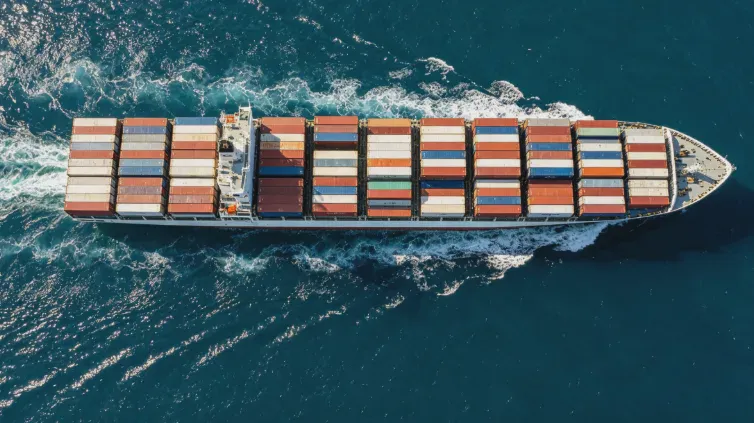
What Is DDP Shipping from China to Austria?
DDP (Delivered Duty Paid) is the Incoterm where your freight forwarder takes responsibility for everything — and we mean everything — from the moment your goods leave the supplier's loading dock in China until they arrive at your address in Vienna, Linz, Graz, or Salzburg. Under DDP, the forwarder pays China export fees, international freight, Austrian import duties, and the 20% Einfuhrumsatzsteuer (Austrian import VAT) on your behalf. You get one all-inclusive quote and one point of contact. That's the promise. Here's how it actually unfolds across six stages.
Step 1: Supplier Pickup & Cargo Consolidation in China
The process starts at the factory. Most importers source from multiple Chinese cities — electronics from Shenzhen, textiles from Guangzhou, hardware from Yiwu, machinery from Shanghai. A door-to-door forwarder handling shipping from China to Austria dispatches trucks to each supplier, collects the goods, and brings everything to a consolidation warehouse (typically in Shenzhen, Guangzhou, or Shanghai). There, the cargo is inspected, palletized, labeled, and combined into a single shipment. Consolidation is especially valuable for LCL (Less than Container Load) shipments — instead of paying for a full container you haven't filled, you share container space with other cargo and pay only for the cubic meters (CBM) you actually use.
Step 2: China Export Customs Clearance
Before anything leaves Chinese soil, it must clear export customs. Your forwarder files the Export Declaration with China Customs, along with the Commercial Invoice and Packing List you've provided. For most general cargo, this is a 1–2 day formality. But if your goods require export licenses (certain electronics, batteries, or dual-use items), clearance takes longer. A competent forwarder flags these requirements before you ship — not after the container is already at the terminal.
Step 3: International Freight — Sea, Air, Rail, or Express
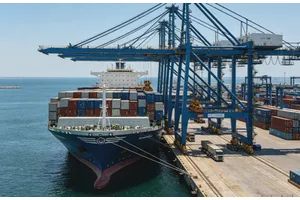
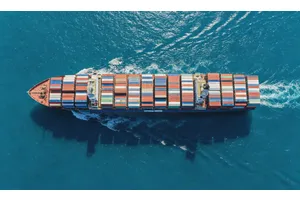
This is the main event. Your cargo travels from China to a European gateway, and the route you choose determines both your cost and your timeline. For sea freight, the container sails to Port of Koper (Slovenia), Port of Trieste (Italy), Port of Hamburg (Germany), or Port of Rotterdam (Netherlands). For air freight, it flies into Vienna International Airport (VIE), Linz Airport (LNZ), or Salzburg Airport (SZG). For rail freight, the China-Europe Railway Express runs from Chengdu, Chongqing, Xi'an, or Zhengzhou directly to the Vienna/Linz freight terminals. Each of these choices has ripple effects on cost and speed — we'll compare them head-to-head in Section 5.
Step 4: Austria Import Customs Clearance
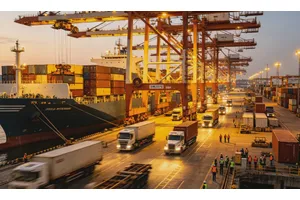
Once your cargo reaches the European gateway, Austrian customs — Zollamt Österreich — takes over. The forwarder submits an electronic entry through the ATLAS customs system, declaring your goods' HS codes, CIF value, origin, and applicable duties. If the documentation is clean and the HS codes are correct, clearance typically takes 1–3 working days. If not — and this is where most delays happen — your shipment sits in a bonded warehouse accruing storage fees while customs requests clarification.
Step 5: Austrian VAT & Duty Payment
Here's where DDP earns its keep. Austria charges 20% import VAT (Einfuhrumsatzsteuer) on the CIF value plus any applicable customs duties. The formula works like this:
VAT = (CIF Value + Customs Duty) × 20%
Customs duties themselves range from 0% to 12% depending on your product's HS code — electronics typically fall in the 0–3% range, textiles and apparel can reach 8–12%, and furniture lands around 0–5.6%. Under DDP, your forwarder pays both the duty and the VAT at the border. You reimburse them as part of the all-inclusive quote — no separate payment, no surprise invoice from Austrian customs three weeks after delivery.
For businesses that are VAT-registered in Austria, the 20% VAT is reclaimable through the Vorsteuerabzug (input tax deduction) process on your regular VAT return. Your forwarder can advise on documentation requirements for the reclaim.
Step 6: Final Delivery to Your Doorstep in Austria
After customs release, the cargo transfers to a final-mile carrier. For parcel-sized shipments, this means DPD, GLS, UPS, or DHL delivering to your home, office, or Amazon FBA warehouse — usually within 1–3 business days of clearance. For palletized or full-container loads, a dedicated truck delivers directly to your address in Vienna, Graz, Linz, Salzburg, Innsbruck, or anywhere else in Austria. You sign for the goods, and the journey is complete.
Door to Door Shipping Cost from China to Austria
The single most common question we hear is straightforward: "What does door-to-door shipping to Austria actually cost?" The honest answer is that it depends on seven variables — but the ranges below give you a realistic starting point for budgeting.
Where Your Money Goes: Cost Components
Every DDP door-to-door quote is built from the same layers. Understanding them helps you evaluate whether a quote is reasonable — and whether anything is being left out:
| Cost Component | Who Pays (DDP) | Typical Range |
|---|---|---|
| Ocean/Air/Rail Base Freight | Forwarder | Varies by mode (see below) |
| Bunker/Fuel Surcharge (BAF) | Forwarder | 15–30% of base freight |
| Peak Season Surcharge (PSS) | Forwarder | 0–40% (seasonal) |
| China Export Clearance & Docs | Forwarder | $80–150 flat |
| Port/Airport Handling (Origin + Destination) | Forwarder | $200–500 per shipment |
| Austria Customs Brokerage | Forwarder | $150–350 per entry |
| EU Customs Duty (0–12%) | Forwarder (reimbursed by you) | Depends on HS code |
| Austrian Import VAT (20%) | Forwarder (reimbursed by you) | 20% × (CIF + Duty) |
| Inland Trucking to Austria | Forwarder | $800–1,400 per container |
| Final-Mile Delivery | Forwarder | $50–300 (parcel) / included (truck) |
2026 Indicative Door-to-Door DDP Pricing
The table below shows all-inclusive DDP price ranges — meaning freight + customs brokerage + duties + 20% Austrian VAT + final delivery — for typical shipment profiles shipping from major Chinese ports (Shenzhen, Shanghai, Ningbo) to Vienna:
| Shipping Mode | DDP Price (All-In, Including Duty & VAT) | Best For |
|---|---|---|
| Sea Freight LCL | $120–200 / CBM | 1–15 CBM, multi-supplier consolidation |
| Sea Freight FCL 20ft | $4,000–6,500 / container | 15–28 CBM, single large shipment |
| Sea Freight FCL 40ft / 40HQ | $5,800–9,000 / container | 30–68 CBM, bulk cargo |
| Rail Freight DDP | $1.80–3.00 / kg | 100 kg–1,000 kg, cost-speed balance |
| Air Freight DDP | $4.50–7.50 / kg | 45 kg+, urgent or high-value cargo |
| Express Courier DDP (DHL/FedEx/UPS) | $8–12 / kg | 1–200 kg, small parcels & samples |
These are ballpark figures for general cargo (non-hazardous, non-licensed goods) shipped during non-peak periods. Actual quotes depend on your specific commodity, weight, volume, and destination within Austria.
Hidden Costs That Inflate Your Final Bill
Even with DDP, certain charges can surface if the shipment isn't managed properly. The most common culprits:
- Demurrage: Charged when containers sit at the port beyond the free time (usually 5–7 days at European ports). A single customs documentation error can trigger demurrage of $50–150 per day.
- Detention: Charged when you hold the container beyond the allotted free days after pickup. Planning inland transport to Austria in advance prevents this.
- Customs Inspection Fees: If Zollamt Österreich flags your shipment for physical inspection, expect $200–500 in examination fees — plus delivery delays.
- Peak Season Markups: During Chinese New Year (January–February), ocean freight rates can spike 30–50%. During the Q4 Christmas rush (September–November), air freight rates rise 20–40%.
Key Pricing Factors
- Chargeable Weight: Carriers charge whichever is higher — actual weight or volumetric weight (length × width × height in cm ÷ 6,000). A shipment of pillows (large, light) may cost significantly more than its actual weight suggests.
- Destination City: Delivery to Vienna, Linz, or Graz is standard. Delivery to remote Alpine towns in Tyrol or Vorarlberg may add $50–200 in final-mile surcharges.
- Cargo Type: Dangerous goods (batteries, chemicals), oversized machinery, or food products incur additional handling and compliance fees.
For businesses importing into multiple European markets, the cost structure for Austria is broadly comparable to neighboring countries. You can reference our detailed breakdowns on shipping cost from China to Germany and shipping cost from China to Italy — Italy being particularly relevant since Trieste serves as an alternative gateway for Austrian sea freight.
Door to Door Shipping Time from China to Austria
"How long?" is always the second question after "how much?" The answer depends not just on the transport mode but also on Austria's landlocked geography — every sea shipment requires an extra leg from the port to the Austrian border.
| Shipping Method | Door-to-Door Transit Time | Best When... |
|---|---|---|
| Express Courier (DHL/FedEx/UPS) | 2–5 days | You need samples, documents, or small e-commerce orders fast |
| Air Freight DDP | 5–8 days | Inventory is running low or the goods are high-value |
| Rail Freight DDP | 18–25 days | You need a cost-effective option faster than sea |
| Truck DDP | 18–25 days | Shipping 100–1,000 kg with medium urgency |
| Sea Freight FCL DDP | 30–38 days | You're shipping a full container and cost is the priority |
| Sea Freight LCL DDP | 30–40 days | You're consolidating smaller volumes and can wait |
What Affects Transit Time to Austria?
Gateway port selection is the biggest variable for sea freight. Choosing Koper (Slovenia) over Hamburg (Germany) can save 5–7 days on the door-to-door timeline — Koper sits just 380 km from Vienna (a 5–6 hour truck drive), while Hamburg is over 1,000 km away (10–12 hours by truck or rail). For shipments to Graz or southern Austria, Koper is the clear winner at roughly 3 hours of inland transit.
Origin city in China also matters. Shipments from Shenzhen, Guangzhou, or Shanghai reach the port within 1–2 days — for example, shipping from Shanghai to Germany moves through the same Yangtze River Delta port infrastructure that serves Austria-bound cargo via Hamburg. Shipments from inland manufacturing hubs like Chongqing, Wuhan, or Zhengzhou add 2–5 days of domestic trucking before the container even reaches the seaport.
Customs inspection is the wildcard. Routine clearance takes 1–3 working days at Zollamt Österreich. A physical inspection — triggered by inconsistent HS codes, undervaluation, or missing CE documentation — can add 5–10 days and hundreds of dollars in examination and storage fees.
Peak season congestion at European ports (especially Hamburg and Rotterdam in Q4) routinely adds 3–7 days to sea freight schedules. Adriatic ports like Koper and Trieste tend to be less congested than their North Sea counterparts.
Cheapest Way to Ship from China to Austria: Sea Freight vs Air Freight vs Rail Freight
Every importer eventually faces the same trade-off: cost versus speed. For Austria specifically, the geography tilts the equation in ways that don't apply to coastal EU nations. Here's how the four main options stack up.
Sea Freight
If you're shipping more than 2–3 CBM and can plan 5–6 weeks ahead, sea freight is almost always your cheapest option.
For Austria-bound cargo, four gateway ports dominate the routing decision:
| Gateway Port | Country | Distance to Vienna | Inland Transit | Best For |
|---|---|---|---|---|
| Koper | Slovenia | ~380 km | 5–6 hrs truck | Fastest Adriatic route; ideal for southern Austria (Graz, Klagenfurt) |
| Trieste | Italy | ~500 km | 6–7 hrs truck | Alternative Adriatic gateway with good rail connections |
| Hamburg | Germany | ~1,050 km | 10–12 hrs truck/rail | Northern European hub; largest ship capacity |
| Rotterdam | Netherlands | ~1,150 km | 11–13 hrs truck/rail | Europe's busiest port; extensive feeder and rail connections |
Why Koper often wins for Austria: As the nearest seaport to Vienna, Koper has emerged as the preferred Adriatic gateway for Austrian importers. The port has invested heavily in container handling capacity and rail intermodal connections. For shipments to Graz, Koper is the undisputed champion — only 3 hours by truck from the port to the city center. Ocean transit from Shanghai to Koper takes approximately 28–32 days, plus 2–4 days for inland trucking and customs. For importers shipping through Rotterdam and the Netherlands, door to door shipping from China to Netherlands follows a similar multimodal pattern — sea freight to Rotterdam plus inland trucking to the final destination.
FCL vs LCL trade-off: For shipments above 15 CBM, a Full Container Load (FCL) 20ft container usually costs less per unit than Less than Container Load (LCL) consolidation. Below 15 CBM, LCL is more economical despite the higher per-CBM rate — you simply aren't paying for unused container space. We'll break this down in detail in the next section.
Rail Freight
If there's one shipping method that has transformed China-Austria logistics in the last five years, it's rail freight. The China-Europe Railway Express now offers weekly departures from Chengdu, Chongqing, Xi'an, and Zhengzhou to the Vienna and Linz freight terminals. Transit from Chinese rail hub to Austrian terminal takes just 14–16 days — add 3–5 days on either end for pickup and final delivery, and you have a realistic door-to-door timeline of 18–25 days.
The economics are compelling: rail DDP costs roughly 50–60% less than air freight while delivering 15–20 days faster than sea freight. For a deeper comparison, see our analysis of sea vs rail freight: which is faster and more reliable from China. For an importer shipping 500 kg of electronics or machinery parts from Shenzhen to Vienna, rail offers the best combination of speed and cost.
Austria's position as a Central European rail hub — with direct connections to Hungary, Czech Republic, Slovakia, and the Balkans — also makes it an attractive entry point for importers distributing across the CEE region. For businesses targeting multiple markets, Austria-based consolidation can feed into dedicated routes like door to door shipping from China to Germany, door to door shipping from China to Hungary, and door to door shipping from China to Poland, all of which can be served from a single Austrian distribution center.
Air Freight
Air freight is expensive. There's no sugarcoating it. But when you're facing a stockout, launching a seasonal product, or shipping high-value goods where inventory carrying cost outweighs freight cost, air DDP from China to Austria makes economic sense.
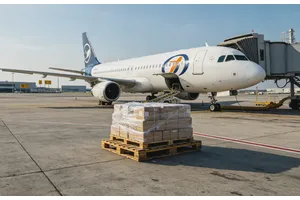
China's major export airports (Shenzhen SZX, Guangzhou CAN, Shanghai PVG, Hong Kong HKG) all serve Vienna (VIE), Linz (LNZ), and Salzburg (SZG) with direct or one-stop connections. Door-to-door air DDP takes 5–8 days including customs clearance and final delivery.
Watch the volumetric weight trap: Air freight carriers charge based on chargeable weight — the greater of actual weight and volumetric weight (L × W × H cm ÷ 6,000). A shipment that's physically light but bulky (think furniture, packaging materials, or insulated containers) can cost 2–3× more than you'd expect based on scale weight alone. Smart packing and consolidation reduce this multiplier.
Truck DDP
Truck freight from China to Austria (via Central Asia and Eastern Europe) has matured into a reliable door-to-door option over the past several years. With transit times of 18–25 days, it competes directly with rail on speed while offering more flexibility for medium-sized shipments (100–1,000 kg) where neither air nor sea feels quite right. Truck DDP rates typically run $0.69–2.89 per kg, making it a viable middle ground between rail and air.
FCL vs LCL Door to Door Shipping from China to Austria
The FCL-versus-LCL decision can save — or cost — you thousands on a single shipment. Here's how to get it right.
FCL (Full Container Load): Your Own Container
With FCL, you rent an entire container. Nobody else's cargo shares the space. The container is sealed at your supplier's factory or the consolidation warehouse in China and isn't opened again until it reaches Austrian customs.
| Container Type | Internal Capacity | Approx. Pallet Capacity | Max Payload | DDP Price Range (to Vienna) |
|---|---|---|---|---|
| 20ft GP | 25–28 CBM | 10 standard pallets | ~28,000 kg | $4,000–6,500 |
| 40ft GP | 55–58 CBM | 22 standard pallets | ~26,000 kg | $5,800–8,000 |
| 40ft HQ (High Cube) | 65–68 CBM | 24 standard pallets | ~26,000 kg | $6,200–9,000 |
FCL is the right choice when: You're shipping from a single supplier with enough volume to fill at least 60–70% of a container (roughly 15+ CBM for a 20ft); your cargo is heavy or dense (machinery, metal parts, stone, tiles); or you want the security of a sealed, untouchable container from origin to destination.
LCL (Less than Container Load): Share & Save
LCL (Less than Container Load) means your cargo shares container space with shipments from other importers. You pay only for the cubic meters you occupy — typically starting from 1 CBM. At the destination, the container is "deconsolidated" at a CFS (Container Freight Station), and your cargo is separated for individual customs clearance and delivery.
LCL is the right choice when: You're shipping less than 15 CBM; sourcing from multiple suppliers and consolidating in China; testing a new product with a small trial order; or maintaining lean inventory with frequent small-batch restocking.
The cost crossover point: At approximately 15 CBM, FCL and LCL costs intersect. Below 15 CBM, LCL is cheaper despite the higher per-CBM rate. Above 15 CBM, FCL's per-unit cost drops below LCL's, and you gain the speed and security advantages of a dedicated container.
Practical Consolidation Tips
Most freight forwarders with China-Austria routes offer free warehousing for 20–30 days at their Chinese consolidation centers — typically in Shenzhen, Guangzhou, or Yiwu. This means you can have Supplier A's electronics (5 CBM from Shenzhen), Supplier B's packaging (3 CBM from Dongguan), and Supplier C's accessories (2 CBM from Guangzhou) all delivered to the same warehouse, stored free of charge, and combined into one LCL shipment or one FCL container when everything has arrived. The consolidated shipment clears China export customs as a single entry, and arrives in Austria as a unified consignment. This consolidation approach is similar to what we describe in our door to door shipping from China to UK guide — the principle of combining multiple supplier loads into one efficient shipment applies across all European destinations.
DDP vs DDU Shipping from China: Which Incoterm for Austria Imports?
Choosing between DDP and DDU is fundamentally a question about who handles Austrian customs — and who bears the risk of getting it wrong.
| Responsibility | DDP (Delivered Duty Paid) | DDU / DAP (Delivered Duty Unpaid) | FOB (Free on Board) | EXW (Ex Works) |
|---|---|---|---|---|
| China Pickup & Export Clearance | Forwarder | Forwarder | Supplier | You |
| International Freight | Forwarder | Forwarder | You (or your forwarder) | You |
| Austria Import Customs Clearance | Forwarder | You (or your broker) | You | You |
| Austrian Import Duty | Forwarder (then you reimburse) | You | You | You |
| Austrian 20% VAT | Forwarder (then you reimburse) | You | You | You |
| Final Delivery in Austria | Forwarder | Forwarder | You arrange | You arrange |
| Risk Transfer Point | At your door in Austria | At your door (but customs risk is yours) | At the Chinese port | At the factory gate |
When DDP Makes Sense
DDP is the default recommendation for most importers shipping to Austria — and here's why: if you don't have an Austrian EORI number, a customs broker relationship with Zollamt Österreich, and experience with the ATLAS electronic customs system, clearing a commercial import yourself is not a weekend project. Under DDP, the forwarder absorbs the customs complexity. One quote. One payment. One throat to choke if something goes wrong.
DDP is ideal for:
- First-time importers who don't have an Austrian customs broker
- E-commerce sellers (Amazon FBA, Shopify) who need predictable total landed cost
- SMEs without a dedicated logistics or trade compliance team
- Anyone who values budget certainty — DDP locks in the final cost upfront
If you're still deciding between trade terms, our comparison of DDP vs FOB: which option saves time and reduces hassle breaks down the real-world impact of each Incoterm on cost, risk, and delivery timelines. For importers already familiar with DDP in other EU markets, DDP shipping from China to Germany follows the same EU customs framework — the same 20% VAT (19% in Germany) and EORI requirements apply, just through a different national customs authority.
When DDU / DAP Makes Sense
If you're an established Austrian company with a VAT registration, an EORI number, and a relationship with a local customs broker (Zollagent), DDU can save you 15–25% on the customs brokerage and clearance fees baked into a DDP quote. You handle the import entry yourself and pay Austrian customs directly upon clearance. The forwarder still handles pickup, international transport, and final delivery — they just stop at the customs step.
A Note on FOB and EXW
FOB (Free on Board) is common when you have an established freight forwarder relationship but your supplier insists on handling China-side export. The supplier delivers to the Chinese port and clears export; your forwarder takes over from there. EXW (Ex Works) puts maximum responsibility on you — the supplier hands you goods at their factory gate, and everything after that (domestic China trucking, export clearance, international freight, Austria import, delivery) is yours to arrange. Unless you have a logistics team on the ground in China, EXW is rarely the right choice for door-to-door shipping to Austria.
How to Avoid Customs Delays When Shipping from China to Austria
Austrian customs isn't uniquely difficult — but it is exact. Small documentation errors that a coastal EU country might overlook (because they process higher volumes) can trigger delays at Zollamt Österreich. Here's how to get it right the first time.
The EORI Number: Your EU Import ID
An EORI (Economic Operators Registration and Identification) number is required for any commercial import into the EU — including Austria. If you're importing under DDP, your freight forwarder typically uses their own EORI or their customs broker's EORI to clear your goods. If you're importing under DDU, you need your own. Registration is free through the Austrian customs portal (Zollamt Österreich website) and typically takes 2–5 working days. The same EORI framework applies across the EU — if you import into multiple member states, our shipping from China to Europe overview explains how a single EORI covers customs clearance in all 27 EU countries.
Austrian Import VAT: The 20% You Need to Budget For
Austria's standard import VAT rate is 20% (some goods like food, books, and pharmaceuticals qualify for the reduced 10% rate). Here's a worked example for a typical shipment:
CIF Value of goods: €10,000 Customs duty rate (HS code dependent): 5% = €500 VAT base: €10,000 + €500 = €10,500 Import VAT (20%): €10,500 × 0.20 = €2,100
Total import charges: €500 (duty) + €2,100 (VAT) = €2,600
If you're VAT-registered in Austria, the €2,100 is reclaimable as input tax (Vorsteuerabzug) on your next VAT filing. If you're not VAT-registered (common for non-EU e-commerce sellers using DDP), the VAT is a non-recoverable cost — which is why it's critical to factor it into your product pricing from day one.
Essential Documents for Austrian Customs Clearance
Every shipment to Austria requires these documents. Missing or inconsistent paperwork is the #1 cause of customs delays:
- Commercial Invoice — Must include: seller and buyer details, detailed goods description, HS code for each line item, unit price and total value, Incoterm, country of origin, and currency. German translations of product descriptions (while not mandatory) speed up clearance.
- Packing List — Must match the Commercial Invoice exactly. Include per-carton weights and dimensions, total gross/net weight, and package count.
- Bill of Lading (B/L) or Airway Bill (AWB) — The transport document issued by the carrier. Ensure the consignee name matches your EORI registration (or your forwarder's).
- Certificate of Origin — Required to claim preferential (reduced or zero) duty rates under the EU-China trade framework. Issued by CCPIT or China Customs.
- CE Declaration of Conformity — Mandatory for products covered by EU CE marking directives: electronics, toys, machinery, medical devices, PPE, construction products, and more.
- Packaging Compliance (VerpackG) — If your goods arrive in any kind of packaging (boxes, pallets, bubble wrap), the shipper must be registered with Germany's Zentrale Stelle Verpackungsregister (ZSVR), which also covers Austria under the mutual recognition framework. Most DDP forwarders handle this registration on your behalf.
Austria-Specific Product Compliance
Beyond CE marking, Austria enforces several product-specific regulations that importers should be aware of:
- ElektroG / WEEE: All electronic and electrical products must comply with Austria's Waste Electrical and Electronic Equipment regulations. This requires registration with the Austrian Elektroaltgeräte Koordinierungsstelle (EAK).
- REACH & RoHS: Chemicals, substances, and electronic components must comply with EU REACH and RoHS directives restricting hazardous substances.
- ÖNORM Standards: Austria maintains its own technical standards (ÖNORM) that may exceed baseline EU requirements for certain products — particularly in construction materials and industrial equipment.
A qualified DDP freight forwarder with Austria-specific experience will screen your product catalog against these requirements before shipping, not after the container is flagged at customs.
Cargo Insurance: Small Cost, Big Protection
Marine cargo insurance for China-to-Austria shipments typically costs 0.3–0.5% of the declared cargo value. For a €20,000 shipment, that's €60–100 — roughly the cost of dinner for two in Vienna.
The standard Institute Cargo Clauses (A) "All Risks" policy covers physical loss or damage during ocean transit, inland trucking, loading/unloading, and temporary warehousing. It does not cover inherent vice (goods that deteriorate naturally), improper packing by the shipper, or war/strikes (unless specifically added).
Without insurance, if a container is damaged in a storm off the Adriatic or a truck overturns on the A2 motorway between Koper and Vienna, the financial loss is entirely yours. For shipments valued above €5,000, skipping insurance is rarely worth the gamble. For a detailed look at coverage options, premiums, and what policies actually protect, see our guide on shipping container insurance cost for shipments from China.
FAQs
Q: How much does door to door shipping from China to Austria cost per kg?
DDP all-inclusive rates (covering freight, customs clearance, duties, and 20% VAT) vary by mode: sea freight LCL works out to approximately $1.20–2.00 per kg for large shipments; rail DDP runs $1.80–3.00 per kg; air freight DDP costs $4.50–7.50 per kg; and express courier DDP (DHL/FedEx/UPS) runs $8–12 per kg. These are ballpark figures — your specific commodity, total weight, volume, and destination city all affect the final quote.
Q: What is the cheapest way to ship from China to Austria door to door?
Sea freight LCL (Less than Container Load) consolidation via Koper is the cheapest door-to-door method for most importers, at approximately $120–200 per CBM all-in. When your shipment exceeds 15 CBM, upgrading to a FCL 20ft container becomes more cost-effective on a per-unit basis. If your shipment is under 30 kg and you don't need it urgently, postal or economy courier services can be the cheapest option overall.
Q: How long does DDP shipping from China to Austria take?
Door-to-door DDP transit times by mode: express courier 2–5 days, air freight 5–8 days, rail freight 18–25 days, truck freight 18–25 days, sea freight LCL 30–40 days, sea freight FCL 30–38 days. These are end-to-end timelines from Chinese supplier pickup to Austrian doorstep delivery.
Q: Can I ship from China to Amazon FBA in Austria door to door?
Yes. DDP door-to-door services deliver directly to Amazon fulfillment centers in Austria and across the EU. The service includes FBA-compliant labeling (FNSKU barcodes, shipping labels), outer carton compliance (size and weight limits), customs clearance, and prepaid duties plus VAT. You'll need to provide your FBA Reference ID (shipment ID from Seller Central) and ensure your products meet Amazon's packaging and prep requirements before dispatch. The forwarder handles the rest. For FBA sellers also shipping to North America, our door to door shipping from China to USA guide covers the equivalent process for the US market.