Looking for a reliable way to handle door to door shipping from China to the UK in 2025? This guide will help you navigate the updated logistics landscape with ease. Inside, you’ll discover current transit times, shipping costs, customs requirements, and tips for choosing the right freight forwarder. Whether you’re a new importer or experienced trader, this article provides the essential insights you need for a seamless shipping experience.
What is Door to Door Shipping?
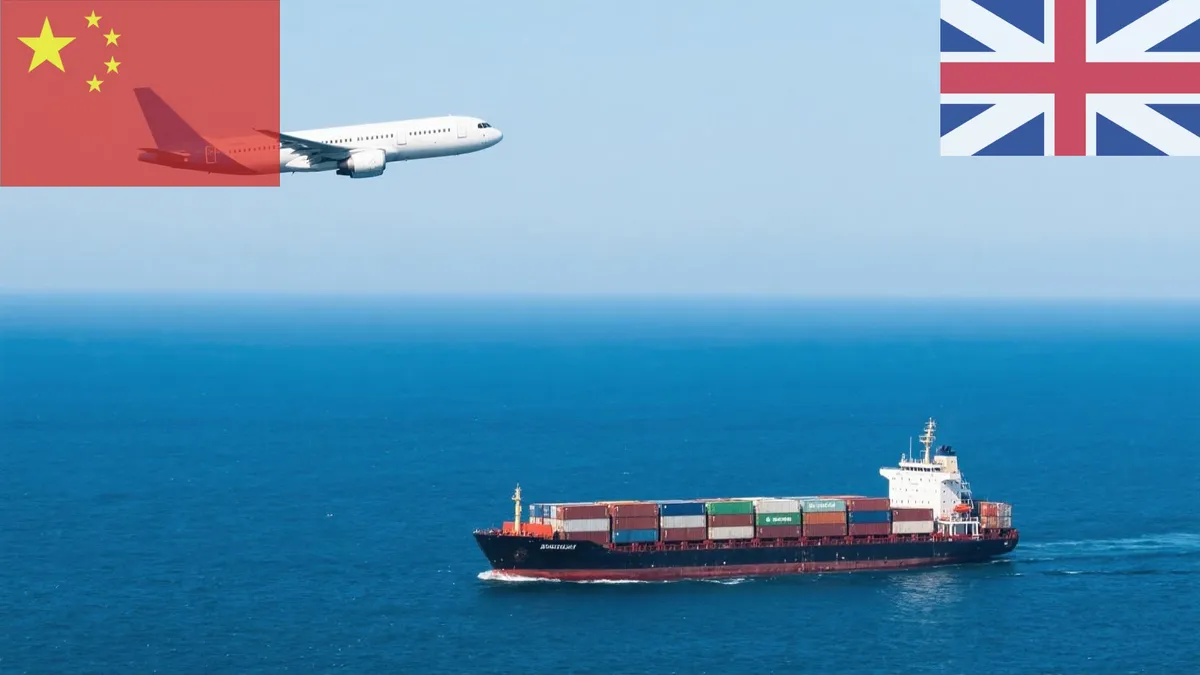
Door to door shipping is a comprehensive logistics service that takes care of transporting goods from the sender's location directly to the recipient's doorstep. This all - inclusive service encompasses every stage of the journey, starting from the initial pickup at the shipper's premises. The shipping company then manages the transit, which may involve multiple modes of transport such as trucks, ships, or planes depending on the distance and nature of the goods. They also handle all the necessary documentation and customs clearance procedures at both the origin and destination countries. This eliminates the need for the sender or receiver to deal with the complexities of international shipping, making it a hassle - free option for businesses and individuals alike.
For example, a small UK - based e - commerce business that sources products from a manufacturer in China can simply arrange for a door to door shipping service. The shipping company will pick up the goods from the Chinese factory, transport them across the ocean, clear them through UK customs, and finally deliver them to the business's warehouse in the UK. This seamless process ensures that the products reach their destination without the business having to worry about the numerous steps in - between.
The Step - by - Step Door to Door Process
- Pickup: The process begins with the shipping company sending a courier or a logistics team to the sender's location in China. They carefully collect the goods, ensuring proper packaging and labeling according to international shipping standards. For instance, if the goods are fragile, they will be packed with appropriate cushioning materials.
- Transport to the Port/Airport: After pickup, the goods are transported to the nearest port or airport in China. This may involve short - distance road transportation. Once at the port or airport, the goods are prepared for the long - haul international journey.
- International Transit: If the chosen mode of transport is sea freight, the goods are loaded onto cargo ships. These ships typically follow established shipping routes, making stops at various ports along the way. In the case of air freight, the goods are loaded onto cargo planes, which offer a much faster but more expensive option for transportation.
- Customs Clearance in the UK: When the goods reach the UK, they must go through customs clearance. The shipping company takes care of submitting all the necessary documents, such as commercial invoices, packing lists, and certificates of origin. They also pay any applicable duties and taxes on behalf of the recipient. Customs officials may inspect the goods to ensure compliance with UK regulations.
- Last - Mile Delivery: Once the goods have cleared customs, they are transported to the recipient's address in the UK. This final leg of the journey is often carried out by local delivery partners who are familiar with the UK road network and can ensure timely and accurate delivery.
Sea Freight vs. Air Freight vs. Rail Freight
Choosing the right transportation method among sea freight, air freight, and rail freight depends on your shipment’s size, urgency, and budget. Here’s a detailed comparison tailored to the China-UK route:
Sea Freight
- Best for: Large shipments (over 20 cubic meters), heavy goods, non-urgent deliveries, and cost-sensitive cargo, such as furniture, machinery, and bulk textiles.
- Capacity: Full Container Load (FCL) for shipments filling a 20ft or 40ft container, or Less than Container Load (LCL) for smaller cargo sharing container space.
- Transit Time: 25-35 days from major Chinese ports (Shanghai, Shenzhen) to UK ports like Felixstowe. However, this can be affected by factors such as port congestion and route.
- Cost: Generally the most cost-effective for large volumes. For example, shipping a 40ft FCL from Shanghai to Felixstowe costs approximately $2,000 - $3,500 (as of 2025), excluding additional fees.
- Advantages: Economical for large shipments, has a relatively large carrying capacity, and is suitable for a wide range of goods.
- Disadvantages: Longer transit times, and potential delays due to port congestion and weather conditions.
Air Freight
- Best for: Small to medium-sized shipments, high-value goods, such as electronics, pharmaceuticals, and time-sensitive deliveries.
- Capacity: Charged by weight (kg) or dimensional weight, whichever is higher.
- Transit Time: 3-7 days from major Chinese airports to UK airports like London Heathrow.
- Cost: Higher but faster. For example, shipping 100kg from Guangzhou to London costs around $4 - $6 per kg (as of 2025), depending on the carrier and season.
- Advantages: Rapid delivery, ideal for perishables or time-critical orders, and offers better security for high-value items.
- Disadvantages: More expensive, and limited capacity for oversized goods.
Rail Freight
- Best for: Medium-sized shipments that require a balance between cost and speed, and for goods that are not as time-sensitive as those shipped by air but need to arrive faster than by sea. It is also suitable for overland connections and can be a more environmentally friendly option.
- Capacity: Can handle a significant amount of cargo, with container sizes similar to sea freight.
- Transit Time: 12-20 days from certain Chinese cities connected to the China-Europe Railway Express to the UK. This can be affected by border crossing procedures and train schedules.
- Cost: Usually falls between sea and air freight in terms of price. For example, shipping a 20ft container from a suitable Chinese origin to the UK by rail may cost around $1,500 - $2,500 (as of 2025), excluding additional fees.
- Advantages: Offers a relatively fast alternative to sea freight, is less affected by weather compared to sea and air, and can be a more sustainable option.
- Disadvantages: Limited origin and destination points as it depends on the railway network, and there may be potential delays at border crossings for customs and regulatory checks.
Tip: For shipments between 5 - 20 cubic meters, carefully compare LCL sea freight, air freight, and rail freight costs. Sometimes, rail freight or air freight may offer better value for moderately urgent cargo.
What is the Door to Door Shipping Cost from China to UK?
Door to door shipping costs from China to the UK are comprehensive, covering a range of services from origin pickup to final delivery. To provide full clarity, below is a detailed breakdown of costs (as of 2025), including individual components, their typical ranges, and total combined expenses for common shipment types.
Core Shipping Costs: Service Components and Total Fees
The total door to door cost is the sum of several key components, which vary by shipping mode (sea, air, or rail) and shipment size. Here’s how they break down:
Sea Freight (LCL: Less than Container Load)
Components of Cost per Cubic Meter:
- Origin Pickup: $10 - $15 (transport from factory/warehouse to Chinese port).
- Export Customs Clearance: $20 - $30 (documentation, declarations, and formalities in China).
- Ocean Freight: $20 - $30 (shipping from Chinese port to UK port).
- Import Customs Clearance: $15 - $20 (UK customs processing, duties excluded).
- Destination Delivery: $10 - $15 (transport from UK port to final address).
Total per Cubic Meter: $75 - $110 (inclusive of all above components).
Example for 10 Cubic Meters:
- Total core cost: $750 - $1,100.
- Plus additional fees (see below) = Total estimated cost: $850 - $1,300.
Sea Freight (FCL: Full Container Load)
Container Size Components of Cost Total Cost Range Example Total with Add-Ons 20ft Container - Origin Pickup: $50 - $80 - Export Clearance: $30 - $50 - Ocean Freight: $1,500 - $3,000 - Import Clearance: $40 - $60 - Destination Delivery: $80 - $120 $1,600 - $3,310 $1,800 - $3,600 40ft Container - Origin Pickup: $80 - $120 - Export Clearance: $30 - $50 - Ocean Freight: $2,500 - $4,000 - Import Clearance: $40 - $60 - Destination Delivery: $100 - $150 $2,750 - $4,380 $3,000 - $4,700 Air Freight
Components of Cost per kg:
- Origin Pickup: $0.50 - $0.80 (transport to Chinese airport).
- Export Customs Clearance: $0.30 - $0.50 (China customs processing).
- Air Freight: $4.00 - $6.00 (cargo flight from China to UK).
- Import Customs Clearance: $0.20 - $0.40 (UK customs processing).
- Destination Delivery: $0.40 - $0.70 (transport from UK airport to final address).
Total per kg: $5.40 - $8.40 (inclusive of all above components).
Example for 50kg Shipment:
- Total core cost: $270 - $420.
- Plus additional fees (see below) = Total estimated cost: $300 - $470.
Rail Freight
Components of Cost per Container (20ft as example):
- Origin Pickup: $60 - $100 (transport to the starting point of the railway service in China).
- Export Customs Clearance: $30 - $50 (documentation and formalities in China).
- Rail Freight: $1,200 - $2,000 (transport from China to the UK via rail).
- Import Customs Clearance: $40 - $60 (UK customs processing).
- Destination Delivery: $100 - $150 (transport from the arrival point in the UK to the final address).
Total per 20ft Container: $1,430 - $2,360 (inclusive of all above components).
Additional Mandatory/Common Fees
These fees apply across all shipping modes and are added to the core costs above:
| Fee Type | Cost Range | Application |
|---|---|---|
| Insurance | 0.3 - 0.5% of cargo value | Optional but recommended (e.g., $30 - $50 for $10,000 goods). |
| UK Customs Duties | Vary by product, with an average around 5 - 10% of the value of the goods (excluding VAT) | Mandatory. |
| VAT (Value Added Tax) in the UK | 20% of the total value of the goods including customs duties | Mandatory for most goods. |
| Peak Season Surcharges | 10 - 20% of core freight cost | Applies during peak seasons, such as pre-Christmas or Chinese New Year periods. |
| Special Handling | 20 - 50% of core freight cost | For fragile, hazardous, or temperature-controlled goods. |
Summary Table: Total Door-to-Door Costs
| Shipping Mode | Shipment Size | Core Cost Range | Typical Additional Fees | Total Estimated Cost |
|---|---|---|---|---|
| Sea Freight (LCL) | 10 cubic meters | $750 - $1,100 | $100 - $200 | $850 - $1,300 |
| Sea Freight (FCL) | 20ft container | $1,600 - $3,310 | $200 - $290 | $1,800 - $3,600 |
| Sea Freight (FCL) | 40ft container | $2,750 - $4,380 | $250 - $320 | $3,000 - $4,700 |
| Air Freight | 50kg | $270 - $420 | $30 - $50 | $300 - $470 |
| Rail Freight | 20ft container | $1,430 - $2,360 | $150 - $200 | $1,580 - $2,560 |
All costs are in USD and reflect average market rates as of 2025. For precise quotes, contact a logistics provider with your shipment details (origin city, destination, cargo type, and timeline).
How Long Does Door to Door Shipping from China to UK Take?
Transit duration fluctuates with mode, distance from China origin, and real-time logistics environment (including UK border changes):
- Sea LCL: 35–45 days (includes LCL consolidation & clearance delays)
- Sea FCL: 28–40 days (direct east coast China to South England routes fastest)
- Air Freight: 4–8 days (express options as little as 3 days for priority goods)
2025 Real-Time Updates:
- Felixstowe invested in new AI-powered container handling (Spring 2025) and CDS clearance now reduces margin for error.
- Heathrow’s new cargo slot system implemented in June 2025 cut air import dwell times for perishable and fashion products.
Tip: Allow extra lead time if shipping immediately before UK holidays, during major sales events, or before China’s Golden Week.
Key Factors Influencing Door-to-Door Transit Time:
- Origin and Destination Specifics: Shipments from southern Chinese industrial centers (e.g., Pearl River Delta, around Shenzhen) are generally faster. The final UK delivery location (e.g., central London vs. rural Scotland) also impacts the overall timeline.
- Customs Clearance Efficiency (UK): Flawless documentation, accurate HS code classification, and timely electronic pre-lodgments are indispensable to avoid significant delays by HMRC. Discrepancies (e.g., concerning UKCA marking, product safety standards) can trigger substantial holds.
- Port/Airport Congestion: While major UK hubs (Felixstowe, Southampton, LHR, EMA) are efficient, peak seasons (Q4 pre-Christmas, Chinese New Year) can cause temporary increases in waiting times or processing delays.
- Weather Conditions: Adverse weather in shipping lanes (e.g., North Sea storms) or at origin/destination can temporarily disrupt sea freight and air freight schedules.
- Carrier Schedules & Service Levels: Reputable carriers with reliable schedules and optimal service levels are crucial for predictable transit.
DTFU Logistics: Your Trusted Door - to - Door Partner
DTFU Logistics has established itself as a reliable and efficient door to door shipping partner for businesses and individuals shipping from China to the UK. They have an extensive network of partners in both countries, allowing them to offer seamless pickup, transit, and delivery services.
DTFU Logistics provides real - time tracking for all shipments, giving customers peace of mind as they can monitor the progress of their goods at every stage of the journey. Their team of experts is well - versed in handling customs clearance procedures in both China and the UK, ensuring that there are no unnecessary delays due to paperwork or regulatory issues.
In terms of cost - effectiveness, DTFU Logistics offers competitive pricing, taking into account the various factors that affect shipping costs. They also provide personalized solutions based on the specific needs of each customer, whether it's a small - scale e - commerce business shipping a few parcels or a large - scale manufacturer sending containers full of goods.
Moreover, DTFU Logistics is committed to providing excellent customer service. Their customer support team is available around the clock to answer any questions or concerns that customers may have regarding their shipments.