If you are sourcing products from Chinese suppliers and need them delivered to Venezuela reliably and on time, air shipping from China to Venezuela is a fast, practical logistics solution — but it comes with a set of challenges you will not encounter when shipping to the US or Europe. Between SENIAT customs complexity, limited direct flight options, and the realities of international sanctions, Venezuela is a destination that demands careful planning and the right freight forwarder. This guide covers everything you need to know: realistic transit times, 2026 air freight pricing by weight tier and departure airport, a step-by-step breakdown of the entire shipping process, a deep dive into Venezuelan customs clearance, and a practical framework for choosing a freight partner who actually understands this market.
Air Freight vs. Express Courier vs. Sea Freight
Before diving into routes and rates, the first decision is which shipping mode fits your cargo. Many importers default to the cheapest option without weighing the trade-offs — and for Venezuela, those trade-offs can be especially painful.
For a deeper look at the air versus express decision across markets, our guide on Air Freight vs Express: Which Is Faster and More Cost-Effective from China to USA covers the cost-speed trade-offs in detail.
Comparison at a Glance
| Factor | Air Freight | Express Courier (DHL, FedEx, UPS) | Sea Freight |
|---|---|---|---|
| Transit Time | 5–12 days airport-to-airport | 3–7 days door-to-door | 35–55 days port-to-port |
| Cost per kg (typical) | $4.00 – $9.50 | $7.50 – $16.00 | $0.80 – $3.00 |
| Minimum Shipment | ~45 kg (cost-effective) | 0.5 kg | 1 CBM or ~200 kg |
| Best For | Commercial cargo 50–1,000+ kg | Samples, documents, small parcels | Bulk goods, 2+ CBM, non-urgent |
| Door-to-Door Available | Yes (with DDP service) | Yes (built-in) | Yes (with DDP service) |
| Venezuela-Specific Note | Fastest option for commercial volumes | Expensive per kg at scale | Port congestion at La Guaira / Puerto Cabello adds 5–10+ days |
When Air Freight Wins
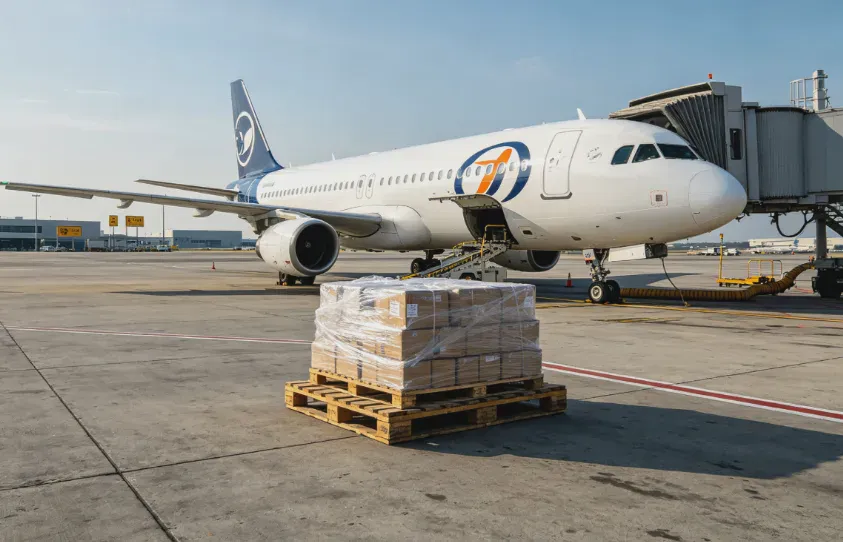
Air freight is the right choice when you are shipping commercial volumes (50–1,000+ kg) of high-value or time-sensitive goods. Electronics, pharmaceuticals, automotive spare parts, medical equipment, and seasonal merchandise all justify the premium because the alternative — weeks of port delays or missed sales windows — costs more than the freight itself.
For Venezuela specifically, air freight also sidesteps the chronic congestion at Venezuelan seaports. La Guaira and Puerto Cabello have experienced persistent delays in recent years, with some shipments sitting for weeks awaiting customs release. Flying cargo into Simón Bolívar International Airport (CCS) in Caracas puts your goods through a faster, more predictable clearance channel.
When Express Courier Wins
For shipments under 30 kg — product samples, legal documents, replacement parts, or small e-commerce orders — express courier services from DHL, FedEx, or UPS are the most practical option. They handle door-to-door delivery including customs clearance, with tracking at every step. The per-kg cost is higher ($7.50–$16.00/kg), but for small shipments the absolute dollar difference is manageable, and the convenience is unmatched.
When Sea Freight Wins
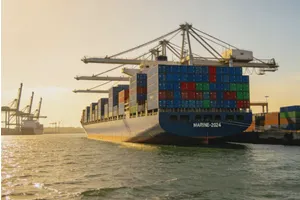
If you are shipping 2+ cubic meters of low-value, non-urgent cargo — furniture, construction materials, bulk textiles — sea freight remains the cost champion at $0.80–$3.00/kg. Just build in 35–55 days of transit and a realistic buffer for Venezuelan port clearance. For many importers, a hybrid strategy works best: sea freight for base inventory, air freight for urgent replenishment. For a complete breakdown of ocean freight options including FCL, LCL, and port-to-port transit times, see our guide on Sea Shipping from China to Venezuela.
What About Sea-Air Combined?
Sea-air combined shipping — where cargo travels by sea to a regional hub (e.g., Panama or Colombia) and then flies to CCS — exists as a theoretical middle ground, but in practice it is rarely used for Venezuela due to limited regional air cargo capacity and the added complexity of coordinating two carriers. For most importers, pure air or pure sea is the more straightforward choice.
China–Venezuela Air Freight Routes, Airlines & Transit Times
Understanding the route options from China to Venezuela helps you set realistic expectations and choose the departure airport that best serves your cargo.
Departure Airports in China
China's major international cargo hubs all support air freight to Venezuela, but frequency, pricing, and routing vary significantly:
| Airport | Code | Connectivity to Venezuela | Notes |
|---|---|---|---|
| Guangzhou Baiyun | CAN | Best — rare direct flight available | Most competitive rates; V0-308 direct to CCS |
| Shanghai Pudong | PVG | Excellent — daily connections via Europe/IST | Reliable, consistent pricing |
| Shenzhen Bao'an | SZX | Good — multiple weekly connections | Wide price range depending on carrier |
| Beijing Capital | PEK | Good — via IST primarily | Solid for northern China suppliers |
| Xiamen Gaoqi | XMN | Moderate — via European hubs | Niche routes via Lisbon/Amsterdam |
| Hong Kong | HKG | Excellent — global hub connectivity | Premium pricing but highest frequency |
Arrival Airports in Venezuela
Simón Bolívar International Airport (CCS) in Caracas is the primary air cargo gateway for Venezuela, handling the vast majority of international air freight. Secondary airports — Arturo Michelena International Airport (VLN) in Valencia and La Chinita International Airport (MAR) in Maracaibo — receive limited international cargo flights. In nearly all cases, your shipment will arrive at CCS and then be trucked to its final destination within Venezuela.
Airline Routes & Transit Times
| Airline / Flight | Route | Transit Hub | Frequency | Airport-to-Airport |
|---|---|---|---|---|
| Venezuela United (V0-308) | CAN → CCS | None (direct) | 1x/week (Mondays) | 1–3 days |
| Turkish Airlines (TK) | PEK / PVG / CAN → IST → CCS | Istanbul | 3x/week | 7–12 days |
| Air Europa (UX-996) | PVG / CAN → AMS → MAD → CCS | Madrid | Weekly | 5–10 days |
| Air Portugal (TP-047) | XMN → AMS/CDG → LIS → CCS | Lisbon | Weekly | 7–10 days |
| Conviasa / Avianca | Various → BOG/PTY → CCS | Bogotá / Panama | Varies | 5–8 days |
Turkish Airlines is the workhorse on this route — consistent frequency, reasonable transit times, and good cargo capacity through its Istanbul hub. Air Europa and Air Portugal offer competitive alternatives via European transit points. Conviasa and Avianca provide regional connectivity through Latin American hubs, which can sometimes offer faster clearance due to regional trade agreements. For importers sourcing goods for multiple Latin American destinations, we also provide dedicated Shipping from China to Colombia services with regular air and sea connections through Bogotá.
Transit Time Summary
| Service Level | Typical Transit Time |
|---|---|
| Direct flight (CAN → CCS, limited availability) | 1–3 days |
| Standard connecting air freight (airport-to-airport) | 5–12 days |
| Door-to-door with customs clearance + last mile | 7–14 days |
| Express courier (DHL/FedEx/UPS, door-to-door) | 3–7 days |
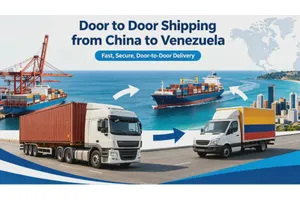
The door-to-door window of 7–14 days is the most realistic figure for a typical commercial air freight shipment from China to Venezuela. It accounts for origin handling, connecting flights, SENIAT customs clearance at CCS, and final trucking to your warehouse or store. For a comprehensive look at the full door-to-door process including DDP customs handling and last-mile delivery across Venezuela, read our guide on Door to Door Shipping from China to Venezuela.
Air Shipping Costs from China to Venezuela
Air freight pricing is never a single number — it depends on weight, volume, departure airport, carrier, season, and cargo type. Below are realistic 2026 estimates to help you budget.
Pricing by Weight Tier (USD)
| Weight Tier | Air Freight (Airport-to-Airport) | Express Courier (Door-to-Door) |
|---|---|---|
| 1–5 kg | — | $80 – $120 total |
| 10–30 kg | — | $150 – $300 total |
| 45–100 kg | $5.00 – $9.50 / kg | $10 – $16 / kg |
| 100–300 kg | $4.50 – $8.00 / kg | Air freight recommended |
| 300–1,000 kg | $4.00 – $7.00 / kg | Air freight recommended |
| 1,000+ kg | $3.50 – $6.50 / kg | Air freight recommended |
The price per kilogram drops significantly as your shipment weight increases — this is the economy of scale that makes air freight cost-effective for commercial volumes. A 100 kg shipment at $6.50/kg costs $650 total; a 500 kg shipment at $5.00/kg costs $2,500 — five times the cargo for less than four times the cost.
Pricing by Departure Airport (General Cargo, per kg)
| Departure Airport | Estimated Price Range (CNY/kg) | Approx. USD Equivalent |
|---|---|---|
| Guangzhou (CAN) | ¥62 – ¥84 | $8.50 – $11.50 |
| Shanghai (PVG) | ¥59 – ¥63 | $8.10 – $8.60 |
| Shenzhen (SZX) | ¥58 – ¥131 | $8.00 – $18.00 |
| Xiamen (XMN) | ¥55 – ¥121 | $7.50 – $16.50 |
Rates are dynamic — they shift weekly based on fuel costs, capacity availability, and seasonal demand. The prices above reflect general cargo (non-sensitive, non-dangerous goods) as of mid-2026. Always confirm current rates with your freight forwarder before budgeting.
What Drives Air Freight Pricing
Several factors beyond weight influence your final rate:
- Fuel surcharges and security fees typically add ¥300–¥400 (approximately $40–$55) per air waybill.
- Peak season premiums kick in before Christmas (October–December) and after Chinese New Year (February–March), when cargo capacity tightens and rates can jump 20–40%.
- Cargo type surcharges apply to sensitive or regulated goods — lithium batteries, liquids, powders, and items classified as dangerous goods (DG) under IATA regulations. Expect a 30–100% premium for these categories due to special handling and documentation requirements.
Volumetric Weight: The Hidden Cost Factor
One of the most common surprises for first-time air shippers is volumetric weight — also called chargeable weight. Airlines charge based on whichever is greater: the actual gross weight of your cargo or its volumetric weight.
The formula:
Volumetric Weight (kg) = Length (cm) × Width (cm) × Height (cm) ÷ 6000
Worked example: A box measuring 50 cm × 40 cm × 30 cm that weighs 8 kg actual weight:
- Volumetric weight: 50 × 40 × 30 ÷ 6000 = 10 kg (air freight standard)
- Express courier divisor: 50 × 40 × 30 ÷ 5000 = 12 kg (express standard)
- You are charged for 10 kg (air freight) or 12 kg (express), not the 8 kg actual weight
This is why lightweight but bulky items — foam packaging, empty containers, textiles — can cost far more to ship by air than their actual weight suggests. Your freight forwarder should help you optimize packaging to minimize volumetric weight before booking.
Why the Cheapest Rate Isn't Always Best for Venezuela
A rock-bottom per-kg quote may look attractive, but for a destination as complex as Venezuela, the true cost of a shipment includes customs clearance success, transit reliability, and what happens when something goes wrong. A forwarder quoting $4.00/kg but leaving you to navigate SENIAT alone may end up costing you far more in delays, storage fees, and frustration than a partner quoting $6.00/kg with full DDP customs support included.
The Air Freight Process: Step-by-Step from China to Venezuela
Understanding how your cargo moves from your supplier in China to your door in Venezuela removes uncertainty and helps you spot potential issues before they become problems. Here is the full journey, stage by stage.
Step 1: Supplier Pickup & Export Preparation (Days 1–2)
The process begins at your supplier's factory or warehouse in China. Your freight forwarder arranges truck pickup and transports the cargo to their origin warehouse or consolidation center. If you source from multiple suppliers — common for importers buying electronics from Shenzhen, textiles from Guangzhou, and components from Shanghai — the forwarder consolidates all goods into a single shipment at their warehouse.
During this stage, the forwarder verifies the commercial invoice and packing list against the actual cargo. Accuracy here is critical — discrepancies between documents and physical goods are the single most common trigger for customs delays at both the Chinese export and Venezuelan import stages.
Step 2: Export Customs Declaration in China (Days 2–3)
Before cargo can leave China, it must clear Chinese export customs. The forwarder files an export declaration with China Customs, submitting the commercial invoice, packing list, and any required export licenses. For standard general cargo, this typically clears within half a day to one day — provided the documentation is accurate and complete.
Step 3: Cargo Terminal Handling & AWB Issuance (Days 3–4)
Cleared cargo is delivered to the departure airport's cargo terminal, where it undergoes security screening, palletization, and build-up into Unit Load Devices (ULDs) — the standardized containers used in aircraft cargo holds.
At this point, the Airway Bill (AWB) is issued. The AWB is the master transport document for your air shipment — it serves as the contract of carriage, receipt of goods, and the document that tracks your cargo through every stage of transit. Your AWB number is your shipment's unique identifier for tracking purposes.
Step 4: International Air Transit (Days 4 → 7–14)
Your cargo is loaded onto the aircraft and departs China. Depending on the routing, it may transit through one or two intermediate hubs — Istanbul, Madrid, Amsterdam, Lisbon, Bogotá, or Panama City — before arriving at CCS in Caracas.
Throughout transit, a competent freight forwarder provides milestone tracking updates. With DTFU Logistics, our 24/7 online tracking platform gives you real-time visibility — you know when your cargo departs the origin airport, connects through the transit hub, and arrives at CCS. For high-value air cargo, this level of transparency is not a luxury; it is a requirement.
Step 5: Arrival at CCS & Import Customs Clearance (Days 7–14 → +1–3 Days)
This is the most critical stage — and the one where Venezuela differs most from other destinations. Upon arrival at Simón Bolívar International Airport, your cargo is transferred to the airport's customs-bonded warehouse, where SENIAT (Servicio Nacional Integrado de Administración Aduanera y Tributaria) — Venezuela's customs and tax authority — takes over.
SENIAT officers inspect the documentation, assess the declared value, calculate applicable import duties and IVA (VAT), and determine whether the shipment can be released or requires further inspection. When documentation is complete and accurate, clearance takes 1–3 days. When issues arise — incomplete paperwork, undervalued invoices, missing permits — delays can stretch to 1–2 weeks or longer.
Experienced freight forwarders mitigate this risk through pre-clearance document review: every document is verified against Venezuelan import requirements before the cargo ever leaves China, dramatically reducing the chance of a SENIAT hold.
Step 6: Last-Mile Delivery in Venezuela (Final 1–3 Days)
Once customs release is obtained and duties are paid, the cargo is loaded onto a truck for final delivery. From CCS, cargo can reach Caracas (same day), Valencia (2–3 hours by road), Maracaibo (8–10 hours), or any other Venezuelan city within 1–3 days, depending on distance and road conditions.
The shipment concludes with a Proof of Delivery (POD) — a signed confirmation that your goods arrived at the designated address, in the expected condition, on the expected date.
Venezuela Customs Clearance: SENIAT, Documentation & Avoiding Delays
Venezuelan customs is the single biggest source of anxiety for importers shipping from China — and the single biggest reason to work with an experienced freight forwarder rather than the cheapest one you can find.
Understanding SENIAT
SENIAT is Venezuela's integrated customs and tax authority, responsible for assessing duties, collecting import taxes, and enforcing import regulations at all ports of entry including CCS airport. SENIAT operates under a framework that has grown increasingly complex in recent years due to economic volatility, currency controls, and international trade restrictions.
The key thing to understand is that SENIAT officers have significant discretion. Two identical shipments with identical documentation can have different clearance experiences depending on the officer, the day, and current enforcement priorities. This is not a criticism — it is a reality that shapes how smart importers prepare.
Complete Documentation Checklist
Missing or incorrect paperwork is the number one cause of customs delays. Here is exactly what you need:
| Document | Purpose | Who Provides It |
|---|---|---|
| Airway Bill (AWB) | Master transport contract and tracking document | Airline / Freight Forwarder |
| Commercial Invoice | Declares cargo value, buyer and seller details, Incoterms | Exporter / Supplier |
| Packing List | Itemizes quantities, weights, and dimensions per package | Exporter / Supplier |
| Certificate of Origin | Certifies goods were manufactured in China (may reduce duty rates under trade agreements) | China Chamber of Commerce |
| Import Permit / License | Required for regulated product categories (electronics, medical devices, food, chemicals) | Importer (Venezuela side) |
| HS Code Classification | Determines the applicable duty rate for each product | Freight Forwarder / Customs Broker |
Common Causes of Customs Delays — and How to Avoid Them
1. Undervalued commercial invoices. SENIAT aggressively scrutinizes declared values. If your commercial invoice shows a unit price far below market norms, expect a reassessment — and potential fines. Always declare accurate transaction values.
2. Incomplete or inconsistent documentation. A packing list that does not match the commercial invoice, or an AWB with the wrong consignee name, can trigger an automatic hold. Your forwarder should cross-check every document before departure.
3. Restricted goods without permits. Certain electronics, medical devices, food products, and chemicals require import licenses from Venezuelan regulatory agencies before they can clear customs. Confirm permit requirements before your supplier ships anything.
4. Using a forwarder without SENIAT experience. A generalist forwarder unfamiliar with Venezuelan customs procedures is a liability. They may have great rates on paper but no idea how to navigate a SENIAT inspection.
Import Duties & Taxes Overview
Venezuela applies import duties based on the CIF value (Cost + Insurance + Freight) of the goods, with rates typically ranging from 5% to 35% depending on the HS code classification. On top of duty, IVA (Impuesto al Valor Agregado) — Venezuela's value-added tax — is applied to the CIF value plus the duty amount. Additional fees such as customs service charges and warehouse storage may also apply.
This is why DDP (Delivered Duty Paid) shipping is strongly recommended for Venezuela: your forwarder calculates and includes all duties and taxes in your all-in quote upfront. You pay once, and the forwarder handles every payment to SENIAT on your behalf. No surprises, no wire transfers to Venezuelan government accounts, no clearance delays because duties were miscalculated.
Incoterms 2020 for Air Freight to Venezuela
Incoterms (International Commercial Terms) define who is responsible for what at each stage of an international shipment. Choosing the right Incoterm for air freight to Venezuela can be the difference between a smooth delivery and a customs nightmare.
Incoterms Quick Reference for Air Freight
| Incoterm | Who Handles Export Clearance? | Who Pays Main Carriage? | Who Handles Import Clearance & Duties? | Best For |
|---|---|---|---|---|
| EXW (Ex Works) | Buyer | Buyer | Buyer | Maximum buyer control; experienced importers with their own Venezuelan customs broker |
| FCA (Free Carrier) | Seller | Buyer | Buyer | Seller handles China-side delivery to carrier |
| CPT (Carriage Paid To) | Seller | Seller | Buyer | Forwarder manages transit; buyer handles SENIAT |
| CIP (Carriage & Insurance Paid To) | Seller | Seller | Buyer | Same as CPT but includes cargo insurance |
| DAP (Delivered at Place) | Seller | Seller | Buyer | Forwarder delivers to your door; you handle import clearance |
| DDP (Delivered Duty Paid) | Seller | Seller | Seller (via forwarder) | Recommended for Venezuela — forwarder handles everything including SENIAT duties |
Why DDP Is Particularly Valuable for Venezuela
Three reasons make DDP the default recommendation for air freight to this market:
1. SENIAT complexity. Self-clearing a shipment through Venezuelan customs without local expertise is difficult even for experienced importers. A forwarder offering DDP has established customs brokerage relationships and knows exactly what SENIAT requires.
2. Payment simplicity. Venezuela's banking and foreign currency environment remains challenging. Under DDP, you pay a single all-inclusive invoice to your Chinese freight forwarder — no separate payments to Venezuelan customs brokers, no wire transfers to government accounts, no currency conversion headaches at the destination.
3. No surprise costs. DDP quotes include estimated duties and taxes upfront. If duties come in higher than expected, the forwarder absorbs the difference — not you. This budget certainty is worth the modest premium over DAP or CPT.
A Real-World DDP Scenario
A Caracas-based importer sources 200 kg of consumer electronics from a supplier in Shenzhen. Under DDP with DTFU Logistics, the process works like this:
- DTFU picks up the cargo from the Shenzhen supplier and consolidates it at our Guangzhou warehouse
- Export clearance is handled in China, and the cargo is booked on a Turkish Airlines flight via Istanbul to CCS
- Upon arrival, DTFU's customs broker clears the shipment through SENIAT, pays all applicable duties and IVA, and arranges trucking to the importer's warehouse in Caracas
- The importer receives a single invoice and a single point of contact — from factory floor to final delivery
Compare this to EXW, where the importer would need to coordinate a Chinese trucking company, a Chinese customs broker, an airline or freight forwarder, a Venezuelan customs broker, a SENIAT duty payment, and a Venezuelan trucking company — all independently. For most importers, DDP is not a luxury; it is the only practical choice.
For a broader comparison of trade term strategies and when each makes sense, check out our guide on DDP vs FOB: Which Option Saves Time and Reduces Hassle.
How to Choose a Reliable Air Freight Forwarder for Venezuela
Your freight forwarder is arguably more important than the airline carrying your cargo — especially for Venezuela, where local knowledge makes the difference between a shipment that clears customs in two days and one that sits in limbo for two weeks.
Why Venezuela Demands a Specialist
Generalist freight forwarders who "ship everywhere" rarely have deep Venezuela expertise. They may offer competitive per-kg rates but lack the relationships, documentation know-how, and SENIAT experience to get your cargo cleared smoothly. For a destination as nuanced as Venezuela, you want a forwarder who has shipped this specific route repeatedly — not someone figuring it out for the first time with your cargo.
Six Things to Look For
1. Proven Route Experience. Ask directly: "How many air shipments have you handled from China to Venezuela in the last 12 months?" A forwarder with real volume on this corridor knows the airlines, the transit hubs, the customs officers, and the pitfalls. For importers managing supply across multiple Latin American markets, a forwarder with broader regional experience — from Air Shipping from China to Colombia and Air Shipping from China to Brazil to Venezuela — provides a single, consistent logistics partner for the entire region.
2. SENIAT & Customs Expertise. Your forwarder should be able to explain — in plain language — what SENIAT requires for your specific product category, which documents are mandatory, and what the typical clearance timeline looks like. If they are vague on Venezuelan customs, keep looking.
3. DDP Capability. Does the forwarder offer true door-to-door DDP service including duty and tax payment, or only airport-to-airport? For Venezuela, DDP is strongly preferred. A forwarder who cannot or will not quote DDP likely lacks the local customs infrastructure to support it.
4. Direct Airline Relationships. Forwarders with direct contracts with Turkish Airlines, Air Europa, and other carriers on the China–CCS corridor can offer better rates and secured cargo space — even during peak season when capacity tightens industry-wide.
5. Industry Credentials. Look for FIATA (International Federation of Freight Forwarders Associations) and IATA (International Air Transport Association) certification. These are not marketing badges — they indicate that the forwarder meets international standards for professional competence, financial stability, and regulatory compliance.
6. Transparency & Communication. You should receive a clear all-in quote (not a low base rate with vague "additional charges may apply"), real-time shipment tracking, and a dedicated account manager who responds to your questions — not a generic customer service queue.
Red Flags to Avoid
- Rates that are dramatically lower than market average (likely hiding fees or skipping customs support)
- No experience with Latin American routes — "we ship everywhere" is not a qualification
- No DDP option for Venezuela — a sign they lack local customs brokerage capability
- Vague or evasive answers about customs clearance procedures
Why Importers Trust DTFU Logistics for Venezuela Air Freight
At DTFU Logistics, we have built our Venezuela air freight service on the recognition that this is not a standard route. Founded in 2014 and headquartered in Shenzhen with operations across China's major export hubs — Guangzhou, Shanghai, Ningbo, Qingdao, and more — we hold both FIATA and IATA certification and maintain direct contracts with the airlines that serve the China–Venezuela corridor.
Our Venezuela team understands SENIAT procedures, prepares documentation to Venezuelan import standards before cargo leaves China, and offers full DDP door-to-door service with transparent all-in pricing. Every client is assigned a dedicated account manager and receives access to our 24/7 online cargo tracking platform — so you always know exactly where your shipment is and when it will arrive. For businesses importing across the broader Western Hemisphere, explore our comprehensive Shipping From China to Americas services covering North, Central, and South American destinations.
FAQs
How long does air shipping from China to Venezuela take?
A direct cargo flight from Guangzhou (CAN) to Caracas (CCS) takes just 1–3 days, but availability is limited to one weekly flight. Standard connecting air freight — via Istanbul, Madrid, Lisbon, or Bogotá — takes 5–12 days airport-to-airport. With customs clearance and last-mile delivery included, a realistic door-to-door window is 7–14 days.
What is the cost of air freight from China to Venezuela per kg?
For general cargo, expect approximately $4.00–$9.50/kg for air freight (airport-to-airport), depending on weight tier and departure airport. Express courier services (DHL, FedEx, UPS) run $7.50–$16.00/kg for smaller shipments. Rates are dynamic and should be confirmed with your forwarder at the time of booking.
Can I ship electronics or batteries from China to Venezuela by air?
Yes, but with important caveats. Lithium batteries and certain electronic devices are classified as dangerous goods (DG) under IATA regulations and require special packaging, documentation (including a Dangerous Goods Declaration), and handling. Expect a 30–100% surcharge over general cargo rates. Always work with a forwarder who has DG certification and experience with this cargo type.
Is there a direct cargo flight from China to Venezuela?
Yes — Venezuela United (flight V0-308) operates a direct Guangzhou (CAN) to Caracas (CCS) cargo service once per week on Mondays, with a 1–3 day transit time. However, capacity is extremely limited and demand is high. Most commercial shipments use connecting flights via Istanbul, Madrid, or other transit hubs, which add several days but offer more consistent availability.
What documents do I need for air shipping from China to Venezuela?
The essential documents are an Airway Bill (AWB), Commercial Invoice, Packing List, and Certificate of Origin. Depending on your product category, you may also need import permits or licenses from Venezuelan regulatory agencies. See the full documentation checklist in Section 6 above.
Is DDP air shipping available to Venezuela?
Yes — and it is strongly recommended. DDP (Delivered Duty Paid) means your freight forwarder handles every stage: China export clearance, international air transit, SENIAT import clearance, duty and IVA payment, and final delivery to your door. You receive one all-inclusive invoice with no surprise charges at destination.
What items are restricted or prohibited for air freight to Venezuela?
Standard IATA dangerous goods restrictions apply (explosives, flammable materials, certain chemicals). Venezuela also restricts or requires special permits for food products, used goods, pharmaceuticals, and certain electronics. Always disclose your full cargo details to your forwarder before booking so they can verify compliance.
Whether you are a B2B importer shipping commercial electronics from Guangzhou, an SME consolidating goods from multiple suppliers across China, or a first-time buyer testing the Venezuelan market with an initial sample order, DTFU Logistics provides end-to-end Shipping From China to Venezuela solutions — by air, sea, and door-to-door DDP — backed by FIATA and IATA certification, direct airline contracts on the China–CCS corridor, and a dedicated team with real Venezuela customs expertise.