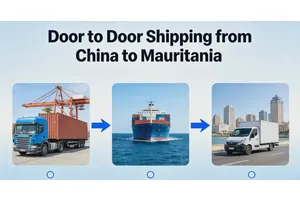
If you're sourcing goods from China and need them delivered to Mauritania, you've probably asked yourself: What's the real cost of sea shipping, and how do I avoid overpaying?
The short answer: shipping a 20FT container from Shanghai to Nouakchott typically runs $3,200–$4,200 (all-in, mid-2026 reference range), while LCL shipments start around $120–$160 per CBM. But the final number depends heavily on your cargo profile, port choices, season, and the Incoterm you negotiate.
This guide breaks down every component that shapes your sea shipping cost from China to Mauritania — from freight rate anatomy and FCL vs. LCL economics to hidden fees and Mauritania-specific import rules. By the end, you'll have a clear framework to budget accurately and choose the right shipping strategy.
Key Ports in China and Mauritania
Your choice of origin and destination ports has a direct impact on freight rates, transit time, and overall logistics complexity.
Major Chinese Export Ports for West Africa
China operates several of the world's busiest container ports. For shipments bound for Mauritania, these five are the most frequently used:
| Port Name | Location | Annual Throughput (TEU, 2023) | Key Advantages | Typical Transit to Nouakchott |
|---|---|---|---|---|
| Shanghai | East China | 47.3 million | World's largest port; highest sailing frequency to West Africa | 35–45 days |
| Shenzhen | South China | 29.8 million | Proximity to Pearl River Delta manufacturing; fast customs | 33–42 days |
| Ningbo-Zhoushan | East China | 33.4 million | Advanced terminal automation; quick container turnaround | 35–44 days |
| Guangzhou | South China | 24.5 million | Strong Africa trade connections; competitive pricing | 33–45 days |
| Qingdao | North China | 25.7 million | Preferred for northern China exporters; modern cold-chain facilities | 38–50 days |
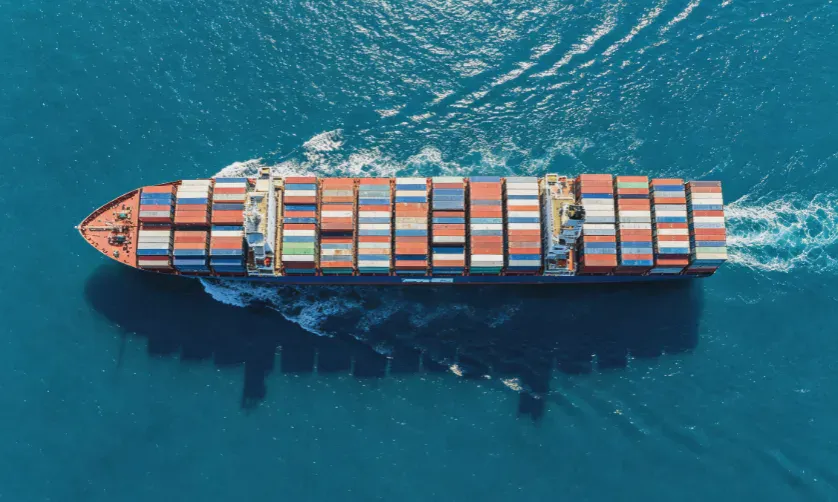
All five ports offer regular FCL and LCL services to West Africa via major carriers including Maersk, MSC, CMA CGM, and COSCO. Most sailings involve transshipment through Mediterranean hubs such as Algeciras (Spain) or Tangier Med (Morocco), as direct China–Nouakchott services are limited.
Mauritania's Primary Gateway: Nouakchott Port
| Port Name | Location | Annual Throughput (2022) | Primary Cargo Types | Notes |
|---|---|---|---|---|
| Nouakchott Port (Port de l'Amitié) | Capital city, West Coast | ~1.2 million tons | Containers, bulk cargo, general cargo, project cargo | Main commercial harbor; ongoing expansion of container handling facilities |
Nouakchott Port is the entry point for virtually all sea freight arriving in Mauritania. Recent infrastructure investments have improved container yard capacity and customs processing efficiency, though congestion can still occur during peak import periods (notably before Ramadan).
Planning tip: If you're shipping from South China (Guangdong/Fujian), pairing Shenzhen or Guangzhou with Nouakchott typically offers the shortest transit. For cargo originating in the Yangtze River Delta, Shanghai or Ningbo are the natural choices. A reliable freight forwarder can help you evaluate port pairings against your specific timeline and budget.
Factors That Determine Sea Shipping Costs
The headline rate you see on a freight index rarely matches your final invoice. Understanding what drives the total cost helps you negotiate better and avoid surprises.
Freight Rate Components
| Component | Description | Approximate Share |
|---|---|---|
| Basic Ocean Freight | Base carrier charge for port-to-port container transport | 60–70% of total |
| BAF (Bunker Adjustment Factor) | Fuel price fluctuation surcharge | 5–10% |
| CAF (Currency Adjustment Factor) | Exchange rate risk surcharge | 1–3% |
| Port Charges (THC) | Terminal handling at origin and destination ports | 10–20% |
| Documentation Fees | Bill of lading, export/import documentation processing | $40–120 per shipment |
| ISPS Security Fee | International Ship & Port Facility Security surcharge | $10–25 per container |
| Customs Duties & Taxes | Import duties, VAT, and clearance fees in Mauritania | Varies by cargo type and value |
| Other Surcharges | Peak Season Surcharge (PSS), congestion fees, equipment imbalance, war risk (if applicable) | Variable |
Actual proportions depend on your route, carrier, cargo type, and season. Always request an itemized quotation.
How Cargo Type, Weight & Volume Affect Pricing
Your shipment's physical characteristics are a primary cost driver:
- General cargo (textiles, machinery, furniture): Standard rates apply.
- Dangerous goods (chemicals, batteries, lithium-ion products): Higher surcharges for special handling, documentation, and stowage.
- Oversized / OOG (Out-of-Gauge) cargo: Requires flat racks or open-top containers at premium rates.
The weight-vs-volume rule for LCL: Freight is charged on whichever is greater — actual weight (metric tons) or volumetric weight (1 CBM = 1,000 kg). If your cargo is light but bulky, you pay for the space it occupies, not its weight.
| Container Type | Internal Volume (CBM) | Typical Payload (tons) | Best For |
|---|---|---|---|
| 20FT | 28 | 21–25 | Small-to-medium shipments; dense/heavy cargo |
| 40FT | 56 | 26–28 | Bulkier, moderately heavy cargo |
| 40HQ | 68 | 24–26 | High-volume, lighter goods; maximizing CBM per dollar |
| 45HQ | 78 | 22–24 | Extra-large, high-volume shipments |
Quick reference:
- 10 CBM of electronics (2,000 kg) from Shanghai to Nouakchott via LCL: roughly $120–$160/CBM (all-in)
- Same cargo in a dedicated 20FT FCL: roughly $3,200–$4,200 (all-in, mid-2026 reference)
If your shipment exceeds 15–18 CBM, FCL is almost always more cost-effective on a per-unit basis. We'll explore this in detail in the FCL vs. LCL section below.
Seasonal Fluctuations & Market Dynamics
Ocean freight rates are never static. Key volatility drivers include:
- Peak Season Surges: Rates can spike 20–40% during Chinese New Year (January–February), Golden Week (October), and the pre-Christmas holiday rush (August–October).
- Carrier Capacity Management: Blank (cancelled) sailings and vessel-sharing alliance adjustments can tighten capacity on the Asia–West Africa lane with little notice.
- Fuel Price Volatility: Marine bunker price swings flow directly into BAF surcharges.
- Geopolitical Events: Red Sea security disruptions (ongoing since late 2023) have forced many Asia–Africa services to reroute, adding 10–15 days and significant cost to some sailings.
- Environmental Compliance: IMO regulations on sulfur emissions and the EU ETS extension to shipping incrementally add to carrier operating costs.
Takeaway: Book 3–4 weeks ahead of peak seasons, and always confirm whether your quote is valid for 7, 14, or 30 days.
FCL vs. LCL: Cost Comparison & Decision Guide
Choosing between Full Container Load (FCL) and Less than Container Load (LCL) is the single most impactful cost decision you'll make.
- FCL means you book the entire container exclusively — you control the loading and the seal.
- LCL means your cargo shares container space with other shippers' goods; you pay only for your volume (CBM).
Cost Comparison: Shanghai → Nouakchott (Mid-2026 Reference)
| Option | Capacity (CBM) | Approximate All-In Cost | Cost per CBM | Transit Time |
|---|---|---|---|---|
| 20FT FCL | 28 | $3,200 – $4,200 | $114 – $150 | 38–45 days |
| 40FT FCL | 56 | $5,800 – $7,200 | $104 – $129 | 38–45 days |
| 40HQ FCL | 68 | $6,200 – $7,600 | $91 – $112 | 38–45 days |
| LCL (per CBM) | Flexible | $120 – $160 / CBM | $120 – $160 | 40–48 days |
Rates are indicative mid-2026 market references. Actual quotes vary with carrier, season, and cargo specifics. Request live pricing from your forwarder before budgeting.
When to Choose FCL vs. LCL
| Criteria | Choose FCL | Choose LCL |
|---|---|---|
| Cargo volume | >15–18 CBM (or fills a container) | <15 CBM, small shipments |
| Cargo nature | Fragile, valuable, or sensitive goods | General cargo tolerant of shared handling |
| Transit speed | Faster — direct routing, fewer touch points | Slightly slower — consolidation/deconsolidation adds 3–7 days |
| Cost efficiency | Lower per-CBM for large volumes | Pay only for space used — no wasted capacity |
| Security & risk | Lower risk — single consignee, sealed container | Higher risk — multiple handling points, shared space |
| Customs | Direct clearance, simpler process | Group clearance can be slower |
The Break-Even Rule
A practical rule of thumb: at roughly 15–18 CBM, FCL (20FT) starts to beat LCL on total cost. Below that threshold, LCL typically wins despite higher per-CBM rates because you avoid paying for unused container space.
Example: Shipping 20 CBM of electronics from Shenzhen → Nouakchott as LCL at $140/CBM = $2,800. A 20FT FCL at $3,500 handles 28 CBM — for an extra $700, you get 40% more capacity, fewer handling risks, and faster transit. If your volume is close to the threshold, FCL is usually the smarter bet.
Choosing the Right Incoterm for Your Shipment
Incoterms (International Commercial Terms) define who pays for what — and misunderstanding them is one of the most common causes of unexpected shipping costs. For China–Mauritania trade, four Incoterms dominate:
| Incoterm | Who Pays Ocean Freight? | Who Handles Export Clearance? | Who Handles Import Clearance & Duties? | Risk Transfers |
|---|---|---|---|---|
| EXW (Ex Works) | Buyer | Buyer | Buyer | At seller's premises |
| FOB (Free on Board) | Buyer | Seller | Buyer | When goods cross ship's rail at origin port |
| CIF (Cost, Insurance & Freight) | Seller | Seller | Buyer | When goods cross ship's rail at origin port* |
| DDP (Delivered Duty Paid) | Seller | Seller | Seller | At buyer's designated destination |
*Under CIF, the seller insures the goods during transit but the buyer bears risk once loaded. For higher-value shipments, consider supplemental insurance.
What This Means for Your Budget
| If You Buy Under... | Your Cost Includes | You'll Also Need to Budget For... |
|---|---|---|
| EXW | Product cost at factory gate | Everything: inland trucking in China, export clearance, ocean freight, import clearance, duties, Mauritania inland delivery |
| FOB | Product cost + China-side logistics through loading | Ocean freight, insurance, import clearance, duties, Mauritania inland delivery |
| CIF | Product cost + China logistics + ocean freight + basic insurance | Import clearance, duties/VAT, Mauritania inland delivery |
| DDP | All-in door-to-door cost | Nothing — but verify what's included (some DDP quotes exclude certain customs inspection fees) |
Recommendation for Mauritania Importers
- First-time importers: DDP offers the smoothest experience — one quote, one point of contact, no surprises at Nouakchott customs. The premium over CIF is often worth the peace of mind.
- Experienced importers with a local broker: FOB or CIF gives you more control over destination costs and carrier selection.
- Always clarify whether your forwarder's DDP quote includes Mauritania's 16% VAT and any applicable import duties, as these can add 20–35%+ to your landed cost depending on product classification.
For a deeper dive into all-inclusive shipping, see our guide on Door to Door Shipping from China to Mauritania.
How to Calculate Your Total Shipping Cost
Accurate cost calculation requires a systematic approach. Here's the framework we use with our clients:
Step-by-Step Calculation
Define Your Cargo Profile
- Product type (general, hazardous, OOG, perishable)
- Total volume: Length (m) × Width (m) × Height (m) × number of packages = CBM
- Gross weight (kg): total shipping weight of all packages
Choose Your Shipping Mode
- Use the 15–18 CBM break-even rule from the FCL vs. LCL section (Section 3)
- If FCL, select container size (20FT / 40FT / 40HQ)
Select Port Pairing
- Origin: Shanghai, Shenzhen, Ningbo, Guangzhou, or Qingdao
- Destination: Nouakchott (Port de l'Amitié)
Determine Your Incoterm
- Refer to the Incoterm section (Section 4) to map out which costs fall on you vs. your supplier
Request Itemized Freight Quotes
- Get quotes from at least three forwarders
- Ensure each quote breaks out: ocean freight + BAF + CAF + port charges + docs + customs + any surcharges
Add Destination-Side Costs
- Import duties (varies by HS code)
- VAT (16% in Mauritania)
- Customs clearance fee
- Inland trucking from Nouakchott to final destination
- Cargo insurance (0.1–0.3% of cargo value)
Real-World Cost Example
Scenario: A Mauritanian importer is bringing in 12 CBM (2,500 kg) of agricultural machinery parts from a supplier in Shenzhen. They've negotiated FOB terms.
| Cost Component | Estimated Cost (USD) | Notes |
|---|---|---|
| Ocean Freight (LCL, 12 CBM × $145/CBM) | $1,740 | Mid-2026 reference; actual rate varies by carrier |
| Origin Port Charges (THC + handling) | $250 | Covered by supplier under FOB |
| Bill of Lading & Documentation | $65 | Export side |
| Export Customs Clearance (China) | $80 | Covered by supplier under FOB |
| Import Customs Clearance (Mauritania) | $150 | Paid by importer |
| Import Duty (estimated 10% on $15,000 CIF value) | $1,500 | Depends on HS code classification |
| VAT (16% on CIF + duty) | $2,640 | Standard Mauritania VAT rate |
| Destination Port Handling (Nouakchott) | $180 | Terminal + unloading fees |
| Inland Delivery (Nouakchott city center) | $320 | ~30 km radius |
| Cargo Insurance (0.2% of $15,000) | $30 | Highly recommended |
| Total Estimated Landed Cost | ~$6,955 | Includes duties and VAT |
Key insight: In this scenario, duties and VAT account for nearly 60% of the total landed cost beyond the product price. Understanding your HS code classification and applicable duty rates upfront is critical to accurate budgeting. For large shipments, pre-classification by a customs broker can prevent costly surprises at the port.
Hidden Fees & Additional Charges to Watch For
Even experienced importers can be caught off guard by charges that fall outside the main freight quote. Here's what to look for:
Port Handling, Documentation & Customs Fees
| Charge Type | Typical Range (USD) | Applies At | Notes |
|---|---|---|---|
| Terminal Handling (THC) | $90–$200 / container | Both origin and destination | Varies by port and container size |
| Documentation Fee | $40–$80 / shipment | Export + import sides | Covers B/L, certificates, and admin processing |
| Export Customs Clearance | $50–$100 / shipment | China | Usually included in FOB/CIF/DDP quotes |
| Import Customs Clearance | $100–$200 / shipment | Mauritania | Excludes duties and VAT |
| ECTN/BSC Certificate | $100–$250 | Mauritania | Electronic Cargo Tracking Note — mandatory for most shipments to West Africa (see Section 7: Mauritania Import Guide) |
Inland Transportation, Storage & Other Costs
Inland Trucking (Nouakchott → other cities):
- Nouakchott → Nouadhibou (~480 km): $700–$1,000 per 40FT
- Rates scale with distance, road conditions, and fuel prices
Demurrage & Detention: If containers sit beyond the free period (typically 5–7 days at Nouakchott), daily charges of $30–$80 per container accrue quickly.
Cargo Insurance: 0.1–0.3% of declared cargo value. A $50,000 shipment costs $50–$150 to insure — negligible compared to the risk of uninsured loss.
Customs Inspection Fees: If Mauritanian customs selects your container for physical inspection, additional handling and delay costs apply.
Currency Spread: If your forwarder quotes in USD but your local bank settles in MRU (Mauritanian Ouguiya), factor in exchange rate margin (typically 2–5%).
Pro tip: Always ask your forwarder: "Is this quote all-in? If not, what's excluded?" A trustworthy forwarder will provide a transparent breakdown. If a quote seems 30% cheaper than compe*****s', it's likely hiding destination charges.
Mauritania Import Guide: Customs, Duties & Required Documents
Mauritania's import regime is relatively straightforward compared to some West African neighbors, but ignoring the details can lead to costly delays.
Import Duties & Taxes at a Glance
| Category | Rate | Notes |
|---|---|---|
| Import Duty | 0–20% (varies by HS code) | Machinery and industrial equipment often benefit from reduced rates; consumer goods are typically higher |
| VAT | 16% | Applied on CIF value + import duty |
| Other Taxes | Variable | Certain goods (tobacco, alcohol, luxury items) may attract excise taxes |
Always verify your product's HS code with a Mauritanian customs broker to determine the exact duty rate before shipping.
Required Documents
A complete and accurate document package prevents customs holds:
- Bill of Lading (B/L) — Ocean bill of lading or sea waybill
- Commercial Invoice — Must state accurate value, HS codes, and Incoterm
- Packing List — Detailed per-package contents, dimensions, and weights
- Certificate of Origin — Usually issued by CCPIT (China Council for the Promotion of International Trade)
- ECTN/BSC Certificate — Electronic Cargo Tracking Note (Bordereau de Suivi de Cargaison). This is mandatory for virtually all commercial shipments to West African ports, including Mauritania. Your freight forwarder should handle this — confirm it's included in your quote.
- Insurance Certificate — Strongly recommended; proof of coverage
- Import License / Authorization — Required for certain regulated product categories
Restricted & Prohibited Items
Mauritania maintains restrictions on several categories. Before shipping, verify that your goods are not on this list:
- Prohibited: Narcotics, weapons/ammunition (without special permit), counterfeit goods, pornography by local standards, products infringing Islamic principles
- Restricted (require permits): Pharmaceuticals, telecommunications equipment, agricultural products, live animals, certain food products, used vehicles (age restrictions may apply)
Typical Clearance Timeline
Under normal conditions, customs clearance at Nouakchott takes 3–7 business days after vessel arrival, assuming complete and accurate documentation. Delays are most commonly caused by:
- Missing or incorrect ECTN/BSC
- Discrepancies between declared and inspected cargo
- Under-declared commercial invoice values
- Port congestion during peak import seasons (pre-Ramadan, year-end)
How to Reduce Your Sea Shipping Costs
Cost optimization isn't about cutting corners — it's about making smarter logistics decisions. Here's what works, drawn from real China–Africa shipping experience.
Choose the Right Freight Forwarder
A forwarder with genuine China–Mauritania expertise delivers value far beyond a cheaper freight rate:
- Compare itemized quotes from 3+ forwarders. Don't evaluate on bottom-line price alone — compare what's included vs. excluded.
- Leverage shipment volume. Regular shippers or larger volumes command volume discounts. Be upfront about your annual forecast.
- Seek local-market expertise on both ends. A forwarder with an established network in China and a reliable agent at Nouakchott Port can resolve issues faster and negotiate better local handling rates.
- Negotiate extended free days. Ask for 10–14 days free storage at destination instead of the standard 5–7, especially for complex clearance scenarios.
- Consider DDP for predictability. An all-in door-to-door quote eliminates the risk of unbudgeted destination charges. DTFU Logistics specializes in transparent China–Mauritania DDP solutions with no hidden fees — everything from EXW pickup in China to final delivery in Nouakchott, Nouadhibou, or inland Mauritania is covered in one contract.
Optimize Packaging & Consolidation
How you pack directly affects how much you pay:
- Maximize container utilization. For LCL, every unused cubic meter inside your cartons is space you're paying for. Use right-sized packaging and stackable designs.
- Consolidate multiple LCL shipments into one FCL when your aggregate volume passes ~15 CBM. The per-unit savings are significant.
- Match container type to cargo profile. A 40HQ costs only ~15–25% more than a 40FT standard but provides 21% more volume — ideal for lightweight, bulky goods.
- Use standardized pallet sizes (Euro pallets or ISO pallets) to speed up loading/unloading and reduce handling damage risk.
Time Your Shipments Strategically
- Avoid the 4–6 weeks before Chinese New Year (late January–February) when rates peak.
- Book 3–4 weeks in advance during normal seasons to lock in better rates.
- Consider a slight transit time trade-off. If your supply chain can absorb an extra 5–7 days, transshipment routings via Algeciras or Tangier Med can be cheaper than more direct options.
For context on how China–West Africa rates compare to other corridors, see our analysis of Sea Shipping Cost from China to Nigeria — Africa's largest market, which often influences regional rate trends.
FAQs
1. What are the main sea shipping routes from China to Mauritania?
Most cargo departs from Shanghai, Shenzhen, or Ningbo and transships through Mediterranean hubs — primarily Algeciras (Spain) or Tangier Med (Morocco) — before reaching Nouakchott Port. Direct sailings are limited; transshipment adds 3–7 days but generally offers more scheduling flexibility and competitive pricing.
2. How long does sea freight from China to Mauritania take?
Average port-to-port transit times:
| Origin Port | Destination | Estimated Transit |
|---|---|---|
| Shanghai | Nouakchott | 35–45 days |
| Shenzhen | Nouakchott | 33–42 days |
| Ningbo | Nouakchott | 37–46 days |
| Qingdao | Nouakchott | 38–50 days |
Times vary with transshipment connections, port congestion, and seasonal factors. Door-to-door delivery adds 5–10 days for inland trucking and customs clearance.
3. What documents do I need for sea shipping from China to Mauritania?
Essential documents: Bill of Lading, Commercial Invoice, Packing List, Certificate of Origin, and ECTN/BSC certificate. We also strongly recommend an Insurance Certificate. A professional freight forwarder can prepare and verify all documentation on your behalf to prevent customs delays.
4. How are sea shipping costs calculated?
Freight cost is based on: cargo type and volume (CBM) / weight (kg), container size (for FCL), origin and destination ports, chosen Incoterm, and any additional services (insurance, customs clearance, inland delivery). For LCL, you're charged on the greater of actual weight or volumetric weight (1 CBM = 1,000 kg). For FCL, pricing is per container regardless of fill level.
5. What is the difference between FCL and LCL?
- FCL (Full Container Load): You exclusively use a 20FT, 40FT, or 40HQ container. More cost-effective for shipments above 15–18 CBM. Faster transit, less handling, lower damage risk.
- LCL (Less than Container Load): Your goods share container space with other shipments. You pay per CBM. Better for smaller shipments but slower and involves more handling.
6. Can I ship personal effects or household goods to Mauritania?
Yes. Personal effects and household goods can be shipped via LCL or FCL. You'll typically need a detailed packing list and a copy of the owner's passport. Used personal effects may benefit from reduced duty rates in some cases. Check with your forwarder for the latest Mauritania customs policy on personal imports.
7. What happens if my goods are damaged during transit?
This is why cargo insurance is essential. If damage occurs:
- Document the damage with photos immediately upon receipt
- Note the damage on the delivery receipt before signing
- File a claim with your insurance provider within the specified window (typically 7–14 days)
- Your freight forwarder should assist with the claims process and carrier liability documentation
Without insurance, carrier liability is typically limited by international convention (Hague-Visby Rules) to a fraction of your cargo's actual value.
8. How do I track my shipment from China to Mauritania?
Most professional freight forwarders provide online tracking platforms where you can monitor your shipment in real time. You'll typically receive the container number or Bill of Lading number upon departure, which allows you to track vessel position, transshipment status, and estimated arrival at Nouakchott. DTFU Logistics provides 24/7 cargo tracking with proactive status notifications.
9. Are there restricted items I cannot ship to Mauritania?
Yes. Prohibited items include ********s, weapons (without permits), counterfeit goods, and materials contrary to Islamic principles. Restricted categories requiring special permits include pharmaceuticals, telecom equipment, certain agricultural products, and used vehicles. Always verify your product category with a Mauritania customs specialist before shipping.
10. What payment methods are accepted for freight services?
Most China-based freight forwarders accept bank transfer (T/T) in USD, EUR, or RMB. Some also offer letter of credit (L/C) for large-volume contracts, online payment gateways for smaller amounts, or negotiated credit terms for established clients with regular shipping volumes.