Are you wondering whether Sea Freight or Rail Freight is the better option for shipping from China in 2026? Importers and supply chain managers constantly balance transit times, reliability, and landed costs. In this guide, we provide a direct, data-backed comparison to help you choose the optimal logistics solution for your cargo.
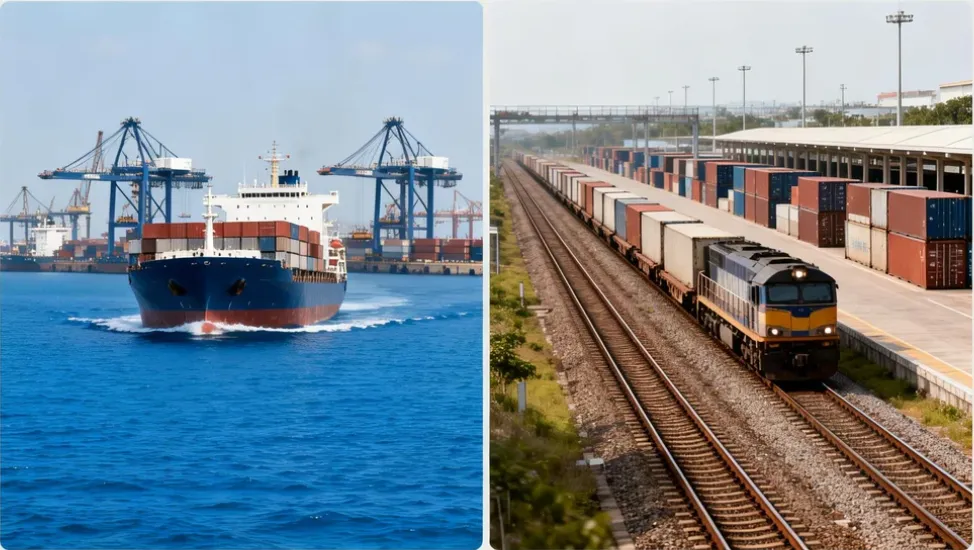
Key Takeaways: Sea vs Rail Freight
- Speed: Rail freight is typically 12–18 days to Europe (30-50% faster than sea). Sea freight takes 25–35 days to Europe and 12-18 days to the US West Coast.
- Cost: Sea freight is the most economical choice for bulk cargo (around $1,400-$1,800 per 40HQ to Europe). Rail freight is moderately priced (around $4,500-$5,500 per 40HQ), filling the gap between sea and air.
- Reliability: Rail offers superior schedule stability (over 92% on-time) compared to ocean shipping, which is more prone to port congestion and weather delays.
- Best Use Case: Choose Rail for high-value, time-sensitive goods to Europe/Central Asia. Choose Sea for high-volume, cost-sensitive global shipments.
Introduction to Sea and Rail Freight from China
What are the main differences between sea and rail freight from China?
The main difference is that Sea Freight offers the lowest shipping cost and global reach but takes 20-45 days, while Rail Freight offers faster transit (12-18 days to Europe) with higher reliability, but at a moderately higher cost and limited geographical coverage.
As a Senior Logistics Analyst at DTFU International Logistics, I see businesses struggling to optimize their supply chains amid shifting global dynamics. In 2026, the China-Europe Railway Express has matured into a highly competitive alternative to traditional ocean shipping.
Why Choose Between Sea and Rail Freight?
Importers must weigh several core factors:
- Urgency of delivery: Can your inventory wait 30 days, or do you need it in 15?
- Type and value of goods: High-value electronics benefit from faster rail transit, while bulk furniture is perfect for sea freight.
- Budget constraints: Sea freight offers rock-bottom base rates.
- Sustainability goals: Rail freight produces significantly less CO2 than air and is highly efficient.
Overview of China's Export Logistics Channels
China’s logistics infrastructure supports a range of international transport channels.
Main Export Channels Comparison
| Channel | Key Features | Primary Destinations | Typical Cargo |
|---|---|---|---|
| Sea Freight | Highest capacity, most economical, slowest | Global (Americas, Europe, Asia, Africa) | FCL, LCL, Bulk, OOG |
| Rail Freight | Fast, reliable, land-locked routes | Europe, Central Asia, Russia | FCL, LCL, Electronics, Auto parts |
| Air Freight | Fastest transit, highest cost | Worldwide | Urgent, high-value, samples |
What is the Transit Time for Sea vs Rail Freight from China?
How long does it take to ship by sea vs rail from China?
In 2026, Sea Freight from China typically takes 12–16 days to the US West Coast and 25–35 days to Europe. Rail Freight from China to Europe takes only 12–18 days, making it significantly faster and a crucial option for time-sensitive supply chains.
Typical Shipping Times for Sea Freight Routes
Sea Freight transit times depend on the destination, shipping line schedules, and port conditions. Here are the estimated transit times from major Chinese ports (FCL, direct service):
| Origin Port | Destination | Estimated Transit Time (Days) |
|---|---|---|
| Shanghai | Hamburg (Germany) | 28–35 |
| Shenzhen | Rotterdam (Netherlands) | 27–33 |
| Ningbo | Los Angeles (USA) | 12–16 |
| Qingdao | New York (USA) | 26–32 |
| Guangzhou | Sydney (Australia) | 14–18 |
Note: Schedules are subject to variability due to seasonal demand and port congestion. For North American lanes, check our detailed guide on Freight Cost from China to USA.
Average Transit Times for Rail Freight Services
Rail Freight via the Eurasian Land Bridge is a fast and consistent mode for shipments to Europe and Central Asia.
| Origin Rail Hub | Destination (Europe) | Main Route | Estimated Transit Time (Days) |
|---|---|---|---|
| Xi’an | Duisburg (Germany) | China-Kazakhstan-Russia-Poland-Germany | 14–18 |
| Chongqing | Moscow (Russia) | China-Kazakhstan-Russia | 12–15 |
| Yiwu | Madrid (Spain) | China-Kazakhstan-Russia-Belarus-Poland-Germany-France-Spain | 18–22 |
| Zhengzhou | Małaszewicze (Poland) | China-Mongolia-Russia-Poland | 11–15 |
Reliability Comparison: Which Mode is More Punctual?
Is rail freight more reliable than sea freight?
Yes, rail freight is generally more reliable than sea freight. In 2025/2026, China-Europe rail services achieved an on-time delivery rate of over 92%, whereas sea freight schedule reliability hovered around 65-70% due to port congestion, blank sailings, and weather disruptions.
On-Time Performance of Sea Freight
Sea freight faces inherent challenges:
- Port Congestion: Peak seasons can cause delays at major hubs like Rotterdam or Los Angeles.
- Weather Events: Typhoons in the South China Sea can temporarily halt vessel schedules.
| Route (Sea) | Typical Transit Time | Estimated On-Time Rate (2025/2026) |
|---|---|---|
| Shanghai – Rotterdam | 28–35 days | 65% |
| Shenzhen – Los Angeles | 12–16 days | 72% |
Punctuality of Rail Freight
Rail freight offers fixed, frequent departures (often 3-5 times per week from hubs like Chongqing or Xi'an) and direct train routes that minimize mid-journey handling.
| Route (Rail) | Typical Transit Time | Estimated On-Time Rate (2025/2026) |
|---|---|---|
| Chongqing – Duisburg | 14–18 days | 94% |
| Xi’an – Warsaw | 12–15 days | 92% |
How Much Does Sea vs Rail Freight Cost?
Is rail freight more expensive than sea freight?
Yes, rail freight is generally more expensive than sea freight but significantly cheaper than air freight. For a 40HQ container to Europe in 2026, sea freight costs approximately $1,400–$1,800, while rail freight costs around $4,500–$5,500. Rail provides a balanced middle ground for speed and budget.
Current Market Rates
Note: The rates below are market averages for informational purposes. At DTFU, we leverage our extensive carrier network to secure preferential contract rates that are consistently below the market average, helping you maximize your profit margins.
Cost Comparison Table (Selected Routes, FCL 40HQ, 2026)
| Route | Sea Freight Rate (Approx.) | Rail Freight Rate (Approx.) |
|---|---|---|
| Shanghai – Rotterdam (EU) | $1,400–$1,800 | $4,500–$5,500 |
| Shanghai – Hamburg (EU) | $1,500–$1,900 | $4,600–$5,600 |
| Shenzhen – Warsaw (EU) | $1,450–$1,850 | $4,200–$5,200 |
| Shanghai – Los Angeles (US) | $1,600–$2,100 | N/A |
LCL Charges (Less than Container Load):
- Sea LCL: Typically $15–$30/CBM
- Rail LCL: Typically $80–$100/CBM
Additional Fees to Consider
When comparing quotes, remember to account for:
- Terminal Handling Charges (THC)
- Customs Clearance Fees
- Insurance: We highly recommend comprehensive cargo insurance.
Cargo Types: What Goods Are Best Suited for Each Mode?
What products should I ship by sea vs rail?
Ship bulky, heavy, or non-urgent items like furniture, machinery, and textiles by Sea Freight. Ship medium-to-high value, time-sensitive goods like consumer electronics, auto parts, and seasonal fashion by Rail Freight.
| Cargo Characteristic | Best Transport Mode | Examples |
|---|---|---|
| High Volume, Low Value | Sea Freight | Furniture, Plastics, Raw Materials |
| Oversized / Heavy | Sea Freight | Industrial Machinery, Vehicles (Ro-Ro) |
| Time-Sensitive, High Value | Rail Freight | Laptops, Smartphones, Precision Instruments |
| Seasonal Goods | Rail Freight | Fast Fashion, Holiday Merchandise |
Route and Destination Coverage
Main Sea Freight Ports from China
China's deep-water ports connect to over 600 global ports.
- Shanghai & Ningbo: Major hubs for Europe and North America.
- Shenzhen & Guangzhou: Key for electronics and South/Southeast Asian routes.
Major Rail Freight Routes
The China-Europe Railway Express primarily serves Eurasia.
- Key Departure Hubs: Chongqing, Chengdu, Xi'an, Zhengzhou, Yiwu.
- Key European Destinations: Duisburg, Hamburg, Warsaw, Madrid, Lodz.
Final Verdict: Which Should You Choose?
When deciding between Sea vs Rail Freight, prioritize based on your specific supply chain needs:
- Choose Rail Freight if: You are shipping to Europe or Central Asia, your goods are high-value (like electronics), and reducing transit time by 15-20 days will significantly improve your cash flow or meet urgent market demand.
- Choose Sea Freight if: Your destination is the Americas, Africa, or Southeast Asia, your cargo is bulky, and minimizing logistics costs is your absolute top priority.
At DTFU International Logistics Co.,Ltd, we don't just quote prices; we engineer solutions. Whether you need the unparalleled economy of sea freight or the rapid reliability of the China-Europe rail network, our team secures preferential contract rates and provides end-to-end visibility.
With our comprehensive services—including one-stop customs clearance, warehousing, and tailored Amazon FBA solutions—we ensure your supply chain remains resilient and cost-effective in 2026 and beyond. Contact us today to upgrade your freight strategy.