Are you looking to master the complexities of shipping from Shanghai to Germany? Whether you’re concerned about choosing the right freight method, understanding customs procedures, or optimizing shipping costs, it’s crucial to have the latest insights into this vital trade route. In this comprehensive guide, we’ll explore everything from key shipping options and required documentation to transit times and cost-saving tips—ensuring your shipment from Shanghai to Germany is smooth, efficient, and worry-free.
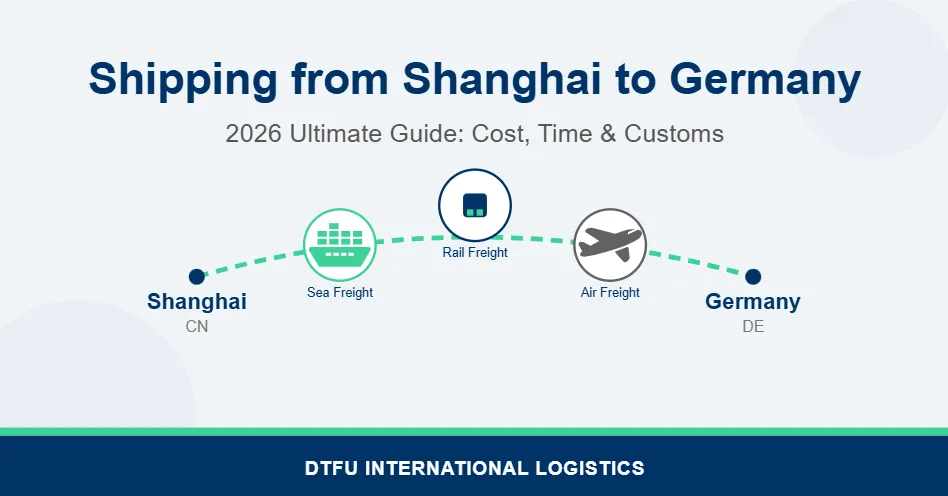
Overview of Shipping from Shanghai to Germany
Shipping from Shanghai to Germany is a crucial trade lane connecting China’s manufacturing hub with Europe’s largest economy. The route supports a wide array of industries, from automotive and machinery to electronics and consumer goods. Efficient logistics between these two regions ensures supply chain stability for importers, exporters, and manufacturers alike.
Key Trade Routes and Major Ports
The main shipping routes from Shanghai to Germany traverse both maritime and land corridors. Let's explore the key departure and arrival points:
Major Ports in Shanghai (China)
- Port of Shanghai: As the world's busiest container port, the Port of Shanghai serves as China’s principal export gateway. It offers state-of-the-art infrastructure and connects to hundreds of global destinations.
Major Ports in Germany
- Port of Hamburg: Recognized as the largest seaport in Germany and the third busiest in Europe, Hamburg is the primary entry point for containers from East Asia. It handles diverse cargo and offers excellent rail and road connectivity across Europe.
- Port of Bremerhaven: Specializes in container and automobile shipments. It is another strategic port for goods entering or leaving northern Europe.
| Route | Origin | Destination | Typical Transit Time (Sea) |
|---|---|---|---|
| Main Sea Route | Shanghai | Hamburg | 28-35 days |
| Main Sea Route | Shanghai | Bremerhaven | 28-35 days |
| Rail Route | Shanghai (via Xi’an/Chengdu) | Hamburg/Duisburg | 16-20 days |
| Air Route | Shanghai Pudong Int’l Airport | Frankfurt Airport | 2-5 days |
Recent trends (2025-2026) show a steady increase in rail and air freight volumes due to evolving supply chain needs and geopolitical factors. The China-Europe Railway Express, for example, saw significant growth in train departures in the first quarter of 2026.
For a more detailed breakdown of shipping time from China to Germany, you can review real transit data and industry updates.
Shipping Methods from Shanghai to Germany
Selecting the optimal logistics channel is not just about comparing quotes—it's about balancing inventory turnover, capital efficiency, and supply chain reliability. As a veteran freight forwarder, I break down the operational realities of each mode below to help you make the right choice for 2026.
1. Sea Freight: The Backbone of Global Trade
Best for: High-volume, non-urgent shipments (15 CBM+).
FCL (Full Container Load)
You hire the entire box. It’s the safest and most cost-efficient method for volume.
-
Strategic Advantage: You control the sealing. No risk of damage from other shippers' cargo.
-
Container Options:
- 20GP: Ideal for heavy cargo (Machinery, Metals). Max Payload: ~28 tons.
- 40HQ: Ideal for voluminous cargo (Textiles, Electronics). Capacity: ~68-76 CBM.
-
Insider Tip: If your cargo volume exceeds 15 CBM, compare the cost of a 20GP vs. LCL. Often, booking a full 20GP is cheaper and safer than paying high LCL rates, even if you don't fill it completely.
LCL (Less than Container Load)
You share space. Vital for SMEs.
- How it works: Your goods are consolidated at a Shanghai warehouse (CFS) and deconsolidated in Hamburg.
- The Hidden Cost: Destination charges (DTHC) in Germany can be high. Always ask for an "All-in" quote to avoid surprises.
- Ideal For: Samples, trial orders (1-10 CBM).
| Container Type | Capacity (CBM) | Typical Use Case | Approximate Cost (Shanghai–Hamburg) [Jan 2026] |
|---|---|---|---|
| 20FT FCL | 28 | Bulk, heavy cargo | $1,400 – $2,450 USD |
| 40FT FCL | 56 | Large volume goods | $2,450 – $4,200 USD |
| 40HQ | 68 | Voluminous goods | $2,800 – $4,900 USD |
| LCL | N/A | Small shipments | $49 – $84/CBM |
Note: Rates fluctuate weekly. For the latest FCL and LCL pricing, check our 20ft & 40ft container cost guide.
2. Rail Freight: The "Silk Road" Hybrid Solution
Best for: High-value goods that need faster delivery than sea but are too costly for air.
The China-Europe Railway Express (CR Express) connects Shanghai (via Xi'an/Chengdu) to Duisburg and Hamburg.
- Transit Time: 16–22 days (approx. 50% faster than sea).
- Cost: ~50% cheaper than air freight.
- Stability: Less affected by port congestion or weather.
- Ideal For: Automotive components, fashion collections, mid-tier electronics.
3. Air Freight: Speed & Precision
Best for: Urgent restocks, samples, high-value electronics.
- Standard Air: Cargo flies on passenger or freighter planes. (3-7 days).
- Express (Courier): DHL/UPS/FedEx. Best for <100kg. Door-to-door is standard.
- The "Chargeable Weight" Factor: Air freight is charged on the higher of actual weight or volumetric weight (1 CBM = 167 KG). Pro Tip: Optimize packaging to reduce empty space and save significantly.
| Cargo Type | Typical Transit Time | Estimated Cost (per kg, Jan 2026) |
|---|---|---|
| General Cargo | 2–5 days | $3.15 – $5.25 USD |
| Express Services | 1–2 days | $4.55 – $8.40 USD |
| Dangerous Goods | 3–6 days | $6.30 – $10.50 USD |
4. DDP Shipping (Door-to-Door / Amazon FBA)
Best for: E-commerce sellers (Amazon, eBay) and businesses without import licenses.
- What is DDP?: "Delivered Duty Paid." The forwarder handles pickup, export, shipping, customs clearance (paying duties/VAT), and final delivery (often via UPS/DPD).
- Why it wins: You don't need to deal with German customs or have a European VAT number (in many cases). It's a true "hands-off" solution for getting goods from a Shanghai factory to an Amazon FBA warehouse in Germany.
Step-by-Step Shipping Process from Shanghai to Germany
Shipping goods from Shanghai to Germany involves a systematic process that ensures compliance, efficiency, and cost-effectiveness. Below, I will break down the critical steps and offer expert insights based on years of logistics management experience.
Essential Documentation and Customs Procedures
Successful shipping starts with preparing the right documents and understanding customs procedures in both China and Germany. Incomplete or incorrect paperwork can lead to delays or even cargo seizure.
Key Shipping Documents Required:
| Document Name | Purpose | Issued By/To |
|---|---|---|
| Commercial Invoice | Details value, description, and terms of sale; needed for customs | Exporter to Importer |
| Packing List | Lists all items in each package/container | Exporter |
| Bill of Lading (B/L) | Contract of carriage, proves ownership of goods | Carrier to Shipper |
| Certificate of Origin | Declares the country of manufacture; may reduce tariffs | Chamber of Commerce |
| Export/Import Licenses | Specific goods require licenses (e.g., chemicals, electronics) | Govt. Authorities |
| Customs Declaration | Required for export from China and import into Germany | Shipper/Agent |
| Insurance Policy | Proof of cargo insurance coverage (optional but recommended) | Insurer |
Customs Procedures:
- In China, the shipper must declare the goods via the China Customs electronic system, attaching all relevant documents.
- Upon arrival in Germany (an EU member), the consignee or their freight agent files an Import Declaration via the ATLAS system. The goods are assessed for import duties and VAT.
Tips:
- Always check for restricted or prohibited items for both countries.
- Consider using a professional freight forwarder for smooth documentation and clearance.
Cargo Packing, Labeling, and Handling Requirements
Proper packing and labeling are crucial for both compliance and cargo safety during transit from Shanghai to Germany.
Main Points for Packing:
-
Use sturdy, export-grade packaging material to withstand long distances and multiple handlings.
-
For container shipping: Know your options:
- 20FT Container: 28CBM capacity
- 40FT Container: 56CBM capacity
- 40HQ Container: 68CBM capacity
- 45HQ Container: 78CBM capacity
-
Palletizing goods is recommended for easier loading/unloading.
-
For air freight, keep weight and volume optimization in mind.
Labeling Requirements:
- All packages must be clearly labeled in English (and optionally in German for easier clearance).
- Labels should include: consignee/shipper details, package numbers, contents, weight, and handling instructions (e.g., “Fragile”, “Keep Dry”).
- Dangerous goods require compliance with IMO (for sea) or IATA (for air) labeling and packing standards.
Handling:
- Sensitive goods may need temperature-controlled containers or special handling (e.g., electronics, pharmaceuticals).
- Secure all cargo to prevent shifting during transit.
Import Duties, Taxes, and Compliance in Germany
When goods arrive in Germany, importers must comply with EU regulations and pay relevant charges.
Duties and Taxes:
- All goods are subject to customs duties, determined by the HS code and origin.
- Value Added Tax (VAT) is generally 19% (as of 2026), calculated on CIF value plus duty.
- Certain goods (e.g., electronics, textiles) may have specific tariffs or anti-dumping duties.
Compliance Steps:
- Ensure goods meet EU/CE standards, especially for machinery, electronics, and consumer goods.
- Register for an EORI number (Economic Operators Registration and Identification) before importing.
- Submit proper customs declarations through the ATLAS system or via a customs broker.
- Maintain detailed records for at least 3 years.
Pro Tips:
- Use an experienced freight forwarder offering one-stop customs clearance and compliance support. A good partner stays updated on regulatory changes, helping you avoid penalties and delays.
Shipping Costs: How to Calculate and Optimize Expenses
Understanding the cost structure is vital for budgeting and price competitiveness. Shipping from Shanghai to Germany involves several variable and fixed costs. Let’s examine these and ways to optimize.
Main Factors Affecting Shipping Rates
| Cost Component | Details & Influencing Factors |
|---|---|
| Freight Charges | Varies by mode: Sea Freight, Air Freight, Rail Freight |
| Fuel Surcharges | Fluctuates with global oil prices |
| Terminal Handling | Charges at loading (Shanghai) and discharge (Germany) ports |
| Security Fees | Higher for air, especially post-pandemic |
| Customs Duties & VAT | Depends on product HS code, value, and EU tariffs |
| Cargo Insurance | Optional but highly recommended |
| Documentation Fees | Bill of Lading, certificates, inspection, etc. |
| Last Mile Delivery | To warehouse or final address; varies by distance and method |
| Peak Season Surcharges | Higher rates during busy periods (Q3-Q4 for Europe) |
Sample Cost Comparison (Estimated, as of Jan 2026):
| Shipping Mode | Avg. Cost per 20FT (USD) | Avg. Transit Time | Notes |
|---|---|---|---|
| Sea Freight (FCL) | $1,400 – $2,450 | 28 – 35 days | Most cost-effective |
| Air Freight | $3.15 – $5.25/kg | 3 – 7 days | Best for urgent cargo |
| Rail Freight | $3,500 – $4,200/40HQ | 16 – 22 days | Good balance speed/cost |
Prices fluctuate based on season, fuel costs, and global logistics trends.
If you’re shipping to nearby countries as well, you might be interested in the cost of shipping container from China to Portugal or France, which can provide useful benchmarks for Western Europe shipping budgets.
Tips to Save on Shipping from Shanghai to Germany
- Plan Ahead: Book space early to avoid peak season surcharges and get better rates.
- Optimize Packing: Maximize container utilization—choose between FCL and LCL based on cargo volume.
- Consolidate Shipments: Combine multiple LCL shipments where possible to save on per-unit costs.
- Negotiate with Carriers: Leverage professional freight forwarders with strong carrier relationships for discounts.
- Choose the Right Mode: For bulky, non-urgent shipments, sea freight is cheapest. For high-value or urgent, consider air or rail.
- Use a Trusted Freight Partner: Work with a transparent partner to ensure you receive clear pricing and tailored shipping solutions including Sea Freight, Air Freight, Rail Freight, Amazon FBA, Warehouse, and Door to Door services.
- Monitor Currency & Market Trends: Exchange rates and international events (such as port strikes or geopolitical issues) can impact costs—stay updated via reliable sources.
Table: Quick Tips At a Glance
| Tip | Benefit |
|---|---|
| Plan Shipments Early | Lower rates, guaranteed space |
| Use Full Containers (FCL) When Viable | Lower cost per unit |
| Consolidate LCL Cargo | Reduce per-cubic-meter charges |
| Partner with a Pro Forwarder | End-to-end, cost-effective solutions |
| Consider Rail for Faster, Mid-cost | Balance speed and expense |
Transit Times and Delivery Schedules
Typical Shipping Times for Sea, Air, and Rail Freight
When shipping goods from Shanghai (China) to Germany, selecting the right transportation method is crucial for balancing cost, speed, and reliability. Below is an overview of typical transit times for the three main international shipping modes:
| Shipping Method | Origin Port (China) | Destination Port (Germany) | Average Transit Time | Best For |
|---|---|---|---|---|
| Sea Freight (FCL) | Shanghai Port | Hamburg / Bremerhaven | 28 – 35 days | Large shipments, cost savings |
| Sea Freight (LCL) | Shanghai Port | Hamburg / Bremerhaven | 32 – 40 days | Smaller cargo, flexibility |
| Air Freight | Shanghai Pudong (PVG) | Frankfurt / Munich | 3 – 7 days | Urgent, high-value goods |
| Rail Freight | Shanghai | Duisburg / Hamburg | 16 – 22 days | Balanced speed/cost, e-commerce |
Sea Freight is the most economical, especially for full container loads (FCL). Less than container load (LCL) shipments involve consolidation, so handling and customs clearance can add a few extra days.
Air Freight is the fastest, with direct flights from Shanghai Pudong International Airport (PVG) to major German airports like Frankfurt and Munich. It is preferred for urgent, perishable, or high-value goods.
Rail Freight via the China-Europe Express now serves as an effective middle ground. The route from Shanghai to Duisburg or Hamburg typically takes about 16–22 days, making it a popular choice for electronics, automotive parts, and cross-border e-commerce.
Note: Transit times depend on customs clearance, the chosen logistics provider, and real-time global events (e.g., strikes, pandemics, or geopolitical issues). Always confirm current schedules with your freight forwarder.
As you evaluate schedules, you might also be interested in how long does shipping from China to Germany take for a range of different cargo types and routes.
Factors Causing Delays and How to Avoid Them
Delays in international shipping can disrupt supply chains and increase costs. Understanding the root causes and proactive mitigation is essential:
| Delay Factor | Impact | Mitigation Tips |
|---|---|---|
| Customs Clearance | Major delays | Ensure accurate, complete documentation. Pre-clear where possible. |
| Port Congestion | 2–10 days+ | Choose less congested ports; book early; track vessel schedules. |
| Weather Disruptions | Variable | Monitor forecasts; select reliable carriers; avoid peak typhoon season |
| Holiday Peaks | 3–15 days | Plan around Chinese New Year, Golden Week, and European holidays. |
| Global Events | Unpredictable | Have contingency plans; stay updated on geopolitical changes. |
| Incorrect Packing/Labeling | Quarantine, fines | Follow international labeling/packing standards; consult your forwarder |
| Inadequate Freight Insurance | Financial loss | Secure comprehensive insurance, especially for high-value goods |
Best Practices to Minimize Delays:
- Partner with an experienced freight forwarder: A professional provider offers end-to-end service, pre-clearance, and real-time updates.
- Prepare documentation in advance: Bills of lading, commercial invoices, and certificates should be accurate and ready.
- Monitor shipping schedules: Regularly check for vessel/flight changes and be flexible with routing if needed.
- Insure your cargo: Protect against unforeseen risks with comprehensive freight insurance.
Choosing a Reliable Freight Forwarder for China-Germany Shipping
Selecting a qualified freight forwarder is critical for a seamless shipping experience from Shanghai to Germany. Here’s what to look for:
| Criteria | Why It Matters | What to Look For |
|---|---|---|
| Experience in China-Germany Routes | Deep local and international expertise ensures smooth operations | 10+ years of specialized experience; strong network in both countries |
| Comprehensive Service Portfolio | Reduces the complexity of multiple providers | Sea, Air, Rail, Amazon FBA, Warehousing, Door-to-Door, OOG, Consolidation, Insurance |
| Transparent Pricing | Avoids hidden charges and surprises | Upfront, detailed quotations; no hidden fees |
| Customs Brokerage Proficiency | Essential for fast clearance and compliance | Expert customs team; up-to-date with Germany and EU import regulations |
| Cargo Tracking Technology | Enhances visibility and security of your goods | Real-time online tracking and customer support |
| Client References & Reviews | Validates reliability and professionalism | Excellent client feedback; trusted by global traders |
When evaluating providers, look for those that offer a one-stop solution to simplify your logistics. For example, DTFU International Logistics integrates sea, air, and rail freight with critical value-added services like Amazon FBA, customs brokerage, and door-to-door delivery. Partnering with a comprehensive logistics provider ensures you have a single point of contact for all your shipping needs, from warehouse to final destination.
For a customized quote or shipping consultation, contact our team today.
FAQs
Q1: What is the cheapest way to ship from Shanghai to Germany? A1: The most cost-effective method is typically sea freight (FCL), especially for large volumes. For smaller shipments, LCL is more flexible. Rail freight offers a balance of speed and cost.
Q2: How can I track my shipment from Shanghai to Germany? A2: You can monitor your shipment's real-time location and status from origin to destination. Simply visit our Cargo Tracking page and enter your Bill of Lading, Container, or Air Waybill number for instant updates.
Q3: What documents are required for customs clearance in Germany? A3: Essential documents include the Bill of Lading or Air Waybill, Commercial Invoice, Packing List, and, where applicable, Certificates of Origin or Import Licenses.
Q4: How long does it take to ship from Shanghai to Hamburg? A4: Transit times vary by mode:
- Sea Freight (FCL/LCL): 28–35 days port-to-port.
- Rail Freight: 16–22 days via the China-Europe Railway Express.
- Air Freight: 3–7 days for standard cargo.
Q5: How much does shipping from China to Germany cost? A5: Shipping costs depend on weight, volume, and service level. As of January 2026:
- Sea Freight: ~$49–$84 per CBM (LCL).
- Air Freight: ~$3.15–$5.25 per kg.
- Rail Freight: ~$3,500–$4,200 for a 40HQ container. Note: Prices fluctuate weekly based on fuel and demand.
Q6: How much does it cost to ship 20ft and 40ft container from Shanghai to Hamburg? A6: Current estimated rates for January 2026 are:
- 20ft Container: $1,400 – $2,450 USD.
- 40ft Container: $2,450 – $4,200 USD.
- 40HQ Container: $2,800 – $4,900 USD. For the most accurate "all-in" price including local surcharges, we recommend getting a live quote.
For more tailored advice on shipping from Shanghai to Germany, reach out to the experts at DTFU International Logistics Co.,Ltd—your trusted partner for seamless, reliable, and cost-efficient international freight forwarding.
If you’re also shipping to France, you may find this guide on shipping from Shanghai to France helpful for comparing requirements and processes in neighboring European markets.