Are you wondering what drives the cost of shipping containers from China to Portugal and how you can optimize your logistics budget? Navigating the complexities of container shipping, from options to hidden fees and port charges, can be challenging for businesses of all sizes. In this comprehensive guide, we’ll break down the key factors, compare shipping methods, and provide actionable tips to help you calculate and minimize your total shipping costs.
Factors Influencing the Cost of Shipping Containers from China to Portugal
When planning international shipping from China to Portugal, understanding the cost structure is critical for business decision-making. Several key factors influence the cost of shipping a container from China to Portugal. As a Senior Logistics Analyst with over 10 years of experience, I have guided numerous clients through these cost determinants to optimize their shipments and reduce unnecessary expenses.
Container Type & Size
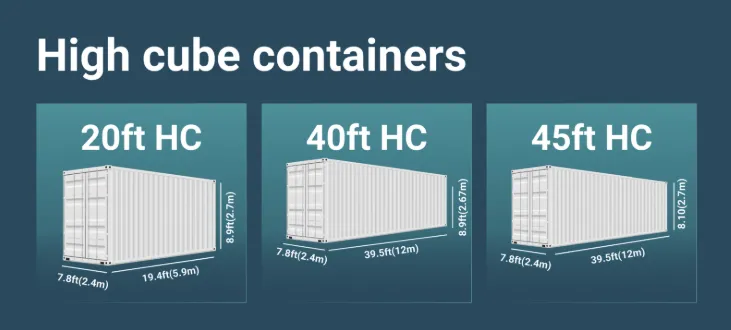
The most common container sizes are 20FT (28CBM), 40FT (56CBM), 40HQ (68CBM), and 45HQ (78CBM). Larger containers naturally command higher base freight rates. However, per-cubic-meter costs often decrease with increased container size, making full utilization more cost-effective.
| Container Type | Volume (CBM) | Suitable for | Typical Use Case |
|---|---|---|---|
| 20FT | 28 | Small to medium shipments | Dense or heavy cargo |
| 40FT | 56 | Larger shipments | General cargo, mixed loads |
| 40HQ | 68 | Bulky/lightweight cargo | E-commerce, textiles, electronics |
| 45HQ | 78 | Oversized/Voluminous | Furniture, machinery, large orders |
Route and Port Pair Selection
Rates vary between different Chinese origin ports (Shanghai, Shenzhen, Ningbo, Qingdao, etc.) and Portuguese destination ports (Lisbon, Leixões, Sines). Proximity to manufacturing hubs and the frequency of shipping lines impact price and transit time. For example, Shanghai to Lisbon is among the most popular and competitively priced routes. If you are comparing routes in Southern Europe, you may also find it useful to see the .
Shipping Seasonality & Market Dynamics
Peak shipping seasons—such as pre-Chinese New Year or back-to-school periods—often see rate surges due to increased demand. Conversely, during low season, there may be opportunities for discounted rates. Real-time global events, such as port strikes or disruptions in the Red Sea, can also cause sudden cost fluctuations.
Cargo Nature & Special Requirements
The nature of your cargo determines cost drivers such as:
-
Hazardous materials require extra documentation, handling, and surcharges.
-
Temperature-controlled (reefer) containers are priced higher than standard dry containers.
-
Out-of-Gauge (OOG) or oversized cargo often incurs surcharges and specialized handling fees.
Incoterms and Service Level
The agreed-upon Incoterms (e.g., FOB, EXW, CIF, DAP) determine the division of costs and responsibilities. Using a service, like those provided by DTFU International Logistics Co.,Ltd, streamlines operations but may reflect higher all-in costs compared to port-to-port-only services.
Additional Charges
Beyond the base ocean freight, shippers must consider:
-
Bunker Adjustment Factor (BAF)
-
Currency Adjustment Factor (CAF)
-
Port handling charges
-
Customs Clearance and inspection fees
-
Demurrage and detention if containers stay beyond free time
A transparent freight forwarder, like DTFU International Logistics Co.,Ltd, is invaluable for identifying and minimizing these charges.
Ocean Freight Shipping Options: FCL vs LCL from China to Portugal
Selecting the right shipping mode between FCL (Full Container Load) and LCL (Less than Container Load) directly impacts your logistics cost and efficiency. Let’s explore both in depth:
FCL: Pricing Structure and Best Use Cases
FCL means reserving an entire container exclusively for your shipment, regardless of whether it is fully loaded. Here’s how FCL pricing works:
-
Flat-Rate Pricing: Charged per container, not per unit or cubic meter.
-
Cost Efficiency: Ideal for shipments close to the container’s capacity (typically above 15 CBM for 20FT and above 30 CBM for 40FT).
-
Security & Speed: Since your goods are not co-loaded with others, risk of damage or theft is reduced and customs clearance is often faster.
-
Flexibility: Suits all cargo types, including fragile, valuable, or time-sensitive goods.
-
Predictability: Fixed sailing schedules and minimized handling reduce the risk of delays.
| FCL Advantages | FCL Limitations |
|---|---|
| Lower unit cost for large cargo | Higher upfront cost for small loads |
| Less risk of contamination/damage | May require higher documentation |
| Shorter transit and handling times | More complex customs requirements |
Best Use Cases:
-
Full warehouse restocks
-
Bulk manufacturing parts
-
High-value or sensitive cargo
LCL: Cost Calculation and When to Choose LCL
LCL enables multiple shippers to share the same container, paying only for the space they use. Here’s what you need to know:
-
Volume-Based Pricing: Charged per CBM (cubic meter) or per metric ton, whichever is greater.
-
Flexible Entry Point: Cost-effective for shipments under ~13-15CBM.
-
Shared Risk: Co-loading means exposure to other shippers’ delays or compliance issues.
-
Handling Fees: LCL typically incurs higher handling charges at origin and destination for sorting and consolidation.
-
Transit Time: Slightly longer due to consolidation and deconsolidation procedures.
| LCL Advantages | LCL Limitations |
|---|---|
| Cost-effective for small shipments | Higher risk of delays from other shippers' cargo |
| No need to fill a full container | More loading/unloading increases damage risk |
| Greater frequency and flexibility for small batches | Higher per-unit cost compared to FCL |
When to Choose LCL:
-
Trial shipments
-
E-commerce stock replenishment
-
Startups and SMEs with limited stock volume
If you are considering alternatives in Europe, you may want to compare with similar services for insights on market differences.
FCL vs LCL Cost Comparison Table (January 2026)
| Route | FCL 20FT (USD) | FCL 40HQ (USD) | LCL (per CBM, USD)* | Transit Time (Days) |
|---|---|---|---|---|
| Shanghai - Lisbon | 1,650–2,050 | 3,250–3,850 | 90–110 | 27–33 |
| Shenzhen - Leixões | 1,700–2,150 | 3,300–3,900 | 95–120 | 29–35 |
| Ningbo - Sines | 1,750–2,250 | 3,350–3,950 | 100–125 | 28–34 |
*LCL rates may include basic handling but exclude destination charges.
By understanding these shipping fundamentals, you can make informed decisions, budget accurately, and minimize international trade risks. Always request a detailed quote and clarify all inclusions and exclusions when comparing shipping options.
Major Ports in China and Portugal
Top Chinese Origin Ports and Their Rate Differences
When shipping containers from China to Portugal, the choice of the origin port can significantly impact both the freight cost and transit time. China, as a global manufacturing hub, has several major seaports. The primary ports used for shipments to Portugal include:
| Port Name | Location | Typical Route to Portugal | Average Ocean Freight Rate (USD/20GP) | Advantages | Remarks |
|---|---|---|---|---|---|
| Shanghai Port | East China | Direct/Transshipment | $1,650 - $1,950 | Largest port, frequent sailings | Stable rates, wide carrier choice |
| Shenzhen Port | South China | Direct/Transshipment | $1,600 - $1,900 | Fast loading, competitive pricing | Popular for electronics export |
| Ningbo-Zhoushan Port | East China | Direct/Transshipment | $1,680 - $1,980 | Efficient handling, lower congestion | Stable service |
| Qingdao Port | North China | Transshipment via Singapore | $1,750 - $2,050 | Access to northern manufacturing regions | Slightly longer transit time |
| Guangzhou Port | South China | Direct/Transshipment | $1,600 - $1,900 | Good for bulk and consolidated cargo | Flexible for LCL |
| Xiamen Port | Southeast China | Transshipment | $1,700 - $2,000 | Strong for textiles and machinery | Smaller volume, flexible services |
Note: Rates above are for standard 20-foot containers (20GP), approximate as of January 2026, and may fluctuate due to fuel costs, seasonal demand, or global events such as the Red Sea crisis. For the most accurate, up-to-date rates, always check with a reliable freight forwarder like DTFU International Logistics Co.,Ltd.
Key Takeaways:
-
Shanghai and Shenzhen generally offer the most competitive rates and frequent sailings.
-
Qingdao and Xiamen may be better for cargo originating from northern and southeastern China, respectively, but may involve transshipment, affecting both cost and transit time.
-
The choice of port can save costs if aligned with factory location and shipping schedule.
If you're interested in how shipping costs differ for nearby European countries, this analysis on the offers useful benchmarking.
Key Portuguese Destination Ports and Associated Charges
Portugal's strategic Atlantic coastline makes it an important gateway to Europe. The main container ports for Chinese imports are:
| Port Name | Location | Container Handling | Typical Local Charges (USD/20GP) | Remarks |
|---|---|---|---|---|
| Port of Sines | Southwest Portugal | Deepwater, efficient | $350 - $500 | Largest, main entry for Asian cargo |
| Port of Lisbon | Central Portugal | Well-connected | $380 - $520 | Ideal for shipments to Lisbon metro area |
| Port of Leixões | Northwest Portugal | High capacity | $400 - $550 | Serves Porto & North Portugal, strong industrial base |
| Port of Setúbal | South of Lisbon | Limited container ops | $420 - $600 | More suitable for specific project/bulk cargo |
Associated Charges at Portuguese Ports:
-
Terminal Handling Charges (THC): Collected by the port for loading/unloading containers.
-
Port Security Fee: Covers security infrastructure and personnel.
-
ISPS (International Ship and Port Facility Security) Fee: Compliance with international security requirements.
-
Delivery Order (DO) Fee: For release of containers to consignee.
-
Customs Examination Fees (if selected): Variable, based on inspections.
-
Import VAT & Duties: Based on commodity, declared value, and incoterms.
Insider Tip: Local charges at Port of Sines are typically lower due to its scale and efficiency. Choosing the correct destination port can optimize both cost and supply chain efficiency.
Additional Charges and Hidden Fees in Container Shipping
Understanding the full range of fees is crucial for calculating the cost of shipping container from China to Portugal. Besides base ocean freight, expect the following:
Customs Clearance, Documentation, and Inspection Fees
-
Customs Clearance Fee
-
Paid to customs broker or freight forwarder for processing import/export formalities in both China and Portugal.
-
Typical Range: $80 - $180 per shipment
-
Complexity, value, and type of goods impact the final charge.
-
-
Documentation Fee
-
Covers preparation of Bill of Lading, commercial invoice, packing list, and export declaration.
-
Typical Range: $40 - $100 per set of documents
-
-
Inspection/Quarantine Fee
-
Applicable if your cargo is selected for random inspection or requires health/phyto-sanitary checks.
-
Typical Range: $50 - $200, but can be higher for complex cargo like foodstuffs or machinery.
-
-
Import Duty and VAT
-
Calculated as a percentage of the total cargo value (CIF basis) based on HS code classification.
-
Portugal, as an EU member, applies standard VAT of 23% and varying duty rates. Verify your product's rates in advance.
-
-
Other Regulatory Fees
-
For goods requiring special permits, licenses, or certifications (e.g., CE Marking, REACH compliance).
-
| Fee Type | Typical Range (USD) | Who Charges | Notes |
|---|---|---|---|
| Customs Clearance | $80 - $180 | Broker/Freight Forwarder | Both export & import sides |
| Documentation | $40 - $100 | Forwarder/Carrier | Per shipment |
| Inspection/Quarantine | $50 - $200+ | Authorities | Only if selected or for specific goods |
| Import VAT & Duty | Varies | Customs | Based on HS code & product value |
Port Handling, Demurrage, and Storage Charges
-
Port Handling Charges (THC)
-
Imposed by both Chinese and Portuguese ports for container handling (loading/unloading).
-
Usually included in the local charges section of your freight quote.
-
Typical Range: $150 - $350 per container at origin/destination.
-
-
Demurrage Charges
-
Fees for keeping a container at the port beyond the free time (usually 5-7 days).
-
Charged by shipping lines.
-
Typical Rate: $40 - $100 per day per container (varies by port and carrier).
-
-
Detention Charges
-
Applied when you keep the container outside the port (for unloading at your premises) beyond the allowed free days.
-
Can significantly increase costs if not managed well.
-
-
Storage Charges
-
Levied when containers remain in port storage areas after free storage period.
-
Typical Rate: $25 - $60 per day.
-
| Charge Type | Who Charges | Free Time (Days) | Rate (USD/Day) | Remarks |
|---|---|---|---|---|
| Demurrage | Shipping Line | 5-7 | $40 - $100 | For containers at port after free time |
| Detention | Shipping Line | 5-7 | $50 - $120 | For containers outside port after free time |
| Storage | Port | 5-7 | $25 - $60 | May accumulate quickly if delays occur |
Pro Tips for Minimizing Extra Charges:
-
Pre-clear documents and book timely customs inspections.
-
Schedule pick-up/delivery to avoid exceeding free time.
-
Work with a proactive freight forwarder like DTFU International Logistics Co.,Ltd—our expert team closely monitors deadlines, documentation, and port operations to help our clients avoid unnecessary fees and keep shipments moving smoothly.
For more insights on managing costs and navigating hidden fees for other key routes in Europe, consider reading about the .
How to Get the Best Shipping Rates from China to Portugal
Tips for Negotiating with Freight Forwarders
Securing the most competitive cost of shipping container from China to Portugal requires a strategic approach to negotiations with your freight forwarder. Here are essential tips, based on years of industry experience:
-
Prepare Complete and Accurate Shipment Details
-
Always provide accurate information on cargo type, dimensions, weight, volume (CBM), and preferred container size (20FT, 40FT, 40HQ, or 45HQ). This allows freight forwarders like DTFU International Logistics Co.,Ltd to offer precise and competitive quotes.
-
-
Request Quotes from Multiple Providers
-
Comparing offers from several reputable freight forwarders ensures transparency. However, price is not the only factor—consider reliability, value-added services, and coverage of hidden costs.
-
-
Negotiate All-Inclusive Rates
-
Ask for a breakdown of all charges: base ocean freight, surcharges, documentation, port handling, and delivery. Negotiating for all-inclusive rates minimizes unexpected costs.
-
-
Consolidate Shipments
-
If possible, combine multiple shipments into a single container (FCL or consolidated LCL), which often reduces per-unit shipping costs.
-
-
Leverage Volume and Regularity
-
If you ship regularly or in large volumes, negotiate for discounted contract rates or loyalty terms.
-
-
Clarify Service Scope
-
Understand the differences between port-to-port, door-to-port, and door-to-door services. Choose the scope that best matches your logistics needs.
-
-
Verify Credentials
-
Work with established and accredited freight forwarders like DTFU International Logistics Co.,Ltd, who are experienced in China-Portugal routes and provide transparent, professional service.
-
The Role of Shipping Schedules and Consolidation in Cost Saving
Shipping schedules and consolidation strategies play a crucial role in optimizing the cost of shipping container from China to Portugal.
1. Optimizing Shipping Schedules
-
Flexible Shipping Dates: Avoiding peak seasons (e.g., pre-Chinese New Year, Golden Week) can result in lower rates due to decreased demand.
-
Sailing Frequency: Select routes with frequent sailings to benefit from better rates and flexible timelines. Major ports like Shanghai, Shenzhen, and Ningbo have more schedule options.
-
Transit Time Consideration: Sometimes, a slightly slower sailing can be more economical than the fastest option.
2. Cargo Consolidation
-
LCL (Less than Container Load): If your shipment is small, LCL allows you to share container space with others, reducing individual costs.
-
FCL (Full Container Load) Consolidation: For regular shippers, consolidating bookings across multiple orders or with partner companies can help secure volume discounts.
-
Warehouse Services: Using consolidation warehouses near major Chinese ports (offered by providers like DTFU International Logistics) streamlines groupage and reduces per-unit shipping costs.
Summary Table: Cost-Saving Strategies by Method
| Strategy | Description | Potential Saving |
|---|---|---|
| Off-peak Shipping | Schedule around low season | 5-15% |
| LCL Consolidation | Share container with other shipments | Up to 25% |
| FCL Volume Booking | Contract rates for repeat/large volume shipments | 10-20% |
| Flexible Routing | Accept longer routes for lower base rates | 5-10% |
| All-Inclusive Packaging | Negotiate bundled services, avoid hidden charges | Variable |
For additional strategies on reducing costs to other European destinations, see our article on .
Cost Comparison: Ocean Freight vs Air Freight from China to Portugal
Shipping Cost Differences and When Air Freight Is Worth Considering
Choosing between ocean freight and air freight depends on urgency, budget, and cargo type. Here's a professional analysis based on real market data:
| Shipping Mode | Average Cost (per CBM) | Transit Time | Suitability |
|---|---|---|---|
| Ocean Freight (FCL) | USD 60 - 120 | 25-35 days | Bulk cargo, heavy/large shipments |
| Ocean Freight (LCL) | USD 100 - 170 | 28-38 days | Small volumes, non-urgent goods |
| Air Freight | USD 5.5 - 9.5/kg | 3-7 days | High-value, urgent, light shipments |
When to Choose Air Freight:
-
If delivery time is critical (e.g., urgent samples, high-value electronics)
-
Cargo value justifies higher freight cost
-
Shipments are small/lightweight (under 500kg)
When to Choose Ocean Freight:
-
For bulk shipments or heavy cargo
-
When cost savings outweigh urgency
-
For regular, large-scale trade logistics
DTFU International Logistics can help you assess the optimal mode based on your specific requirements, balancing cost, transit time, and risk.
Transit Time vs Total Logistics Cost Analysis
It is vital to consider both transit time and total logistics costs when planning your shipment.
| Shipping Mode | Port of Origin (China) | Port of Destination (Portugal) | Transit Time (Days) | Estimated Total Cost (20FT) |
|---|---|---|---|---|
| Ocean Freight (FCL) | Shanghai | Lisbon | 28-32 | USD 1,650 - 2,050 |
| Ocean Freight (LCL) | Shenzhen | Porto | 32-38 | USD 95 - 125/CBM |
| Air Freight | Guangzhou | Lisbon | 3-5 | USD 6,500 - 8,200 (1,000kg) |
-
Ocean freight offers the lowest cost per unit but a longer lead time.
-
Air freight shortens supply chain cycles but at a much higher unit cost.
-
Consider inventory holding costs, product shelf-life, and customer expectations when making decisions.
How to Calculate Your Total Shipping Cost Step-by-Step
Online Freight Calculators and Quotation Process
Step 1: Gather Information
-
Cargo details: weight, volume (use standardized container volumes: 20FT = 28CBM, 40FT = 56CBM, 40HQ = 68CBM, 45HQ = 78CBM)
-
Origin and destination (e.g., Shanghai, China to Lisbon, Portugal)
-
Incoterms (FOB, CIF, DAP, DDP, etc.)
Step 2: Use Freight Calculator Tools
-
Leading providers, including DTFU International Logistics, offer online calculators for quick cost estimation. Input your shipment details for instant quotes.
Step 3: Request Detailed Quotation
-
For the most accurate assessment, request a full quote from your freight forwarder, covering:
-
Ocean/air freight charges
-
Origin/destination port fees
-
Customs clearance & documentation
-
Insurance and value-added services
-
Last-mile delivery (if required)
-
Step 4: Compare and Analyze
-
Review and compare all offers, ensuring transparency in all line items.
Quotation Example Table
| Expense Category | Description | Typical Cost (USD) |
|---|---|---|
| Ocean Freight | 20FT container, Shanghai-Lisbon | 2,400 |
| Port Charges (Origin) | THC, documentation, export fees | 180 |
| Port Charges (Destination) | THC, import, handling | 250 |
| Customs Clearance | Brokerage, import duties | 100-250 |
| Insurance | Based on cargo value (0.1-0.3%) | 50-150 |
| Inland Delivery | Trucking to final destination | 250-500 |
Real-World Example: Sample Cost Breakdown for a Standard Shipment
Scenario: You want to ship a 20FT container (28CBM, 18,000kg) of general goods from Ningbo, China to Lisbon, Portugal.
| Cost Component | Amount (USD) | Notes |
|---|---|---|
| Ocean Freight (20FT) | 2,350 | Main sea freight charge |
| Origin Port Handling | 180 | Terminal Handling Charge (THC) |
| Export Documentation | 80 | Bill of Lading, customs docs |
| Destination Port Handling | 270 | THC in Lisbon |
| Import Customs Clearance | 120 | Local brokerage |
| Import Duties & VAT | 750 (approx.) | Subject to cargo type, customs value |
| Insurance | 65 | 0.2% of cargo value |
| Door Delivery (Lisbon area) | 300 | Trucking from port to warehouse |
| Total Estimated Cost | 4,115 | Excluding import duties & VAT |
Tips:
-
This estimate excludes special cargo, out-of-gauge items, or value-added services.
-
For precise quotes tailored to your shipment, consult with DTFU International Logistics Co.,Ltd.
In summary, understanding the nuances of major origin/destination ports, as well as potential additional charges in container shipping from China to Portugal, is crucial for accurate budgeting and efficient logistics planning. By partnering with a professional, experienced, and trusted freight forwarder such as DTFU International Logistics Co.,Ltd