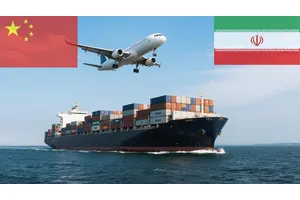
If you're trying to figure out how much to ship a container from China to Iran, you've probably already noticed that freight forwarder quotes vary wildly — and that most of them only tell half the story. One forwarder quotes $2,200 for a 20ft container. Another quotes $4,500 for what looks like the same route. Which one is right? The uncomfortable truth is that both could be — the first is showing you basic ocean freight, while the second is giving you a realistic estimate of your total cost to get goods to your warehouse door. As a FIATA and IATA-certified freight forwarder operating from China's major ports, DTFU Logistics has helped importers across 120+ countries — including Iran — navigate exactly this question. For importers seeking a dedicated shipping from China to Iran service with transparent pricing and end-to-end support, understanding the full cost picture is the critical first step. In this guide, we'll break down not just the container shipping rates, but the total landed cost of importing a container from China to Iran in 2026 — including customs duties, VAT, port charges, and inland delivery that most "price guides" conveniently leave out.
Here's what you'll learn: exact 2026 FCL shipping rates from Shanghai, Shenzhen, Ningbo, and Qingdao to Bandar Abbas and other Iranian ports; a worked example of total landed cost for a real shipment (Shenzhen to Tehran); Iran customs procedures and required documentation; how to choose between FOB, CIF, and DDP for your Iran shipment; and practical guidance on sanctions compliance, cargo insurance, and container loading that no compe***** covers.
China to Iran Container Shipping Costs
Let's start with the numbers you came here for. The table below shows current 2026 port-to-port ocean freight rates for FCL (Full Container Load) shipments from China's major ports to Bandar Abbas — Iran's primary container gateway handling roughly 85% of all container traffic. If you're looking for a broader shipping cost from China to Iran breakdown across multiple transport modes, we've covered air, rail, and door-to-door options later in this guide.
Quick Answer: A 20ft container from China to Iran costs $2,200–$3,200 in basic ocean freight, while a 40ft/40HQ container runs $3,700–$5,700. However, your total landed cost — including Iran import duties, 9% VAT, destination charges, and inland trucking — typically adds 40%–80% on top. If you're budgeting purely off a freight quote, you're in for a surprise.
FCL Container Rates by Origin Port (to Bandar Abbas)
| Origin Port | 20ft GP (USD) | 40ft GP (USD) | 40ft HC (USD) |
|---|---|---|---|
| Shanghai | $2,200 – $2,800 | $3,800 – $4,800 | $4,300 – $5,400 |
| Shenzhen (Yantian/Shekou) | $2,200 – $2,700 | $3,700 – $4,600 | $4,200 – $5,200 |
| Ningbo | $2,300 – $2,900 | $3,900 – $4,900 | $4,400 – $5,500 |
| Qingdao | $2,400 – $3,000 | $4,000 – $5,100 | $4,600 – $5,700 |
| Guangzhou (Nansha) | $2,200 – $2,800 | $3,800 – $4,800 | $4,300 – $5,400 |
| Tianjin | $2,500 – $3,200 | $4,200 – $5,500 | $4,800 – $6,000 |
Rates reflect port-to-port ocean freight only. BAF (Bunker Adjustment Factor) included. Destination-side charges not included. Rates fluctuate weekly — always confirm with your forwarder before booking.
Why the port-to-port price differences?
Shenzhen and Guangzhou typically offer the most competitive rates for the China–Iran route — they sit at the heart of the Pearl River Delta manufacturing ecosystem, enjoy the highest sailing frequency to the Persian Gulf, and benefit from intense carrier competition. Our dedicated sea shipping from China to Iran service leverages weekly sailings from all major Chinese ports to secure optimal rates and transit times. Shanghai and Ningbo follow closely as the Yangtze River Delta's export powerhouses — see our shipping from Shanghai to Iran page for port-specific transit and rate details. Qingdao and Tianjin carry a modest premium ($200–$500 more per container) due to longer domestic feeder distances and slightly lower service frequency, though Qingdao often offers the fastest transit times to Bandar Abbas (18–24 days) thanks to its more direct routing around the Korean peninsula. For importers sourcing from the Pearl River Delta, our shipping from Shenzhen to Iran page details specific sailings from Yantian and Shekou terminals.
Iranian Destination Ports Beyond Bandar Abbas
While Bandar Abbas (Shahid Rajaee terminal) dominates Iran's container landscape, other ports may better serve your final destination:
| Port | Best For | Transit (from Shanghai) | Cost Premium vs Bandar Abbas |
|---|---|---|---|
| Bandar Abbas | Tehran, central & eastern Iran | 20–25 days | Baseline |
| Bushehr | Southern Iran, Shiraz, Bushehr province | 22–28 days | +$200–$400 |
| Imam Khomeini Port | Western Iran, Khuzestan, border regions | 24–30 days | +$300–$500 |
| Chabahar | Eastern Iran, Afghanistan transit | Information | +$400–$800 |
Chabahar's strategic position on the Gulf of Oman makes it a valuable alternative for importers distributing goods into eastern Iran or across the border into Afghanistan. For shipments destined specifically for Afghanistan via Iranian ports, see our shipping from China to Afghanistan service page.
LCL (Less than Container Load) Rates
If your cargo doesn't fill a full container, LCL shipping costs $75–$210 per cubic meter (CBM) from China to Iran. The exact rate depends on your port pair, cargo type, and whether the shipment requires special handling.
When does LCL make sense vs FCL? The break-even point is roughly 15 CBM. Below that, LCL costs less in absolute dollar terms — though you'll pay more per CBM and wait an extra 5–10 days for consolidation and deconsolidation at both ends. Above 15 CBM, FCL almost always delivers better value, faster transit, and lower damage risk (your goods aren't handled alongside other shippers' cargo).
Air Freight: The Express Alternative
For time-sensitive, high-value, or small shipments, air freight from China to Tehran (IKA) costs $5.20–$7.30 per kilogram with a door-to-door transit of 5–10 days. For urgent consignments, our air shipping from China to Iran express service delivers to Tehran Imam Khomeini International Airport within 3–7 days. This makes sense for urgent spare parts, sample shipments under 500 kg, or high-value electronics where the capital cost of 30+ days at sea outweighs the air freight premium.
What "Ocean Freight" Quotes Actually Include — and What They Don't
This is where most importers get burned. Your forwarder's "ocean freight" quote typically covers:
- Base ocean freight rate
- BAF (Bunker Adjustment Factor) — fuel surcharge
- Basic carrier documentation fees
It does NOT include:
- Terminal Handling Charges (THC) at Bandar Abbas
- Customs clearance fees in Iran
- Iran import duty (4%–55% depending on HS code)
- Iran VAT (9% on CIF value + duty)
- Inland trucking from the port to your final destination
- Demurrage and detention charges if your container overstays the free period
That gap — between the freight quote and the total landed cost — is exactly what we'll model in the next section.
Through our direct contracts with major carriers on the China–Middle East trade lane, DTFU Logistics secures competitive container rates year-round — and we provide a line-by-line cost breakdown so you see exactly where every dollar goes before you commit.
What You Actually Pay to Import a Container from China to Iran
Here's the reality: if you budget $2,500 for shipping a 20ft container from China to Iran based on an ocean freight quote, your final bill will be closer to $4,500–$5,500 by the time the container reaches your warehouse in Tehran. Ocean freight typically represents only 50–60% of the true cost of importing. The rest? Duties, taxes, port fees, and inland logistics that no compe*****'s "pricing page" will show you.
The 8-Component Landed Cost Model
Every container you import from China to Iran passes through eight cost checkpoints:
| # | Cost Component | Who Collects It | Typical Range |
|---|---|---|---|
| ① | FOB Value of Goods | Your Chinese supplier | Varies by product |
| ② | Ocean Freight (20ft/40ft) | Freight forwarder / carrier | $2,200–$5,700 |
| ③ | Cargo Insurance | Insurer / forwarder | 0.2%–0.5% of CIF value |
| ④ | Destination Port Charges (THC, docs, handling) | Port authority / forwarder | $300–$600 |
| ⑤ | Iran Import Duty | IRICA (Iran Customs) | 4%–55% of CIF value (varies by HS code) |
| ⑥ | Iran VAT (9%) | IRICA | 9% × (CIF value + duty) |
| ⑦ | Customs Brokerage Fee | Licensed customs broker | $150–$400 |
| ⑧ | Inland Trucking (port → final destination) | Trucking company / forwarder | $500–$1,200+ |
Worked Example: Electronics Shipment from Shenzhen to Tehran
Let's make this concrete. An Iranian importer buys $30,000 worth of consumer electronics from a Shenzhen supplier and ships one 20ft container via DDP (door-to-door, all-inclusive). Here's the real cost breakdown:
| Cost Component | Amount (USD) | % of Total |
|---|---|---|
| Goods Value (FOB Shenzhen) | $30,000 | 71.2% |
| Ocean Freight (20ft, Shenzhen → Bandar Abbas) | $2,500 | 5.9% |
| Cargo Insurance (0.3% of CIF) | $98 | 0.2% |
| Destination Port Charges | $400 | 0.9% |
| Iran Import Duty (electronics, ~15%) | $4,875 | 11.6% |
| Iran VAT (9% on CIF + duty) | $3,377 | 8.0% |
| Customs Brokerage Fee | $250 | 0.6% |
| Inland Trucking (Bandar Abbas → Tehran, ~1,200km) | $650 | 1.5% |
| TOTAL LANDED COST | $42,150 | 100% |
The critical insight: Ocean freight was only 5.9% of the total cost. Iran's import duty and VAT together accounted for 19.6% — over three times the freight cost. If this importer had only budgeted for the freight quote, they'd face a $9,650 gap between expectation and reality. This is why understanding your HS code classification and applicable duty rate before you ship isn't just smart — it's financially essential.
Quick Cost Comparison: FOB vs CIF vs DDP
How your chosen Incoterm affects who pays what:
| Cost Component | FOB (You Arrange Freight) | CIF (Seller Arranges) | DDP (Forwarder Handles All) |
|---|---|---|---|
| Ocean Freight | ✅ You pay directly | ✅ Included in goods price | ✅ Included in DDP quote |
| Cargo Insurance | ❌ You arrange separately | ✅ Seller provides (minimum cover) | ✅ Full All-Risk coverage |
| Destination Charges | ✅ You pay at Bandar Abbas | ✅ You pay at Bandar Abbas | ✅ Included |
| Iran Import Duty & VAT | ✅ You handle & pay | ✅ You handle & pay | ✅ Included |
| Customs Brokerage | ✅ You hire broker | ✅ You hire broker | ✅ Included |
| Inland Trucking | ✅ You arrange | ✅ You arrange | ✅ Included |
| Coordination Burden | 🔴 High (5+ parties to coordinate) | 🟡 Medium (handle destination side) | 🟢 Low (single point of contact) |
For importers who want full cost visibility without the hassle of coordinating multiple parties across two countries, DDP is the closest thing to a turnkey solution. Our door to door shipping from China to Iran service handles everything from factory pickup to Tehran delivery with a single all-inclusive invoice. If you're weighing the trade-offs between different terms, our detailed DDP vs FOB: which option saves time and reduces hassle comparison breaks down the real cost and time implications of each approach. For those with established Iran-side customs brokers who want maximum control over each cost line, FOB offers the most transparency — but requires active management.
For importers who want complete cost transparency without the coordination headache, DTFU's DDP door-to-door service provides a single, all-inclusive quote — with a dedicated Iran trade specialist handling every stage from Shenzhen pickup to Tehran delivery.
How Long Does Container Shipping from China to Iran Take?
China to Iran container shipping route transit time varies significantly by departure port, destination, and whether you choose direct or transshipped service. Here's what to expect.
Port-to-Port Transit Time Matrix
| Origin (China) | → Bandar Abbas | → Bushehr | → Imam Khomeini Port |
|---|---|---|---|
| Shanghai | 20–25 days | 22–28 days | 24–30 days |
| Shenzhen / Guangzhou | 20–24 days | 22–27 days | 24–29 days |
| Ningbo | 21–26 days | 23–29 days | 25–31 days |
| Qingdao | 18–24 days | 20–27 days | 22–29 days |
| Tianjin | 24–30 days | 26–32 days | 28–34 days |
Qingdao regularly offers the fastest transit to Bandar Abbas (as quick as 18 days), owing to its more northerly position that shortens the routing around the Korean peninsula into the East China Sea, then southwest through the Strait of Malacca and across the Indian Ocean to the Strait of Hormuz. For a detailed port-by-port breakdown of vessel schedules, see our dedicated shipping time from China to Iran reference. Shenzhen and Shanghai, while slightly slower, offer higher sailing frequency — typically 2–3 departures per week vs Qingdao's 1–2.
Door-to-Door Timeline: Realistic Breakdown
| Stage | Duration | Notes |
|---|---|---|
| Factory Pickup → Export Port | 1–2 days | Depends on supplier's distance from port |
| China Export Customs Clearance | 1–2 days | Smooth with correct documentation |
| Port Waiting & Vessel Loading | 1–3 days | Longer during peak season |
| Ocean Transit | 20–30 days | Varies by port pair and routing |
| Iran Import Customs Clearance | 3–7 days | Can extend to 14+ days if documents are incorrect |
| Inland Trucking to Final Destination | 1–3 days | Distance-dependent (e.g., Bandar Abbas to Tehran ≈ 1–2 days) |
| TOTAL DOOR-TO-DOOR | 27–47 days | Plan for 35–40 days as a realistic expectation |
What Slows Your Shipment Down — and How to Prevent It
- Transshipment via Jebel Ali (UAE): Adds 3–7 days. Direct sailings avoid this entirely — confirm with your forwarder whether your quoted route is direct or transshipped. For importers also moving goods through Gulf hubs, our shipping from China to UAE service covers Jebel Ali and other major Middle Eastern ports with regular consolidated sailings.
- Iran Customs Hold-Ups: The #1 cause of extended clearance delays. Incorrect HS codes, missing Certificates of Origin, or incomplete commercial invoices trigger IRICA audits and physical inspections. Prevention costs nothing; resolving a stuck container costs $50–$150 per day in demurrage.
- Peak Season Crunch: Three periods push transit times 5–10 days above normal: Pre-Chinese New Year (January–February), Pre-Nowruz / Iranian New Year (March), and Q4 global holiday shipping (October–December). Book 3–4 weeks ahead during these windows.
- Strait of Hormuz Tensions: Rare but possible disruptions due to regional security events. Reputable forwarders monitor conditions and can re-route if necessary. For context on how Middle East regional instability impacts global freight, see our coverage of the Red Sea shipping crisis and its return under tightened security.
- Pro tip: Build a 7–10 day buffer into your supply chain planning for every China–Iran shipment. The one time you don't need it, you'll be early. The time you do need it, you'll avoid telling your customer their goods are stuck at sea.
Transit Time vs. Cost: Sea vs Air vs Rail
| Mode | Door-to-Door Transit | Cost | Best For |
|---|---|---|---|
| Sea Freight (FCL) | 27–47 days | $2,500–$5,700/container | Bulk cargo, cost-sensitive shipments |
| Sea Freight (LCL) | 35–55 days | $75–$210/CBM | Shipments under 15 CBM |
| Rail Freight (Xi'an→Tehran) | 14–22 days | ~$4,000–$4,800/20ft | Mid-value, time-sensitive cargo avoiding sea delays |
| Air Freight | 5–10 days | $5.20–$7.30/kg | High-value, urgent, or sample shipments |
Iran Customs Clearance & Import Duties
If there's one section in this guide that will save you money, it's this one. Iran customs clearance is where unexpected costs and delays germinate — and where a knowledgeable freight forwarder earns their fee many times over.
IRICA: The Customs Gatekeeper
All commercial imports into Iran are overseen by IRICA (Islamic Republic of Iran Customs Administration), which operates the EPL (Integrated Customs System) — an electronic platform where every import declaration must be submitted, assessed, and cleared before goods can leave the port. The system assigns every shipment one of three risk pathways:
- Green Channel: Documents approved, immediate release (3–5 working days)
- Yellow Channel: Document audit required before release (5–10 working days)
- Red Channel: Physical inspection mandated (7–14+ working days)
The channel assignment depends on your HS code classification, declared value vs IRICA's reference price database, the importer's compliance history, and whether your documentation is complete and internally consistent.
Required Shipping Documents for Iran Import
| Document | Purpose | Issuing Authority |
|---|---|---|
| Bill of Lading (B/L) | Proof of shipment; title document for cargo release | Shipping line / forwarder |
| Commercial Invoice | Declares goods value, buyer, seller, Incoterms | Chinese exporter / supplier |
| Packing List | Itemized weight, dimensions, and contents per package | Chinese exporter / supplier |
| Certificate of Origin | Confirms Chinese origin; may affect duty rate eligibility | CCPIT (China Council for Promotion of International Trade) |
| Insurance Certificate | Proof of cargo insurance coverage | Insurer / freight forwarder |
| Import License | Required for regulated goods categories | Iran Ministry of Industry, Mine and Trade |
| Inspection Certificate | Mandatory for food, pharmaceuticals, certain electronics | Third-party agency (SGS, Bureau Veritas, etc.) |
| Business Registration (Kart Bazangani) | Importer identity verification for IRICA | Iran Chamber of Commerce |
Iran Import Duty Rates by Product Category
| Product Category | Approximate Duty Rate | Key Notes |
|---|---|---|
| Industrial Machinery | 4% – 15% | Lower rates for manufacturing & production equipment |
| Electronics / Electrical Goods | 15% – 26% | Highly HS-code-specific; sub-classification matters |
| Auto Parts & Components | 20% – 40% | Domestic auto industry protection applies |
| Textiles & Apparel | 20% – 55% | Finished goods attract higher rates than raw fabric |
| Steel & Metal Products | 10% – 20% | Depends on processing level (raw vs fabricated) |
| Building Materials | 15% – 30% | Ceramics and finished tiles often at higher tier |
| Furniture | 30% – 55% | Frequently classified under luxury/consumer goods |
| Medical Equipment | 4% – 10% | Reduced rates for essential medical devices |
| Food Products | 20% – 40% | Halal certification typically required |
Iran applies 9% VAT on the total of CIF value plus customs duty. Certain goods may qualify for preferential tariff rates under China-Iran bilateral trade arrangements — confirming HS code eligibility with your freight forwarder before shipment can yield significant savings.
Iran Customs Clearance: Step by Step
- Pre-Arrival Registration: Importer registers the shipment in the EPL system before the vessel docks
- Electronic Declaration: Submit full import declaration with HS codes, declared value, origin, and all supporting documents
- IRICA Risk Assessment: System assigns Green / Yellow / Red channel
- Physical Inspection (if Red): IRICA officers inspect cargo — common for electronics, machinery, and high-value shipments
- Duty & VAT Assessment: IRICA calculates payable amounts based on HS code rates and CIF value
- Payment & Release: Upon payment confirmation, release order is issued and container can exit the port
The Four Most Expensive Customs Mistakes
- Undervaluation: IRICA maintains a reference price database. Declaring below reference triggers automatic audit, fines, and potentially weeks of delay. The "savings" from under-declaring almost never survive the actual cost of demurrage and penalties.
- Wrong HS Code: A single digit difference can mean 15% vs 40% duty — or trigger reclassification with backdated penalties.
- Missing Certificate of Origin: Without it, any preferential tariff treatment you might qualify for is denied at clearance.
- Shipping Restricted Items Without Verification: Some electronics categories, dual-use materials, and certain chemicals face import restrictions. Always verify your product's eligibility before the container leaves China.
DTFU's Iran trade desk pre-audits every set of shipping documents before vessel departure, cross-checking HS codes, declared values, and Certificate of Origin details against IRICA requirements — so clearance issues are caught before they become demurrage bills.
FOB vs CIF vs DDP: Choosing the Right Incoterm for Your Iran Shipment
Your choice between FOB, CIF, and DDP determines who pays what, where risk transfers from seller to buyer, and how many parties you need to coordinate. For Iran specifically, where sanctions compliance adds a layer of complexity, getting this decision right matters more than for most trade lanes.
Incoterms at a Glance: Who Does What?
| Responsibility | FOB | CIF | DDP |
|---|---|---|---|
| Books ocean freight | You (buyer) | Chinese supplier | Your forwarder |
| Pays ocean freight | You | Supplier (built into goods price) | Forwarder (included in DDP quote) |
| Provides cargo insurance | You | Supplier (minimum cover only) | Forwarder (comprehensive All-Risk) |
| Handles Iran customs clearance | You | You | Forwarder |
| Pays Iran import duty + 9% VAT | You | You | Forwarder (included) |
| Arranges inland trucking in Iran | You | You | Forwarder |
| Your Coordination Effort | 🔴 High | 🟡 Medium | 🟢 Low |
| Cost Visibility | 🟢 Full line-by-line transparency | 🟡 Freight cost hidden in goods price | 🟢 Single all-inclusive quote |
| Risk Transfers From Seller to Buyer | At China port (goods cross ship's rail) | At China port (goods cross ship's rail) | At your warehouse door in Iran |
Which Incoterm Fits Your Situation?
| Your Situation | Best Incoterm | Why |
|---|---|---|
| You have a trusted customs broker in Iran | FOB | You control freight and destination logistics; maximum cost transparency |
| You want the supplier to handle China-side export | CIF | Supplier manages export; you handle Iran arrival onward |
| First time importing to Iran | DDP | Single point of contact handles everything including duties and compliance |
| Shipping high-value or sensitive goods | DDP | Fewer handling parties = lower damage risk and tighter compliance control |
| You want to negotiate freight directly | FOB (with your own forwarder) | You choose the carrier and service level; no supplier markup on freight |
Iran-Specific Considerations
- Sanctions compliance: Under DDP, a reputable forwarder screens the transaction end-to-end — reducing your exposure to inadvertent compliance issues that could delay or block your shipment.
- Payment logistics: Under FOB/CIF, you pay the supplier for goods and pay the forwarder for freight separately. Under DDP, the forwarder consolidates everything into one payable quote.
- Currency risk: Ocean freight is quoted in USD. Iran import duties are assessed in IRR at the Central Bank of Iran's exchange rate on the clearance date — an exchange rate risk you bear regardless of your chosen Incoterm.
Step-by-Step Container Shipping Process from China to Iran
Understanding the end-to-end journey helps you spot where delays arise, which documents are needed when, and what a good container freight forwarder should be handling on your behalf.
The 8-Stage Shipping Journey
| Stage | What Happens | Key Players | Typical Duration |
|---|---|---|---|
| ① Booking & Planning | Confirm rates, vessel space, schedule, and Incoterms. Submit cargo details (weight, volume, HS codes). | You + Forwarder | 1–2 days |
| ② Factory Pickup & Trucking | Empty container delivered to supplier, loaded, sealed, and trucked to departure port. | Supplier + Forwarder + Trucking | 1–2 days |
| ③ China Export Declaration | Export documents submitted to China Customs. Customs clearance obtained. | Forwarder + China Customs | 1–2 days |
| ④ Port Handover & Vessel Loading | Full container enters terminal, passes port security, and is loaded onto the vessel. | Forwarder + Port Operator + Shipping Line | 1–3 days |
| ⑤ Ocean Transit | Vessel sails South China Sea → Indian Ocean → Arabian Sea → Gulf of Oman → Strait of Hormuz → Bandar Abbas. | Shipping Line | 20–30 days |
| ⑥ Iran Import Customs Clearance | EPL declaration submitted, risk assessed, duties + VAT assessed and paid, release granted. | Importer + Customs Broker + IRICA | 3–7 days |
| ⑦ Port Release & Pickup | Container released from terminal, loaded onto truck for inland transport. | Customs Broker + Port + Trucking | 1 day |
| ⑧ Final Delivery | Container delivered to your warehouse or facility in Tehran, Mashhad, Isfahan, or other cities. | Trucking Company | 1–3 days |
Documentation Timeline
Each document enters the process at a specific stage. Missing one can halt the entire chain:
| Document | Required at Stage |
|---|---|
| Proforma Invoice / Sales Contract | ① Booking |
| Packing List | ② Pickup (issued by supplier) |
| Commercial Invoice | ③ Export Declaration |
| Export Declaration Form | ③ Export Declaration |
| Bill of Lading (B/L) | ④ Post-Loading (issued by carrier) |
| Certificate of Origin | ③–④ (issued by CCPIT) |
| Insurance Certificate | ④ Pre-Sailing |
| Import Declaration (EPL) | ⑥ Customs Clearance |
| Duty Payment Receipt | ⑥ Customs Clearance |
| Delivery Order | ⑦ Port Release |
Where Shipments Get Stuck — and Prevention
- Stage ③→④: Export documentation errors cause rejection at China Customs. Prevention: Forwarder pre-audits all paperwork before submission.
- Stage ⑤: Port congestion at Bandar Abbas during peak import seasons. Prevention: Book vessel space 2–3 weeks in advance; consider Bushehr as an alternate discharge port if Bandar Abbas is severely congested.
- Stage ⑥: Red-channel physical inspection triggered by HS code mismatches or valuation flags. Prevention: Accurate classification and documentation, backed by a forwarder whose Iran-side customs broker has a strong IRICA track record.
DTFU's 24/7 online tracking platform provides real-time visibility at every stage — from container loading in Shenzhen, Shanghai, or Ningbo through to Bandar Abbas arrival and final delivery. Your dedicated account manager proactively flags potential delays and coordinates solutions before they impact your timeline.
Container Types, Loading Best Practices & Cargo Insurance
Your choice of container and how it's loaded directly affects your per-unit shipping cost, cargo safety during the 20–30 day ocean voyage, and whether your goods clear Iran customs without incident.
Container Types: Which One Fits Your Cargo?
| Container Type | Internal Dimensions (L×W×H) | Volume | Max Payload | Best For |
|---|---|---|---|---|
| 20ft GP | 5.90 × 2.35 × 2.39 m | ~33 CBM | ~28,000 kg | Heavy/dense cargo: machinery, steel, stone, auto parts |
| 40ft GP | 12.03 × 2.35 × 2.39 m | ~67 CBM | ~26,500 kg | General mixed cargo; balanced weight-to-volume shipments |
| 40ft HC (High Cube) | 12.03 × 2.35 × 2.69 m | ~76 CBM | ~26,300 kg | Voluminous but lighter goods: furniture, insulation, textiles, empty bottles |
| 20ft / 40ft Reefer | Slightly smaller (insulation) | Varies | Varies | Temperature-controlled: food, pharmaceuticals, chemicals |
| Open Top | No fixed roof (tarpaulin cover) | Varies | Varies | Over-height cargo: large machinery, construction equipment |
| Flat Rack | No sides or roof | Varies | Varies | Oversized/irregular: industrial boilers, vehicles, boats, heavy equipment |
The FCL vs LCL decision rule: If your shipment exceeds ~15 CBM, book a full container (FCL). You'll pay less per CBM, transit faster, and avoid the damage risk of your goods being consolidated and deconsolidated alongside unknown cargo. For a detailed breakdown of container costs by size, see our 20ft & 40ft container cost from China to Iran reference. If you're considering a high cube container, we also have a dedicated high cube shipping container cost from China guide covering the 40HQ option in detail. Below 15 CBM, LCL makes financial sense — just build in the extra 5–10 days for consolidation.
Loading Practices That Prevent Damage and Delays on the Iran Route
- Weight distribution matters more than you think: Keep the center of gravity low and centered. The road from Bandar Abbas to Tehran includes significant mountain passes — unevenly loaded containers shift dangerously on these gradients, risking cargo damage and road safety incidents.
- Secure everything for rough seas: The Indian Ocean monsoon season (June–September) and Strait of Hormuz crossings can produce rough conditions. Use lashing belts, dunnage airbags, and corner protectors. Assume your container will encounter a storm.
- Standardize your pallets: Euro pallets (1200×800mm) or industrial pallets (1200×1000mm) load efficiently into both 20ft and 40ft containers and allow customs inspectors to access goods quickly — which can mean the difference between Green and Red channel.
- Moisture is the silent cargo killer: Persian Gulf humidity combined with 20–30 days of temperature swings inside a metal container creates condensation. Install container desiccants (silica gel poles — typically 6–8 per 20ft, 10–12 per 40ft). A $30 investment in desiccants prevents thousands in water-damaged goods.
- ISPM 15 compliance is non-negotiable: Iran strictly enforces ISPM 15 standards for all wooden packaging materials. Every wooden pallet, crate, or dunnage must be heat-treated and stamped with the IPPC mark. Non-compliant wood = rejected at port + fumigation costs + multi-day delays.
Cargo Insurance: Don't Let a $90 Savings Cost You $30,000
Standard carrier liability under a Bill of Lading covers just $500–$1,000 per container — regardless of whether your cargo is worth $5,000 or $50,000. For real protection, you need marine cargo insurance. If you're unsure about coverage costs, our shipping container insurance cost guide explains premium calculations for different cargo values and routes.
| Coverage Level | What It Covers | Recommendation for Iran Route |
|---|---|---|
| Institute Cargo Clause A (All Risks) | Physical loss or damage from any external cause | ✅ Strongly recommended — this is the only coverage that fully protects you |
| Clause B | Named perils only (fire, sinking, collision, stranding) | ⚠️ Acceptable for low-value, durable goods |
| Clause C | Major casualty only (vessel sinks, burns, or collides) | ❌ Inadequate for almost all commercial shipments |
Cost: Typically 0.2%–0.5% of CIF value. For that $30,000 electronics shipment, comprehensive All-Risk coverage costs $60–$150. War risk and piracy coverage for the Strait of Hormuz transit warrants a specific conversation with your insurer — some standard policies exclude the Persian Gulf.
If you discover damage, document everything with timestamped photos immediately upon opening the container, note the container seal number and condition, and file your claim within 3 days of delivery to preserve your rights.
DTFU's All-Risk cargo insurance options include Persian Gulf transit specifically underwritten — because "basic coverage" that excludes your actual shipping route isn't coverage at all.
Ready to get an actual quote for your China-to-Iran container shipment? Contact DTFU Logistics — our Iran trade specialists will provide a line-by-line cost breakdown tailored to your cargo, port pair, and delivery requirements, with no hidden fees and no surprises at the destination. For more information on our Iran logistics services, visit our dedicated shipping container from China to Iran page or explore our container shipping cost from China to UAE guide if the Gulf region is part of your distribution network.
FAQs
Q1: What's the cheapest way to ship a container from China to Iran?
FCL sea freight from Shenzhen or Guangzhou to Bandar Abbas consistently offers the lowest cost per CBM. For shipments under 15 CBM, LCL is cheaper in absolute terms. If you can plan your shipment during the low season (May–August, avoiding the pre-Nowruz rush), rates are typically 20–30% lower than during peak periods. For a detailed comparison of 20ft & 40ft shipping container costs from China to Iran, see our dedicated rate guide.
Q2: How long does Iran customs clearance actually take?
For standard consumer goods with complete, accurate documentation: 3–7 working days. If IRICA assigns a Red-channel physical inspection (common for electronics, machinery, and high-value shipments): add 5–10 days. The single most common cause of extended delays is incorrect HS codes or undervaluation triggering an IRICA audit — which can stretch clearance to 2–4 weeks.
Q3: Which Chinese port is best for shipping to Iran?
It depends on where your supplier is located. Shenzhen/Guangzhou serves Southern China (Pearl River Delta) and offers the most competitive overall rates. Shanghai/Ningbo serves the Yangtze River Delta with excellent sailing frequency. Qingdao offers the fastest transit (as quick as 18 days to Bandar Abbas) for Northern China suppliers. The best port is almost always the one closest to your supplier — minimizing domestic trucking in China saves both time and money. For importers managing multi-country Middle East supply chains, we also provide dedicated shipping from China to Iraq and shipping from China to Saudi Arabia services with regular sailings to major Gulf ports.