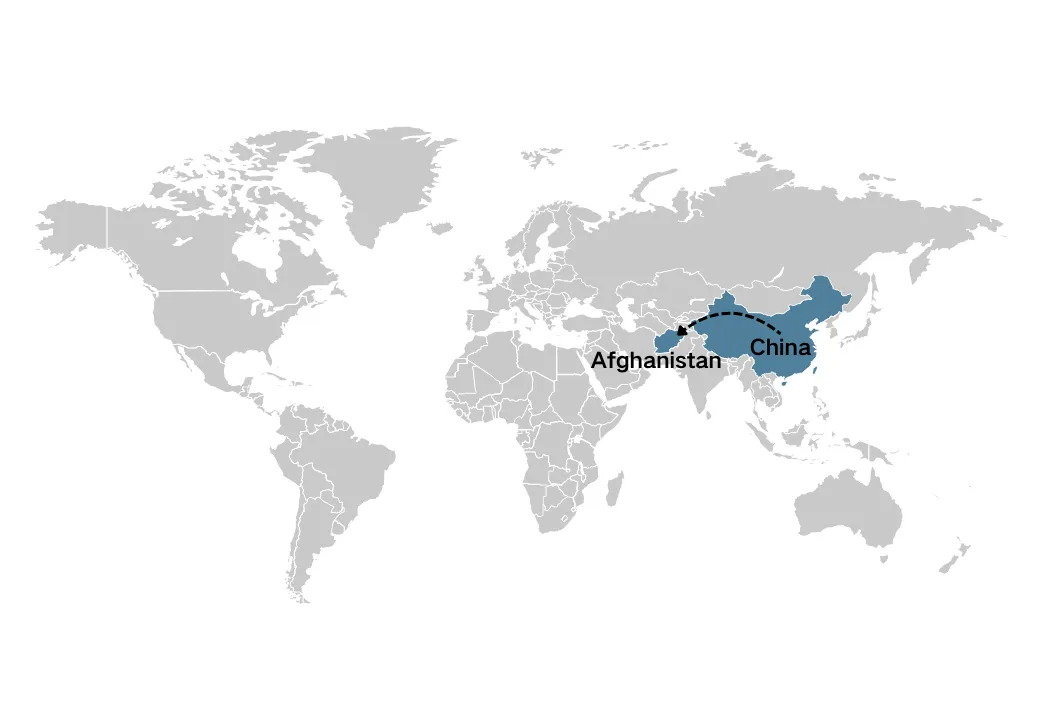
Shipping From China to Afghanistan
Fast & Reliable
Comprehensive guide to shipping from China to Afghanistan. Compare sea-land routes via Pakistan/Iran, air freight costs, and transit times with DTFU Logistics.
We make shipping from China to Afghanistan simple, reliable, and cost-effective
Competitive Rates
Best shipping rates with no hidden fees. Save up to 40% compared to other forwarders.
Fast Transit
Reliable delivery times with express options available for urgent shipments.
Safe & Secure
Full cargo insurance and secure handling throughout the entire shipping process.
24/7 Support
Dedicated customer support team available around the clock for all your needs.
Shipping from China to Afghanistan presents unique logistical challenges. As a landlocked country with complex regional transit agreements, navigating the supply chain requires more than just booking freight—it requires deep local expertise. Whether you are importing construction materials, electronics, or everyday consumer goods, choosing the right transit route, managing border customs, and keeping costs low are your top priorities.
In this guide, we break down everything you need to know about sea-land multimodal transport, air freight, costs, transit times, and how DTFU International Logistics can simplify your supply chain from Alibaba or 1688 directly to Kabul, Kandahar, or Herat.
Sea Shipping from China to Afghanistan (October 2026)
Because Afghanistan has no direct access to the ocean, "sea shipping" is actually a multimodal process: Sea Freight + Road Freight. Your cargo is shipped from major Chinese ports (like Shenzhen, Ningbo, or Shanghai) to a neighboring country's seaport, and then trucked inland across the border.
How does sea-land transit work?
The most common and cost-effective gateway is via Karachi Port or Port Qasim in Pakistan. Under the Afghanistan-Pakistan Transit Trade Agreement (APTTA), goods arrive in Pakistan and are moved by bonded trucks through border crossings like Torkham (towards Kabul/Jalalabad) or Chaman (towards Kandahar).
FCL (Full Container Load): Best for large volume shipments. Your goods remain sealed in the same container from China until they reach the final destination in Afghanistan.
LCL (Less than Container Load): Ideal for smaller shipments. Goods are consolidated in China, shipped to Karachi, and then securely transloaded onto trucks for the final leg.
Alternatively, cargo can be routed through Chabahar Port or Bandar Abbas in Iran, entering Afghanistan via the Zaranj (Nimroz) or Islam Qala (Herat) borders. This route is increasingly popular for its stability and avoidance of certain transit bottlenecks.
Air Shipping from China to Afghanistan (October 2026)
When speed is your absolute priority, air freight is the only choice. Air shipping bypasses the complex land border crossings, delivering your cargo directly to major Afghan airports.
What are the main cargo airports in Afghanistan?
The primary hub is Kabul International Airport (KBL), which handles the vast majority of international commercial cargo. Secondary options include Kandahar (KDH) and Mazar-i-Sharif (MZR), though international connections are more limited.
Best for: High-value electronics, medical supplies, urgent spare parts, and time-sensitive documents.
Pros: Extremely fast (typically 3 to 7 days), highly secure, and avoids unpredictable land border delays.
Cons: Significantly more expensive than sea-land transport, with strict weight and volume limitations.
Door to Door Shipping from China to Afghanistan (October 2026)
Managing customs in transit countries (like Pakistan or Iran) and final clearance in Afghanistan can be a massive headache for importers. That’s where Door-to-Door shipping (D2D) comes in.
What is Door-to-Door shipping to Afghanistan?
With a D2D service, your freight forwarder handles the entire supply chain. We pick up the goods from your supplier in China (e.g., in Guangzhou or Yiwu), manage export customs, handle the sea or air freight, navigate the transit country's bonded transport requirements, clear Afghan customs clearance, and deliver directly to your warehouse in Kabul or elsewhere.
Note: Due to the complex nature of Afghan customs and local tax structures, true DDP (Delivered Duty Paid) is heavily dependent on the specific commodity and current local regulations. We highly recommend consulting with our experts at DTFU to determine the best incoterm for your specific cargo.
Major Shipping routes from China to Afghanistan
Choosing the right route dictates your transit time, cost, and risk exposure. Here are the three primary logistics corridors used by Chinese exporters and Afghan importers:
1. The Pakistan Transit Route
Path: China Ports -> Karachi Port / Port Qasim (Pakistan) -> Torkham or Chaman Border -> Afghanistan.
Why choose it: This is the most established and widely used route, offering the highest frequency of sailings from China and competitive freight rates. In our experience, while cost-effective, importers must account for seasonal truck congestion at Torkham, especially during the late summer agricultural export season.
2. The Iran Transit Route
Path: China Ports -> Bandar Abbas or Chabahar Port (Iran) -> Islam Qala or Zaranj Border -> Afghanistan.
Why choose it: Often favored for shipments heading to western Afghanistan (like Herat). It provides an excellent alternative when the Pakistan borders face congestion or political delays. We increasingly route high-value goods through Chabahar due to its exemption from certain international sanctions and smoother overland transit to Nimroz.
3. The Central Asia Rail/Truck Route
Path: China (via Xinjiang) -> Kazakhstan/Uzbekistan (by Rail) -> Hairatan or Sherkhan Bandar Border -> Afghanistan.
Why choose it: An overland alternative that entirely bypasses the ocean. It can be faster than sea freight and is highly strategic for shipments heading to northern cities like Mazar-i-Sharif.
Shipping cost from China to Afghanistan (October 2026)
Shipping costs fluctuate based on fuel prices, seasonal demand, and geopolitical factors affecting transit corridors.
How much does it cost to ship?
Because of the multimodal nature of this route, costs are broken down into the ocean freight to the transit port, the inland trucking fee, and border transit charges.
Shipping Method
Estimated Cost Range
Best For
Sea-Land (FCL 20ft)
$3,500 - $5,500 (China to Kabul)
Large wholesale orders, machinery, building materials.
Sea-Land (FCL 40ft)
$4,500 - $7,000 (China to Kabul)
High-volume imports, vehicles, bulky goods.
Sea-Land (LCL)
$150 - $250 per CBM
Medium-sized shipments (2-15 CBM) not requiring a full container.
Disclaimer: These rates are rough estimates and subject to change. For accurate, up-to-date pricing, contact DTFU International Logistics with your exact cargo details.
Shipping time from China to Afghanistan
Transit times depend heavily on the chosen route and the efficiency of border crossings.
How long does it take to ship?
Air freight is the fastest at under a week, while sea-land multimodal transport requires careful planning due to a longer transit window.
Shipping Route / Method
Estimated Transit Time
Key Variables
Air Freight (to Kabul)
3 - 7 Days
Flight availability, direct vs. connecting flights.
Sea + Truck (via Pakistan)
30 - 45 Days
Karachi port congestion, Torkham/Chaman border clearance speed.
Sea + Truck (via Iran)
35 - 50 Days
Bandar Abbas clearance, Islam Qala border conditions.
Rail + Truck (via Central Asia)
20 - 30 Days
Rail schedule alignment at Khorgos/Alashankou.
Import duty from China to Afghanistan (October 2026)
Understanding the customs framework is critical to avoiding delays and unexpected costs upon arrival. Afghanistan utilizes the ASYCUDA (Automated System for Customs Data) for processing imports.
How are import duties calculated?
Duties are generally assessed based on the CIF (Cost, Insurance, and Freight) value of the goods.
Tariff Rates: Most consumer goods, electronics, and textiles face tariffs ranging from 2.5% to 50%, depending on their specific HS Code. Essential goods and raw materials usually enjoy lower rates.
BRT (Business Receipt Tax): Importers are typically required to pay a BRT, which acts as a form of sales tax on imported goods.
Documentation: You must have a commercial invoice, packing list, Bill of Lading (or Air Waybill), Certificate of Origin, and an Afghan transit permit (if routing through Pakistan or Iran). Crucially, your Afghan consignee must hold a valid Jawaznama (business license) and process the Ilm-o-Khabar (customs declaration form) via the ASYCUDA system.
Working with a knowledgeable local customs broker (Despachante) or a comprehensive freight forwarder is highly recommended to navigate the valuation and clearance process smoothly.
Shipping process from China to Afghanistan
Importing successfully requires a structured, step-by-step approach. Here is the standard workflow when you partner with a professional forwarder:
Quote & Booking: You provide your cargo details (weight, dimensions, commodity, pickup location in China). We advise on the best route (Pakistan vs. Iran) and provide a comprehensive quote.
Cargo Consolidation: We pick up the goods from your supplier(s) and transport them to our warehouse in Shenzhen, Guangzhou, or Ningbo for loading and export customs clearance.
Main Leg Transit (Sea or Air): The cargo is loaded onto a vessel heading to Karachi/Bandar Abbas, or placed on a flight to Kabul.
Transit Country Clearance (Sea-Land only): Upon arrival at the transit port, the cargo is processed for bonded transit. It is then loaded onto specialized trucks authorized to cross the Afghan border.
Border Crossing & Afghan Customs: The truck arrives at the border (e.g., Torkham). Goods are inspected, import duties are paid, and final Afghan customs clearance is achieved.
Final Delivery: The cargo is driven to your designated warehouse or facility in Afghanistan.
Your Trusted Freight Forwarder for Alibaba & 1688 Shipments to Afghanistan
Sourcing from platforms like Alibaba, 1688, or Made-in-China is highly profitable, but getting those goods safely to a landlocked country requires a logistics partner you can trust.
At DTFU International Logistics, we specialize in complex multimodal routes. We offer:
Free Supplier Consolidation: We can collect goods from multiple 1688 or Alibaba suppliers and pack them into a single shipment, saving you thousands in LCL fees.
Transparent Routing: We monitor border conditions in real-time, choosing between Pakistan or Iran routes to avoid congestion and delays.
End-to-End Visibility: From the factory floor in China to your warehouse in Kabul, our team provides constant updates and handles all transit documentation.
Frequently Asked Questions
Get answers to common questions about shipping from China to Afghanistan
Yes. However, lithium batteries are classified as Dangerous Goods (DG). They require special MSDS documentation and must be shipped via approved carriers, usually via specialized sea freight or specific cargo flights.
Absolutely. Given the multimodal nature of the transport, the multiple handling points (port to truck), and the rugged overland terrain, comprehensive cargo insurance is highly recommended to protect your investment against damage or loss.
Yes, commercial importers must have a valid business license and be registered with the Afghanistan Chamber of Commerce and Investment (ACCI) and the customs authority to process commercial shipments legally.
Beyond the standard Bill of Lading and Commercial Invoice, the Afghan importer must possess a valid Jawaznama (trade license). Documents often need to be verified by the ACCI, and having your paperwork pre-checked by our local experts prevents costly demurrage at the border.
Yes. Importers must strictly adhere to local laws. Prohibited items include alcohol, pork products, and certain unapproved media. Furthermore, "dual-use" goods (items that could have both civilian and military applications, such as certain drones or heavy-duty electronics) require extensive pre-approval and special permits.
Ready to Shipping From China to Afghanistan?
Get your instant quote today and experience the difference of working with a professional freight forwarder.
5000+
Successful Shipments
98%
Customer Satisfaction
Get Your Free Quote
Response within 2 hours • No obligation • Free consultation
We use cookies to enhance your browsing experience and analyze site traffic. By continuing to use our site, you consent to our use of cookies. Learn more in our Cookie Policy.