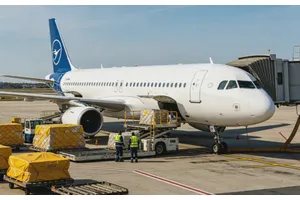
Afghanistan has no coastline, yet businesses in Kabul receive goods from Shenzhen in under a week. That is the power of air shipping from China to Afghanistan — a logistics corridor that bypasses the mountain passes, border bottlenecks, and 40-to-60-day transit times that make sea freight a waiting game. Over the past decade, our team at DTFU Logistics has moved everything from construction machinery to humanitarian medical supplies along this route. The single biggest lesson? Most importers overpay — not because air freight is inherently expensive, but because nobody teaches them how chargeable weight, route selection, and Afghan customs preparation actually work.
This guide is that missing education. Whether you are a B2B importer sourcing electronics from Shenzhen, an e-commerce seller consolidating Alibaba orders, or an NGO shipping relief supplies, you will learn exactly how air freight from China to Afghanistan works — real-world rates, airline route comparisons, step-by-step customs procedures, and the chargeable weight formula that can save (or cost) you thousands. For a broader look at all shipping modes to the country, see our complete Shipping From China to Afghanistan guide.
Why Air Freight to Afghanistan? The Landlocked Advantage
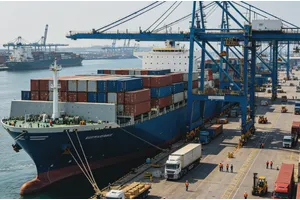
Afghanistan is one of the world's most landlocked nations — bordered by six countries but touching no ocean. Sea freight cannot reach Afghan soil directly: containers must land at a foreign transit port — typically Karachi (Pakistan) or Bandar Abbas in Shipping from China to Iran — clear transit-country customs under bond, then travel 1,000+ km by truck through mountain terrain and multiple border crossings.
The Real Cost of Sea Freight to Afghanistan
Comparing air freight vs sea freight from China to Afghanistan, the headline numbers deceive. A $1,500 sea freight quote (20ft, Shanghai→Karachi) looks attractive — but by the time cargo reaches Kabul, the all-in cost is $3,000–$4,500 and the journey takes 40–60 days:
| Factor | Air Freight | Sea Freight (via Karachi/Bandar Abbas) |
|---|---|---|
| Door-to-Door Transit | 5–8 days | 40–60 days |
| All-In Cost | $5–$10/kg (chargeable weight) | $3,000–$4,500 per 20ft container |
| Customs Complexity | Moderate — one country (ACD) | High — transit country + Afghan customs |
| Inland Transit Risk | Minimal | High — mountain roads, border closures, theft |
| Seasonal Reliability | Stable year-round | Degraded in winter (Salang Pass closures) |
| Best For | High-value, urgent, perishable | Heavy bulk cargo, no time sensitivity |
| Demurrage/Detention Risk | Very low | High — border delays rack up storage fees |
For a full ocean freight breakdown, read our Sea Shipping cost from China to Afghanistan analysis. The hidden cost of sea freight is unpredictability — we have seen shipments stuck at Torkham border for three weeks, racking up $80–$150/day in demurrage. When capital is tied up for two months, air freight or sea freight to Afghanistan from China becomes a working capital calculation, not a per-kilo comparison.
When Air Freight Makes Sense: A Decision Framework
Use air freight when any of these apply:
- Cargo value density exceeds $50/kg. Freight cost is a small fraction of product value.
- Time-to-market is revenue-critical. Seasonal goods, fashion, or promotional inventory lose value with every day of delay.
- Perishability or shelf life constraints. Food, pharmaceuticals, and temperature-sensitive goods cannot survive a 60-day journey.
- Inventory carrying cost exceeds freight savings. At 12% cost of capital, a $50,000 shipment tied up for an extra 50 days costs ~$820 in financing — narrowing the gap with air freight.
- Supply chain disruption risk is unacceptable. For spare parts where a stockout halts production, air freight's reliability premium is worth the cost.
A Hybrid Option: Sea-Air Combined
For importers who need speed but cannot justify full air freight rates, a sea-air combined shipping strategy routes cargo by ocean to Dubai, then transfers to air for the final leg into Afghanistan — cutting total transit to 18–25 days at ~40–50% of the cost of pure air freight. This requires a forwarder with deep Middle East hub presence.
DTFU Insight: Many importers overpay by shipping everything by air out of fear of delays. A smarter approach is split-inventory: keep 2–3 weeks of fast-moving stock flowing by air while a bulk sea shipment replenishes the warehouse every 45–60 days.
Air Freight Routes & Airlines from China to Afghanistan
Your choice of departure airport, transit hub, and airline directly impacts cost, speed, and reliability. There is no "best" route — only the best route for your cargo profile.
Chinese Departure Airports: Which One for Your Cargo?
| Departure Airport | Code | Best For | Key Advantage |
|---|---|---|---|
| Guangzhou Baiyun | CAN | General cargo, electronics, South China suppliers | Direct Turkish Airlines flights to KBL |
| Shanghai Pudong | PVG | Heavy machinery, textiles, East China suppliers | Multiple daily connections via Dubai/Istanbul |
| Shenzhen Bao'an | SZX | E-commerce parcels, consolidated shipments | Strong Qatar Airways connectivity; SF Express dedicated line |
| Urumqi Diwopu | URC | Northwest China suppliers, time-critical cargo | Closest to Afghanistan; direct Ariana Afghan flights |
| Hong Kong | HKG | High-value goods, dangerous goods | Highest international frequency; world-class DG handling |
| Beijing Capital | PEK | North China suppliers | Reliable transit via Middle Eastern hubs |
Match the departure airport to your supplier's location, not just flight time. Trucking from Shanghai to Urumqi for a marginally shorter flight defeats the purpose — domestic transit eats the time savings.
Afghanistan Destination Airports
| Airport | Code | Role |
|---|---|---|
| Hamid Karzai International (Kabul) | KBL | Primary gateway — 90%+ of all Afghan air cargo |
| Kandahar International | KDH | Southern Afghanistan; agricultural and regional trade |
| Herat International | HEA | Western Afghanistan; Iran-border and Central Asian corridors |
| Mazar-i-Sharif | MZR | Northern Afghanistan; growing Central Asian hub |
Most cargo enters through Kabul. Direct international service to Kandahar, Herat, and Mazar-i-Sharif is limited — cargo typically clears customs at KBL and trucks onward.
Airline Route Matrix: Complete Comparison
Our operational knowledge of air cargo airlines serving China to Afghanistan as of mid-2026:
| Airline | Route | Frequency | Flight Time | Total Transit | Notes |
|---|---|---|---|---|---|
| Turkish Airlines (TK) | CAN → KBL direct | 3x/week (Tue/Thu/Sat) | ~6 hrs | 1–2 days | Most reliable direct option; strong belly capacity |
| Ariana Afghan Airlines (FG) | URC → KBL direct | 2x/week (Mon/Fri) | ~3 hrs | 1–2 days | Limited capacity; best for smaller NW China shipments |
| Emirates SkyCargo (EK) | PVG/CAN → DXB → KBL | Daily | 7–9 hrs + 4–12 hr connection | 3–5 days | Highest frequency; premium rates, unmatched reliability |
| Qatar Airways Cargo (QR) | SZX/CAN → DOH → KBL | 3x/week | 8–10 hrs + 4–12 hr connection | 3–5 days | Strong e-commerce and consolidation handling |
| Uzbekistan Airways (HY) | URC → TAS → KBL | 3x/week (Tue/Thu/Sat) | 3 hrs + 4–8 hr connection | 4–6 days | Northern corridor; often lower rates than Middle East routes |
| Kam Air (RQ) | URC → TAS → KBL | 2x/week | 3 hrs + 4–8 hr connection | 4–6 days | Afghan carrier; local market knowledge; limited cargo space |
| China Southern (CZ) | PVG/CAN → KBL | Seasonal (1–2x/week) | ~7 hrs | 2–3 days | Operates during Afghan pine nut harvest season (Oct–Dec) |
| Silk Way Airlines (7L) | PVG → GYD → KBL | On demand / charter | 8–10 hrs + connection | 4–5 days | Dedicated cargo airline; ideal for oversized/heavy freight |
Transit Hubs: What Happens Between Flights
Dubai (DXB) is the workhorse. Emirates SkyCargo moves enormous volumes from China through Dubai — a key hub for our broader Shipping from China to UAE services — with state-of-the-art cold chain, DG handling, and daily frequencies that mean cargo rarely waits more than 12 hours for the next KBL connection. Rates typically run 10–20% above alternatives.
Istanbul (IST) is the only reliable direct passenger-aircraft service from a major Chinese cargo hub (Guangzhou) to Kabul via Turkish Airlines. It is also the natural consolidation point for shipments combining China-origin and Europe-origin cargo.
Doha (DOH) has grown rapidly as Qatar Airways Cargo invested in pharmaceutical and e-commerce handling — increasingly preferred for temperature-sensitive medical and consolidated e-commerce shipments.
Tashkent (TAS) is the underappreciated northern corridor. When Middle Eastern hubs congest during Ramadan and Q4 peak, routing through Tashkent via Uzbekistan Airways or Kam Air can shave 2–3 days off transit at more competitive rates — though frequency is lower.
DTFU Insight: Route selection is about matching cargo profile to airline strengths. Emirates excels at frequency and reliability. Silk Way Airlines handles outsized cargo — generators, industrial equipment — that passenger airlines cannot physically accommodate in belly holds. Turkish Airlines provides the best balance of direct access and volume. A forwarder with relationships across all three carrier families routes optimally, rather than forcing cargo onto whichever airline they have a volume contract with.
Air Freight Costs from China to Afghanistan
This section will save you money — not through discounts, but through understanding pricing mechanics few forwarders explain.
Current Market Rate Ranges
The air freight cost from China to Afghanistan per kg varies by shipment weight — heavier shipments (chargeable weight) earn lower per-kg rates:
| Weight Tier (Chargeable Weight) | Rate Range (per kg) | Typical Service Type |
|---|---|---|
| Under 45 kg | $12–$18/kg | Express courier / small parcel consolidation |
| 45–100 kg | $8–$12/kg | Standard consolidated air freight |
| 100–300 kg | $7–$9/kg | Standard air freight with volume discount |
| 300–500 kg | $6.50–$8/kg | Bulk discount tier |
| 500–1,000 kg | $5.50–$7/kg | High-volume rate; contract-eligible |
| Over 1,000 kg | $5–$6.50/kg | Contract / charter rates; best per-kg pricing |
Rates reflect mid-2026 market conditions. Actual pricing varies by route, airline, season, and cargo profile. Contact DTFU Logistics for a real-time all-inclusive quote.
Why Rates Fluctuate (and How to Time Your Shipments)
Key drivers on the China–Afghanistan corridor:
- Fuel surcharges (FSC): Updated monthly per the IATA index, typically 15–25% of base rate.
- Seasonal demand: Pre-Ramadan consumer goods surge, Chinese New Year factory slowdowns (Jan/Feb), and Q4 global peak (Oct–Dec) can spike rates 20–40%.
- Geopolitical events: Middle East airspace closures force costly rerouting; regional instability spikes insurance premiums.
- KBL airport capacity: Kabul's single runway and limited cargo apron create a throughput ceiling — peak congestion delays flights and pushes rates up.
Chargeable Weight: The Silent Cost Killer
This is the single most important concept in air freight — and no compe***** covering this route explains it. Airlines charge based on chargeable weight, the greater of actual (gross) weight and volumetric weight. A plane has both weight and space limits — a shipment of feathers fills the hold but weighs little; steel bars weigh tons but occupy minimal space. The airline charges for whichever resource your cargo consumes more of.
The formula:
Volumetric Weight (kg) = Length (cm) × Width (cm) × Height (cm) ÷ 6,000
The divisor 6,000 is the IATA standard (1 m³ = 166.67 kg). Some carriers use 5,000 for specific lanes, but 6,000 is the industry default.
Worked Example 1 — Dense Cargo (Actual Weight Wins):
You ship one box of smartphone accessories:
- Dimensions: 50 cm × 40 cm × 30 cm
- Actual weight: 25 kg
- Volumetric weight: (50 × 40 × 30) ÷ 6,000 = 60,000 ÷ 6,000 = 10 kg
- Chargeable weight: 25 kg (actual weight is higher)
Efficient: you pay for 25 kg to ship 25 kg. Electronics, metal parts, and dense industrial goods fall into this favorable category.
Worked Example 2 — Bulky Cargo (Volumetric Weight Wins):
You ship one box of foam packaging cushions:
- Dimensions: 100 cm × 80 cm × 60 cm
- Actual weight: 15 kg
- Volumetric weight: (100 × 80 × 60) ÷ 6,000 = 480,000 ÷ 6,000 = 80 kg
- Chargeable weight: 80 kg (volumetric weight is 5.3× the actual weight)
This is the trap: you pay for 80 kg but your goods weigh 15 kg. At $8/kg, that is $640 for $120 worth of foam. Every cubic meter of wasted packaging space is money handed to the airline.
Pro Tip: Before finalizing export packaging, calculate volumetric weight. If it exceeds actual weight by >20%, redesign: use smaller boxes, vacuum-seal soft goods, nest hollow items, eliminate filler. For high-volume shippers, custom-sized packaging can cut freight costs 15–30% — pure margin recovery.
Complete Cost Breakdown Per Air Shipment
A proper air freight quote itemizes every charge. If your forwarder gives a single number with no breakdown, push back:
| Cost Component | Typical Range | Notes |
|---|---|---|
| Base air freight rate | $5–$10/kg (chargeable weight) | Airport-to-airport transport |
| Fuel surcharge (FSC) | 15–25% of base rate | Adjusted monthly per IATA index |
| Security surcharge (SSC) | $0.10–$0.25/kg | Elevated for Afghanistan-bound cargo |
| Origin terminal handling | $50–$150 flat | Chinese departure airport terminal fees |
| Destination terminal handling | $80–$200 flat | ACD inspection and handling at KBL/KDH/HEA |
| Export customs clearance | $80–$150 | China-side declaration |
| Import customs brokerage | $120–$250 | Afghan-side clearance by licensed broker |
| AWB issuance | $20–$50 | Airway Bill document fee |
| Cargo insurance | 0.15–0.5% of declared value | Recommended; higher for Afghanistan risk profile |
| Last-mile delivery | $0.30–$0.80/kg or flat quote | Airport-to-door trucking within Afghanistan |
Cost-Saving Strategies That Actually Work
- Consolidate shipments above 100 kg. Crossing into the 100kg+ tier typically drops your per-kg rate by 15–25%. Use a forwarder with warehouse consolidation in China to combine goods from multiple suppliers into one optimized air shipment.
- Accept deferred transit (5–7 days vs. 2–3 days). Consolidation services that wait to fill a ULD before dispatch are 20–30% cheaper than priority loading.
- Optimize packaging for volumetric efficiency. See the chargeable weight section above — right-sizing cartons can recover 15–30% margin.
- Ship off-peak. Avoid the 3 weeks before Ramadan, the 2 weeks around Chinese New Year, and Q4 (October–December).
- Commit to volume for contracted rates. Even modest regular volumes, when locked into a forwarder's direct airline contracts, access rates spot-market buyers never see.
Step-by-Step Air Shipping Process from China to Afghanistan
Here is the air shipping process from China to Afghanistan step by step — the exact workflow DTFU executes daily:
Step 1: Supplier Pickup & Cargo Preparation (Day 0–1)
Your forwarder dispatches a truck to your supplier anywhere in China. Before loading, cargo is inspected for damage, labeling accuracy, and packaging integrity.
For multi-supplier sourcing — common for Alibaba and 1688 buyers — your forwarder consolidates goods from multiple suppliers at a central warehouse into a single air freight consignment. This alone can reduce your per-kg rate by bumping the combined shipment into a higher weight tier.
Packaging standard: Boxes must withstand stacking during ULD loading. Use double-wall corrugated cartons for anything over 15 kg. Pallets should be heat-treated (ISPM 15) if wood — plastic pallets skip fumigation entirely and are increasingly standard for air cargo.
Step 2: Export Customs Clearance in China (Day 1–2)
Your forwarder submits an electronic export declaration to China Customs with:
- Commercial Invoice — accurate HS codes, unit values, total value, and the applicable Incoterms 2020 rule (the ICC's standardized trade terms; for air freight: FCA, CIP, DAP, or EXW)
- Packing List — per-package breakdown: dimensions, weight, contents
- Export License — required only for restricted categories (certain electronics, chemicals, dual-use items)
Standard cargo typically clears within 24–48 hours. The number one delay: HS code misclassification. A generic or incorrect HS code triggers manual review, adding 1–3 days. Verify codes before your forwarder submits the declaration.
Step 3: Airline Booking & Cargo Handover (Day 2–3)
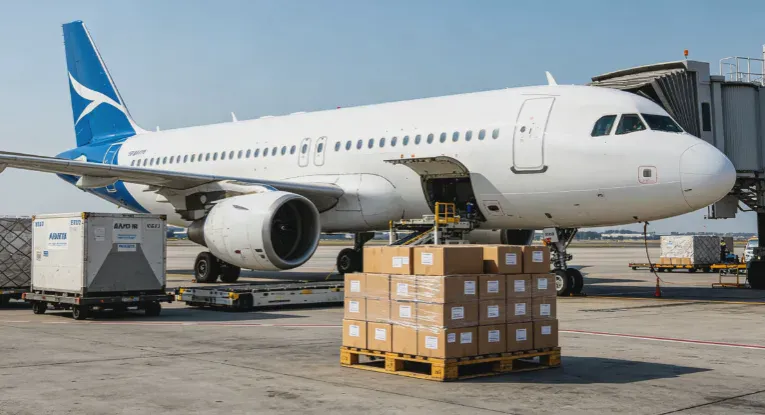
With export clearance secured, your forwarder books space with the selected airline. Your cargo is palletized and loaded into Unit Load Devices (ULDs) — standardized aluminum containers and pallets that fit directly into aircraft cargo holds.
The Airway Bill (AWB) is issued at this stage — an 11-digit identifier referenced by every scan, handover, and customs entry. Unlike a sea freight Bill of Lading, an AWB is non-negotiable (does not confer title), simplifying the documentation chain.
Before loading, cargo undergoes security screening (X-ray/ETD) per IATA and airport regulations.
Step 4: Air Transit (Day 3–5)
Direct flights (CAN→KBL) take ~6 hours. Transit via Dubai, Doha, or Istanbul takes 7–10 hours plus 4–24 hours connection. Your AWB number enables real-time tracking at every scan: origin acceptance, loading, transit transfer, and destination arrival.
Step 5: Afghan Import Customs Clearance (Day 5–7)
Your cargo lands at Kabul International Airport (or KDH/HEA/MZR), and the Afghan Customs Department (ACD) clearance begins. Your forwarder's local broker submits the import declaration electronically through ASYCUDA World with your AWB, Commercial Invoice, Packing List, Certificate of Origin, Import License, and any product-specific certificates.
ACD assesses import duties and Business Receipt Tax (BRT) based on CIF value. Payment must be settled before release. Typical clearance takes 2–3 business days — over 95% of DTFU-managed air shipments clear within this window. Common delays: incomplete documentation, HS code disputes, and cargo flagged for physical inspection.
Pro tip: Pre-clear documents. Submit electronically while the flight is airborne — customs review completes before landing, cutting clearance to 24 hours.
Step 6: Last-Mile Delivery in Afghanistan (Day 7–8)
With customs released, cargo is trucked to its final destination. Major cities (Kabul, Kandahar, Herat, Mazar-i-Sharif, Jalalabad) receive same-day or next-day delivery; remote areas are served through vetted local partners. Delivery concludes with a signed Proof of Delivery (POD) and optional photographic confirmation.
Door-to-Door: Standard 5–8 days. Expedited 3–5 days.
Customs Clearance & Documentation for Afghanistan Air Imports
The customs clearance Afghanistan process separates smooth shipments from costly delays. ACD operates under the Ministry of Finance using the ASYCUDA World platform — straightforward in framework but inconsistent in local implementation, making an experienced broker essential.
Essential Air Import Documentation Checklist
Missing any of these documents will delay your shipment. Demand all of them ready before the aircraft departs China.
| Document | Requirement | Critical Details |
|---|---|---|
| Airway Bill (AWB) | Mandatory | 11-digit tracking number issued by the airline or IATA-accredited forwarder |
| Commercial Invoice | Mandatory | In English: HS codes, unit values, total value, currency, Incoterm, seller/buyer details |
| Packing List | Mandatory | Per-carton breakdown: contents, quantity, net/gross weight, dimensions |
| Certificate of Origin | Conditional | For preferential tariff claims; issued by CCPIT or China chamber of commerce |
| Import License | Conditional | Required for commercial importers (Afghan Ministry of Commerce) |
| Product Certificates | Conditional | Electronics: conformity certificates; Pharma: MoPH registration; Food: health certificate |
| Insurance Certificate | Recommended | Proves coverage; required for claim processing |
Afghanistan Import Duty Structure
Afghanistan applies a simplified tariff system, though enforcement and valuation practices vary between customs offices.
| Category | Typical Duty Rate | Examples |
|---|---|---|
| Essential goods | 2.5–5% | Medical supplies, basic food staples, agricultural inputs |
| General consumer goods | 5–10% | Electronics, household appliances, clothing, footwear |
| Industrial goods | 5–8% | Machinery, spare parts, construction materials |
| Luxury items | 10–16% | High-end electronics, premium vehicles, jewelry |
Afghanistan also levies a Business Receipt Tax (BRT) of 2–4% on CIF value. For a typical $10,000 CIF electronics shipment, expect ~$700–$1,400 in combined duties and BRT.
Important caveat: While DDP vs FOB: Which Option Saves Time and Reduces Hassle is a critical decision on most trade lanes, DDP (Delivered Duty Paid) is rarely feasible for Afghanistan. Local tax payment systems, currency controls, and inconsistent customs valuation make it difficult for foreign forwarders to prepay Afghan duties reliably. Most shipments to Afghanistan operate on DAP (Delivered at Place) terms — the forwarder handles everything up to your door, but you or your local broker pay import duties directly to ACD at clearance.
Restricted & Prohibited Items
Do not assume an item that ships freely elsewhere can enter Afghanistan without scrutiny.
Prohibited: Narcotics, weapons/ammunition (without Afghan permits), counterfeit goods, alcohol, pork products, and materials contrary to Afghan law and Islamic values.
Restricted (require permits): Pharmaceuticals (MoPH registration), telecom equipment (ATRA approval), chemicals (environmental permits), food products (health certification), and dual-use electronics (additional screening).
Practical Tips for Smooth Afghan Customs
- Use a licensed local broker. Afghan brokers understand unwritten rules no remote forwarder can navigate.
- Declare accurate, defensible values. Undervaluation triggers audits, penalties, and multi-week delays — savings rarely justify the risk.
- Mark packages in English and Dari/Pashto and separate multi-supplier shipments clearly in the Packing List. Lumped-together goods default to physical inspection.
- Pre-clear before arrival. DTFU's Afghan brokerage submits documentation while the aircraft is en route, completing review before landing — saving 1–2 days.
Cargo Types, Dangerous Goods & Risk Management
Different cargo types face different regulatory hurdles on the China–Afghanistan corridor. Know these before you ship.
Cargo Type Guide: What Ships Well by Air to Afghanistan
| Cargo Category | Typical Commodities | Key Considerations |
|---|---|---|
| Electronics | Smartphones, laptops, appliances, solar panels | Lithium battery declarations required (UN3480/UN3481); ESD packaging recommended |
| Machinery & Parts | Construction spares, industrial components, generators | Favorable chargeable weight (dense); heavy items need crating, not cartons |
| Textiles & Garments | Fabrics, clothing, carpets, home textiles | Volumetric weight risk — use vacuum compression to reduce chargeable weight |
| Medical Supplies | Pharmaceuticals, medical devices, consumables | Afghan MoPH registration mandatory for commercial imports; cold chain may be needed |
| Auto Parts | Engines, transmissions, body panels, electrical components | Dense — good air freight profile; verify no dual-use restrictions |
| E-commerce Parcels | Consumer goods from Alibaba/Taobao/1688 | Consolidation is the profit lever — combine parcels into one shipment |
| Humanitarian Aid | Food, shelter materials, medical kits, water purification | May qualify for Afghan duty exemptions with proper NGO documentation |
| Food Products | Dry foods, snacks, canned goods | Afghan food safety certification required; verify shelf life > transit + local distribution time |
Dangerous Goods by Air to Afghanistan
Dangerous goods (DG) air shipping from China to Afghanistan is possible but strictly regulated under the IATA Dangerous Goods Regulations (DGR) — the globally recognized standard published annually by the International Air Transport Association. The most common DG classes on this route:
| DG Class | Examples | Requirements |
|---|---|---|
| Class 9 — Miscellaneous | Lithium-ion batteries (UN3480), lithium batteries with/contained in equipment (UN3481) | UN-spec packaging, Shipper's Declaration (DGD), MSDS; airline DG acceptance required |
| Class 3 — Flammable Liquids | Adhesives, paints, solvents, perfumes | UN-certified packaging, DGD, limited quantity provisions may apply |
| Class 8 — Corrosives | Cleaning chemicals, battery acid, industrial chemicals | UN-certified packaging, DGD; many airlines restrict Class 8 on passenger aircraft |
Critical DG rules:
- Emirates and Qatar Airways have the most consistent DG acceptance on KBL flights; Turkish Airlines and Ariana Afghan are more restrictive. Always confirm airline DG policy before booking.
- Your forwarder must employ IATA-DGR certified staff — uncertified forwarders cannot legally tender DG cargo.
- Undeclared/misdeclared DG is the most serious air freight compliance violation, carrying potential criminal liability. Disclose any battery, chemical, magnet, or pressurized container upfront.
Cargo Insurance: Non-Negotiable for Afghanistan
Afghanistan is classified as a high-risk destination by cargo insurers. Standard all-risk policies may exclude or heavily surcharge Afghanistan-bound shipments — see our shipping container insurance cost for shipments from China guide for policy details. If your forwarder says insurance is unnecessary, find another forwarder.
| Coverage Type | What It Protects | Importance for Afghanistan |
|---|---|---|
| Institute Cargo Clauses A (All Risks) | Theft, physical damage, total loss, non-delivery | Essential — broadest standard coverage |
| War & Strikes Clause | War, civil war, terrorism, strikes, riots | Highly recommended — addresses Afghanistan-specific exclusions |
| Institute Cargo Clauses C (Named Perils) | Fire, explosion, aircraft accident, cargo jettison | Too narrow for Afghanistan — do not rely on this alone |
Key details: Premiums: 0.15%–0.5% of declared value. Cover: at least 110% of CIF value (industry standard). In case of damage: photograph everything, retain packaging, file claim within 7 days. Airline liability under the Montreal Convention is limited to ~22 SDR/kg (~$30/kg) with numerous exclusions — it does not substitute for cargo insurance.
Risk Mitigation Checklist
Before cargo leaves the supplier, verify: valid Afghan importer license, commodity checked against prohibited/restricted lists, forwarder IATA accreditation active, All Risks + War & Strikes insurance purchased, documentation complete and consistent, and electronic pre-clearance submitted before departure.
Why DTFU Logistics for Afghanistan Air Freight
After 10+ years on the Central and South Asian corridor, DTFU Logistics has the infrastructure and operational knowledge this demanding route requires.
FIATA + IATA Dual Certification. The industry's two highest credentials — FIATA validates operational and ethical standards globally; IATA authorizes us to issue AWBs directly, settle through CASS, and handle DG in full DGR compliance (audited annually). No other forwarder on this route combines both.
Direct Airline Contracts. Volume agreements with Emirates, Turkish Airlines, Qatar Airways, and regional carriers mean contracted rates and priority space — even during peaks when spot buyers get priced out.
China Consolidation Network. Warehouses in Shenzhen, Guangzhou, Shanghai, and Yiwu combine multi-supplier purchases into one optimized shipment at one rate.
Afghan Brokerage Team. Vetted partners clear cargo at KBL, KDH, HEA, and MZR, with electronic pre-submission while flights are airborne.
Transparent Pricing. Every quote includes a full line-item breakdown — no hidden charges, no surprise fees. You see the complete landed cost before booking.
FAQs
How much does air shipping from China to Afghanistan cost per kg?
Market rates in 2026 range from ~$5/kg (1,000kg+ shipments) to $12–18/kg (under 45 kg). The real cost depends on chargeable weight — the higher of actual vs. volumetric weight. Fuel surcharges (15–25%), security surcharges, terminal fees, customs brokerage, and last-mile delivery all add to the total. Always request an all-inclusive, line-by-line quote.
How long does air cargo take from China to Kabul?
Standard door-to-door transit from Chinese supplier to Kabul is 5–8 days. Direct flights (Guangzhou→Kabul via Turkish Airlines) deliver airport-to-airport in 1–2 days, door-to-door in 3–4 days. Expedited service: 2–4 days. Afghan customs typically accounts for 2–3 days. Dubai/Doha transit adds ~1–2 days vs. direct flights.
What is the cheapest way to air ship from China to Afghanistan?
(1) Consolidate shipments above 100 kg to access bulk rate tiers; (2) Use deferred services (5–7 days vs. 2–3 days express) for 20–30% savings; (3) Optimize packaging to minimize volumetric weight; (4) Ship off-peak, avoiding pre-Ramadan, Chinese New Year, and Q4; (5) Build a relationship with a forwarder who has direct airline contracts — spot-market buyers always pay more.
Can I ship electronics with lithium batteries by air from China to Afghanistan?
Yes, with strict IATA DGR compliance. Lithium batteries are Class 9 Dangerous Goods: UN3480 (loose), UN3481 (with/contained in equipment). You need IATA-compliant packaging, a Shipper's Declaration (DGD), and MSDS. Not all airlines on this route accept DG — confirm acceptance before booking. Your forwarder must employ IATA-DGR certified staff to prepare the declaration.
What are the main Afghanistan airports for air cargo from China?
Kabul International (KBL) handles 90%+ of all air cargo entering Afghanistan. Kandahar (KDH) serves the south, Herat (HEA) the west, and Mazar-i-Sharif (MZR) the north. Direct international service to KDH/HEA/MZR is very limited — most cargo clears customs at KBL and trucks onward.
What items are prohibited from air shipping to Afghanistan?
Prohibited: ********s, weapons/ammunition (without Afghan government permits), counterfeit goods, alcohol, pork products, materials contrary to Afghan law and Islamic values. Restricted (require permits): pharmaceuticals (MoPH registration), telecom equipment (ATRA approval), chemicals, and food products (health certification). Always disclose full commodity details to your forwarder before booking.