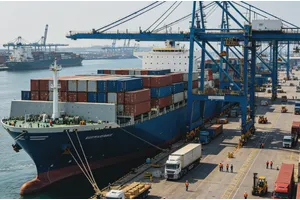
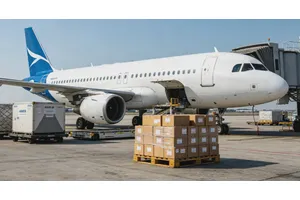
Afghanistan is landlocked — no direct seaport. Yet Afghan businesses import billions in goods from China every year, from machinery and electronics to construction materials and consumer products. The real barrier isn't geography; it's fragmented information. First-time importers get blindsided by door to door shipping from China to Afghanistan quotes that obscure transit fees, border delays that rack up detention charges, and customs procedures that seem impenetrable from the outside. This guide cuts through the noise. You'll get every viable shipping route mapped and compared, a full cost breakdown with real numbers, the complete 8-step process from a Chinese factory to an Afghan warehouse, customs and documentation requirements laid out plainly, and honest risk guidance — so you ship with clarity, not guesswork.
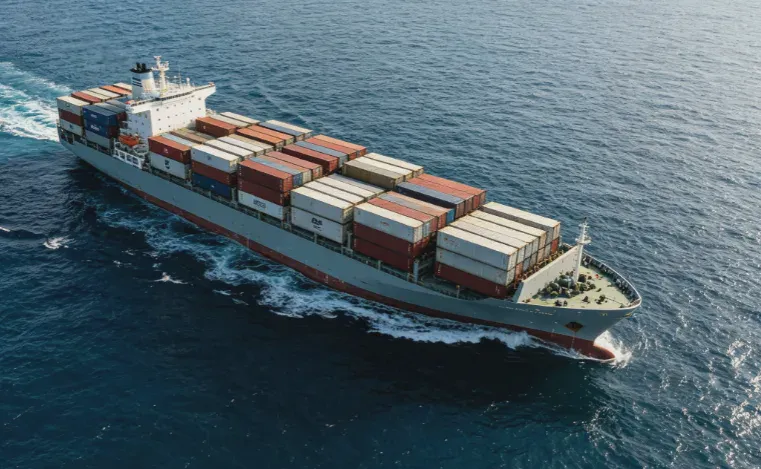
Shipping Routes from China to Afghanistan
Because Afghanistan has no coastline, all sea freight must transit through a neighboring country before crossing into Afghanistan by road or rail. Four main corridors handle virtually all China-to-Afghanistan cargo. The route you pick determines your total cost, transit time, and risk exposure.
Sea + Land via Karachi, Pakistan (Most Economical)
This is the workhorse corridor for shipping from China to Afghanistan via Karachi — it handles the majority of containerized imports. Cargo sails from any major Chinese port to Karachi Port or Port Qasim, clears Pakistani transit customs under the Afghanistan-Pakistan Transit Trade Agreement (APTTA), then moves inland by bonded carrier (a licensed trucking company authorized to move transit cargo across Pakistan) to the Afghan border.
Typical path: Chinese port → Karachi → Peshawar → Torkham Border → Kabul / other Afghan cities
For cargo destined for southern Afghanistan, an alternative branch runs Karachi → Quetta → Chaman Border → Kandahar (~913 km from Karachi).
Transit time breakdown:
| Leg | Duration |
|---|---|
| Ocean freight (Shanghai→Karachi) | 16–24 days |
| Karachi port handling + transit customs | 3–5 days |
| Bonded trucking Karachi→Torkham (~2,010 km) | 3–4 days |
| Torkham border clearance | 1–2 days |
| Final delivery within Afghanistan | 1–3 days |
| Total door-to-door | 25–40 days |
This route works best for bulk cargo, heavy machinery, and construction materials — when your priority is cost per kilogram rather than speed. Keep in mind that Torkham border delays are a known variable; we cover risk management in detail later.
Sea + Land via Bandar Abbas, Iran
This corridor serves western Afghanistan — especially importers in Herat, Farah, and Nimruz. Cargo transits through Iran under its transit regime, entering Afghanistan at the Islam Qala border crossing.
Typical path: Chinese port → Bandar Abbas, Iran → Islam Qala → Herat / onward to Kabul
Total transit time: approximately 30–40 days door to door.
This route can be logistically efficient for western Afghan destinations, but it comes with a critical caveat: Iran's sanctions landscape means certain goods, carriers, and financial transactions face restrictions. Shipping from China to Afghanistan via Iran requires an experienced forwarder who understands the compliance landscape and can vet the routing for your specific cargo. Do not attempt this route through a generalist forwarder unfamiliar with Iran transit. For importers already shipping to Iran and looking to extend into Afghanistan, DTFU also provides dedicated Door to Door Shipping from China to Iran services using the same Bandar Abbas corridor.
Rail + Truck via Central Asia (Fastest Overland)
For time-sensitive cargo that doesn't justify air freight rates, the Central Asian rail corridor offers a compelling middle ground. Goods travel by truck from Chinese cities like Kashgar or Urumqi, transfer to rail through Kazakhstan or Uzbekistan, and enter northern Afghanistan at the Hairatan border (Uzbekistan) or Sher Khan Bandar (Tajikistan).
Typical path: Kashgar/Urumqi → rail via Kazakhstan/Uzbekistan → Hairatan → Mazar-i-Sharif / Kunduz / Kabul
Total transit time: approximately 18–25 days door to door.
China to Afghanistan railway freight is the fastest overland option, but container costs run higher than the Karachi sea route. Rail frequency on certain Central Asian segments can be limited, so advance booking is essential. This route is ideal for northern Afghan destinations like Mazar-i-Sharif.
Air Freight (Fastest Overall)
When speed trumps everything, air freight delivers. Cargo flies from major Chinese airports (Guangzhou CAN, Shanghai PVG, Shenzhen SZX, Beijing PEK) to Kabul International Airport (KBL), Kandahar, Herat, or Mazar-i-Sharif.
Transit time: 3–7 days door to door.
Air cargo from China to Afghanistan door to door is the go-to for high-value electronics, medical supplies, perishables, and urgent commercial shipments. Be aware that Kabul air cargo has weight and volume constraints — oversize items may need charter arrangements. Certain cargo types require advance security screening.
Route Comparison at a Glance
| Route | Transit Time | Cost Level | Best For | Primary Risk |
|---|---|---|---|---|
| Karachi Sea + Land | 25–40 days | ★★☆☆☆ | Bulk cargo, machinery, construction materials | Torkham border delays |
| Bandar Abbas Sea + Land | 30–40 days | ★★☆☆☆ | Western Afghanistan (Herat, Farah) | Iran sanctions complexity |
| Central Asia Rail + Truck | 18–25 days | ★★★★☆ | Northern Afghanistan, time-sensitive overland | Limited rail frequency |
| Air Freight | 3–7 days | ★★★★★ | High-value, urgent, perishable cargo | Weight/size restrictions |
Which Route Should You Choose?
- "I have a full container and 40 days to spare." → Karachi sea + land route. Lowest cost per kilogram.
- "My cargo is destined for Herat." → Bandar Abbas route. Geographically optimal.
- "I need it in under three weeks and my buyer is in Mazar." → Central Asia rail. Best speed-to-cost ratio for northern destinations.
- "It's 200 kg of electronics and my customer needs it now." → Air freight. No overland alternative comes close.
The Complete Door-to-Door Process: A Step-by-Step Breakdown
Understanding the full journey helps you spot where delays and costs creep in — and why choosing the right freight forwarder for China to Afghanistan door to door shipping makes the difference between a smooth shipment and a logistics headache. Here's exactly what happens from pickup to delivery.
Step 1: Supplier Pickup and Consolidation in China
Your forwarder collects cargo from your supplier's factory or warehouse anywhere in China. If you're buying from multiple suppliers, cargo can be consolidated at the forwarder's warehouse — this is especially useful for LCL (Less than Container Load) shipments, where goods from different suppliers share container space. Packaging gets checked for multimodal transit suitability: your cargo will be handled four to six times en route, so export-grade packaging is essential.
Duration: 1–3 days
Step 2: China Export Customs Declaration
The forwarder files an export declaration with China Customs. Required documents include the commercial invoice, packing list, export contract, and a customs declaration form. Certain product categories — machinery, electronics, chemicals — may trigger a commodity inspection requirement. A competent forwarder handles this end to end.
Duration: 1–2 days
Step 3: Ocean Freight to the Transit Port
Your container loads at one of China's major ports — Shanghai, Ningbo, Shenzhen, Guangzhou, Qingdao, Tianjin, or Xiamen. The vessel sails to Karachi (16–24 days) or Bandar Abbas (18–25 days), depending on your chosen route. Throughout the voyage, real-time container tracking keeps you informed.
Duration: 16–25 days
Step 4: Transit Port Customs and Bonded Transfer
At the transit port, the container is discharged and a transit customs declaration is filed — under APTTA for Pakistan or Iran's transit regime for the Bandar Abbas route. Cargo is then transferred to a bonded carrier for cross-border trucking. For LCL shipments, cargo is stripped at a Container Freight Station (CFS) and consolidated for onward trucking; FCL (Full Container Load) containers move directly on bonded trucks.
One critical operational detail: Afghanistan has not signed international container agreements. Empty containers must be returned to the transit port, which adds a cost component that standard coastal-country door-to-door quotes don't include.
Duration: 3–5 days
Step 5: Cross-Border Trucking into Afghanistan
Bonded trucks haul your cargo from Karachi to Torkham (~2,010 km, 3–4 days) or to Chaman (~913 km, 2–3 days). From Bandar Abbas, trucks head to Islam Qala. Reputable forwarders equip fleets with GPS tracking and offer armed escort options for high-value cargo. Delays can occur due to winter road conditions on high-altitude routes, security checkpoints, or border congestion.
Duration: 2–5 days (highly variable — the widest range in the entire process)
Step 6: Afghan Import Customs Clearance
At the Afghan border customs post — Torkham, Chaman, Islam Qala, or Hairatan — your forwarder's customs broker files an import declaration through the ASYCUDA World system, Afghanistan's electronic customs platform managed by the Afghanistan Customs Department (ACD). Officials verify all documents (commercial invoice, packing list, Bill of Lading, and Certificate of Origin) and conduct physical inspection — partial or full, depending on cargo type and risk profile.
Duration: 1–3 days, assuming documents are complete and correctly prepared
Step 7: Duty and Tax Payment
The ACD assesses import duties and taxes based on the cargo's CIF (Cost, Insurance, Freight) value and HS Code classification. Import duties typically range from 0% to 20%, with a flat 10% VAT applied on top of (CIF value + duty). If you've chosen DDP (Delivered Duty Paid) terms, your forwarder handles this payment on your behalf. Under DDU (Delivered Duty Unpaid), you arrange payment directly to the Afghan Revenue Department.
Duration: 1 day after assessment
Step 8: Last-Mile Delivery in Afghanistan
Once customs releases the cargo, trucks deliver it to the final destination — Kabul, Kandahar, Herat, Mazar-i-Sharif, Jalalabad, or wherever your warehouse sits. You sign a Proof of Delivery (POD) to confirm receipt.
Duration: 1–3 days
Complete Timeline Overview
| Process Stage | Duration |
|---|---|
| Supplier pickup + China export clearance | 2–5 days |
| Ocean freight to transit port | 16–25 days |
| Transit port handling + cross-border trucking | 5–9 days |
| Afghan customs clearance + last-mile delivery | 2–6 days |
| Total: Sea route door-to-door | 25–45 days |
| Total: Air route door-to-door | 3–7 days |
Door to Door Shipping Costs from China to Afghanistan
Understanding door to door shipping from China to Afghanistan cost means looking at every component — ocean freight, transit fees, overland trucking, and Afghan import charges. For a deeper dive into ocean freight rates and seasonal trends on this lane, see our dedicated Sea Shipping cost from China to Afghanistan guide. Here's what each piece costs, based on mid-2026 market rates.
Rates fluctuate with fuel prices, seasonal demand, and carrier capacity. Always request a current quote. The figures below are indicative June 2026 ranges.
Sea Freight: China Ports to Karachi
| Port of Loading | 20GP (approx.) | 40GP/HQ (approx.) |
|---|---|---|
| Shanghai | $750–$900 | $1,350–$1,600 |
| Ningbo | $750–$900 | $1,350–$1,600 |
| Shenzhen / Yantian | $700–$850 | $1,250–$1,500 |
| Guangzhou / Nansha | $750–$900 | $1,350–$1,600 |
| Qingdao | $800–$950 | $1,500–$1,750 |
| Tianjin | $850–$1,000 | $1,550–$1,800 |
Cargo ships from the port closest to your supplier — no need to truck goods across China to a "preferred" port.
Overland and Transit Costs: Karachi to Kabul
| Cargo Type | 20GP | 40GP/HQ |
|---|---|---|
| Commercial cargo (CFR, all-inclusive transit) | $2,000–$2,300 | $3,000–$3,400 |
| Non-commercial / personal effects | $1,800–$2,100 | $2,800–$3,200 |
This includes Pakistan transit customs, bonded trucking, Torkham border handling, Afghan import clearance facilitation, and last-mile delivery to Kabul. For destinations beyond Kabul, add incremental trucking cost.
LCL (Less than Container Load) Rates
For LCL shipping from China to Afghanistan, you pay per cubic meter rather than per container:
- Sea freight LCL: $50–$80 per CBM (China port → Karachi CFS)
- Overland LCL transit: $80–$120 per CBM (Karachi → Kabul)
- Total LCL door-to-door: approximately $130–$200 per CBM
- Minimum chargeable volume: typically 1–2 CBM
Air Freight Rates
Air freight cost from China to Afghanistan per kg drops sharply with volume:
| Weight Band | Rate (approx.) |
|---|---|
| Under 45 kg | $8–$12/kg |
| 45–100 kg | $6–$9/kg |
| 100–500 kg | $5–$7/kg |
| 500+ kg | $4–$6/kg |
Afghan Import Duties and Taxes (Estimated)
| Charge | Rate | Applied To |
|---|---|---|
| Customs duty | 0–20% | CIF value (varies by HS code) |
| VAT | 10% | CIF value + duty |
| Excise tax (select categories) | Variable | Certain luxury goods, fuel, tobacco |
Example landed cost calculation: A $10,000 CIF shipment with a 5% duty rate lands at $10,000 + $500 (duty) + $1,050 (10% VAT on $10,500) = $11,550 total before logistics costs.
Hidden Costs to Watch For
Every experienced forwarder knows these — most quotes conveniently omit them:
- Container detention at Torkham: If border delays eat into free days, detention fees run $80–$150/day. A single weeklong closure can add $1,000+ to your total.
- Pakistani escort/security fees: Certain cargo types require mandatory security escorts on Pakistan's highways.
- Afghan customs brokerage fees: Separate from duties — budget $150–$400 depending on complexity.
- Demurrage at Karachi port: Accumulates if transit documents are delayed and containers sit beyond free time.
- Currency conversion: The Afghan Afghani (AFN) can be volatile; USD-denominated quotes protect against exchange rate surprises.
A door-to-door DDP shipping from China to Afghanistan quote that bundles all of the above into one price shields you from these line-item surprises.
Afghanistan Customs Clearance, Duties and DDP Shipping Explained
Afghanistan Customs at a Glance
Afghanistan's customs authority is the Afghanistan Customs Department (ACD), operating under the Ministry of Finance. All import declarations are processed through ASYCUDA World, the UNCTAD-developed electronic customs management system used by over 100 countries. Customs valuation generally follows the WTO Valuation Agreement, using transaction value (CIF) as the primary basis. Physical inspection is common; a risk-based selectivity system determines whether your shipment gets a spot check or a full examination.
Afghanistan Import Tariff Structure
Afghanistan import duties and taxes from China follow HS Code chapter classification:
| Product Category | Typical Duty Rate |
|---|---|
| Raw materials, essential goods | 0–2.5% |
| Semi-finished goods, industrial inputs | 2.5–5% |
| Consumer goods | 5–10% |
| Luxury items, non-essential goods | 10–20% |
A flat 10% VAT applies across most categories. Certain products — fuel, tobacco, luxury vehicles — attract additional excise taxes. Always have your forwarder verify your HS code classification before shipment; a misclassification discovered at the border means underpaid duties, penalties, and delays.
DDP vs DDU: Which Incoterm Should You Use?
For DDP shipping China to Afghanistan, your forwarder pays all costs including Afghan import duties and VAT. You receive one all-in quote and one point of accountability. For first-time importers and anyone shipping complex or high-value cargo, DDP is strongly recommended. If you're weighing DDP against other Incoterms like FOB, our comparison guide DDP vs FOB: Which Option Saves Time and Reduces Hassle breaks down the trade-offs in detail.
| Aspect | DDP (Delivered Duty Paid) | DDU (Delivered Duty Unpaid) |
|---|---|---|
| Who pays Afghan duties? | Forwarder | Importer |
| Who handles clearance? | Forwarder's broker | Importer or their broker |
| Cost predictability | High — single all-in quote | Variable |
| Best for | First-time importers, complex shipments | Experienced importers with local broker |
| Buyer's risk | Low | Buyer bears customs and payment risk |
Common Afghan Customs Pitfalls
- Undervaluation: Afghan customs may reject declared values and reassess at higher reference prices. This triggers not only higher duties but also audits on prior shipments.
- Missing Certificate of Origin: Without it, goods face higher MFN (Most Favored Nation) tariff rates. Always have your supplier or forwarder obtain a CO from CCPIT (China Council for the Promotion of International Trade).
- Prohibited and restricted items: Alcohol, ********s, arms, certain chemicals, and specific electronics require special permits or are banned outright. Verify product admissibility before you ship.
- Incomplete packing lists: Missing detail on individual package contents triggers physical inspection, which means delays — and detention fees.
- HS code misclassification: The single most avoidable source of customs trouble. A forwarder with an Afghanistan desk checks this before cargo leaves China.
Required Documents for Shipping from China to Afghanistan
Missing or inconsistent paperwork is the number one cause of shipping delays at the Afghanistan Pakistan border and customs hold-ups. Here's exactly what you need.
Mandatory Documents
| Document | Issued By | Purpose |
|---|---|---|
| Commercial Invoice | Chinese supplier | Declares cargo value, description, buyer/seller details, Incoterm |
| Packing List | Chinese supplier | Itemizes contents, weight, and dimensions of each package |
| Through Bill of Lading | Shipping line / forwarder | Single contract covering ocean + inland legs to Afghanistan |
| Certificate of Origin | CCPIT / China Chamber of Commerce | Qualifies goods for preferential tariff rates |
| Export Declaration | China Customs / forwarder | Required for China export clearance |
| APTTA Transit Document | Pakistan Customs / forwarder | Required for bonded transit through Pakistan |
| ASYCUDA Import Declaration | Afghan customs broker | Filed electronically with ACD |
| Import License (if applicable) | Afghan Ministry of Commerce | Required for regulated product categories |
Additional Documents by Cargo Type
- Machinery and equipment: Factory test reports, CE or ISO certificates, manufacturer's technical datasheets
- Food and pharmaceuticals: Health certificates, lab analysis reports, halal certification (for food products)
- Electronics: FCC or CE compliance certificates, radiation safety reports for certain devices
- Used goods: Pre-shipment inspection certificate from an accredited agency
Documentation Best Practices
- All documents must be in English, or accompanied by a certified translation
- Cargo values must match across every document — an invoice that says $10,000 and a packing list suggesting $8,000 will trigger a customs hold
- Have your forwarder verify HS codes before the shipment departs China — not after it arrives at Torkham
- Keep digital copies of every document accessible for real-time troubleshooting
Risk Management and Cargo Insurance for Afghanistan Shipments
Shipping to a landlocked, high-risk destination means facing risks that don't apply to standard routes. Acknowledging them openly — and having a plan — is what separates professional forwarders from amateurs.
Understanding the Risks
- Transit theft: The Pakistan and Afghan overland segments have known cargo theft exposure. Bonded carriers with GPS fleet tracking and tamper-evident seals are the baseline defense.
- Border disruptions: Torkham border can close with little warning — security incidents, political flare-ups between Pakistan and Afghanistan, or customs system outages. A closure of 3–7 days is not unusual during periods of tension.
- Multimodal handling damage: Cargo transfers four to six times between ship, port, truck, and border — each transfer is a damage opportunity. Export-grade reinforced packaging is not optional.
- Financial risk: Afghanistan's banking system has limitations. USD-denominated transactions through established forwarders offer the most reliable payment path.
- Seasonal factors: Winter conditions close high-altitude Afghan highways like the Salang Pass, disrupting deliveries to northern provinces between December and March.
Cargo Insurance Options
Cargo insurance for China to Afghanistan shipments costs more than standard routes — but skipping it is a false economy.
| Coverage Level | What It Covers | Recommended For |
|---|---|---|
| Institute Cargo Clauses A (All Risk) | Physical loss or damage from any external cause | Most shipments — the recommended baseline |
| Institute Cargo Clauses B (Named Perils) | Specified perils only (fire, stranding, collision, etc.) | Low-value, low-risk cargo |
| Institute Cargo Clauses C (Basic) | Major casualties only | Rarely sufficient for Afghan routes |
| War Risk and Strikes (add-on) | Loss from war, civil unrest, strikes | Highly recommended for Afghan transit |
Typical all-risk premium for Afghanistan: 0.15%–0.5% of cargo value. On a $50,000 shipment, that's $75–$250 — a fraction of the cost of a single uninsured loss. For a complete breakdown of coverage types and what they cost across different routes, refer to our Shipping container insurance cost for shipments from China guide. Standard exclusions include loss from delay, inherent vice (product defect), insufficient packaging, and nuclear/chemical events.
Practical Risk Mitigation
- Use bonded carriers with GPS tracking. If your forwarder can't tell you where your truck is in real time, find another forwarder.
- Choose DDP terms. DDP shifts transit risk from you to the forwarder — they're incentivized to get your cargo through cleanly.
- Time your shipments deliberately. Check with your forwarder about current border conditions and avoid shipping into known tension windows.
- Invest in packaging. Reinforced crating, waterproof wrapping, and tamper-evident seals are not upsells — they're requirements for multimodal transit.
- Work with forwarders who have dedicated Afghanistan desks. Institutional knowledge — knowing which border crossing, which carrier, and which customs broker for your specific cargo — cannot be replaced by a generic routing algorithm.
Why Choose DTFU Logistics for Your China-Afghanistan Shipments
Shipping to Afghanistan demands a forwarder who understands landlocked logistics, transit country regulations, and Afghan customs procedures — not a generalist applying a coastal-country playbook to a fundamentally different problem. As explored in our article on The Strategic Role of Freight Forwarders in Modern Supply Chains, the right logistics partner does far more than book cargo space — they manage risk, navigate compliance, and keep your supply chain running when disruptions hit.
Multi-Port, Multi-Route Expertise
DTFU Logistics operates from every major Chinese port — Shanghai, Ningbo, Shenzhen, Guangzhou, Qingdao, Tianjin, and Xiamen. Your cargo ships from the port closest to your supplier, not the one most convenient for your forwarder. We run shipments across all three transit corridors covered in this guide — Karachi, Bandar Abbas, and Central Asian rail — and we'll recommend the optimal route based on your cargo, destination, budget, and timeline, not the one that's easiest for our operations desk.
FIATA and IATA Dual Certification
DTFU holds both FIATA (International Federation of Freight Forwarders Associations) and IATA (International Air Transport Association) certification. For Afghanistan — where customs officials scrutinize documentation more closely than at most borders — working with an uncertified forwarder invites delays and compliance risk. Dual certification means one forwarder handles your sea freight, air freight, and multimodal shipments with a single, consistent standard.
What Sets DTFU Apart
- Direct carrier contracts with major shipping lines — including COSCO, Maersk, and OOCL — mean competitive rates, secured container space, and no middleman markup
- Dedicated Afghanistan desk staffed by account managers who know Afghan customs valuation methods, APTTA transit procedures, and Torkham's operational rhythms
- Real-time tracking platform — monitor your shipment from Chinese supplier pickup through to Afghan delivery, 24/7
- DDP door-to-door with guaranteed landed cost — one transparent quote covering supplier pickup, China export, ocean freight, transit customs, cross-border trucking, Afghan import clearance, duties and VAT, and last-mile delivery
- Comprehensive cargo insurance — all-risk coverage with optional war risk add-on for Afghan transit routes
- Proven track record — since 2014, DTFU has served importers across 120+ countries with FIATA-certified and IATA-certified freight forwarding
Our Commitment
- Transparent pricing — no hidden fees, no surprise detention charges. If we know about a cost, you know about it before you pay.
- Honest transit time estimates — we tell you about potential border delays upfront, because surprise delays damage trust and your supply chain.
- Dedicated account manager — one person who knows your business, your cargo profile, and your preferred routes — not a rotating call center queue.
For a full overview of our Afghanistan service capabilities, visit our Shipping From China to Afghanistan landing page. DTFU also serves the broader Central and West Asian region with dedicated Door to Door Shipping from China to Iran, Door to Door shipping from China to Iraq, and Door to Door Shipping from China to UAE services for importers managing multi-country supply chains.
FAQs
How long does door-to-door shipping from China to Afghanistan take?
Sea freight via Karachi takes 25–45 days door to door. The Central Asia rail + truck route takes 18–25 days. Air freight takes 3–7 days. Exact timing depends on your chosen route, the season, and current border conditions — particularly at Torkham.
Is DDP shipping available from China to Afghanistan?
Yes. DDP is the most common and recommended Incoterm for Afghanistan imports. Under DDP, your forwarder handles all costs including Afghan customs duties and 10% VAT, giving you one predictable landed cost and eliminating surprise charges at the border.
Which shipping route is cheapest: Karachi, Bandar Abbas, or Central Asia?
The Karachi sea + land route offers the lowest cost per kilogram for containerized cargo. The Bandar Abbas route through Iran is comparable in cost but has fewer weekly sailings. Central Asian rail is faster than sea but costs more per container. The cheapest way to ship from China to Afghanistan depends on your cargo volume, weight, and urgency — there is no single universal answer.
What documents are needed for shipping from China to Afghanistan?
The core document set consists of: commercial invoice, packing list, Through Bill of Lading, Certificate of Origin (from CCPIT), China export declaration, APTTA transit document (for Pakistan routes), and the ASYCUDA import declaration. Additional certificates — health certificates, lab reports, compliance certificates — may apply depending on your cargo type.
How much do Afghan customs duties cost?
Afghanistan import duties and taxes range from 0% to 20% of CIF value depending on HS code classification, plus a flat 10% VAT on the combined (CIF value + duty) total. Raw materials and essential goods sit at the low end (0–2.5%); luxury and non-essential goods at the high end (10–20%). Request a landed cost estimate from your forwarder before shipping..