In the evolving landscape of China-Iraqi trade relations, bilateral commerce has seen steady growth as Iraq's reconstruction efforts and economic development drive demand for diverse goods. Amidst this, door-to-door shipping has emerged as a preferred logistics solution, offering businesses a streamlined, hassle-free way to transport goods from China's manufacturing hubs directly to destinations across Iraq. This comprehensive guide covers all aspects of door-to-door shipping from China to Iraq, equipping you with essential knowledge to optimize your supply chain.
What is Door to Door Shipping?
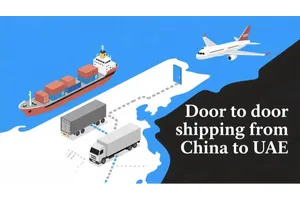
Door-to-door shipping is an integrated logistics service that manages the entire journey of goods from the supplier's location in China (whether factory, warehouse, or business premise) to the recipient's specified address in Iraq. Unlike fragmented shipping methods that require coordinating multiple parties (local transporters, freight forwarders, customs agents, and last-mile delivery services), door-to-door shipping consolidates all these steps under a single service provider.
This end-to-end solution includes:
- Local pickup from the origin address in China
- Export customs clearance procedures in China
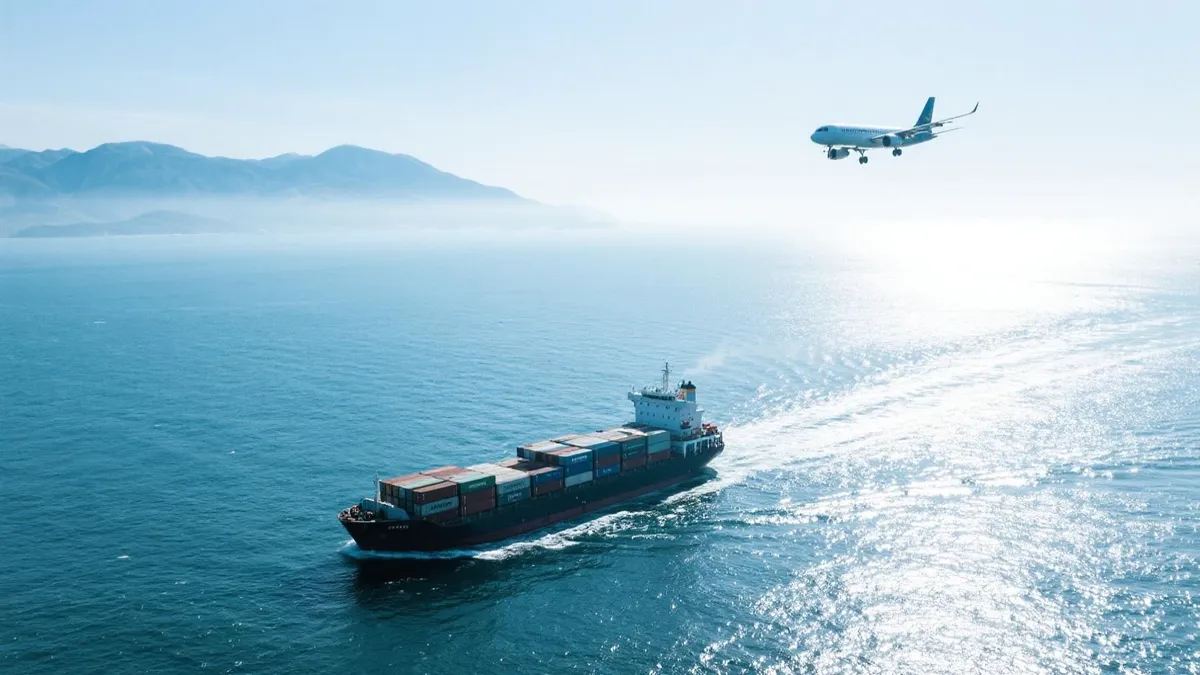
- Main transportation (by sea or air)
- Import customs clearance in Iraq
- Last-mile delivery to the final destination in Iraq (commercial facilities, warehouses, or residential addresses)
By centralizing these processes, door-to-door shipping reduces administrative workload, minimizes delay risks, and provides complete visibility throughout the shipment's lifecycle.
The Step-by-Step Door to Door Process
International shipping involves numerous complex procedures, but door-to-door services simplify the journey. Here's a detailed breakdown of the process for shipments from China to Iraq:
- Order Confirmation and Documentation: After selecting your logistics provider, you'll need to submit key documents including commercial invoices, packing lists, certificates of origin, and product-specific permits (e.g., for electronics, pharmaceuticals, or food items). Your provider will verify these documents to ensure compliance with both Chinese export regulations and Iraqi import requirements.
- Origin Pickup: The logistics team arranges collection of goods from your specified location in China (such as Guangzhou, Shanghai, Shenzhen, or Yiwu). They'll inspect cargo condition, verify packaging integrity, and affix tracking labels.
- Export Customs Clearance: The provider handles all formalities with Chinese customs, including declaration submission, payment of applicable export duties (if any), and acquisition of necessary export licenses. This step typically takes 1–3 business days, depending on cargo complexity.
- Main Transportation Arrangement: Goods are transported to the departure port or airport in China. For sea freight, this usually means shipping to major ports like Shanghai, Ningbo, or Shenzhen; for air freight, to international airports such as Shanghai Pudong, Guangzhou Baiyun, or Shenzhen Bao'an.
- Ocean or Air Transit: Cargo is loaded onto container ships (sea freight) or cargo aircraft (air freight) bound for Iraq. Iraq's primary seaport is Umm Qasr, while key airports include Baghdad International Airport, Erbil International Airport, and Sulaymaniyah International Airport.
- Iraqi Import Customs Clearance: Upon arrival, the logistics provider manages Iraqi customs procedures, including payment of import duties (standard rate of 5% for most goods, with variations for specific categories), document submission, and coordination of any required inspections. This step generally takes 2–4 business days.
- Last-Mile Delivery: After customs clearance, goods are transported to the final destination in Iraq—whether a warehouse in Baghdad, a business in Erbil, or a residential address in Basra. The provider coordinates with local partners to ensure timely and secure delivery.
- Delivery Confirmation and Tracking: Throughout the process, you can monitor your shipment via real-time tracking systems. Upon completion, you'll receive delivery confirmation including recipient sign-off.
Sea Freight vs. Air Freight: Door-to-Door Transportation Methods between China and Iraq
Choosing between sea freight and air freight depends on your shipment's size, urgency, and budget. Here's a detailed comparison for the China-Iraq route:
Sea Freight
- Best for: Large shipments (over 20 cubic meters), heavy goods, non-urgent deliveries, and cost-sensitive cargo (e.g., construction materials, machinery, bulk textiles, and consumer goods).
- Capacity: Available as Full Container Load (FCL) for shipments filling a 20ft or 40ft container, or Less than Container Load (LCL) for smaller cargo sharing container space.
- Transit Time: 25–35 days from major Chinese ports (Shanghai, Shenzhen) to Umm Qasr Port, plus 3–7 days for inland delivery to final Iraqi destinations.
- Cost: Generally 4–6 times cheaper than air freight. For example, shipping a 40ft FCL from Shanghai to Umm Qasr costs approximately $2,200–$3,000 (as of 2025), excluding additional fees.
- Advantages: Economical for large volumes, suitable for oversized items, lower carbon footprint.
- Disadvantages: Longer transit times, potential delays due to port congestion in Umm Qasr.
Air Freight
- Best for: Small to medium-sized shipments, high-value goods (e.g., electronics, medical supplies), and time-sensitive deliveries.
- Capacity: Charged by actual weight (kg) or dimensional weight (whichever is higher), calculated as length × width × height (cm) / 6000.
- Transit Time: 5–10 days from major Chinese airports to Baghdad, Erbil, or Sulaymaniyah airports, including all handling.
- Cost: Higher but faster. For example, shipping 100kg from Guangzhou to Baghdad costs around $4–$6 per kg (as of 2025), depending on the carrier and season.
- Advantages: Rapid delivery, ideal for perishables or urgent orders, lower inventory holding costs.
- Disadvantages: More expensive, limited capacity for heavy or oversized goods.
Tip: For shipments between 5–20 cubic meters, compare LCL sea freight and air freight costs—air freight may offer better value for moderately urgent cargo, especially to northern Iraqi cities like Erbil.
What is the Door to Door Shipping Cost from China to Iraq?
Door-to-door shipping costs from China to Iraq encompass a range of services from origin pickup to final delivery. Below is a detailed breakdown of costs (as of 2025), including key components, typical ranges, and total expenses for common shipment types.
Core Shipping Costs: Service Components and Total Fees
Total door-to-door cost combines several components, varying by shipping mode and shipment size:
- Sea Freight (LCL: Less than Container Load)
Cost Components per Cubic Meter:
- Origin Pickup: $15 – $25 (transport from factory/warehouse to Chinese port)
- Export Customs Clearance: $25 – $40 (documentation and formalities in China)
- Ocean Freight: $40 – $60 (shipping from Chinese port to Umm Qasr)
- Import Customs Clearance: $30 – $50 (Iraqi customs processing, duties excluded)
- Destination Delivery: $20 – $40 (transport from Umm Qasr to final address in Iraq)
Total per Cubic Meter: $130 – $215 (inclusive of all above components)
Example for 10 Cubic Meters:
- Total core cost: $1,300 – $2,150
- Plus additional fees (see below) = Total estimated cost: $1,500 – $2,500
- Sea Freight (FCL: Full Container Load)
| Container Size | Cost Components | Total Cost Range | Example Total with Add-Ons |
|---|---|---|---|
| 20ft Container | - Origin Pickup: $80–$120 - Export Clearance: $30–$50 - Ocean Freight: $1,800–$2,500 - Import Clearance: $50–$80 - Destination Delivery: $100–$180 | $2,060–$2,930 | $2,300–$3,300 |
| 40ft Container | - Origin Pickup: $100–$150 - Export Clearance: $30–$50 - Ocean Freight: $2,500–$3,500 - Import Clearance: $50–$80 - Destination Delivery: $150–$250 | $2,830–$4,030 | $3,100–$4,500 |
Note: FCL costs are lower from coastal Chinese cities; inland locations (e.g., Chongqing, Xi'an) may add $150–$300 to origin pickup costs.
- Air Freight
Cost Components per kg:
- Origin Pickup: $0.60 – $1.00 (transport to Chinese airport)
- Export Customs Clearance: $0.40 – $0.70 (China customs processing)
- Air Freight: $4.00 – $6.00 (cargo flight from China to Iraq)
- Import Customs Clearance: $0.50 – $0.90 (Iraqi customs processing)
- Destination Delivery: $0.80 – $1.50 (transport from Iraqi airport to final address)
Total per kg: $6.30 – $10.10 (inclusive of all above components)
Example for 50kg Shipment:
- Total core cost: $315 – $505
- Plus additional fees (see below) = Total estimated cost: $350 – $600
Additional Mandatory/Common Fees
These fees apply across all shipping modes and are added to core costs:
| Fee Type | Cost Range | Application |
|---|---|---|
| Insurance | 0.4–0.6% of cargo value | Optional but recommended (e.g., $40–$60 for $10,000 goods) |
| Iraqi Customs Duties | 5% of cargo value (varies by product) | Mandatory (e.g., $500 for $10,000 goods) |
| Peak Season Surcharges | 15–25% of core freight cost | Applies Q4 (Oct–Dec) and pre-religious holidays |
| Special Handling | 30–60% of core freight cost | For fragile, hazardous, or temperature-controlled goods |
| Inland Transit Surcharge | $50–$200 per shipment | For deliveries to northern Iraq (Erbil, Sulaymaniyah) from Umm Qasr |
Summary Table: Total Door-to-Door Costs
| Shipping Mode | Shipment Size | Core Cost Range | Typical Additional Fees | Total Estimated Cost |
|---|---|---|---|---|
| Sea Freight (LCL) | 10 cubic meters | $1,300–$2,150 | $200–$350 | $1,500–$2,500 |
| Sea Freight (FCL) | 20ft container | $2,060–$2,930 | $240–$370 | $2,300–$3,300 |
| Sea Freight (FCL) | 40ft container | $2,830–$4,030 | $270–$470 | $3,100–$4,500 |
| Air Freight | 50kg | $315–$505 | $35–$95 | $350–$600 |
All costs are in USD and reflect average market rates as of 2025. For precise quotes, contact a logistics provider with your specific shipment details (origin city, destination, cargo type, and timeline).
How Long Does Door to Door Shipping from China to Iraq Take?
The door-to-door shipping timeline from China to Iraq varies based on transportation method, specific origin and destination points, and current logistics conditions. As of 2025, the route experiences moderate stability with some regional factors influencing transit times.
Estimated Door-to-Door Transit Times
| Transportation Method | Typical Transit Time (Days) | Breakdown of Stages | Key Factors Influencing Time |
|---|---|---|---|
| Sea Freight (LCL) | 35 - 50 | Pickup (2-3) + China Export (3-5) + Ocean (25-35) + Iraq Import (5-7) + Delivery (3-5) | Origin port to Umm Qasr Port. LCL consolidation adds 5-10 days. Umm Qasr port congestion can add 3-7 days during peak periods. |
| Sea Freight (FCL) | 30 - 45 | Pickup (1-2) + China Export (2-4) + Ocean (20-30) + Iraq Import (3-6) + Delivery (2-4) | Direct routes are faster. Inland delivery to northern Iraq adds 3-5 days. Regional geopolitical factors may occasionally impact transit. |
| Air Freight (Standard) | 7 - 14 | Pickup (1) + China Export (1-2) + Air (2-5) + Iraq Import (2-4) + Delivery (1-2) | Major Chinese airports to Baghdad, Erbil, or Sulaymaniyah. Flight frequency varies (1-3 flights weekly). |
| Air Freight (Express) | 5 - 9 | Pickup (1) + China Export (0.5-1) + Air (1-3) + Iraq Import (1-2) + Delivery (0.5-1) | Premium service with priority handling. Ideal for urgent shipments to major Iraqi cities. |
Key Factors Influencing Door-to-Door Transit Time:
- Origin and Destination Locations: Shorter transit from southern Chinese ports/airports (Shenzhen, Guangzhou) to Iraqi hubs. Inland delivery within Iraq adds time—especially to remote areas.
- Customs Efficiency: Both Chinese and Iraqi customs processing speed is critical. Accurate documentation and proper HS code classification by your freight forwarder significantly reduce delays. Iraqi customs may conduct more thorough inspections for certain goods.
- Port/Airport Operations: Umm Qasr Port, while improving, can experience occasional delays during peak periods. Iraqi airports have varying efficiency levels, with Erbil and Baghdad generally processing cargo faster.
- Weather Conditions: Monsoon season (June-September) in the Arabian Sea can impact sea freight schedules, adding 2-5 days. Winter fog in northern China occasionally disrupts air cargo.
- Regional Logistics Infrastructure: Inland transportation within Iraq can be affected by road conditions and regional infrastructure, particularly outside major cities.
Experienced logistics providers maintain contingency plans to mitigate these challenges, offering realistic timelines and proactive communication throughout the shipping process.
DTFU Logistics: Your Trusted Door-to-Door Partner
When it comes to door-to-door shipping from China to Iraq, DTFU Logistics stands out as a reliable partner with extensive experience in the China-Iraq trade corridor. With over 12 years of specialized service, DTFU offers:
- End-to-End Expertise: Seamless management from pickup in China's key manufacturing centers (Guangzhou, Yiwu, Shanghai, Shenzhen) to delivery across Iraq (Baghdad, Erbil, Sulaymaniyah, Basra, and beyond).
- Customized Solutions: Tailored services including FCL, LCL, air freight, project cargo handling, and temperature-controlled shipping to meet diverse industry needs.
- Regulatory Mastery: A dedicated team of bilingual customs specialists master both Chinese export regulations and Iraqi import requirements, ensuring smooth clearance and minimizing documentation-related delays.
- Advanced Tracking: Real-time shipment monitoring through a user-friendly online portal, providing 24/7 visibility and instant status updates.
- Transparent Pricing: Detailed quotes with no hidden fees, ensuring cost predictability and competitive rates for your specific shipment requirements.
Contact DTFU Logistics today for a seamless, secure, and cost-effective door-to-door shipping experience. Let our expertise transform your China-Iraq supply chain into a competitive advantage, with reliable service that meets your timelines and budget requirements.