Ask five forwarders for a shipping from Ningbo to Canada quote and you may get five numbers for the same box — a 20-foot container priced anywhere from USD 1,600 to USD 4,800 on one port pair. None is necessarily wrong: "Ningbo to Canada" is a port-to-port ocean rate, a DDP door-to-door price, a transshipment routing and a peak-season booking with surcharges stacked on top, and most price lists never say which one you are seeing.
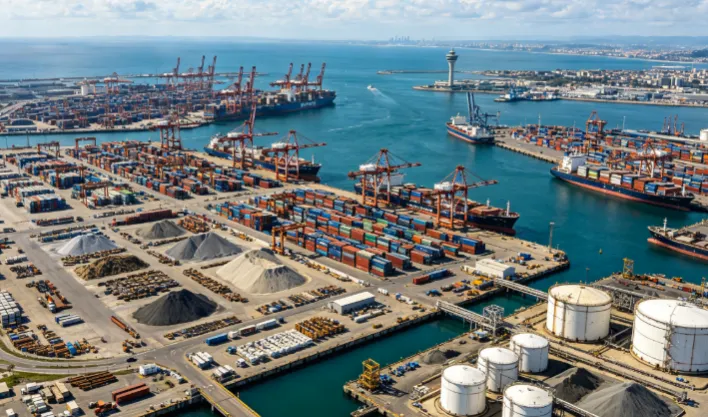
This guide follows the lane from the yard at Ningbo-Zhoushan to an Ontario warehouse: which terminal loads your box, what it truly costs in 2026, how long it takes to reach Vancouver, Prince Rupert and Toronto, where the FCL/LCL break-even sits, and how CARM changes what you must do before the vessel sails. Every figure is an indicative 2026 market range from a FIATA- and IATA-certified team — not a quotation.
Ningbo Zhoushan Port to Canada: Why It's the Smartest Origin Gateway for Canadian Importers
In short: Ningbo-Zhoushan is the world's largest port by cargo tonnage, with deep water, direct transpacific calls to Vancouver and Prince Rupert, and road access to most Zhejiang and Jiangsu factories within a day.
The Terminal Cluster That Decides Your Cut-Off
Ningbo-Zhoushan is a port group, not one terminal: Beilun (with NBICT and NPC Phases 4 and 5), Meishan, Daxie, Chuanshan and Zhenhai, with North America services loading mainly out of Beilun and Meishan. Each publishes its own gate-in window, SI cut-off and VGM deadline, so a booking assigned on rate alone is how containers get rolled to the next sailing.
The Zhejiang and Yangtze River Delta Sourcing Map
Your origin port should follow your supplier — trucking an extra 200 km to save USD 100 on ocean freight is a losing trade.
| Supplier region | Typical products | Trucking to Ningbo | Trucking to Shanghai |
|---|---|---|---|
| Ningbo local (Beilun, Cixi, Yuyao) | Appliances, auto parts, tools | Same day | 3–5 hours |
| Yiwu | Small commodities, promotional goods | 2–3 hours | 4–5 hours |
| Shaoxing | Textiles, knitwear, socks | 2–3 hours | 3–4 hours |
| Taizhou / Wenzhou | Hardware, footwear, valves, plastics | 3–5 hours | 5–7 hours |
| Hangzhou | E-commerce goods, apparel, electronics | 2–3 hours | 3–4 hours |
| Jiangsu (Suzhou, Wuxi, Nantong) | Machinery, textiles, chemicals | 4–6 hours | 2–4 hours |
If your supplier sits in southern Zhejiang or the Yiwu–Jinhua corridor, Ningbo wins on trucking cost and terminal proximity; north of Hangzhou Bay in Jiangsu, Shanghai is often the shorter truck. When the supplier map spans provinces, it pays to compare this lane with Shipping from Shanghai to Canada and Shipping from Guangzhou to Canada, and to keep a national view of Shipping from China to Canada coverage instead of optimizing a single corridor.
Export Mechanics and Peak Season at Ningbo
The step that erodes margin fastest is documentation, not transport: an invoice that disagrees with the packing list or draft B/L triggers a late SI amendment at origin and a customs query at destination. Add Golden Week (October 1–7) and Chinese New Year, when yard density has pushed past 90% in 2026 peak periods, and booking four weeks ahead stops being optional.
Our Industry Insights: importers often default to Shanghai because it is "the bigger port." For a Wenzhou or Yiwu supplier that default costs an extra day of trucking and heavier berth queues, while Ningbo's deep water often outweighs a marginally longer ocean leg. Because many services call both ports within 24–48 hours on the same loop, you can usually keep your preferred carrier even when your supplier's location shifts.
Fastest Way to Ship from Ningbo to Canada: Sea, Rail-Intermodal, Air and Express Compared
In short: The fastest way to ship from Ningbo to Canada is air freight — 3 to 8 days door-to-door at roughly USD 4.50–8.00 per kg; the cheapest is ocean FCL at about USD 1,600–2,900 per 20-foot container port-to-port.
| Channel | Cost basis (indicative 2026) | Door-to-door transit | Best fit | Main limitation |
|---|---|---|---|---|
| Ocean FCL | USD 1,600–4,500 per container | 25–45 days | 15+ CBM, heavy or bulky cargo | Slowest door-to-door |
| Ocean LCL | USD 70–180 per CBM | 28–48 days | 1–14 CBM, trial orders | Destination CFS fees add up |
| Ocean + rail intermodal | FCL rate + rail ramp fee | 30–48 days | Ontario, Quebec, Prairies | Rail adds 3–7 days |
| Air freight | USD 4.50–8.00 per kg | 3–8 days | High-value, urgent, under 500 kg | Cost scales with weight |
| Express courier | USD 6.50–9.50 per kg | 2–5 days | Samples, documents, under 45 kg | Most expensive per kg |
Air Freight from Ningbo to Canada
Air cargo leaves Ningbo (NGB) or is trucked to Shanghai Pudong (PVG) for a wider choice of departures, landing at Vancouver (YVR), Toronto (YYZ) or Montreal (YUL). Rates are bracketed by weight break and billed on chargeable weight — the greater of actual and volumetric weight — at a volumetric ratio of 1:167, so light bulky goods weighing 80 kg can be billed at 250 kg. For current weight-break pricing, see Air Shipping From China Canada.
Rail Intermodal Is Not a Separate Ocean Route
There is no rail service from China to Canada: "rail" here always means the inland leg from Vancouver or Prince Rupert on CN Rail or CPKC, so treating it as an alternative to ocean misprices a shipment from the first quote. Cost-led cargo goes by sea FCL, speed-led cargo by air, and Ontario or Quebec freight with a moderate deadline by ocean plus rail; beyond roughly 100 kg, express courier rarely justifies itself. If your cargo sits between modes, the trade-offs are set out in Sea vs Rail Freight: Which Is Faster and More Reliable from China.
Cost of Shipping from Ningbo to Canada in 2026: FCL, LCL and Air Rate Benchmarks
In short: In 2026 a 20-foot container from Ningbo to Vancouver runs about USD 1,600–2,900 port-to-port, a 40HQ about USD 2,200–4,500, and LCL about USD 70–180 per CBM; add CAD 350–800 per container in destination charges, plus duty and GST/HST.
| Route | 20GP (USD) | 40GP / 40HQ (USD) | Scope |
|---|---|---|---|
| Ningbo → Vancouver (CAVAN) | 1,600–2,900 | 2,200–4,500 | Port-to-port, plus surcharges |
| Ningbo → Prince Rupert (CAPRR) | 1,700–3,000 | 2,300–4,600 | Port-to-port, plus surcharges |
| Ningbo → Toronto (via West Coast rail) | 2,400–3,700 | 4,000–5,300 | Includes rail, excludes destination THC |
| Ningbo → Montreal (CAMTR) | 2,400–3,700 | 4,000–5,300 | Rail or all-water, excludes destination THC |
A 40HQ gives about 13% more internal volume than a 40GP for nearly the same money, which is why light voluminous cargo almost always ships in one. LCL prices between USD 70 and 180 per CBM on a 1 CBM minimum, but CFS deconsolidation adds roughly USD 80–120 per CBM at destination, so a rate reading "USD 85/CBM" can settle at USD 190/CBM landed. Air freight into Toronto runs USD 4.50–8.00 per kg in the +100 kg bracket, rising in Q4 peak. Anyone asking how much to ship a container from China to Canada should read these as port-to-port benchmarks and add the destination block below, and our Sea Shipping Cost from China to Canada page tracks how ocean rates on this lane move between quarters.
The Complete Landed-Cost Breakdown
| Cost block | Components | Typical 2026 range |
|---|---|---|
| Origin (China) | Factory pickup, export declaration, documentation, origin THC, port security, booking fee | USD 150–400 per container |
| International freight | Ocean freight, BAF/LSS, PSS, GRI | Carrier-published, resets quarterly |
| Destination (Canada) | DTHC, Delivery Order fee, drayage, chassis fee, rail ramp fee, demurrage & detention, inland delivery | CAD 350–800 per container |
| Duties and taxes | MFN duty by 10-digit HS code, then GST 5% / HST 13% / GST 5% + PST 7% / GST 5% + QST 9.975% on the duty-paid value | 0%–18%+ duty, plus tax |
| Insurance and brokerage | Cargo insurance, customs brokerage per entry | 0.2%–0.5% of value; CAD 50–150 per entry |
A 40HQ into Vancouver with a CIF value of USD 10,000 in an 8% MFN duty band pays USD 800 in duty, then GST at 5% on the duty-paid value of USD 10,800 — USD 540 — for USD 1,340 in border taxes, 13.4% of goods value before a dollar of freight. British Columbia importers also owe 7% PST; Quebec importers 9.975% QST.
Why Published Ningbo → Canada Rates Disagree by Up to 3×
The same container is published at USD 1,600 by one source and USD 4,800 by another, and both can be honest, because four variables get silently swapped: scope (a port-to-port rate and a DDP delivered price differ by destination THC, brokerage, duty, tax and inland delivery — easily 2×), routing (direct versus transshipment via Busan), carrier and sailing, and surcharge timing (BAF/LSS reset quarterly, PSS appears in peak, GRI lands without warning).
Our Industry Insights: these are indicative 2026 ranges, not quotations, and rates move with fuel, capacity and season. The habit we teach every client is to demand four things on each quote — the scope layer, the currency, the validity date and the free-time clause. When buyers ask for those four, quotes that looked 40% apart usually converge to within 10%.
How Long Does Shipping from Ningbo to Canada Take?
In short: Ocean transit from Ningbo to Vancouver is roughly 15–20 days port-to-port, to Prince Rupert 12–18 days, and to Toronto or Montreal 24–38 days including the inland rail leg; door-to-door, plan on 30–45 days.
| Route | Direct ocean transit | Via transshipment | Door-to-door | Gateway notes |
|---|---|---|---|---|
| Ningbo → Vancouver | 15–20 days | Add 5–10 days | 25–35 days | CAVAN; widest carrier choice |
| Ningbo → Prince Rupert | 12–18 days | Rarely needed | 28–38 days | CAPRR; shortest ocean leg |
| Ningbo → Toronto | 24–38 days | Add 5–10 days | 32–44 days | West Coast port + CN/CPKC rail |
| Ningbo → Montreal | 28–38 days | 30+ days all-water | 35–50 days | Rail via West Coast or all-water |
| Ningbo → Halifax | 30–40 days | Common | 35–50 days | Atlantic gateway |
Gateway Profiles: Vancouver, Prince Rupert, Montreal and Halifax
Vancouver (CAVAN) handles roughly 3.5 million TEU a year and offers the widest choice of ex-Ningbo services, but 2026 wait times have risen sharply on labor disruption and post-holiday surges, with demurrage starting at about CAD 150 per container per day once free time of 5–7 days expires.
Prince Rupert (CAPRR) sits about 36 nautical hours closer to Chinese ports and is North America's shortest transpacific crossing, with Fairview Terminal connecting directly to CN Rail for Toronto, Montreal and the Prairies; fewer sailings is the price, but for Ontario-bound cargo it is the most underrated gateway on this lane. Eastern Canada chooses between rail from a West Coast port, usually faster, and all-water service at 30+ days; Halifax rarely beats West Coast plus rail for China-origin cargo. When you compare numbers with a supplier or a marketplace estimate, make sure the source states its scope — a blanket shipping time from China to Canada figure means little without the gateway attached to it.
Toronto Has No Deep-Sea Container Port
Containers bound for the GTA arrive by rail at CN's MacMillan Yard in Brampton or CPKC's Vaughan Intermodal Terminal, so every "shipping to Toronto" transit time includes a mandatory 3–7 day rail leg. Vancouver is the natural gateway for British Columbia, either West Coast port plus rail for the Prairies, and Prince Rupert plus CN Rail for Ontario. For a leg-by-leg breakdown of the same calculation, see how long does a ship take from China to Canada.
Direct Service vs. Transshipment
Several transpacific services call Ningbo directly, removing a relay but narrowing carrier choice, while relaying through Busan or Kaohsiung adds 5–10 days — so the words "direct sailing" or "transshipment" should appear on your quote. Services run on weekly rotations with peak loaders, operated by COSCO, OOCL, MSC, Maersk, ONE, Evergreen, Yang Ming, HMM, SML and ZIM. Origin yard density, routing, port rotation, Canadian rail congestion and weather move your arrival date most, so build a 5–7 day buffer into any date you promise.
FCL Shipping from Ningbo to Canada vs LCL Shipping from Ningbo to Canada
In short: FCL (Full Container Load) means booking the whole box; LCL (Less than Container Load) means sharing one and paying per CBM. Published break-evens cluster at 12–15 CBM, but the true crossover — once destination CFS handling and DTHC are added — sits nearer 13–15 CBM.
| Container | Internal volume | Max payload | When to use |
|---|---|---|---|
| 20GP | ~33 CBM | ~28.2 t | Dense, heavy cargo; smaller FCL loads |
| 40GP | ~67 CBM | ~26.5 t | Standard FCL, best per-CBM economics |
| 40HQ | ~76 CBM | ~26.3 t | Light, bulky cargo — +13% volume for nearly the same rate |
Pure ocean break-even sits near 12 CBM; landed-cost break-even sits higher because LCL adds destination CFS handling, deconsolidation labor, a DTHC charged per shipment rather than per container, and 3–7 extra transit days. Before you commit to a box size, model the rate against the equipment you actually fill — containers shipping cost from China to Canada breaks out 20GP, 40GP and 40HQ pricing side by side.
| Shipment volume | LCL estimate (USD 70–180/CBM) | 20GP FCL to Vancouver | Verdict |
|---|---|---|---|
| 12 CBM | USD 840–2,160 + CFS | USD 1,600–2,900 | Near crossover — LCL usually ahead |
| 15 CBM | USD 1,050–2,700 + CFS | USD 1,600–2,900 | Crossover zone — the quote decides it |
| 18 CBM | USD 1,260–3,240 + CFS | USD 1,600–2,900 | FCL usually wins once CFS is added |
LCL suits a first trial order, 1–10 CBM of non-urgent cargo and lean-inventory replenishment; FCL is worth the commitment above 15 CBM, for fragile or high-value goods, and for cargo needing a clean single-consignee customs profile. One point nobody mentions: LCL carries minimum charges at both origin and destination, so your per-CBM cost rises as volume grows.
Real-Life Scenario: a Zhejiang hardware importer booking 15 CBM of LCL to a Greater Toronto Area warehouse every six weeks watched landed cost drift upward despite a stable ocean rate. Modeling a shared 40HQ loading two months of stock alongside a second shipper cut per-unit landed cost by roughly a fifth, because destination CFS and per-shipment charges disappeared and the rail leg was negotiated once instead of twice. The lesson was not "FCL is cheaper" — LCL's cost structure punishes you precisely at the volume where you assume it is still winning.
Door to Door Shipping from Ningbo to Canada
In short: Door-to-door covers supplier pickup, export clearance, freight, Canadian customs clearance, duty and GST/HST settlement, and inland delivery. DDP (Delivered Duty Paid) includes duty and tax; DAP (Delivered at Place) stops short of them, and both cost roughly 30–60% more than port-to-port.
| Element | DDP | DAP / DDU | Port-to-Port |
|---|---|---|---|
| Factory pickup and export declaration | Seller | Seller | Seller |
| International freight | Seller | Seller | Seller |
| Canadian customs clearance | Seller | Buyer | Buyer |
| Duty, GST/HST and surtaxes | Seller | Buyer | Buyer |
| Destination THC and drayage | Seller | Seller | Buyer |
| Final delivery to consignee | Seller | Seller | Buyer |
| Importer of Record | Arranged by seller | Buyer | Buyer |
DDP suits SMEs with no Canadian broker, foreign sellers without a BN15 and RM account, first shipments into Canada and Amazon FBA deliveries direct to a fulfillment center. If you already have a broker, are GST/HST-registered and can recover input tax credits, buying on FOB Ningbo and appointing your own broker lets you see the freight, brokerage and duty lines separately — and recover the tax. Two references help here: Door to Door Shipping From China Canada sets out what a genuinely complete scope contains, and DDP vs FOB: Which Option Saves Time and Reduces Hassle frames the trade-off between control and convenience.
The Six DDP Traps That Cost Canadian Importers Real Money
- Fake DDP bait-and-switch — the provider quotes DDP, ships DAP, pockets the duty allowance and sometimes uses your business number as the Importer of Record.
- Freight folded into the commercial invoice — customs then assesses duty on logistics as well as goods.
- Undisclosed battery and DG surcharges — lithium batteries trigger dangerous goods fees billed after cargo is at origin.
- Volumetric weight arbitrage — a per-kg quote billed on dimensional weight can cost light bulky cargo 30–40% more.
- Unverified HS codes — a classification error can turn a modest duty estimate into a 50%+ effective surcharge.
- CARM compliance exposure — CBSA can pursue the beneficial owner of goods, not merely the IOR on the entry.
Incoterms 2020 and What a Good Quote Must Itemize
EXW leaves you responsible from the factory gate; FOB Ningbo gives you control of main freight and insurance at the load port; CIF Vancouver bundles freight and insurance but stops at the port; DDP Canada transfers everything, including duty, to the seller. Ask any DDP provider whether they use their own Importer of Record and keep the commercial invoice separate from freight, and insist your quote itemizes free time, destination THC, the scope of clearance, whether duty and tax are billed on arrival, the inland leg and who holds the RPP bond.
Importing from Ningbo to Canada Customs Clearance
In short: Since the CARM transition ended on December 31, 2025, commercial importers into Canada need an active CARM Client Portal account, a BN15 with an RM program account, an employee Business Account Manager, a digitally delegated broker and Release Prior to Payment security of roughly CAD 5,000.
Registering with CBSA in 2026 — the CARM Reality
CARM (CBSA Assessment and Revenue Management) moved customs compliance responsibility from the broker back to the importer: obtain a BN15 with an RM account, register in the portal via a Sign-In Partner or GCKey, appoint an employee Business Account Manager, digitally authorize your broker, and post RPP security. A paper Power of Attorney no longer works, and without RPP all duty and tax must clear before CBSA releases the goods — so your container sits accruing demurrage while funds settle.
IOR vs. NRI, and the January 1, 2026 Importer-Liability Change
The Importer of Record is legally responsible for the declaration, while a Non-Resident Importer is a foreign entity registered to act as its own IOR; a supplier's or forwarder's business number should never clear your goods, though a registered NRI can recover the 5% GST paid on commercial imports. Since section 17 of the Customs Act was amended, the IOR bears full liability for the accuracy of its declaration and a broker's business number can no longer clear a client's goods. Your broker files ACI eManifest before arrival, submits a PARS / INPARS pre-arrival review and completes the entry through a CAD or B3; clean files clear in hours, mismatched ones do not. Where a provider is running the lane for you under DDP shipping from China to Canada terms, ask whose business number will appear as the IOR on the entry — that single question separates a compliant service from a quiet transfer of liability.
Canadian Duty, GST/HST and Provincial Tax
| Tax | Rate | Applies to |
|---|---|---|
| MFN duty | 0%–18%+ by 10-digit HS code | Value for duty (CIF) |
| GST (federal) | 5% | Duty-paid value |
| HST Ontario / Atlantic | 13% / 15% | Duty-paid value |
| British Columbia | 5% GST + 7% PST | Duty-paid value |
| Quebec | 5% GST + 9.975% QST | Duty-paid value |
Registered importers recover GST/HST as an input tax credit; unregistered importers absorb it permanently. Canada and China have no free trade agreement, so CUSMA, CETA and CPTPP give no preferential relief on China-origin goods, and surtaxes apply to specific categories — 100% on electric vehicles, 25% on certain steel and aluminum — often the largest line on the invoice.
Documents, Penalties and Product Compliance
The core file is a commercial invoice, packing list, Bill of Lading, a CI1 (Canada Customs Invoice) above CAD 2,500, certificate of origin, 10-digit HS classification, ISPM 15 proof for wood packaging, any OGD permits and a cargo insurance certificate. Misclassification drives most CBSA penalties under the Administrative Monetary Penalty System. Consumer goods must also satisfy the Canada Consumer Product Safety Act (CCPSA), electrical products generally need cUL or CSA certification, and packaging should carry bilingual English and French labeling. Insurance is the other line importers habitually underbuy: shipping container insurance cost for shipments from China is normally priced as a small percentage of CIF value rather than a flat fee, so it is worth pricing early.
Our Industry Insights: the most expensive mistake on this lane is not a bad rate — it is shipping first and registering second. Under the 2026 rules a container can arrive fully paid on freight, sit at a Canadian terminal for two weeks, and accumulate more in demurrage than the entire broker fee would have cost. We now run CARM readiness as a pre-booking step: BN15 and RM account confirmed, BAM appointed, broker delegated and RPP posted before the S/O is issued.
Amazon FBA Shipping from Ningbo to Canada
In short: Plan for a 35–48 day door-to-fulfillment-center reality, not the 15–20 day ocean quote; British Columbia centers are best served through Vancouver with local drayage, and Greater Toronto Area centers are increasingly faster via Prince Rupert plus CN Rail.
Routing through a prep center or 3PL buys labeling flexibility, quality inspection and a chance to fix packaging before it reaches a receiving dock, while DDP direct-to-FC is cheaper per unit but leaves no room for correction and puts your compliance profile in the provider's IOR. Create the shipment plan in Seller Central, apply FNSKU labels correctly and respect Amazon's carton and pallet limits — a labeling error caught in Ningbo costs a reprint, while the same error at a Canadian dock costs a refused delivery and a stockout. Four dates drive the calendar: Q4 peak, Golden Week, Chinese New Year and Q2 congestion at Ningbo; work backward from your sell-through rate by 45 days, not 20. An Amazon.ca shipment is a commercial import requiring your own BN15, RM account and CARM registration, or a legitimate DDP provider using its own IOR. If your replenishment moves as palletized freight rather than full cartons, how much it costs to ship a pallet from China to Canada shows where those charges land.
Best Freight Forwarder for Ningbo to Canada Shipments
In short: A good forwarder can name their Ningbo terminal and cut-off, state whether the routing is direct, itemize every surcharge, explain who holds the RPP bond and put free time in writing.
Ask seven questions: do you have direct carrier contracts on the Ningbo–Canada transpacific? Which terminal and cut-off applies? Is the quote port-to-port or door-to-door? What free time is included? Who holds the RPP bond and files the ACI eManifest? Is the routing direct or transshipment? And what happens if the vessel is rolled? Red flags include an LCL rate with no destination CFS or DTHC shown, a "DDP all-in" with no duty scope, a transit time with no scope label, and any provider offering to clear your goods under a business number that is not yours. If you would rather benchmark than guess, shortlist two or three freight forwarder from China to Canada candidates and score them against those seven answers.
Why DTFU Logistics
DTFU Logistics was founded in 2014 and is headquartered in Shenzhen, with a FIATA- and IATA-certified team and a network covering more than 120 countries. Four things matter most on this lane: direct contracts with shipping lines and airlines that secure space and hold rates in peak season; China-wide origin coverage including Ningbo-Zhoushan, with export clearance, consolidation and warehousing handled in-house; full-service coverage of sea freight, air freight, door-to-door delivery, Amazon FBA forwarding, customs clearance, cargo insurance and warehousing under one account; and a dedicated account manager with 24/7 online support plus real-time tracking from gate-in at Ningbo to final delivery in Canada. If you want the wider picture of how forwarders create value beyond rate negotiation, The Strategic Role of Freight Forwarders in Modern Supply Chains is worth reading before your next tender.
Real-Life Scenario: a Chinese e-commerce seller moving consumer electronics to Toronto had been shipping 8 CBM of LCL every five weeks and losing sales to stockouts, while their provider quoted 12–16 days to Vancouver — technically true port-to-port and useless door-to-door. Re-planning the lane around Prince Rupert plus CN Rail, raising the shipment size to a shared FCL and building a 45-day restock calendar cut landed cost per unit and stabilized their Ontario fill rate. The rate was not the problem; the scope label was.
FAQs
What is the cheapest way to ship from Ningbo to Canada?
Ocean FCL. Above roughly 15 CBM a container delivers the lowest cost per unit of volume; below that, LCL is cheaper until destination CFS fees push per-CBM cost past a container rate.
How long does shipping from Ningbo to Canada take door to door?
Plan on 30–45 days: 15–20 days of ocean transit to Vancouver or 12–18 to Prince Rupert, plus 3–7 days of rail to Toronto and 5–10 days of terminal dwell, customs release and final delivery.
How much does it cost to ship a container from Ningbo to Canada — 20ft and 40ft?
Indicatively in 2026, a 20-foot container runs USD 1,600–2,900 port-to-port to Vancouver and a 40-foot or 40HQ USD 2,200–4,500. To Toronto or Montreal, expect USD 2,400–3,700 and USD 4,000–5,300.
Should I choose FCL or LCL at 15 CBM?
You are at the crossover — run both quotes. Pure ocean break-even sits near 12 CBM, but once destination CFS, deconsolidation and DTHC are added, 13–15 CBM is the practical tipping point.
Which Canadian port should I use?
Vancouver for British Columbia and the widest carrier choice; Prince Rupert for Ontario, the Prairies and time-sensitive cargo; Montreal for Quebec and Atlantic Canada.
Can I import into Canada without a Canadian business number?
Not as your own Importer of Record. You can register as a Non-Resident Importer and obtain a BN15, or use a legitimate DDP provider's own IOR — never a supplier's business number.
How much is Canadian duty and GST/HST on goods from China?
MFN duty runs 0%–18%+ by HS code, with GST at 5% on the duty-paid value. Ontario and the Atlantic provinces charge 13% and 15% HST; British Columbia adds 7% PST; Quebec adds 9.975% QST. Canada also applies surtaxes on specific China-origin categories, including 100% on electric vehicles and 25% on certain steel and aluminum products.
Can you ship Amazon FBA cargo from Ningbo to Canadian fulfillment centers?
Yes. Plan 35–48 days door-to-facility, route BC-bound freight through Vancouver and GTA-bound freight through Prince Rupert plus CN Rail, and verify FNSKU labeling and carton specification at origin.
How do I track my container from Ningbo to Canada?
Request milestone-level visibility: gate-in at Ningbo, vessel departure, transshipment if any, discharge, customs release and rail or drayage handoff. A platform showing only "on the water" is not tracking.
Rates on this lane move with fuel, capacity and season. Send your cargo volume, weight, HS code, supplier location and Canadian delivery address to the DTFU Logistics team, and we will return a live Ningbo → Canada quotation with the scope, currency, validity date and free time stated plainly.