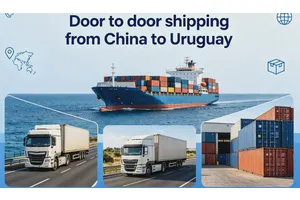
Three quotes land for the same 40HQ leaving Guangzhou for Montevideo: $3,400, $5,850 and $8,700. All three are labeled "China to Uruguay," yet shipping from Guangzhou to Uruguay feels unpredictable because one price is port-to-port ocean freight, one bundles origin charges and Montevideo terminal handling, and one is a DDP rate with Uruguayan duty buried inside. The gap usually surfaces only after the container is already accruing storage at Puerto de Montevideo.
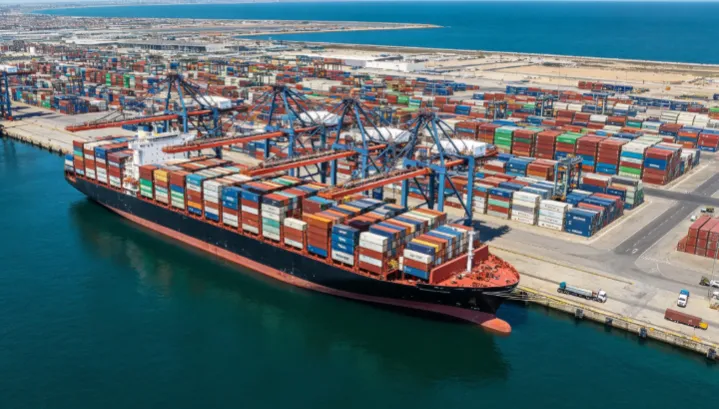
This guide removes the guesswork: the Guangzhou gateway decision, 2026 FCL and LCL rates labeled with the scope they cover, the fees most quotes leave out, a door-to-door transit breakdown, air freight economics from Baiyun, and the full Uruguayan tax stack — duty, tasa consular, IVA at 22% and IMESI — worked through two complete landed-cost examples.
Guangzhou Port Choice for Uruguay-bound Cargo: Nansha vs Huangpu vs Shekou & Yantian
Your gateway sets both your trucking bill and your sailing date — and the two pull in opposite directions. A Foshan or Zhongshan supplier is minutes from Nansha; the same cargo sent to Yantian adds 120–160 km of drayage but buys a much denser schedule.
| Gateway | Best Supplier Cluster | Sailings to ECSA | Freight Advantage | Watch Out For |
|---|---|---|---|---|
| Guangzhou Nansha | Guangzhou, Foshan, Zhongshan, Dongguan (west) | Roughly weekly | Lowest inland drayage for PRD factories | Miss the cut-off and you wait a week |
| Guangzhou Huangpu | Huangpu, Zengcheng, Baiyun, wholesale markets | Varies by carrier | Close to trading hubs and wholesale districts | Fewer direct ECSA options |
| Shenzhen Shekou / Yantian | Dongguan (east), Huizhou, Shenzhen | 1–2 per week | More carriers to compare, mature LCL CFS network | Higher drayage from west PRD |
| Hong Kong | Eastern Pearl River Delta | Route dependent | Wide international connections | Cross-border trucking documentation |
What a Weekly Nansha Sailing Means for Your Cut-off
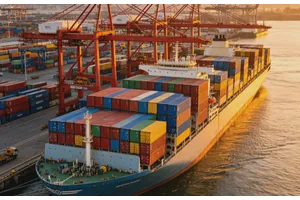
One sailing a week is workable — until you miss it. Cargo reaching the CFS a day late sails the following week, and idle days on a 40HQ cost $80–150 per day in detention plus storage. Book 14–21 days ahead and confirm the vessel cut-off, port cut-off and VGM deadline in writing.
Trucking Radius, Consolidation, and the Guangzhou Advantage
Most Guangzhou-origin shipments are three or four vendors across the Pearl River Delta, not one supplier and one truck — and every handover is a chance for a missing carton.
Our industry insight: the Canton Fair cycle (mid-April to early May and mid-October to early November) is our busiest procurement window out of Guangzhou. Warehouse space, drayage trucks and ECSA slots tighten at once, and bookings made in the two weeks after the fair routinely slide one sailing. Lock space before the fair, not after.
DTFU Logistics picks up from Pearl River Delta factories, verifies cartons against your packing list, labels and palletizes, and consolidates multiple suppliers into one container. The same gateway logic drives other lanes we serve, including shipping from Guangzhou to Canada.
Sea Freight vs Air Freight vs Express: Choosing the Right Mode
Mode selection follows three variables, not preference: total volume, value per cubic meter, and how rigid the deadline is.
| Mode | Best For | Transit | Priced By | Watch Out For |
|---|---|---|---|---|
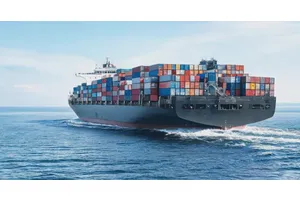
| FCL (20GP / 40HQ) | 15 CBM+, palletized B2B cargo | 38–46 days port-to-port | Per container | You pay for the whole box even at half load |
| LCL | 2–15 CBM from mixed suppliers | 46–60 days door-to-door | Per CBM or per 1,000 kg (W/M) | Destination CBM charges, plus 3–5 days at the Montevideo CFS |
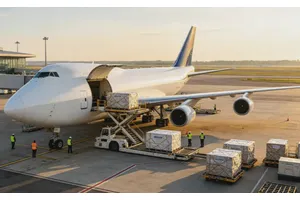
| Air freight (CAN–MVD) | 100–500 kg, launch stock, high-value goods | 5–10 days | Chargeable weight | Volumetric weight punishes bulky cartons |
| Express courier | Samples under 100 kg | 4–7 days | Per kg plus taxable value | Duty, tasa consular and 22% IVA still apply |
The break-even is what importers get wrong. LCL at $80–185 per CBM looks cheaper than a 20GP until roughly 15 CBM — but add Montevideo CFS handling, per-CBM destination charges and an extra week in transit, and the true crossover sits at 13–15 CBM. Below that, ship LCL; above it, book a container.
For dense, slow-moving cargo — machinery, ceramics, furniture, auto parts — sea freight is almost always correct. Air freight earns its premium above $30 per kg or when a launch date is fixed. Temperature-controlled cargo needs a reefer booked early and costs 40–80% more, while oversize machinery moves on open top or flat rack equipment with an agreed lashing plan.
Where a land bridge competes with the ocean leg, the trade-offs shift — see our sea vs rail freight comparison.
Shipping Cost from Guangzhou to Uruguay: 2026 FCL and LCL Rates
Rates below are port-to-port from Nansha to Montevideo and exclude origin and destination charges. Peak columns reflect the August–November South America peak, when General Rate Increases and peak season surcharges hit ECSA services.
| Service | Low Season | Peak Season | Notes |
|---|---|---|---|
| 20GP | $3,400 | $4,950 | Weekly ECSA sailing, direct or one transshipment |
| 40GP | $5,300 | $7,500 | Best cost per CBM for dense cargo |
| 40HQ | $5,700 | $7,700 | Most requested box; hi-cube suits light, bulky freight |
| LCL | $80/CBM | $185/CBM | 1 CBM minimum, weight-or-measure |
| Air freight | $4.20/kg | $7.80/kg | 100 kg+, CAN to MVD, chargeable weight |
Fully landed door-to-door service — pickup in Guangzhou, export declaration, ocean freight, Uruguayan clearance, duty and delivery — generally falls between $3,900 and $8,700 per shipment depending on box size, season and tariff band.
Three things move that spread: seasonality (BAF and CAF track fuel and currency, while GRI and PSS are tactical peak increases), capacity (a single blanked ECSA sailing can tighten space for a month), and competition from Shekou and Yantian, which carriers price against. Lock the rate with a written validity window and a named vessel. Hi-cube pricing swings harder with season than standard equipment — see our high cube shipping container cost breakdown.
The Fees Your Guangzhou–Montevideo Quote Doesn't Show
Two quotes for the same container are only comparable when both stop at the same point — and most of the surprises live at the two ends of the voyage.
| Stage | Charge | Typical Range |
|---|---|---|
| Origin | Export declaration, THC, documentation and VGM | $210–250 per shipment |
| Origin | Trucking from PRD factories to Nansha | $90–260 per container, by distance |
| Destination | DTHC, ISPS and port dues at Montevideo | $230–420 per container |
| Destination | Despachante de aduana and clearance filing | $150–320 |
| Destination | Tasa consular, storage and inspection | Assessed on CIF value |
| Destination | Demurrage and detention | $80–150 per container per day |
A Four-Step Way to Normalize Any Quote
- Fix the scope. Write down whether the price stops at the port of loading, the port of discharge, or the consignee's address.
- Attach origin charges. Add export declaration, THC, drayage and documentation so both offers start at the same factory gate.
- Attach destination charges. Add DTHC, broker fees and delivery to Montevideo, Montevideo's free-port zone, or the interior.
- Convert to one figure. Compare either total landed cost per shipment or landed cost per CBM — never headline ocean freight.
Real-life scenario: an importer in Montevideo booked a $5,700 quote over a $6,450 one. The cheaper rate stopped at Nansha port-of-loading and excluded BAF; once origin charges, DTHC and two days of storage were added, it landed at $7,120. Same box, same sailing — $670 more, purely a scope problem.
Insurance belongs in the comparison too. All Risks cover under Institute Cargo Clauses (A) costs roughly 0.1–0.5% of CIF value, while the narrower (C) cover is cheaper but excludes most handling damage — exactly the risk a 40-day voyage creates. Claim documentation is covered in our shipping container insurance cost guide.
Guangzhou to Uruguay Transit Time: Direct Sailings vs Transshipment
| Routing | Port-to-Port | Notes |
|---|---|---|
| Direct Nansha–Montevideo | 38–46 days | Best case when a direct ECSA call is available |
| Via Santos or Buenos Aires | 45–56 days | Adds one discharge and reload cycle; rollover risk |
| Via Cartagena or Busan | 46–58 days | Common when connecting to a north–south feeder |
| LCL, door-to-door | 46–60 days | Consolidation at both ends drives the extra week |
| Air freight, CAN–MVD | 5–10 days | Routing through Doha, Madrid, Istanbul or Miami |
Door-to-door, plan for 44–58 days. Two days go to factory pickup and consolidation, two to five days to loading and export declaration, 38–46 days to the ocean leg, three to seven days to clearance and container release, and up to three days for inland delivery to Salto, Paysandú or Punta del Este. For the country-level view — alternative Chinese load ports and sailing frequency — see sea shipping from China to Uruguay.
Seasonality stretches that window: the Christmas retail build compresses ECSA capacity, Carnival and Semana de Turismo slow Uruguayan ports and customs, and a rollover adds 7–10 days on its own. Book early and build a two-week buffer on any date you cannot move.
Air Freight from Guangzhou Baiyun (CAN) to Carrasco (MVD)
Air freight from Guangzhou Baiyun International Airport to Montevideo's Carrasco airport runs 5–10 days door-to-door and is priced on chargeable weight — the greater of actual and volumetric weight, the latter being length × width × height in centimeters divided by 6,000. A 60 × 50 × 40 cm carton occupies 20 kg, so bulky light goods pay for the space they take.
| Shipment Size | Rate Range | Indicative Freight |
|---|---|---|
| 100 kg | $4.20–7.80/kg | $420–780 |
| 300 kg | $3.90–6.50/kg | $1,170–1,950 |
| 500 kg | $3.60–5.90/kg | $1,800–2,950 |
Guangzhou is a deep air hub for consumer electronics, medical devices, apparel samples and auto parts, routed through Doha, Madrid, Istanbul or Miami.
Two restrictions catch importers off guard: lithium batteries need UN38.3 reports and sometimes a Material Safety Data Sheet, while magnets, aerosols and certain liquids cannot fly at all. A mis-declared battery shipment is refused at screening, not at the destination.
Our industry insight: when a client needs stock in Montevideo within two weeks, a hybrid works better than a single air shipment — fly the top-selling SKUs and the launch-critical cartons, then move the bulk by LCL or FCL behind it, usually for 25–35% less than flying everything.
Uruguay Customs Clearance: Documents, DNA, VUCE and the Duty + IVA Math
Uruguay requires a licensed despachante de aduana to file import entries; importers cannot self-clear. Declarations go through the VUCE single window under the DNA (Dirección Nacional de Aduanas), and your consignee needs a RUT with DGI as importer of record.
The document set is compact: commercial invoice, packing list, bill of lading or air waybill, insurance certificate, and a certificate of origin where a preferential rate applies. Every line needs the correct NCM code — Uruguay's Mercosur tariff nomenclature — because the code determines the duty band, and a wrong code is the most common cause of clearance delay.
| Charge | Calculated On | Typical Rate |
|---|---|---|
| Import duty (AEC) | CIF value | 0–35%; most industrial goods near 20% |
| Tasa consular | CIF value | 3–5%, depending on the tariff position |
| IVA | CIF + duty + tasa consular | 22% (10% reduced rate for some goods) |
| Anticipo IVA | Import value | Advance payment applied to later IVA |
| IMESI | Specific goods | Varies; applies to fuels, vehicles, cosmetics, alcohol |
Because IVA is charged on the duty-inclusive base, import taxes compound. A 20% duty followed by 22% IVA plus a 5% tasa consular means roughly half of the CIF value goes to the state before your cargo leaves the port — which is why landed-cost math must be done before the purchase order, not after.
Non-fiscal controls run in parallel: LATU for electrical and mechanical goods, URSEC for radio and telecom devices, MSP for cosmetics and medicines, MGAP for food and agricultural products, DINARA for fishery products. Wooden packaging needs ISPM-15 treatment marked on the pallet. Secure all of it before the vessel arrives — it cannot be improvised at the terminal.
Timing matters as much as paperwork. Send the invoice, packing list and bill of lading to your despachante five to seven days before the vessel berths — the VUCE entry must be validated before release, and any NCM query restarts the clock. Duty, tasa consular and IVA are payable at nationalization, while Montevideo storage accrues from discharge.
Door-to-Door DDP Shipping from Guangzhou to Montevideo: Two Landed-Cost Walkthroughs
Example one: one 40HQ of home appliances. FOB value $32,000, duty at an illustrative 20% NCM band.
| Line Item | Amount |
|---|---|
| FOB goods value (Guangzhou) | $32,000 |
| Origin charges, ocean freight and insurance | $6,937 |
| Import duty at 20% | $7,787 |
| Tasa consular at 5% of CIF | $1,947 |
| IVA at 22% on the duty-inclusive base | $10,707 |
| Destination charges, broker and inland trucking | $1,000 |
| Landed cost at Montevideo warehouse | $60,378 |
Example two: one 20GP of machinery parts. FOB $18,000, delivered to Salto, roughly 500 km from the port. Machinery adds lifting, lashing and out-of-gauge questions — see shipping heavy machinery from China for that side of the job.
| Line Item | Amount |
|---|---|
| FOB goods value (Guangzhou) | $18,000 |
| Origin charges, ocean freight and insurance | $3,925 |
| Import duty at 20% | $4,385 |
| Tasa consular at 5% of CIF | $1,096 |
| IVA at 22% on the duty-inclusive base | $6,029 |
| Destination charges, broker and delivery to Salto | $985 |
| Landed cost, delivered to Salto | $34,420 |
Read the first example and the pattern is obvious: ocean freight and origin charges are about 11% of landed cost, while duty, tasa consular and IVA together are roughly 34%. The tax line, not the shipping line, decides whether the order works.
DDP suits importers without a local broker or RUT. If your consignee already has both, FOB with a Uruguayan despachante is often cheaper — ask for that comparison rather than assuming DDP wins. Any DDP rate should name the duty band, the tasa consular treatment and the RUT under which the entry is filed; a quote that cannot is a number, not a service. Our DDP vs FOB comparison explains when each term wins.
Our industry insight: some of the largest DDP savings we deliver come from tariff engineering, not freight negotiation. A corrected NCM classification, a supplier with a valid preferential certificate of origin, or a structure that keeps taxable value in the right IVA band can move landed cost more than any freight discount — and it only happens when the forwarder reviews the codes before the goods ship.
Montevideo, Nueva Palmira and Uruguay's Free Zones
Uruguay is more than a destination market. Montevideo sits on the Río de la Plata, Nueva Palmira reaches the Paraná–Paraguay barge corridor serving Paraguay and Bolivia, and the free-zone regime is among the most permissive in South America.
Under Ley 15.921, goods entering a Zona Franca are exempt from Uruguayan import duty and IVA while they remain inside, so you can store, repack, label, assemble or re-export without paying the 22% IVA a normal import attracts. Montevideo also runs a Puerto Libre regime for duty-free transit of re-exported cargo. Temporary admission (admisión temporaria) covers the related cases of exhibition goods and equipment imported for processing and later re-export.
| Location | Strengths | Typical Use |
|---|---|---|
| Montevideo Zona Franca | Deep-water port, finance and logistics services | Regional distribution hub |
| Zonamerica | Services and light assembly near the airport | Value-added processing |
| Nueva Palmira | Barge access to the Paraná–Paraguay system | Re-export to Paraguay and Bolivia |
| Colonia / Punta Pereira | Port and industrial infrastructure | Bulk, energy and industrial cargo |
For importers serving several South American markets, shipping from Guangzhou into a Uruguayan free zone can replace three national import clearances with one. It is not a way to avoid tax on goods sold inside Uruguay — duty and IVA fall due when cargo enters the domestic market — but it is a legitimate regional distribution structure. Importers whose end market is landlocked ship this corridor with us under shipping from China to Paraguay and shipping from China to Bolivia.
Frequently Asked Questions
How long does shipping from Guangzhou to Uruguay take?
Port-to-port ocean freight runs 38–46 days on a direct ECSA sailing and 45–58 days with transshipment. Door-to-door, plan on 44–58 days for FCL and 46–60 days for LCL. Air freight from Baiyun to Carrasco is 5–10 days door-to-door. The country-level shipping from China to Uruguay overview covers alternative load ports before you compare transit times.
What is the cheapest way to ship from Guangzhou to Uruguay?
Below 13–15 CBM, LCL is usually cheapest on total landed cost. Above that, a 20GP or 40HQ wins, and a 40HQ is the best value per cubic meter for light, bulky cargo. Booking outside the August–November peak can save 30–45% on the ocean leg alone.
Do I need a customs broker in Uruguay?
Yes. Uruguay requires a licensed despachante de aduana to file import entries through the VUCE. Your consignee also needs a RUT registered with DGI to act as importer of record.
Can I avoid paying IVA on imports into Uruguay?
Not on goods sold inside Uruguay. IVA at 22% applies on the duty-inclusive CIF base. Legitimate reductions come from free-zone storage, re-export, and duty relief under Uruguay's temporary admission regimes.
Can DTFU handle door-to-door DDP from Guangzhou to Montevideo?
Yes. DTFU Logistics — Shenzhen-based since 2014, FIATA and IATA accredited — handles Pearl River Delta pickup, export declaration, ocean or air freight, Uruguayan clearance, duty and IVA payment, and delivery to Montevideo, Salto or any interior destination under one contract, one currency and one named account manager. That is door to door shipping from China to Uruguay in its fullest form.
How do I choose a freight forwarder for Guangzhou–Uruguay shipping?
Eight questions separate a partner from a rate reseller: Is it FIATA or IATA accredited? Does it have an owned or long-term Montevideo agent rather than a spot subcontract? Does the quote itemize every charge with free-time and detention rates? Can it pick up, verify and consolidate across the Pearl River Delta? Can it pre-review your invoice, NCM codes and certificates before arrival? Does it arrange cargo insurance and handle claims? Will you get a named account manager with 24/7 tracking? Can it hold space at contract rates in peak season? For what a forwarder should do beyond booking space, see the strategic role of freight forwarders.
Next Steps
Send your packing list and supplier addresses and we will return a landed-cost sheet — not a headline rate — showing ocean freight, origin and destination charges, duty at your NCM band, tasa consular, IVA at 22% and delivery to your door. Whether you ship 3 CBM of samples or a monthly 40HQ program, the math above is the math we run before we quote.