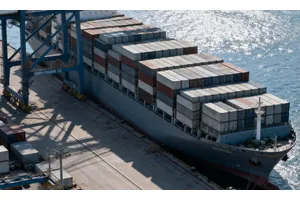
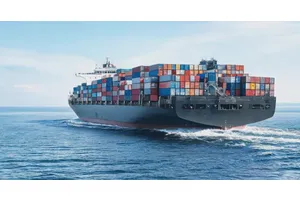
Uruguay is a small market — about 3.4 million people — and that single fact shapes the entire cost of shipping a container from China to Uruguay. Importers order in smaller quantities than their Brazilian or Argentine neighbors, brokers quote per container rather than per program, and every dollar of destination-side cost lands on a smaller revenue base. Yet year after year, the shipments we handle into Montevideo are containers, not parcels: full 20ft and 40ft boxes of furniture, solar equipment, auto parts, textiles, and machinery. Because when you do the per-cubic-meter math, the full container is almost always the cheapest way to bring Chinese goods to the Uruguayan market — if you know where every line of the bill comes from.
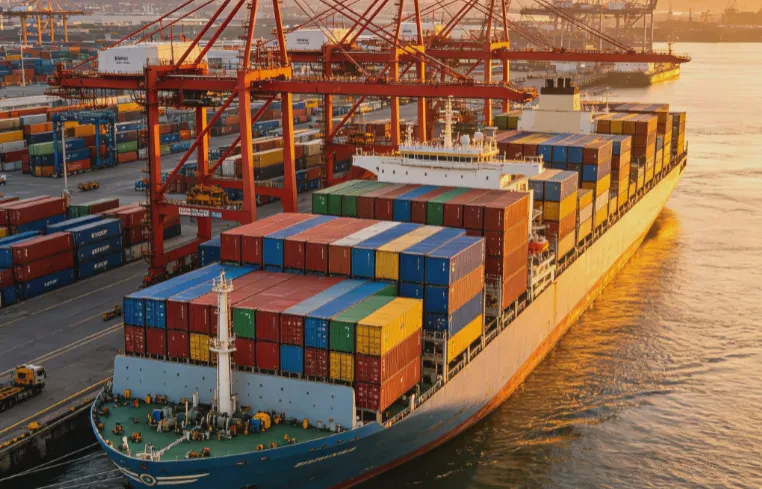
That "if" is what this guide removes. Below are the real 2026 price ranges for 20GP, 40GP, and 40HQ containers from China to Uruguay under all-in DDP terms, the departure-port and destination-port decisions that move your price, the full MERCOSUR duty and IVA calculation on a real shipment, the destination fees that hide inside every quote, and a pre-booking checklist that keeps the final bill honest. All figures are consistent with our shipping from China to Uruguay overview — this guide goes deep on the container cost structure itself.
How Much Does a 20ft Container Cost from China to Uruguay in 2026?
The direct answer: $4,200–$6,500 all-in DDP for a 20GP delivered to your door in Uruguay in 2026. "All-in DDP" means ocean freight, China export clearance, Uruguay import duty, IVA, customs brokerage, and last-mile trucking are bundled into one price. Here is how the 20ft price moves:
| Condition | 20GP DDP all-in (USD) |
|---|---|
| Low season (Q2, flexible dates) | $4,200–$5,200 |
| Typical mid-season booking | $4,800–$5,800 |
| Q4 / pre-Chinese New Year peak | $5,800–$6,500 |
Three things make the 20ft the right box — and one thing makes it the wrong one. The 20ft fits roughly 28 CBM or up to 18–22 tons, which suits dense, heavy cargo: ceramic tiles, machinery, auto parts, bottled goods. The wrong reason to choose it is price-per-box alone: a 40GP usually costs only 30–40% more than a 20ft while carrying 2.4× the volume, so if your cargo is anywhere near 20 CBM of light freight, the 20ft is the expensive choice per cubic meter. If you are comparing port-to-port quotes instead of DDP, remember the ocean leg is only part of the story — the Uruguayan side (duty, IVA, broker, delivery) typically adds 40% or more on top of your CIF value, which is exactly why an all-in price is the only honest comparison. Our sea shipping from China to Uruguay guide breaks down the FCL and LCL service differences in more depth.
40GP vs 40HQ Container Pricing from China to Uruguay
A 40ft container from China to Uruguay runs $5,800–$8,500 all-in DDP in 2026. The high cube adds a modest premium over a standard 40GP — typically $300–$600 — and it is almost always worth it for light, bulky cargo. The per-cubic-meter math tells you why:
| Container | Usable volume | Typical cargo weight | DDP all-in 2026 | Cost per CBM (at $5,800–$8,500) |
|---|---|---|---|---|
| 20GP | ~28 CBM | 18–22 t | $4,200–$6,500 | ~$150–$232 |
| 40GP | ~58 CBM | 26–28 t | $5,800–$8,500 | ~$100–$147 |
| 40HQ | ~68 CBM | 26–28 t | $6,100–$9,100 | ~$90–$134 |
Two rules we apply to every Uruguay booking:
- Light cargo over ~20 CBM should go in a 40ft, full stop. The 40ft costs 30–40% more than the 20ft but carries more than double the volume. Ship a 25 CBM load of textiles in a 20ft and you pay roughly $168–$260/CBM; in a 40ft you pay roughly $100–$147/CBM. Same cargo, 30–40% lower per-unit freight.
- Heavy cargo should stay in the 20ft. If your goods hit the weight limit before filling the box — machinery, tiles, hardware — the 20ft's lower total price wins, and you avoid paying for volume you cannot use. The container-type economics behind this trade-off are covered in our guide to high cube shipping container cost from China.
One caution specific to Montevideo: the port's gantry and yard operations handle 40HQ containers routinely, so there is no equipment penalty for the high cube on this lane — but your inland trucking quote should confirm the delivery address can take a 40ft, because some Montevideo-area warehouses and Punta del Este deliveries are set up for smaller equipment.
How the Chinese Departure Port Changes Your Uruguay Container Cost
Where your container loads in China moves both the price and the transit time, and the "best" port is the one closest to your suppliers — not the one with the cheapest headline rate. Ocean transit to Montevideo by origin:
| Departure port | Ocean transit to Montevideo | Routing notes |
|---|---|---|
| Shanghai | 30–40 days | Most direct sailings on this lane |
| Ningbo | 30–35 days | Some carriers offer direct calls |
| Shenzhen (Yantian/Shekou) | 33–45 days | 1–2 sailings/week; Panama Canal or Brazil transshipment |
| Guangzhou (Nansha) | 35–45 days | Often feeds via Hong Kong or Shenzhen |
| Qingdao | 38–48 days | Typically transships via Shanghai or Busan |
The pricing logic follows the same pattern: Shanghai and Ningbo generally quote the lowest ocean rates to Montevideo because of direct-sailing frequency, while Shenzhen and Nansha sit slightly higher per container but save you the inland trucking cost if your factories are in Guangdong. Hauling a container 1,500 km north from a Guangdong factory to reach a cheaper Shanghai sailing usually wipes out the ocean saving — at DTFU we see importers make this mistake every year.
On the vessel side, the carriers with direct Montevideo calls (no transshipment) are generally ONE, MSC, and ZIM, with transit of 33–38 days from Shenzhen. Everything else transships — often through Santos or Rio Grande in Brazil — which adds 7–15 days and a second port's congestion risk. When comparing quotes, always ask whether the price is for a direct call or a transshipment, and get the door-to-door shipping from China to Uruguay timeline in writing.
Montevideo vs Nueva Palmira: Destination Port Charges That Move Your Container Bill
The destination port is where the hidden money lives on this lane. Montevideo handles the overwhelming majority of Uruguay's containerized imports and is the default discharge port for China services. Nueva Palmira sits on the Río Uruguay and is primarily an agro-export and grain port — it has container feeder services but no meaningful direct China calls, so routing a Chinese container through it adds transshipment legs. In practice, your choice is Montevideo for essentially everything, and the cost work is in the Montevideo line items:
| Destination charge (Montevideo) | Typical range (USD) |
|---|---|
| Destination THC / port handling (DTHC) | $200–$350 |
| Customs brokerage — despachante de aduana | $150–$400 |
| Storage (bodegaje) after free time | $40–$80/day |
| Demurrage / detention after free window | $80–$150/day |
| Inspection fee (if documents trigger a check) | $200–$500 |
| Last-mile trucking (Montevideo metro) | $100–$250 |
| ISPM 15 fumigation (if wood packaging unstamped) | $300–$800 |
Two destination realities worth knowing before you book:
- The despachante is mandatory, not optional. Uruguay requires a licensed customs broker for every commercial import — you cannot self-clear, and no RUT (tax ID), no release. Under DDP, your forwarder arranges and pays the despachante; if you clear in your own name, budget the fee and have your RUT active before the vessel sails.
- ISPM 15 is enforced strictly at Montevideo. Wooden pallets, crates, or dunnage without the fumigation stamp get quarantined and fumigated at destination — $300–$800 and 3–5 days that a $10 stamp at origin would have prevented. We check every Uruguay container's wood packaging before stuffing for exactly this reason.
MERCOSUR Import Duty and IVA on Your Container: The Complete Tax Calculation
Uruguay applies the MERCOSUR Common External Tariff (AEC): 0–20% depending on the HS code, with most consumer goods falling in the 10–14% band, charged on the CIF value. On top of that comes IVA of 22%, calculated on (CIF + duty). The taxes compound — they do not add, they stack — which is why the total so often surprises first-time importers. Here is the complete worked example for a $10,000 CIF shipment of electronics (14% AEC):
| Cost element | Calculation | Amount |
|---|---|---|
| CIF value (goods + freight + insurance) | — | $10,000 |
| Import duty (MERCOSUR AEC, 14% electronics) | $10,000 × 14% | $1,400 |
| IVA base (CIF + duty) | $10,000 + $1,400 | $11,400 |
| IVA (22%) | $11,400 × 22% | $2,508 |
| Customs broker (despachante) fee | Fixed | $150–$400 |
| Total duties, taxes & fees | — | $4,058–$4,308 |
That is roughly 40% on top of CIF — and it is why a freight-only quote is not a cost estimate. Three tax details that trip people up:
- The duty rate lives in the NCM schedule, not the HS schedule. Uruguay classifies via the MERCOSUR NCM (Nomenclatura Común del Mercosur), which extends the HS code to 8 digits. A misclassification at the border re-rates your duty retroactively and holds the container. Verify the NCM before the vessel sails — a 30-minute check by the despachante is the cheapest insurance on the lane.
- Form F matters. A Certificate of Origin on Form F can qualify your goods for preferential MERCOSUR treatment — worth confirming with your broker before departure, because it cannot be fixed after clearance.
- VAT-registered importers can reclaim IVA. If your Uruguayan entity is registered for IVA, the 22% is a cash-flow issue rather than a cost — but only if the import is declared under your RUT with proper invoices.
Customs Broker, Storage and Demurrage: The Uruguay Container Fees Nobody Quotes
Beyond duty and IVA, the destination-side fee stack decides whether your landed cost matches your budget. The three that bite:
- Despachante fee: $150–$400 per shipment. Mandatory and non-negotiable in the sense that someone licensed must file. A forwarder who "doesn't need a broker" in Uruguay is a forwarder who has never cleared cargo there.
- Storage (bodegaje) and demurrage. Montevideo gives a free-time window at the terminal — typically 5–7 days — after which storage accrues at $40–$80/day and container demurrage at $80–$150/day. The most common cause: cargo arrives while documents are still being corrected. Pre-filed, matching documentation clears in days; sloppy documents cost $500+ in waiting.
- Inspection triggers. A mismatch between the commercial invoice and packing list — different unit counts, rounding discrepancies — triggers a physical inspection at $200–$500 plus 3–5 days. DNA (Dirección Nacional de Aduanas) is meticulous about cross-document consistency, and our operational experience is that the mismatch is almost always a supplier-side error in China. Fix it at origin, not at Montevideo — the same document discipline that runs through our customs clearance process applies from the moment the factory packs the boxes.
DDP vs DAP Landed Cost for a Container to Uruguay
For a full container to Uruguay, the Incoterm choice is really a question of who carries the destination-side work — and the price difference reflects that work. The two realistic options:
| Cost & responsibility | DDP (Delivered Duty Paid) | DAP (Delivered at Place) |
|---|---|---|
| Ocean freight & origin charges | Forwarder | Forwarder |
| Uruguay import duty (AEC) | Forwarder (included) | You / your broker |
| IVA (22%) | Forwarder (included) | You / your broker |
| Despachante fee | Forwarder (included) | You |
| Last-mile delivery | Forwarder | Forwarder |
| Typical 20GP all-in | $4,200–$6,500 | ~$500–$900 less than DDP |
| Who carries clearance risk | Forwarder | You |
| Best for | First-time importers, SMEs, 1–3 containers/year | Established importers with a trusted despachante and IVA registration |
The DAP discount is real but small — the duty, IVA, and broker costs are the same either way; the difference is the forwarder's handling margin and your own time. If you are IVA-registered in Uruguay and want to reclaim the 22% on your own timeline, DAP gives you control. If you are new to the market or shipping a couple of containers a year, DDP removes the entire learning curve for a few hundred dollars. Our DDP vs FOB guide explains the trade-offs across all Incoterms in detail.
Why Small-Market Importers Still Ship Full Containers
Uruguay's market size shapes the container decision more than any other factor. With 3.4 million people, many importers assume LCL is the only rational option — and for trial orders it is. LCL runs $350–$550/CBM for a 3 CBM shipment, dropping to $280–$420/CBM at 10 CBM. But the LCL math includes consolidation in China and deconsolidation in Montevideo, adding 5–10 days and a per-shipment handling cost — and once you exceed roughly 13–15 CBM, the flat-rate 20GP beats LCL on cost per cubic meter.
The pattern that works for Uruguay importers is consolidation, not avoidance: buy from three suppliers in Guangdong, ship everything to one consolidation warehouse over a 2–3 week window, and load a single FCL. One ocean bill, one clearance, one delivery. DTFU runs this consolidation through its Shenzhen warehouse for Uruguay clients every month, and it typically cuts total freight cost by 20–30% versus three separate LCL shipments.
Timing matters too. Ocean rates on the China–South America lane spike in Q4 (October–December) and in the 4–6 weeks before Chinese New Year (January/February), when factories rush to ship before the holiday shutdown. The cheapest booking window is Q2 (April–June), when rates run 15–25% lower and Montevideo berth waits are shortest. If your container can sail in June instead of November, that is a $600–$1,200 saving on a 40ft — before you even negotiate.
Container Shipping Cost Checklist: What to Ask Before You Book
Before you commit to a container quote for Uruguay, run this checklist:
| Check | Why it matters |
|---|---|
| Is the quote DDP all-in and itemized? | A one-line price usually omits duty, IVA, or broker — the 40% that appears at the border |
| Is the NCM code verified for your goods? | Wrong classification re-rates duty retroactively and holds the container |
| Is your RUT active? | No RUT, no clearance — customs will not release without it |
| Form F certificate of origin arranged? | Can qualify for preferential MERCOSUR rates |
| ISPM 15 stamps on all wood packaging? | Unstamped wood = $300–$800 fumigation + 3–5 days at Montevideo |
| Free time negotiated (demurrage/detention)? | Protects against clearance delays at $80–$150/day |
| Direct call or transshipment? | Transshipment via Brazil adds 7–15 days |
| Tracking and milestone updates? | You need to know the vessel position, canal transit, and arrival — 24/7 |
| Spanish-language broker relationship? | DNA and the despachante work in Spanish; a forwarder who cannot talk to them is a delay factory |
For a deeper look at the full lane process — factory pickup, export clearance, the six-stage door-to-door flow, and last-mile delivery in Uruguay — see the Shipping from Shenzhen to Uruguay guide, and for insurance on the 40+ day transit, our guide to shipping container insurance cost for shipments from China covers the coverage math.
FAQs
1. How much does it cost to ship a 20ft container from China to Uruguay?
$4,200–$6,500 all-in DDP in 2026 — low season from $4,200, Q4/pre-CNY peak up to $6,500. Port-to-port ocean-only quotes run substantially less but exclude the 40% of CIF that duty and IVA add.
2. How much does a 40ft container cost from China to Uruguay?
$5,800–$8,500 all-in DDP; a 40HQ adds roughly $300–$600. The 40ft is the best per-cubic-meter deal on the lane (about $100–$147/CBM vs $150–$232 for a 20GP).
3. What is the import duty on a container from China to Uruguay?
MERCOSUR AEC of 0–20% on CIF value; most consumer goods sit at 10–14%. IVA of 22% applies on top of (CIF + duty). Total tax burden typically runs 30–40% of CIF.
4. Which Chinese port is cheapest for a container to Uruguay?
Shanghai and Ningbo usually quote the lowest ocean rates (direct sailings, 30–35 days); Shenzhen and Nansha cost a bit more but save inland trucking for Guangdong factories. Match the port to your suppliers — the headline rate is not the whole cost.
5. How long does a container take from China to Montevideo?
Ocean transit 30–45 days depending on origin and routing (33–38 days direct from Shenzhen on ONE/MSC/ZIM; transshipment via Brazil adds 7–15 days). Door-to-door FCL runs 36–55 days.
6. What is the cheapest month to ship a container to Uruguay? Q2 (April–June): rates run 15–25% below the Q4 and pre-CNY peaks, and Montevideo berth waits are shortest.
7. What documents do I need for a container to clear in Uruguay? Commercial invoice (Spanish translation recommended), packing list, Bill of Lading, Certificate of Origin (Form F for preferential rates), active RUT, import permits for regulated goods, and ISPM 15 fumigation certificates for wood packaging.
The cost of shipping a container from China to Uruguay is a stack of line items — ocean, THC, duty, IVA, despachante, storage risk, last-mile — and the only quote worth comparing is the one that lists every line. DTFU has been booking containers into Montevideo since 2014, with direct carrier contracts on the ONE/MSC/ZIM services that call the port without transshipment, a Shenzhen consolidation warehouse for multi-supplier loads, and a Spanish-speaking operations desk that talks to the despachante and DNA directly. Send us your cargo details — commodity, volume, weight, and delivery address — and we will quote your 20GP or 40HQ all-in, itemized line by line, with the duty and IVA math shown on the quote.