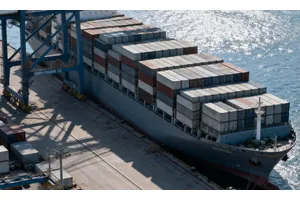
If you are sourcing goods from Chinese manufacturers and need a clear, no-nonsense answer on shipping from Shenzhen to Uruguay, you have probably already hit the three things every first-time importer wrestles with: which shipping method actually makes sense for your cargo, what the real all-in cost looks like (not just the freight quote that doubles once duties and fees land), and how to get through Uruguayan customs without your container sitting at the Port of Montevideo racking up storage charges. We handle China-to-Uruguay shipments weekly, and the gap between what a rate calculator tells you and what happens on the ground is wider than most people expect. For importers seeking an end-to-end logistics partner, comprehensive shipping from China to Uruguay services require a provider who understands both Chinese export procedures and Uruguay's unique customs framework. This guide covers every stage — shipping options, 2026 price ranges, transit times by port, the six-stage door-to-door process, Uruguay-specific customs and tax rules, and how to pick a freight forwarder who actually knows the Montevideo lane.
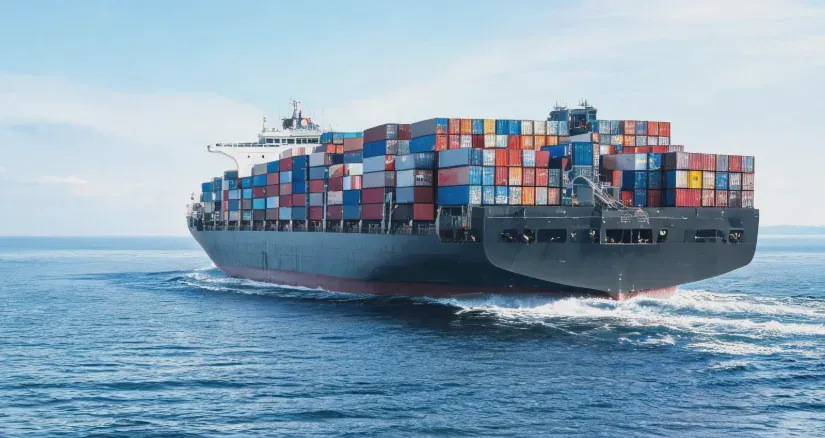
Shipping Methods from Shenzhen to Uruguay: Sea, Air & Express Compared
Choosing the right mode is less about "which is cheapest" and more about matching the method to your cargo volume, urgency, and cash flow.
Sea Freight FCL (Full Container Load)
FCL means you book an entire container exclusively for your goods. It is the go-to choice once your shipment exceeds roughly 15 CBM (cubic meters). You are not sharing space with anyone, so there is no consolidation delay and a lower risk of cargo handling damage.
Common container types on the Shenzhen–Uruguay lane:
| Container Type | Internal Capacity | Typical Use |
|---|---|---|
| 20ft GP | ~28 CBM / 18–22 tons | Small FCL shipments, heavy goods like machinery or tiles |
| 40ft GP | ~58 CBM / 26–28 tons | Most common — furniture, electronics, consumer goods |
| 40ft HC (High Cube) | ~68 CBM / 26–28 tons | Bulky but lighter cargo — textiles, insulation, packaging |
FCL departures from Shenzhen's Yantian and Shekou terminals sail 1–2 times per week. If your supplier is near Guangzhou, Nansha port is also viable. For suppliers in eastern or northern China, you can route through Shanghai, Ningbo, or Qingdao — each adds or subtracts a few days of transit, which we cover in Section 4.
Sea Freight LCL (Less than Container Load)
LCL is the shared-container option for shipments under 15 CBM. Your goods are consolidated with other shippers' cargo at a CFS (Container Freight Station) in Shenzhen, then deconsolidated at the destination CFS in Montevideo.
The trade-off is straightforward: lower freight cost per shipment, but about 5–10 extra days for consolidation and deconsolidation, plus a marginally higher risk of handling-related damage since your goods share container space. LCL pricing starts from as little as 1 CBM — ideal for trial orders, small businesses testing the Uruguayan market, or seasonal restocking where you do not need a full container. For a detailed comparison of ocean freight options, see our guide on sea shipping from China to Uruguay covering FCL and LCL service differences in depth.
Air Freight
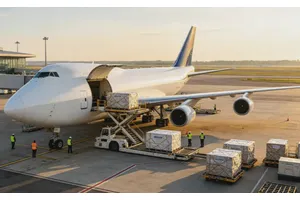
When speed matters more than cost, air freight from Shenzhen Bao'an International Airport (SZX) to Carrasco International Airport (MVD) delivers in 6–12 days door-to-door. Most flights connect through European or Middle Eastern hubs — no direct Shenzhen–Montevideo air route exists. The sweet spot is 100–1,000 kg of high-value or time-sensitive cargo: electronics, pharmaceutical samples, urgent replacement parts, or seasonal fashion that misses the sea freight deadline. Below 100 kg, express couriers (DHL, FedEx, UPS) are typically cheaper and faster.
Express Courier
For documents, samples, and parcels under 50 kg, express couriers deliver in 3–7 days door-to-door. The per-kilo cost is the highest of all methods, but for ultra-urgent small shipments, nothing beats the speed and simplicity.
Quick Comparison
| Method | Volume Sweet Spot | Door-to-Door Time | Best For |
|---|---|---|---|
| Sea FCL | 15+ CBM | 36–55 days | Bulk orders, heavy goods |
| Sea LCL | 1–15 CBM | 40–55 days | Trial orders, small restocks |
| Air Freight | 100–1,000 kg | 6–12 days | High-value, time-sensitive |
| Express Courier | <50 kg | 3–7 days | Samples, documents |
2026 Shipping Costs from China to Uruguay
Here is the question we get asked most often, and the honest answer is: it depends — on volume, season, carrier, and your chosen Incoterm. The ranges below reflect DDP (Delivered Duty Paid) all-in pricing as of mid-2026 — meaning freight, China export clearance, Uruguay import duties, IVA, customs brokerage, and last-mile delivery are all bundled. If you are comparing FOB or CIF quotes, those only cover part of the journey; we break that down in Section 7.
Sea Freight DDP Rates (2026 Reference)
| Service | Volume | DDP All-In Price Range |
|---|---|---|
| Sea LCL | 3 CBM | $350–$550 per CBM |
| Sea LCL | 10 CBM | $280–$420 per CBM |
| Sea FCL 20GP | ~28 CBM | $4,200–$6,500 total |
| Sea FCL 40GP/HQ | ~58–68 CBM | $5,800–$8,500 total |
LCL pricing improves sharply with volume. That 10 CBM shipment costs roughly 20–30% less per cubic meter than 3 CBM — the consolidator's fixed costs spread thinner.
Air Freight DDP Rates (2026 Reference)
| Weight Band | DDP Per-Kilo |
|---|---|
| 100–300 kg | $7.50–$11.00/kg |
| 500 kg+ | $5.50–$8.50/kg |
| Express (10–50 kg) | $8.00–$14.00/kg |
What a DDP Quote Actually Includes — and What It Does Not
A legitimate DDP quote from a freight forwarder covering China to Uruguay should itemize:
- Ocean/air freight (base rate + BAF fuel surcharge)
- China export customs clearance and documentation
- Origin terminal handling (THC/ORC) at Shenzhen
- Destination terminal handling at Montevideo
- Uruguay import duty (MERCOSUR AEC, typically 0–20%)
- IVA (22% on CIF + duty)
- Despachante de Aduana (customs broker) fee
- Last-mile trucking to your door in Uruguay
What DDP does NOT cover: demurrage (container sitting too long at port), detention (keeping the container too long after pickup), storage fees from customs holds, or re-inspection charges. A quality forwarder warns you about these upfront — if your quote does not mention them, ask.
Cost Drivers & How to Save Money
Seasonality is the single biggest lever. Ocean freight rates on the China–South America lane spike sharply in Q4 (October–December) and again in the 4–6 weeks before Chinese New Year (January/February), when factories rush to ship before the holiday shutdown. If your timeline is flexible, book in Q2 (April–June) — rates are consistently 15–25% lower.
Consolidate suppliers before shipping. If you are buying from three factories across Guangdong, do not ship each one separately. A freight forwarder with a Shenzhen consolidation warehouse can receive, inspect, and combine all three orders into one container over a 30-day free storage window — you pay one freight bill instead of three.
Optimize your container utilization. A 40ft HC costs only about 30–40% more than a 20ft but carries 2.4× the volume. If you are anywhere near 20 CBM, the math almost always favors upsizing.
How Long Does Shipping Take from China to Uruguay?
Transit time varies more by port of origin and routing than most importers realize. Here is what we see in practice:
Door-to-Door Timeline by Method
| Method | Door-to-Door | Notes |
|---|---|---|
| Sea FCL | 36–55 days | Varies by port & routing |
| Sea LCL | 40–55 days | +5–10 days for consolidation |
| Air Freight | 6–12 days | Via EU or Middle East hub |
| Express Courier | 3–7 days | Direct to door |
Ocean Transit Time by Chinese Port
| Departure Port | Ocean Transit to Montevideo | Routing Notes |
|---|---|---|
| Shanghai | 30–40 days | Most direct sailings on this lane |
| Ningbo | 30–35 days | Some carriers offer direct calls |
| Shenzhen (Yantian/Shekou) | 33–45 days | 1–2 sailings/week; Panama Canal or Brazil transshipment |
| Guangzhou (Nansha) | 35–45 days | Often feeds via Hong Kong or Shenzhen |
| Qingdao | 38–48 days | Typically transships via Shanghai or Busan |
Shenzhen is not the fastest departure port for Uruguay — Shanghai and Ningbo edge it out by 3–5 days on direct sailings. But if your suppliers are in Guangdong, the trucking time and cost to haul cargo 1,500 km north to Shanghai usually wipes out the ocean transit advantage. Match the port to your supplier's location, not just the sailing schedule.
What Slows Things Down
The Panama Canal routing is the fastest path to Montevideo, but a handful of carriers transship through Brazilian ports (Santos, Rio Grande) instead — this adds 7–15 days. If your supply chain also serves the Brazilian market, our shipping from China to Brazil page covers FCL and LCL services to Santos, Rio de Janeiro, and other major Brazilian ports. Always ask whether the quote is for a direct Montevideo call or a transshipment. Port congestion at Montevideo is less severe than at Santos or Buenos Aires, but customs holds during Uruguay's summer holiday period (late December through January) can add a week.
China to Uruguay Shipping Process: A Step-by-Step Guide
Here is how a typical DDP shipment moves from factory to door, with the real-world timelines we see on the ground — not the idealized version from a brochure. For importers who prefer a single point of accountability from start to finish, door to door shipping from China to Uruguay consolidates the entire journey — factory pickup, export clearance, ocean freight, Uruguay customs, duties and IVA, and last-mile delivery — into one contract with one provider.
Stage 1 — Factory Pickup & Consolidation (Days 1–3)
Your forwarder arranges trucking from your supplier(s) to their Shenzhen consolidation warehouse. If you are buying from multiple factories, this is where the logistics get efficient: all goods arrive at one location, get counted, inspected, and labeled. Many forwarders offer up to 30 days of free warehousing — enough to let a late supplier catch up without holding the entire shipment. One Uruguay-specific detail: if your goods include wooden pallets or crates, they must be ISPM 15 fumigated and stamped before departure. Montevideo customs enforces this strictly, and unstamped wood gets quarantined at your expense.
Stage 2 — China Export Customs Clearance (Days 2–5)
Chinese export clearance is relatively straightforward for most general cargo. Your forwarder files the export declaration with:
- Commercial Invoice (Spanish translation is not required at this stage, but it helps downstream)
- Packing List
- Customs declaration form
The most common holdup at this stage: HS code mismatch between what the supplier declared and what customs expects. A forwarder who cross-checks classification before filing saves days of rework.
Stage 3 — International Ocean Transit (Days 5–40+)
The container loads at Yantian or Shekou and heads out. Major carriers operating this lane: COSCO, MSC, Maersk, ONE, CMA CGM, Hapag-Lloyd, and ZIM. Carriers with direct Montevideo calls (no transshipment) are generally ONE, MSC, and ZIM — transit time 33–38 days from Shenzhen. A quality forwarder gives you real-time tracking with milestone updates at vessel departure, canal transit, and arrival at Montevideo.
Stage 4 — Uruguay Customs Clearance (Adds 3–7 Days)
This is where the lane gets specific. Uruguay requires a licensed Despachante de Aduana (customs broker) for every commercial import — you cannot self-clear as the importer. The broker files with the Dirección Nacional de Aduanas (DNA) using your RUT (Registro Único Tributario). No RUT, no clearance — it is non-negotiable. If you do not have one yet, your forwarder can guide you through obtaining it before the cargo arrives.
Documents submitted at this stage: original Bill of Lading (or telex release), commercial invoice, packing list, and Certificate of Origin. For goods from China, a Form F Certificate of Origin may qualify you for preferential MERCOSUR treatment — worth checking with your broker.
Stage 5 — Duties & IVA Payment
Here is a real worked example for an electronics shipment:
| Cost Element | Calculation | Amount |
|---|---|---|
| CIF value (goods + freight + insurance) | — | $10,000 |
| Import duty (MERCOSUR AEC, 14% for electronics) | $10,000 × 14% | $1,400 |
| IVA base (CIF + duty) | $10,000 + $1,400 | $11,400 |
| IVA (22%) | $11,400 × 22% | $2,508 |
| Customs broker fee | Fixed | $150–$400 |
| Total duties, taxes & fees | — | $4,058–$4,308 |
That is roughly 40% on top of your CIF value — and exactly why an all-in DDP quote matters. A freight-only quote that ignores duties and IVA looks attractively low but understates your true landed cost by a wide margin.
Stage 6 — Last-Mile Delivery in Uruguay (1–3 Days)
Once cleared, your goods leave Montevideo port for final delivery. Montevideo metro area: same day or next day. Inland destinations: Punta del Este (~2 hours east), Salto and Paysandú (northwest, 5–6 hours), and Rivera (northeast border) add 1–3 days. If you are routing goods through a Free Trade Zone like Zonamérica or Aguada Park, the delivery timeline is similar, but duties and IVA are suspended — you only pay when goods exit the zone into Uruguayan commerce.
Uruguay Customs Clearance: Duties, Taxes & Required Documents
Uruguay's customs regime follows the MERCOSUR Common External Tariff (AEC) with some national modifications. If this is your first time importing, here is what you need to know — no filler, just the parts that trip people up.
Import Duty Structure
The AEC sets rates from 0–20%, with most consumer goods falling in the 10–14% band. Duty is calculated on the CIF value (cost of goods + international freight + insurance). Pro tip: Uruguay customs cross-references declared values against reference pricing databases. Undervaluing your goods to save on duty is not worth the risk — penalties include fines up to 100% of the unpaid tax and a flag on your RUT that makes every future clearance harder.
IVA (VAT) Calculation
IVA (Impuesto al Valor Agregado) is 22%, applied to (CIF value + import duty). The total tax burden — duty plus IVA — typically lands between 30–40% of your CIF, depending on your product category. If your business is registered for IVA in Uruguay, you can claim the input tax credit on your monthly return, which substantially improves cash flow. Importers operating under FOB or CIF terms can manage this themselves; DDP importers simply pay one all-in price and let the forwarder handle it.
Essential Documents Checklist
| Document | Required? | Notes |
|---|---|---|
| Commercial Invoice | Yes | Spanish translation strongly recommended |
| Packing List | Yes | Must match invoice quantities exactly |
| Bill of Lading (B/L) or AWB | Yes | Telex release acceptable for sea freight |
| Certificate of Origin | Yes | Form F may qualify for preferential MERCOSUR rates |
| RUT (Tax ID) | Yes | Must be active — customs will not release goods without it |
| Import Permits | Conditional | Required for electronics, food, pharma, chemicals, etc. |
| Fumigation Certificate | Conditional | Mandatory if shipment contains any wood packaging (ISPM 15) |
One document mistake we see repeatedly: the commercial invoice lists values in USD, but the packing list uses a different unit of measure than the invoice. DNA is meticulous about consistency — a mismatch between documents triggers a physical inspection, which adds 3–5 days and a $200–$500 inspection fee.
Common Pitfalls
HS Code misclassification. Verify your product's HS code against the MERCOSUR NCM (Nomenclatura Común del Mercosur) schedule before the container sails. A reclassification at the border changes your duty rate retroactively and holds up clearance.
Missing fumigation stamp. Any wood packaging — pallets, crates, dunnage — must carry an ISPM 15 stamp. Unstamped wood gets quarantined and fumigated at destination, costing $300–$800 and adding 3–5 days.
Incomplete commercial invoice. Uruguayan customs expects the invoice to describe goods in sufficient detail to determine the correct tariff classification. "Electronic goods — 5 cartons" is not enough. "Bluetooth speakers, model X200, 200 units, 5 cartons" clears without questions.
DDP vs FOB vs CIF: Choosing the Best Incoterm for Your Uruguay Shipment
The Incoterm you pick determines who pays for what — and, more importantly, who takes the risk at each stage. Choosing the right term can significantly impact your total landed cost and operational complexity. For a deeper comparison, our guide on DDP vs FOB: which option saves time and reduces hassle breaks down the trade-offs in detail. Here is how each one plays out on the China–Uruguay lane.
Quick Reference
| Incoterm | Freight | Insurance | Uruguay Duties/IVA | Customs Broker | Last-Mile | Risk Transfers |
|---|---|---|---|---|---|---|
| EXW | Buyer | Buyer | Buyer | Buyer | Buyer | At factory gate, China |
| FOB | Buyer | Buyer | Buyer | Buyer | Buyer | Once loaded on vessel, China |
| CIF | Seller | Seller | Buyer | Buyer | Buyer | Once loaded on vessel, China |
| DAP | Seller | Seller* | Buyer | Seller | Seller | At your door, Uruguay |
| DDP | Seller | Seller* | Seller | Seller | Seller | At your door, Uruguay |
*Insurance under CIF is minimum cover only; DAP/DDP typically include broader coverage negotiated by the forwarder.
When DDP Is the Clear Winner
DDP makes the most sense when you are new to the Uruguay market and do not yet have a relationship with a local customs broker, or when your business lacks the in-house logistics team to chase documentation, tax payments, and delivery coordination across two continents and two languages. All costs are quoted upfront — one price, one provider, one point of accountability. For SMEs and e-commerce sellers shipping 1–3 containers a year, DDP eliminates the learning curve entirely.
When FOB or CIF Makes More Sense
If you already work with a trusted Despachante de Aduana in Montevideo, or if your company is registered for IVA in Uruguay and you want to reclaim the 22% on your own timeline, FOB or CIF gives you more control over the destination-side costs. Large-volume importers (10+ containers per year) often negotiate better local trucking and brokerage rates than what a forwarder's standard DDP markup would include.
How to Choose a Reliable Freight Forwarder for China to Uruguay Shipping
A rate is just a number. The forwarder behind it determines whether your shipment arrives on time and on budget — or turns into a costly lesson. Modern freight forwarders play a strategic role that goes far beyond booking cargo space — they manage documentation, navigate customs, optimize routing, and serve as your supply chain's command center.
What to Look For
Uruguay-specific experience. A forwarder who mainly ships to the US or Europe may not know that Uruguay requires a mandatory Despachante de Aduana, or that the RUT is non-negotiable, or that MERCOSUR's NCM classification can differ from the standard HS code. Ask directly: "How many shipments have you handled to Montevideo this year?"
Direct carrier contracts. Forwarders with FIATA/IATA certification and direct agreements with carriers like COSCO, MSC, and Maersk lock in rates and space that spot-market brokers cannot match — especially during Q4 crunch periods on the South America lane.
Multi-port China capability. Your supplier might be in Guangdong today and Zhejiang next quarter. A forwarder with consolidation hubs in Shenzhen and Shanghai (not just one port) keeps you flexible.
Spanish-language communication. Customs issues in Uruguay are handled in Spanish. If your forwarder cannot communicate directly with the DNA and the Despachante, every question becomes a multi-day email chain.
Transparent itemized DDP quoting. If a quote is one number with no breakdown, assume duties and IVA are missing. A proper DDP quote lists every component.
Frequently Asked Questions
What is the cheapest way to ship from China to Uruguay?
LCL sea freight for volumes under 15 CBM; FCL sea freight for full container loads. Avoid Q4 and pre-Chinese New Year (Jan–Feb) booking windows — rates are 15–25% lower in Q2. Consolidating multiple suppliers into one shipment through a Shenzhen warehouse also cuts costs significantly.
How long does sea freight take from Shenzhen to Montevideo?
Ocean transit: 33–45 days from Shenzhen's Yantian or Shekou terminals. Door-to-door including factory pickup, export clearance, ocean transit, Uruguay customs, and last-mile delivery: 36–55 days for FCL, 40–55 days for LCL.
Do I need a customs broker to import goods into Uruguay?
Yes. A licensed Despachante de Aduana is legally mandatory for all commercial imports into Uruguay. Under a DDP arrangement, your freight forwarder arranges and pays for the broker as part of the all-inclusive service.
What is the import duty rate for goods from China to Uruguay?
Uruguay applies the MERCOSUR Common External Tariff (AEC): 0–20%, with most consumer goods at 10–14%. IVA (VAT) of 22% is added on top of (CIF value + import duty). Total tax burden typically ranges from 30–40% of CIF.
Can I ship from other Chinese ports besides Shenzhen to Uruguay?
Yes. Shanghai, Ningbo, Guangzhou (Nansha), and Qingdao all serve the Montevideo route. Shanghai and Ningbo actually offer slightly faster transit times (30–35 days ocean) than Shenzhen. Choose the port closest to your supplier — domestic trucking costs and transit time usually outweigh small ocean transit differences.
What documents do I need to clear customs in Uruguay?
Commercial invoice (Spanish recommended), packing list, Bill of Lading or Airway Bill, Certificate of Origin (Form F may qualify for preferential MERCOSUR rates), active RUT, import permits for regulated goods, and ISPM 15 fumigation certificate if any wood packaging is used.
Request a free, itemized DDP shipping quote for your next China-to-Uruguay shipment and get a clear breakdown of every cost component before you commit.