China exported over $480 billion worth of machinery and mechanical appliances in 2025, cementing its position as the world's dominant equipment supplier. Yet every year, thousands of importers face costly delays, cargo damage, and regulatory nightmares — all because they underestimate what shipping heavy machinery from China actually involves. If you've ever worried about a $50,000 excavator arriving rusted, stuck in customs for weeks, or costing far more than you budgeted, this guide is built for you.
Drawing on 12+ years of hands-on freight forwarding experience — including countless heavy-lift shipments from Shenzhen to destinations across 120+ countries — we'll walk you through every shipping method, real cost figures, China's export procedures (the #1 blind spot for most importers), packaging best practices, and the exact documentation you need. By the end, you'll have a complete, actionable roadmap for moving your equipment safely, on time, and on budget.
Types of Heavy Machinery Commonly Shipped from China
Before diving into logistics, it helps to know where your equipment fits. Chinese factories produce virtually every category of heavy machinery, each with its own shipping considerations.
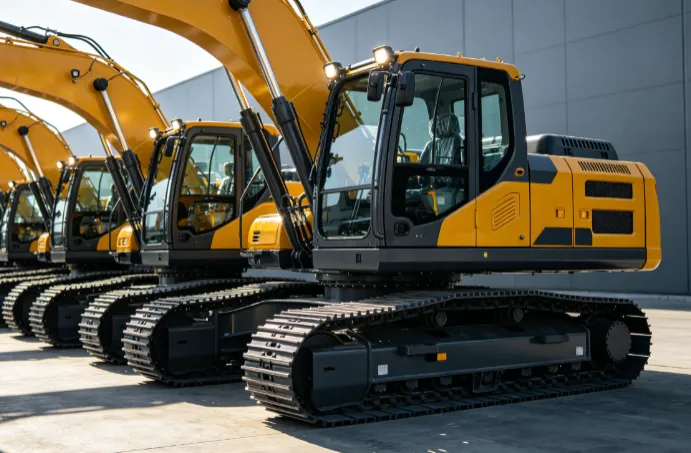
Construction & earthmoving equipment dominates export volumes: crawler and wheeled excavators, bulldozers, wheel loaders, road rollers, graders, and mobile cranes. These typically weigh 8–45 tons and often ship via flat rack container or Ro-Ro vessel.
Manufacturing & industrial machinery — CNC lathes, milling machines, injection molding machines, industrial presses, and laser cutting systems — tends to be dimensionally compact but extremely heavy (5–30 tons). These almost always ship in standard or high-cube FCL containers after partial disassembly.
Agricultural machinery (tractors, combine harvesters, irrigation systems) and mining equipment (drilling rigs, crushers, conveyor systems) present unique challenges due to their irregular shapes and sheer scale. Break bulk shipping is common here.
Power generation equipment — generators, turbines, and transformers — often requires specialized handling due to weight concentration and sensitivity to moisture.
| Machinery Category | Typical Weight Range | Preferred Shipping Method |
|---|---|---|
| Construction (excavators, loaders) | 8–45 tons | Flat rack, Ro-Ro |
| CNC & manufacturing equipment | 5–30 tons | FCL (after disassembly) |
| Agricultural machinery | 3–25 tons | Ro-Ro, FCL |
| Mining equipment | 15–80+ tons | Break bulk, heavy lift |
| Power generation | 5–50 tons | Flat rack, break bulk |
Shipping Methods: Choosing the Right One for Your Machinery
The method you choose impacts everything — transit time, cost, damage risk, and paperwork complexity. Here's how each option stacks up for heavy machinery shipping from China.
FCL (Full Container Load) — The Workhorse
For machinery that fits within standard container dimensions after partial disassembly, FCL is the safest and most cost-effective choice. A 20ft container holds roughly 28 CBM (up to 28 tons), while a 40ft high-cube handles 68 CBM (up to 26 tons). Your cargo is sealed at the factory, untouched until arrival — minimal handling means minimal damage risk. Transit runs 25–40 days on major lanes, and per-unit costs are the lowest among all methods for shipments exceeding 15 CBM.
Flat Rack & Open Top Containers — For Oversized Cargo
When your machinery is too wide or tall for standard containers, flat rack containers (collapsible or fixed-end sides) and open top containers handle the overflow. A 40ft flat rack supports up to 40 tons, and the open-top design lets cranes load from above. Expect a $500–$1,500 premium over standard FCL, plus additional lashing and securing requirements.
Ro-Ro (Roll-on/Roll-off) — For Self-Propelled Equipment
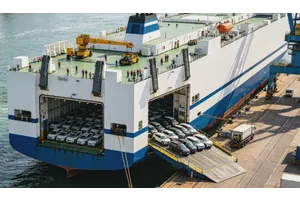
If your machinery has wheels or tracks and can drive itself — excavators, tractors, mobile cranes — Ro-Ro shipping is often the simplest option. Equipment is driven onto the vessel at the Chinese port and driven off at destination. Transit runs 20–35 days at roughly $100–$250 per CBM. Key pre-departure requirements: disconnect batteries, drain fuel below ¼ tank, and ensure the machine is clean and operational.
Break Bulk & Heavy Lift — For the Truly Massive
Equipment exceeding 40 tons or with extreme dimensions goes break bulk — loaded directly onto a vessel using heavy-lift cranes (some with capacities exceeding 700 tons). Carriers like COSCO Shipping Specialized operate dedicated heavy-lift liner services from multiple Chinese ports. Cost runs $90–$180 per ton, transit takes 30–50 days, and sailing schedules are less frequent. This is the domain of mining crushers, large transformers, and complete production lines.
Air Freight & Rail — When Time Matters
For urgent, high-value items (CNC spindles, replacement parts), air freight delivers in 3–7 days at $5–$12 per kg. For Europe-bound machinery where sea is too slow but air is too expensive, China-Europe rail freight (15–25 days via Zhengzhou/Chengdu to Duisburg/Hamburg) bridges the gap at roughly 40–60% less than air freight.
Quick-Reference Comparison
| Method | Transit Time | Cost | Best For | Weight Limit |
|---|---|---|---|---|
| FCL (20ft/40ft) | 25–40 days | $2,000–$5,500 | Machinery fitting containers | 26–28 tons |
| Flat Rack FCL | 25–40 days | +$500–$1,500 vs FCL | Over-width/height cargo | 28–40 tons |
| Open Top | 25–40 days | +$300–$800 vs FCL | Over-height cargo | 26–28 tons |
| Ro-Ro | 20–35 days | $100–$250/CBM | Self-propelled wheeled machines | Vessel-dependent |
| Break Bulk | 30–50 days | $90–$180/ton | Cargo >40 tons, extreme dims | 700+ tons (vessel crane) |
| Air Freight | 3–7 days | $5–$12/kg | Urgent, high-value, small | ~3 tons typical max |
| Rail (China–Europe) | 15–25 days | 40–60% less than air | Mid-urgency Europe shipments | Container limits |
China Export Procedures: The Step Most Importers Overlook
Here's a reality most guides skip: getting your machinery out of China involves as much paperwork as getting it into your country. China export customs clearance follows a structured process, and mistakes here cascade into costly downstream delays.
Required Export Documentation
Every heavy machinery export from China requires at minimum:
- Commercial Invoice & Packing List (Chinese + English versions)
- Export Declaration Form (出口货物报关单) — filed through China Customs' Single Window system
- Certificate of Origin (use FORM E for ASEAN, FORM F for Chile, or generic CO for other destinations to claim preferential tariffs)
- Fumigation Certificate — mandatory if your machinery is packed on wooden pallets or in wooden crates (ISPM 15 compliance)
- Export License — only required for certain CNC machines, dual-use technology, or strategic equipment; most general construction and agricultural machinery is exempt
The Export Clearance Process
- HS Code Classification — verify the correct 10-digit China export HS code (this must match the commercial invoice)
- Customs Declaration Filing — your freight forwarder submits the declaration through the Single Window platform
- Document Review — customs cross-checks invoice, packing list, contract, and any required licenses
- Physical Inspection — if flagged (random or risk-based), customs inspects the actual cargo
- Export Duties — most machinery is export duty-free from China, but verify for your specific HS code
- Release & Loading — once cleared, cargo enters the port and loads onto the vessel
A Critical Supplier Check
If purchasing EXW (Ex Works, under Incoterms 2020), confirm that your supplier holds valid import/export operating rights (进出口经营权). Under EXW terms, the buyer bears virtually all responsibility — freight, both-side customs, and all transit risk — making the supplier's export qualification status critical before any money changes hands.
HS Code Quick Reference for Heavy Machinery
Incorrect HS code classification is the single most common cause of customs delays. Here are the harmonized codes for machinery most frequently shipped from China — use these as a starting point, then verify with your customs broker for the full destination-country digit extension.
| Machinery Type | China HS Code | Int'l HS (First 6) | Chapter |
|---|---|---|---|
| Crawler Excavator | 8429.5212.00 | 8429.52 | 84 — Earthmoving |
| Wheeled Excavator | 8429.5211.00 | 8429.52 | 84 — Earthmoving |
| Bulldozer | 8429.11** | 8429.11 | 84 — Earthmoving |
| Wheel Loader | 8429.51** | 8429.51 | 84 — Earthmoving |
| Road Roller | 8429.40** | 8429.40 | 84 — Construction |
| CNC Horizontal Lathe | 8458.11** | 8458.11 | 84 — Machine Tools |
| CNC Milling Machine | 8459.51** | 8459.51 | 84 — Machine Tools |
| Injection Molding Machine | 8477.10** | 8477.10 | 84 — Manufacturing |
| Industrial Hydraulic Press | 8462.10** | 8462.10 | 84 — Manufacturing |
| Diesel Generator (≥75kVA) | 8502.13** | 8502.13 | 85 — Electrical |
| Agricultural Tractor | 8701.92** | 8701.92 | 87 — Vehicles |
| Drilling Rig | 8430.41** | 8430.41 | 84 — Mining |
The first six digits are harmonized globally; digits 7–10 vary by country. For USA imports, look up the full 10-digit HTS code at the USITC database; shippers must also ensure compliance with U.S. Customs and Border Protection (CBP) ISF (Importer Security Filing) requirements, filed at least 24 hours before vessel departure. For the EU, consult the TARIC system. A $150 consultation with a licensed customs broker can save thousands in penalties from a misclassified shipment.
Major Chinese Ports for Heavy-Lift Cargo
Not all Chinese ports are equally equipped for heavy machinery. If your cargo requires heavy-lift cranes or specialized berths, your departure port choice matters.
| Port | Max Crane Capacity | Heavy-Lift Berths | Ro-Ro Terminal | Best Suited For |
|---|---|---|---|---|
| Shanghai (Yangshan) | 150+ tons | Multiple | Yes | All-around, largest capacity |
| Ningbo-Zhoushan | 120+ tons | Multiple | Yes | Bulk + container combo |
| Shenzhen (Yantian/Shekou) | 100+ tons | Available | Yes | Pearl River Delta machinery |
| Qingdao (Qianwan) | 100+ tons | Available | Limited | Northern China manufacturing |
| Tianjin | 100+ tons | Available | Yes | Beijing/Tianjin industrial belt |
| Guangzhou (Nansha) | 80+ tons | Limited | Yes | Inland river access, South China |
Shenzhen's Yantian and Shekou terminals offer a key advantage: dual-terminal flexibility combined with immediate proximity to the Pearl River Delta — China's densest cluster of machinery and electronics manufacturing. For importers sourcing from Guangdong factories, starting from Shenzhen often saves $300–$800 in inland trucking versus routing through Shanghai or Ningbo.
Packaging Heavy Machinery for Ocean Transport: A Practical Checklist
Ocean freight is brutal. Thirty-plus days of salt spray, humidity swings, vessel vibration, and multiple crane lifts can destroy inadequately protected equipment. In our 12+ years handling heavy machinery exports from Shenzhen, we've seen factory-fresh CNC machines arrive with rusted guide rails because a supplier skipped a $50 VCI wrap, and crates collapse under load because someone used standard pine instead of hardwood dunnage. These aren't rare edge cases — they're predictable outcomes when packaging meets ocean transit unprepared. Here's what actually matters, drawn from hard-won experience.
Step 1 — Pre-Pack Prep: Drain all fluids (fuel, oil, hydraulic) or document them as dangerous goods. Disconnect and remove batteries. Retract hydraulic cylinders fully and lock all articulated joints. Photograph the machine from every angle — this documentation is your insurance claim foundation.
Step 2 — Corrosion Protection: Apply VCI (Vapor Corrosion Inhibitor) film or emitters to all exposed metal surfaces. Coat machined surfaces — CNC ways, hydraulic rods, bearing seats — with rust-preventive grease. Place desiccant bags inside enclosures; calculate quantity at roughly 500g of desiccant per 100 kg of machinery weight inside a sealed wrap.
Step 3 — Crating: All wood packaging must bear the ISPM 15 heat-treatment stamp (the IPPC — International Plant Protection Convention — standard for wood packaging material in international trade). For components over 5 tons, steel-frame crating is strongly recommended over wood alone. Build the base with forklift pockets and clearly marked crane lift points. Mark the center of gravity on all sides of the crate.
Step 4 — Securing: Use polyester lashing straps (not nylon — it stretches when wet) for loads under 10 tons; steel chains or wire ropes above that. Block and brace with hardwood dunnage, and fill remaining voids with dunnage air bags. All securing must comply with the IMO CSS Code (the International Maritime Organization's Code of Safe Practice for Cargo Stowage and Securing, mandatory under SOLAS Chapter VI).
Step 5 — Weather Protection: Wrap the entire unit in a waterproof membrane. For containerized cargo, add container desiccants (pole-mounted along container walls) to combat "container rain" — condensation that drips onto cargo during temperature swings at sea.
Destination Import Duties & Regulations at a Glance
Duties and taxes often represent 15–35% of the total landed cost. Here's what to expect in key markets.
| Destination | Machinery Duty | VAT/GST | Key Requirements |
|---|---|---|---|
| USA | 0–5.8% + up to 25% Section 301 | State sales tax | EPA, OSHA, ISF filing |
| EU | 0–4.5% | 17–27% VAT | CE marking, Machinery Directive 2006/42/EC |
| UK | 0–4.5% | 20% VAT | UKCA/CE marking |
| Saudi Arabia | 5–15% | 15% VAT | SABER certificate mandatory |
| UAE | 5% | 5% VAT | ESMA compliance |
| Australia | 0–5% | 10% GST | Quarantine inspection for used equipment |
| Kenya | 0–25% | 16% VAT | PVoC pre-shipment inspection mandatory |
| Nigeria | 5–35% | 7.5% VAT | SONCAP certificate, Form M |
| Brazil | 0–20% | ICMS (state-level) | RADAR import license, complex tax calc |
| South Africa | 0–20% | 15% VAT | SABS, age restrictions on used machinery |
Used machinery faces additional barriers. India caps imports at 5–7 years for certain categories. Nigeria and Kenya enforce pre-shipment age and condition inspections. Indonesia requires an import permit plus inspection for equipment over 20 years old. Always confirm destination regulations before signing a purchase contract.
Preferential tariff trick: If your destination is in ASEAN, insist on a FORM E Certificate of Origin — this can slash duties from 15–25% to 0–5% under the China-ASEAN Free Trade Agreement. Similar benefits apply under RCEP for Asia-Pacific destinations.
For machinery importers, Incoterms 2020 selection dramatically affects the total landed cost. DDP (Delivered Duty Paid) bundles everything into one invoice — ideal for first-time importers or complex destinations — while FOB (Free On Board) gives experienced buyers with their own customs brokers more cost control. Between the extremes, CIF covers freight and insurance to the destination port, and DAP (Delivered at Place, the successor to the older DDU term) handles everything except import duties and taxes. We help clients model the all-in cost under each term before committing — because the cheapest FOB quote often becomes the most expensive shipment once duties, brokerage, and last-mile delivery land.
For more details on East African heavy equipment imports, including port options and customs procedures at Mombasa, see our comprehensive shipping from China to Kenya guide.
Marine Insurance: Don't Skip This
All compe*****s tell you to "buy insurance." None explain what to buy or how to claim. Here's the short version of what cargo insurance actually covers for heavy machinery shipments.
| Coverage Level | Covers | Typical Premium | Recommended For |
|---|---|---|---|
| ICC A (All Risks) | Partial loss, damage, theft, general average | 0.5–1.5% of declared value | High-value CNC, precision equipment |
| ICC B (Named Perils) | Fire, collision, heavy weather, overboard loss | 0.3–0.8% | Standard machinery |
| ICC C (Basic) | Major casualties only (sinking, fire, stranding) | 0.2–0.5% | Budget option, minimal protection |
Insure for CIF value + 10–20% — this extra margin covers your freight costs, duties paid, and anticipated profit. A $40,000 excavator shipping on CIF terms should be declared at roughly $50,000. Premium cost: approximately $250–$750. Against a total loss? That's a 99%+ discount on peace of mind.
If damage occurs: Photograph everything immediately — do NOT move the cargo. Note damage on the delivery receipt. Notify your insurer within 24–48 hours. The standard claim package includes the survey report, original Bill of Lading, commercial invoice, packing list, and repair/replacement estimate.
For a deeper dive into premium calculations and coverage options, see our guide on shipping container insurance costs for shipments from China.
Common Mistakes When Shipping Heavy Machinery from China
After handling hundreds of heavy machinery shipments, these are the mistakes we see repeatedly — and based on our team's direct experience managing everything from single-excavator moves to full production line relocations, here's how to avoid every one of them.
Budgeting mistakes:
- Underestimating total landed cost — always add 20–30% to the freight quote for duties, taxes, trucking, and incidentals
- Choosing the cheapest shipping method — a $500 savings on freight evaporates instantly with one damaged component
- Ignoring peak season surcharges (August–October and pre-Chinese New Year, when rates can spike 40–60%)
Documentation mistakes:
- Incorrect HS code classification — the #1 cause of customs holds and penalty assessments
- Missing ISF filing for USA shipments — $5,000+ penalty for late or absent Importer Security Filing
- Forgetting the fumigation certificate — an entire container can be rejected at the destination port without valid ISPM 15 wood packaging documentation
Packaging mistakes:
- Assuming factory-standard packaging is adequate for ocean freight — it almost never is. Ocean transport is categorically harsher than domestic trucking
- Skipping rust protection — 30+ days in a salt-spray environment guarantees corrosion on unprotected metal surfaces
Choosing a Freight Forwarder for Heavy Machinery
Not every freight forwarder handles heavy equipment shipping from China. Heavy-lift cargo demands specialized expertise, carrier relationships, and equipment access that general freight forwarders simply don't have.
Look for three things: certification (FIATA and IATA membership demonstrates professional standards and global network access), direct carrier contracts (not spot-market-only booking — this matters critically during peak season when space tightens), and proven machinery experience (ask for specific case studies matching your cargo type and destination).
DTFU Logistics, a FIATA and IATA dual-certified freight forwarder headquartered in Shenzhen since 2014, has shipped everything from 30-ton excavators to precision CNC turning centers across 120+ countries. Our direct contracts with COSCO, MSC, and Maersk — combined with a dedicated account manager assigned to every client, transparent all-inclusive quoting with no hidden fees, and 24/7 shipment visibility through our online tracking platform — ensure your heavy machinery moves safely, on schedule, and without budget surprises.
Red flags when evaluating forwarders: "we ship everything" with no heavy machinery examples, prices significantly below market, no physical office in China, and unwillingness to provide client references for machinery shipments.
FAQs
How long does it take to ship heavy machinery from China?
Port-to-port sea freight takes 18–40 days depending on route. With inland transport and customs at both ends, plan for 4–10 weeks total from factory to final delivery.
What is the cheapest way to ship heavy equipment from China?
FCL sea freight for consolidated loads exceeding 15 CBM. For wheeled, self-propelled machinery, Ro-Ro is often the most economical option.
Can I ship used heavy machinery from China?
Yes, but requirements are stricter: pre-shipment inspection (CCIC), age verification, and destination-specific regulations. Many countries restrict used machinery by age category. Confirm regulations before purchasing.
Do I need an export license to ship machinery from China?
Most general construction, agricultural, and manufacturing machinery does not require an export license. Exceptions include certain CNC machines with dual-use potential and strategic equipment — verify with your forwarder.
How much does shipping insurance cost for heavy machinery?
Typically 0.3–1.5% of the declared cargo value, depending on coverage level (ICC A/B/C), route risk, and packaging quality. Always insure at CIF value + 10–20%.
Which Chinese port is best for heavy machinery?
Shanghai offers the most capacity and route options. Shenzhen is optimal for Guangdong-manufactured machinery. Qingdao and Tianjin serve northern China's industrial belt effectively.