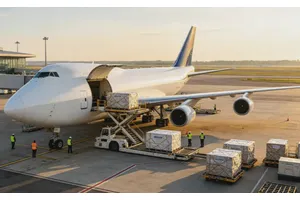
Three quotes land in the same Montevideo inbox for the same 40HQ leaving Shanghai: $3,400, $6,900 and $9,200. All three are labeled "China to Montevideo." That single discrepancy is why the shipping cost from China to Uruguay is so hard to pin down — and why so many importers only discover their true landed cost after the container is already sitting at Puerto de Montevideo accruing storage.
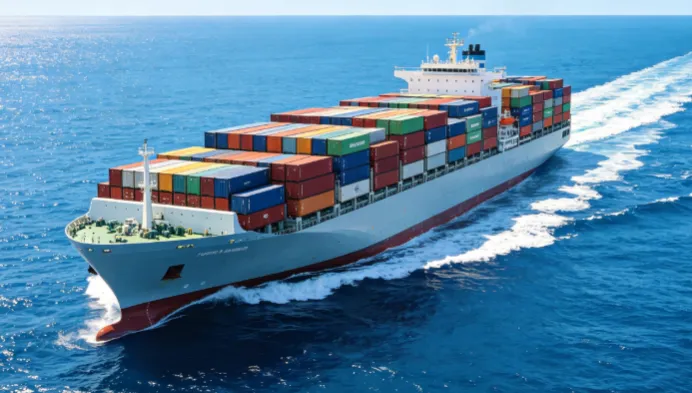
This guide fixes that. You get real 2026 FCL, LCL, air and DDP rates by Chinese origin port, each labeled with the scope it actually covers; the transshipment legs most quotes quietly hide; and the complete Uruguayan tax stack — AEC duty, the 5% tasa consular, IVA at 22%, the recoverable 10% anticipo, IMESI and LATU — with three worked examples you can copy for your own shipment. If you want the service picture first, start with our Shipping from China to Uruguay hub and come back here for the numbers.
How Much Does It Cost to Ship from China to Uruguay in 2026?
Here is the honest answer, with the scope stated on every line. Rates below are Q3 2026 benchmarks with a 14–30 day validity window; they move with GRI cycles and carrier capacity changes on the East Coast South America (ECSSA) trade.
| Mode | 2026 Cost Range | Transit Time | What the Quote Covers | Best For |
|---|---|---|---|---|
| FCL 20GP | $2,600–5,000 | 28–46 days | Port-to-port, ocean freight + origin charges | 15–28 CBM, heavy cargo |
| FCL 40GP | $3,200–6,200 | 28–46 days | Port-to-port | 55–60 CBM, dense palletized freight |
| FCL 40HQ | $3,400–6,500 | 28–46 days | Port-to-port | 65–68 CBM, bulky low-density cargo |
| LCL | $100–280 per CBM | 35–50 days | Port-to-port ocean leg only | 1–13 CBM, mixed SKUs |
| Air freight | $4.50–8.50 per kg | 3–6 days | Door-to-door, chargeable weight | 100–500 kg, urgent stock |
| Express courier | $9.00–15.00 per kg | 2–3 days | Door-to-door, customs included | Under 150 kg, samples |
| DDP door-to-door | $4,200–6,500 (20GP); $5,800–8,500 (40GP/40HQ) | 35–55 days | Freight, duties, clearance, delivery | Importers without a local RUT |
Notice what is missing from the two cheapest lines: the Uruguayan tax layer. That is the part that turns a $3,400 ocean quote into a $9,000 invoice.
What "Shipping Cost" Actually Includes: The Three-Layer Model
Every China–Uruguay quote is a stack of three cost layers, and confusion between them is the single biggest source of budget surprises on this lane.
| Layer | What It Covers | Typical 2026 Range | Who Charges It |
|---|---|---|---|
| 1. Base freight | Ocean or air freight + BAF + CAF | $2,600–6,500 per container | Carrier, billed through your forwarder |
| 2. Local charges | China export clearance, origin THC, documentation; Montevideo DTHC, DO fee, deconsolidation | $180–420 origin / $350–900 destination per shipment | Terminals (TCP, Montecon), forwarder, despachante |
| 3. Landed taxes & delivery | AEC, tasa consular, IVA, anticipo, LATU, storage, inland trucking | 25–70% of CIF value | DNA, despachante, trucking company |
Layer 1 is the number everyone advertises. Layer 3 is the number that decides whether the shipment was profitable — and it is the layer no compe***** quote on this lane spells out.
Why Three Quotes for the Same Lane Can Differ by 4x
Published 20GP figures for China–Uruguay currently range from $2,300 to $9,240. Some sources quote $2,300–4,600 on one page and $2,600–5,000 on another; others show $6,924–8,437 with no scope label at all. None of them are necessarily lying — they are answering different questions.
Before you compare any two quotes on this lane, normalize them with six checks:
- Scope layer — port-to-port, CIF, or DDP with duties paid?
- Origin port and transshipment count — direct vessel, one relay at Santos, or a two-leg routing through the Río de la Plata feeder?
- Surcharges included — BAF, CAF, GRI and PSS are frequently quoted as "plus" items.
- Destination charges — is Montevideo DTHC, the delivery order fee and LCL deconsolidation inside the number?
- Taxes — does the quote include AEC, tasa consular and IVA, and is that even legal for a foreign forwarder to prepay on your behalf?
- Validity and currency — a 30-day-old rate on this lane is history, and an unlocked exchange rate is a second bet.
Our industry insight: the spread we see most often is not price gouging — it is scope drift. When a customer sends us three quotes side by side, roughly seven times out of ten the cheapest one excludes Montevideo destination charges and the most expensive one is a DDP rate with duties already inside it. Normalize the scope first, and the "4x difference" usually collapses to 15–25%.
Transit Time: The Number Behind the Price
Uruguay has two transit-time numbers, and quotes tend to blur them. Port-to-port ocean transit runs 28–46 days depending on routing. True door-to-door adds deconsolidation (3–5 days for LCL), customs clearance (2–5 days), possible LATU inspection, and inland delivery — landing at 35–55 days.
| Origin Port | Ocean Transit (Port-to-Port, 2026) | Notes |
|---|---|---|
| Ningbo | 30–35 days | Fastest mainline rotation |
| Shanghai | 30–40 days | Most capacity, most competitive rates |
| Shenzhen (Yantian / Shekou) | 33–45 days | Varies with direct vs relay routing |
| Guangzhou (Nansha) | 35–45 days | Often feeds via Shenzhen or Hong Kong |
| Qingdao | 38–48 days | Northern gateway, extra relay typical |
A seven-day delay on this lane costs $80–150 per day in detention plus $40–80 per day in storage once free time expires — frequently more than the difference between the cheapest and the most reliable routing.
Ocean Freight Cost from China to Montevideo: 20ft, 40ft & 40HQ FCL Rates
Container pricing on this lane is best understood by origin port, and our Sea Shipping from China to Uruguay guide covers the terminals and sailing patterns behind these numbers. All figures below are port-to-port Q3 2026 and exclude destination charges and Uruguayan taxes.
| Origin Port | 20GP | 40GP | 40HQ |
|---|---|---|---|
| Shanghai | $2,600–4,600 | $3,200–5,800 | $3,400–6,100 |
| Ningbo | $2,700–4,700 | $3,300–5,900 | $3,500–6,200 |
| Shenzhen (Yantian / Shekou) | $2,800–5,000 | $3,400–6,200 | $3,600–6,500 |
| Guangzhou (Nansha) | $2,900–5,000 | $3,500–6,200 | $3,700–6,500 |
| Qingdao | $3,000–5,000 | $3,600–6,200 | $3,800–6,500 |
| Tianjin (Xingang) | $3,100–5,000 | $3,700–6,200 | $3,900–6,500 |
Shipping Cost from Shenzhen and Guangzhou to Montevideo
South China remains the volume heart of this trade, and Shenzhen's Yantian and Shekou terminals offer the widest ECSSA rotation choice. From Yantian or Shekou, expect 33–45 days port-to-port depending on whether your booking lands on a direct call or a relay. Guangzhou's Nansha terminal usually feeds through Shenzhen or Hong Kong, which adds 1–3 days but can soften pricing at peak.
Shipping Cost from Shanghai, Ningbo and Northern Ports
Shanghai and Ningbo carry the most capacity and the best negotiating room on this lane. Qingdao and Tianjin add $200–500 and several days because northern cargo typically connects south before joining an ECSSA rotation — a detail that rarely shows up in a headline rate but always shows up in your schedule.
The Truth About "Direct Sailing": Transshipment via Santos and the Buenos Aires Feeder
There is no high-frequency direct China–Montevideo service. The dominant pattern is one or two transshipments, and every quote you receive implicitly contains one.
- Santos (Brazil) is the primary South America East Coast hub. Your container is discharged, stacked and reloaded here — adding a $300–700 transshipment surcharge and 2–5 days. In peak season, rollover at Santos can push that to 3–7 days. Cargo bound for the Brazilian market clears through this same hub, and we cover that lane separately under Shipping From China to Brazil.
- Buenos Aires / Río de la Plata feeder is the second routing. Cargo is relayed across the estuary to Montevideo on a short-sea vessel. This leg is exposed to Argentine congestion, labour action and forex-related operational disruption.
- Named ECSSA services span MSC, Maersk, CMA CGM, ONE, Hapag-Lloyd, COSCO, Evergreen and PIL rotations. Asking your forwarder which service and how many relays is the fastest way to explain a $700 gap between two quotes.
40GP vs 40HQ vs 20GP: Which Box Costs Less per CBM
The right box depends on density, not on habit. On this lane, per-CBM economics look like this:
| Container | Usable Volume | All-In DDP Cost per CBM | Best Cargo Profile |
|---|---|---|---|
| 20GP | ~28 CBM | $150–232 | Dense cargo: machinery, tiles, hardware, liquids |
| 40GP | ~58 CBM | $100–147 | Palletized mixed freight, balanced weight |
| 40HQ | ~68 CBM | $90–134 | Bulky low-density: furniture, home goods, plastic products |
Two mistakes are common here. First, treating 40GP and 40HQ as interchangeable — they are not; the high-cube costs $300–600 more but carries roughly 10 extra CBM, which is why the High cube shipping container cost from China math so often favors the bigger box on light cargo. Second, defaulting to a 20GP for bulky cargo, which inflates your per-CBM cost by 40–60% for no reason.
Why This Lane Is Volatile: Montevideo's Capacity Crunch
This is the context compe*****s never mention, and it explains almost every rate swing on the lane.
Montevideo's container throughput fell from 634,506 TEU in 2024 to 479,392 TEU in 2025 — a 24.5% contraction (ANP data), driven by carrier service withdrawals, transshipment volume moving to other hubs and softer regional demand. MSC pulled services touching Montevideo, citing high operating costs. Fewer sailings mean wider price spreads and less negotiating leverage for importers.
The counterweight is investment: TCP (Katoen Natie's concession, extended to 2081) is expanding toward 2.5 million TEU, and the Neltume MCT proposal adds a possible ~US$900M, 1.15M TEU greenfield terminal.
Our industry insight: in a contracting-capacity market, berth reliability beats headline rate. We advise clients on this lane to book 3–4 weeks ahead, favor weekly services over the cheapest bi-weekly rotation, and avoid routings that depend entirely on the Buenos Aires feeder during October–December, when Uruguayan import demand peaks and stack congestion is at its worst.
LCL Shipping Cost from China to Uruguay per CBM (and the 15 CBM Break-Even)
LCL pricing is where quotes mislead most, because two legitimate — but very different — numbers circulate for the same shipment. Port-to-port ocean LCL runs $100–280 per CBM. All-in LCL including Montevideo deconsolidation, CFS handling and destination charges runs $280–550 per CBM. Ask which one you were quoted.
| Shipment Size | Ocean Leg (Port-to-Port) | All-In per CBM (Incl. Destination Charges) | Estimated Total |
|---|---|---|---|
| 1 CBM | $100–280 | $280–550 | $280–550 |
| 3 CBM | $100–280 | $280–550 | $840–1,650 |
| 5 CBM | $100–280 | $280–550 | $1,400–2,750 |
| 10 CBM | $100–280 | $280–550 | $2,800–5,500 |
| 15 CBM | $100–280 | $280–550 | $4,200–8,250 |
| 20 CBM | — | — | Past break-even; use a 20GP |
The hidden structure behind LCL quotes follows the same three-layer logic: CFS and documentation at origin; then deconsolidation fees, CFS storage, DTHC and the mandatory despachante at destination. Uruguay adds one more reality — LCL cargo is stripped in a Montevideo bonded warehouse, adding 3–5 days to the timeline. End-to-end LCL on this lane runs 35–50 days. Any source claiming 10–15 days for LCL to Montevideo is describing something that does not physically exist.
Revenue Ton: Why Your 3 CBM Shipment Can Bill as 5
LCL bills on the revenue ton — whichever is greater, cubic meters or metric tons. Furniture, toys and packaged home goods bill by volume. Hardware, tiles and liquids often bill by weight. If your cargo is low-density, your "3 CBM" can be invoiced against a higher chargeable figure, and if it is very dense, you pay by weight even though the volume is small. Always send your forwarder both CBM and gross weight before requesting a quote.
FCL vs LCL Break-Even for the Uruguay Lane
The break-even sits around 13–15 CBM. Below it, LCL wins on cash outlay. Above it, FCL wins on cost per unit, speed and cargo integrity. Worked example — 14 CBM / 2,800 kg of furniture:
| Option | Freight Cost | Transit | Clearance & Destination | Verdict |
|---|---|---|---|---|
| LCL | 14 CBM × $280–550 = $3,920–7,700 | 35–50 days | Shared despachante, higher handling, more touch points | Cheapest only below ~13 CBM |
| 20GP FCL | $2,600–5,000 plus origin charges | 28–46 days | Despachante fee amortized over one DUA, less handling damage | Cheaper and faster at 14 CBM |
At 14 CBM you are already paying FCL-level money for LCL-level speed. Consolidate with a second supplier and step up to a 20GP. If you would rather not manage consolidation, booking and clearance separately, our Door to door shipping from China to Uruguay service bundles all three into a single rate.
Air Freight Cost from China to Uruguay per kg
Air freight makes sense when the cost of waiting exceeds the cost of flying. Current benchmarks:
| Chargeable Weight | Rate per kg | Transit (Door-to-Door) | Notes |
|---|---|---|---|
| 45–100 kg | $6.50–8.50 | 3–5 days | Minimum-billed tier, highest unit cost |
| 100–300 kg | $5.50–7.50 | 3–6 days | Most SME replenishment falls here |
| 300–500 kg | $5.00–6.80 | 4–6 days | Better rate break, watch volume weight |
| 500 kg+ | $4.50–6.00 | 4–7 days | Negotiate directly; spot space only |
| Express courier | $9.00–15.00 per kg | 2–3 days | Customs cleared, door delivery included |
Chargeable Weight: Why Your 100 kg Shipment Can Bill as 167 kg
Airlines bill the greater of actual weight or volumetric weight, calculated as length × width × height in centimeters divided by 6000 for air freight and 5000 for express courier. A 1 CBM carton of packaged textiles may weigh 60 kg but measure 167 kg volumetrically — and you pay for 167 kg. Tightening packaging and reducing void space is often worth several hundred dollars per shipment. Always confirm which divisor your forwarder applied.
No Direct Freighter: How Air Cargo Actually Reaches Carrasco (MVD)
There is no direct China–Montevideo freighter service. Every kilo routes through a hub: GRU (São Paulo), EZE (Buenos Aires), MIA, PTY, MAD, IST or DOH — and most volume travels in passenger belly hold, so capacity tightens sharply in December and during Chinese New Year. GRU carries more of this traffic than any other hub, and we cover that first leg in detail under Air Shipping from China to Brazil.
The routing most importers never hear about is the "Buenos Aires bridge": fly into EZE, then move the cargo by road or ferry across the Río de la Plata via Colonia or the Buenos Aires–Montevideo corridor into Uruguay. Most of that bridge volume originates on our Air Shipping from China to Argentina routes, where the onward road leg is a routine add-on rather than a special request. Because Carrasco operates under a free-airport regime and direct MVD freighter capacity is limited, the EZE-plus-ground leg is often both faster and cheaper than connecting through GRU. It is not the right answer for every consignment — split shipments and road transit add complexity — but on time-critical, mid-weight cargo it regularly beats the default routing.
Express Courier vs Air Freight vs Sea: The Real Decision Matrix
| Criterion | Express Courier | Air Freight | Sea Freight |
|---|---|---|---|
| Sweet spot | Under 150 kg | 150–500 kg | Over 500 kg or over 2 CBM |
| Cost per kg | $9.00–15.00 | $4.50–8.50 | $0.30–1.20 |
| Transit | 2–3 days | 3–7 days | 28–55 days |
| Customs path | Courier's own express channel | Formal entry, despachante required | Formal entry, despachante required |
| Best use | Samples, replacement parts | Stock-out rescue, seasonal top-ups | Volume, planned replenishment |
One caution on courier: the US$800 franquicia regime applies to personal-use parcels only. Commercial inventory sent as courier parcels is not eligible, and we cover the consequences in the clearance section below.
When Air Is Actually the Cheaper Choice
Air freight costs roughly 5–8x more per kilo than sea, so the decision is rarely about freight — it is about what a stock-out costs you. If a $60,000 container of fast-moving electronics would earn a 25% margin over an eight-week selling window, arriving 25 days earlier is worth far more than the $4,000 air premium. Run the arithmetic on lost sales and tied-up working capital before rejecting air on rate alone, especially for the October–December Uruguayan retail window.
Uruguay Import Duties from China: AEC + Tasa Consular 5% + IVA 22%
This is the layer that surprises importers most, and the layer most published guides get wrong. Uruguay has no free trade agreement with China, so full-rate duty applies. Here is the corrected 2026 stack.
The 2026 Tax Stack, Corrected
| Charge | Rate | Base | Recoverable? |
|---|---|---|---|
| AEC (Arancel Externo Común, MERCOSUR) | 0–35% | CIF value | No |
| Tasa consular | 5% | CIF value | No |
| IVA | 22% | CIF + AEC | Creditable against output VAT |
| Anticipo de IVA | 10% | VAT base | Yes, credited against output VAT |
| IMESI | up to ~70% | Goods-specific | No |
| LATU inspection | ~0.5% of CIF | CIF value | No |
Four corrections that matter:
- AEC spans 0–35%, not 0–20%. Some cost guides compress the range and miss the categories that hurt most: apparel, textiles and footwear at 28–35%, and vehicles and parts at roughly 35%. Capital goods and machinery sit at the other end, often 0–2% — and at that end, packing, lifting and out-of-gauge rules affect your total far more than duty does, which is why we treat Shipping Heavy Machinery from China as a separate discipline.
- The 5% tasa consular still applies to Chinese goods. This is the most misunderstood line in Uruguayan importing. Under the EU–MERCOSUR agreement now phasing in, consular duties are being eliminated for EU-origin goods by 2029 — nothing has changed for Chinese origin. You still pay 5% of CIF on top of the AEC.
- IVA is calculated on (CIF + AEC), at 22%. Not on CIF alone, and not at 21%. Getting this wrong understates landed cost by hundreds of dollars on a mid-sized shipment.
- The 10% anticipo is a cash-flow item, not a cost. It is collected at clearance and credited against the VAT you charge your own customers. Budget for the cash, not for the loss.
The Landed-Cost Formula You Can Reuse
Landed cost = CIF + AEC + tasa consular (5% × CIF) + IVA (22% × (CIF + AEC)) + anticipo IVA (10%, recoverable) + despachante + destination charges + inland delivery + insurance
Applied to three shipments, each at $10,000 CIF:
| Line Item | Machinery (AEC 2%) | Electronics (AEC 10%) | Apparel (AEC 35%) |
|---|---|---|---|
| CIF value | $10,000 | $10,000 | $10,000 |
| AEC duty | $200 | $1,000 | $3,500 |
| Tasa consular (5% of CIF) | $500 | $500 | $500 |
| IVA base (CIF + AEC) | $10,200 | $11,000 | $13,500 |
| IVA at 22% | $2,244 | $2,420 | $2,970 |
| Total non-recoverable taxes | $2,944 | $3,920 | $6,970 |
| Tax burden over CIF | 29% | 39% | 70% |
| Anticipo IVA (recoverable) | $1,020 | $1,100 | $1,350 |
The apparel column is the reason a "cheap" Uruguay quote is a dangerous assumption. A container that costs $2,944 in taxes as machinery costs $6,970 as apparel — the spread is larger than the entire ocean freight bill.
Note the tasa consular effect: a common shortcut calculation using $10,000 CIF with 14% duty yields about $4,058–4,308 in taxes, roughly 40% of CIF. Add the 5% consular charge properly and the same shipment lands above 44%. That difference is exactly why some importers feel their landed cost "drifted" after clearance.
Cargo-Specific Duty Bands
| Category | Typical AEC | Landed-Cost Impact |
|---|---|---|
| Machinery, industrial equipment, capital goods | 0–2% | Lowest-duty category; 25–30% total |
| Solar panels, inverters, renewable equipment | 0–10% | Favorable band, verify NCM |
| Electronics, IT hardware, telecom | 6–16% | Mid-band; 35–40% total |
| Building materials, ceramics, steel | 10–18% | Freight-heavy, watch weight/volume |
| Furniture and home goods | 10–20% | Low density, 40HQ economics |
| Vehicles, auto parts, tyres | ~35% (+IMESI) | Highest-duty mainstream category |
| Textiles, apparel, footwear | 28–35% | Highest total landed-cost drag |
| Beverages, perfumes, tobacco | AEC + IMESI up to ~70% | Excise dominates |
Misclassifying your NCM code is the most expensive paperwork error on this lane. The wrong code means overpaid duty, a higher inspection probability and exposure to penalties that survive long after the shipment is delivered. Duty bands, consular charges and VAT recovery rules differ sharply between Uruguay and its neighbours, so if you are pricing more than one market, benchmark our Shipping From China To Chile lane before you commit to a sourcing decision.
Despachante, DUA and Customs Clearance Cost in Uruguay
You Cannot Self-Clear: The Mandatory Despachante
Uruguay requires commercial imports to be cleared by a licensed despachante de aduana. There is no self-clearance path for a normal importer. Fees typically run 0.5–1% of CIF, with a floor around $80–250 per DUA; budget $150–400 per shipment for straightforward entries. Your choice of despachante is not just a cost decision — clearance speed directly determines whether you pay detention, so a broker with category familiarity and fast DUA turnaround often costs less than a cheaper one who is slow.
The Document Chain: DUA, SIGA, VUCE and RUT
The DNA (Dirección Nacional de Aduanas) administers the process. Your entry is filed as a DUA through SIGA, permits and certificates come through VUCE, and you need a RUT tax registration to import commercially at all. Declaración anticipada — advance declaration before vessel arrival — compresses the window between discharge and release, which is the single most effective way to stay inside free time. A missing VUCE certificate typically costs 5–10 days of storage at $40–80 per day on top of the delay.
Regulated Categories and Inspection Costs
| Authority | Covers | Typical Cost |
|---|---|---|
| LATU | Conformity and certification for regulated goods | ~0.5% of CIF |
| URSEA | Fuels, energy, regulated equipment | Varies by filing |
| MSP | Health registration (medical devices, cosmetics) | Registration-driven |
| MGAP | Phytosanitary and zoosanitary controls | Inspection-based |
| ISPM-15 | Heat-treated wood packaging | $300–800 if non-compliant fumigation is required |
Courier Franquicia vs Commercial Import: The #1 Seller Mistake
Uruguay's courier regime allows a natural person up to US$800 per year in tax-free personal imports. That is a personal-use allowance — it is not a channel for commercial inventory. Sellers who split orders into sub-$800 parcels to stay under the threshold routinely see shipments held, classified as commercial imports and penalized.
Real-life scenario: a first-time importer booked six courier parcels of apparel, each valued just under US$800, to test the market. DNA consolidated them, treated the consignment as a commercial import, and applied AEC at 35% plus the 5% tasa consular on the full CIF value — a tax bill roughly 2.4x the estimate. The same goods shipped as one LCL consignment with a proper despachante would have cleared faster and cost less. Test the market with samples, not with disguised commercial volume.
Uruguay Free Zones: The Legal Way to Cut Your Landed Cost
How Free-Zone Entry Defers the Entire Tax Stack
Under Ley 15.921, goods entering a Uruguayan free zone are legally outside the customs territory. That means no AEC, no tasa consular and no IVA at entry. Taxes crystallize only when goods are released into the domestic market — and if they are re-exported to Paraguay, Bolivia or southern Brazil, markets we serve under Shipping From China to Paraguay, they never crystallize at all.
For cash-flow planning this is transformative. Instead of funding the full tax stack on arrival, you pay it in the month you actually sell into Uruguay. For an importer holding seasonal inventory, that is often the difference between a viable margin and a financing problem.
Which Free Zone Fits Your Cargo
| Free Zone | Location | Best Suited To |
|---|---|---|
| Zonamérica | Montevideo metro corridor, ~25–40 km | Logistics, light manufacturing, services, regional distribution |
| Zona Franca Libertad | Adjacent to the port area | Port-linked storage and rapid transfer |
| Nueva Palmira | km 0 of the Paraná–Paraguay waterway | Bulk, timber, grain, waterway transshipment |
| Aguada Park / WTC Free Zone | Montevideo | Technology and services firms |
| Colonia, Rivera, Fray Bentos, Punta Pereira | Interior and border clusters | Region-specific industry and trade |
When Free Zone Beats Direct Import
Free zones win when you are distributing regionally, holding high-duty inventory (apparel at 28–35% is the classic case), or testing demand before committing to a market. They are less attractive for goods delivered straight to a Montevideo customer, because the inbound and outbound handling adds cost without a tax benefit. For landlocked neighbours such as Bolivia the free-zone leg is usually paired with a ground border crossing, and our Door to Door Shipping from China to Bolivia guide explains how that handover is managed.
| Scenario | Direct Import into Montevideo | Free-Zone Entry |
|---|---|---|
| $30,000 apparel CIF, all sold in 30 days | Full AEC + tasa consular + IVA paid on arrival | Tax deferred, but handling cost added — little gain |
| $30,000 apparel CIF, sold over 6 months | Tax paid upfront, working capital tied up | Tax paid as sales occur; capital freed |
| Re-export to Paraguay | Duty paid, then reclaimed (slow) | Duty never incurred |
Door to Door & DDP Shipping Cost from China to Uruguay
DDP (Delivered Duty Paid) pricing removes the compliance burden entirely — one invoice covering freight, Uruguayan duties, clearance and final delivery. We break the trade-off down side by side in DDP vs FOB: Which Option Saves Time and Reduces Hassle. Our own DDP door-to-door benchmarks on this lane:
| Container | DDP Door-to-Door | Inclusions |
|---|---|---|
| 20GP | $4,200–6,500 | Freight, clearance, duties, delivery |
| 40GP | $5,800–8,500 | Same, higher volume |
| 40HQ | $6,100–9,100 | High-cube surcharge of $300–600 |
The gap between port-to-port and DDP is $1,600–2,500 per container and breaks down into despachante fees ($150–400), AEC and taxes (value-driven), DTHC ($200–350), storage and final-mile delivery ($100–250). IMESI-bearing products, LATU certification and inspection fees are typically excluded — confirm each one in writing.
EXW vs FOB vs CIF vs DDP: Who Pays What
| Term | Freight Paid By | Duties Paid By | Risk Transfer | Best For |
|---|---|---|---|---|
| EXW | Buyer | Buyer | At supplier's premises | Buyers with their own China consolidation |
| FOB | Buyer | Buyer | On board at origin port | Experienced importers with a Uruguayan RUT |
| CIF | Seller | Buyer | At destination port | Buyers who want freight arranged but clear locally |
| DDP | Seller | Seller | At final delivery address | First-time importers, no local entity |
When DDP is not the right answer: if you hold a RUT, work with your own despachante and reclaim the anticipo and IVA against your sales, FOB with local clearance is usually cheaper — you keep control of the duty flow and the VAT credit. We tell clients this even when it means a smaller invoice for us, because a mispriced incoterm becomes an expensive lesson later.
Destination Charges in Montevideo: Why THC Hurts Here
Montevideo's terminal handling costs sit at the higher end of the regional range, a consequence of the TCP concession cost structure — the same pressure shippers absorb on the Shipping From China to Argentina side of the estuary. Budget DTHC of $200–350, plus the delivery order fee and, for LCL, deconsolidation and CFS charges. Free time is typically 5–7 days, after which detention runs $80–150 per day and storage $40–80 per day concurrently. On this lane, a slow despacho is far more expensive than a slow vessel.
Inland Delivery Cost by Destination
| Destination | Distance from Port | Trucking Cost (Approx.) |
|---|---|---|
| Montevideo city | 0–15 km | $100–180 |
| Zonamérica / Canelones corridor | 25–40 km | $150–250 |
| Maldonado / Punta del Este | ~140 km | $250–450 |
| Colonia | ~180 km | $300–500 |
| Salto / Paysandú | 350–500 km | $450–800 |
Amazon FBA-Style Head-Haul and Mercado Libre Sellers
Uruguay has no Amazon FBA warehouse, so sellers here build their own fulfilment: consolidated LCL or FCL into Montevideo, then local storage and dispatch. The free-zone route doubles as a fulfilment base for cross-border sellers shipping into Uruguay, Paraguay and southern Brazil from one tax-advantaged location. Inventory planning, not freight rate, is the profit lever for this group. Sellers building that regional base usually pair it with our Sea Shipping from China to Paraguay lane for onward distribution.
Hidden Costs, Delay Risks and the Cheapest Way to Ship from China to Uruguay
The Surcharges Behind Your Base Rate
| Surcharge | Typical Amount | Trigger |
|---|---|---|
| BAF (bunker) | $150–400 per TEU | Fuel price movement |
| CAF (currency) | 10–20% of base freight | Exchange rate movement |
| GRI | $150–600 per container | Carrier general rate increase cycles |
| PSS (peak season) | Up to $1,000 | October–December and pre-Chinese New Year |
| Transshipment surcharge | $300–700 | Santos or Buenos Aires relay |
| Documentation, ISPS, VGM, DO fee | $80–250 per shipment | Standard on every booking |
Hidden Costs That Blow the Budget
Beyond surcharges, the charges that derail a landed-cost estimate are demurrage and detention ($80–150 per day), storage ($40–80 per day), inspection fees ($200–500), non-compliant ISPM-15 fumigation ($300–800), documentation amendment fees, the cash tied up by the anticipo, and the compliance risk of Spanish-language correspondence with DNA. Insuring against the losses you cannot control is the cheapest line in the budget — our breakdown of Shipping container insurance cost for shipments from China shows how little it adds per container.
The 12-Month Cost-and-Delay Calendar
| Period | Risk Driver | Impact |
|---|---|---|
| Jan–Feb | Chinese New Year shutdown | Space tightens, +5–14 days, GRI applied |
| Mar–May | Calmer market | Baseline rate window — best time to book |
| Jun–Aug | Southern winter, Santos congestion | Relay routings +3–7 days |
| Sep | Uruguayan spring restocking begins | Space starts tightening |
| Oct–Dec | Uruguayan import peak (summer + year-end retail) | PSS active, rates +15–30%, yard congestion |
| Dec–Jan | Double holiday season | Clearance and delivery slow by 2–5 days |
| Any month | Montevideo port labour disputes; Argentine spillover | Berth delays, demurrage spikes |
8 Cost Levers You Can Actually Pull
| Lever | Mechanism | Typical Saving |
|---|---|---|
| 1. Consolidate suppliers past break-even | Move from LCL to 20GP above 13–15 CBM | 10–30% |
| 2. Match box type to cargo density | Heavy cargo in 20GP, bulky in 40HQ | 5–15% |
| 3. Avoid the Oct–Dec PSS window | Ship in March–May or pre-position in September | 10–25% |
| 4. Use free-zone deferral | Taxes paid only when goods enter the domestic market | Working capital, up to 35% of tax base |
| 5. Verify your NCM classification | Capital goods qualify for the 0–2% band | Several AEC points |
| 6. Normalize quotes with the six checks | Reveals scope gaps and padding | Unmasks 10–40% overpricing |
| 7. Prefer routings with fewer relays | Reduce Santos rollover and feeder exposure | $300–700 and 2–7 days |
| 8. File advance declarations | Compress free-time consumption | Avoids $80–150 per day |
FAQs
How much does it cost to ship a 20ft container from China to Uruguay?
Port-to-port FCL for a 20GP runs $2,600–5,000 in 2026 depending on origin port and routing. Adding Uruguayan duties, clearance and delivery brings a DDP door-to-door 20GP to roughly $4,200–6,500, with taxes varying by HS code.
How much does it cost to ship a 40ft container from China to Uruguay?
Expect $3,200–6,200 port-to-port for a 40GP and $3,400–6,500 for a 40HQ. The high-cube costs $300–600 more but carries roughly ten extra CBM, which usually lowers your cost per unit.
How much is LCL shipping per CBM from China to Montevideo?
Ocean freight alone is $100–280 per CBM. All-in LCL including Montevideo deconsolidation, CFS handling and destination charges runs $280–550 per CBM. Always confirm which figure a quote represents.
How long does sea freight take from China to Uruguay?
Port-to-port transit is 28–46 days; Shanghai and Ningbo are the fastest at 30–40 and 30–35 days. True door-to-door adds clearance and delivery, landing at 35–55 days.
What is the tasa consular, and does it apply to Chinese goods?
It is a 5% charge on CIF value levied on extrazona imports, on top of the AEC. EU-origin goods are being phased out of it by 2029 under the EU–MERCOSUR agreement; Chinese-origin goods still pay the full 5%.
How do I calculate the landed cost of goods imported into Uruguay?
Add CIF, AEC duty, 5% tasa consular, then IVA at 22% of (CIF + AEC), then clearance, destination charges and delivery. The anticipo of 10% is recoverable. Total tax load typically runs 25–70% of CIF by product category. The same layer-by-layer method applies to every destination in the region — our Shipping From China to Americas hub collects the neighbouring lane guides if you source for more than one market.
Do I need a despachante de aduana to clear customs in Uruguay?
Yes. Commercial imports must be cleared by a licensed despachante; there is no self-clearance route. Fees average 0.5–1% of CIF with a floor of about $80–250 per DUA.
Is DDP cheaper than FOB for shipping to Uruguay?
Not always. DDP is cheaper overall for importers without a RUT or a broker. If you hold a RUT and reclaim IVA and the anticipo, FOB with local clearance usually costs less despite requiring more of your own administration.
Can I use a Uruguay free zone to defer import duties?
Yes. Goods entering a free zone under Ley 15.921 are outside the customs territory, so AEC, tasa consular and IVA do not apply at entry. Taxes are paid only when goods are released for domestic sale.
What hidden fees should I expect on a China–Uruguay shipment?
Watch BAF, CAF, GRI, PSS, transshipment surcharges, DTHC, deconsolidation, the delivery order fee, detention at $80–150 per day, storage at $40–80 per day, and inspection fees of $200–500.