Are you struggling with unpredictable transit times, strict Argentine customs, or skyrocketing costs for your urgent cargo? Navigating air shipping from China to Argentina can be incredibly complex without the right expertise. In our experience managing hundreds of time-critical shipments annually to South America, we know that avoiding delays at Ezeiza (EZE) requires proactive planning. In this comprehensive guide, we explore the key benefits, main air routes, cost factors, required documentation, and expert tips to ensure your air freight arrives safely and efficiently. Start your journey to seamless air cargo logistics right here!
Overview of Air Shipping from China to Argentina
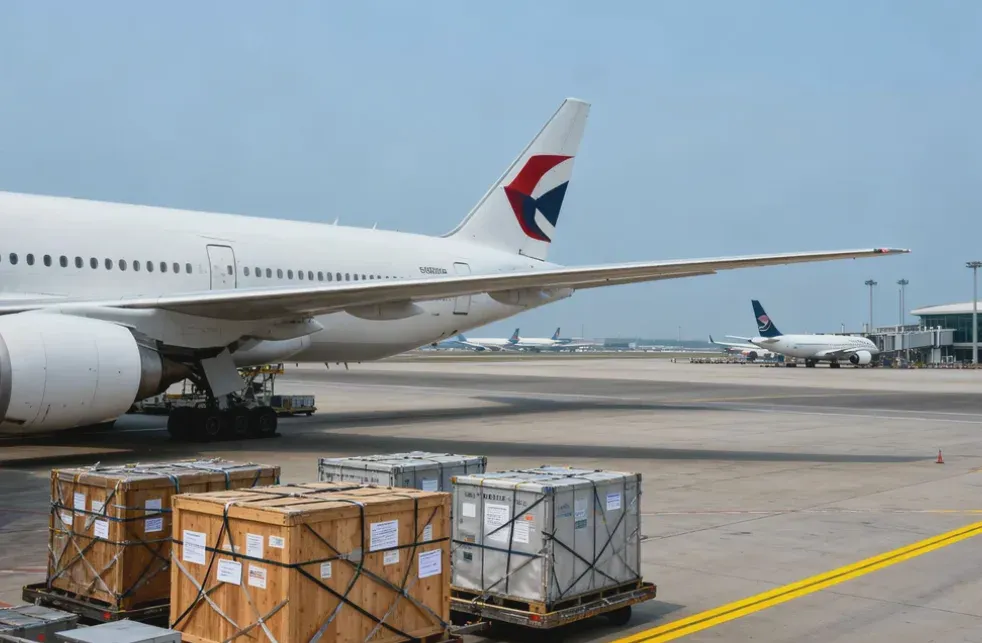
Air shipping is the fastest and most reliable international logistics solution for businesses and individuals moving goods from China to Argentina. With the increasing volume of trade between these two nations, air freight has become an essential mode for transporting time-sensitive, high-value, or perishable cargo. The main advantage of air shipping lies in its speed, security, and the ability to connect major manufacturing hubs in China with key commercial centers in Argentina within days.
According to the latest data (2026, International Air Transport Association), air cargo accounts for nearly 35% of global trade value, even though it represents less than 2% of total freight volume. For the China–Argentina corridor, air shipping is particularly important for industries such as electronics, automotive parts, fashion, pharmaceuticals, and perishables, where lead time and reliability are critical.
At DTFU International Logistics Co.,Ltd, we have spent over a decade providing tailored air freight solutions. By integrating advanced tracking, deep knowledge of Argentina's AFIP customs regulations, and value-added services, we ensure a seamless shipping experience for global traders, cross-border e-commerce sellers, and manufacturers.
Key Benefits of Air Freight from China to Argentina
Fastest Transit Times Compared to Other Shipping Methods
Air freight provides the shortest transit times between China and Argentina. While sea freight may take 35–50 days depending on port congestion at Buenos Aires, air shipping can connect major Chinese cities like Shanghai, Guangzhou, or Shenzhen to Buenos Aires or other Argentine cities in as little as 3–7 days, including customs clearance processes.
Typical Transit Time Comparison Table:
| Shipping Method | Estimated Transit Time (China → Argentina) | Typical Use Case |
|---|---|---|
| Air Freight | 3–7 days | Urgent, high-value goods |
| Sea Freight | 35–50 days | Bulk, non-urgent cargo |
| Rail + Sea | 45–60 days | Cost-saving, less urgent |
| Courier/Express | 2–5 days | Small parcels, documents |
Air shipping is especially suitable for industries where just-in-time inventory, rapid market response, or strict shelf-life management is required. This speed enables businesses to reduce inventory costs, respond quickly to market changes, and maintain competitive advantage.
For businesses comparing logistics solutions, you might also be interested in the key distinctions between Air Freight vs Express: Which Is Faster and More Cost-Effective from China to USA, which provides actionable insights into transit speed and cost management with air freight.
Enhanced Security and Reliability of Air Cargo
Air cargo enjoys the highest level of security among all logistics modes. Major Chinese airports and Argentinian cargo terminals are equipped with advanced surveillance, screening, and handling protocols, minimizing the risk of theft, damage, or loss.
- Cargo Screening: All goods shipped by air are subject to stringent screening for security and compliance, reducing the possibility of prohibited or dangerous items.
- Reduced Handling: Air cargo is typically loaded and unloaded less frequently than sea freight, lowering the risk of physical damage.
- Dependable Schedules: Airlines operate on strict timetables. In our operational experience, air freight schedules face far fewer disruptions from adverse weather compared to sea or land transport.
With a professional freight forwarder like DTFU International Logistics Co.,Ltd, customers gain access to real-time cargo tracking, proactive exception management, and dedicated customer service, further ensuring the safety and punctuality of their shipments.
Flexible Solutions for Urgent and High-Value Shipments
Air freight offers unmatched flexibility for businesses with urgent or high-value shipping needs. Whether it's a small consignment of luxury electronics, critical spare parts, or bulk shipments for promotional campaigns, air shipping can accommodate varying volumes and delivery deadlines.
Key Flexible Solutions Include:
- Consolidated Air Freight: Combine smaller shipments from multiple suppliers in China into one air cargo, reducing cost per unit and streamlining logistics.
- Charter Services: For extremely urgent or oversized cargo, full or partial aircraft chartering ensures the fastest possible transit on a custom schedule.
- Door-to-Door Logistics: End-to-end handling from supplier in China to consignee in Argentina, including pick-up, customs clearance, delivery, and even returns management.
- Cargo Insurance: Comprehensive insurance options protect your investment from pickup to final delivery.
DTFU International Logistics Co.,Ltd provides a one-stop solution, including cargo insurance, warehouse services, and customs clearance. Our experience with Amazon FBA, OOG (out-of-gauge) freight, and breakbulk cargo enables us to serve the most specialized requirements.
Main Airports and Popular Air Routes between China and Argentina
Major Chinese Airports for Air Cargo Exports
When exporting goods via Air Shipping from China to Argentina, selecting the right departure airport in China is crucial for efficiency and reliability. The following are the most prominent air cargo airports in China, catering to international trade:
| Airport Name | IATA Code | City | Annual Cargo (2025, tons) | Key Features |
|---|---|---|---|---|
| Shanghai Pudong Airport | PVG | Shanghai | 4,300,000 | Major global hub; extensive cargo handling capacity. |
| Guangzhou Baiyun Airport | CAN | Guangzhou | 2,200,000 | South China's logistics gateway. |
| Beijing Capital Airport | PEK | Beijing | 2,000,000 | North China's primary air cargo hub. |
| Shenzhen Bao'an Airport | SZX | Shenzhen | 1,750,000 | Close to major manufacturing bases. |
| Hong Kong International | HKG | Hong Kong | 4,400,000 | World’s busiest air cargo airport; global reach. |
These airports are equipped with advanced cargo terminals and customs clearance capabilities, ensuring smooth and fast processing for international shipments. Airlines such as China Southern Airlines, Air China Cargo, and Cathay Pacific offer frequent services from these hubs, often transiting through Europe or North America en route to Argentina.
Main Cargo Airports in Argentina
For air freight from China to Argentina, the majority of cargo lands in the following primary airports, each supporting efficient customs and logistics operations:
| Airport Name | IATA Code | City | Key Features |
|---|---|---|---|
| Buenos Aires Ministro Pistarini Airport | EZE | Buenos Aires | Main international air cargo gateway. |
| Córdoba Ingeniero Aeronáutico Ambrosio L.V. Taravella Int’l | COR | Córdoba | Supports major industrial shipments. |
| Rosario Islas Malvinas Airport | ROS | Rosario | Serves northern and central Argentina. |
Buenos Aires (EZE) is by far the most significant point of entry for air cargo, handling over 85% of Argentina's international freight traffic, making it the preferred destination for most shipments from China.
Most In-Demand Air Freight Routes
Direct flights between China and Argentina are limited due to distance and airline patterns. Most air shipping from China to Argentina utilizes transshipment routes via Europe, North America, or the Middle East. The most common and efficient air freight routes include:
| Route | Typical Airlines/Carriers | Transit Points | Transit Time (Days) |
|---|---|---|---|
| PVG (Shanghai) → EZE (Buenos Aires) | Lufthansa Cargo, Air France-KLM, Qatar | Frankfurt, Paris, Doha, Sao Paulo | 4–7 |
| HKG (Hong Kong) → EZE (Buenos Aires) | Cathay Pacific, Emirates, LATAM Cargo | Dubai, Santiago, Miami | 5–8 |
| CAN (Guangzhou) → EZE (Buenos Aires) | China Southern, Turkish Cargo | Istanbul, Madrid | 5–8 |
| PEK (Beijing) → EZE (Buenos Aires) | Air China Cargo, Lufthansa Cargo | Frankfurt, London, Madrid | 5–9 |
Note: Transit times depend on airline schedules, route congestion, and customs processing. We often recommend transshipments via Europe or the Middle East to minimize delays during peak seasons.
Air Shipping Costs from China to Argentina
Factors Influencing Air Freight Rates
Several factors affect air shipping costs from China to Argentina:
- Chargeable Weight: Calculated as the higher of actual gross weight or volumetric (dimensional) weight.
- Distance & Route: Direct routes may cost more, but reduce transit time. Transshipments can add to costs and risks.
- Fuel Surcharges: Adjusted frequently based on global oil prices.
- Cargo Type: Dangerous goods, oversized shipments, or high-value goods may incur extra charges.
- Seasonality: Peak seasons (e.g., pre-Christmas, Chinese New Year) drive up prices due to high demand.
- Airline & Service Level: Express services cost more than deferred/standard cargo.
- Additional Services: Insurance, warehousing, customs clearance, and last-mile delivery.
Volumetric Weight Formula
For air freight, most airlines calculate volumetric weight using:
Volumetric Weight (kg) = (Length cm × Width cm × Height cm) / 6000
Typical Air Freight Price Ranges and Calculation Methods
As of mid-2026, typical air freight rates from China to Argentina are as follows:
| Weight Break | General Cargo Rate (USD/kg) | Transit Time (Days) |
|---|---|---|
| 45 – 99 kg | $6.00 – $8.00 | 5–9 |
| 100 – 299 kg | $5.60 – $7.20 | 5–9 |
| 300 – 499 kg | $5.20 – $6.40 | 5–9 |
| 500+ kg | $4.80 – $6.00 | 5–9 |
Note:
- Rates vary according to market conditions, airline, and cargo characteristics.
- Special cargo (e.g., batteries, perishables) may incur additional fees.
- Prices exclude destination charges, customs duties, and local delivery.
Sample Calculation:
For a shipment of 200 kg actual weight, with a chargeable volumetric weight of 250 kg, and a rate of $6.00/kg:
Total Cost = 250 kg × $6.00 = $1,500 (plus any surcharges and handling fees)
Cost Comparison: Air Freight vs. Sea Freight
For many businesses, comparing air freight and sea freight is vital to balance cost, speed, and reliability. Below is a simplified comparison for 2026:
| Shipping Mode | Transit Time (China to Argentina) | Typical Cost (per kg/CBM) | Best For |
|---|---|---|---|
| Air Freight | 5–9 days | $4.80 – $8.00 / kg | Urgent, high-value, low-volume |
| Sea Freight (LCL) | 35–50 days | $104 – $152 / CBM | Bulk shipments, cost-sensitive |
| Sea Freight (FCL, 20’) | 35–50 days | $1,680 – $2,000 / container | Large, heavy cargo |
Key Insights:
- Air Freight is typically 5–10 times faster than sea freight, but significantly more expensive.
- Sea Freight is best for large volumes and non-urgent shipments.
- Integrated supply chain strategies (using both modes) can optimize speed and cost.
For regional logistics cost insights, check out the guide to Sea Shipping from China to Peru, offering benchmarks that may inform your own South American shipping strategy.
Why Choose DTFU International Logistics Co.,Ltd for Air Shipping from China to Argentina?
As a highly professional, cost-effective, and reliable one-stop international logistics service provider, DTFU International Logistics Co.,Ltd offers:
- Preferential contract rates through our deep airline partnerships, ensuring you stay below market average without compromising on speed.
- Comprehensive services: Air Freight, Sea Freight, Road Freight, Amazon FBA, Warehousing, Cargo Insurance, Customs Clearance, Door to Door, OOG Freight, Consolidated Freight, and Breakbulk Freight.
- Real-time shipment tracking and dedicated customer support.
- Expertise in handling all documentation and compliance with both China and Argentina customs regulations.
For a tailored logistics solution that fits your specific needs, contact our experienced team. We help you streamline your supply chain and minimize risk.
Air Cargo Shipping Process Step by Step
Booking and Preparing Your Shipment
Air Shipping from China to Argentina is a complex yet efficient logistics solution, especially for time-sensitive and high-value cargo. The process begins with careful booking and preparation, which lays the foundation for a successful shipment.
Step 1: Selecting a Freight Forwarder Choose a reputable freight forwarder like DTFU International Logistics Co.,Ltd—a highly professional, cost-effective, and high-quality one-stop international logistics service provider. It is crucial to partner with a provider experienced in air freight between China and Argentina, ensuring compliance and smooth operations.
Step 2: Booking the Shipment Confirm key details:
- Type of goods (general cargo, perishable, hazardous, etc.)
- Volume and weight (calculated as chargeable weight: maximum of actual or volumetric weight)
- Origin and destination airports (e.g., Shanghai Pudong International Airport to Buenos Aires Ezeiza International Airport)
- Desired arrival date
Step 3: Packing and Labeling Proper packaging is vital for air cargo. Use sturdy, aviation-approved materials and ensure all packages are clearly labeled with:
- Shipper and consignee information
- Handling instructions and cargo description
- International Air Transport Association (IATA) compliant labels
Step 4: Cargo Inspection and Pickup Arrange cargo inspection if required (for dangerous goods, perishable or high-value items). Schedule cargo pickup from your warehouse or factory, or deliver directly to the forwarder’s consolidation warehouse in China.
Documentation and Customs Clearance Requirements
Documentation is a critical component of air shipping from China to Argentina. In our daily operations, we find that over 60% of delays at Ezeiza airport stem from incomplete or erroneous paperwork.
Key Documents for Air Freight:
- Air Waybill (AWB): The primary transport document; it serves as a contract of carriage and receipt.
- Commercial Invoice: Details goods’ value, description, and transaction terms.
- Packing List: Specifies packaging details, weights, dimensions, and marks.
- Certificate of Origin: Required for certain categories of goods to claim preferential duty rates under trade agreements.
- Export/Import Licenses: Depending on the commodity, regulatory approvals might be needed.
Customs Procedures:
- China Export Clearance: Goods must be declared to Chinese Customs. The exporter or their freight forwarder submits the necessary documents and pays any applicable export duties or taxes.
- Argentina Import Clearance (SEDI & MULC Integration): Upon arrival, all documents are reviewed by Argentine Customs (AFIP/DGA). Crucially, your importer must secure a SEDI (Sistema Estadístico de Importaciones) approval before the cargo boards the plane in China. Arriving at EZE without a valid SEDI can result in immediate cargo holding. Furthermore, due to Argentina's strict MULC (Mercado Único y Libre de Cambios) currency controls, we highly recommend shipping on a "Freight Prepaid" basis in China. Paying freight collect in Argentina involves complex central bank approvals to access official exchange rate dollars, often causing severe delays.
Tip: Partnering with a freight forwarder offering one stop customs clearance service, such as DTFU International Logistics Co.,Ltd, ensures compliance and reduces the risk of costly demurrage fees.
For those interested in best practices for smooth customs and paperwork in other Latin American lanes, the article on Sea Shipping from China to Peru gives further useful perspective.
Tracking and Delivery upon Arrival in Argentina
Real-time Tracking: Modern air freight solutions offer digital tracking platforms, allowing shippers and consignees to monitor their cargo’s status from origin to destination. DTFU International Logistics provides end-to-end visibility, including flight status, customs clearance progress, and estimated delivery times.
Arrival and Delivery (Navigating TCA Storage Traps):
- Upon cargo arrival at the Ezeiza International Airport (Buenos Aires) or other designated airports, ground handlers unload, inspect, and transfer goods to customs bonded warehouses (Terminal de Cargas Argentina - TCA).
- Insider Tip: TCA storage fees (Armazenaje) compound aggressively after the first few free days. If your paperwork (especially the SEDI) isn't pre-filed for rapid clearance through the Green/Orange/Red channels (Canal Verde/Naranja/Rojo), storage costs can quickly erase the profit margin of your shipment. We strongly advocate for "Despacho de Importación" (pre-clearing) where possible.
- After customs clearance, the goods are either delivered to the consignee’s premises via local trucking or made available for pickup.
Note: For critical shipments, “door-to-door” services ensure seamless delivery from the supplier’s location in China to the final destination in Argentina, including all logistics and customs procedures.
Required Documents and Customs Clearance for Air Freight
Essential Shipping Documents
To ensure smooth air shipping from China to Argentina, accurate and complete documentation is essential. Below is a summary of the most required shipping documents:
| Document | Purpose/Content | Issued by | Remarks |
|---|---|---|---|
| Air Waybill (AWB) | Contract of carriage, tracking number, cargo details | Airline/Freight Forwarder | Must match other shipping documents |
| Commercial Invoice | Transaction details, value, Incoterms, HS codes | Exporter | Used for customs valuation |
| Packing List | Detailed description of packaging, marks, weights | Exporter | Facilitates handling and inspection |
| Certificate of Origin | Proves manufacturing country, may reduce duties | Chamber of Commerce | Required for preferential tariffs under trade agreements |
| Export License | Approval for restricted goods (if needed) | Chinese government | Not needed for all goods |
| Import License | Authorization for specific imports (if needed) | Argentine authorities | Check Argentine regulations |
| Insurance Certificate | Confirms cargo insurance coverage | Insurance provider | Highly recommended for valuable shipments |
Recommendation: Use a reliable freight forwarder (such as DTFU International Logistics) that provides comprehensive assistance with paperwork preparation and submission.
Argentina Import Regulations and Duties
Argentina maintains strict import controls and tariff schedules, particularly for high-value and regulated items. Based on our 2026 operations, below are the main points to consider:
- Duties and Taxes: Import duties typically range from 0% to 35%, depending on the product’s HS code. Value-Added Tax (VAT) is usually 21%, with some products subject to additional taxes.
- Restricted/Prohibited Goods: Certain goods (e.g., hazardous chemicals, pharmaceuticals, agricultural products) require special permits or are banned.
- Customs Valuation: Argentina applies the CIF (Cost, Insurance, and Freight) value when calculating duties and taxes.
- Registration Requirements: Importers must be registered with Argentine Customs (AFIP) and have a valid importer number (CUIT).
Updated Insights (2026): In recent years, Argentina has increased scrutiny on under-invoicing and product misclassification. Accurate, transparent documentation is more important than ever to avoid penalties and shipment delays. Using the correct HS codes is strictly enforced.
Tips for Smooth Customs Clearance
- Double-Check All Documentation: Ensure consistency among all shipping documents (AWB, invoice, packing list, etc.). Even minor discrepancies can trigger inspections at EZE.
- Comply with Product Regulations: Confirm whether your cargo is subject to special import licenses, technical standards, or sanitary controls in Argentina.
- Use a Licensed Customs Broker: Engage a local partner or select a forwarder like DTFU International Logistics Co.,Ltd that provides one-stop customs clearance, minimizing risk of errors and delays.
- Prepare for Inspections: Certain categories of cargo may be subject to random inspection or scanning at airports.
- Leverage Digital Tools: Utilize online tracking and document management systems for real-time updates and quick responses to any issues.
Conclusion: A clear understanding of the air cargo shipping process and Argentine customs requirements will streamline your logistics flow, reduce risk, and optimize costs. With the support of a professional logistics partner such as DTFU International Logistics Co.,Ltd, your business can achieve secure, efficient, and compliant air shipping between China and Argentina.
Tips for Choosing the Best Air Freight Forwarder from China to Argentina
Choosing the right air freight forwarder is essential for a smooth and cost-effective experience with air shipping from China to Argentina. A reliable partner will help you navigate complex logistics, ensure timely deliveries, and minimize risks. Below, we provide key criteria and considerations based on our extensive firsthand experience in international freight forwarding.
What to Look for in a Reliable Freight Forwarder
When evaluating freight forwarders for shipping goods by air from China to Argentina, consider the following factors:
| Criteria | Why It Matters | What to Look For |
|---|---|---|
| Experience and Specialization | Specialized knowledge ensures smooth customs & logistics handling | Years in business, expertise in China-Argentina route |
| Global Network | Strong global agents ensure efficient end-to-end service | Offices/agents in both China and Argentina |
| Licenses and Certifications | Legal compliance and credibility | IATA, FIATA, or local customs broker licenses |
| Transparent Pricing | Avoids hidden fees and ensures predictability | Detailed quotations and rate breakdowns |
| Comprehensive Services | One-stop solutions save you time and stress | Air, sea, road, warehousing, customs, insurance, etc. |
| Customer Support | Responsive service is crucial for urgent shipments | Multilingual, 24/7 customer care, proactive communication |
| Track Record & References | Proven reliability reduces risk | Client testimonials, case studies, or third-party reviews |
DTFU International Logistics Co.,Ltd stands out as a leading freight forwarder offering integrated solutions—including air freight, sea freight, Amazon FBA, cargo insurance, and door-to-door delivery—between China and major destinations in Argentina.
For insights on freight forwarding in similar trade lanes, see the in-depth resource on Freight forwarder from China to Egypt, which discusses forwarder selection and best practices relevant across many global routes.
Value-Added Services: Cargo Insurance, Consolidation, and Tracking
Top air freight forwarders do more than just move goods. They offer value-added services that enhance security, efficiency, and visibility:
- Cargo Insurance: Protect your shipment against damage, theft, or loss. Comprehensive coverage is essential for high-value or sensitive goods. DTFU International Logistics Co.,Ltd provides tailored insurance solutions for every shipment. For an in-depth look at the costs and details of such protection, refer to Shipping container insurance cost for shipments from China.
- Consolidation Services: Combine multiple shipments into one air cargo lot to optimize costs and simplify customs processes. This is especially valuable for SMEs and e-commerce sellers shipping lower volumes.
- Real-Time Tracking: Access digital tracking platforms for instant updates on shipment location and status. Reliable tracking reduces uncertainty and improves supply chain planning.
- Customs Clearance Support: Expert guidance through documentation, duties, and local regulations, ensuring fast and compliant entry into Argentina.
- Warehousing & Distribution: Storage and cross-docking solutions for inventory management and efficient delivery in Argentina.
DTFU International Logistics Co.,Ltd delivers all these services for a complete, one-stop solution for air shipping from China to Argentina.
Common Challenges and How to Avoid Delays in Air Shipping
Despite the speed and efficiency of air shipping, challenges can arise. Understanding and proactively managing these issues will help ensure on-time delivery and smooth operations.
Handling Restricted and Prohibited Goods
Argentina and China have strict regulations regarding certain types of cargo. Common restricted or prohibited items include:
- Hazardous materials (e.g., batteries, chemicals, flammables)
- Pharmaceutical products or medical devices without proper certification
- Foodstuffs and agricultural products subject to quarantine
- Counterfeit or intellectual property-infringing goods
- Weapons, explosives, or dual-use items
Best Practices:
- Always check the latest import/export regulations for both countries.
- Provide accurate cargo descriptions and supporting documents.
- Consult with your freight forwarder—DTFU International Logistics Co.,Ltd offers up-to-date compliance guidance and can pre-screen shipments.
Managing Peak Seasons and Capacity Issues
Air freight demand surges during certain periods, such as:
- Chinese New Year (January/February)
- Q4 e-commerce peak (October–December)
- Argentina’s holiday seasons
During these times, air freight rates rise, capacity tightens, and delays become more likely.
How to Manage:
| Challenge | Solution |
|---|---|
| Tight cargo space | Book shipments well in advance (2–4 weeks ahead during peak season) |
| Higher rates | Consider flexible dates or partial consolidation to optimize costs |
| Longer transit times | Use premium/express air services or alternative airports/routes |
| Documentation bottlenecks | Ensure all paperwork is accurate and complete before shipment |
DTFU International Logistics Co.,Ltd leverages strong airline partnerships and local expertise to secure space even in peak periods.
Solutions for Avoiding Air Cargo Delays
Delays in air shipping from China to Argentina can disrupt your supply chain. Here are practical tips to minimize risk:
- Accurate Documentation: Ensure all shipping documents, licenses, and customs declarations are correct and complete.
- Cargo Preparedness: Proper packaging and labeling reduce inspection times and the risk of rejection.
- Proactive Communication: Regular updates with your freight forwarder keep you informed and enable fast problem-solving.
- Leverage Technology: Use digital tracking to monitor shipments and anticipate arrival dates.
- Contingency Planning: Have backup plans for urgent shipments (e.g., alternative routes, express services).
- Choose a Reliable Partner: Work with a reputable forwarder like DTFU International Logistics Co.,Ltd with a proven track record on the China–Argentina air freight route.
If you are looking for benefit-oriented, tailored support for air shipping from China to Argentina, feel free to contact us at DTFU International Logistics Co.,Ltd. Our team offers professional, cost-effective, and reliable logistics solutions for global traders, securing preferential rates for your most critical cargo.