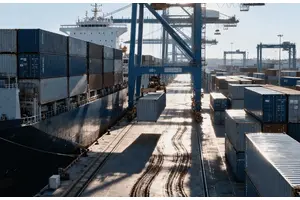
The $1,600 container quote you just received from your freight forwarder? Brace yourself — your actual landed cost to get those goods into your warehouse in Ankara will likely land somewhere around $29,000. And that is assuming nothing goes wrong at Turkish customs. If you have been importing from China for any length of time, you already know the gap between a freight quote and your final bill can be brutal. But what you may not realize is just how many hidden cost layers are stacked inside that gap — and more importantly, how many of them you can control.
This is not another generic "shipping from China to Turkey" guide. We already published one of those, covering routes, transit times, and the end-to-end logistics process. This guide is different. It is a surgical breakdown of every single cost component you will encounter when shipping from China to Turkey in 2026 — from base freight rates and port-pair pricing to Turkey's uniquely punishing layered import tax system, the hidden surcharges most forwarders bury in fine print, and seven proven strategies our clients use to cut their total logistics spend by 15–25%. Every number in this guide reflects real mid-2026 market data, sourced from our daily operations as a FIATA and IATA dual-certified freight forwarder with over a decade of hands-on experience on the China-Turkey corridor.
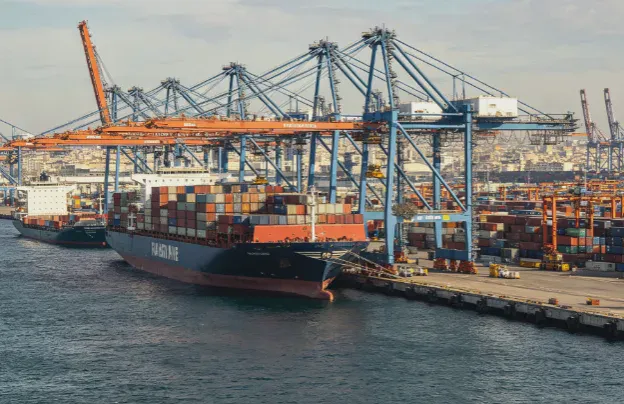
How Much Does It Cost to Ship from China to Turkey in 2026?
Before we go deep, here is the cheat sheet. If you need a fast answer on what it costs to ship from China to Turkey right now, this table captures the current market for every major mode.
| Shipping Mode | Unit | Estimated Cost (USD) | Transit Time | Best For |
|---|---|---|---|---|
| Sea Freight FCL 20GP | Per Container | $1,300 – $1,800 | 25–35 days | Bulk cargo, 15+ CBM |
| Sea Freight FCL 40GP/HQ | Per Container | $2,300 – $3,200 | 25–35 days | Large-volume shipments |
| Sea Freight LCL | Per CBM | $50 – $130 | 30–42 days | Small shipments, 1–15 CBM |
| Air Freight (100kg+) | Per KG | $4.00 – $6.50 | 3–7 days | Urgent, high-value goods |
| Express Courier (DHL/FedEx/UPS) | Per KG | $8.00 – $15.00 | 2–5 days | Samples, documents, parcels |
| Rail Freight FCL 40ft | Per Container | $3,000 – $8,500 | 12–25 days | Mid-volume, cost-speed balance |
| Rail Freight LCL | Per CBM | $60 – $130 | 18–28 days | Smaller rail-eligible cargo |
| Sea DDP (All-Inclusive) | Per KG / Per FCL | $1.00–$1.50/kg or $2,000–$5,000/FCL | 28–38 days | Hands-off, full-service buyers |
| Air DDP (All-Inclusive) | Per KG | $4.50 – $6.50 | 5–7 days | Urgent door-to-door |
Important: These are port-to-port or airport-to-airport base freight rates unless marked "DDP." They do not include Turkish import duties, VAT, destination handling, customs brokerage, or inland delivery. As of mid-2026, ocean freight rates are elevated approximately 12% year-on-year due to Strait of Hormuz disruption-driven rerouting — a situation we covered in our analysis of Red Sea Shipping Returns Under Tight Security — while air freight has seen roughly 22% year-on-year increases. Post-Chinese New Year normalization has brought rates down from their January peaks but they remain above the 2024 baseline.
If you already know which mode fits your shipment profile, jump directly to the detailed section below. If you are still evaluating options, read through — the cost differences between a smart choice and a rushed one can exceed $5,000 per shipment.
Sea Freight Cost from China to Turkey: Container & LCL Rates by Route
Sea freight accounts for over 90% of China-Turkey cargo volume and remains the most economical option for the vast majority of importers. However, the spread between the lowest and highest quotes can be enormous — and the difference is rarely just about the carrier.
FCL Container Shipping Costs
When you book a Full Container Load (FCL), you rent an entire container exclusively for your cargo. This gives you better security, faster handling at both origin and destination, and a significantly lower cost per cubic meter than Less than Container Load (LCL) — provided your volume justifies it.
Here are the current container shipping costs from China to Turkey by route, reflecting June 2026 spot market rates:
| Origin Port (China) | Destination Port (Turkey) | 20ft Container (20GP) | 40ft Container (40GP/HQ) | Transit Time |
|---|---|---|---|---|
| Shanghai (Yangshan) | Istanbul (Ambarli) | $1,500 – $1,800 | $2,600 – $3,100 | 25–30 days |
| Shenzhen (Yantian/Shekou) | Istanbul (Ambarli) | $1,450 – $1,750 | $2,500 – $3,000 | 23–29 days |
| Ningbo-Zhoushan | Mersin | $1,400 – $1,700 | $2,400 – $2,900 | 24–30 days |
| Guangzhou (Nansha) | Izmir (Aliaga) | $1,500 – $1,800 | $2,550 – $3,100 | 25–32 days |
| Qingdao | Gemlik | $1,550 – $1,850 | $2,650 – $3,200 | 26–34 days |
| Xiamen | Istanbul (Ambarli) | $1,500 – $1,800 | $2,550 – $3,050 | 24–31 days |
For importers shipping specifically from South China's manufacturing hubs, our dedicated guide on Shipping From ShenZhen to Turkey provides additional route-specific insight and real-time rate tracking from the Pearl River Delta region.
Seasonal price bands are a critical factor that most first-time importers overlook:
| Season | Months | Rate Impact vs Baseline | Notes |
|---|---|---|---|
| Off-Peak | Feb–Apr, Jun–Aug | Baseline (best rates) | Post-CNY lull and summer window offer the most negotiating leverage |
| Shoulder | May, Sep | +5–10% | Moderate demand, rates begin climbing |
| Peak | Jan (pre-CNY), Oct (Golden Week), Nov–Dec | +20–30% | Space tightens significantly; book 4–6 weeks ahead minimum |
The 20ft container shipping cost from China to Turkey of $1,450–$1,850 represents roughly 28 CBM of capacity, making it ideal for shipments in the 15–28 CBM range. A 40ft container at $2,400–$3,200 gives you about 56–68 CBM — roughly double the space for about 70% more cost, which is why high-volume importers almost always choose 40ft containers.
LCL Shipping Cost per CBM
For smaller shipments, LCL shipping cost from China to Turkey ranges from $50 to $130 per cubic meter, depending on the route, consolidator, and season. However, there is a critical caveat: LCL pricing in the market is wildly inconsistent. Some forwarders advertise rates as low as $12–$15/CBM to win the booking, then layer on consolidation fees, deconsolidation charges, documentation fees, and destination handling that can push the effective rate past $165/CBM. Always ask for the all-in LCL rate including both origin and destination charges.
Here is the breakeven math that most importers never run:
- Scenario A (LCL): 28 CBM at $100/CBM all-in = $2,800
- Scenario B (FCL 20GP): One 20ft container Shenzhen → Istanbul at $1,600 + $200 destination THC + $150 documentation = $1,950
Savings from switching to FCL: $850. And you get faster transit (no consolidation delays) and better cargo security. The breakeven point typically falls around 15 CBM — above that volume, FCL almost always wins on total cost.
FCL vs LCL: Decision Framework
| Factor | FCL | LCL |
|---|---|---|
| Volume sweet spot | 15+ CBM | 1–15 CBM |
| Cost per CBM | $45–$65 (20GP), $40–$55 (40GP) | $50–$130 |
| Transit speed | Faster (direct port-to-port) | +5–10 days (consolidation & deconsolidation) |
| Cargo security | Exclusive container, sealed at origin | Shared space, multiple handling points |
| Customs risk | Single shipment, single clearance | Your cargo linked to other shippers' compliance |
| Flexibility | Must fill or mostly fill container | Ship as little as 1 CBM |
Sea Freight Surcharges Decoded
Your base ocean freight rate is only the starting point. These surcharges apply to virtually every FCL and LCL shipment:
| Surcharge | Acronym | Typical Range | What It Covers |
|---|---|---|---|
| Bunker Adjustment Factor | BAF | $200–$600/container | Fuel price volatility for the vessel |
| Currency Adjustment Factor | CAF | 1–3% of base freight | Exchange rate fluctuations between USD and carrier's operating currency |
| Peak Season Surcharge | PSS | $200–$500/container | Demand surge during Q3–Q4 |
| Terminal Handling Charge (Origin) | THC-O | $80–$150/container | Port loading and terminal operations in China |
| Terminal Handling Charge (Destination) | THC-D | $100–$450/container | Port unloading and terminal operations in Turkey |
| Documentation Fee | DOC | $50–$90/shipment | Bill of Lading issuance and processing |
| Container Seal Fee | — | $10–$30/container | Security seal for container integrity |
| Hormuz Route Surcharge | — | 10–22% of base freight | Geopolitical risk premium (2026-specific) |
When comparing quotes from different forwarders, ask one question: "Is this your all-in rate including BAF, CAF, PSS, THC at both ends, and documentation?" The answer will tell you everything you need to know about that forwarder's transparency. We also strongly recommend reviewing your shipping container insurance cost for shipments from China — cargo insurance is typically only 0.3% of cargo value but can mean the difference between a covered loss and a write-off.
Air Freight Cost from China to Turkey: Per KG Rates & Express Options
When speed is non-negotiable, air freight delivers. Direct flights from China's major hubs to Istanbul Airport (IST) ensure your cargo moves from factory to Turkish soil in under a week. But the pricing structure is fundamentally different from ocean freight — and misunderstanding it can easily double your bill.
Air Freight Rate Breakdown by Weight Bracket
Air freight costs from China to Turkey follow a tiered structure: the more you ship, the lower your per-kilo rate.
| Weight Bracket | Rate (USD/kg) | Typical Transit | Origin Airports |
|---|---|---|---|
| < 45 kg | Not applicable (use express courier) | — | — |
| 45 – 100 kg | $4.80 – $6.20 | 3–5 days | PVG, SZX, CAN |
| 100 – 300 kg | $4.10 – $5.50 | 3–5 days | PVG, SZX, CAN, PEK |
| 300 – 1,000 kg | $3.80 – $5.00 | 3–6 days | PVG, SZX, CAN, PEK, CGO |
| 1,000+ kg | $3.60 – $4.80 | 3–6 days | All major airports |
Route-Specific Air Freight Pricing
| Route | Standard Air Freight (USD/kg) | Express Air Freight (USD/kg) |
|---|---|---|
| Shanghai (PVG) → Istanbul (IST) | $4.10 – $5.00 | $5.90 – $7.20 |
| Shenzhen (SZX) → Istanbul (IST) | $4.20 – $5.20 | $6.10 – $7.50 |
| Guangzhou (CAN) → Ankara (ESB) | $4.30 – $5.30 | $6.00 – $7.40 |
| Beijing (PEK) → Izmir (ADB) | $4.10 – $5.10 | $5.90 – $7.30 |
Chargeable Weight: The Pricing Trap Most Shippers Miss
Air freight is not priced on your cargo's actual weight — it is priced on chargeable weight, which is the greater of actual (gross) weight and volumetric weight. The formula:
Volumetric Weight (kg) = (Length × Width × Height in cm) ÷ 6,000
Here is why this matters. Say you are shipping 200 kg of foam cushions in boxes measuring 120 × 80 × 100 cm each (0.96 CBM per box × 3 boxes = 2.88 CBM):
- Actual weight: 200 kg
- Volumetric weight: (120 × 80 × 100 × 3) ÷ 6,000 = 480 kg
- You pay for: 480 kg, not 200 kg
At $4.50/kg, that is $2,160 instead of the $900 you may have budgeted. This is why packaging optimization (see Strategy 4 in Section 8) can have an outsized impact on air freight costs.
Express Courier Costs
For small parcels, samples, and urgent documents, express courier services provide the fastest door-to-door option:
| Courier | Weight | Estimated Cost (USD) | Transit |
|---|---|---|---|
| DHL | 1 kg | $34 – $39 | 3–6 days |
| FedEx | 1 kg | $32 – $37 | 3–6 days |
| UPS | 1 kg | $31 – $35 | 3–6 days |
| All Couriers | 10 kg | $140 – $185 | 3–6 days |
| All Couriers | 30 kg | $395 – $475 | 3–6 days |
When Air Freight Makes Financial Sense
Air freight is not just for emergencies. Run this simple cost-of-delay calculation: if 30 days of sea transit ties up $50,000 in inventory that you could have sold at a 40% margin, that is $20,000 in delayed revenue. If an additional $2,000 in air freight unlocks that revenue 25 days sooner, the net gain is obvious. High-value electronics, seasonal fashion, and urgent industrial spare parts all routinely justify air freight on this basis. For a deeper comparison of air courier versus consolidated air freight, see our breakdown of Air Freight vs Express: Which Is Faster and More Cost-Effective from China to USA.
Cheapest Way to Ship from China to Turkey: Rail vs Sea vs Air Freight
In 2026, the Trans-Caspian International Transport Route (TITR) — better known as the Middle Corridor — has matured into a genuinely competitive option for China-Turkey freight. It is not just a niche alternative anymore; for many cargo profiles, it is the optimal choice.
Rail Freight Costs
| Rail Service | Cost | Transit Time | Best For |
|---|---|---|---|
| FCL 40ft Container | $3,000 – $8,500 | 12–25 days | Mid-volume, mid-value goods |
| LCL (per CBM) | $60 – $130 | 18–28 days | Smaller shipments needing speed |
The wide FCL range reflects the route variant: the faster services (12–15 days) use the Caspian Sea ferry crossing and command a premium; the more economical services (18–25 days) take slightly longer routing through Kazakhstan and Azerbaijan with rail-only segments.
Cost-Speed Comparison: Rail vs Sea vs Air
| Dimension | Sea Freight (FCL) | Rail Freight (FCL) | Air Freight (>300kg) |
|---|---|---|---|
| Cost (40ft container) | $2,300–$3,200 | $3,000–$8,500 | $45,000–$80,000 equivalent |
| Transit time | 25–35 days | 12–25 days | 3–7 days |
| Cost per day saved (vs sea) | — | $100–$500/day | $2,000–$4,000/day |
| Reliability (2026) | Moderate (Hormuz risk) | High (overland route) | Moderate (capacity tight) |
| Carbon footprint | Lowest per ton-km | ~50% lower than air | Highest |
For a detailed breakdown of when each mode makes financial sense, our comparison of Sea vs Rail Freight: Which Is Faster and More Reliable from China walks through the full decision framework with real shipment scenarios.
Why Rail Matters Right Now
Three factors make rail freight particularly relevant in mid-2026:
- Hormuz immunity: Rail routes through Kazakhstan, Azerbaijan, and Georgia completely bypass the Strait of Hormuz and Suez Canal, eliminating the 10–22% geopolitical surcharge currently baked into ocean freight rates.
- Price stability: Unlike ocean and air freight — both of which have seen double-digit percentage increases — rail pricing has remained relatively stable throughout 2026 as operators add capacity on the Middle Corridor.
- Speed without the air premium: For mid-volume shipments of electronics, machinery, textiles, and auto parts, rail delivers in roughly half the time of sea freight at a fraction of air freight's cost.
DTFU Logistics offers integrated rail freight solutions from all major Chinese rail hubs (Xi'an, Chengdu, Zhengzhou, Chongqing) to Istanbul via the Middle Corridor, with full customs support at both ends. For importers also evaluating routes to neighboring markets, our guide on the Shipping Cost from China to Iran provides cost benchmarks for the broader region.
DDP & Door-to-Door Shipping Cost from China to Turkey
For importers who want one price, one point of contact, and zero customs surprises, DDP (Delivered Duty Paid) and door-to-door services eliminate the complexity of coordinating multiple vendors across two countries.
DDP Shipping Cost Breakdown
| DDP Method | Cost | Transit Time | What's Included |
|---|---|---|---|
| Sea Freight DDP (LCL) | $1.00 – $1.50/kg | 30–38 days | Freight + customs clearance + duties + VAT + last-mile delivery |
| Sea Freight DDP (FCL 20GP) | $2,000 – $3,500 all-in | 28–35 days | Full container, all duties/taxes, door-to-door |
| Sea Freight DDP (FCL 40GP) | $3,500 – $5,000 all-in | 28–35 days | Full container, all duties/taxes, door-to-door |
| Air Freight DDP | $4.50 – $6.50/kg | 5–7 days | Air freight + all customs + duties + delivery |
| Express DDP | $7.00 – $10.00/kg | 3–5 days | Courier + all customs + duties |
Incoterms Cost Comparison: Who Pays What?
Understanding how costs shift under different Incoterms 2020 is essential for accurate budgeting. Here is a real scenario: a $10,000 shipment of consumer electronics from Shenzhen to Istanbul.
| Cost Component | EXW | FOB | CIF | DAP | DDP |
|---|---|---|---|---|---|
| China inland trucking ($150) | Buyer | Seller | Seller | Seller | Seller |
| China export clearance ($100) | Buyer | Seller | Seller | Seller | Seller |
| Ocean freight ($1,600) | Buyer | Buyer | Seller | Seller | Seller |
| Insurance ($100) | Buyer | Buyer | Seller | Seller | Seller |
| Turkey destination THC ($250) | Buyer | Buyer | Buyer | Seller | Seller |
| Customs brokerage ($200) | Buyer | Buyer | Buyer | Buyer | Seller |
| Import duty + İGV + VAT (~$5,000) | Buyer | Buyer | Buyer | Buyer | Seller |
| Inland delivery Turkey ($300) | Buyer | Buyer | Buyer | Seller | Seller |
| Total buyer responsibility | ~$7,700 | ~$7,450 | ~$5,750 | ~$5,550 | $0 (all-in price) |
DDP typically costs 20–30% more than FOB on the quoted price, but for first-time importers, Amazon FBA sellers without a Turkish tax ID, and businesses shipping goods subject to complex Turkish customs regulations, that premium is often cheaper than a single customs delay. For a side-by-side comparison of these two approaches, read our analysis of DDP vs FOB: Which Option Saves Time and Reduces Hassle. For businesses expanding into Europe from Turkey, we also provide dedicated DDP shipping from China to Germany and Shipping from China to Germany solutions.
Turkey Import Duty from China: Hidden Fees, Taxes & Total Landed Cost
This is the section that separates a useful shipping guide from one that actually saves you money. Understanding Turkey's import tax system is not optional — it is the difference between a profitable import operation and a financial disaster.
Hidden Fees Most Forwarders Do Not Mention Upfront
| Hidden Fee | Typical Range | When It Hits |
|---|---|---|
| Destination Terminal Handling (THC-D) | $100 – $450/container | Mandatory, at every Turkish port |
| Customs Brokerage Fee | $100 – $250/shipment | Required for commercial clearance |
| Demurrage | $50 – $200/day per container | After free time expires (typically 3–7 days at Turkish ports) |
| Detention | $50 – $150/day per container | If container not returned to depot on time |
| Port Storage | $20 – $80/day | After free storage period (varies by port) |
| TAREKS Inspection Fee | $50 – $300+ | For regulated goods (electronics, toys, machinery) |
| CE Marking / Re-labeling | $200 – $1,000+ | If goods lack proper Turkish-compliant labeling |
| Inland Delivery (Turkey) | $150 – $700+ | Varies by distance from port to final destination |
| Currency Exchange Loss | 1–5% of invoice | TRY/USD volatility on local charges |
| Emergency Bunker Surcharge (EBS) | $50 – $200/container | Fuel price spikes |
| Gözetim (Surveillance Price) Adjustment | Unpredictable | Turkish customs may revalue goods to their reference price floor |
Turkey's Layered Import Tax Stack: The "VAT Trap"
Turkey does not simply charge one tax on your imports. It layers multiple taxes sequentially, with each layer calculated on an expanding base. This compounding effect — what experienced importers call the "VAT trap" — is the single biggest source of post-shipment budget shock.
Here is the tax stack applied to Chinese-origin goods:
- Customs Duty: 0–20% of CIF value (Cost + Insurance + Freight)
- Additional Customs Duty (İGV): 10–30% of CIF value — applied specifically to Chinese-origin goods
- Anti-Dumping Duty: Variable — active on Chinese steel, aluminum, ceramics, certain textiles, plastics, and chemicals
- VAT (KDV): 20% calculated on (CIF + Customs Duty + İGV + Anti-Dumping Duty)
Notice step 4 carefully: VAT is charged on the CIF value plus all duties already applied. This compounding means the effective VAT you pay is always higher than the nominal 20%.
Worked example — $10,000 electronics shipment (Shenzhen → Istanbul, CIF):
| Tax Layer | Calculation | Amount |
|---|---|---|
| CIF Value | — | $10,000 |
| Customs Duty (5%) | 5% × $10,000 | $500 |
| İGV (15% — China surcharge) | 15% × $10,000 | $1,500 |
| Subtotal before VAT | $10,000 + $500 + $1,500 | $12,000 |
| VAT (20%) | 20% × $12,000 | $2,400 |
| Total Tax Burden | $500 + $1,500 + $2,400 | $4,400 (44% of CIF!) |
If you had budgeted for VAT as simply "20% of my goods value" — $2,000 — you would be $2,400 short. This is not an edge case; it is the standard calculation for virtually every Chinese import into Turkey.
Typical Duty & Tax Rates by Product Category
| Product Category | Customs Duty | Typical İGV (China) | Effective Total Tax Burden* |
|---|---|---|---|
| Consumer Electronics | 0–5% | 0–10% | 25–35% of CIF |
| Textiles & Apparel | 8–12% | 10–20% | 40–55% of CIF |
| Furniture | 0–5% | 10–30% | 35–50% of CIF |
| Machinery & Equipment | 0–3.5% | 0–5% | 22–30% of CIF |
| Toys & Sports Goods | 0–5% | 5–15% | 28–42% of CIF |
| Plastics & Articles | 4–6.5% | 10–20% | 35–52% of CIF |
| Steel & Aluminum | 0–15% | Variable + anti-dumping | 30–65%+ of CIF |
*Effective total tax burden = Customs Duty + İGV + VAT as a percentage of CIF value. Actual rates depend on specific HS code classification. For comparison, importers shipping to nearby Middle Eastern markets may want to review our regional cost guides for the Shipping Cost from China to Iraq and Shipping Cost from China to Saudi Arabia, where duty structures differ significantly.
The Total Landed Cost Formula
Here is the formula we use at DTFU Logistics to give our clients an accurate landed cost estimate before they commit to a shipment:
Total Landed Cost =
    EXW Price (goods from supplier)
  + China Inland Trucking ($80 – $200)
  + China Export Customs Clearance ($60 – $120)
  + Base Ocean/Air/Rail Freight
  + Cargo Insurance (~0.3% of cargo value)
  + Destination Terminal Handling (THC-D: $100 – $450)
  + Customs Brokerage Fee ($100 – $250)
  + Import Customs Duty (0–20% of CIF)
  + Additional Customs Duty / İGV (10–30% of CIF — China-specific)
  + Anti-Dumping Duty (if applicable)
  + VAT / KDV (20% of CIF + all duties above)
  + Inland Delivery in Turkey ($150 – $700)
  + Contingency Buffer (5% of subtotal)
Worked example — $20,000 furniture shipment (Shenzhen → Ankara, 20ft FCL):
| Cost Component | Amount |
|---|---|
| EXW Goods Value (Foshan factories) | $20,000 |
| China Inland Trucking (Foshan → Shenzhen) | $180 |
| China Export Clearance | $100 |
| Ocean Freight (20GP, Shenzhen → Istanbul) | $1,600 |
| Cargo Insurance (0.3%) | $60 |
| Destination THC (Ambarli) | $250 |
| Customs Brokerage (Turkish broker) | $180 |
| Customs Duty (3% of CIF = 3% × $21,760) | $653 |
| İGV (15% of CIF — furniture surcharge) | $3,264 |
| VAT (20% of [$21,760 + $653 + $3,264]) | $5,135 |
| Inland Delivery (Istanbul → Ankara, ~450 km) | $450 |
| Contingency (5%) | $1,594 |
| Total Landed Cost | $33,466 |
Rule of thumb: For standard Chinese goods imported into Turkey, budget your total landed cost at 1.35× to 1.65× your CIF value. For products in high-tariff or anti-dumping categories (textiles, steel, ceramics), that multiplier can exceed 1.8×.
How HS Code Classification Affects Your Total Cost
Turkey uses a 12-digit HS code system (GTIP) — four digits longer than the standard international 6-digit code. Even a minor misclassification can shift your product into an entirely different duty band, trigger İGV surcharges you were not expecting, or flag your shipment for TAREKS inspection.
Here is a real example from our operations:
- A client importing LED lighting panels was initially classified by their Chinese supplier under HS 9405.40 (other electric lamps). Turkish customs reclassified the shipment under HS 8539.50 (LED light sources) — triggering a different duty rate, a higher İGV band, and a mandatory TAREKS inspection. The reclassification added $1,300 in unplanned duties and 11 days of port storage at $60/day.
The fix cost $150 — paying a licensed Turkish customs broker to verify the HS code before the shipment left China. That is a 10:1 return on a 15-minute investment.
How to Reduce Shipping Cost from China to Turkey: 7 Proven Strategies
The cheapest freight rate rarely produces the lowest total cost. These seven strategies have saved DTFU Logistics clients an average of 15–25% on their annual China-Turkey logistics spend — not by hunting for marginally cheaper quotes, but by restructuring how they ship.
Strategy 1: Consolidate Shipments into FCL
Most importers sourcing from multiple Chinese suppliers default to running separate LCL shipments. The math rarely supports it.
Real numbers: Shipping 28 CBM across three separate LCL consignments at $100/CBM all-in costs $2,800. Consolidating all three suppliers' cargo into a single 20ft FCL from Shenzhen to Istanbul costs approximately $1,600 in freight + $250 THC + $150 docs = $2,000. That is $800 saved per shipment cycle — plus faster transit, fewer customs entries, and lower brokerage fees.
How it works at DTFU: We receive goods from all your suppliers at our Shenzhen warehouse, consolidate them into a single container, and ship one FCL to Turkey. You deal with one Bill of Lading, one customs entry, and one delivery. This same consolidation model is highly effective for Middle East-bound cargo — see our guide on container shipping cost from China to UAE for comparison rates on a parallel trade lane.
Strategy 2: Choose the Right Mode with a Decision Framework
Not every shipment belongs on a container ship. Use this decision matrix:
| Your Profile | Optimal Mode | Why |
|---|---|---|
| 15+ CBM, not urgent | Sea FCL | Lowest per-unit cost |
| 5–15 CBM, not urgent | Sea LCL | Pay only for space used |
| 5–20 CBM, need speed | Rail LCL/FCL | 2× faster than sea, 60% cheaper than air |
| High-value, urgent (<500 kg) | Air Freight | Speed premium justified by inventory/cash flow |
| Small parcels, samples | Express Courier | Door-to-door convenience |
The hidden cost of "cheap" sea freight: 35 days of inventory in transit means 35 days of capital tied up. If that same inventory could generate a 30% margin, rail at 15 days unlocks three weeks of selling time. Run the numbers — rail often wins on total supply chain economics even when the freight line item looks higher. For businesses evaluating options on other major trade lanes, our analysis of Freight Cost from China to USA applies a similar total-cost methodology to the transpacific corridor.
Strategy 3: Book Strategically — Timing Is Money
Spot-market bookings made 7–10 days before sailing consistently carry the highest rates. The importers who pay the least share one habit: they book 4–6 weeks ahead during off-peak windows.
| Booking Window | Typical Rate Position |
|---|---|
| 6+ weeks ahead (off-peak) | Best — carrier incentives and contract rates available |
| 4–6 weeks ahead | Good — space secured before PSS triggers |
| 2–3 weeks ahead | Moderate — limited carrier options |
| < 2 weeks (spot market) | Worst — premium pricing, limited space |
2026 Hormuz factor: When Strait of Hormuz tensions spike (as they have several times in early 2026), spot rates can jump 15–25% within a week. Forward-contracted rates are insulated from these surges.
Strategy 4: Optimize Packaging to Reduce Chargeable Weight
This strategy is most impactful for air freight and LCL shipments, where you pay by volume:
- Knock-down/flat-pack design can reduce volume by 20–30% versus fully assembled goods. For a 25 CBM LCL shipment at $100/CBM, cutting to 19 CBM saves $600.
- Nesting and stackable packaging eliminates wasted air space inside cartons.
- Right-sizing cartons — many factories default to oversized boxes. Specifying exact dimensions can trim 5–10% off total volume.
For an importer running monthly LCL shipments, a 20% volume reduction translates to roughly $2,400–$7,200 in annual freight savings — purely from smarter packaging.
Strategy 5: Get HS Codes Verified BEFORE Shipping
The cost of getting this wrong dwarfs the cost of getting it right:
| Outcome | Cost |
|---|---|
| Turkish broker pre-verification of HS code | $100 – $200 |
| Customs reclassification + back duties + penalties | $500 – $5,000+ |
| Port storage during dispute (per day) | $50 – $200 |
| Potential cargo seizure (worst case) | Total loss |
Workflow we recommend: Supplier provides proposed HS code → DTFU Logistics cross-checks against Turkish GTIP database → licensed Turkish customs broker confirms classification → shipment departs with verified documentation.
Strategy 6: Consider DDP for Predictable Budgeting
DDP shipping costs 20–30% more than FOB on paper but eliminates the five largest variables in your total cost: customs clearance delays, duty rate disputes, İGV surprises, VAT calculation errors, and demurrage charges. For shipments under $50,000 where predictability matters more than marginal savings, DDP is often the lower-risk — and ultimately lower-cost — choice.
DDP also solves a practical hurdle: importers without a Turkish tax ID or import license cannot clear customs themselves. DDP shifts that responsibility to the forwarder's licensed entity in Turkey.
Strategy 7: Leverage Turkey's Free Trade Zones & Bonded Warehouses
Turkey operates 19 Free Trade Zones (FTZs) — designated areas where goods can be stored, processed, or re-exported without triggering import duties and VAT. Key locations for China-Turkey trade include:
- Istanbul Atatürk Airport FTZ: Ideal for high-value electronics and air-freighted goods
- Mersin FTZ: Adjacent to Mersin port, perfect for sea-freighted bulk cargo
- Aegean FTZ (Izmir): Strong manufacturing and processing zone
- Bursa FTZ: Automotive and textile industry hub
Bonded warehouse strategy: Instead of paying full import duties and VAT upon arrival, store goods in a bonded warehouse. You pay taxes only as goods are withdrawn for sale — improving cash flow, especially for seasonal inventory or products where demand is uncertain. This is particularly valuable given Turkey's 20% VAT rate, which represents a significant upfront cash outlay on large shipments. For importers distributing across Europe from a Turkish hub, our Sea Shipping Cost from China to France and Shipping from China to UAE guides cover alternative regional logistics strategies.
FAQs
How much does it cost to ship a 20ft container from China to Turkey in 2026?
As of June 2026, shipping a 20ft container (20GP) from China to Turkey costs between $1,300 and $1,800 in base ocean freight, depending on the origin-destination port pair, carrier, and season. Route-specific estimates: Shenzhen to Istanbul starts at approximately $1,450; Shanghai to Istanbul at $1,500; Ningbo to Mersin at $1,400. These are port-to-port freight rates only and do not include destination terminal handling, customs brokerage, import duties, VAT, or inland delivery. For comparison, our guide on How much to ship a Container from China to Saudi Arabia covers container costs on a parallel Middle East trade lane with similar transit characteristics.
How much does it cost to ship a 40ft container from China to Turkey?
A 40ft container (40GP or 40HQ) from China to Turkey costs between $2,300 and $3,200 in base ocean freight. Shanghai to Istanbul routes average $2,600–$3,100; Shenzhen to Istanbul averages $2,500–$3,000. A 40HQ (High Cube) container, offering an extra 30 cm of interior height, typically adds $100–$200 to the 40GP rate.
What is the cheapest way to ship from China to Turkey?
Sea freight LCL is the cheapest option for shipments under approximately 15 CBM, with all-in rates ranging from $50 to $130 per cubic meter. For shipments above 15 CBM, sea freight FCL (a 20ft container) delivers the lowest cost per unit — typically $45–$65 per CBM versus $50–$130 for LCL. For mid-volume cargo where transit time matters, rail freight often provides the best total supply chain cost when you factor in inventory carrying costs.
How much does air freight cost from China to Turkey per kg?
Air freight costs from China to Turkey range from $3.60 to $6.20 per kilogram for shipments over 45 kg, with rates decreasing as weight increases. The 1,000 kg+ bracket sees rates of $3.60–$4.80/kg. Express air freight services command $5.90–$7.50/kg. Express courier (DHL, FedEx, UPS) for parcels under 45 kg ranges from $8 to $15/kg.
What is the shipping cost from Shenzhen, Shanghai, or Guangzhou to Turkey?
Route-specific costs vary by approximately 10–15% depending on the port pair. Shenzhen to Istanbul (20GP) starts at roughly $1,450; Shanghai to Istanbul at $1,500; Guangzhou to Mersin at $1,500; Ningbo to Mersin at $1,400. A full route-by-route pricing table is available in the Sea Freight Costs section above.
How much does DDP shipping from China to Turkey cost?
Sea freight DDP costs $1.00–$1.50 per kilogram for LCL shipments, or $2,000–$5,000 per FCL container all-inclusive (freight + duties + VAT + customs clearance + delivery). Air freight DDP costs $4.50–$6.50/kg. DDP typically carries a 20–30% premium over FOB pricing, but it includes all import duties, VAT, customs brokerage, and last-mile delivery — eliminating the risk of surprise charges.
What import duties and taxes apply when shipping to Turkey?
Turkish imports from China are subject to a layered tax system: Customs Duty (0–20% of CIF value), Additional Customs Duty / İGV (10–30% of CIF, specifically on Chinese-origin goods), and VAT / KDV (20% calculated on CIF plus all duties). The effective total tax burden typically ranges from 25% to over 55% of CIF value, depending on the product category. A detailed breakdown with worked examples is in Section 7.
How can I reduce my shipping costs from China to Turkey?
Seven proven strategies: (1) consolidate multi-supplier shipments into single FCL containers, (2) match your shipping mode to your actual volume, urgency, and cargo value profile, (3) book 4–6 weeks ahead during off-peak seasons, (4) optimize packaging to reduce volumetric weight, (5) verify HS codes with a Turkish broker before shipping, (6) consider DDP for predictable all-in budgeting, and (7) leverage Turkey's Free Trade Zones and bonded warehouses. Each strategy is detailed in Section 8.
How long does sea shipping take from China to Turkey?
Sea freight from China to Turkey takes 22–35 days port-to-port for direct or Suez Canal transshipment routes. LCL shipments add 5–10 days for consolidation and deconsolidation. Door-to-door DDP sea freight typically takes 28–38 days total. Specific transit times by route are detailed in the Sea Freight Costs section.
What documents are required for customs clearance in Turkey?
Turkish customs requires a Commercial Invoice showing accurate transaction value, a Packing List, a Bill of Lading (B/L) or Airway Bill (AWB), and a Certificate of Origin. Depending on the product category, you may also need CE marking documentation, a TAREKS reference number (for regulated goods), and product-specific certifications. Turkish labeling laws require product information in Turkish — non-compliance caused approximately 28% of import rejections in 2024–2025.