Shipping from Shenzhen to Yemen in 2026 is not a question of whether the cargo moves — it moves every month out of Yantian and Shekou — but of how much the Red Sea situation adds to your cost, your transit time, and your risk. Aden is operating normally. Most major carriers still route around the Cape of Good Hope, war-risk surcharges are a standard line item, and insurers price the Gulf of Aden as elevated-risk. The importers who get this right pay a fair rate, clear Yemen customs without surprises, and know exactly which port their cargo should use. The ones who book on the cheapest quote absorb delays, rerouting, and fees they never saw coming.
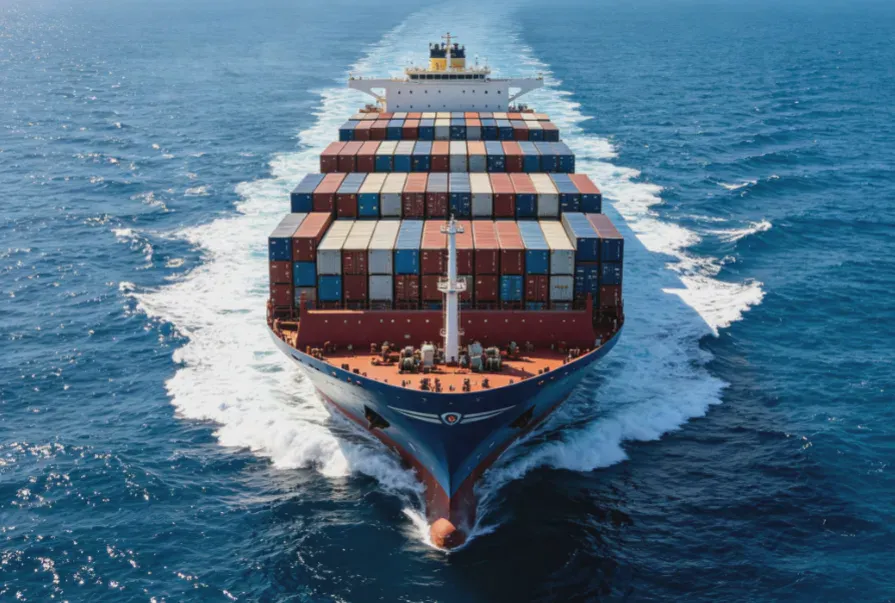
This guide gives you the operating picture for 2026: the four routing options, the real status of Aden and Hodeidah, current container and air rates from Shenzhen, exactly what Yemen customs requires, and two worked shipment examples — using the same numbers we quote for shipping from China to Yemen from our Shenzhen headquarters.
Why Shipping from Shenzhen to Yemen Is One of the Hardest Lanes in Freight Right Now
Yemen sits at the bottom of the Red Sea, and that geography is the problem. Every vessel heading to Aden or Hodeidah must approach through the Gulf of Aden and, for Hodeidah, transit the Bab el-Mandeb Strait — the same narrow choke point where commercial ships have been attacked with drones, missiles, and armed boats since late 2023. The result is a lane reshaped by three forces that barely existed before 2024:
- Rerouting. Most mainline services now sail around Africa, adding 10–15 days and pushing Shenzhen-to-Aden transit from 23–32 days to roughly 33–47.
- War-risk surcharges (WRS). Carriers add $200–$800 per container ($200–$500 to Aden, $400–$800 to Hodeidah) as a separate line item on top of base freight, BAF, and THC.
- Insurance hardening. Marine cargo insurance costs 1–3% of the CIF value, and standard Institute Cargo Clauses (C) coverage excludes war risks — so importers buy war-risk extensions.
In planning terms: budget 35–50 days from booking to cargo availability, quote WRS up front, treat insurance as non-negotiable. None of this makes Yemen unshippable — it makes the cheapest quote the most dangerous.
Lesson from the lane: in 2024 we had a 20ft container of construction hardware booked for Hodeidah — the client's final delivery point was Sana'a, and Hodeidah is 230 km closer. The terminal's call schedule changed with 48 hours' notice and the sailing was pulled; we rerouted to Aden mid-transit, where it discharged on schedule and trucked the extra 350 km north: 9 days' delay, ~$400 in extra trucking. Since then our rule is: book Aden unless you have a vetted agent at Hodeidah.
Shipping from Shenzhen to Yemen: Your Route Options in 2026
Pre-2024, the answer was simple: load at Yantian or Shekou, cross the Indian Ocean, transit the Red Sea, discharge at Aden in 23–32 days. In 2026 there are four options, and choosing between them trades speed against risk and cost.
| Route | How It Works | Added Transit vs Pre-2024 | Extra Cost vs Pre-2024 | Best For |
|---|---|---|---|---|
| Direct Red Sea (via Bab el-Mandeb) | Classic route through the strait; only a few carriers offer it, and only when security allows | None — fastest on paper | WRS $300–$800/container + war-risk insurance | Cargo that must arrive fastest and accepts residual risk |
| Cape of Good Hope rerouting | Ship rounds Africa and approaches Aden from the south, clear of the Red Sea conflict zone | +10–15 days | Higher fuel burn (BAF), modest security surcharge | Most commercial cargo today — predictable and low-risk |
| Transshipment via Jebel Ali or Salalah | Mainline China→Gulf service, then a feeder for the short hop to Aden | +5–7 days vs full Cape reroute | Feeder leg + transshipment handling | Importers who also serve Gulf markets, or want faster than Cape-only |
| Land bridge via Oman or Saudi Arabia | Discharge at Salalah (Oman) or a Saudi port; trucked across the land border into Yemen | Highly variable (1–3 weeks by border status) | Trucking + border clearance fees | Northern and eastern Yemen destinations when the borders are open |
Most mainline carriers — including COSCO, CMA CGM, MSC, and HMM — still default to the Cape route for Yemen-bound cargo in 2026, and for most importers that is the pragmatic choice: slower, but predictable. Transshipment through Jebel Ali (Dubai) or Salalah (Oman) is the middle ground, shaving 5–7 days off the full Cape rerouting while keeping cargo out of the high-risk corridor — at the cost of one extra handling step at a busy hub (see our analysis of Middle East port congestion). It pairs naturally with shipping from China to UAE strategies, since the same services feed both markets.
Two less obvious options deserve a mention. First, routing via Djibouti: cargo discharged at Doraleh terminal and fed across the Gulf of Aden to Aden — used heavily for aid cargo and increasingly for commercial freight (see our China-to-Djibouti guide). Second, the land bridge: for northern destinations like Sana'a, some importers discharge at Salalah in Oman (Al-Mazyunah–Al-Ghaydah crossing) or at a Saudi port and truck through the Al-Wadiah crossing. Border schedules shift and you need active operations on both sides, but it can beat waiting for a Hodeidah berth. Our China-to-Saudi Arabia and Shenzhen-to-Saudi Arabia guides cover the same border realities.
Route decision rule we use with clients: schedule flexibility → Cape rerouting via Aden. Need it 1–2 weeks faster? Compare a direct Red Sea sailing (when offered) against Jebel Ali or Salalah transshipment. Northern destination? Price Aden + trucking against the land bridge. The wrong default is booking blind on the cheapest rate.
Aden vs Hodeidah: Which Yemen Port Should Your Cargo Use in 2026?
The single most important destination decision for Yemen cargo is not which carrier — it's which port. Aden and Hodeidah are completely different operating environments in 2026, and the difference shows up in your cost, your transit, and your risk.
| Factor | Port of Aden | Port of Hodeidah |
|---|---|---|
| Location | Southern Yemen, on the Gulf of Aden — south of the conflict zone | Western Yemen, Red Sea coast — requires Bab el-Mandeb transit |
| Operating status (2026) | Stable and fully operational; regular container calls | Intermittent disruptions; call schedules can change with 48 hours' notice |
| Infrastructure | Deep-water berths, modern container terminal (Aden Container Terminal) with gantry cranes | Functional but primarily bulk/breakbulk oriented; container handling more limited |
| War-risk surcharge | $200–$500 per container | $400–$800 per container |
| Customs processing | Moderate and consistent | Slower; subject to operational interruptions |
| Last-mile to Sana'a | ~350 km by truck (8–10 hours) | ~230 km by truck (5–7 hours) |
| Best for | Most commercial cargo, containerized goods, re-export via the Aden Free Zone | Humanitarian aid, northern-Yemen delivery with a vetted local agent |
The Port of Aden is the workhorse of Yemen's import trade: deep-water berths, working gantry cranes, and the most consistent vessel call schedules in the country. It is also home to the Aden Free Zone, with 15-year exemptions from customs duties, trade taxes, and income taxes for goods stored or processed within the zone — a real advantage for importers re-exporting to East Africa or the Gulf. We mean "if reliability matters, route through Aden" operationally: we have rerouted client shipments mid-transit when a Hodeidah call was pulled.
The Port of Hodeidah is closer to Sana'a, and the shorter truck leg tempts northern importers. But its container handling is limited, schedules shift with as little as 48 hours' notice, and it carries the higher war-risk premium precisely because vessels must transit the Bab el-Mandeb to reach it. Use Hodeidah only when your final delivery point is in the north and your forwarder has a reliable agent there — otherwise trucking "savings" evaporate in detention and rerouting costs.
The other Yemeni ports — Mukalla (Hadramawt, mainly bulk), Mokha, and Saleef — handle niche cargo but lack container infrastructure. For 99% of importers, the decision is Aden.
2026 Container Shipping Costs from Shenzhen to Yemen (FCL & LCL)
All rates below are 2026 market ranges in USD from Shenzhen's terminals (Yantian, Shekou, Chiwan). The low end is base ocean freight in off-peak periods; the high end is an all-in quote including BAF (Bunker Adjustment Factor), security surcharges, THC (Terminal Handling Charges), and documentation. Two quotes for the same container can differ by $2,000+ purely on what they include — our China-to-Yemen cost breakdown unpacks each tier.
| Equipment | Usable Capacity | Shenzhen → Aden (USD) | Shenzhen → Hodeidah (USD) | Notes |
|---|---|---|---|---|
| 20ft (20GP) | ~33 CBM / 28 t | $1,200–$3,500 | 5–15% above Aden | Machinery, steel, dense goods |
| 40ft (40GP) | ~67 CBM / 26 t | $2,800–$6,000 | 5–15% above Aden | Furniture, textiles, consumer goods |
| 40ft High Cube (40HQ) | ~76 CBM / 26 t | $2,900–$6,200 | 5–15% above Aden | Bulky but lightweight cargo |
For LCL (Less than Container Load), you pay per cubic meter and share the container — the right choice below roughly 15 CBM.
| Destination | Rate (USD/CBM) | Transit (from Shenzhen) |
|---|---|---|
| Aden | $25–$55 | 30–38 days |
| Hodeidah | $30–$65 | 35–45 days |
Expect these line items on top of base freight — ask every forwarder to quote them up front rather than discover them later:
| Surcharge | What It Covers | Typical Range (USD) |
|---|---|---|
| BAF (Bunker Adjustment Factor) | Fuel price fluctuation | $200–$600 per container |
| THC (Terminal Handling Charges) | Port crane loading/unloading at origin and destination | $150–$300 per container |
| WRS (War Risk Surcharge) | Security and insurance premiums for Yemen-bound vessels | $200–$800 per container (Aden $200–$500, Hodeidah $400–$800) |
| PSS (Peak Season Surcharge) | Demand-driven increases during busy periods | $150–$500 per container |
| Documentation fee | Bill of Lading issuance, export declaration | $50–$100 |
| Seal fee | Container security seal | $10–$25 |
Three cost levers matter most on this lane. First, consolidate multiple suppliers into one FCL: collecting from several Pearl River Delta factories at a Shenzhen warehouse and loading a single 20ft typically cuts freight cost per unit by 30–50% versus separate LCL moves, and eliminates extra documentation and export-clearance fees. Second, book outside peak windows: rates spike before Chinese New Year, during Golden Week (early October), and in the weeks before Ramadan — we have tracked 20ft spot rates doubling between a mid-August and a late-September booking on identical Shenzhen-to-Aden sailings. Third, insist on the all-in number: a $1,200 "ocean freight only" quote that omits WRS, THC, and destination charges can easily become $2,800+ by sailing day. Our sea freight guide for China-to-Yemen compares FCL and LCL economics in detail.
How Long Does Shipping from Shenzhen to Yemen Take in 2026?
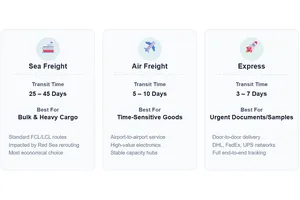
The honest answer: budget 35–50 days from booking to cargo availability at Aden, and treat anything faster as a bonus.
| Mode | Shenzhen → Aden (direct) | With Cape Rerouting | Realistic Planning Range |
|---|---|---|---|
| FCL 20ft/40ft | 23–32 days | +10–15 days | 33–47 days |
| LCL | 30–38 days | +10–15 days | 40–53 days |
| Via Jebel Ali / Salalah transshipment | — | — | 28–40 days |
| Air freight (SZX → hub → ADE) | — | — | 5–10 days |
Three factors stretch these numbers. Rerouting is the big one: Cape sailings add 10–15 days, and your sailing date on a specific vessel matters more than the published transit. Consolidation adds 5–10 days for LCL (origin CFS at Shenzhen, deconsolidation at Aden). Seasonality compresses everything: Chinese New Year and Golden Week empty the sailing schedule, and Ramadan shifts Yemen-side working hours — see our update on Red Sea shipping returning under tight security for how monitored resumptions are changing these numbers.
The practical implication is inventory planning: assume 45 days, treat 35 as the good case, and you avoid stockouts and emergency air rates. Our shipping time guides map adjacent Middle East lanes with the same method.
Air Freight from Shenzhen to Yemen: Rates, Hubs & When It Makes Sense
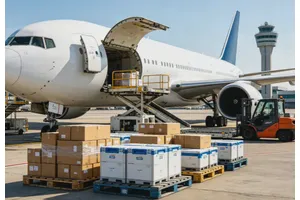
There are no regular direct cargo flights from China to Yemen — a "direct Shenzhen–Sana'a flight" promise is a red flag, not a service. Air cargo moves on two legs: Shenzhen Bao'an (SZX) to a Middle East hub — typically Dubai (DXB), Jeddah (JED), Doha (DOH), or Istanbul (IST) — then a feeder leg into Aden International Airport (ADE). Sana'a International (SAH) faces operational restrictions, so routing depends on current approvals. Our air shipping guide for China-to-Yemen covers the hub math in detail.
| Chargeable Weight | Rate (USD/kg) | Typical Routing | Transit |
|---|---|---|---|
| 45–99 kg | $8.50–$11.00 | SZX → DXB/JED → ADE | 5–8 days |
| 100–299 kg | $7.80–$10.00 | SZX → DXB/JED → ADE | 5–8 days |
| 300–499 kg | $7.00–$9.50 | SZX → DXB → ADE | 5–8 days |
| 500–999 kg | $5.50–$7.50 | SZX → DXB/IST → ADE | 5–10 days |
| 1,000+ kg | $3.50–$6.00 | SZX → DXB/IST → ADE (contract rates) | 6–10 days |
Air freight is charged on chargeable weight — the greater of actual gross weight and volumetric weight (L × W × H in cm ÷ 6,000); light, bulky cargo can trigger a charge far above physical weight, so accurate dimensions matter. For urgent replenishment, production stops, and Ramadan/Eid restocking, air's 5–10 day transit is usually worth the premium; above ~200 kg, sea wins on cost. For samples under ~30 kg, express couriers (DHL, FedEx, UPS) run 3–10 days at $1.50–$20.00/kg with clearance bundled — and Yemen's restricted-items rules apply to couriers just as strictly.
DDP Door-to-Door Shipping from Shenzhen to Yemen: The Hands-Off Option
DDP (Delivered Duty Paid) is the closest thing to stress-free shipping on this lane: your forwarder handles China pickup, export clearance, ocean or air freight, Yemen import customs, duty and VAT payment, and last-mile trucking — one all-in price. With limited local brokerage options, complex customs, and real port-storage risk in Yemen, that bundling is worth real money. Current all-in DDP from Shenzhen: $4,500–$6,500 for a 20ft, $6,000–$9,000 for a 40ft, door to warehouse, duties included. Our door-to-door shipping guide for China-to-Yemen breaks down what sits inside those numbers.
Why does DDP make sense specifically for Yemen? Because the alternative — managing clearance yourself under FOB or CIF — puts customs delays, unexpected duty assessments, and port storage fees on you, and the consequences usually exceed the DDP premium. Verify two things before committing: exactly which duties are included (some quotes exclude product-specific taxes), and that the forwarder has a vetted trucking partner — Sana'a is a 350 km truck from Aden.
| Incoterm | Freight Arranged By | Insurance | Yemen Customs & Duties | Risk Transfers At |
|---|---|---|---|---|
| EXW | Buyer | Buyer | Buyer | Supplier's factory gate |
| FOB | Buyer | Buyer | Buyer | Loaded on board at the Chinese port |
| CIF | Seller | Seller (basic, excludes war risk) | Buyer | Arrival at the Yemen port |
| DDP | Seller/Forwarder | Seller/Forwarder | Seller/Forwarder | Delivery to the buyer's address in Yemen |
A note on CIF: the seller arranges freight and basic insurance, but "basic" under Institute Cargo Clauses (C) excludes war risks — precisely the risk that matters here. If you buy CIF, verify the insurance scope and top up with war-risk coverage. See our DDP vs FOB analysis for a fuller comparison.
Yemen Customs Clearance: Duties, Documents & What Actually Happens at the Port
Yemen customs is where shipments actually succeed or fail. The Yemen Customs Authority enforces strict documentation standards, physical inspections are common (especially for food, medical supplies, and high-value electronics), and a mistake that costs a day in Rotterdam can cost a week — plus a storage bill — in Aden. Product compliance is overseen by YSMO (Yemen Standards, Metrology and Quality Control Organization).
The tax structure is simple but rarely explained. Duty is assessed on CIF value (cost + insurance + freight), and VAT of 5% applies on top of (CIF + duty). Duties range from 5% to 25% for most manufactured goods (WTO average bound rate: 21.7%), with higher rates on certain agricultural products and beverages, and there is effectively no de minimis threshold — duty applies from the first dollar, though a YER 20,000 (~$40) simplified clearance band exists for very small consignments. Our customs clearance guide covers the origin-side half.
| Product Category | Est. Duty Rate | + 5% VAT | Total Tax Burden | Example HS Codes |
|---|---|---|---|---|
| Electronics & electrical | 17.9% | 5% | ~22.9% | 85xx |
| Machinery & equipment | 15–21% | 5% | ~20–26% | 84xx |
| Textiles & apparel | 21.8% | 5% | ~26.8% | 50xx–63xx |
| Furniture & wood products | 21.8% | 5% | ~26.8% | 94xx |
| Vehicles & auto parts | 20.9% | 5% | ~25.9% | 87xx |
| Construction materials | 15–20% | 5% | ~20–25% | 68xx–70xx |
| Plastics & articles | 20–25% | 5% | ~25–30% | 39xx |
| Food & beverages | 14–44.8% | 5% | ~19–49.8% | Various |
| Medical supplies | 5–15% | 5% | ~10–20% | 30xx |
| Toys & sports equipment | 20% | 5% | ~25% | 95xx |
Worked example: a Sana'a wholesaler imports a 20ft container of furniture (HS Chapter 94), CIF $20,000. Duty at 21.8% = $4,360; VAT at 5% on ($20,000 + $4,360) = $1,218. Total taxes: $5,578 — 27.9% of CIF value, before a single dollar of freight — why landed-cost thinking matters more here than almost anywhere.
The documentation set is small but unforgiving — every document must be internally consistent:
- Commercial Invoice — declared value, buyer/seller details, goods description (must match all other documents exactly)
- Packing List — per-package contents, weights, dimensions
- Bill of Lading (sea) or Airway Bill (air) — the transport document
- Certificate of Origin — usually required for duty calculation
- Import License — required for certain regulated categories (check with your forwarder before shipping)
- Product certificates — health/phytosanitary for food and agricultural goods, conformity certificates for regulated electronics
Clearance runs five steps: confirm HS codes and licensing before the vessel sails → compile documents → your broker submits the import declaration with duty and tax calculations on arrival → physical inspection (common) → release once duties are paid. The pitfalls are the same three every season: undervaluation (a red flag that can trigger penalties, seizure, or blacklisting), inconsistent documents (B/L says 200 cartons, packing list says 195 — expect a hold), and missing certifications (food without health certificates sits at the port until it expires).
Clearance reality check: a Sana'a electronics importer sends his full document set to our broker the day the vessel departs Shenzhen, and his containers typically clear Aden in 2 days. A first-time importer who sent documents after arrival once watched his shipment sit 9 days while a Certificate of Origin was corrected. Same port, same cargo — purely a document-readiness gap.
Finally, cargo insurance: carrier liability under a Bill of Lading is capped at roughly $500 per container — effectively nothing against a $25,000 cargo. At 1–3% of CIF value, a $20,000 shipment costs $200–$600 to cover, including the war-risk extension we recommend for every Yemen-bound consignment. Our container insurance guide explains how premiums are calculated.
What Real Shipments from Shenzhen to Yemen Cost: Two Worked Examples
Rate tables only tell half the story. Here are two shipments we priced and moved this year.
Scenario A — LCL: phone accessories to Sana'a. A mobile accessories retailer orders 3 CBM of screen protectors, cases, and chargers from three suppliers in Shenzhen. Goods value: $8,000.
| Cost Item | Amount (USD) |
|---|---|
| China pickup (Shenzhen factories → Yantian CFS) | $120 |
| LCL sea freight (3 CBM × $40/CBM) | $120 |
| Documentation & export clearance | $150 |
| Cargo insurance (1.5% × $8,000) | $120 |
| Destination port charges (Aden) | $180 |
| Yemen customs brokerage | $150 |
| Import duty (20% × $8,120 CIF) | $1,624 |
| VAT (5% × $9,744) | $487 |
| Last-mile delivery (Aden → Sana'a, ~350 km) | $250 |
| Total logistics cost | $3,201 |
Logistics at 40% of goods value — typical for small-volume Yemen importers, and why consolidation matters: the same importer at 10 CBM would see that ratio drop toward 25%.
Scenario B — FCL: building materials to Aden. A construction supplier ships a 20ft container of LED lighting and building hardware, CIF value $22,000. Duty at ~20% = $4,400; VAT 5% on $26,400 = $1,320; total taxes $5,720. DDP lands around $5,000–$5,500 all-in including those taxes, freight, insurance, and delivery — versus a "bargain" $1,500 ocean-only quote that excludes them. Under FOB with a trusted local broker you save 8–15% on the freight side but absorb every customs delay yourself.
The insurance lesson we tell every client: a container of electronics we handled arrived in Aden with water damage from a poorly sealed hatch cover — the kind of loss a $1,500 "cheap quote" covers at zero. The importer's $400 premium recovered $18,000 of goods value. On this lane, insurance is not a line item to trim.
Frequently Asked Questions
Is it safe to ship cargo from Shenzhen to Yemen in 2026? Yes — with proper planning. Aden Port operates normally; most carriers route via the Cape of Good Hope, clear of the conflict zone. Use a forwarder who carries war-risk insurance and quotes WRS up front.
How much does it cost to ship a 20ft container from Shenzhen to Yemen? $1,200–$3,500 to Aden depending on season, carrier, and quote scope; DDP runs $4,500–$6,500 all-in. Compare total landed cost, not base freight.
How long does shipping from Shenzhen to Yemen take? 23–32 days port-to-port on direct sailings; with Cape rerouting, 33–47 days; realistically 35–50 from booking to availability. LCL adds 5–10 days; air runs 5–10.
What documents do I need to import into Yemen? Commercial Invoice, Packing List, Bill of Lading (or Airway Bill), Certificate of Origin — plus an import license for regulated categories and health/conformity certificates for food and electronics. All copies must be consistent.