China is Yemen's largest source of imported goods — from construction materials and machinery to textiles and consumer electronics — and sea freight from China to Yemen remains the backbone of this trade. But in 2026, shipping this route comes with real questions: Is my cargo safe given the Red Sea situation? What's the actual all-in cost? Which port should I use — Aden or Hodeidah?
This guide answers those questions with current data, practical comparisons, and honest operational insight. Whether you're importing a full container of building supplies or testing the market with a small LCL shipment, this guide covers everything you need to know about shipping from China to Yemen by sea — from costs and transit times to customs requirements and forwarder selection.
China to Yemen Shipping Routes: Red Sea Risks & Safety
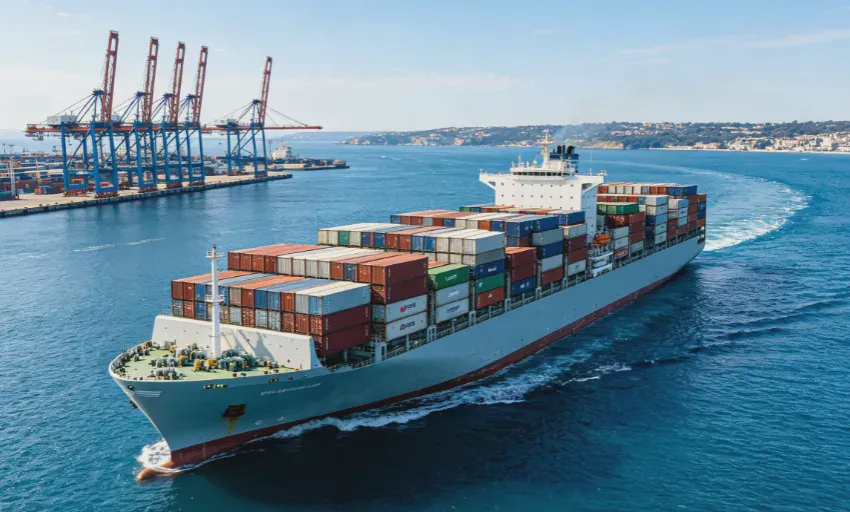
The Red Sea shipping route — specifically the Bab el-Mandeb Strait and Gulf of Aden — is the natural maritime corridor between China and Yemen. However, Houthi attacks on commercial vessels since late 2023 have fundamentally reshaped how carriers approach this lane. As of mid-2026, most major shipping lines continue to avoid direct Red Sea transits for Yemen-bound cargo.
Three Route Options in Play
Direct Red Sea Route (via Bab el-Mandeb): The fastest path on paper — Shanghai to Aden in roughly 25 days. However, very few carriers offer this option. Those that do charge substantial war-risk surcharges (WRS) , typically $300–$800 per container, and may require additional insurance endorsements. This route is only viable when security conditions temporarily improve and specific carriers resume limited passages.
Cape of Good Hope Rerouting: The current default for most COSCO, CMA CGM, MSC, and HMM vessels. Ships sail south around Africa before heading northeast toward the Arabian Sea and Gulf of Aden. This adds 10–15 days to transit but eliminates exposure to the Red Sea conflict zone. For most importers, this is the pragmatic choice in 2026 — slower but predictable.
Transshipment via Gulf Hubs: An emerging middle ground. Cargo is shipped from China to a neutral Gulf port — typically Jebel Ali (UAE) or Salalah (Oman) — on a standard container line, then transferred to a feeder vessel for the shorter hop to Aden. This can shave 5–7 days off the full Cape rerouting while keeping cargo clear of the high-risk Red Sea corridor. For importers also serving Gulf markets, shipping from China to UAE and shipping from China to Saudi Arabia are natural complements to a Yemen logistics strategy, sharing the same transshipment hubs.
What This Means for Your Shipment
- Expect longer lead times. Budget 35–50 days from booking to arrival at Aden instead of the pre-crisis 21–30 days.
- War-risk surcharges are now standard. They appear as a separate line item on your freight invoice — ask your forwarder to quote them upfront.
- Aden is the safer port. The Port of Aden, located on the Gulf of Aden south of the conflict zone, remains fully operational. The Port of Hodeidah on the Red Sea coast faces intermittent disruptions and commands higher war-risk premiums.
Bottom line: Yes, shipping to Yemen is still very much possible in 2026. The route has changed, costs have adjusted, and lead times are longer — but with an experienced freight forwarder managing the routing and documentation, cargo moves reliably. For the latest on route developments, see our update on Red Sea shipping returning under tight security as carriers cautiously resume monitored passages.
Container Shipping from China to Yemen
Sea freight from China to Yemen comes in two forms: FCL (Full Container Load) and LCL (Less than Container Load) . The right choice depends on your shipment volume, budget, and urgency.
Quick Comparison
| Factor | FCL (Full Container Load) | LCL (Less than Container Load) |
|---|---|---|
| How It Works | You book an entire container; it's sealed at origin and opened at destination | Your goods share container space with other shippers' cargo |
| Minimum Volume | Typically 15+ CBM to justify | As little as 1 CBM |
| Transit Speed | Faster — direct port-to-port, no consolidation delays | Slower — add 5–10 days for consolidation and deconsolidation |
| Cargo Security | Lower risk — container is sealed, fewer handling touchpoints | Higher risk — goods handled multiple times during consolidation |
| Cost Structure | Fixed container rate regardless of how full | Charged per CBM (cubic meter) or per ton (whichever is higher) |
| Best For | Large-volume importers, bulky goods, fragile cargo | SMEs, new importers testing the market, small-volume shipments |
FCL: When You Need a Full Container
With FCL shipping China to Yemen, you rent an entire container. Three standard types serve most importers:
| Container Type | Internal Dimensions (L×W×H) | Capacity | Typical Cargo |
|---|---|---|---|
| 20GP (20ft) | 5.9 × 2.35 × 2.39 m | ~33 CBM / 28 tons | Machinery, steel, dense goods |
| 40GP (40ft) | 12.03 × 2.35 × 2.39 m | ~67 CBM / 26 tons | Furniture, textiles, consumer goods |
| 40HQ (40ft High Cube) | 12.03 × 2.35 × 2.69 m | ~76 CBM / 26 tons | Bulky but lightweight cargo (insulation, packaging) |
FCL shines for Yemen's most common imports: construction materials, machinery, furniture, and bulk consumer goods. The dedicated container means less handling, faster customs processing, and lower per-unit shipping costs at scale. For shipments above roughly 15 CBM, FCL is almost always more cost-effective than LCL.
LCL: Flexible Shipping for Smaller Volumes
LCL shipping China to Yemen is ideal when you don't have enough cargo to fill a container. Your freight forwarder consolidates your goods with other shipments bound for Yemen into a shared container.
LCL rates in 2026 range from $25 to $65 per CBM, depending on the origin port and whether your cargo is destined for Aden (cheaper) or Hodeidah (higher). The trade-off: your goods are handled at consolidation warehouses at both origin and destination, which adds time and slightly increases damage risk. If you're a new importer or testing a product line, LCL lets you start small without committing to a full container's freight cost.
When to Switch from LCL to FCL
Here's a practical rule of thumb: at roughly 15 CBM, FCL becomes more economical on a per-unit basis. Below that threshold, LCL wins. If you're shipping 10 CBM of furniture, compare the LCL quote against a 20GP FCL quote — the difference is often smaller than you'd expect, and FCL gives you faster transit and better cargo protection.
Sea Freight Costs from China to Yemen
Understanding the true sea freight cost from China to Yemen means looking beyond the base ocean freight rate. What matters is the landed cost — the total you pay to get goods from the Chinese port to the Yemen destination, including all surcharges.
2026 FCL Rate Ranges (Ocean Freight + Standard Surcharges)
| Origin Port (China) | 20GP (USD) | 40GP / 40HQ (USD) | Notes |
|---|---|---|---|
| Shanghai | $1,200–$3,400 | $2,800–$5,800 | Most frequent sailings to Yemen |
| Shenzhen (Yantian/Shekou) | $1,200–$3,500 | $2,800–$6,000 | Closest to Guangdong manufacturing |
| Ningbo-Zhoushan | $1,300–$3,700 | $2,900–$6,200 | Competitive rates, strong infrastructure |
| Guangzhou (Nansha) | $1,200–$3,500 | $2,800–$6,100 | Shortest direct transit to Aden |
| Qingdao | $1,300–$3,800 | $3,000–$6,600 | Northern China gateway |
| Xiamen | $1,300–$3,600 | $2,900–$6,300 | Good for Fujian suppliers |
Ranges reflect spot market rates including standard surcharges. The wide variance depends on the carrier, season, routing (Cape vs. direct), and whether the war-risk surcharge (WRS) is bundled in. Always confirm what's included when comparing quotes.
2026 LCL Rate Ranges
| Destination | Rate per CBM (USD) |
|---|---|
| Aden | $25–$55 |
| Hodeidah | $30–$65 |
Surcharges Demystified
Every sea freight quote includes line items beyond the base rate. Here's what they mean:
| Surcharge | What It Covers | Typical Range |
|---|---|---|
| BAF (Bunker Adjustment Factor) | Fuel cost fluctuation | $200–$600 per container |
| THC (Terminal Handling Charges) | Port loading/unloading at origin and destination | $150–$300 per container |
| WRS (War Risk Surcharge) | Additional insurance and security premiums for Yemen-bound vessels | $200–$800 per container |
| PSS (Peak Season Surcharge) | Demand-driven rate increases during busy periods | $150–$500 per container |
| Documentation Fee | Bill of Lading issuance, customs declaration processing | $50–$100 |
| Seal Fee | Container security seal | $10–$25 |
DDP Door-to-Door Cost Estimate
If you want the all-inclusive option, DDP sea freight China to Yemen for a 20ft container typically lands between $4,500 and $6,500. This covers ocean freight, Chinese export clearance, Yemen import customs clearance, import duties and taxes, and last-mile trucking to your warehouse. For a 40ft container, expect $6,000–$9,000 all-in under DDP terms.
How to Keep Costs Down
- Consolidate shipments. Combine orders from multiple suppliers into one container at your forwarder's China warehouse — this turns multiple LCL shipments into one cost-efficient FCL move.
- Book outside peak seasons. Chinese New Year (January/February), Ramadan, and Golden Week (October) drive rates 20–40% higher. Book 3–4 weeks ahead of these windows.
- Compare total landed cost, not just the freight quote. A $1,200 ocean freight quote that excludes WRS, THC, and destination charges can easily become $2,800+ once surcharges hit. Ask for an all-in quote.
Shipping Time from China to Yemen: Transit Times & Port Comparison
Transit time is one of the most searched questions by Yemen importers — and for good reason. Knowing your shipping time from China to Yemen lets you plan inventory, manage cash flow, and set realistic customer expectations.
Port-to-Port Transit Time Matrix
| Origin (China) | → Aden (Direct) | → Hodeidah (Direct) | With Cape Rerouting (+days) |
|---|---|---|---|
| Shanghai | 25–35 days | 28–38 days | +10–15 days |
| Shenzhen (Yantian/Shekou) | 23–32 days | 26–35 days | +10–15 days |
| Ningbo | 30–40 days | 32–42 days | +10–15 days |
| Guangzhou (Nansha) | 21–34 days | 24–37 days | +10–15 days |
| Qingdao | 30–42 days | 32–45 days | +10–15 days |
| Xiamen | 28–38 days | 30–40 days | +10–15 days |
LCL shipments: Add 5–10 days for consolidation at origin and deconsolidation at destination.
Choosing Your Chinese Departure Port
- Guangzhou (Nansha) offers the shortest transit to Aden (21–34 days) — ideal if your suppliers are in Guangdong.
- Shanghai (Yangshan) has the most frequent Yemen-bound sailings and the widest carrier choice — best for East China suppliers (Zhejiang, Jiangsu).
- Shenzhen (Yantian/Shekou) sits at the heart of China's manufacturing belt — perfect for Pearl River Delta suppliers.
- Ningbo-Zhoushan and Qingdao serve the central and northern industrial zones respectively.
- Xiamen is a solid alternative for Fujian-based suppliers.
Golden rule: Pick the port closest to your supplier. Inland trucking from a factory in Zhejiang to Shenzhen can add $400–$800 to your total cost — money better spent on ocean freight from nearby Ningbo or Shanghai.
Aden vs. Hodeidah: Which Yemen Port Should You Use?
| Factor | Port of Aden | Port of Hodeidah |
|---|---|---|
| Location | Southern Yemen, Gulf of Aden | Western Yemen, Red Sea coast |
| Security Status (2026) | Stable, fully operational | Intermittent disruptions, higher risk |
| Infrastructure | Deep-water berths, modern container terminals, gantry cranes | Adequate; primarily bulk and breakbulk focused |
| Customs Processing | Moderate speed, consistent | Slower, subject to operational interruptions |
| War-Risk Surcharge | Lower (typically $200–$500) | Higher (typically $400–$800) |
| Best For | General commercial cargo, containerized goods | Humanitarian aid, northern Yemen destinations |
Recommendation: For the vast majority of commercial importers, ocean freight from China to Aden port is the safer and more reliable choice in 2026. Use Hodeidah only if your final delivery point is in northern Yemen and you're working with a forwarder who has active operations and a reliable agent at that port.
Other Yemeni ports — Mukalla and Mokha — handle niche cargo but lack the container handling infrastructure for regular commercial shipments.
Incoterms for Yemen-Bound Shipments: FOB vs CIF vs DDP
Choosing the right Incoterm determines who pays for what — and where risk transfers from seller to buyer. For Yemen shipments in 2026, this choice directly impacts your cost control and risk exposure.
Incoterms at a Glance
| Incoterm | Who Arranges Freight? | Who Pays Insurance? | Who Handles Yemen Customs & Duties? | Risk Transfers At |
|---|---|---|---|---|
| EXW (Ex Works) | Buyer | Buyer | Buyer | Supplier's factory gate |
| FOB (Free On Board) | Buyer | Buyer | Buyer | Loaded onto vessel at Chinese port |
| CIF (Cost, Insurance & Freight) | Seller | Seller (basic) | Buyer | Arrival at Yemen port |
| DDP (Delivered Duty Paid) | Seller/Forwarder | Seller/Forwarder | Seller/Forwarder | Delivery to buyer's Yemen address |
Which Incoterm Works for Yemen?
EXW — Not recommended. You bear all responsibility from the supplier's door in China. Unless you have a procurement team on the ground, the coordination burden and risk are too high.
FOB — Best for experienced importers. You control the shipping and can negotiate directly with forwarders for the best China to Yemen shipping routes and rates. The catch: you own the risk from the moment cargo crosses the ship's rail in China. If something goes wrong in the Gulf of Aden, it's on you. Only choose FOB if you have a trusted forwarder and comprehensive cargo insurance in place.
CIF — Convenient but watch the fine print. The seller arranges ocean freight and basic insurance to the Yemen port of your choice. This sounds appealing, but the insurance coverage is typically minimal — often just 110% of the invoice value under Institute Cargo Clauses (C), which excludes war risks. Given the Red Sea situation, basic CIF insurance may not cover what you actually need. If you go CIF, verify the insurance scope and consider topping up with your own war-risk coverage.
DDP — The hassle-free option (and increasingly popular). Under DDP sea freight China to Yemen, your freight forwarder handles everything: Chinese export clearance, ocean freight, Yemen import customs clearance, duty and tax payment, and last-mile delivery to your warehouse. For a 20ft container, expect an all-in DDP cost of $4,500–$6,500. For most Yemen importers — especially those without a dedicated logistics team — DDP eliminates the biggest headaches: Yemen customs complexity and last-mile coordination in a challenging operating environment.
DDP Watch-Outs
- Confirm exactly which duties are included. Some forwarders quote DDP but exclude certain product-specific taxes. For a deeper comparison of shipping terms, read our guide on DDP vs FOB: which option saves time and reduces hassle.
- Last-mile delivery to inland Yemen destinations can be complex. Verify your forwarder has a vetted trucking partner.
- DDP shifts responsibility to the forwarder — which is great — but choose a forwarder with proven Yemen experience (see Section 8).
Yemen Customs Clearance & Required Documentation
Yemen customs can be challenging for first-time importers. The Yemen Customs Authority enforces strict documentation standards, and errors lead to delays, storage fees, or cargo rejection.
Customs at a Glance
- Import duties: 5%–20% of the CIF value, varying by product category
- Additional taxes: Some goods attract VAT or consumption tax
- Regulatory body: YSMO (Yemen Standards, Metrology and Quality Control Organization) oversees product compliance and conformity standards
The 5-Step Clearance Process
- Pre-Shipment Preparation: Confirm the correct HS code for each product. Check whether your goods require an import license or fall under any Yemen import restrictions.
- Document Compilation: Assemble all required documents before the vessel departs China. Late or incorrect documents are the #1 cause of customs delays.
- Declaration Submission: Upon arrival at Aden or Hodeidah, your customs broker submits the import declaration with duty and tax calculations.
- Physical Inspection: Yemen customs frequently conducts physical cargo inspections — especially for food products, medical supplies, and high-value electronics.
- Release & Delivery: Once duties are paid and inspection clears, cargo is released for pickup or last-mile trucking.
Required Documentation Checklist
| Document | Purpose | Critical Notes |
|---|---|---|
| Commercial Invoice | Declares transaction value, buyer/seller details, goods description | Must be accurate and consistent with other documents |
| Packing List | Lists per-package contents, weights, and dimensions | Essential for customs inspection efficiency |
| Bill of Lading (B/L) | Core ocean freight transport document | Must match invoice and packing list exactly |
| Certificate of Origin | Verifies goods' country of manufacture | Often required for duty calculation and trade compliance |
| Import License | Required for certain regulated product categories | Check with your forwarder whether your goods need one |
| Product Certificates | Health, phytosanitary, or conformity certificates | Mandatory for food, agricultural goods, and regulated electronics |
Common Pitfalls
- Undervaluation: Declaring a lower invoice value to reduce duties is a red flag for Yemen customs and can result in penalties, cargo seizure, or blacklisting.
- Inconsistent documentation: If your Bill of Lading says 200 cartons but the packing list shows 195, expect delays.
- Missing product certifications: Food products without health certificates, or electronics without conformity documentation, will be held at the port.
Cargo-Specific Notes
- Construction materials: Generally straightforward; ensure quality standards compliance.
- Food products: Require health and sanitary certificates; products close to expiration may be rejected.
- Medical supplies: Require Ministry of Health approval and special handling documentation.
- Electronics: May require conformity certification; wireless devices face additional scrutiny.
- Used goods: Often subject to higher duties or import restrictions — confirm admissibility before shipping.
How to Choose a Reliable Freight Forwarder for China-Yemen Shipping
Yemen is not a standard shipping destination. The combination of route disruptions, port-specific operational challenges, and complex customs means a generic freight forwarder won't cut it — a point we explore in depth in our article on the strategic role of freight forwarders in modern supply chains. Choosing the best sea freight forwarder China to Yemen requires evaluating specific capabilities.
6 Criteria That Matter
- Proven Yemen Route Experience: Ask how many containers they've shipped to Aden and Hodeidah in the past 12 months. A forwarder with active Yemen operations knows the current carrier schedules, which port is functioning well this month, and what customs officers are flagging.
- Direct Carrier Contracts: Forwarders with direct agreements with COSCO, MSC, CMA CGM, HMM, and other major lines can offer better rates and — crucially — guaranteed container space during peak periods.
- In-Country Yemen Presence: Does the forwarder have a licensed agent or partner on the ground in Aden or Hodeidah? This is non-negotiable. Without a local partner, your cargo sits at the port while you try to find someone to clear it.
- Risk Management Capability: Can they arrange war-risk cargo insurance? Do they actively monitor Red Sea security developments and adjust routing accordingly? A professional forwarder should offer route options and insurance recommendations, not just a single quote.
- Transparent, All-In Pricing: Beware of quotes that look too good. A $1,100 "ocean freight only" quote that doesn't mention WRS, THC, or destination charges is misleading. Insist on a line-by-line breakdown.
- Tracking & Communication: Real-time container tracking and a dedicated account manager who responds within hours — not days — are table stakes for Yemen shipping given how quickly conditions can change.
Red Flags
- Quotes significantly below the ranges in this guide
- No verifiable Yemen shipment history or references
- Vague answers about war-risk surcharges and insurance
- No physical presence or licensed agent in Yemen
Working with DTFU Logistics
DTFU Logistics has been serving global importers since 2014, with active shipping operations from China to Yemen and across the Middle East. As a FIATA and IATA dual-certified freight forwarder serving 120+ countries, we bring three things Yemen importers need most:
- Direct carrier contracts with major shipping lines, securing competitive rates and guaranteed space even during peak seasons.
- Experienced Yemen operations — our team understands the nuances of Aden and Hodeidah customs, documentation requirements, and last-mile logistics.
- Full transparency — every quote includes a complete surcharge breakdown, and our 24/7 tracking platform keeps you informed from departure to delivery.
Whether you need a single LCL pallet or regular FCL shipments, our dedicated account managers build a shipping plan tailored to your volume, timeline, and budget.
FAQs
How much does sea freight from China to Yemen cost in 2026?
FCL (20ft): $1,200–$3,800; FCL (40ft): $2,800–$6,600. LCL: $25–$65 per CBM. DDP door-to-door (20ft): $4,500–$6,500 all-in. Actual costs vary by port, season, and carrier. Always request an all-in quote that includes BAF, THC, WRS, and destination charges.
How long does sea freight take from China to Yemen?
Direct port-to-port: 21–42 days depending on the port pair. With Cape of Good Hope rerouting, add 10–15 days. LCL adds another 5–10 days for consolidation and deconsolidation. In practice, most importers should budget 35–50 days from booking to cargo availability at Aden.
Which Chinese port is best for shipping to Yemen?
Guangzhou (Nansha) offers the shortest transit to Aden. Shanghai has the most frequent sailings. Shenzhen is closest to major manufacturing hubs. Choose the port nearest your supplier to minimize inland trucking costs.
What documents are required to ship from China to Yemen?
Essential: Commercial Invoice, Packing List, Bill of Lading, Certificate of Origin. May also need: Import License and product-specific certificates (health, conformity). Accuracy and consistency across all documents is critical to avoid customs delays.
How much are Yemen import duties and taxes?
Import duties range from 5% to 20% of the CIF value, depending on the product category. Some goods are subject to additional VAT or consumption tax. Consult your forwarder for a product-specific duty estimate before shipping.
What is the cheapest way to ship from China to Yemen?
LCL sea freight is the cheapest option for shipments under 15 CBM. For larger volumes, FCL offers lower per-unit costs. Always compare total landed cost — not just the ocean freight rate — when evaluating options.
What does DDP shipping from China to Yemen include?
DDP covers: Chinese export clearance, ocean freight, Yemen import customs clearance, import duties and taxes, and last-mile delivery to your specified address in Yemen. It's the most hassle-free option but costs more than FOB or CIF.