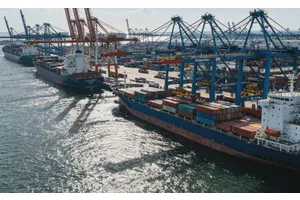
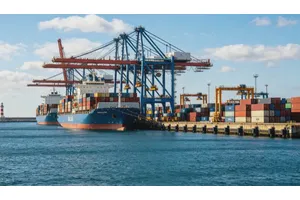
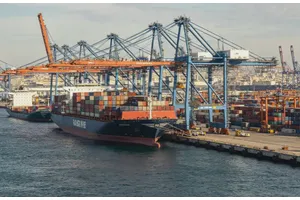
If you're importing goods from China to Yemen, the question that keeps you up at night is almost certainly this: how much does shipping from China to Yemen actually cost? The answer isn't a single number — quotes for the same 20-foot container range from $1,100 to over $5,000 depending on what's included and which port you ship from. We've seen businesses overpay by thousands because they didn't know what their quote covered, and others under-budget because they overlooked Yemen's import duties, war-risk surcharges, and destination port fees.
This guide eliminates that guesswork. Drawing on over a decade of freight forwarding experience, it breaks down every shipping mode — sea freight (FCL & LCL), air freight, express courier, and DDP (Delivered Duty Paid) door-to-door — with real rate tables, worked shipment scenarios, and a product-by-product Yemen customs duty reference that no other guide provides. By the end, you'll know exactly what to budget and how to cut your total logistics cost by 20–40%. Every DTFU client on the China-to-Yemen route is assigned a dedicated account manager who understands this lane specifically — so the person helping you plan today is the same person managing your shipment through to delivery.
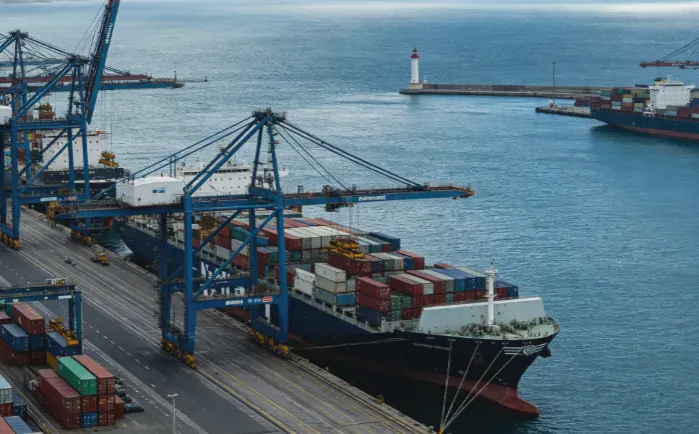
Shipping Cost at a Glance
If you're an experienced importer who just needs the numbers, here's your one-glance summary. For readers new to international shipping, each mode is unpacked in detail in the sections that follow.
| Shipping Mode | Cost Range | Transit Time | Best For |
|---|---|---|---|
| Sea FCL 20ft | $1,100–$3,800 | 25–40 days | Bulk goods, 15+ CBM |
| Sea FCL 40ft / 40HQ | $2,750–$6,200 | 25–40 days | Large-volume shipments |
| Sea LCL | $20–$300 / CBM | 30–45 days | Small cargo, under 15 CBM |
| Air Freight | $3.50–$11.00 / kg | 5–14 days | Time-sensitive, high-value goods |
| Express Courier (DHL/FedEx/UPS) | $1.50–$20.00 / kg | 3–10 days | Samples, documents, small parcels |
| DDP Door-to-Door | $4,200–$5,000 (20ft) | 30–50 days | Hands-off, all-inclusive solution |
Why such a wide range? Because different quotes include different things — and this is the single most important concept to understand before you compare freight rates. A $1,100 quote typically covers base ocean freight only — the cost of renting space on the vessel. A $3,800 quote usually bundles in surcharges, documentation fees, and both origin and destination port handling. A $5,000 DDP quote covers everything: freight, surcharges, insurance, customs clearance, import duties, VAT, and last-mile delivery to your door in Yemen. Throughout this guide, we'll unpack exactly what sits behind each price tier.
Sea Freight Costs from China to Yemen
Sea freight is the backbone of China-Yemen trade, moving everything from construction materials and furniture to electronics and machinery. If your shipment is over 200 kg and not urgently needed, ocean freight will almost always offer the lowest cost per unit.
FCL (Full Container Load) Rates by Port Pair
When you book FCL (Full Container Load), you're renting an entire container — giving you exclusive use of the space, better security for your cargo, and a lower cost per cubic meter compared to sharing a container. The table below shows current market rates across all six major Chinese departure ports to Yemen's two primary container gateways.
| Origin (China) | Destination (Yemen) | 20ft (USD) | 40ft (USD) | 40HQ (USD) | Transit |
|---|---|---|---|---|---|
| Shanghai | Aden | $1,100–$3,200 | $2,750–$5,800 | $2,900–$6,000 | 25–35 days |
| Shenzhen | Aden | $1,180–$3,500 | $2,750–$6,000 | $2,900–$6,200 | 23–32 days |
| Ningbo | Hodeidah | $1,250–$3,700 | $2,900–$6,200 | $3,100–$6,400 | 30–40 days |
| Guangzhou | Aden | $1,200–$3,500 | $2,800–$6,000 | $2,950–$6,100 | 21–34 days |
| Qingdao | Aden / Hodeidah | $1,300–$3,800 | $3,000–$6,500 | $3,150–$6,600 | 30–42 days |
| Xiamen | Aden | $1,250–$3,600 | $2,850–$6,100 | $3,000–$6,300 | 28–38 days |
Rates updated June 2026. All prices in USD. Ranges reflect market fluctuations, seasonal demand, and carrier-specific surcharges.
The lower end of each range represents base ocean freight during off-peak periods. The higher end reflects all-in pricing that bundles the Bunker Adjustment Factor (BAF), security surcharges for the Gulf of Aden transit, Terminal Handling Charges (THC) at both origin and destination, and documentation fees. When comparing quotes from different forwarders, always ask whether these surcharges are included — it's the number-one reason two quotes for the same route can differ by thousands of dollars. If you're also evaluating logistics costs for broader Middle East distribution, our 20ft and 40ft container cost guide for Iraq provides a comparable port-to-port rate reference for another Gulf-adjacent market.
Transit times are influenced by three main variables: the Red Sea security situation (Houthi activity has at times forced vessels to reroute around the Cape of Good Hope, adding 10–15 days), transshipment waiting periods at hubs like Jebel Ali (UAE), Salalah (Oman), or Djibouti, and operational conditions at the destination port — Aden is generally reliable, while Hodeidah's status fluctuates.
LCL (Less than Container Load) Rates
LCL (Less than Container Load) lets you pay only for the space your cargo occupies, measured in CBM (cubic meters). It's the right choice for shipments under approximately 15 CBM — above that threshold, FCL typically becomes more cost-effective.
| Origin Port | Cost (USD / CBM) | Destination | Transit |
|---|---|---|---|
| Shenzhen | $20–$50 | Aden | 30–38 days |
| Ningbo | $20–$60 | Aden / Hodeidah | 35–42 days |
| Qingdao | $30–$70 | Hodeidah | 36–45 days |
| Guangzhou | $25–$55 | Aden | 28–35 days |
At $40/CBM as a midpoint, shipping 10 CBM of cargo costs roughly $400 in ocean freight — far less than a full container. But the crossover point matters: at 15 CBM × $50 = $750, you're approaching the cost of a 20ft FCL at $1,100 base freight, and the FCL gives you exclusive container use, faster transit (no consolidation/deconsolidation delays), and lower risk of cargo handling damage. If you source from multiple suppliers, consolidating their goods at a warehouse in Shenzhen or Guangzhou into a single FCL before export can save 30–50% compared to shipping each order separately via LCL.
Understanding Yemen's Port Landscape
- Aden Port — Yemen's primary commercial gateway on the southern coast. Deep-water berths, functional container handling equipment, and the most consistent vessel call schedules. If reliability matters, route through Aden.
- Hodeidah Port (Al Hudaydah) — Located on the Red Sea coast, closer to northern population centers including Sana'a, but subject to operational disruptions related to the ongoing conflict. In our experience, Hodeidah's vessel call schedules can change with as little as 48 hours' notice, and we've had to reroute client shipments to Aden mid-transit on more than one occasion. Carriers apply additional war-risk premiums for Hodeidah-bound cargo, and insurance underwriters may require higher deductibles for this destination.
- Mukalla, Saleef, and Mokha — Secondary ports handling specific cargo types (petroleum, bulk, regional distribution). Not recommended for general containerized cargo unless you have a specific operational reason.
Air Freight & Express Courier Costs from China to Yemen
When speed matters more than cost per kilogram, air freight and express courier services bridge the distance between China and Yemen in days rather than weeks.
Air Freight Rates (General Cargo)
Due to Yemen's airspace restrictions, there are no direct cargo flights from China to Yemen. All shipments transit through Middle Eastern hubs — primarily Dubai (DXB), Jeddah (JED), or Istanbul (IST) — which adds 1–3 days of handling time. Rates are quoted per kilogram and tiered by shipment weight: the heavier your consignment, the lower your per-kg rate.
| Weight Bracket | Cost (USD / kg) | Transit Time | Typical Routing |
|---|---|---|---|
| 45–100 kg | $8.50–$11.00 | 5–8 days | Via DXB / JED |
| 100–300 kg | $7.80–$10.00 | 5–8 days | Via DXB / JED |
| 300–500 kg | $7.00–$9.50 | 5–8 days | Via DXB / JED |
| 500+ kg | $3.50–$7.00 | 5–10 days | Via DXB / IST |
Air freight uses chargeable weight — the greater of your shipment's actual gross weight and its volumetric weight (calculated as Length × Width × Height in centimeters ÷ 6,000). If you're shipping lightweight but bulky items — furniture components, insulation materials, empty containers — volumetric weight may drive your cost higher than expected. Always provide accurate dimensions when requesting air freight quotes.
Express Courier Rates for Small Shipments
For samples, documents, and small e-commerce parcels under 100 kg, express couriers offer the fastest door-to-door service with built-in tracking and customs clearance.
| Carrier | 1–20 kg | 21–45 kg | 45+ kg | Transit |
|---|---|---|---|---|
| DHL Express | $2.00–$5.00 / kg | $1.80–$3.50 / kg | $1.50–$2.50 / kg | 3–7 days |
| FedEx | $2.20–$5.50 / kg | $1.90–$3.80 / kg | $1.60–$2.80 / kg | 3–8 days |
| UPS | $2.10–$5.00 / kg | $1.85–$3.50 / kg | $1.55–$2.60 / kg | 3–7 days |
Express courier rates drop sharply above the 21 kg and 45 kg thresholds — if you're shipping 18 kg, it's often cheaper to add 3 kg of marketing materials or spare parts and cross into the next bracket than to pay the higher per-kg rate for the lower tier.
DDP & Door-to-Door Shipping Costs from China to Yemen
DDP (Delivered Duty Paid) is the closest thing to a stress-free shipping experience for importers. Under DDP terms — one of the 11 Incoterms 2020 rules defined by the International Chamber of Commerce — your freight forwarder handles the entire logistics chain: collecting goods from your Chinese supplier, managing export clearance, booking international transport, clearing Yemeni customs, paying all import duties and taxes, and delivering to your final address.
DDP is especially compelling for Yemen because the country's customs procedures are complex, local brokerage options can be limited, and the consequences of a clearance delay — port storage fees, missed delivery windows, cash-flow disruption — often exceed the premium you pay for a DDP arrangement. The alternative, managing clearance yourself under FOB (Free on Board) or EXW (Ex Works) terms, can save money if you have a trusted customs broker already operating in Aden or Hodeidah, but it shifts all destination-country risk onto you. For a detailed comparison of these approaches, see our guide on DDP vs FOB: which option saves time and reduces hassle.
DDP Cost Formula
Every DDP quote is built from the same components. Understanding this formula lets you evaluate whether a DDP quote is fair — and identify what's missing from a non-DDP quote that appears cheaper on the surface.
DDP Total = EXW Goods Cost
          + China Pickup & Trucking
          + Export Customs Clearance & Documentation
          + Ocean Freight + BAF + Security Surcharge
          + Cargo Insurance (1–3% of CIF for Yemen routes)
          + Yemen Import Customs Brokerage
          + Import Duty (CIF Value × Applicable Duty Rate)
          + VAT (5% × [CIF Value + Import Duty])
          + Destination Port Handling
          + Last-Mile Delivery to Final Address in Yemen
Sample DDP Estimates
| Mode | Shipment Profile | Estimated DDP Cost | Transit |
|---|---|---|---|
| LCL DDP | 150 kg / 1 CBM to Sana'a | $950–$1,200 | 35–45 days |
| Air DDP | 45 kg product samples to Aden | $650–$850 | 7–10 days |
| FCL DDP | 20ft container to Aden | $4,200–$5,000 | 30–40 days |
For an apples-to-apples comparison: a 20ft container shipped DDP at $4,500 includes roughly $1,200 in base freight, $500 in surcharges and handling, $350 in insurance, $250 in brokerage, and approximately $2,200 in Yemen import duties and VAT (assuming a typical manufactured goods duty rate of ~22% and a CIF value around $10,000). If someone quotes you $1,500 to ship that same container, they're almost certainly quoting base freight alone — and you should expect an additional $3,000+ in costs before the goods reach your warehouse.
Understanding Your Total Cost: Fees, Surcharges & Insurance
Here's the hard truth about freight quotes: the published rate is rarely the price you actually pay. Some forwarders quote only the base freight — deliberately or otherwise — leaving importers to discover thousands of dollars in additional charges after their cargo is already in transit. On the China-to-Yemen route, base ocean freight typically represents only 40–60% of your total logistics spend. The remaining costs come from a list of mandatory surcharges, government fees, and strongly recommended services.
Our approach is different: we quote all-inclusive rates up front, with every line item disclosed before you commit — no hidden fees, no post-booking surprises. Because we hold direct contracts with major carriers serving the Middle East lane (including COSCO, Maersk, and CMA CGM), we're able to secure competitive base rates and pass those savings through transparently. Knowing what each line item means — and which ones are genuinely negotiable — puts you in control of the conversation with any forwarder you evaluate.
Complete Cost Component Breakdown
| Cost Component | Typical Range | What It Covers | Charged By |
|---|---|---|---|
| Base Ocean Freight | $900–$1,600 (20ft) | Vessel slot reservation | Shipping line |
| BAF (Bunker Adjustment Factor) | 5–15% of base freight | Fuel price fluctuation buffer | Shipping line |
| Security / War Risk Surcharge | $100–$500 / container | Gulf of Aden & Red Sea transit risk | Shipping line |
| THC (Terminal Handling Charges) | $120–$200 / container | Port crane loading & unloading | Origin & destination terminals |
| Documentation Fee | $50–$100 | Bill of Lading issuance, export filing | Freight forwarder |
| Export Customs Clearance | $80–$150 | China export declaration processing | Customs broker |
| Cargo Insurance | 1–3% of CIF value | Loss, damage, or total-loss coverage | Insurance underwriter |
| Destination Port Charges | $150–$400 | Yemen terminal handling & storage | Destination terminal operator |
| Yemen Customs Brokerage | $100–$300 | Import declaration & clearance | Yemen-licensed broker |
| Import Duty | 5–25% of CIF value | Government tariff revenue | Yemen Customs Authority |
| VAT | 5% of (CIF + Duty) | Value-added tax on imports | Yemen Tax Authority |
| Last-Mile Delivery | $200–$800 | Trucking from port to final address | Local transport provider |
Cargo Insurance: Non-Negotiable for Yemen
The Gulf of Aden and the Red Sea approach to Yemen are classified as elevated-risk zones by marine insurers. Standard carrier liability under a Bill of Lading is limited — typically around $500 per container or $0.50 per kilogram, whichever is lower — which is nowhere near enough to cover a container loaded with $25,000 worth of furniture or electronics.
Cargo insurance for Yemen-bound shipments typically costs 1–3% of your CIF (Cost + Insurance + Freight) value, with the exact premium depending on your cargo type, packaging quality, destination port, and whether you opt for standard coverage or add war-risk and strike-riot-and-civil-commotion extensions. On a $20,000 shipment, that's $200–$600 to protect against a potential total loss — a return on peace of mind that's hard to argue against. We've seen claims where a single container of electronics arrived in Aden with water damage from a poorly sealed hatch cover; the importer's $400 insurance premium recovered $18,000 in goods value.
Yemen Customs Duties & Taxes: What You'll Pay on Import
No compe***** guide provides this level of detail — and it's the information that most directly impacts your bottom line. Yemen's import tax system is relatively straightforward in structure but highly variable by product category.
The Tax Structure
- Tax Basis: CIF value — the sum of your goods' cost, insurance premium, and freight charges
- VAT / GST: 5%, applied to (CIF value + import duty)
- Import Duty Range: 5–25% for most manufactured goods; up to 100% for certain agricultural products, beverages, and tobacco
- WTO Average Bound Rate: 21.7% across all product categories
- De Minimis Threshold: Effectively $0 — duties apply from the first dollar of CIF value, though some sources cite a YER 20,000 (~$40) simplified clearance threshold
Import Duty Table by Product Category
| Product Category | Est. Duty Rate | + 5% VAT | Total Tax Burden | Example HS Codes |
|---|---|---|---|---|
| Electronics & Electrical | 17.9% | 5% | ~22.9% | 85xx |
| Machinery & Equipment | 15–21% | 5% | ~20–26% | 84xx |
| Textiles & Apparel | 21.8% | 5% | ~26.8% | 50xx–63xx |
| Furniture & Wood Products | 21.8% | 5% | ~26.8% | 94xx |
| Vehicles & Auto Parts | 20.9% | 5% | ~25.9% | 87xx |
| Construction Materials | 15–20% | 5% | ~20–25% | 68xx–70xx |
| Plastics & Articles | 20–25% | 5% | ~25–30% | 39xx |
| Food & Beverages | 14–44.8% | 5% | ~19–49.8% | Various |
| Medical Supplies | 5–15% | 5% | ~10–20% | 30xx |
| Toys & Sports Equipment | 20% | 5% | ~25% | 95xx |
Duty rates sourced from the WTO Yemen tariff profile and cross-referenced with forwarder declarations processed through our FIATA-certified documentation team. As members of both FIATA (International Federation of Freight Forwarders Associations) and IATA (International Air Transport Association), we maintain current customs databases for all active trade lanes. Always confirm your specific HS code with Yemen Customs or your broker before finalizing budgets — classification changes can shift your duty rate significantly.
Duty Calculation Walkthrough
Let's work through a real example. A Yemeni furniture wholesaler imports a 20ft container from Guangzhou with a CIF value of $20,000. The applicable duty rate for furniture (HS Chapter 94) is 21.8%.
- Import Duty: $20,000 × 21.8% = $4,360
- VAT (5%): ($20,000 + $4,360) × 5% = $1,218
- Total Tax Burden: $5,578 (27.9% of CIF value)
That's nearly $5,600 in taxes alone — before accounting for a single dollar of freight, handling, or delivery charges. If your initial budget only accounted for the $1,200 container freight cost, you're now looking at an additional $7,000+ in combined logistics and tax expenses. This is exactly the kind of budgeting gap that the "cheapest quote" approach creates.
Prohibited & Restricted Items
Yemen prohibits or restricts the import of: alcohol, ********s and drugs, firearms and explosives, certain chemicals, fresh food and live animals (without prior permits), and currency above declared limits. Additionally, certain goods require pre-approval or an import license from Yemen's Ministry of Industry and Trade. Always verify your product's HS code against the current Yemen Customs prohibited list before initiating a shipment — goods that arrive without proper authorization may be seized, destroyed, or incur substantial fines.
8 Cost-Saving Strategies for Shipping from China to Yemen
Knowing the rates is step one. Knowing how to reduce them is where the real money is made. These strategies are specific to the China-Yemen route and grounded in the operational realities of this trade lane.
- Ship During Off-Peak Windows. Freight rates spike before Chinese New Year (January–February), during Golden Week (early October), and in the weeks leading into Ramadan. The best booking windows for competitive rates are March through May and August through mid-September. In our experience, the most dramatic rate swings affect the China-to-Middle East lane in particular — we've tracked 20ft spot rates doubling between a mid-August booking and a late-September booking on identical Shenzhen-to-Aden sailings. A two-week shift in your sailing date can mean a 15–25% difference in your ocean freight rate, and planning your purchase orders around these windows is one of the simplest cost-saving levers available.
- Consolidate Multiple Suppliers into One FCL. If you source from three factories in Guangdong, shipping each order separately via LCL might cost $40–$60/CBM across three consignments. Consolidating all three orders at a Shenzhen or Guangzhou warehouse and loading them into a single 20ft FCL can cut your per-unit freight cost by 30–50% — plus you eliminate two sets of documentation fees, two export clearance charges, and the risk of one consignment being delayed at a transshipment hub while the others arrive on schedule.
- Choose the Right China Port. Shenzhen and Guangzhou consistently offer the fastest transit times to Aden (21–34 days) and competitive rates due to the dense concentration of shipping services in the Pearl River Delta. Shanghai and Ningbo can sometimes offer lower base rates on specific carriers but involve longer sailing distances. If your suppliers are in northern China, Qingdao × Hodeidah may be the most direct pairing — weigh the destination-port reliability of Hodeidah against the longer but more predictable routing through Aden.
- Go FCL Above 15 CBM. At a midpoint LCL rate of $40/CBM, 15 CBM costs $600 in freight. Add LCL-specific handling fees at both origin and destination CFS (Container Freight Station), and your total is approaching $800–$900. A 20ft FCL at $1,100 base freight gives you roughly 28 CBM of usable space — nearly double the capacity for only 20–30% more cost. The break-even is clear: above 15 CBM, FCL is almost always the economically rational choice.
- Leverage the Aden Free Zone. If your business model involves re-exporting goods to neighboring markets — Saudi Arabia, Oman, Djibouti, or East Africa — the Aden Free Zone offers 15-year exemptions from customs duties, trade taxes, and income taxes (extendable to 25 years). For importers also moving cargo to nearby Gulf markets, our shipping cost guide for Saudi Arabia provides comparable rate breakdowns and customs data for the region's largest economy. Goods stored, processed, or lightly manufactured within the zone enter and leave without triggering Yemeni import duties. No compe***** guide mentions this, and it's a genuine strategic advantage for regional distributors.
- Compare DDP Against FOB + Local Broker. DDP eliminates risk and administrative burden — ideal for first-time importers and complex shipments. But if you have an established customs broker in Aden and a consistent shipment pattern, buying FOB and managing destination clearance yourself can reduce costs by avoiding the forwarder's DDP risk premium (typically 8–15% above the sum of individual cost components). The trade-off is that you absorb all destination-country risk: customs delays, unexpected duty assessments, port storage fees.
- Insure Smart, Not Excessively. Insurance is calculated on CIF value plus 10% (standard trade practice). Don't declare an inflated cargo value "just to be safe" — you'll pay a higher premium for coverage you can't claim against. On a $30,000 genuine cargo value, insuring at $33,000 (CIF + 10%) at 1.5% costs $495. Inflating the declared value to $45,000 raises your premium to $675 with no additional claim benefit.
- Build a Realistic Time Buffer. Even under normal conditions, sea freight to Yemen takes 30–40 days door-to-door. Red Sea disruptions — which have become a recurring pattern since 2024 — can add 10–15 days when vessels reroute via the Cape of Good Hope. If your business plan assumes a 25-day delivery window and reality delivers 45 days, you'll either lose sales to stockouts or pay emergency air freight rates to cover the gap. Budget for 45 days, and treat anything faster as a bonus.
FAQs
How much does it cost to ship a 20ft container from China to Yemen?
Sea freight for a 20ft container ranges from $1,100 to $3,800, depending on the origin port in China, the destination port in Yemen, the shipping line, and what's included in the quote. A DDP door-to-door arrangement for the same container typically costs $4,200–$5,000, covering freight, surcharges, insurance, customs clearance, import duties, VAT, and final delivery.
How long does shipping from China to Yemen take?
Sea freight takes 25–40 days under normal conditions, though Red Sea disruptions requiring Cape of Good Hope rerouting can extend this to 45–55 days. Air freight typically takes 5–14 days. Express courier services (DHL, FedEx, UPS) deliver in 3–10 days.
What is the cheapest way to ship from China to Yemen?
Sea freight LCL is the most economical option for shipments under 15 CBM, with rates as low as $20/CBM. For larger volumes, FCL offers the lowest cost per cubic meter — a 20ft container at $1,100 base freight works out to roughly $39/CBM at full utilization. Consolidating orders from multiple suppliers into a single FCL container before export is the single most effective cost-reduction strategy for most importers.
What documents do I need to import goods into Yemen?
The core documentation set includes: Commercial Invoice, Packing List, Bill of Lading (B/L) for sea freight or Airway Bill (AWB) for air freight, and a Certificate of Origin (recommended — may be required depending on the product). Product-specific certificates — such as health certificates for food products or conformity certificates for electronics — may also be required. Certain goods require a pre-approved import license from Yemen's Ministry of Industry and Trade. Your freight forwarder should provide a complete documentation checklist specific to your cargo type before shipment.
Which Chinese port is best for shipping to Yemen?
Shenzhen and Guangzhou offer the fastest transit times to Aden (21–34 days) and the most competitive rates due to the concentration of shipping services in the Pearl River Delta. Shanghai and Ningbo offer slightly longer transit but can be advantageous if your suppliers are based in eastern China, avoiding costly domestic trucking to southern ports.