Navigating the logistics landscape of the Middle East requires a deep understanding of both standard procedures and current geopolitical shifts. Determining the Shipping time from China to Yemen is no longer a simple calculation of nautical miles; it involves accounting for port congestion, security rerouting, and complex customs protocols.
For businesses sourcing machinery, textiles, or electronics from Chinese manufacturing hubs like Shenzhen or Shanghai, understanding these timelines is critical for supply chain stability. In this guide, we provide a realistic breakdown of transit durations for 2026, helping you navigate the challenges of shipping to one of the world's most strategic maritime gateways.
Sea Freight Transit Time from China to Yemen
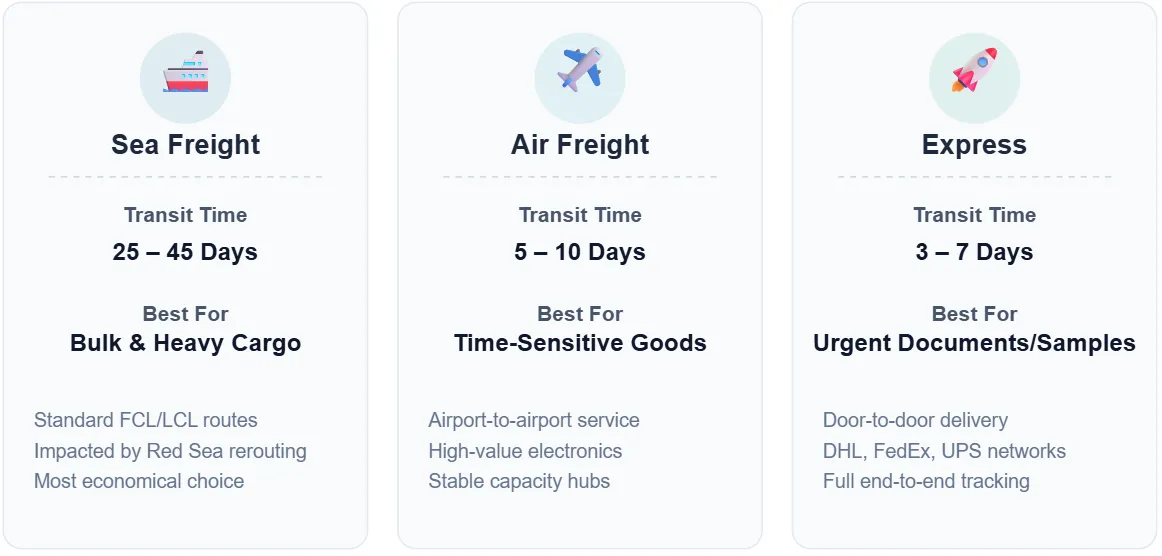
Sea Freight remains the most economical method for moving large volumes of cargo, though it is currently the most affected by regional volatility. For importers looking for the most competitive sea shipping cost from China to Yemen, choosing the right port and carrier is essential. Under normal circumstances, the voyage from major Chinese ports to Yemen takes between 25 and 35 days. However, the current reality in 2026 often requires more conservative planning.
FCL (Full Container Load) vs. LCL (Less than Container Load)
For FCL (Full Container Load) shipments, where you rent an entire 20ft or 40ft container, the transit is relatively direct. Once the vessel departs, it heads toward the Gulf of Aden. Currently, FCL transit times are averaging 30 to 45 days due to security-related slower steaming and port wait times.
LCL (Less than Container Load), where you share container space with other importers, typically adds an extra 5 to 10 days to the total timeline. This additional time is required for the consolidation process at the origin port in China and the deconsolidation at the destination port, such as the Port of Aden.
The Transshipment Factor
Most sea cargo to Yemen is not direct. It often involves transshipment at major hubs like Jebel Ali (UAE), Salalah (Oman), or Djibouti. While transshipment allows for more frequent sailings, it introduces the risk of "roll-overs" (cargo being left for the next vessel), which can add a week or more to your lead time.
Air Freight and Express Shipping Duration
When time is of the essence, Air Freight provides a significantly faster, albeit more expensive, alternative. Importers often rely on air shipping from China to Yemen to avoid maritime delays during peak seasons. For high-value electronics, medical supplies, or urgent spare parts, air transport is the preferred choice.
- Standard Air Freight: Typically takes 5 to 10 days. This includes the time for pickup in China, export customs, the flight itself, and import clearance in Yemen. Most cargo arrives at Aden International Airport (ADE) or Sana’a International Airport (SAH) via transit hubs like Dubai or Doha.
- Express Shipping: Services like DHL, FedEx, and UPS offer the fastest door-to-door transit, usually within 3 to 7 days. These services are ideal for small parcels and urgent documentation, offering end-to-end tracking and expedited customs handling.
| Shipping Mode | Typical Transit Time | Best For |
|---|---|---|
| Express Shipping | 3 – 7 Days | Documents, Samples, Small Parcels |
| Air Freight | 5 – 10 Days | High-Value, Time-Sensitive Goods |
| Sea Freight (FCL) | 30 – 45 Days | Large Volumes, Full Containers |
| Sea Freight (LCL) | 35 – 55 Days | Smaller Commercial Shipments |
Port-to-Port Transit Times: Major China-Yemen Routes
The specific departure port in China significantly influences the total nautical distance and, consequently, the transit time.
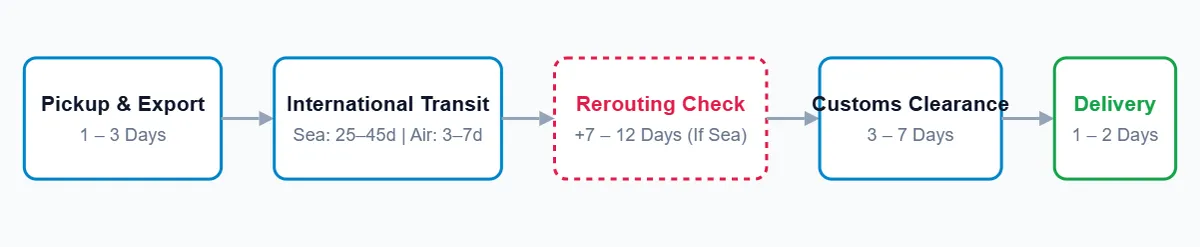
- Shanghai/Ningbo to Aden Port: As the primary commercial gateway to Southern Yemen, this route typically averages 30 to 35 days for direct sailings, though rerouting can extend this to 45 days.
- Shenzhen/Guangzhou to Hodeidah Port: Serving the Western coast, this route is critical for northern regions but often faces more operational challenges and inspections, averaging 35 to 40 days.
- Qingdao/Tianjin to Mukalla: Shipments from Northern China to Eastern Yemen usually involve more transshipment points, often exceeding 40 days.
Impact of the Red Sea Crisis on Yemen Shipping Time
The ongoing geopolitical situation in the Red Sea and the Bab-el-Mandeb Strait has fundamentally changed shipping lead times in 2026.
The Rerouting Reality
To mitigate the risk of Houthi attacks, many major carriers have opted to reroute vessels around the Cape of Good Hope. This detour adds approximately 3,500 nautical miles to the journey, resulting in a 7 to 12-day increase in transit time. Importers must now account for this "New Normal" when planning their inventory cycles.
Security Protocols and Insurance
Even for vessels continuing through the Red Sea, increased security protocols—such as "Safe Passage" registrations and naval escorts—add complexity and potential delays at the entrance to the Gulf of Aden. Furthermore, War Risk Insurance premiums have surged, and the time required to secure these approvals can add 2 to 3 days to the pre-shipment phase.
Beyond the Ocean: Factors Influencing Delivery Time in Yemen
The arrival of a ship at the port does not mark the end of the journey. Local factors in Yemen can be just as influential as the ocean transit itself.
Customs Clearance Duration
Customs Clearance in Yemen is a multi-step process that varies significantly between the Southern (Aden) and Northern (Hodeidah/Sana'a) control zones. In the Port of Aden, clearance typically takes 3 to 7 days, provided all documentation is in order. In the North, additional inspection layers by various authorities can extend this to 10 days or more.
DDP vs. DDU Impact
Choosing DDP (Delivered Duty Paid) terms can significantly shave days off the terminal dwell time. While we focus on Yemen, many businesses also utilize our expertise for DDP shipping from China to USA to streamline their global operations. When the freight forwarder handles the prepayment of duties and taxes, the cargo can often be released immediately upon inspection, rather than waiting for the consignee to settle payments locally.
Inland Infrastructure Challenges
Yemen’s inland infrastructure has been heavily impacted by conflict. Moving goods from the port to major cities like Taiz or Sana'a involves navigating numerous checkpoints and potentially damaged roads, adding 2 to 5 days to the final delivery.
How to Choose the Right Shipping Mode Based on Urgency
Choosing the right mode requires a balance between cost, safety, and speed.
- High Urgency (Under 1 week): Express Shipping is the only viable option. It bypasses the maritime volatility and offers the most predictable customs path.
- Moderate Urgency (1-2 weeks): Air Freight provides the best balance of speed and security, avoiding the Red Sea rerouting entirely.
- Standard Shipments (Over 1 month): Sea Freight remains the standard for B2B procurement. However, we always recommend building a 15-day buffer into your schedule to account for potential rerouting or port delays.
Seasonal Tip: Avoid shipping during Ramadan or the Chinese New Year period. During these times, labor shortages at ports and reduced flight capacity can add 7 to 14 days to any shipping mode.
FAQs
How long does customs clearance usually take in Aden?
Typically, Customs Clearance in the Port of Aden takes 3 to 7 business days. This is contingent on having a complete set of documents, including the Bill of Lading, Commercial Invoice, and Certificate of Origin.
Does the current conflict affect air freight as much as sea freight?
No. Air Freight is significantly less affected by the Red Sea maritime crisis. While insurance costs for flights into Yemen have risen, the transit times remain relatively stable compared to the 10-day detours facing sea freight.
What is the fastest shipping method from China to Yemen?
The fastest method is Express Shipping via carriers like DHL or FedEx, which typically delivers within 3 to 7 days.
How many days does sea freight from Shanghai to Aden Port take?
Currently, in 2026, sea freight from Shanghai to Aden takes between 30 and 45 days, depending on whether the vessel takes the direct Red Sea route or the Cape of Good Hope detour.
What is the typical air cargo transit time via Dubai or Djibouti to Yemen?
Air cargo transiting through hubs like Dubai usually takes 5 to 8 days to reach Yemen.
How much extra time does LCL shipping take compared to FCL for Yemen?
LCL shipping generally takes 5 to 10 days longer than FCL due to the time required for consolidation and deconsolidation at both ends of the journey.
Which documents are mandatory to prevent customs delays in 2026?
Mandatory documents include the Bill of Lading (B/L), Commercial Invoice, Packing List, and a Certificate of Origin. Some goods may also require specific import licenses or quality certificates.
Conclusion & The DTFU Advantage
Shipping to Yemen in 2026 requires more than just a booking; it requires a strategic partner who understands the shifting tides of Middle Eastern logistics. By recalibrating your expectations and accounting for the 7 to 12-day rerouting buffer, you can ensure your supply chain remains resilient despite regional challenges. For those also managing regional distribution, we provide comprehensive shipping from China to Saudi Arabia to cover the entire Arabian Peninsula.
At DTFU Logistics, we bring over 10 years of specialized experience to the China-Yemen route. As a FIATA and IATA certified freight forwarder, we offer: * Real-time rerouting strategies to avoid high-risk zones. * Direct contracts with carriers to ensure space and competitive rates. * Dedicated account managers who handle the complex Yemeni customs landscape on your behalf.
Don't let logistics uncertainty stall your business. Contact DTFU Logistics today for a real-time shipping quote and let our experts handle the complexity for you.