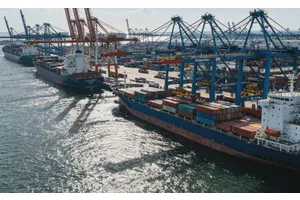
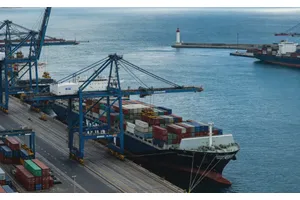
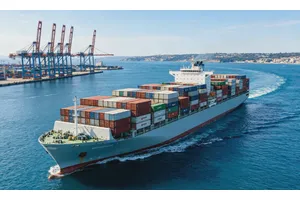
If you’re trying to import to Yemen and you keep getting vague quotes, surprise “destination charges,” or unclear tax answers, Door to Door Shipping from China to Yemen (usually under DDP) can feel like the only safe option—but it’s also the easiest to misunderstand.
I’ve handled enough Middle East shipments to know the pattern: most delays don’t happen in the ocean leg. They happen because the cargo description is too generic, the HS Codes are wrong, the paperwork doesn’t match, or the last-mile plan inside Yemen was never clarified. This guide breaks down what door-to-door really includes, how to compare sea vs air, how Yemen clearance usually works in practice, and what details you need to get a quote that is actually usable. For a broader pricing overview across all modes, see our Shipping cost from China to Yemen guide, or visit the Shipping from China to Yemen hub for all service options.
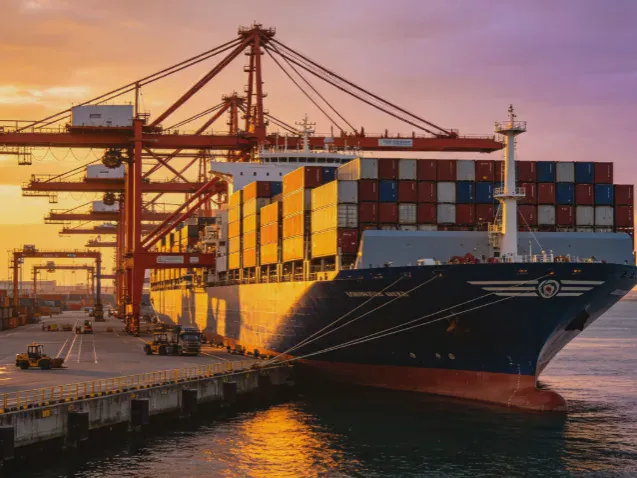
What Is Door-to-Door Shipping from China to Yemen?
In plain English, Door-to-Door Service means one logistics provider coordinates the shipment from your supplier’s address in China to your final delivery address in Yemen. When the service is arranged as DDP (Delivered Duty Paid) under Incoterms 2020, the forwarder is typically responsible for:
- Pickup from the supplier (factory, trading company, or warehouse)
- Export customs clearance in China
- Main international transport (usually Sea Freight or Air Freight)
- Import customs clearance in Yemen (handled via local partners/agents)
- Paying Duties and Taxes (as agreed) and arranging final delivery
That “as agreed” part matters. In real shipments, DDP is not a magic word—it’s a scope of responsibility that still depends on cargo type, destination city, and documents.
What a “DDP Quote to Yemen” Usually Includes
Commonly included (confirm in writing): - Inland pickup in China (one address) - Export documentation + China customs filing - Freight charges (ocean or air) plus standard carrier surcharges - Import clearance service fees in Yemen - Last-mile delivery to a named city/address (or to a local depot)
Often excluded or limited: - Demurrage/detention caused by delayed consignee response - Storage charges if the cargo is held for inspection or document mismatch - Special permits/certifications for regulated goods (medical, chemicals, telecom, etc.) - Oversize/overweight handling, crane costs, special trucking permits - “War risk”-related changes (routing, security escorts, insurance surcharges) if conditions change
When DDP Shipping from China to Yemen Makes Sense
DDP is typically the best fit when: - You’re a first-time importer and you don’t have a reliable customs broker in Yemen - You need cost predictability for budgeting (landed cost planning) - Your shipment is time-sensitive and you can’t afford handoffs between multiple parties
It may not be the best fit when: - You already have a strong in-country broker and want full control of duties/taxes - You’re importing regularly and prefer negotiated clearance agreements - Your goods require complex licensing where the importer must be the applicant
For importers managing multiple Middle East destinations, the same DDP logic applies to other Gulf lanes — see our Door to Door Shipping from China to Saudi Arabia guide for comparable cost structures and clearance workflows.
China to Yemen Shipping Routes, Ports, and Delivery Cities
Most commercial cargo from China enters Yemen through major seaports. In practice, the route and the “last mile” plan should be decided together. If you only plan the port leg, you may win a cheaper ocean rate and lose weeks on inland delivery.
Key Origin Ports in China (and Why They Matter)
Common origin ports used for Yemen shipments include: - Shanghai - Shenzhen - Ningbo - Guangzhou - Qingdao - Xiamen
Your supplier’s location impacts the best port choice. A factory near Shenzhen, for example, usually benefits from shorter domestic trucking and faster cut-off coordination, which reduces the risk of missing a sailing.
Yemen Destination Ports: Aden, Hodeidah, Mukalla
The three names you’ll see most often are: - Aden Port: a primary commercial gateway, especially for southern routes and onward trucking - Hodeidah Port: a major entry point in the west, often referenced for certain supply flows - Mukalla Port: used for specific trade patterns and regional distribution
Even if your end customer is in Sana’a, your cargo may still clear and discharge at a port where the inland network is more feasible for your cargo category and current conditions. Many Yemen shipments transit through Dubai or Jeddah before reaching Aden — see our Shipping from China to UAE page for routing and transshipment hub details.
Local Reality: Door Delivery Inside Yemen Is Not One Standard Service
From a forwarder’s perspective, “deliver to Sana’a” is not the same as “deliver to Aden.”
- Sana’a is inland. A common planning assumption is an overland leg from a coastal port (Aden is often used in planning). The distance from Aden to Sana’a is roughly a few hundred kilometers, and it’s not just kilometers that matter—road conditions, checkpoints, and local security conditions can reshape schedules.
- Taiz and other inland cities often require extra routing checks, not because the cargo can’t move, but because you need the right trucking plan and the right paperwork handoff.
That’s why a good Yemen door-to-door quote always asks: exact delivery city, delivery type (business address/warehouse vs residential), and whether offloading equipment is available.
Before You Request a Quote: The 10 Details That Prevent “Fake DDP”
To avoid a quote that looks good but collapses later, prepare:
- Cargo name + product use (not just “spare parts”)
- Photos of the cargo and packaging
- Carton count, dimensions, and gross weight
- Packaging type (cartons / pallets / crates)
- Cargo value (for insurance and customs value logic)
- Known HS Codes (if available; otherwise request classification support)
- Pickup address in China (city + zip code is often enough)
- Delivery address/city in Yemen (Sana’a/Aden/Taiz/Hodeidah, etc.)
- Desired mode (sea vs air) and latest acceptable arrival date
- Any “specials”: batteries, liquids, branded goods, medical items, telecom equipment
Sea Freight Door-to-Door China to Yemen Cost
If you’re shipping commercial quantities, sea freight is usually the most cost-efficient path—even when you choose DDP. The best sea solution depends on whether you can fill a container.
LCL vs FCL for Yemen Imports: The Practical Difference
- LCL (Less than Container Load): You share container space with other shippers. You pay by volume (often per CBM) and sometimes by “chargeable” rules. LCL is flexible for smaller shipments, but it adds consolidation/deconsolidation steps that can affect timing.
- FCL (Full Container Load): You use a full 20ft or 40ft container. FCL is often simpler operationally (less handling), and it can be safer for damage control, especially for fragile goods. For a focused look at port-to-port options before adding door delivery, refer to our Sea Freight From China to Yemen breakdown.
What Drives Sea Freight Door-to-Door China to Yemen Cost?
To evaluate any “all-in” sea quote, break it into three buckets:
| Cost Bucket | What It Covers | Why It Changes |
|---|---|---|
| Origin (China) | Pickup, export docs, export customs filing, warehouse handling | Distance to port, cargo readiness, documentation quality |
| Ocean leg | Ocean freight + common surcharges (terminal handling, docs) | Season, carrier space, routing, equipment availability |
| Destination (Yemen) | Import clearance service, duties/taxes (if included), port handling, trucking to final city | HS code/duty profile, inspection risk, last-mile complexity |
Table A: LCL Door-to-Door Estimate Framework (China → Yemen)
Use this table as a structure to compare vendors. The numbers will vary, but the line items should not.
| LCL Line Item | Typical Pricing Unit | What to Ask Your Forwarder |
|---|---|---|
| Origin pickup | per shipment / per truck | Is pickup included from my supplier city? Any waiting time fees? |
| China export clearance | per shipment | Do you handle export declaration under your name or mine? |
| LCL consolidation | per CBM | What is the minimum chargeable volume? |
| Ocean freight | per CBM | Is the rate valid for this week/month? Any peak surcharge? |
| Destination deconsolidation | per CBM | Are port handling and CFS fees included? |
| Yemen import clearance | per shipment | What documents do you need from me and when? |
| Last-mile delivery | per shipment | Is delivery to Sana’a/Taiz included or only to port city? |
Table B: FCL Container Shipping from China to Yemen Door-to-Door
For FCL, a serious quote should clearly state the container type, the discharge port (Aden/Hodeidah/Mukalla), and whether inland delivery is included.
| Item | 20ft (FCL) | 40ft (FCL) | Notes |
|---|---|---|---|
| Best for | Dense/heavy cargo | Higher-volume cargo | Volume vs weight economics |
| Handling risk | Lower | Lower | Less cargo handling than LCL |
| Cost predictability | Higher | Higher | Fewer CFS steps |
| Key questions | Included trucking to inland city? | Same | Confirm detention/demurrage scope |
Table C: Transit Time Door-to-Door China to Yemen (Sea Freight)
Compe***** benchmarks for this lane commonly show sea transit in the 25–40 day range, but door-to-door adds more steps. A practical planning view looks like this:
| Segment | Typical Range | What Causes Delays |
|---|---|---|
| Pickup + China export | 2–7 days | Supplier readiness, missing invoice/packing list details |
| Ocean transit | 25–40 days | Transshipment, schedule changes, port congestion |
| Yemen clearance + port handling | 3–15+ days | Inspection, duty disputes, document mismatch |
| Inland delivery (port → city) | 1–10+ days | Truck availability, route conditions, local checkpoint schedules |
Cost-Saving Tips That Actually Work on Yemen Lanes
- Consolidate correctly: multiple suppliers can be combined, but only if all invoices match and the packing list is standardized. For detailed route-level rate comparisons, our Sea Shipping cost from China to Yemen article breaks down container rates from major Chinese ports.
- Don’t “round” carton sizes: volumetric mistakes are one of the most common causes of quote inflation after cargo is received.
- Use better packaging: damage claims are harder on multi-leg routes. Palletizing and moisture protection often saves more than it costs.
- Confirm delivery terms early: “door-to-door” without a defined delivery city is not door-to-door.
Air Freight Door-to-Door from China to Yemen
Air freight can be a lifesaver for urgent shipments to Yemen—especially spare parts, electronics with time pressure, or high-value items where inventory downtime costs more than shipping.
How Air Freight Is Priced (Chargeable Weight Explained)
Air quotes usually depend on chargeable weight, which is the greater of: - Actual gross weight, or - Volumetric weight (based on carton dimensions)
That’s why “small but bulky” shipments can be expensive by air.
Table D: Shipping from China to Yemen DDP Price per Kg (Air) — A Practical Weight-Break Guide
Exact rates change weekly, but the structure below is what you should expect from a professional quote.
| Chargeable Weight Tier | Typical Use Case | What You Should Confirm |
|---|---|---|
| 0.5–5 kg | samples, urgent parts | Minimum charge, remote delivery limits |
| 5–45 kg | small commercial shipments | Volumetric calculation method |
| 45–100 kg | regular B2B air cargo | Security screening requirements |
| 100–300 kg | bulk urgent orders | Capacity constraints and cut-off times |
| 300 kg+ | project/stock replenishment | Split shipment strategy and insurance |
Table E: Air Freight vs Sea Freight for Door-to-Door Delivery Yemen from China
| Factor | Air Door-to-Door | Sea Door-to-Door |
|---|---|---|
| Speed | Fastest (often 5–12 days lane benchmarks for air legs) | Slower (often 25–40 days ocean leg benchmarks) |
| Best for | Urgent, high-value, low volume | Commercial cargo, heavier shipments |
| Risk profile | Less handling time, more airline restrictions | More handling points, more port exposure |
| Cost sensitivity | High | Lower per unit for larger shipments |
| Common failure point | Restricted cargo (batteries/liquids) | Documentation and port/inland coordination |
Common Air Freight Mistakes (Seen Repeatedly)
- Declaring “general cargo” when the product is regulated (electronics, chemicals, telecom items)
- Forgetting batteries: lithium content changes the booking and sometimes the airline choice
- Missing a clean commercial invoice (wrong consignee name, inconsistent values, unclear description)
Step-by-Step DDP Shipping Process: From China Supplier Pickup to Yemen Door Delivery
One reason DDP works well for Yemen is that it reduces handoffs. But it only stays smooth when you treat the shipment like a project, not just a booking.
Step 1: Booking and Quotation Checklist (Don’t Skip This)
Before your forwarder confirms DDP, align on: - The shipment mode (sea LCL/FCL or air) - The discharge port (Aden/Hodeidah/Mukalla) - The delivery city (Sana’a/Aden/Taiz/etc.) - Document responsibilities (who issues what and when) - Whether duties/taxes are included under the DDP scope for your cargo type
Step 2: Supplier Pickup + Consolidation in China
For multi-supplier purchases (a common Alibaba pattern), consolidation is where you win or lose time.
Practical best practice: ask your warehouse to re-check carton counts and re-measure dimensions on arrival. If the cargo measures bigger than declared, your chargeable volume/weight changes—and so does your budget.
Step 3: China Export Customs Clearance
Your forwarder typically needs: - Commercial invoice and packing list (final versions) - Product description sufficient for export declaration - Any required export compliance documents (product-dependent)
If you’re exporting under a supplier’s company, ensure names and values are consistent. “Inconsistent seller names” is a common red flag in customs review.
Step 4: Main Transport + Tracking Milestones
A professional forwarder tracks milestones such as: - Cargo received at warehouse - Export cleared - Departed origin port/airport - Arrived destination port/airport - Clearance in progress - Out for delivery
This matters more on Yemen lanes because routing can change (transshipment or schedule adjustment). You want visibility early, not after the cargo is already waiting.
Step 5: Arrival at Aden/Hodeidah + Yemen Import Customs Clearance
Yemen clearance is where details matter: - The HS Codes must match the product description and declared values - The commercial invoice should read like a real transaction (not a placeholder) - Packing lists should match physical cargo (carton count, gross weight)
In real operations, the consignee’s responsiveness is the biggest controllable variable. If customs asks for a clarification and the importer replies two days later, that’s two days added to your “port time.”
Step 6: Last-Mile Delivery to Final Address
For inland deliveries (e.g., to Sana’a), plan for: - Delivery appointment style (warehouse hours, unloading capability) - Proof-of-delivery process - Immediate damage check and photo documentation
If there is damage, the best claims are the ones documented at delivery—not three days later.
Yemen Customs Clearance, Import Duties & VAT (YCA): What You Must Prepare
No compe***** in this topic cluster explains Yemen customs clearly, but it’s often the single biggest source of shipment anxiety. You don’t need to memorize regulations—you need a repeatable checklist and a clear duty/tax logic.
In many shipments, import formalities are handled through local partners working under the Yemen Customs Authority (YCA) processes, so document accuracy and HS classification become the real “speed factor.”
The Core Customs Terms You’ll See (and Should Understand)
- Customs Clearance: the official process of declaring goods, submitting documents, and paying required charges
- HS Codes: the classification code that drives duty rate and import rules
- Duties and Taxes: import duty plus VAT/sales tax (as applicable)
- Bill of Lading (B/L) / Airway Bill (AWB): the transport document used to release cargo and complete clearance
- Certificate of Origin: sometimes required, depending on cargo type and local requests
A Practical Duty + VAT Calculation Template (With a Simple Example)
Exact duty rates depend on the HS code and product category. But the landed-cost method typically follows a pattern like:
- Start with customs value basis (often aligned to CIF logic: cargo value + freight + insurance)
- Apply duty rate (depends on HS code)
- Apply VAT/sales tax (often stated as 5% in many references for Yemen imports; confirm for your product and import zone)
- Add clearance/port service fees
Here’s a simplified example using hypothetical numbers (for understanding only):
| Component | Example Value | Notes |
|---|---|---|
| Cargo value (invoice) | $20,000 | Based on commercial invoice |
| Freight + insurance (for customs basis) | $3,000 | Mode-dependent |
| Customs value basis | $23,000 | Example customs base |
| Duty (assume 10%) | $2,300 | HS-code dependent |
| VAT/sales tax (assume 5%) | $1,265 | Often applied on base + duty; confirm locally |
| Clearance + port service fees | $300–$900 | Varies by shipment and handling |
| Indicative landed charges total | $4,165–$4,465 | Excludes inland delivery cost |
The key takeaway: if your invoice value is incorrect or your HS code is wrong, the entire chain of duty/tax logic changes—and delays follow.
Documentation Checklist for Customs Clearance Yemen Imports from China
Most shipments will require at least the following documents:
| Document | Who Provides It | Common Mistake to Avoid |
|---|---|---|
| Commercial Invoice | supplier/exporter | Vague description (“goods”), inconsistent buyer/seller names |
| Packing List | supplier/exporter | Carton count/weights don’t match physical cargo |
| B/L or AWB | carrier/forwarder | Wrong consignee details or missing original requirements |
| Certificate of Origin (if requested) | supplier/exporter | Issued late or inconsistent product description |
| HS code reference | importer/forwarder | Guessing codes without validation |
| Special certificates (product-specific) | importer/supplier | Assuming “general cargo” when regulated |
Yemen Import Restrictions and Prohibited Items (High-Level)
Because Yemen’s import environment can vary by cargo type and region, treat this as a pre-shipment confirmation step, not an afterthought. Before shipping, confirm whether your goods are: - Restricted (require a license/approval) - Prohibited - Sensitive (telecom items, medical, chemicals, branded goods)
If you’re unsure, a professional forwarder will ask for your product specs early and tell you what they can and cannot move under DDP.
DDP vs DDU vs FOB vs EXW for Shipping from China to Yemen
Most “shipping confusion” isn’t about the ship—it’s about who is responsible at each step and who controls customs.
Quick Comparison Table: Who Pays and Who Controls What
| Term | Seller Responsibility | Buyer Responsibility | Best For |
|---|---|---|---|
| EXW | Makes goods available at factory | Pickup, export, freight, import, delivery | Experienced importers with full logistics control |
| FOB | Delivers to China port, export cleared | Freight, import, delivery | Importers who want control from port onward |
| CIF | Ocean freight + insurance to port | Import clearance + delivery | Port-based buyers with local broker |
| DDU | Delivery without duties/taxes paid | Duties/taxes + clearance finalization | Buyers who can pay duties but want logistics handled |
| DDP | Delivery with duties/taxes handled (as agreed) | Provide docs + comply with importer requirements | Buyers who want predictable landed cost and fewer handoffs |
When DDP Is Worth It for Yemen Shipments
DDP is often worth the premium when: - You need a single accountable party across pickup, export, freight, clearance, and delivery - Your shipment is high-value and you want fewer coordination failures - Your internal team is small and you can’t manage multiple vendors. For a deeper Incoterms comparison, read DDP vs FOB: Which Option Saves Time and Reduces Hassle.
A “Best Freight Forwarder China to Yemen Door to Door” Checklist
Use these criteria to separate real capability from a generic template quote:
- Can they explain Yemen clearance documents in plain English?
- Do they ask for HS code/cargo specs early (a good sign) instead of quoting blindly?
- Do they have a clear last-mile plan for your city (Sana’a/Taiz/etc.)?
- Do they define what is included and excluded in DDP (fees, duties, detention)?
- Do they offer tracking milestones, not just a departure date?
- Can they advise on Cargo Insurance for high-risk routes?
Cargo Insurance and Risk Management for Yemen Shipments
For Yemen-bound cargo, insurance and risk planning isn’t “optional upsell.” It’s part of professional importing—especially for commercial goods with tight margins.
What Cargo Insurance Is (and What It Isn’t)
Cargo Insurance typically covers loss or damage during transit under defined terms. It does not automatically fix: - Delays caused by documentation issues - Market disruptions that require rerouting - Losses due to poor packaging
Ask for the exact coverage basis (all-risk vs named perils) and confirm any route-related exclusions. For a broader primer on coverage costs across lanes, see our Shipping container insurance cost for shipments from China guide.
Risk-Control Checklist: What We Recommend in Real Operations
| Risk Area | Practical Mitigation | Why It Matters for Yemen |
|---|---|---|
| Packaging damage | palletize, corner protection, moisture barrier | More handling points on multi-leg routes |
| Document mismatch | consistent invoice + packing list + HS code support | Customs delays start with inconsistencies |
| Routing uncertainty | choose routing with reliable transshipment hubs when needed | Schedule stability can beat “cheap rates” |
| Visibility | milestone tracking + fast escalation path | You need early warning on exceptions |
| Claims readiness | photos at stuffing + photos at delivery | Claims depend on evidence, not opinions. For context on how the regional security landscape affects maritime logistics, see Red Sea Shipping Returns Under Tight Security. |
A Realistic Local Scenario (Why “Inland Delivery” Changes Everything)
One Sana’a-based importer we supported for building materials had a straightforward plan on paper: sea freight to a Yemen port, then trucking inland. The shipment didn’t fail because of ocean transit—it almost failed because the consignee details on the invoice didn’t match the final delivery paperwork format required for clearance handoff. We corrected it before the cargo arrived, and that single change prevented a “silent delay” that would have turned into storage fees plus missed delivery windows. If you're shipping construction-related cargo to Yemen, our Shipping Building Materials from China guide covers packaging, loading, and customs specifics for this high-volume cargo category.
The lesson: if you want Yemen door-to-door to be predictable, you must treat documents and inland delivery as one integrated plan.
FAQs
What’s the cheapest way to ship small quantities from China to Yemen?
For small shipments, LCL sea freight is usually the lowest-cost option, but it adds handling steps. If timing matters, compare LCL with consolidated air freight based on chargeable weight.
Can you deliver door-to-door to Sana’a, or only to Aden Port?
Door delivery to Sana’a is possible in many cases, but it must be quoted specifically. A serious quote will name the delivery city and clarify the inland trucking scope, not just “to Yemen.”
How long does Yemen customs clearance usually take?
It varies widely based on cargo type and document accuracy. In practical planning, assume a range of a few days to two weeks or more if the cargo is selected for inspection or documents need correction.
What documents do I need for customs clearance in Yemen?
At minimum: commercial invoice, packing list, and B/L or AWB. Many shipments also require HS code validation and sometimes a Certificate of Origin or product-specific certificates.
Can I ship Alibaba goods door-to-door to Yemen under DDP?
Yes—this is one of the most common patterns. The key is consolidating supplier documents into one clean set and matching carton data to the actual cargo received.
What’s the difference between DDP and DDU for Yemen imports?
With DDU, you (the importer) usually handle paying duties/taxes, while the forwarder manages transport. With DDP, the forwarder coordinates duties/taxes as part of the service scope (as agreed).
What happens if my cargo is inspected or held by customs?
Expect requests for clarifications (product specs, invoice value support, HS code rationale). The fastest resolutions come from having accurate documents and responding quickly through your forwarder’s clearance partner.
How do I estimate the total landed cost (duty + VAT + clearance + delivery)?
Start with a clean invoice value, add freight/insurance for the customs basis, then apply duty and VAT assumptions based on HS code. Finally add clearance fees and inland delivery. If you want a precise number, share product details so your forwarder can validate the HS code first.
If you want a door-to-door quote that doesn’t change after cargo is received, send these details upfront: cargo name + photos, cartons/pallet dimensions, gross weight, pickup city in China, delivery city/address in Yemen, and your preferred shipping mode (sea/air). For shipments to neighboring Gulf markets, explore our Shipping from China to Saudi Arabia service page.