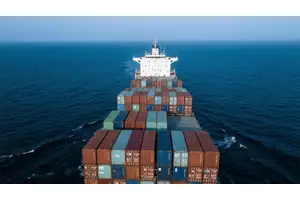
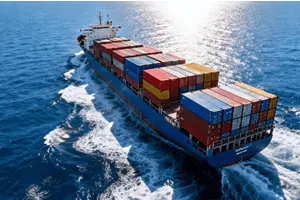
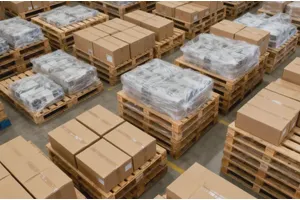
Learning how to ship building materials from China can feel overwhelming — fragile cargo, multiple 1688 suppliers, confusing Incoterms, and shipping costs that fluctuate by the day. This guide covers everything: packaging tiles, stone, and glass to survive ocean transit, comparing FCL vs LCL vs rail costs with real numbers, choosing between DDP and FOB, consolidating multi-supplier orders into one shipment, and navigating customs documentation. For a fully managed experience, door-to-door shipping handles every step from factory to final delivery. Built from 955 real shipments and over 11,000 customer inquiries — not marketing theory.
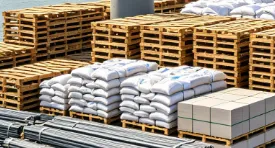
Types of Building Materials You Can Import from China
Before you plan your shipment, it helps to understand the full landscape of building materials available from Chinese manufacturers. Each category has different shipping requirements, HS codes, and handling considerations.
Structural Materials
Steel beams, rebar, cement, and concrete products fall under HS Chapters 72–73 and 68. These are among the heaviest materials you can ship, which means freight costs are driven primarily by weight rather than volume. Steel exports from China, particularly carbon steel and stainless steel profiles, are subject to anti-dumping duties in several markets — we will cover that in the customs section. For structural materials, FCL (Full Container Load) shipping in 20ft containers is usually the most economical choice because 20ft containers have a higher weight tolerance (~28 metric tons) than 40ft containers.
Finishing Materials
This is the largest and most diverse category — and the one that generates the most inquiries at DTFU Logistics. It includes:
- Ceramic and porcelain tiles (HS Chapter 69) — by far the most frequently shipped building material from China, particularly from the Foshan region
- Marble, granite, and natural stone (HS Chapter 68) — heavy, fragile, and high-value; demands specialized crating
- SPC and laminate flooring (HS Chapter 39) — lighter than tiles but sensitive to moisture and stacking pressure
- Wall panels and ceiling panels — PVC panels, WPC panels, and acoustic panels are all fast-growing export categories
Doors, Windows & Glass Products
Aluminum windows, tempered glass panels, and insulated glass units fall under HS Chapters 70 and 76. Glass and aluminum profiles are two very different shipping challenges: glass is fragile and must travel vertically in A-frame crates, while aluminum profiles are relatively durable but long, making them awkward to containerize efficiently.
Sanitary Ware & Hardware
Toilets, sinks, faucets, shower enclosures, and bathroom vanities (HS Chapters 69, 73, and 84) are popular imports for renovation and hospitality projects. The main challenge here is mix-loading: a ceramic toilet is heavy and fragile, while a faucet set is compact and durable. Packing them together in the same container requires careful weight distribution planning.
Wood Products & Panels
Plywood, MDF, OSB, and engineered wood flooring (HS Chapter 44) are subject to ISPM 15 regulations — any solid wood packaging must be heat-treated or fumigated and stamped with the IPPC mark. Engineered wood products (plywood, MDF) are generally exempt from fumigation requirements, which makes them logistically simpler to import.
China's Building Material Industry Clusters: Where to Source
One of the biggest advantages of sourcing from China is the geographic concentration of manufacturing expertise. Knowing which region specializes in your product helps you find better suppliers, negotiate sharper prices, and minimize inland transportation costs to the nearest port.
| Region | Specialization | Nearest Port | Why It Matters |
|---|---|---|---|
| Foshan, Guangdong | Ceramic tiles, sanitary ware, SPC flooring, aluminum doors & windows | Guangzhou / Shenzhen | The world's largest ceramic production hub; 60%+ of China's tile exports originate here |
| Quanzhou / Xiamen, Fujian | Natural stone (granite, marble), outdoor tiles | Xiamen | Home to China's stone processing industry; direct access to Xiamen port |
| Shandong Province | Steel structures, stone, cement products | Qingdao / Tianjin | Heavy industry zone; competitive rates for steel and structural materials |
| Hebei Province | Steel, glass (flat glass, tempered glass) | Tianjin (Xingang) | Major glass production region; proximity to Tianjin port reduces inland trucking |
| Zhejiang Province | Hardware, door and window fittings, lighting fixtures | Ningbo / Shanghai | China's hardware capital; ideal for smaller, high-value fittings and accessories |
| Jiangsu Province | Steel structures, construction machinery, prefabricated buildings | Shanghai | Strong in engineered and prefabricated construction products |
When it comes to purchasing channels, most first-time importers start on Alibaba — it is English-friendly and offers Trade Assurance. More experienced buyers often move to 1688 (Alibaba's domestic platform) for significantly lower prices, though 1688 requires a Chinese-speaking purchasing agent or a freight forwarder with procurement support. Made-in-China.com and Global Sources are solid alternatives, and for large-volume buyers, attending the Canton Fair (Guangzhou, April/October) or Bauma China (Shanghai, for construction machinery) can be transformative for building direct supplier relationships.
Shipping Methods for Building Materials: Complete Comparison
Choosing the right shipping method is arguably the single most important decision you will make — it affects your cost, transit time, and most critically for building materials, the risk of cargo damage.
FCL (Full Container Load)
With FCL, you book an entire container exclusively for your cargo. This is the gold standard for building materials, especially fragile ones. Because your goods are loaded once at origin and not touched again until destination, the handling risk is dramatically lower than LCL.
| Container Type | Capacity | Max Payload | Best For |
|---|---|---|---|
| 20ft GP | ~28 CBM | ~28,000 kg | Heavy materials: tiles, stone, steel, cement |
| 40ft GP | ~56 CBM | ~26,500 kg | Volume cargo: doors, windows, panels, insulation |
| 40ft HQ | ~68 CBM | ~26,500 kg | Lightweight volume cargo: SPC flooring, plywood, ceiling panels |
Pro tip: If you are shipping tiles or stone, always prefer a 20ft container even if you don't fill it completely. 40ft containers have a lower weight limit, and for dense materials, you will hit the weight cap long before you fill the volume.
LCL (Less than Container Load)
LCL means your cargo shares a container with other importers' goods. It is the go-to option for shipments between 1 and 15 CBM — the sweet spot for first-time importers and small businesses testing the market. You pay per cubic meter (CBM) rather than a flat container rate. However, LCL involves more handling (consolidation at origin CFS warehouse, deconsolidation at destination), which means a higher physical risk for fragile items. We address how to mitigate this in the packaging section below.
Break Bulk & Flat Rack
For oversized items that simply do not fit into a standard container — think long steel beams, prefabricated building modules, or tower crane components — break bulk shipping (loaded directly onto the vessel) or flat rack containers (open-sided containers for over-width/over-height cargo) are your options. These are specialized and more expensive per unit of cargo, but they are the only viable choice for truly oversized construction materials.
Air Freight
Air freight for building materials is rarely economical for anything beyond samples, urgent spare parts, or small hardware shipments. At roughly 5–8 times the cost of sea freight per kilogram, air freight only makes sense when speed justifies the premium. For time-sensitive shipments, air freight from China offers door-to-door transit in as little as 5–8 days to major global hubs. A common use case: a contractor waiting on a custom faucet set or a specialized door handle to finish a project on schedule.
Rail Freight (China-Europe Railway Express)
For shipments to Europe, rail freight is an increasingly attractive middle ground. Transit times of 15–20 days (vs. 28–40 days by sea) at roughly 40–60% of the air freight cost make rail a compelling option for medium-urgency building material shipments. Routes typically depart from Xi'an, Chongqing, or Zhengzhou and terminate at hubs like Duisburg (Germany), Warsaw (Poland), or Madrid (Spain). For a deeper comparison of these two modes, read our analysis of sea vs rail freight. If you are importing to any European country, our Shipping From China to Europe hub covers all major routes and destination ports.
Shipping Method Comparison at a Glance
| Method | Cost (per CBM or equiv.) | Transit (to Europe) | Min. Volume | Damage Risk | Best For |
|---|---|---|---|---|---|
| FCL Sea | $50–$120/CBM (40ft basis) | 28–40 days | ~15+ CBM | Low | Fragile, heavy, or bulk materials |
| LCL Sea | $80–$180/CBM | 35–50 days | 1 CBM | Medium | Small-volume, non-fragile, mixed loads |
| Break Bulk | Quoted per shipment | 30–45 days | Project-based | Medium | Oversized steel, structures, equipment |
| Air Freight | $3–$8/kg | 5–8 days | 0.5–1 CBM | Low | Samples, urgent hardware, small fittings |
| Rail Freight | $2–$5/kg | 15–20 days | 1 CBM | Low-Medium | Mid-urgency European shipments |
How Much Does It Cost? Complete Cost Breakdown by Route
Cost transparency is one of the biggest competitive gaps we identified across all competing guides. Most freight forwarders publish their articles without a single dollar figure — which is exactly what frustrates importers the most. Here is a practical, route-by-route breakdown based on current market rates.
FCL Container Rates by Route (2026 Market Reference)
Note: Ocean freight rates are dynamic and fluctuate with fuel prices, peak seasons, and global demand. The ranges below reflect current mid-2026 market conditions (spot rates for general cargo, accurate as of June 2026). Heavy cargo, hazardous materials, or peak-season shipments (August–October, pre-Chinese New Year) will land at the higher end. For a live, shipment-specific quote, always consult your freight forwarder — these ranges are reference benchmarks, not binding offers.
| Route (China → Destination) | 20ft GP | 40ft GP / 40HQ | Transit (Sea) |
|---|---|---|---|
| Shenzhen → US West Coast (LA/Long Beach) | $2,000–$4,000 | $3,000–$5,500 | 14–22 days |
| Shenzhen → US East Coast (NY/Savannah) | $3,500–$6,500 | $5,000–$8,500 | 25–40 days |
| Shanghai → North Europe (Rotterdam/Hamburg/Felixstowe) | $2,500–$5,500 | $4,000–$7,500 | 28–40 days |
| Ningbo → Mediterranean (Barcelona/Genoa/Piraeus) | $2,800–$5,800 | $4,500–$8,000 | 25–38 days |
| Guangzhou → Middle East (Dubai/Jeddah) | $1,500–$3,500 | $2,500–$5,000 | 18–30 days |
| Shenzhen → East Africa (Mombasa/Dar es Salaam) | $2,000–$4,500 | $3,500–$6,500 | 22–35 days |
| Shanghai → West Africa (Lagos/Tema/Apapa) | $2,500–$5,500 | $4,000–$7,500 | 30–45 days |
| Shenzhen → Australia (Sydney/Melbourne) | $1,800–$3,800 | $2,800–$5,500 | 15–25 days |
| Ningbo → Southeast Asia (Singapore/Bangkok/Jakarta) | $500–$1,500 | $1,000–$2,500 | 5–12 days |
| Shanghai → South America (Santos/Buenos Aires) | $2,500–$5,500 | $4,000–$7,500 | 30–45 days |
LCL Sea Freight: Per-CBM Pricing Guide
For LCL shipments, you pay per cubic meter (CBM). The table below gives you a realistic range for building materials:
| Route (China → Destination) | LCL Cost (per CBM) | Typical Minimum |
|---|---|---|
| China → USA | $80–$160/CBM | 1 CBM |
| China → UK / Europe | $70–$150/CBM | 1 CBM |
| China → Middle East | $50–$120/CBM | 1 CBM |
| China → Africa | $90–$180/CBM | 1–2 CBM |
| China → Australia | $60–$140/CBM | 1 CBM |
| China → Southeast Asia | $30–$80/CBM | 0.5–1 CBM |
Important: LCL rates for heavy materials (tiles, stone, steel) are typically calculated on a weight-or-measure basis: 1 CBM = 500 kg. If your cargo weighs more than 500 kg per cubic meter, you will be charged by weight rather than volume. For example, 2 CBM of marble tiles weighing 1,600 kg would be billed as 3.2 CBM (1,600 ÷ 500).
Hidden Fees That Surprise First-Time Importers
The ocean freight charge is only part of the total cost. Here are the fees that often catch importers off guard:
| Fee Category | Typical Range | What It Covers |
|---|---|---|
| Origin Charges | $200–$600 | Export customs clearance, documentation, port handling |
| Destination Terminal Handling (THC) | $150–$500 | Container unloading and terminal handling at destination port |
| Customs Bond (USA) | $300–$800 (annual) | Required by US CBP for imports valued over $2,500 |
| Customs Broker Fee | $100–$300 | Professional customs entry preparation and filing |
| Import Duties & Taxes | Varies by country & HS code | Tariffs and VAT on your specific building material category — always calculated transparently, never hidden as markups |
| Last-Mile Delivery | $300–$2,000+ | Trucking from destination port/CFS to your final address |
| ISPM 15 Fumigation | $50–$150 | Mandatory for solid wood packaging; inspection and stamp |
| Demurrage & Detention | $50–$200/day | Penalties if containers are held beyond free time at port |
| Storage / Warehouse Fees | $20–$80/day | If you delay pickup after cargo arrives |
Total Door-to-Door Cost Formula
To estimate your all-in cost, use this formula:
Total Cost = Factory Price + China Inland Trucking + Export Customs + Ocean Freight + Insurance + Import Duties & VAT + Destination Port Fees + Last-Mile Delivery
If you opt for a DDP (Delivered Duty Paid) service with a freight forwarder, most of these line items are bundled into a single door-to-door quote — more on this in the Incoterms section. For specific container pricing to major destinations, see our detailed 20ft & 40ft container cost from China to USA guide and Shipping From China to Australia rates.
4 Ways to Reduce Your Shipping Costs
- Consolidate multiple LCL shipments into one FCL. If you are sourcing from multiple 1688 suppliers and your combined volume exceeds ~15 CBM, consolidating into a single 20ft container almost always reduces your per-CBM cost — sometimes by 30–40%.
- Ship off-peak. Ocean freight rates spike sharply from August to October (pre-Christmas retail rush) and in the weeks before Chinese New Year (January/February). Whenever possible, book your shipments for March–July or November to secure lower rates.
- Use a 20ft container for heavy materials. 40ft containers have a lower weight tolerance (~26.5t vs ~28t for 20ft). If you are shipping dense materials like tiles, stone, or steel, a 20ft container lets you maximize payload without triggering overweight surcharges.
- Choose the port closest to your factory. If your supplier is in Foshan, shipping from Shenzhen or Guangzhou instead of Shanghai saves hundreds of dollars in domestic trucking costs per container.
Packaging Guide: How to Protect Each Type of Building Material During Shipping
This is the section that none of the top-ranking compe***** articles adequately cover — and it is arguably the most important one. Improper packaging is the #1 cause of cargo damage claims in building material shipments, and standard freight insurance policies may deny your claim if packaging is deemed "insufficient." Here is exactly how to package each material type for a safe ocean journey.
| Material Type | Recommended Packaging | Key Precautions |
|---|---|---|
| Ceramic / Porcelain Tiles | Foam interleaving between each tile + plastic edge protectors + wooden crate or reinforced export pallet with PET strapping | Max stack height 1m; "FRAGILE — DO NOT STACK" labels on all sides; add 8–12% overage for expected breakage; ISPM-15 fumigation stamp required if using solid wood crates |
| Glass Panels & Windows | A-frame wooden crates with anti-shatter protective film + closed-cell foam padding between each panel; tilt indicators affixed to crate exterior | Never lay flat — must travel vertically; never stack other cargo on top; A-frame design transfers weight to the base, not the glass edges |
| Marble, Granite & Stone | Heavy-duty wooden crates with moisture-barrier lining + steel or high-tension PET strapping; internal wood bracing to prevent slab movement | Place at container floor only — never stack stone on top of other cargo; use 20ft containers for density; weight distribution must be even across container floor |
| Steel, Aluminum & Metal Profiles | Bundled with steel straps + protective edge guards; for long sea voyages, add VCI (Vapor Corrosion Inhibitor) paper or film to prevent rust | Bundles must be separated by timber dunnage for forklift access; oversized beams require flat rack containers; ensure material is dry before packaging |
| SPC / Laminate Flooring | Export-grade cartons with internal plastic vapor barrier + desiccant packs; stacked on pallets with stretch wrap and corner boards | Keep flat and level — warping occurs if stored vertically; avoid exposure to moisture or direct sunlight during warehouse staging; max 4-high pallet stacking |
| Sanitary Ware (Toilets, Sinks) | Custom-molded EPE or EVA foam inserts + double-wall corrugated boxes + corner guards; shock and tilt indicators on external packaging | Never mix sanitary ware on the same pallet with heavy materials; silica gel packs inside boxes to absorb condensation; fragile labels on all sides |
| Plywood & Timber | Export-grade pallets with vapor barrier + desiccants; plywood crating is preferred (engineered wood products are exempt from fumigation) | ISPM 15 compliance is mandatory for any solid wood packaging — fumigated and stamped with IPPC mark; keep flat to prevent warping; store in dry conditions |
Understanding ISPM 15
ISPM 15 (International Standards for Phytosanitary Measures No. 15) is an international regulation adopted by the IPPC (International Plant Protection Convention), a body administered by the Food and Agriculture Organization (FAO) of the United Nations. It requires that all solid wood packaging materials (pallets, crates, dunnage) used in international trade be heat-treated or fumigated and marked with the official IPPC stamp. This is non-negotiable — customs authorities in virtually every country will reject or destroy shipments with non-compliant wood packaging. A valid fumigation certificate must accompany any shipment using solid wood packaging. Engineered wood products like plywood, MDF, and OSB are exempt from ISPM 15 requirements because the manufacturing process (heat + pressure + adhesives) eliminates pests. If given the choice, use plywood crates for your building material shipments — you avoid the fumigation hassle while still getting strong protection.
DDP vs FOB vs CIF: Which Incoterm Should You Choose?
Understanding Incoterms — specifically the Incoterms 2020 rules published by the International Chamber of Commerce (ICC) — are essential for building material imports because the cost differences between FOB, CIF, and DDP can be staggering — and choosing the wrong one can leave you with unexpected bills for customs duties, port fees, or last-mile delivery that you did not budget for.
Quick Definitions (Incoterms 2020)
| Term | Who Arranges Ocean Freight? | Who Pays Import Duties? | Who Handles Last-Mile Delivery? | Best For |
|---|---|---|---|---|
| EXW (Ex Works) | You | You | You | Buyers with a China-based procurement team or agent |
| FOB (Free On Board) | You | You | You | Experienced importers with their own customs broker at destination |
| CIF (Cost, Insurance & Freight) | Supplier | You | You | Buyers comfortable with destination customs but wanting shipping handled |
| DDP (Delivered Duty Paid) | Forwarder (all-in) | Forwarder | Forwarder | First-time importers, small businesses, and anyone who wants a single price to their door |
What about DDU? The Incoterm DDU (Delivered Duty Unpaid) was officially retired in Incoterms 2020 and replaced by DAP (Delivered at Place). Under DAP/DDU terms, the seller handles all logistics up to the named destination — but the buyer is responsible for import customs clearance, duties, and taxes. For most building material importers, DAP/DDU adds complexity without meaningful cost savings compared to DDP, which is why we almost always recommend DDP for first-time and small-volume importers.
Why DDP Is the Most Popular Choice for Building Material Importers
Based on our analysis of 955 building material inquiries, DDP door-to-door is by far the most requested service. Here is why:
- Everything is included in one price. From factory pickup in Foshan to final delivery at your warehouse in Dallas or Rotterdam, DDP bundles every step into a single quote. No surprises.
- Customs risk transfers to the forwarder. If the forwarder misclassifies your HS code or undervalues the shipment, they bear the liability — not you.
- No need for your own customs broker. For importers who do not have an existing relationship with a destination-country customs broker, DDP eliminates that headache entirely.
The DDP Trade-Off: Pros and Cons
✅ Advantages:
- True door-to-door convenience — you track one shipment, pay one invoice
- Customs expertise built into the service — forwarders handle HS classification, duties calculation, and clearance
- Lower risk of customs delays due to documentation errors
- Price certainty — no unbudgeted port charges or delivery fees appearing mid-transit
⚠️ Disadvantages:
- Typically 15–25% more expensive than FOB on the shipping portion (the forwarder builds in a risk margin for customs and delivery)
- Less control over the customs clearance process — you rely on the forwarder's broker
- Not all freight forwarders offer genuine DDP — some advertise "DDP" but exclude duties and taxes (always read the fine print)
For a deeper dive into trade-offs between these two approaches, explore our DDP vs FOB comparison. If you are importing to the United States, our DDP shipping from China to USA service provides a fully landed door-to-door solution.
DDP Decision Framework: Is It Right for You?
DDP is your best option if:
- This is your first time importing building materials
- You do not have an existing customs broker in the destination country
- Your total shipment is under one full container (LCL)
- You want one fixed price with zero administrative hassle
FOB or CIF may be better if:
- You import regularly and already work with a destination customs broker
- You want full visibility and control over customs clearance
- You are shipping full containers (FCL) and want to negotiate ocean freight directly
- Your shipment value is high and you want to manage duty payments yourself for cash-flow reasons
Small Quantity Shipping: How to Import 1–15 CBM of Building Materials
Not every building material buyer is ready for a full container — and that is perfectly fine. In fact, roughly 42% of all building material inquiries DTFU Logistics receives are for shipments under 5 CBM. Here is how to ship small volumes without overpaying.
1–5 CBM: The LCL Sweet Spot
For shipments between 1 and 5 CBM, LCL sea freight + DDP door-to-door is almost always your most cost-effective option. Expect to pay $50–$180/CBM for the ocean leg depending on your destination, plus customs duties, port charges, and last-mile delivery bundled into a DDP quote.
Under 1 CBM: When Express Courier Beats Sea Freight
There is a breakpoint below which express courier (DHL, FedEx, UPS) is actually cheaper and faster than LCL sea freight. For shipments under approximately 0.3–0.5 CBM and under 100 kg, courier services eliminate the fixed costs of LCL (CFS fees, documentation charges, customs brokerage minimums) that make very small sea shipments disproportionately expensive per unit.
Example comparison — 0.3 CBM of sample tiles, 120 kg, Shenzhen to London:
- Express Courier (FedEx/DHL): ~$350–$500, 5–7 days door-to-door
- LCL Sea + DDP: ~$400–$550, 35–45 days door-to-door
In this scenario, express courier wins on both price and speed. But scale it to 3 CBM and 1,200 kg, and LCL sea becomes dramatically cheaper — roughly $500–$700 for sea vs. $2,500+ for courier.
Heavy vs. Light Cargo: Understanding Chargeable Weight
This is critical for building materials. LCL shipments are priced on either actual volume (CBM) or chargeable weight (1 CBM = 500 kg) — whichever is higher. For example:
- 2 CBM of SPC flooring weighing 900 kg → billed as 2 CBM (volume-based, since 900 kg ÷ 500 = 1.8 CBM < 2 CBM)
- 2 CBM of marble tiles weighing 1,600 kg → billed as 3.2 CBM (weight-based, since 1,600 kg ÷ 500 = 3.2 CBM > 2 CBM)
This is why dense materials like tiles, stone, and steel are often more expensive to ship LCL than their volume alone would suggest — and why moving to FCL becomes economical at a lower CBM threshold for heavy materials.
The Smart First-Time Importer Strategy
If you are new to importing building materials, here is a proven approach:
- Start with LCL (1–5 CBM) to test product quality, supplier reliability, and market demand.
- Use a DDP forwarder so you do not have to learn customs clearance on your first shipment.
- Once demand is proven, increase order volumes and consolidate multiple LCL shipments from different suppliers into a single FCL container — this typically cuts your per-unit shipping cost by 30–40%.
Real example: A client from Melbourne first contacted us in early 2025 wanting to import just 2 CBM of SPC flooring samples — total DDP cost was roughly $320. By October 2025, after confirming strong local demand, he scaled to 22 CBM across three suppliers (SPC flooring, skirting boards, and underlay from Foshan) and we consolidated everything into a single 20ft container. His per-square-meter shipping cost dropped from $1.90 to $0.65 — a 66% reduction. Today, he imports 2–3 containers per quarter. The key insight: LCL is not a limitation, it is a low-risk testing phase that sets you up for efficient scaling.
Multi-Supplier Consolidation: How to Combine Orders from 1688, Alibaba & More
If you are sourcing building materials the way most small and mid-sized importers actually do — tiles from supplier A, doors from supplier B, hardware from supplier C, and sanitary ware from supplier D — you need consolidation. Shipping each supplier's goods separately as individual LCL shipments is wildly expensive. A freight forwarder with warehouse services and a dedicated CFS (Container Freight Station) can receive, inspect, and combine all your purchases into one efficient shipment. Here is how to consolidate efficiently.
The Consolidation Workflow, Step by Step
Step 1: Supplier Coordination
All suppliers ship their goods to one CFS (Container Freight Station) warehouse in China — typically located in Shenzhen, Guangzhou, or near the port of loading.
Step 2: Warehouse Receiving & Inspection
The warehouse team checks each delivery against the packing list, inspects for visible damage, and photographs the goods.
Step 3: Repacking & Labeling
Goods are repacked for export if needed (upgrading from domestic to export-grade packaging), and unified shipping marks are applied so all cartons/crates are traceable to one consolidated shipment.
Step 4: Consolidated Packing List & Export Customs
All items are combined into a single customs declaration with one consolidated packing list. One export customs clearance — not five.
Step 5: Container Loading & Ocean Freight
All goods are loaded into one container (FCL) or consolidated with other shipments (LCL) and shipped as a single consignment.
Step 6: Destination Deconsolidation & Delivery
At destination, the consolidated shipment is either delivered as-is to a single address, or broken down for multi-address distribution if you need goods sent to different locations.
What Consolidation Costs
Consolidation fees are typically charged per supplier or per incoming delivery:
| Fee Item | Typical Cost | Notes |
|---|---|---|
| Warehouse receiving fee | $15–$35 per supplier delivery | Covers unloading and check-in |
| Repacking / repalletizing | $25–$80 per pallet | Only if needed — many goods arrive export-ready |
| Consolidation coordination fee | $50–$150 per consolidated shipment | Covers document merging and logistics coordination |
| Storage (if suppliers arrive at different times) | $0–$50/day after free period | Most warehouses offer 5–7 free storage days |
3 Critical Rules for Successful Consolidation
- Coordinate supplier delivery windows. If supplier A's tiles arrive on May 1 and supplier D's doors don't show up until May 25, you will rack up storage fees on the tiles. Give all suppliers a unified delivery window (e.g., "deliver between May 1–7") and communicate it clearly.
- Heavy materials on the bottom, fragile on top. When your consolidated shipment is being loaded, the warehouse team must place dense materials (tiles, stone, steel) at the container floor and lighter, more fragile items (sanitary ware, glass, aluminum trim) on top. If this rule is violated, you risk crushed goods.
- Unify your shipping marks. Every carton and crate in your consolidated shipment should carry the same shipping mark — this ensures customs at destination treats it as one consignment. A good freight forwarder handles this for you, but verify it before the container ships.
Customs Clearance & Documentation for Building Materials
Customs is the step that intimidates most first-time importers — and for good reason. A documentation error can hold your container at port for weeks, racking up demurrage charges of $100–$300 per day. Partnering with a forwarder that offers professional customs clearance can mean the difference between a smooth release and an expensive delay. Here is exactly what you need.
Customs regulations vary dramatically by country, and they change frequently. Throughout this section, we reference requirements published by US Customs and Border Protection (CBP), the European Union's Union Customs Code (UCC), and the World Customs Organization (WCO) Harmonized System for HS code classification — all of which your freight forwarder's customs broker should be intimately familiar with.
Essential Documents Checklist
| Document | Required? | Notes |
|---|---|---|
| Commercial Invoice | ✅ Always | Must show accurate value; undervaluing to reduce duties is customs fraud |
| Packing List | ✅ Always | Must detail contents of every carton/crate — weight, dimensions, quantity per package |
| Bill of Lading (B/L) | ✅ Sea freight | Issued by the shipping line; your proof of ownership |
| Certificate of Origin (CO) | ⚠️ Often | May qualify you for reduced or zero tariffs under free trade agreements |
| Fumigation Certificate | ⚠️ If wood | Required if solid wood packaging is used; must match IPPC stamp on the pallets/crates |
| Mill Test Certificate (MTC) | ⚠️ Steel only | Certifies the chemical composition and mechanical properties of steel products |
| Product Test Reports | ⚠️ Regulated products | CE test reports (EU), ASTM reports (USA), AS/NZS reports (Australia), etc. |
Country-Specific Regulatory Requirements
| Country / Region | Special Requirement | Applies To |
|---|---|---|
| USA | Anti-dumping duties (AD/CVD) on Chinese ceramic tiles and certain steel products; CPSC compliance for building products — for full route guidance see Shipping from China to USA | Tiles, steel, regulated construction products |
| European Union | CE marking mandatory for construction products covered by harmonized standards; CBAM carbon reporting for steel/cement (2026+) — note that the EU has imposed anti-dumping duties up to 79% on certain Chinese ceramic products | Steel, cement, tiles, glass, insulation |
| United Kingdom | UKCA marking (post-Brexit equivalent of CE); separate anti-dumping duties on Chinese ceramic tiles | Tiles, regulated construction products |
| Australia | Building Code of Australia compliance; mandatory biosecurity inspection for any wood-content products | All building materials; wood products especially |
| Saudi Arabia | SASO / SABER certification — mandatory for virtually all building materials imported into KSA | Tiles, steel, sanitary ware, electrical, glass |
| Canada | CSA certification for electrical building products; wood packaging subject to CFIA inspection | Electrical fixtures, wood packaging |
Top 3 Customs Mistakes to Avoid
- ❌ Vague HS code descriptions. Declaring your shipment as "building materials" is a red flag. Instead, be specific: "6907.21 — Ceramic tiles, unglazed, water absorption <0.5%" gets through customs faster and avoids reclassification disputes.
- ❌ Non-compliant wood packaging. Solid wood pallets or crates without a visible, valid IPPC stamp are the single most common reason for customs holds on building material shipments. Take a photo of the stamp on every pallet before the container leaves China.
- ❌ Undervaluing the commercial invoice. Some suppliers offer to "help" by writing a lower value on the invoice to reduce your import duties. This is customs fraud. Consequences include fines up to the full value of the goods, seizure of the shipment, and permanent flags on your importer record.
Cargo Insurance for Fragile Building Materials: What You Need to Know
Building materials — particularly tiles, glass, stone, and sanitary ware — are among the most damage-prone cargo categories in international shipping. A single rough handling incident at a transshipment port can destroy an entire pallet. Cargo insurance is not a "nice to have" — for fragile construction materials, it is essential.
The ICC Insurance Clauses Explained
Marine cargo insurance is governed by the Institute Cargo Clauses (ICC) — the industry standard developed by the International Underwriting Association (IUA) and the Lloyd's Market Association (LMA) — which come in three levels of coverage:
| Clause | Coverage Level | What's Covered | Suitable for Building Materials? |
|---|---|---|---|
| ICC (A) | All Risks (most comprehensive) | Physical loss or damage from any external cause — including breakage, crushing, water damage, theft, and non-delivery | ✅ Recommended for tiles, glass, stone, sanitary ware, and high-value materials |
| ICC (B) | Named Perils (moderate) | Fire, explosion, vessel stranding/sinking, collision, discharge at port of distress, earthquake, entry of water | ⚠️ Does NOT cover breakage or rough handling damage — not sufficient for fragile materials |
| ICC (C) | Minimum Cover (basic) | Fire/explosion, vessel stranding/sinking, collision only | ❌ Essentially useless for building materials — covers total loss only |
The key difference: ICC(A) covers breakage during loading, unloading, and handling — which is exactly how building materials get damaged. ICC(B) and ICC(C) do not. For the small premium difference, ICC(A) is the only logical choice for fragile cargo.
What Insurance Costs
Marine cargo insurance premiums are remarkably affordable relative to the protection they provide — for a detailed cost breakdown, see our guide on shipping container insurance cost for shipments from China. Here is what to expect:
- Standard building materials (tiles, sanitary ware, flooring): 0.3–0.5% of the insured cargo value
- Premium example: Insuring a $10,000 shipment of porcelain tiles at 0.4% costs just $40
- High-risk materials (glass, marble slabs): 0.5–0.8% of insured value
The Claims Process: What to Do If Damage Occurs
- Before shipment: Photograph the packaging — clear images of crates, pallet strapping, and "FRAGILE" labels. This is your evidence of adequate packaging, which is critical if the insurer questions the claim.
- Upon arrival: Inspect the cargo immediately. Do not sign a clean delivery receipt without examining the goods. If the container exterior shows damage or the goods are visibly compromised, note it on the delivery receipt before signing — write "DAMAGED — SUBJECT TO INSPECTION."
- Within 24 hours: Take detailed photographs of all damaged items and packaging. Request an independent surveyor report — your freight forwarder or insurance broker can arrange this. Do not dispose of damaged goods or packaging until the surveyor has inspected them.
- File the claim: Submit the claim with the survey report, photos, commercial invoice, packing list, and bill of lading. Most legitimate claims are settled within 30–60 days.
Fair warning: The most common reason insurers deny building material claims is "insufficient packaging." This is exactly why the packaging guide in Section 6 of this article is so important — if you follow those packaging standards and document it with photos, your claim stands on solid ground. According to the International Union of Marine Insurance (IUMI), improper packing accounts for an estimated 30–40% of all marine cargo claims globally.
Transit Times: How Long Does Shipping Take from China?
Building materials are rarely urgent in the way that consumer electronics or fashion items are — but knowing what to expect for your timeline is still critical for project planning. The table below covers the most common routes from major Chinese ports.
| Destination | Sea FCL | Sea LCL | Air Freight | Rail Freight |
|---|---|---|---|---|
| US West Coast (LA/Long Beach) | 14–22 days | 20–30 days | 5–8 days | N/A |
| US East Coast (NY/Savannah) | 25–40 days | 30–45 days | 7–10 days | N/A |
| Northern Europe (Rotterdam/Hamburg) | 28–40 days | 35–50 days | 5–8 days | 15–20 days |
| Mediterranean (Barcelona/Piraeus) | 25–38 days | 32–48 days | 6–9 days | 18–22 days |
| Middle East (Dubai/Jeddah) | 18–30 days | 25–35 days | 4–7 days | N/A |
| East Africa (Mombasa) | 22–35 days | 30–45 days | 6–9 days | N/A |
| West Africa (Lagos) | 30–45 days | 38–55 days | 7–10 days | N/A |
| Australia (Sydney/Melbourne) | 15–25 days | 20–30 days | 5–8 days | N/A |
| Southeast Asia (Singapore/Bangkok) | 5–12 days | 8–18 days | 3–5 days | N/A |
| South America (Santos/Buenos Aires) | 30–45 days | 38–55 days | 7–12 days | N/A |
Factors That Can Add 2–4 Weeks to Your Timeline
- Peak season congestion (August–October): The pre-holiday retail rush creates port congestion at major hubs, especially Los Angeles/Long Beach and Rotterdam. Add 2–3 weeks to transit estimates.
- Pre-Chinese New Year crunch (January–February): Factories rush to ship before the holiday shutdown, creating equipment shortages and rolling containers. Book at least 4 weeks in advance.
- Customs examinations: Random or targeted customs inspections can add 3–10 business days. This is why accurate documentation is so critical — clean paperwork reduces your odds of being flagged for inspection.
- Inland delivery distance: If your final destination is 500 km from the port, account for an additional 2–5 days of trucking.
5 Common Mistakes to Avoid When Shipping Building Materials from China
These are not hypothetical warnings. Every one of them comes from real shipments gone wrong — lessons learned the hard way by importers who came to us after the damage was done.
Mistake #1: Only Comparing Factory Prices, Ignoring Total Landed Cost
A tile that costs $3/m² from a factory in Foshan might seem like a bargain — until you realize that ocean freight, customs duty, and last-mile delivery to your warehouse outside Chicago add $4.50/m². The factory price is a fraction of the total. Always calculate the total landed cost per unit before comparing suppliers, not just the ex-works price.
Mistake #2: Using the Cheapest Possible Packaging
We have seen importers save $80 by downgrading from wooden crates to basic cartons for a pallet of ceramic tiles — and then lose over $3,000 in broken goods upon arrival. For fragile building materials, the packaging budget is insurance, not an expense. Crates cost more upfront; replacement goods and lost sales cost far more.
Mistake #3: Buying First, Consulting a Freight Forwarder Later
Before you place an order with a supplier, your freight forwarder should know what you are buying, in what quantities, and where it is going. Why? Because they can warn you about issues the supplier will not mention: anti-dumping duties on Chinese tiles to the US, mandatory SASO certification for Saudi Arabia, or weight limits that make your 28-ton marble order impossible to load into a single container without overweight surcharges. We had a client who purchased 26 tons of granite slabs from a Quanzhou supplier before speaking to us — the factory happily accepted the order, but never mentioned that a 20ft container's weight limit plus the crate weight would push them into overweight territory, triggering $1,200 in surcharges and a 10-day customs delay. A 10-minute call before placing the order would have caught it.
Mistake #4: Assuming LCL Is Always Cheaper Than FCL
There is a well-established break-even point around 10–15 CBM: above this volume, an FCL 20ft container costs less per cubic meter than LCL — and it reduces damage risk because your goods are handled fewer times. If you are approaching 15 CBM across multiple suppliers, consolidation into one FCL almost always wins on both cost and safety.
Mistake #5: Skipping Insurance to Save a Few Dollars
Marine cargo insurance costs 0.3–0.5% of your cargo value. On a $12,000 shipment of marble slabs, that is $36–$60. One cracked slab can cost you $800. One container that gets caught in a storm can cost you everything. For fragile building materials, insurance is not optional — and ICC(A) "All Risks" is the minimum acceptable coverage level.
How to Choose a Freight Forwarder for Building Materials
Not all freight forwarders are equipped to handle building materials. A forwarder who primarily ships electronics or apparel may lack the specialized knowledge and warehouse infrastructure needed for tiles, stone, glass, or oversized steel. Here are the six criteria to evaluate a potential partner against.
6 Evaluation Criteria
- Building Material Experience — Has the forwarder handled your specific material type before? Tiles, glass, stone, and steel each have unique handling and packaging requirements. Ask for examples of similar shipments they have managed.
- Full Door-to-Door (DDP) Capability — Can the forwarder provide a true DDP service covering pickup from multiple factories, consolidation, export clearance, ocean/air freight, import customs, duty payment, and final delivery — all on one invoice? A forwarder that can only handle the ocean leg leaves you to coordinate the rest, which defeats the purpose.
- Own CFS Consolidation Warehouse — If you are sourcing from multiple suppliers (and most building material importers are), a forwarder with their own or contracted CFS warehouse in China is essential. This is where your goods are received, inspected, repacked, and consolidated.
- Transparent Pricing — The forwarder should provide a line-item or all-inclusive quote with no hidden fees. If they cannot explain exactly what is included and what is extra, that is a red flag. Look for transparency around destination port charges, customs bond fees, and last-mile delivery.
- FIATA / IATA Certifications — FIATA (International Federation of Freight Forwarders Associations), the global umbrella organization representing over 40,000 freight forwarding and logistics firms across 150+ countries, and IATA (International Air Transport Association), representing some 300 airlines carrying over 80% of global air traffic, set the gold standards in freight forwarding. A forwarder holding both certifications operates under internationally recognized professional standards, standardized documentation (including the FIATA Bill of Lading), and enforceable ethics codes.
- Communication & Responsiveness — International shipping involves multiple time zones, real-time problem-solving, and high-stakes deadlines. You need a forwarder who responds within hours, not days, and who assigns a dedicated account manager to your shipments.
The DTFU Logistics Advantage
At DTFU Logistics, building materials are not an afterthought — they are one of our core cargo categories, backed by FIATA and IATA dual certifications and over 11 years of experience since our founding in 2014. Based in Shenzhen, we operate our own CFS consolidation warehouse strategically located to receive goods from Foshan (tiles), Fujian (stone), and the Pearl River Delta manufacturing corridor. Our team has handled over 955 building material shipments — from single-pallet LCL tile samples to full 40ft containers of prefabricated steel structures — to over 120 countries worldwide.
What sets us apart for building material shipping:
- Professional packaging team trained specifically in fragile material handling — our tile and glass breakage rate is below 0.5%
- Direct contracts with major shipping lines ensuring competitive rates and space availability, even during peak season
- True DDP door-to-door service covering every step from your suppliers' factories to your door — one contact, one invoice, zero surprises
- Multi-supplier consolidation as a standard service, not an afterthought — we receive from 1688, Alibaba, and Made-in-China suppliers daily
FAQs
1. What is the minimum CBM for LCL shipping of building materials from China?
Typically 1 CBM, though some routes accept as little as 0.5 CBM (at a higher per-CBM rate). If your shipment is under 0.3–0.5 CBM, express courier (DHL/FedEx/UPS) is usually cheaper and faster than LCL sea freight.
2. Can you consolidate tiles, doors, and hardware from different 1688 suppliers into one shipment?
Yes — this is exactly what our consolidation service is designed for. All suppliers deliver to our Shenzhen CFS warehouse, we combine everything into a single shipment with one customs declaration, and it ships as one consignment. See the consolidation workflow in Section 9 for the full step-by-step process.
3. How do I protect ceramic tiles from breaking during sea freight?
Use wooden crates or reinforced export pallets with foam interleaving between each tile, edge protectors, and PET strapping. Ship by FCL rather than LCL whenever possible to reduce handling. And always insure under ICC(A) "All Risks." Detailed packaging instructions for every material type are in Section 6.
4. Is DDP door-to-door delivery available for building materials to my country?
Most likely yes. DTFU Logistics provides DDP door-to-door service to over 120 countries. Whether you are shipping to the US, UK, EU, Middle East, Africa, Australia, or South America, we handle the full chain: factory pickup → export customs → ocean/air freight → import customs → duty payment → final delivery.
5. How much does it cost to ship 5 CBM of tiles from Foshan to my country?
As a rough range, expect $50–$180/CBM for the LCL ocean freight leg, plus origin charges, destination port fees, customs duties, and last-mile delivery. The all-in DDP cost depends heavily on your destination country. For a precise quote, contact us with your shipment details — it takes about 30 minutes to prepare an accurate door-to-door estimate.
6. Do I need insurance for shipping marble or granite from China?
Strongly recommended. Natural stone is heavy, brittle, and susceptible to cracking during handling. ICC(A) "All Risks" insurance costs 0.3–0.5% of the cargo value — a $10,000 shipment costs roughly $30–$50 to insure. Without it, you bear the full cost of any damage.
7. What documents do I need to import building materials?
At minimum: Commercial Invoice, Packing List, Bill of Lading, and Certificate of Origin. Depending on your material and destination, you may also need a Fumigation Certificate (solid wood packaging), Mill Test Certificate (steel), CE/UKCA test reports (Europe/UK), or SASO certification (Saudi Arabia). The complete checklist is in Section 10.
8. How long does sea freight take from China?
West Coast USA: 14–22 days. East Coast USA: 25–40 days. North Europe: 28–40 days. Middle East: 18–30 days. Africa: 22–45 days. Australia: 15–25 days. See the full transit time table in Section 12.