Shipping from China to Yemen by air isn’t as simple as booking a “direct flight” and waiting a few days. In reality, Yemen-bound air cargo almost always moves via Middle Eastern transit hubs, with extra security checks, tighter airline acceptance rules, and more variability on the last leg into Aden or Sana’a.
This 2026 guide breaks it down in plain English: when air freight is actually worth it, which routes are used (and why there are no regular direct flights), realistic transit times, 2026 rate ranges by weight bracket, and a step-by-step process from pickup in China to delivery in Yemen. You’ll also get practical advice for shipping into a high-risk destination, including insurance, restrictions, and alternative routing.
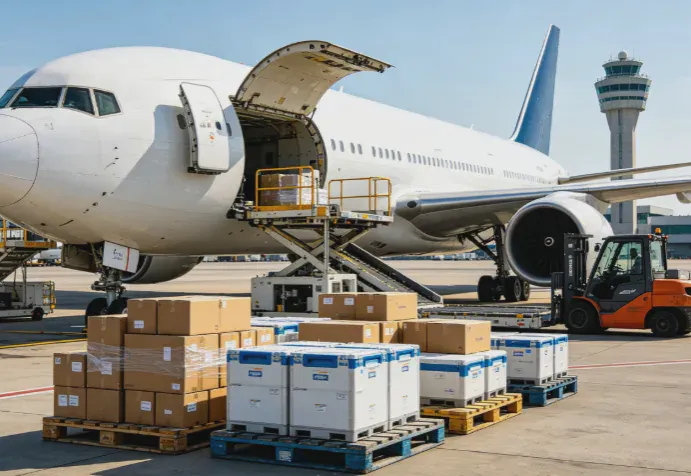
When Is Air Freight the Right Choice for Shipping to Yemen?
Air freight is usually the right fit when you need speed and predictability more than the lowest possible cost. For Yemen in particular, air is commonly used to avoid long sea transit plus port congestion and to reduce inventory risk—especially for urgent replenishment.
Air freight is best for: - Urgent replenishment (Ramadan/Eid promotions, stockouts, production-line stops) - High-value, low-volume cargo (electronics, phone accessories, medical devices, chips) - Samples and small trial orders after sourcing (e.g., post-Canton Fair samples) - Fragile or time-sensitive goods that can’t tolerate long ocean transit
Air freight is usually not economical for: - Heavy, bulky cargo (machinery, equipment, building materials) unless there is a critical deadline - Low-margin goods where freight cost must stay minimal (sea freight often wins)
Fast comparison: Air vs Sea vs Express courier
| Mode | Typical transit time | Typical pricing model | Best for | Watch-outs |
|---|---|---|---|---|
| Air freight (standard / consolidated) | 5–10 days | Per kg (chargeable weight) | Commercial goods, 45 kg+ | Hub connection delays, acceptance rules |
| Express courier (DHL/UPS/FedEx) | 3–7 days | Per kg (often higher) | Documents, samples, <30 kg | Higher per-kg cost, restricted items |
| Sea freight (FCL/LCL) | 25–40+ days | Per container / per CBM | Bulk cargo, heavy goods | Longer cash cycle, port/land transport risks |
Practical rule: if your shipment is above ~45 kg and you’re optimizing for speed (not just convenience), standard air cargo with a forwarder is usually more cost-effective than express courier. If your cargo is heavy and not urgent, sea freight from China to Yemen may offer a better cost structure.
Air Freight Routes from China to Yemen: Transit Hubs, Airlines & No Direct Flights
Let’s be clear: there are no regular direct cargo flights from China to Yemen. Nearly all Yemen air cargo moves on a two-leg routing:
China departure airport → Middle East/Turkey hub → Yemen (usually Aden; Sana’a may be restricted)
Common transit hubs (and when to use each)
| Hub | Why it’s used | Strengths | Trade-offs |
|---|---|---|---|
| Dubai (DXB) | Most common hub | Frequent China connections, strong cargo network | Congestion during peak seasons |
| Jeddah (JED) | Strong Saudi gateway | Sometimes smoother compliance for certain cargo | Schedules vary by airline/season |
| Doha (DOH) | Major cargo hub | Competitive capacity on some lanes | Fewer flexible options on certain weeks |
| Istanbul (IST) | Turkey network | Useful for specific airline solutions | Longer routing in some cases |
Best China departure airports for Yemen-bound air cargo
| Departure airport | Best for | Why it works |
|---|---|---|
| Guangzhou Baiyun (CAN) | South China exporters | Dense Middle East schedules, close to manufacturing |
| Shenzhen Bao’an (SZX) | Electronics / PRD shipments | Convenient for nearby factories; good feeder network |
| Shanghai Pudong (PVG) | East China exporters | Strong international capacity and airline choice |
| Hong Kong (HKG) | Premium capacity & flexibility | Often the widest airline/options mix |
Yemen airports: what importers should know
- Aden International Airport (ADE) is commonly used for commercial cargo and is often the practical entry point.
- Sana’a International Airport (SAH) can face operational restrictions; routing may change based on the current situation and approvals.
Dubai and Jeddah are by far the most common gateways for Yemen-bound cargo because they sit at the intersection of well-established shipping from China to UAE and shipping from China to Saudi Arabia routes, giving your forwarder more airline choices and frequent last-leg connections into Aden.
If a forwarder promises “direct flights China–Yemen” or “1–3 days to Sana’a for any cargo,” treat it as a red flag. Reliable forwarders explain the hub reality up front and plan around it.
How Long Does Air Shipping from China to Yemen Take?
Most standard air freight shipments take 5–10 days airport-to-airport, depending on your origin, hub connection time, airline schedule, and Yemen-side clearance efficiency.
Typical transit time ranges (realistic planning)
| Routing example | Typical airport-to-airport transit time | Notes |
|---|---|---|
| CAN → DXB → ADE | 5–8 days | Often the most practical routing |
| PVG → DXB/JED → ADE | 6–10 days | More variability depending on connections |
| HKG → DOH/DXB → ADE | 5–9 days | Good airline options, but acceptance rules can be strict |
| China → hub → SAH | 6–12 days | Often subject to additional restrictions/approvals |
What can delay Yemen air cargo?
- Connection waiting time at the hub (missed cutoffs, limited last-leg capacity)
- Cargo acceptance and screening requirements (especially batteries, electronics, liquids)
- Yemen import clearance readiness (missing documents can add days)
- Peak seasons: Ramadan/Eid, Chinese New Year, and Q3–Q4 freight peak weeks
Express vs standard air freight
- Express courier: typically 3–7 days door-to-door for small parcels, with higher cost per kg.
- Consolidated air freight: typically 5–10 days, designed for commercial shipments 45 kg+ and better cost efficiency.
Air Freight Rates from China to Yemen: 2026 Cost Breakdown
Rates change weekly (sometimes daily) based on capacity and seasonality. The ranges below are market estimates for 2026 meant for budgeting—not a locked quote. For a broader look at what drives overall freight spend on this lane, see our shipping cost from China to Yemen breakdown.
Estimated 2026 air freight rates (per kg)
| Chargeable weight bracket | Estimated rate (USD/kg) | Typical situation |
|---|---|---|
| 45–99 kg | $8.50–$11.00 | Small consolidated shipments |
| 100–299 kg | $7.80–$10.00 | Stable commercial volume |
| 300–499 kg | $7.00–$9.50 | Better consolidation leverage |
| 500–999 kg | $5.50–$7.50 | Stronger rate competitiveness |
| 1,000+ kg | $3.50–$6.00 | Contract rates / big volume |
What’s included in “air freight cost” (and what’s not)
Your total landed cost is usually the sum of: - Base Freight Rate (airline line-haul) - Fuel Surcharge and Security Surcharge - Terminal Handling Charges (THC) at origin and sometimes at destination - Export paperwork / handling (depending on Incoterms and your forwarder) - Yemen customs clearance fee (if handled by an agent/forwarder) - Import duties & VAT (commonly budget around 5%–22% duty + 5% VAT, depending on HS code) - Last-mile delivery inside Yemen (if door-to-door)
Budget examples (door-to-door / DDP reference)
| Example shipment | Service style | Budget range (USD) | What it typically covers |
|---|---|---|---|
| 45 kg to Aden | Air freight DDP | $650–$850 | Air + clearance + duty/tax handling + delivery |
| 100 kg to Sana’a | Air freight DDP | $1,200–$1,800 | Air + clearance + duty/tax handling + delivery (subject to restrictions) |
If you want a quote that’s actually comparable between forwarders, ask each one to confirm: chargeable weight, routing hub, service scope (airport-to-airport vs door-to-door), and whether duties/taxes are included.
How Chargeable Weight Works: Volumetric Weight Explained
Airlines charge by Chargeable Weight, which is the greater of: - Actual Weight (scale weight), and - Volumetric Weight (space your cargo occupies)
The most common formula is:
Volumetric Weight (kg) = Length × Width × Height (cm) ÷ 6000
Two quick examples (why packaging matters)
| Example | Carton size (cm) | Actual weight | Volumetric weight | Chargeable weight | What it means |
|---|---|---|---|---|---|
| Electronics components (dense cargo) | 50×40×30 | 12 kg | 10 kg | 12 kg | You pay by actual weight |
| Garments/textiles (bulky cargo) | 80×60×50 | 15 kg | 40 kg | 40 kg | You pay ~2.7× more than actual |
How to reduce chargeable weight (without damaging cargo)
- Right-size cartons; avoid “air space” in packaging
- Use vacuum compression for suitable textiles
- Consolidate cartons efficiently (fewer oversized boxes)
- Confirm the divisor with your forwarder (some lanes may price with ÷5000)
Step-by-Step: The Air Cargo Process from China to Yemen
The most expensive mistakes happen when importers treat air freight as “just a flight.” In practice it’s a controlled chain of documents, compliance checks, and handovers.
Step 1 — Pickup from the Chinese supplier (EXW pickup)
Confirm your HS Code, cargo description, and whether the goods are general cargo or restricted (batteries, liquids, magnets, etc.). Your forwarder will also ask for carton count, dimensions, and gross weight to calculate chargeable weight.
Step 2 — China export customs clearance
Typical documents requested include: - Commercial Invoice - Packing List - Export declaration details (handled by your forwarder or export agent) - Certificate of Origin (recommended for smoother clearance and classification)
Step 3 — Delivery to the departure airport (CAN/PVG/HKG/SZX)
Cargo is delivered into the airline/ground handler warehouse before cutoff. Warehouse rules can be strict: accurate labels, correct weights/dimensions, and compliant packaging.
Step 4 — International air transit: China → hub → Yemen
The forwarder issues the Airway Bill (AWB) (Master or House, depending on consolidation). Tracking becomes active once the cargo is accepted and manifested.
Step 5 — Hub handling and transshipment
In the hub, cargo may be: - Re-screened for security - Re-built onto a new ULD or flight - Re-documented (Master AWB to House AWB visibility for consignees)
This is where most “unexpected” delays happen, so choose a forwarder who books realistic connection times—not just the cheapest option.
Step 6 — Yemen import customs clearance
Yemen clearance requirements vary by cargo type, but commercial shipments commonly need: - Commercial Invoice - Packing List - Airway Bill (AWB) - Certificate of Origin - Import license / consignee registration (as applicable)
If the consignee can’t clear cargo locally, consider a door-to-door DDP service where the forwarder arranges clearance and duty/tax payment handling.
Step 7 — Final delivery (airport pickup vs door-to-door)
You typically choose: - Airport-to-airport (consignee arranges pickup and customs broker), or - Door-to-door (forwarder arranges delivery to Aden/Sana’a/Taiz/Hodeidah, subject to reachability)
Door-to-Door Air Shipping & DDP Freight to Yemen
For many Yemeni importers—especially first-timers—DDP is the most practical way to avoid clearance surprises. If you're weighing the trade-offs between different trade terms, our DDP vs FOB comparison explains when each option saves time and reduces hassle.
DDP (Delivered Duty Paid) generally means your forwarder coordinates: Pickup → export clearance → air freight → Yemen import clearance → duty/tax handling → final delivery
DDP vs EXW vs FOB vs CIF for Yemen (practical decision guide)
| Incoterm | Who controls shipping? | Who handles Yemen clearance? | When it works best for Yemen-bound air freight |
|---|---|---|---|
| EXW | Buyer/forwarder | Buyer (or buyer’s broker) | Experienced importers with reliable Yemen-side broker |
| CIF | Seller controls main transport (sea-focused) | Buyer | More common for sea freight than air freight |
| FOB | Seller handles export to port/airport | Buyer | Sometimes used, but less common for air freight |
| DDP | Forwarder/shipper arranges end-to-end | Forwarder/agent | Most convenient for SMEs and first-time Yemen importers |
What to ask before choosing a DDP air freight provider
- Which hub routing will you use (DXB/JED/DOH/IST), and what’s the backup plan?
- Are duties/taxes included or only “handled” on behalf of the consignee?
- Can you ship my specific cargo type (especially batteries/electronics)?
- Do you offer cargo insurance options for Yemen (high-risk destination)?
If you need a door-to-door solution, DTFU Logistics can quote routing options and help you compare standard air freight vs express courier for your cargo. Website: https://www.dtfulogistics.com/
Shipping to Yemen: Safety, Insurance & Conflict-Zone Logistics
Yemen is widely treated as a higher-risk destination. That doesn’t mean you can’t ship—it means you must plan properly.
Cargo insurance for Yemen air freight
- Many policies price Yemen as a higher-risk lane; budget roughly 1%–3% of cargo value depending on commodity and coverage.
- A common approach is insuring for CIF value + 10% (confirm with your broker/forwarder).
- For a comprehensive look at protecting your shipment, review our guide on shipping container insurance cost for shipments from China — the same principles apply to air freight coverage.
Yemen cargo restrictions (general guidance)
Always confirm your HS code and commodity with your forwarder. In general: - Standard commercial cargo (electronics, clothing, auto parts, medical supplies, construction materials, solar products) is often shippable with proper documents. - Dangerous goods (flammables, explosives, compressed gases, certain chemicals) are restricted under IATA rules and may require special handling or be prohibited on some routings. - Batteries and devices with batteries may require MSDS, UN38.3, and airline pre-approval.
Alternative routing: via Oman overland (when it helps)
For some consignees—especially in northern Yemen—an alternative is routing cargo to Oman and then moving it overland. This can be useful when the last-leg air capacity is limited or when the consignee’s delivery address is better served by a land corridor.
Packaging tips for higher-risk transit
- Use strong outer cartons and anti-tamper sealing
- Add waterproofing and internal cushioning
- Label clearly and avoid ambiguous cargo descriptions on documents
Frequently Asked Questions (FAQs)
Can I ship by air from China directly to Yemen?
No. There are no regular direct cargo flights from China to Yemen. Most air freight transits through hubs like Dubai (DXB), Jeddah (JED), Doha (DOH), or Istanbul (IST) before connecting to Aden (ADE) or, when possible, Sana’a (SAH).
How much does air shipping from China to Yemen cost per kg?
In 2026, air freight rates typically budget around $3.50–$11.00/kg depending on your chargeable weight bracket and season. Smaller shipments (45–99 kg) usually cost more per kg, while 1,000+ kg shipments can be significantly cheaper with contract rates.
How long does air shipping from China to Yemen take?
Standard consolidated air freight is typically 5–10 days airport-to-airport. Express courier can be 3–7 days door-to-door for small parcels. Actual time depends heavily on hub connection waiting time and Yemen-side clearance readiness.
What documents do I need to ship air cargo from China to Yemen?
Common documents include Commercial Invoice, Packing List, Airway Bill (AWB), and often a Certificate of Origin. For commercial shipments, the consignee may also need an import license/registration depending on the commodity.
Is it safe to ship by air to Yemen?
Yes, if you plan correctly. Yemen is often treated as a higher-risk destination, which can mean higher insurance premiums and stricter security screening. Working with an experienced forwarder and using appropriate packaging and insurance is key.
Should I use DDP or EXW for air shipping to Yemen?
If you don’t have a reliable customs broker and clearance capacity in Yemen, DDP is usually the simplest option because it bundles clearance and duty/tax handling with transport. EXW can be cost-effective for experienced importers with a strong local setup.
What goods cannot be shipped by air to Yemen?
Many dangerous goods are restricted by IATA regulations and by airline policy. Some controlled items may require permits or may be prohibited. Always confirm your cargo’s HS code and any battery/chemical classification before booking.
Which Chinese airport is best for air freight to Yemen?
Guangzhou (CAN) is often the most practical choice for South China supply chains due to strong Middle East connections. Shanghai (PVG) and Hong Kong (HKG) offer broad airline choices. Shenzhen (SZX) is convenient for electronics shipments from the Pearl River Delta.