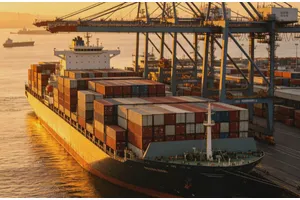
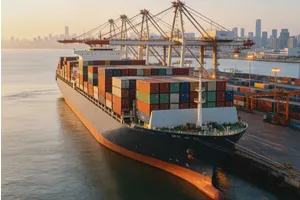
Ask ten importers how much to ship a car from China to Saudi Arabia and you will get ten wildly different numbers — $1,400, $2,600, $4,100, $6,800, and at least one "we'll confirm after arrival." The variance is almost never the ocean freight. It is the scope hiding behind it, and it is the single most expensive misunderstanding in this trade lane.
This guide closes that gap. Using live 2026 rates for the shipping from China to Saudi Arabia lanes into Jeddah and Dammam, we break the answer into two clean figures you can budget against: the door-to-door logistics cost per car (everything except the vehicle itself) and the total landed cost (vehicle plus every fee until it sits in your yard). You will get four fully itemized worked examples in USD and SAR, the exact formula behind Saudi Arabia's 20.75% border tax stack, the break-even math that decides RoRo versus container, and a 20-item checklist of the fees that quietly blow up a "cheap" quote. It is written by the freight forwarding team at DTFU Logistics — based in Shenzhen since 2014, and moving vehicles on this lane every month.
Our industry insight: In eleven years of moving vehicles out of China, we have never seen a budget destroyed by the ocean freight rate. We have seen it destroyed by a car that arrived during Ramadan, sat past its free time, and generated demurrage bigger than the freight itself. Budget the last mile and the waiting time, not just the sailing.
How Much to Ship a Car from China to Saudi Arabia? The 2026 Short Answer
There are two numbers that matter, and mixing them up is why so many buyers feel misled later. The first is the shipping cost per car — the money you pay forwarders, terminals, customs and truckers. The second is the total landed cost, which adds the vehicle's purchase price.
Door-to-door logistics cost per car (excluding the vehicle price):
- RoRo (Roll-on/Roll-off): roughly $1,500–$3,200 per car, port to door
- 20ft container (20GP), one car: roughly $2,300–$4,300 per car
- 40ft high cube (40HQ), two cars split: roughly $2,000–$3,300 per car
Total landed cost, including the vehicle:
- Economy sedan or compact: about $9,500–$14,000 delivered
- Mid- to large SUV: about $17,000–$24,000 delivered
- Luxury vehicle or battery-electric (EV): about $25,000–$45,000+ delivered
| Shipping Method | Logistics Cost per Car (no vehicle) | Landed Total (with vehicle) | Transit Time | Best Suited To |
|---|---|---|---|---|
| RoRo | $1,500–$3,200 | $9,500–$45,000+ | 22–35 days | Running, standard cars on a tight budget |
| 20GP container | $2,300–$4,300 | $11,000–$46,000+ | 23–36 days | One car needing protection or extra cargo |
| 40HQ container (2 cars) | $2,000–$3,300 per car | $10,500–$44,000+ per car | 23–36 days | Dealer batches of two identical-ish cars |
| Air freight | $8,000–$15,000+ | $30,000–$60,000+ | 3–7 days | Ultra-luxury, prototypes, urgent orders |
Any quote that reads "ocean freight only" is not a landed cost. It excludes Chinese export charges, Saudi customs duty and VAT, terminal handling, clearance and inland trucking. Treat every initial number as a starting point and reserve a 10–15% contingency on top of it.
Quote validity: The rates above reflect the January 2026 market for Chinese base ports (Shanghai, Ningbo, Qingdao, Tianjin, Nansha, Shekou) to Jeddah and Dammam. Ocean freight moves with BAF, PSS and GRI surcharges, so always ask for a dated booking-level quote.
Because DTFU Logistics contracts directly with carriers and RoRo operators rather than buying through brokers, we can usually lock an all-in rate with a defined validity window — which is exactly what protects your margin when peak season arrives.
What "How Much" Really Includes: The Four Layers of Landed Cost
Before you can compare two quotes, you need a shared vocabulary. Four terms do most of the work.
Total landed cost is the sum of every cost incurred from the moment the car leaves the supplier's yard in China until it is cleared, delivered and registrable in Saudi Arabia. Incoterms 2020 defines where your responsibility and cost begin — a car bought EXW leaves you paying everything from the factory gate, while DDP (Delivered Duty Paid) puts the entire chain on the seller's side. If you are still weighing the two ends of that spectrum, our comparison of DDP vs FOB explains which option saves time and reduces hassle. Importer of Record (IOR) is the entity legally responsible for the Saudi declaration — usually you, or your licensed broker acting on your behalf. CIF customs value is the declared worth of the vehicle for tax purposes: FOB value + international freight + insurance.
Every car shipping bill, no matter how it is worded, decomposes into four layers.

Layer 1 — China Export Costs
Collection from the supplier's yard or factory, inland trucking by car carrier to the load port, export customs declaration, second-hand vehicle deregistration, certificate of origin, warehousing and loading.
Layer 2 — International Transport Costs
Ocean freight (RoRo or FCL) on our sea shipping from China to Saudi Arabia route, fuel and peak-season surcharges, plus marine cargo insurance — typically 0.25%–1.2% of FOB value for an All Risks policy.
Layer 3 — Saudi Border Costs
Import duty at 5% of CIF, the customs service fee of 0.15%, and 15% VAT calculated on the duty-inclusive base — the compounding that produces the ≈20.75% effective figure. SASO/SABER conformity costs sit here too.
Layer 4 — Destination and Door-Door Costs
Destination THC (terminal handling charges), the delivery order fee, customs brokerage, inspection or scanning if selected, any storage or demurrage and detention, and inland delivery to the final address.
| Layer | What It Covers | Who Charges It | When It's Paid | Can It Be Locked? |
|---|---|---|---|---|
| 1. China export | Trucking, export declaration, deregistration, CO, loading | Chinese forwarder, trucker, customs | Before departure | Yes, quote as a fixed package |
| 2. International transport | Ocean or air freight, surcharges, insurance | Carrier, insurer | Booking to B/L release | Partially — all-in rate plus surcharge clause |
| 3. Saudi border | 5% duty, 0.15% service fee, 15% VAT, SASO | ZATCA, SASO | At clearance | No — tax is tax |
| 4. Destination & door | THC, D/O, brokerage, storage, inland trucking | Terminal, broker, trucker | Arrival to delivery | Mostly yes, if quoted upfront |
The most common quoting error is double counting. A CIF quote already contains freight and insurance; adding them again inflates the total. A FOB quote already includes Chinese export handling. Read the Incoterm on every line before you accept a number.
Our industry insight: Buyers sometimes negotiate a hard EXW price to shave cost off the invoice, not realizing that ZATCA can question an artificially low declared value and reassess it against local dealer pricing. A "cheap" invoice often produces an expensive valuation dispute. We recommend pricing at FOB and documenting the transaction cleanly — a defensible CIF value is worth more than a low one.
Cost to Ship a Car by Method: RoRo vs 20ft vs 40ft Container vs Air Freight
Four practical options exist on this lane, and each has a different cost curve.
RoRo (Roll-on/Roll-off)
The cheapest per-car option on the market. RoRo carriers load vehicles by driving them up a stern ramp onto a dedicated car carrier vessel, so there is no container, no lashing cage and no terminal lift charge. Two rules matter: the car must be driveable, and nothing may be left inside it — not spare parts, not personal effects. Vehicles travel exposed to salt air and handling, which is why a pre-shipment condition report with photographs is essential. For a side-by-side look at how this same decision plays out on a longer ocean leg, see our cost to ship car from China to US West Coast RoRo or Container analysis.
20ft Container (20GP)
A single car fits snugly in a 20GP, fully enclosed — the same box we price in our guide to how much to ship a container from China to Saudi Arabia. This is the right choice when the car is valuable, when you want to ship spare parts or accessories with it, or when the vehicle cannot be driven. You pay for lift-on/lift-off handling at both ends plus lashing inside the box.
40ft High Cube Container (40HQ)
Two standard cars load into one 40HQ with professional racking or staggered positioning, turning the container into a shared platform. This is the single most important cost lever on the lane for dealers.
Air Freight
Three to seven days, and $8,000–$15,000+ per vehicle; our air freight from China to Saudi Arabia page covers the general cargo version of this option. Air freight is only rational for ultra-luxury cars, prototypes, homologation samples or genuinely urgent dealer commitments.
| Method | Load Capacity | Cost per Car (Logistics) | Transit | Advantages | Drawbacks | Best For |
|---|---|---|---|---|---|---|
| RoRo | 1 car | $1,500–$3,200 | 22–35 days | Lowest cost, no box handling | Must run, nothing inside, exposed | Budget single-car imports |
| 20GP | 1 car (or 1 + parts) | $2,300–$4,300 | 23–36 days | Enclosed, allows cargo, non-runners OK | Higher freight, dual handling | Valuable or non-running cars |
| 40HQ | 1–2 cars | $2,000–$3,300 per car | 23–36 days | Best per-car cost at 2 units | Only pays off when paired | Dealer batches |
| Air freight | 1 car | $8,000–$15,000+ | 3–7 days | Fastest by far | 4–6× the cost, size limits | Ultra-luxury, urgent |
The Per-Car Break-Even Point Nobody Publishes
Here is the decision most articles skip. If two RoRo slots cost you, say, $2,400 each ($4,800 total), and a 40HQ to Saudi Arabia costs $5,000 carrying both cars, the container costs $2,500 per car — slightly worse. Lower the 40HQ rate to $4,400 and it drops to $2,200 per car — better than RoRo.
The break-even is simple: a 40HQ beats two RoRo slots when the container rate is less than twice the RoRo rate per car, plus the value of what you gain. And you gain real things: enclosed protection, the ability to ship spare parts, and the option of a non-running vehicle. If you would otherwise air-freight $400 of parts that RoRo forbids you from loading, that $400 belongs in the RoRo column.
Our industry insight: We tell dealers to run this test on every batch rather than assuming containers always win. In a soft freight market, RoRo rates fall faster than container rates, and two RoRo slots occasionally beat a half-empty 40HQ. The rule is arithmetic, not folklore.
Non-Running Vehicles and EVs: The Cost Multipliers
A car that cannot be driven is normally rejected by RoRo operators. It must travel in a Flat Rack or open-top container with crane lifting, which typically adds hundreds of dollars and requires a non-running vehicle declaration. EVs bring their own cost layer: they ship under UN3171 dangerous goods rules, need an MSDS for the battery, must usually arrive with a state of charge below 30%, and may attract a carrier DG surcharge.
China-Side Export Costs: What You Pay Before the Ship Sails
This is the layer compe*****s skip, and it is where a China-based freight forwarder from China to Saudi Arabia earns its keep. A supplier's FOB price covers loading on board — not the dozen operational steps that happen before that.
The Itemized List
Inland collection from the supplier's yard or factory; transport to the load port by car carrier truck (Shanghai, Ningbo, Qingdao, Tianjin, Nansha, Shekou and Yantian are the usual gateways); export customs declaration and document review; for used cars, deregistration of the vehicle's Chinese registration; application for a Certificate of Origin through CCPIT; short-term warehousing and vehicle inspection; container loading design with wheel straps and wheel chocks and VGM filing; issuance of the bill of lading with telex release or original courier; and for EVs, dangerous goods declaration and battery documentation.
| Cost Item | Mandatory? | Borne By | Typical Amount | Notes |
|---|---|---|---|---|
| Supplier collection & inland trucking | Yes | Buyer | $150–$500 per car | Distance and city dependent |
| Export customs declaration | Yes | Buyer | $60–$150 per shipment | Includes document review |
| Used-car deregistration | Used cars only | Buyer | $100–$300 per car | Required before export |
| Certificate of Origin (CCPIT) | Yes for Saudi clearance | Buyer | $50–$120 per shipment | Consular legalization may apply |
| Warehouse & inspection | Usually | Buyer | $50–$150 per car | Steam cleaning for used chassis |
| Loading, lashing & VGM | Container shipments | Buyer | $200–$450 per car | Not applicable to RoRo |
| Bill of lading / telex release | Yes | Buyer | $40–$120 per shipment | Original courier costs extra |
| EV dangerous goods filing (UN3171) | EVs only | Buyer | $150–$400 per car | MSDS and SoC declaration |
The 2026 Rule Change That Adds Lead Time
From January 1, 2026, China tightened its vehicle export administration. Electric passenger vehicles now require an export licence, and second-hand units registered for 180 days or less may need a maintenance and after-sales confirmation letter from the original manufacturer. Neither rule changes the freight rate, but both change how early you must start paperwork — and a missing confirmation letter can hold a car at port long enough to trigger storage charges.
DTFU Logistics operates its own team and warehousing inside China, so collection, export declaration, deregistration and loading all sit under one accountable operator. No handoffs between three suppliers who each point at the other when a document is late.
Saudi Customs Duty and 15% VAT: How the 20.75% Is Really Calculated
Here is the correction that saves importers real money: 5% duty plus 15% VAT does not equal 20%. VAT is not charged on the car's price. It is charged on the CIF value plus the duty plus the customs service fee, and that compounding pushes the true border burden to roughly 20.75% of CIF.
The Calculation, Step by Step
- CIF customs value = transaction value + international freight + insurance (+ any additions required by ZATCA)
- Import duty = CIF × 5% (HS heading 8703 passenger cars, GCC Common External Tariff)
- Customs service fee = (goods value + freight + insurance) × 0.15%, subject to a minimum of SAR 15 and a maximum of SAR 500
- VAT base = CIF + duty + service fee + other dutiable amounts
- Import VAT = VAT base × 15%
| Item | Calculation | Amount |
|---|---|---|
| CIF customs value | — | SAR 100,000.00 |
| Import duty @ 5% | 100,000 × 5% | SAR 5,000.00 |
| Customs service fee @ 0.15% | 100,000 × 0.15% | SAR 150.00 |
| VAT base | 100,000 + 5,000 + 150 | SAR 105,150.00 |
| Import VAT @ 15% | 105,150 × 15% | SAR 15,772.50 |
| Total border charges | — | SAR 20,922.50 |
That is 20.92% of CIF on this example — and it is why a quote built on "20% of the car price" lands short.
The Risk Nobody Explains: Declared Value Is Not Invoice Value
ZATCA is not obliged to accept your invoice at face value. The authority can reference local dealer pricing for equivalent new vehicles and apply an official depreciation schedule — up to 50% for passenger cars and 80% for trucks — to establish a defensible customs value. The practical consequence: a low purchase price does not guarantee a low taxable value. Where a vehicle's declared value looks inconsistent with the market, expect a valuation adjustment and a bigger duty-and-VAT bill than planned. We recommend confirming an indicative valuation with the VIN and HS code before the car is loaded.
VAT Recovery Changes the Dealer Math
If you are VAT-registered and importing for resale, the 15% VAT is generally recoverable — you pay it at the border, then reclaim it against output VAT. That single fact can swing dealer gross margin by a couple of thousand dollars per unit, and it is one reason some importers move to DDP shipping from China to Saudi Arabia so that duty and VAT are settled at the border by the seller. It also means cash flow, not just margin, decides how many cars you can run per quarter. Always confirm your position with your tax advisor and verify current rules directly with ZATCA, SASO and the SABER platform before committing funds.
Total Landed Cost of Importing a Car from China to Saudi Arabia: Four Worked Examples
These are the four cost profiles we quote most often. Each one runs from the FOB purchase price to the car sitting at a Riyadh or Jeddah address, with logistics cost isolated so you can compare against any forwarder's number.
Example 1 — Economy Sedan, RoRo, Single Car
Purchase price $9,000 FOB.
| Stage | Detail | USD | SAR (≈3.75) |
|---|---|---|---|
| Vehicle | FOB purchase price | 9,000 | 33,750 |
| China export | Trucking, declaration, CO, deregistration | 520 | 1,950 |
| Transport & insurance | RoRo freight + All Risks cover | 2,100 | 7,875 |
| Saudi border | 5% duty + 0.15% fee + 15% VAT | 2,540 | 9,525 |
| Destination | THC, D/O, brokerage, SASO check | 640 | 2,400 |
| Inland delivery | Jeddah → Riyadh | 380 | 1,425 |
| Total landed cost | $15,180 | SAR 56,925 | |
| of which logistics | excluding vehicle | $6,180 | SAR 23,175 |
Example 2 — Mid-Size SUV, 20GP Container, Single Car
Purchase price $15,000 FOB.
| Stage | Detail | USD | SAR (≈3.75) |
|---|---|---|---|
| Vehicle | FOB purchase price | 15,000 | 56,250 |
| China export | Trucking, declaration, CO, lashing, VGM | 780 | 2,925 |
| Transport & insurance | 20GP freight + insurance | 3,400 | 12,750 |
| Saudi border | 5% duty + 0.15% fee + 15% VAT | 4,090 | 15,338 |
| Destination | THC, D/O, brokerage, SASO check | 720 | 2,700 |
| Inland delivery | Dammam → Riyadh | 220 | 825 |
| Total landed cost | $24,210 | SAR 90,788 | |
| of which logistics | excluding vehicle | $9,210 | SAR 34,538 |
Example 3 — Large 4WD SUV, 40HQ, Two Cars Split
Purchase price $20,000 FOB per car, two units shipped together.
| Stage (per car) | Detail | USD | SAR (≈3.75) |
|---|---|---|---|
| Vehicle | FOB purchase price | 20,000 | 75,000 |
| China export | Trucking, declaration, lashing, VGM (shared) | 640 | 2,400 |
| Transport & insurance | 40HQ freight split two ways + insurance | 2,600 | 9,750 |
| Saudi border | 5% duty + 0.15% fee + 15% VAT | 5,230 | 19,613 |
| Destination | THC, D/O, brokerage, SASO check | 680 | 2,550 |
| Inland delivery | Dammam → Riyadh, two-car truck | 190 | 713 |
| Total landed cost | $29,340 | SAR 110,025 | |
| of which logistics | excluding vehicle | $9,340 | SAR 35,025 |
Example 4 — Battery-Electric Vehicle, 20GP Container, Single Car
Purchase price $22,000 FOB, including dangerous goods handling.
| Stage | Detail | USD | SAR (≈3.75) |
|---|---|---|---|
| Vehicle | FOB purchase price | 22,000 | 82,500 |
| China export | Trucking, declaration, CO, UN3171 filing, MSDS | 1,050 | 3,938 |
| Transport & insurance | 20GP freight + DG surcharge + insurance | 4,100 | 15,375 |
| Saudi border | 5% duty + 0.15% fee + 15% VAT | 5,700 | 21,375 |
| Destination | THC, D/O, brokerage, SASO/EV conformity | 820 | 3,075 |
| Inland delivery | Jeddah → Riyadh | 380 | 1,425 |
| Total landed cost | $34,050 | SAR 127,688 | |
| of which logistics | excluding vehicle | $12,050 | SAR 45,188 |
Is Importing from China Worth It? A Candid Cost-vs-Local Comparison
We would rather lose a booking than oversell a bad one, so here is the honest version.
| Scenario | Verdict | Why |
|---|---|---|
| Model already SASO-approved + 2 or more units + China price 25%+ below Saudi equivalent + VAT-registered | Worth it | Shared freight, no homologation cost, VAT recoverable |
| Single car, popular model, VAT-registered dealer | Marginal | Freight and compliance eat most of the price gap |
| Individual buyer importing one car, no VAT recovery | Rarely worth it | Full tax stack, no recovery, resale restricted for 3 years |
| Niche model not SASO-approved | Usually not | CAB certification adds $3,000–$10,000+ and 4–8 weeks |
| Grey-import brand with no homologation route | No | Cannot be registered for road use |
The pattern is consistent: volume plus approved models plus VAT recovery is what makes Chinese sourcing work. One-offs rarely do. If you are benchmarking other destinations at the same time, our how much to ship a car from China to USA breakdown applies the same landed-cost logic to the trans-Pacific lane.
Hidden Fees in Car Shipping from China to Saudi Arabia: The 20-Item Checklist
A low headline rate is usually funded by something excluded from it. Here is every charge that can appear on a China–Saudi car shipment, who levies it, and whether you can avoid it.
| # | Fee | Charged By | Typical Basis | Avoidable? |
|---|---|---|---|---|
| 1 | Ocean freight base rate | Carrier | Per car / per container | — |
| 2 | BAF bunker adjustment | Carrier | Floats with fuel | Lock all-in to hedge |
| 3 | PSS / GRI peak-season surcharge | Carrier | Seasonal | Book outside peak |
| 4 | CAF currency adjustment | Carrier | Percentage | Partly negotiable |
| 5 | Origin THC | Terminal | Per unit | No |
| 6 | Export documentation fee | Forwarder / carrier | Per shipment | No |
| 7 | Origin handling & loading | Warehouse | Per car | Required for FCL |
| 8 | VGM filing fee | Terminal | Per container | No |
| 9 | China export customs fee | Broker | Per shipment | No |
| 10 | Vehicle deregistration | Authority / agent | Per car | Required for used cars |
| 11 | Certificate of Origin | CCPIT | Per shipment | Required for Saudi clearance |
| 12 | Marine insurance | Insurer | 0.25%–1.2% of FOB | Optional but advised |
| 13 | Destination THC | Terminal | Per unit | No |
| 14 | Delivery order fee | Carrier | Per shipment | No |
| 15 | Manifest amendment | Carrier | Per correction | Yes — accurate documents |
| 16 | Demurrage & detention | Carrier | Daily after 5–7 free days | Yes — clear promptly |
| 17 | Port storage | Terminal | Daily after free time | Yes |
| 18 | Customs brokerage | Broker | Per shipment | No |
| 19 | Inspection / scanning | Customs | If selected | No |
| 20 | Inland delivery | Trucker | Per kilometer | Yes — choose the right port |
Five Signs of a Low-Price Trap
Ask these before signing anything: Does the quote say only "ocean freight" and nothing about destination charges? Is it silent on whether Saudi duty and VAT are included? Does it fail to state the free-time days for the container? Does it omit DG or non-running vehicle surcharges? Is there no clause covering currency or surcharge movement?
Our industry insight: The two avoidable lines above — amendment and demurrage — cause more disputes than every other fee combined. Both trace back to documents and timing. A VIN typo discovered at destination costs a manifest amendment; a clearance delay over a holiday week costs demurrage at daily rates. Our practice is a pre-departure document audit and a pre-arrival clearance file, so the container is released inside its free window.
DTFU Logistics quotes transparent pricing without hidden fees: every quotation states clearly what is included and what is excluded, line by line, before you commit.
Seasonal Red Zones
Ramadan, Eid and the Hajj season all slow Saudi clearance and inland delivery, often by 5–10 additional days. Demurrage exposure rises at exactly the moment terminal gates are busiest. If your shipment falls in one of these windows, plan the buffer deliberately rather than hoping.
Car Import Regulations That Change Your Price: Age Limits, SASO/SABER and Import Quotas
Compliance is not an administrative detail on this lane — it is a cost line. A car that fails eligibility does not simply arrive late; it gets re-exported at your expense, or attracts a compensation payment measured in tens of thousands of riyals.
Age and Model Eligibility
Saudi Arabia applies a five model-year rule to used passenger vehicles, which in 2026 means 2021 models and newer. Vehicles 30 years or older have a separate classic-car route, but those cannot be registered for normal road use. Left-hand drive is mandatory — right-hand drive vehicles are not admissible. Salvage, flood-damaged, fire-damaged, total-loss and ex-taxi vehicles are prohibited outright.
The Non-Compliance Compensation Cost
Light vehicles that miss the energy-efficiency or age requirements can sometimes use a special route — but only on payment of a compensation fee of 20%–50% of the vehicle's value, with a minimum of SAR 20,000. Critically, this route is restricted to Saudi citizens and Premium Residency holders; ordinary residents and commercial dealers cannot use it. And paying it does not legalize a vehicle that is prohibited in the first place.
SASO / SABER Conformity Costs
If your model is already approved in Saudi Arabia — BYD Atto 3, Seal and Song Plus, Changan CS75 Plus, Geely Monjaro, Jetour X70, X90 and T2, and similar — you are looking at port inspection only, with a SASO inspection fee around SAR 300 per vehicle. A brand-new, unapproved model needs type approval through a SASO-recognized Conformity Assessment Body (CAB): 4–8 weeks and $3,000–$10,000+.
Personal Import Quotas and Resale Restrictions
This is the rule most foreign guides omit. GCC citizens can generally import two vehicles per calendar year; Iqama residents typically one vehicle every three years, usually with an employer guarantee letter. Imported vehicles generally cannot be resold within three years. Commercial importers need a Commercial Registration (CR) and a VAT registration number.
| Situation | Can It Be Imported? | Extra Cost | Risk Level |
|---|---|---|---|
| Approved model, 2021+, LHD, running | Yes | ~SAR 300 SASO inspection | Low |
| Approved model with minor efficiency shortfall | Citizens/premium residency only | 20%–50% of value, min SAR 20,000 | High |
| Unapproved but homologable model | Yes, via CAB | $3,000–$10,000+, 4–8 weeks | Medium |
| 2020 model or older (non-classic) | Generally no | Re-export at own cost | Severe |
| Salvage, flood, fire or ex-taxi vehicle | No | Re-export plus penalties | Severe |
| Right-hand drive vehicle | No | Re-export at own cost | Severe |
Documents to prepare: VIN, HS code, commercial invoice, packing list, bill of lading, Certificate of Origin, SASO/SABER certificate, used-vehicle deregistration certificate and insurance policy.
Our industry insight: Regulations on this lane move, and published interpretations genuinely conflict — you will find both the five-model-year rule and older "2017 or newer" guidance circulating online. We no longer advise clients based on blog posts. Before payment, we confirm eligibility with the VIN against official channels and licensed Saudi brokers, and we put that confirmation in writing.
Jeddah vs Dammam, Transit Time and the Door-to-Door Timeline
Port Choice Economics: Cheap Freight Is Not Cheap Delivery
Jeddah Islamic Port is the Red Sea gateway serving Jeddah, Makkah, Madinah and the central region, with shorter sailing times from China. King Abdulaziz Port in Dammam serves the Eastern Province and Riyadh, sitting roughly 440 km (4–5 hours) from the capital. King Abdullah Port is a newer Red Sea facility known for efficient operations. Importers who are also comparing Gulf gateways, including transshipment via Jebel Ali, will find our shipping from China to UAE guide a useful reference.
The inland leg changes the decision. Trucking from Jeddah to Riyadh runs about $300–$500 per car, against $150–$250 from Dammam. If your market is Riyadh or the Eastern Province, a slightly higher Dammam ocean rate can still produce a lower landed cost.
The Three-Leg Timeline
For the general cargo version of this route, lane-level sailing and clearance timings sit in our shipping time from china to Saudi Arabia reference. For a vehicle, the timeline breaks down as follows:
| Leg | Typical Duration | Volatility Factors |
|---|---|---|
| 1. China export clearance and loading | 2–5 days | Document completeness, deregistration, EV DG review |
| 2. Ocean voyage (China → Jeddah / Dammam) | 18–25 days | Sailing schedule, port rotation, Red Sea routing |
| 3. Saudi customs clearance | 3–7 working days (+2–5 if SASO inspected) | SASO review, scanning selection, Ramadan/Hajj |
| 4. Inland delivery to Riyadh or Jeddah | 1–3 days | Distance, terminal release, weekends and holidays |
| Door-to-door total | ≈22–35 days | Add 7–14 days under Red Sea disruption |
Our industry insight: Red Sea security conditions and Cape of Good Hope rerouting have made schedule reliability genuinely worse, and rollovers compound it. We now advise clients to hold two to three weeks of buffer in inventory planning rather than optimizing for the shortest advertised transit time. A car that arrives two weeks late is a cheaper problem than a showroom with no stock.
The Door-to-Door (DDP) Flow in Eight Steps
Collection in China → export declaration → loading (RoRo or container) → ocean transit with live tracking → arrival at Jeddah or Dammam → customs clearance and duty/VAT payment through ZATCA, SABER and Fasah → technical inspection under Fahas/MVPI → inland delivery to the door and registration via Absher.
DTFU Logistics runs this as a single door-to-door (DDP) service with 24/7 shipment tracking and a dedicated account manager — you do not need to build customs capability on the Saudi side. The full scope is set out in our door to door shipping from China to Saudi Arabia service page.
FAQs
How much does it cost to ship a car from China to Saudi Arabia in total?
Two figures matter. Door-to-door logistics cost runs about $1,500–$3,200 per car by RoRo, $2,300–$4,300 in a 20GP, and $2,000–$3,300 per car when two cars share a 40HQ. Including the vehicle, landed totals run roughly $9,500–$14,000 for an economy car, $17,000–$24,000 for a mid-size SUV and $25,000–$45,000+ for luxury or EV models.
Is RoRo or container shipping cheaper for cars to Saudi Arabia?
RoRo has the lowest base rate, but only works for driveable cars with nothing loaded inside. Containers cost more in freight yet allow cargo, protect the paintwork and accept non-runners. Run the per-car break-even before assuming either wins.
Can I ship two cars in one 40ft container to Saudi Arabia?
Yes, and for dealers it is usually the best per-car cost. Two standard cars load into a 40HQ with proper racking and lashing, though oversized SUVs may not fit two abreast.
How long does it take to ship a car from China to Saudi Arabia?
Plan on 22–35 days door to door: 2–5 days for Chinese export handling, 18–25 days at sea, 3–7 working days for Saudi clearance and 1–3 days for inland delivery. Red Sea disruption can add 7–14 days.
Do I pay 15% VAT on the car's purchase price?
No. VAT applies to the CIF value plus duty plus the customs service fee. On a SAR 100,000 CIF car, border charges total SAR 20,922.50 — an effective 20.75% of CIF, not 20%.
Can I import a used car to Saudi Arabia? Used passenger cars must be within five model years — 2021 or newer in 2026 — with a separate route for vehicles 30 years or older. Left-hand drive is mandatory, and salvage, flood, fire and ex-taxi vehicles are prohibited.
Can I put personal belongings inside the car when shipping?
Never on RoRo — operators forbid it. Inside a container it is possible, but everything must be declared accurately, as undeclared goods can jeopardize clearance and affect customs valuation.
Can I ship a non-running or damaged car?
A non-running vehicle is normally refused by RoRo and must move in a Flat Rack or open-top container with crane handling. Salvage, flood-damaged and fire-damaged vehicles cannot be imported at all.
Can I ship an electric car from China to Saudi Arabia?
Yes, but EVs require UN3171 dangerous goods declaration, an MSDS for the battery pack, a state of charge below 30%, and conformity with Saudi EV requirements. Expect a DG surcharge on top of standard freight.
Who handles customs clearance in Saudi Arabia — do I need to be there?
No. Clearance is handled by a licensed broker or by your forwarder under a DDP arrangement. You supply the documents; the broker files through Fasah and settles duty and VAT.
What happens if my car fails the age or SASO requirement at the port?
It stays at the port accruing storage, and your options are re-export at your own cost or, for Saudi citizens and premium residency holders only, a compensation payment of 20%–50% of value with a minimum of SAR 20,000. Neither is a good outcome — verify eligibility before shipping.
What's the cheapest way to ship a car from China to Saudi Arabia?
A running, standard, SASO-approved car via RoRo is the cheapest single-unit option. For two or more units, a 40HQ usually wins. The bigger savings come from choosing the right port, clearing within free time and getting one complete quote instead of three partial ones. Importers also benchmarking other MENA lanes can compare our how much to ship a car from China to Algeria guide.
How to Choose a Freight Forwarder for the China–Saudi Arabia Lane
Five things to verify: an operating team inside China that controls the first mile; dangerous goods (DG) capability for EVs; the ability to quote genuine DDP door-to-door; a quotation that labels every inclusion and exclusion; and a licensed Saudi customs broker at destination.
DTFU Logistics has been moving cargo since 2014 from its headquarters in Shenzhen, China, and holds dual FIATA and IATA accreditation with a network covering 120+ countries. On this lane we provide sea freight, air freight, door-to-door delivery, Amazon FBA programs, customs clearance, warehousing and cargo insurance — all under one contract. For the general cargo side of the same route, our shipping cost from China to Saudi Arabia overview covers rates and routing. We book directly with carriers and RoRo operators to hold rates and space, assign a dedicated account manager with 24/7 support, and provide live shipment tracking plus photographic condition records before loading.
Need a real all-in number for your car? Send us the model, VIN, pickup city in China and delivery city in Saudi Arabia, and we will return a line-by-line, fully transparent quotation — no rounded guesses, no surprises at the destination terminal.
The bottom line: your money goes into four layers — China export, international transport, Saudi border charges and destination delivery. Saudi duty and VAT compound to about 20.75% of CIF, not 20%. And the three real savings levers are choosing the right port, clearing inside free time, and getting one complete quote instead of three partial ones.