Choosing between 20ft and 40ft shipping from China to Brazil feels like a volume question, but it is really a money question — and most importers get it backwards. On the China–Brazil lane, the ocean freight is routinely less than half of what you actually pay, and the "cheaper" box is often the costlier one per cubic meter. Pick the wrong size and you are paying for empty space, overweight penalties, or a second container you did not need. This guide walks you through which size fits your cargo, what a 20ft and a 40ft each cost in 2026, how the Brazilian tax and port reality changes the math, and how long either box actually takes — so you compare landed cost, not freight quotes. If you also want the schedules behind those numbers, our Sea Shipping from China to Brazil guide covers the ocean options end to end.
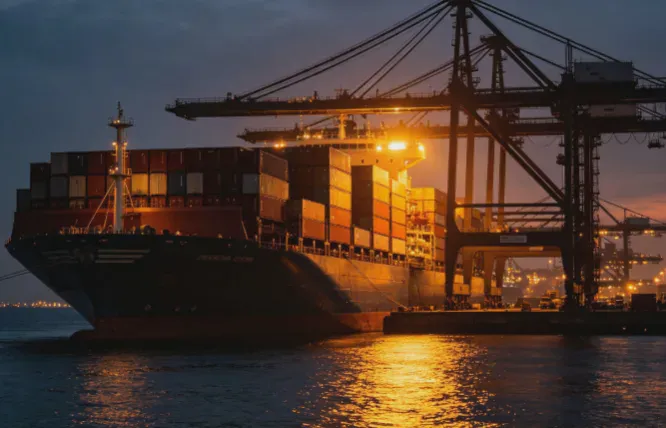
20ft vs 40ft Containers: Which Size Should You Ship from China to Brazil?
The decision starts with what a box can physically carry. Container specs quote theoretical volume; freight forwarders plan with the usable numbers below, and those are the figures that matter for a Brazil booking:
| Container | Practical load | Usable payload | Best for |
|---|---|---|---|
| 20ft (20GP) | ~28 CBM | ~18–22 t | Dense, heavy cargo: machinery, tiles, auto parts |
| 40ft (40GP) | ~58 CBM | ~26–28 t | Standard full loads: furniture, appliances, consumer goods |
| 40ft High Cube (40HQ) | ~68 CBM | ~26–28 t | Light, voluminous cargo that maxes out on space before weight |
| LCL | per CBM | — | Under ~13–15 CBM |
Three rules settle most size debates:
- Judge by density (kg per CBM), not volume alone. Divide your total weight by your total volume. Above roughly 500 kg/CBM, you are a heavy 20ft candidate — the box will fill on weight long before space. Between 250 and 500 kg/CBM, a 40ft standard gives the best cost per CBM. Below 250 kg/CBM — light goods like toys, textiles, or furniture — a 40ft high cube earns its extra space.
- Know your real payload ceiling. A 20ft is rated to carry far more on paper than you will ever load into it on this lane. Some carriers apply a heavy-load surcharge once a 20ft exceeds roughly 20 metric tons, and Brazilian inland routes — including the Serra do Mar escarpment into São Paulo — plus chassis weight rules can cap usable weight below the nameplate. On the Brazil lane, plan a 20ft as an 18–22 t box, not a 28 t one.
- The 40ft wins on unit cost above ~30 CBM. It carries roughly double the 20ft's volume for only half again the price. The bigger the load, the more the 40ft dominates.
Our industry insight: the most common misbooking we see on this route is a first-time importer ordering a 20ft because the freight quote looked cheaper — then discovering the load was really 45 CBM of light goods that needed a 40GP, or the reverse: cargo that reached the weight limit of a 20ft before the box was full. Measure weight and volume before you call for a quote, and send both numbers to your forwarder. Density, not habit, picks the box.
20ft and 40ft Container Shipping Cost from China to Brazil (2026 Rates by Origin Port)
Ocean freight on this lane is quoted per container, and the price moves with your origin port as much as your destination. These are freight-only baselines for 2026, port-to-port to Santos from China's main loading ports — every Brazilian charge and tax lands on top:
| Origin port region | 20ft (USD) | 40ft / 40HQ (USD) | Notes |
|---|---|---|---|
| Shanghai / Ningbo | $1,800–$2,800 | $2,500–$4,000 | Most frequent direct sailings; usually the lowest base |
| Shenzhen / Yantian | $2,000–$3,000 | $2,700–$4,300 | South China; some routings transship via Singapore |
| Qingdao | $2,100–$3,200 | $2,900–$4,500 | North China direct services |
| Tianjin | $2,300–$3,500 | $3,200–$4,800 | Fewer direct calls; higher base, more transshipment |
Three things to read from this table:
- The 40HQ premium is small. Plan on roughly $150–$400 more than a 40GP for the high cube — and the extra ~10 CBM of space costs less per cubic meter than any other way to buy volume on the lane.
- The 20ft to 40ft ratio runs about 1.7–2.0× on freight for a box with more than twice the volume. That gap is the whole reason the 40ft beats the 20ft on unit cost.
- Rates move weekly. Fuel, capacity, and the Q3–Q4 Brazilian peak swing these bands by 15–25% over the year. The ranges above are a budgeting anchor — always price against a live quote.
For a line-by-line 2026 breakdown that turns a freight quote into a budget number, our Sea Shipping cost from China to Brazil guide itemizes every charge on the lane.
Those figures are the freight. Here is the uncomfortable part of the lane.
Why Is Shipping to Brazil So Expensive? AFRMM and the Tax Tail on Your Box
Brazil is the one destination where the freight quote is rarely the deciding cost. By the time a container clears, the importer has paid the ocean rate, terminal and documentation charges, a series of cumulative import taxes, and a freight surcharge most foreign quotes never mention.
- AFRMM — the Additional Freight Charge for Renewal of the Merchant Marine — is a Brazilian levy on the ocean freight itself, currently roughly 8% of the freight value under the 2026 rate (Law 14.301/2022, the "BR do Mar" reform). Older guides still quote 25%; that was the pre-reform longo curso rate, and a forwarder who quotes it that way is working from stale tables. Confirm the AFRMM basis in writing before you book.
- The tax stack compounds. II import duty (typically 10–35% by NCM code), IPI, PIS/COFINS, and state ICMS are each calculated on a base that includes the previous taxes, so the combined bill on consumer goods runs 60–100%+ of the CIF value — a $200 difference in freight is noise next to a tax line both quotes will share.
- Brazilian port charges and inland trucking add more. Destination THC, despachante (broker) fees, armazenagem storage if clearance drags, and the specialized Serra do Mar trucking leg into São Paulo all sit on top.
Our industry insight: the single fastest way to cut your Brazil cost is not a cheaper carrier — it is a correct NCM classification. The 8-digit Brazilian NCM code sets your II rate, your IPI band, and whether an import license is triggered. A supplier's export-side HS code frequently does not match the Brazilian NCM, and a mismatch can silently add 15 points of duty. We run the NCM review before a container is stuffed, not after it is at sea — at Santos, mistakes bill you by the day.
20ft vs 40ft Landed Cost to Brazil: Worked Examples, Box by Box
Put the pieces together with two realistic 2026 shipments and watch the size decision resolve itself.
Example A — dense cargo that must go 20ft. A 24 CBM, 15-tonne load of ceramic tiles to São Paulo has no real size choice: it is a 20ft. Freight runs about $2,400, destination and trucking add ~$900, and the tax stack at ~60% of an $18,000 CIF value adds roughly $10,800 — around $500 per CBM landed. A bigger box would not have helped; the cargo was heavy, not voluminous.
Example B — 55 CBM of light furniture that forces the real decision. The same importer ships 55 CBM of knockdown furniture at 8 tonnes:
| Option | Freight (USD) | Destination + trucking | Import taxes (≈ same, value-based) | Landed total | Cost per CBM |
|---|---|---|---|---|---|
| 1× 40GP | ~$3,400 | ~$950 | ~value-based | ~$4,350 + taxes | lower |
| 2× 20ft | ~$4,600 | ~$1,900 | ~value-based | ~$6,500 + taxes | ~50% higher |
One 40ft carries the volume for roughly $2,100 less in freight and destination charges than two 20ft, with a single customs file instead of two. The tax bill is nearly identical either way, because Brazilian taxes are value-based — which is the deeper lesson: switching box size does not reduce Brazilian taxes; it reduces freight and handling. Only the NCM code and the declared value change the tax line.
When the 20ft still wins: genuinely heavy cargo, partial fills you cannot wait to consolidate, or a receiving site with chassis or access limits. The rule is not "bigger is better" — it is "size to your density and fill."
Container Shipping Time from China to Brazil: Does Box Size Change the Clock?
No. A 20ft, 40GP, and 40HQ sail on the same vessel on the same schedule — container size does not change the transit time. What actually moves the clock is your route, your destination port, and the season:
| Leg | Typical duration |
|---|---|
| Ocean, Shanghai/Ningbo → Santos (direct) | 32–36 days |
| Ocean, South China → Santos (via Singapore/HK) | 34–42 days |
| Ocean, North China → Santos | 36–44 days |
| Transshipment routing (Singapore, Durban or via the Mediterranean) | adds 7–12 days |
| Brazilian customs clearance (documents in order) | 3–7 days |
| Door-to-door total (pickup to delivery) | 45–65 days |
Two timing realities to plan around: Santos congestion spikes in Q3–Q4, when Brazil's agribusiness export surge meets the pre-year-end import rush — expect 3–7 days of berth waiting and rates 15–25% higher (Q2 is the cheapest window); and clearance that slips on a wrong NCM or a mismatched description can stretch from days to 2–3 weeks, billing armazenagem the whole time. And when a shipment is too urgent for the 45–65-day sea window, Air Shipping from China to Brazil is the express alternative worth pricing before you default to a box.
Which Brazil Port Should Your Container Clear? Santos, Navegantes, Paranaguá and Beyond
Your gateway choice changes clearance speed and inland cost more than ocean freight. The ports that matter for China imports:
| Port | Transit (direct) | Role for importers |
|---|---|---|
| Santos (SP) | 32–36 days | The default — handles a large share of Brazil's container traffic; Q3–Q4 congestion and red-channel risk |
| Navegantes (SC) | 35–40 days | Fastest-clearing southern gateway; ideal when your buyer is in the South and you want to skip the Santos queue |
| Paranaguá (PR) | 34–38 days | Agribusiness hub; suits Paraná-bound cargo |
| Suape / Pecém (NE) | longer | Closer gateways for Northeast buyers; expect feeder or transshipment routings |
| Manaus (ZFM) | longest | The Manaus Free Trade Zone for electronics requires a special inland or feeder leg — plan it, do not discover it |
A market reality magnifies the choice: since the $50 de minimis exemption ended in 2024, a growing share of e-commerce volume has shifted into formal container imports through the southern ports, making clearance speed a measurable cost. A container clearing green at Navegantes in days versus red at Santos in weeks is a difference of thousands of dollars in storage fees — when the freight gap between ports is small (it usually is), pick the port whose clearance behavior matches your documentation quality. From any port, budget the free-time window (commonly 7–14 days) and demurrage of roughly $100–150/day beyond it.
Brazil Customs Clearance for Your Container: NCM, RADAR and What Holds Cargo
Clearance in Brazil is gated before your vessel even departs. The importer of record needs a CNPJ (Brazilian tax ID) and an active RADAR registration in Siscomex — a foreign company without a Brazilian entity cannot self-clear. If you have no CNPJ, your practical routes are a licensed Brazilian import agent (importador por conta e ordem), a DAP structure with a despachante settling taxes under your registration, or setting up a Brazilian entity for sustained volume.
What actually holds containers on this lane:
- NCM misclassification — the master variable. It sets your duty, your IPI band, and whether an import license is required. Fix it before stuffing.
- Missing product authorizations — electronics and appliances need INMETRO, wireless gear ANATEL, cosmetics and medical goods ANVISA, agricultural products MAPA. Budget 2–8 weeks of lead time; containers without them are detained.
- Documentation slips — the commercial invoice needs Portuguese descriptions and NCM codes that exactly match the packing list and bill of lading. Value inconsistencies and mismatched descriptions are the most common trigger for physical inspection.
- IPPC wood packing — wooden crates and pallets without the IPPC heat-treatment stamp are rejected, forcing costly repacking.
- Anti-dumping measures — Brazil applies duties on a range of Chinese goods including certain ceramics, steel fasteners, bicycle parts, and textiles. A quick check of your product against current measures before booking can save a profitable order.
Our industry insight: on the documentation side, the line that trips more first-time Brazil shipments than anything else is the Portuguese description on the invoice. Forwarders and suppliers translate loosely, the NCM and the description drift apart, and the container drops into a physical inspection channel. When we prepare Brazil files, the invoice description is checked character-for-character against the NCM code before export — an hour of care at origin that saves two weeks and thousands in storage at Santos.
Door-to-Door Container Shipping from China to Brazil
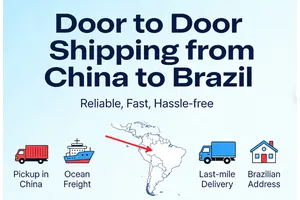
For importers without a Brazilian entity, door-to-door is the standard professional answer, and our Door to Door Shipping from China to Brazil guide walks the end-to-end process step by step. Understand the two structures:
- DDP (Delivered Duty Paid) — your forwarder quotes one all-in price covering pickup in China, export clearance, ocean freight, Brazilian import clearance through a licensed partner importer, and delivery to your door. On the Brazil lane a credible DDP all-in (taxes by NCM) typically runs from roughly $3,500–$5,500 for a 20ft and $5,500–$8,500 for a 40ft — but only quote it after your product list and NCM codes are on the table.
- DAP (Delivered at Place) — the forwarder delivers to your door while your own despachante settles II, IPI, PIS/COFINS, and ICMS under your registration. This is the compliant structure for companies that already hold a CNPJ and want the ICMS credit on their own books.
Red flags in a Brazil DDP quote: an all-in price with no itemized AFRMM or tax basis, a forwarder who quotes without asking for your NCM codes, or a rate built on the stale 25% AFRMM figure. A serious quote breaks down freight, AFRMM, taxes by NCM, and inland delivery — on this lane, the price you cannot verify is the one that surprises you.
FAQs
1. Should I ship a 20ft or 40ft container to Brazil?
Above roughly 30 CBM, the 40ft wins on cost per cubic meter. Choose the box by density: heavy cargo (500+ kg/CBM) fits a 20ft; light, voluminous cargo under ~250 kg/CBM justifies a 40ft high cube. Below ~13–15 CBM, use LCL.
2. How many CBM fit in a 20ft vs 40ft container?
Plan on ~28 CBM practical for a 20ft, ~58 CBM for a 40GP, and ~68 CBM for a 40ft high cube. On the Brazil lane, also respect payload: a 20ft is realistically an 18–22-tonne box.
3. How much does a 20ft vs 40ft container cost from China to Brazil in 2026?
Freight-only baselines to Santos: 20ft about $1,800–$3,500 and 40ft/40HQ about $2,500–$4,800 by origin port, a 40HQ adding roughly $150–$400. Taxes and destination charges land on top — often 60–100% of cargo value.
Get a Landed Quote for Your 20ft or 40ft to Brazil
The right container size for a Brazil shipment is decided by density and fill, and the right price is decided by landed cost — freight, AFRMM, taxes by NCM, and inland delivery together. That is how DTFU has specialized in Shipping From China to Brazil since 2014: a nationwide China network that prices 20ft, 40GP, and 40HQ from whichever port loads your cargo, FIATA- and IATA-accredited operations, direct carrier contracts for space in the Q3–Q4 peak, and an itemized, all-in quote with the Brazilian tax math modeled up front. Send your commodity, volume, weight, and Brazilian delivery address for a landed quote before you book your box. The same nationwide network also quotes Shipping From China to Argentina and Shipping From China to Chile when your distribution reaches beyond Brazil.