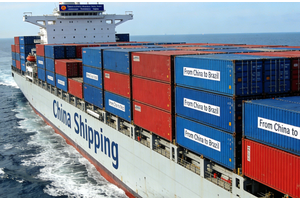
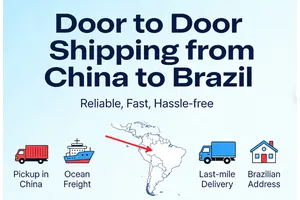
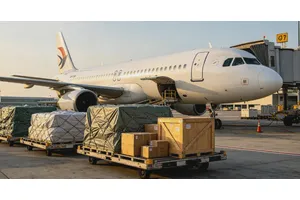
China and Brazil share one of the world's most consequential trade relationships — with bilateral trade exceeding $180 billion annually — and Guangzhou, as the Pearl River Delta's logistics nerve center, is where a massive share of those goods begins their journey. Whether you're importing electronics from Dongguan, furniture from Foshan, or apparel from Guangzhou's sprawling wholesale markets, shipping from Guangzhou to Brazil isn't just about moving cargo across the ocean. It's about navigating one of Latin America's most complex customs regimes, choosing the right mode for your budget and timeline, and building a supply chain that keeps your Brazilian customers satisfied without draining your margins.
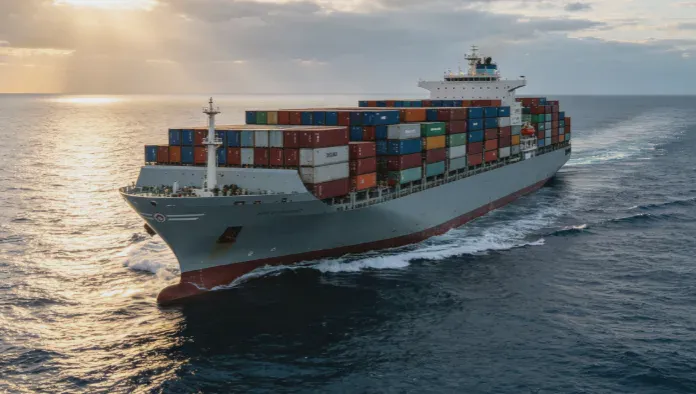
Brazilian customs complexity, unpredictable transit times, opaque surcharges, and a tax stack that can push total landed costs 40% to 100% above FOB — these are the realities every importer faces on the Guangzhou–Brazil lane. But when you understand the route, the regulations, and the practical strategies that experienced freight forwarders use every day, shipping from Guangzhou to Brazil becomes a competitive advantage rather than a headache.
In this guide, you'll get a clear, no-fluff breakdown of every shipping mode available from Guangzhou to Brazil — sea FCL and LCL, air freight, express courier, door-to-door DDP, and Amazon FBA forwarding. You'll see Guangzhou-specific cost benchmarks for 2026, learn how Brazilian import taxes actually work (with a real worked example), compare Brazilian ports side by side, and walk away with seven actionable strategies to cut both costs and transit time. Everything that follows is grounded in hands-on freight forwarding experience on the Guangzhou–Brazil corridor — not generic shipping advice repackaged with a city name. For a broader overview of freight options across all Chinese ports, refer to our comprehensive guide on Shipping From China to Brazil.
Why Ship from Guangzhou to Brazil? PRD Manufacturing Hub & Port Advantages
Guangzhou isn't just another Chinese port city. It's the commercial capital of the Pearl River Delta (PRD) — the world's densest and most diverse manufacturing cluster. If you understand what that means for your supply chain, you'll understand why shipping from Guangzhou Nansha port to Brazil gives you advantages that other Chinese origins simply can't match.
The Pearl River Delta Ecosystem: More Than Just a Port
Within a 100-kilometer radius of downtown Guangzhou, you'll find:
- Foshan — China's largest furniture and ceramics production base. If you import sofas, dining sets, tiles, or sanitary ware destined for Brazil's construction and home furnishing markets, your factory is almost certainly here.
- Dongguan — The world's electronics manufacturing floor. Smartphones, PCBs, connectors, molds, and consumer electronics components that feed Brazil's tech retail and industrial sectors.
- Zhongshan — Lighting capital of the world. Chandeliers, LED panels, industrial fixtures — Zhongshan manufactures roughly 60% of global lighting products.
- Shunde — Home appliance manufacturing hub. Microwaves, air conditioners, refrigerators from brands you recognize (and many you don't) originate in Shunde.
Here's the operational reality: when you consolidate cargo from these four industrial cities into a single Guangzhou warehouse or Container Freight Station (CFS) before shipping, you typically cut inland trucking costs by 15% to 30% versus shipping from scattered factory locations individually. One truck from Foshan, one from Dongguan, one from Zhongshan — all converging at a Guangzhou consolidation point — means one Bill of Lading (B/L), one export customs declaration, one set of documentation fees, and one coordinated sailing. That consolidation efficiency is the PRD's hidden logistics advantage, and it's something no compe***** article adequately explains.
Nansha Port: Guangzhou's Deep-Water Gateway to Brazil
Guangzhou Nansha Port is the primary deep-water container terminal serving the PRD, with an annual throughput exceeding 18 million TEUs. In September 2023, COSCO Shipping launched the first regular direct container service from Nansha to Brazil, calling at Santos and Vitória with a fleet of multipurpose vessels sailing every two weeks. This was a landmark development for the Guangzhou–Brazil lane — it cut port-to-port transit by at least five days compared to the transshipment routings (via Singapore, Port Kelang, or European hubs) that had been the only option previously.
Major carriers serving the Nansha–Brazil corridor today include COSCO Shipping (direct), Maersk, MSC, CMA CGM, Hapag-Lloyd, Evergreen, and ONE — giving shippers competitive options across both direct and transshipment services. Weekly departures are standard from Nansha to Santos and Paranaguá.
Huangpu Port: Guangzhou's Specialist Gateway
While Nansha dominates container traffic, Guangzhou Huangpu Port — located further up the Pearl River — serves as Guangzhou's workhorse for breakbulk cargo, project shipments, heavy machinery, and smaller feeder-container services. If you're shipping construction equipment, industrial boilers, or oversized manufacturing machinery to Brazil, Huangpu is often the more practical loading point due to its specialized handling equipment and proximity to Guangdong's heavy industry zones. For project cargo and heavy equipment shipments, see our dedicated guide on Shipping Heavy Machinery from China.
Baiyun International Airport (CAN): Air Cargo to Brazil
Guangzhou Baiyun International Airport (CAN) is one of China's top three air cargo hubs, handling over 2 million tons of cargo annually. For the Brazil lane, major cargo airlines operating CAN→GRU (São Paulo Guarulhos) routes include Qatar Airways Cargo (via Doha), Emirates SkyCargo (via Dubai), Turkish Cargo (via Istanbul), and Lufthansa Cargo (via Frankfurt). Direct all-cargo flights to Brazil are limited; most air freight transits through a Middle Eastern or European hub, with total airborne time of 20–30 hours.
The key advantage of CAN for PRD-based shippers is proximity: electronics factories in Dongguan and Shenzhen can deliver goods to CAN's cargo terminal within 2–3 hours by truck, enabling same-day-pickup-to-next-flight-out turnaround for urgent shipments.
Guangzhou vs. Other Chinese Ports for the Brazil Lane
How does Guangzhou compare to other major Chinese origins for shipping to Brazil? Here's the real-world picture based on 2026 routing and rate data:
| Origin Port | Transit to Santos (FCL, Direct) | Relative Cost vs. Guangzhou | Best For |
|---|---|---|---|
| Guangzhou (Nansha) | 30–40 days | Baseline | PRD-origin cargo, electronics, furniture, lighting |
| Shenzhen (Yantian) | 28–38 days | 3–8% lower on base freight | South China cargo closer to Shenzhen |
| Shanghai (Yangshan) | 32–45 days | 5–12% higher | Yangtze River Delta origin cargo |
| Ningbo-Zhoushan | 33–46 days | 5–10% higher | Zhejiang manufacturing cluster |
| Qingdao | 38–50 days | 8–18% higher | North China heavy industry |
Shenzhen Yantian offers marginally lower base ocean freight on the Brazil lane due to higher carrier density, but the difference is often offset by the inland trucking savings you get from consolidating in Guangzhou — especially if your suppliers are in Foshan, Zhongshan, or the northern PRD. For Shanghai and Ningbo origins, both cost and transit time penalties make Guangzhou the clearly superior choice for PRD-based cargo. Guangzhou's strategic position also serves as a launch point for other major trade lanes — for instance, importers shipping to North America can explore our guide on Shipping from Guangzhou to USA for a comparable lane analysis.
Sea Freight from Guangzhou to Brazil: FCL, LCL & Transit Times
For the vast majority of Brazil-bound cargo from Guangzhou, sea freight is the backbone — handling everything from single-pallet LCL shipments to full-container loads of furniture, electronics, and machinery. Understanding the operational differences between FCL and LCL, and knowing when each makes economic sense, is the foundation of smart shipping on this lane.
FCL (Full Container Load) from Guangzhou
FCL (Full Container Load) means you book an entire container exclusively for your cargo. From Guangzhou, the standard container types available for the Brazil lane are:
| Container Type | Internal Capacity | Typical Cargo | Best For |
|---|---|---|---|
| 20GP (20ft General Purpose) | ~33 CBM / 28 tons payload | Dense/heavy goods | Machinery, tiles, metal products |
| 40GP (40ft General Purpose) | ~67 CBM / 26 tons payload | High-volume, lighter goods | Furniture, lighting, textiles |
| 40HQ (40ft High Cube) | ~76 CBM / 26 tons payload | Voluminous cargo | Mattresses, insulation, bulky packaging |
FCL transit times from Guangzhou to major Brazilian ports (2026 actuals):
- Guangzhou Nansha → Santos: 30–40 days port-to-port (direct COSCO sailing)
- Guangzhou Nansha → Paranaguá: 32–42 days
- Guangzhou Nansha → Itajaí / Navegantes: 33–43 days
- Guangzhou Huangpu → Santos: 35–45 days (typically requires feeder to Nansha or Hong Kong for mother vessel connection)
- Door-to-door FCL total: 45–55 days (including China export customs processing at Nansha, ocean transit, Brazilian import clearance at Santos, and inland trucking to the consignee's door — typically 1–3 days from Santos to São Paulo)
When FCL is the right choice: your shipment exceeds 13–15 CBM, or your cargo is fragile, heavy, or oversized — FCL gives you exclusive container use, meaning fewer handling moves and lower damage risk. Bulk commodities, furniture, consumer electronics pallets, and industrial machinery are all classic FCL cargo on the Guangzhou–Brazil lane.
LCL (Less than Container Load) from Guangzhou
LCL (Less than Container Load), also called consolidation, means your cargo shares container space with other shippers' goods. It's the go-to mode for smaller volumes that don't justify a full container.
- Guangzhou consolidation hub → Santos / Itajaí: 40–50 days door-to-door (includes consolidation at a Guangzhou CFS, ocean transit, and deconsolidation at the Brazilian port)
- Express LCL from Guangzhou to Santos: 18–22 days — a premium consolidated option that uses prioritized loading, faster vessels, and expedited deconsolidation to cut total transit by approximately 40% compared to standard LCL
- Cost: $100–$250 per CBM, with a minimum chargeable volume of 1–2 CBM (meaning even a 0.5 CBM shipment pays for at least 1 CBM)
- LCL-to-FCL break-even point: At roughly 13–15 CBM, a 20ft FCL container typically becomes cheaper per cubic meter than LCL once you factor in destination terminal handling charges, port storage fees after the free period (usually 5–7 days at Brazilian ports), and the multiple-handling damage risk inherent in consolidation
When LCL makes sense: you're shipping under 13 CBM, testing a new supplier with a trial order, restocking e-commerce inventory in smaller batches, or your cargo doesn't fill a container and you're not in a rush.
The Sea Route: Guangzhou to Brazil
The physical journey from Nansha to Santos traces a familiar global trade artery: South China Sea → Singapore Strait → Indian Ocean → Cape of Good Hope (South Africa) → South Atlantic Ocean → Brazil's southeastern coast. The Cape of Good Hope routing — which became the default after Red Sea security disruptions in 2024 forced carriers to avoid the Suez Canal shortcut — adds roughly 7–10 days of steaming time compared to the pre-2024 Suez routing, but has proven stable and reliable for the Brazil lane. For the latest developments on Red Sea transit security, read our analysis on Red Sea Shipping Returns Under Tight Security. For a deeper dive into ocean freight options specifically, see Sea Shipping from China to Brazil.
Air Freight from Guangzhou to Brazil: Speed, Costs & Best Use Cases
When 30+ days on the water isn't an option, air freight from Guangzhou to Brazil delivers unmatched speed — but at a premium that only makes sense in specific scenarios. For a complete overview of air cargo options on this lane, see our dedicated guide on Air Shipping from China to Brazil. Here's what you need to know to make the right call.
Standard Air Freight from Guangzhou Baiyun (CAN)
- Transit: 5–9 days door-to-door from Guangzhou to São Paulo (includes cargo terminal processing at CAN, flight time of 20–30 hours typically via a Middle East or European hub, customs release at GRU, and final delivery)
- Cost: $5.00–$12.00 per kg (2026 indicative, based on chargeable weight — the greater of actual gross weight versus volumetric weight calculated as length × width × height in cm ÷ 6,000)
- Best for: high-value electronics and smartphone components, urgent industrial spare parts where production-line downtime costs exceed the air premium, fashion samples and seasonal collections with hard launch dates, medical devices, and perishable goods
Air freight rates from CAN to GRU fluctuate considerably based on seasonal demand (Q4 peak adds 15–25%), fuel surcharges, and space availability on the limited direct and connecting flights to Brazil.
Express Courier (DHL, FedEx, UPS) from Guangzhou
- Transit: 3–7 days door-to-door
- Cost: $8.00–$20.00 per kg — steep volume penalties apply above 100 kg, making express uneconomical for anything beyond samples and small parcels
- Best for: documents, product samples under 50 kg, small-batch e-commerce orders where speed trumps cost
- Important: Brazil's Receita Federal applies import tax on express shipments valued above $50 USD, including the shipping cost in the taxable base — factor this into your small-package economics
When Does Air Freight Actually Pay for Itself?
The air-vs-sea decision isn't just about comparing freight rates. It's about comparing total supply chain cost. Here's a practical framework:
Scenario: You're shipping $50,000 worth of smartphone LCD assemblies from a Dongguan supplier to a repair center in São Paulo. Sea freight (LCL, 2 CBM): ~$400 in freight, 45 days transit. Air freight: ~$3,000 in freight (300 kg × $10/kg), 7 days transit. On paper, air costs $2,600 more. But those 38 extra days of ocean transit mean $50,000 of inventory sitting on a ship — at a 12% annual inventory carrying cost, that's roughly $625. If a stockout during those 38 days costs even one wholesale client relationship, the air premium was cheaper than the alternative.
The rule of thumb: air freight tends to win when your cargo value exceeds 10× the freight cost, when the cost of a stockout is high, when goods are perishable or time-sensitive, or when you're shipping lightweight, high-value components rather than bulky, low-value commodities.
Guangzhou's Air Cargo Advantage
CAN's position within 2–3 hours' trucking distance of Dongguan's electronics factories and Shenzhen's tech supply chain means same-day cargo delivery to the terminal and next-flight-out connections to Brazil via Middle East hubs. For PRD-based electronics and high-value component shippers, this geographic advantage translates to 1–2 days faster total transit compared to shipping through Shanghai Pudong (PVG) or Beijing Capital (PEK).
Guangzhou to Brazil Shipping Costs: 2026 Price Breakdown by Mode
Let's put concrete numbers on the table. Below is a comprehensive cost comparison for shipping from Guangzhou to Brazil across all major modes — these are 2026 indicative ranges based on current market conditions on the Guangzhou–Santos corridor. For additional pricing benchmarks across different origin ports, check our detailed analysis of Sea Shipping cost from China to Brazil.
All-Mode Cost Comparison
| Mode | Unit | Cost Range (USD) | Effective Cost per CBM | Door-to-Door Transit | Best For |
|---|---|---|---|---|---|
| Sea FCL 20GP | Per container | $2,500–$4,500 | ~$75–$135/CBM | 45–55 days | 13–33 CBM, bulk goods |
| Sea FCL 40GP/HQ | Per container | $3,800–$7,000 | ~$55–$105/CBM | 45–55 days | 34–76 CBM, high-volume |
| Sea LCL (Standard) | Per CBM | $100–$250 | $100–$250/CBM | 50–70 days | 1–13 CBM, non-urgent |
| Sea LCL (Express) | Per CBM | $90–$130 | $90–$130/CBM | 25–35 days | 1–10 CBM, urgent small-volume |
| Air Freight | Per kg | $5.00–$12.00 | $850–$2,000/CBM* | 5–9 days | High-value, time-critical |
| Express Courier | Per kg | $8.00–$20.00 | $1,360–$3,400/CBM* | 3–7 days | Samples, documents, <100 kg |
| DDP Sea (All-In) | Per CBM/container | Freight + 40–70% in duties & taxes | Varies by NCM | 45–55 days | Hassle-free, predictable total cost |
*Air freight CBM equivalents are approximate — typical air cargo density ranges from 150–250 kg/CBM.
What Actually Drives Guangzhou–Brazil Freight Rates
Four factors move the needle more than anything else:
-
Bunker Adjustment Factor (BAF) and General Rate Increases (GRI): Carriers adjust these quarterly, and they can add 20% to 30% to the base ocean freight on the Guangzhou–Brazil lane. When fuel prices spike or capacity tightens, BAF and GRI are the first levers carriers pull.
-
Peak Season Surcharges (PSS): The Guangzhou–Brazil lane has two distinct peak windows — Q4 pre-Christmas (September through November) and pre-Chinese New Year (January). During these periods, expect 10–20% rate premiums and 7–14 days of additional transit time as vessels fill up and equipment runs short, especially 40HQ containers.
-
Equipment Availability: 40-foot high-cube containers are structurally tighter on the Brazil backhaul because Brazil exports fewer containerized goods than it imports. During peak season, securing a 40HQ at Nansha can require booking 2–3 weeks in advance.
-
AFRMM (Adicional ao Frete para Renovação da Marinha Mercante): Brazil's mandatory 25% surcharge on ocean freight value — unique to Brazil and applied to every sea import. A $3,000 ocean freight bill triggers a $750 AFRMM charge before your goods clear. This surcharge compounds with higher base rates, which is why Brazilian importers are especially sensitive to ocean freight fluctuations.
Total Landed Cost: The Formula That Matters
Understanding the difference between freight cost and total landed cost is the single most important financial skill for importing from Guangzhou to Brazil. Here's the formula:
Total Landed Cost = FOB Value
  + Ocean/Air Freight
  + [Cargo Insurance](https://www.dtfulogistics.com/news/shipping-container-insurance-cost-for-shipments-from-china/) (typically 0.3–0.5% of CIF)
  + AFRMM (25% of ocean freight; not applicable to air)
  + II — Import Duty (0–35% of CIF, depending on NCM code)
  + IPI — Industrialized Products Tax (0–30% of CIF+II)
  + PIS/COFINS — Social Contribution Taxes (~9.25% on CIF+II)
  + ICMS — State VAT (4–18%, calculated "por dentro")
  + SISCOMEX Customs Fee (R$185+ per DI)
  + Customs Brokerage (~$300–$600)
  + Inland Trucking (Santos→São Paulo: ~$400–$800 for a full container)
Depending on your NCM classification and the Brazilian state of entry, total landed cost typically ranges from 140% to 200% of the FOB value. We'll walk through a real example in the customs section below.
Cheapest Shipping Decision Framework
If you're optimizing purely for cost and your cargo isn't urgent:
| Your Situation | Cheapest Mode | Why |
|---|---|---|
| < 2 CBM, non-urgent | Sea LCL ($100–$250/CBM) | Pay only for the space you use |
| 2–13 CBM, non-urgent | Sea LCL | Still cheaper than a 20ft container |
| 13+ CBM | Sea FCL 20GP | Lower per-CBM cost, fewer handling risks |
| 15+ CBM with fragile items | Sea FCL 20GP | Exclusive container reduces damage risk |
| > 33 CBM | Sea FCL 40GP/HQ | Lowest per-CBM cost of all modes |
| < 100 kg, moderately urgent | Express Courier | Small-parcel economics win |
| 100–500 kg, urgent | Air Freight | Volume discount vs. express pricing |
| > 500 kg, need speed but budget matters | Express LCL or Hybrid Air-Sea | 40% faster than standard LCL at moderate premium |
Door-to-Door & DDP Shipping from Guangzhou to Brazil
For many importers — especially small and medium-sized businesses without dedicated logistics teams in Brazil — door-to-door shipping from Guangzhou to Brazil is the difference between a manageable supply chain and an operational nightmare. A single freight forwarder handles every touchpoint: factory pickup in the PRD, Guangzhou warehouse consolidation, China export customs clearance, international freight (sea or air), Brazilian import customs clearance, all duty and tax payments, and final delivery to the consignee's door. You deal with one point of contact, one set of paperwork, one invoice.
DDP (Delivered Duty Paid) from Guangzhou
DDP (Delivered Duty Paid) is the most comprehensive Incoterm — the seller (or your freight forwarder) assumes responsibility for everything up to and including duty and tax payment at destination. For Guangzhou-to-Brazil shipments, a DDP service typically covers:
- Factory/supplier pickup across the PRD (Foshan, Dongguan, Zhongshan, Guangzhou)
- Consolidation and warehousing in Guangzhou
- China export customs declaration and clearance
- International sea or air freight
- Brazilian import customs clearance via SISCOMEX — filed by a licensed despachante aduaneiro (customs broker)
- Payment of all import duties and taxes: II, IPI, PIS/COFINS, ICMS, AFRMM
- Port/airport terminal handling and release
- Final trucking delivery to the consignee's commercial address, warehouse, or residence
The all-in DDP cost from Guangzhou to Brazil typically runs 40% to 70% above the base freight, with the exact percentage depending heavily on the NCM (Mercosul Common Nomenclature) classification of your goods. A product with a 0% import duty NCM will land much cheaper under DDP than one with a 35% duty rate.
The Critical Requirement: CNPJ and RADAR
Here's something that catches first-time importers off guard: Brazilian customs requires a local CNPJ (Cadastro Nacional da Pessoa Jurídica) — a Brazilian tax identification number — as the importer of record. You cannot clear goods through Brazilian customs without one. Additionally, the importer of record must have an active RADAR Siscomex registration with Receita Federal:
- RADAR Expresso: Streamlined approval for low-risk, low-volume importers
- RADAR Limitado: Financial cap of $150,000 per semester — suitable for most SMEs
- RADAR Ordinário: No financial cap, but requires demonstrated financial capacity and a more rigorous approval process
For DDP shipments, reputable freight forwarders (including DTFU Logistics) work through registered Brazilian partner entities that act as the importer of record on your behalf under the legal framework of "importação por conta e ordem de terceiros" — import by account and order of a third party. This is a fully legal, Receita Federal-recognized model where a registered Brazilian company handles all tax payments and customs filings under its own CNPJ while you retain full economic ownership of the goods. Always confirm that your forwarder explains this arrangement transparently before booking — any forwarder who glosses over the CNPJ/RADAR question is not being honest about how DDP into Brazil actually works.
Amazon FBA Shipping from Guangzhou to Brazil
For e-commerce sellers using Amazon's Brazilian marketplace, Amazon FBA shipping from Guangzhou to Brazil requires more than just sending inventory — it requires FBA-compliant preparation before the goods leave China:
- Products must be labeled with Amazon FBA barcodes (FNSKU) at origin
- Cartons must meet Amazon's packaging and palletization standards
- ANVISA or INMETRO certification must be in place before shipment if your product category requires it
- The shipment must clear Brazilian customs with correct NCM classification and full tax payment before Amazon will accept it into FC (Fulfillment Center) inventory
DTFU Logistics handles the full FBA prep workflow in Guangzhou — supplier pickup, quality inspection, labeling, palletization, export clearance, freight to Santos or GRU, customs brokerage with tax payment, and final delivery to Amazon fulfillment centers — so sellers can manage their Brazil marketplace entirely from China, without a local Brazilian entity or logistics team.
Incoterms Decision Matrix: DDP vs. CIF vs. FOB
| Incoterm | You Handle | Forwarder Handles | Cost Predictability | Complexity | Best For |
|---|---|---|---|---|---|
| EXW (Ex Works) | Everything from factory gate | Nothing beyond pickup | Low — you control everything | Very high | Experienced importers with their own logistics contracts |
| FOB (Free On Board) | Main carriage, insurance, destination clearance | China export clearance + delivery to port | Medium | High | Importers with established freight contracts and Brazilian customs brokers |
| CIF (Cost, Insurance, Freight) | Destination clearance, duties, inland delivery | China export + main carriage + insurance | Medium-high | Medium | First-time importers who want freight handled but can manage Brazilian customs |
| DDP (Delivered Duty Paid) | Nothing — receive at your door | Everything, including duties and taxes | Very high | Very low | SMEs, e-commerce sellers, first-time importers, businesses without Brazilian entity |
Brazil Customs Clearance & Import Taxes
Brazilian customs is widely regarded as one of the most complex import regimes in the world — and for good reason. A single misclassified NCM code, a missing import license, or an expired RADAR registration can result in cargo held at port, mounting demurrage charges, and penalties that can reach 50% of the goods' value. Understanding how the system works before your Guangzhou shipment leaves Nansha is the difference between a routine clearance and an expensive lesson.
The SISCOMEX System: How Your Shipment Gets Processed
All imports into Brazil are processed through SISCOMEX (Sistema Integrado de Comércio Exterior), the electronic customs platform managed by Receita Federal do Brasil. The process works as follows:
- A licensed despachante aduaneiro (customs broker) files a Declaração de Importação (DI) — an electronic import declaration — in SISCOMEX, attaching all required documentation (commercial invoice, packing list, B/L or AWB, NCM codes, licenses)
- SISCOMEX performs an automated risk assessment and assigns the shipment to one of four customs inspection channels:
| Channel | Meaning | Typical Outcome | Timeline |
|---|---|---|---|
| Green | Automatic clearance — no inspection | Goods released immediately | Same day |
| Yellow | Document review only | Customs officer checks paperwork for discrepancies | 1–5 days |
| Red | Full physical inspection + document review | Container opened, goods examined against declaration | 5–15+ days |
| Grey | Physical inspection + customs valuation audit | Underlying transaction investigated for under-invoicing | 15–60+ days |
A red or grey channel assignment doesn't necessarily mean you did something wrong — it can be triggered by statistical sampling, the importer's compliance history, the NCM code's risk profile, or discrepancies in declared values. But it will add days or weeks to your timeline, and if the inspection finds errors, fines and storage charges start accumulating.
RADAR Siscomex: Your Import License to Operate
As mentioned in the DDP section above, RADAR Siscomex is the authorization every Brazilian importer (or their legal representative) must hold before goods can clear. Key points for Guangzhou shippers:
- RADAR is not automatic — the importer must apply to Receita Federal and demonstrate financial capacity commensurate with their import volume
- RADAR Limitado caps imports at $150,000 per semester — sufficient for most SMEs
- RADAR Ordinário has no dollar cap but requires audited financial statements and proof of funds
- Without valid RADAR, your goods cannot clear; they sit at the port racking up demurrage (storage) charges that can quickly exceed the freight cost itself
Experienced freight forwarders on the Guangzhou to Brazil lane can guide clients through the RADAR application or, for DDP shipments, connect them with a registered Brazilian importer-of-record partner who already holds active RADAR authorization.
Brazilian Tax Stack: A Worked Example
This is the section compe*****s skip — they list tax names and percentages but never show you the actual math. Here's a real-world calculation for a typical electronics shipment from Guangzhou to São Paulo:
Scenario: 300 laptop computers, NCM code 8471.30.19, manufactured in Dongguan and shipped via Guangzhou Nansha → Santos. FOB value: $50,000. Ocean freight: $2,800. Insurance: $150 (0.3% of CIF).
| Step | Calculation | Amount (USD) |
|---|---|---|
| 1. CIF Value | $50,000 (FOB) + $2,800 (Freight) + $150 (Insurance) | $52,950 |
| 2. II — Import Duty | $52,950 × 16% (NCM 8471.30.19 rate) | $8,472 |
| 3. IPI — Industrialized Products Tax | ($52,950 + $8,472) × 0% (computing equipment exemption) | $0 |
| 4. PIS/COFINS | ($52,950 + $8,472) × 9.25% | $5,682 |
| 5. ICMS (São Paulo, 18%) | ICMS calculated "por dentro" on (CIF + II + IPI + PIS/COFINS + ICMS itself + other charges) ÷ (1 − 0.18) × 0.18 — approximates $13,200–$14,800 effective | ~$14,000 |
| 6. AFRMM | $2,800 (ocean freight) × 25% | $700 |
| 7. SISCOMEX Fee | Fixed per DI | ~$37 |
| 8. Customs Brokerage | Licensed despachante fee | ~$500 |
| 9. Inland Trucking | Santos → São Paulo (85 km, full container) | ~$600 |
| Total Landed Cost | ~$82,941 |
That's roughly 66% above FOB value — and this is for a relatively favorable NCM code with 16% duty and 0% IPI. For consumer goods in higher duty brackets (25–35% II plus IPI), landed cost can exceed 200% of FOB.
The takeaway for Guangzhou shippers: NCM classification isn't a bureaucratic detail — it's the single biggest lever controlling your total cost to serve Brazilian customers. A forwarder who pre-validates your NCM codes against Receita Federal's TEC (Tarifa Externa Comum) database before your goods leave Guangzhou can save you thousands of dollars in avoidable penalties and overpayments.
Required Documentation Checklist
Before your Guangzhou shipment departs, ensure these documents are complete and accurate:
- Commercial Invoice — in Portuguese or English, with detailed product descriptions, unit values, total value, Incoterm, and currency. Inaccuracies trigger yellow or red channel inspections.
- Packing List — itemized with gross/net weights, dimensions, and carton count per SKU.
- Bill of Lading (B/L) or Air Waybill (AWB) — issued by the carrier; the consignee field must match the Brazilian importer of record.
- NCM/HS Classification — 8-digit Mercosul code for every product line; the first 6 digits match the international HS system.
- Certificate of Origin — issued in Guangdong for goods manufactured in the PRD; required for statistical purposes even though China-Brazil has no FTA for preferential tariff treatment.
- Import License (Licença de Importação — LI) — required for regulated goods; must be obtained before shipment departure, not after arrival.
- RADAR Registration Proof — the importer of record's active authorization.
- ISPM 15 Compliance Certificate — for any solid wood packaging (pallets, crates, dunnage), certifying heat treatment or methyl bromide fumigation.
Product Certification: Don't Ship Without It
Brazil requires mandatory certification from specific regulatory agencies for a wide range of product categories. Critically, certification must be obtained before goods are shipped — you cannot apply for certification after your container arrives. Key agencies:
| Agency | Regulated Products | Examples |
|---|---|---|
| ANATEL | Telecommunications and wireless equipment | Smartphones, routers, Bluetooth devices, radio transmitters |
| INMETRO | Electrical/electronic goods, toys, medical devices, automotive parts | Power adapters, LED drivers, children's toys, blood pressure monitors |
| ANVISA | Health products, cosmetics, pharmaceuticals, medical devices, food | Skincare products, vitamins, surgical instruments, packaged foods |
| MAPA | Agricultural products, animal feed, veterinary products | Fertilizers, pet food, plant-based raw materials |
Goods that require certification but arrive without it face seizure — not just delay, but confiscation — at Brazilian customs. A Guangzhou freight forwarder with Brazil-lane expertise should be able to flag certification requirements based on your NCM codes during the quoting stage, before you commit cargo.
2025–26 Brazil Tax Reform: What to Watch
Brazil's long-discussed consumption tax reform is gradually taking shape. The existing five-layer tax system (II, IPI, PIS, COFINS, ICMS) is being transitioned toward a simplified dual-VAT model: CBS (Contribuição sobre Bens e Serviços) at the federal level and IBS (Imposto sobre Bens e Serviços) at the state/municipal level, with a transition period extending through 2033. For importers from Guangzhou, the key near-term development was the April 2026 reduction of II (Import Duty) rates on select NCM codes — primarily industrial machinery, IT equipment, and certain capital goods not manufactured domestically in Brazil. Consult your forwarder for the latest NCM-specific rates, as this is a moving target.
Choosing the Right Brazilian Port for Your Guangzhou Shipment
Brazil has over 7,000 kilometers of coastline, but for containerized imports from Guangzhou, the decision realistically comes down to four or five ports — and your choice can swing total landed cost by 5% to 12% depending on your consignee's location. For a broader regional perspective covering logistics across the Western Hemisphere, visit our hub page on Shipping From China to Americas. This section gives you a practical decision framework.
Port-by-Port Analysis for Guangzhou Imports
Santos (São Paulo State) - Share of Brazilian container imports: ~40% - Transit from Guangzhou: 30–40 days port-to-port (direct); 45–55 days door-to-door - LCL consolidation frequency: Highest of any Brazilian port — most weekly sailings, fastest LCL deconsolidation - Inland trucking to São Paulo city: 1–3 days (~85 km) — the shortest and cheapest inland leg in Brazil - Congestion risk: Moderate to high, especially during sugar and coffee export season (May–October) when the same terminals handle heavy export volumes - ICMS: 18% for most goods entering through São Paulo state - Best for: São Paulo metro and state destinations; highest-frequency LCL; first-time importers who want the most carrier options
Paranaguá (Paraná State) - Transit from Guangzhou: 32–42 days port-to-port - Less congested than Santos — faster average berth turnaround - Best for: Curitiba metro, Paraná industrial zones, and northern Santa Catarina - ICMS: varies by product; certain industrial goods benefit from Paraná state incentives
Itajaí / Navegantes (Santa Catarina State) - Transit from Guangzhou: 33–43 days - Key advantage: Santa Catarina's state ICMS regime can be more favorable for textile, electronics, and certain consumer goods NCM codes — making Itajaí/Navegantes the cost-optimized choice for southern Brazil distribution - Best for: Southern Brazil consignees (SC, RS, southern PR), textile and apparel importers, electronics distributors serving the Porto Alegre–Florianópolis corridor
Rio de Janeiro (Rio de Janeiro State) - Transit from Guangzhou: 35–45 days - Serves: Rio de Janeiro metro, Espírito Santo (Vitória), and Minas Gerais via inland connections - ICMS: Rio de Janeiro state rates apply - Best for: Importers with customers or operations in Rio state and Espírito Santo
Suape (Pernambuco State) - Transit from Guangzhou: 40–50 days (typically transshipment) - Key advantage: The only major container port serving Brazil's Northeast region — fastest access to Recife, Fortaleza, Salvador, and Natal - Best for: Northeast Brazil consignees for whom trucking from Santos (3,000+ km) would cost more than the additional ocean transit to Suape
Port Selection Decision Matrix
| Factor | Santos | Itajaí/Navegantes | Paranaguá | Suape |
|---|---|---|---|---|
| LCL frequency from Guangzhou | ★★★★★ | ★★★☆☆ | ★★★☆☆ | ★★☆☆☆ |
| Inland trucking cost to São Paulo | ★ Lowest | Higher | Higher | Prohibitive |
| Southern Brazil (SC, RS) delivery | Higher inland cost | ★ Lowest inland cost | Low inland cost | Prohibitive |
| Northeast Brazil delivery | High inland cost | Prohibitive | Prohibitive | ★ Lowest inland cost |
| Congestion & delay risk | Higher | Lower | Lower | Low |
| ICMS optimization potential | Standard (18% SP) | Good for select NCMs (SC) | Good for Paraná-based | Depends on state |
| Carrier & sailing options | ★★★★★ | ★★★☆☆ | ★★★☆☆ | ★★☆☆☆ |
How to Decide
Start with your consignee's address. Map the inland trucking distance and cost from each candidate port. Then layer on: 1. NCM → ICMS rate by state (Santa Catarina vs. São Paulo vs. Paraná can differ meaningfully for certain product categories) 2. LCL vs. FCL frequency (if you ship LCL, Santos' consolidation density is a real advantage) 3. Congestion and peak-season risk tolerance
In most cases, if your consignee is in São Paulo state, Santos is the default and optimal choice. For southern Brazil (Paraná, Santa Catarina, Rio Grande do Sul), Itajaí or Paranaguá can lower inland trucking cost enough to offset marginally higher ocean freight. For northeastern Brazil, Suape or direct-to-Salvador services avoid a cross-country trucking bill that can exceed $3,000 per container. Importers also serving neighboring markets can explore Shipping From China to Argentina and dedicated sea freight services to Argentina from the same South China ports.
7 Proven Ways to Reduce Guangzhou to Brazil Shipping Costs & Transit Time
After managing hundreds of shipments on the Guangzhou–Brazil lane, here are the strategies that consistently deliver savings — not generic "book early" advice, but operational tactics specific to this origin-destination pair.
1. Classify Your NCM Before You Ship a Single Carton
The single most expensive mistake Guangzhou shippers make: assuming the HS code used for China export is the correct NCM for Brazilian import. NCM codes are 8-digit Mercosul-specific classifications, and a wrong code can double your effective duty rate and trigger a red-channel inspection. Before your goods leave Guangzhou, have a licensed Brazilian customs broker review your product specifications and confirm the correct NCM codes against Receita Federal's TEC database. This pre-validation alone prevents more cost and delay than any other single action.
2. Consolidate PRD Cargo at a Guangzhou CFS
If you source from three factories — say, furniture from Foshan, lighting from Zhongshan, and electronics from Dongguan — the instinct is to ship three LCL shipments, each from its nearest port. Don't. Consolidate all three supplier pickups into one Guangzhou Container Freight Station (CFS) and ship one FCL container. You eliminate two SISCOMEX DI filings, two sets of customs brokerage fees, two sets of terminal handling charges, and the higher per-CBM LCL rate. For PRD-based multi-supplier supply chains, consolidation at a Guangzhou CFS is routinely the highest-ROI logistics decision you'll make.
3. Hit the FCL Break-Even at ~13–15 CBM
The per-CBM economics flip at roughly 13–15 CBM. At 15 CBM × $200/CBM LCL, you're paying $3,000 — right at the low end of a 20ft FCL rate. But with FCL, you avoid destination deconsolidation fees ($80–$150), per-CBM terminal handling at the Brazilian port, and the damage risk inherent in shared-container consolidation. If you're close to the break-even, consolidating a little extra inventory (or combining two suppliers' LCL shipments) to hit FCL volume usually delivers better total economics.
4. Use Guangzhou Nansha's Direct Sailing to Brazil
COSCO's direct Nansha→Santos/Vitória service isn't just faster — it's fundamentally more reliable. Transshipment through Singapore or Port Kelang introduces connection risk: your Guangzhou feeder arrives late, the mother vessel has already sailed, and your container sits at a transshipment hub for a week waiting for the next sailing. Direct services avoid this entirely. Fewer handling moves also mean lower damage risk — important for fragile cargo like furniture, lighting, and electronics.
5. Time Your Bookings Around Both Chinese and Brazilian Peak Seasons
The Guangzhou–Brazil lane has a double peak-season problem: - Pre-Chinese New Year (January): PRD factories rush to ship before the two-week holiday shutdown. Container space tightens; rates spike 10–20%. - Q4 Holiday Peak (September–November): Brazilian retailers stock up for Black Friday (November) and Christmas. Demand surges on the Asia–South America trade lane.
The optimal booking windows from Guangzhou to Brazil: March–April (post-CNY, pre-midyear) and July–August (post-midyear restocking, pre-Q4 peak). Booking 3–4 weeks ahead of vessel departure during these windows typically secures base rates without peak season surcharges.
6. Model AFRMM into Every Cost Comparison
Brazil's 25% AFRMM surcharge on ocean freight means a $1,000 increase in ocean freight doesn't cost you $1,000 — it costs you $1,250. When comparing FCL quotes or evaluating whether air freight is a viable alternative, always model the full freight + AFRMM cost for ocean options. For high-duty NCM codes, the AFRMM impact is modest relative to the duty burden. For low-duty bulk goods (e.g., raw materials at 0–5% II), AFRMM can be a meaningful percentage of total landed cost — and in some edge cases, makes air freight comparatively more attractive than it appears on freight rates alone.
7. Work with a Guangzhou-Based Freight Forwarder Who Knows Brazil
This isn't just a plug — it's an operational reality. A forwarder with a physical office in Guangzhou (not just a remote sales desk) can: - Visit your supplier's factory in Foshan and pre-inspect cargo before it's loaded into a container - Walk your documents through Guangdong CCPIT for same-day certificate of origin issuance - Physically verify container loading at the Nansha or Huangpu terminal to ensure correct stuffing and prevent cargo damage - React to last-minute vessel schedule changes — rebooking at the terminal counter rather than through a call center - Coordinate PRD multi-supplier consolidation with local trucking partners they've worked with for years
These are things a forwarder based in Shanghai, Hong Kong, or overseas simply cannot do for Guangzhou-origin cargo. On a lane as operationally demanding as Guangzhou–Brazil, local presence directly translates to lower risk and faster problem resolution. For a broader perspective on how professional freight forwarders add value across the supply chain, read our analysis of The Strategic Role of Freight Forwarders in Modern Supply Chains.
FAQs
How long does shipping from Guangzhou to Brazil take?
Sea freight (FCL) from Guangzhou Nansha to Santos takes 30–40 days port-to-port on direct sailings, or 45–55 days door-to-door including China export customs, Brazilian import clearance, and inland delivery. LCL shipments add 5–10 days for consolidation and deconsolidation — expect 50–70 days door-to-door. Air freight takes 5–9 days door-to-door from CAN to GRU. Express courier (DHL, FedEx, UPS) delivers in 3–7 days. The fastest sea option is Express LCL at 18–22 days port-to-port.
How much does it cost to ship a container from Guangzhou to Brazil?
A 20ft container (20GP) from Guangzhou to Santos ranges $2,500–$4,500; a 40ft container (40GP/40HQ) ranges $3,800–$7,000. These are 2026 indicative base freight rates and exclude BAF, GRI, and peak season surcharges that can add 20–30%. Actual rates depend on the carrier, season, equipment availability, and fuel prices at time of booking.
What is the cheapest way to ship from Guangzhou to Brazil?
For shipments under 13–15 CBM, sea LCL at $100–$250 per CBM is the cheapest option. Above 15 CBM, sea FCL delivers a lower per-unit cost, especially once destination handling charges are factored in. For urgent shipments under 100 kg, express courier is the cheapest air option; for 100–500 kg, standard air freight.
Is there direct shipping from Guangzhou Nansha to Brazil?
Yes. COSCO Shipping launched the first regular direct container service from Guangzhou Nansha to Brazil (Santos and Vitória) in September 2023. The service operates every two weeks and cuts port-to-port transit by at least 5 days compared to transshipment routings. Other carriers, including Maersk, MSC, and CMA CGM, also serve the Guangzhou–Brazil lane with both direct and transshipment options.
What documents are required for shipping from Guangzhou to Brazil?
A complete documentation set includes: commercial invoice (Portuguese or English, with detailed product descriptions and values), packing list (itemized with weights and dimensions), bill of lading (B/L) for sea freight or air waybill (AWB) for air freight, NCM/HS classification codes (8-digit Mercosul format), certificate of origin, and an import license (LI) if your goods are on Brazil's non-automatic licensing list. Wooden packaging must have ISPM 15 compliance certification.
How much are Brazilian import duties and taxes on goods from China?
Brazil's total effective import tax burden typically ranges from 40% to 100% above FOB value, composed of: II (Import Duty, 0–35% of CIF), IPI (Industrialized Products Tax, 0–30%), PIS/COFINS (~9.25%), ICMS (state VAT, 4–18%), and AFRMM (25% of ocean freight). China does not have a free trade agreement with Brazil, so standard Mercosul external tariff (TEC) rates apply. The exact burden depends entirely on your product's NCM classification.
Can DTFU Logistics handle Amazon FBA shipping from Guangzhou to Brazil?
Yes. As an experienced freight forwarder with FIATA and IATA certifications, DTFU Logistics provides end-to-end Amazon FBA forwarding from Guangzhou to Brazil. This includes supplier pickup across the PRD, FBA-compliant labeling and palletization at our Guangzhou facility, China export customs clearance, international freight (sea or air), Brazilian import customs clearance with full tax payment, and final delivery to Amazon fulfillment centers in Brazil. Brazilian FBA sellers can manage their entire supply chain through a single point of contact without a local Brazilian entity.
Which Brazilian port is best for my Guangzhou shipment?
Santos is the default and best choice for São Paulo state destinations — it has the highest sailing frequency, fastest LCL deconsolidation, and the lowest inland trucking cost to Brazil's largest consumer market. Itajaí/Navegantes can reduce total landed cost for southern Brazil (SC, RS) deliveries thanks to favorable Santa Catarina state ICMS rates. Paranaguá is optimal for Paraná state and Curitiba metro. Suape is the right choice for Northeast Brazil consignees. Match your consignee's state and inland distance first — port choice can swing landed cost by 5–12%.
What products require special certification for import into Brazil?
Electronics and wireless devices require ANATEL certification. Electrical goods, toys, and medical devices require INMETRO approval. Cosmetics, pharmaceuticals, and health products require ANVISA registration. Agricultural goods and food products require MAPA clearance. These certifications must be obtained before goods are shipped — non-compliant cargo arriving at Brazilian customs faces seizure, not just delay.