How long does shipping time from China to Brazil really take? The honest answer spans 3 to 65 days — express courier can touch down in São Paulo in as little as three business days, while door-to-door ocean freight often stretches past two months. The gap isn't the ocean crossing; it's what happens at the Brazilian border.
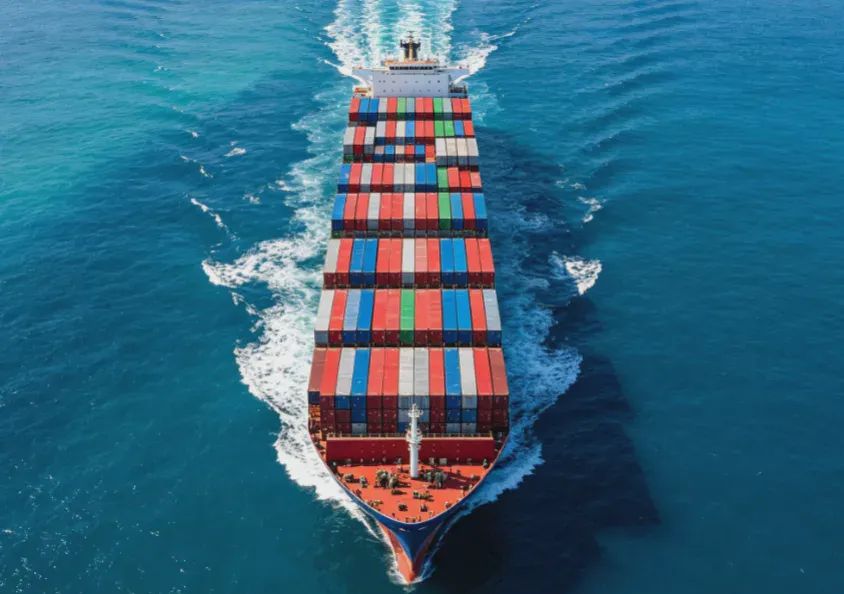
In this guide, we break down every mode — sea freight (FCL & LCL), air freight, express courier, and door-to-door DDP — with a port-by-port transit time matrix, a step-by-step timeline of a real shipment, and the five factors that most often delay cargo. By the end, you'll know exactly how long to plan for and how to keep that number from slipping.
How Long Does Shipping from China to Brazil Take?
Here's the at-a-glance answer most importers need before they commit to a purchase order:
| Shipping Mode | Typical Transit Time | Cost Level | Delivery Type | Best For |
|---|---|---|---|---|
| Express Courier (DHL / FedEx / UPS) | 3–5 business days | Very High | Door-to-Door | Samples, documents, urgent spare parts |
| Air Freight | 3–8 days | High | Airport-to-Airport | High-value, perishable, time-critical cargo |
| Sea Freight (FCL) | 30–45 days | Low | Port-to-Port | Bulk cargo, full container loads |
| Sea Freight (LCL) | 35–55 days | Moderate | Port-to-Port | Smaller volumes under ~15 CBM |
| Sea Freight (Door-to-Door) | 45–65 days | Low–Moderate | Door-to-Door | Full supply chain, hands-off importing |
One caution before we go deeper: if you see a quote claiming ocean LCL from China to Brazil in "9–17 days," treat it as an error. That is physically impossible for sea freight — it's almost certainly air consolidation or a last-mile figure dressed up as an ocean transit time. Knowing this distinction early will save you from planning against a number that can't be delivered.
What Determines Shipping Time from China to Brazil?
Total transit time — often called lead time in supply chain planning — is never just the vessel or the flight. It's the sum of four separate legs:
- Origin handling (China): 3–7 days — supplier pickup, consolidation, export customs clearance, and loading at the port or airport.
- Main international transit: 30–45 days by sea, or 3–8 days by air.
- Destination customs clearance (Brazil): 7–14 days on average, and easily 20+ days if an inspection is triggered.
- Final delivery (Brazil): 2–5 days of inland trucking from the port to your warehouse.
Under Incoterms 2020, how far down this chain you are responsible depends on the term you've agreed — EXW (seller's gate), FOB (on board the vessel), CIF (cost, insurance, and freight to the destination port), DDP (all the way to your door, duties paid), or DDU (to your door, duties unpaid). Your Incoterm doesn't change the physics of transit, but it changes who absorbs each delay and where your visibility ends.
Our Industry Insight: In more than a decade of moving cargo into Brazil, the single most under-budgeted number we see is the customs leg. Importers plan for a 35-day ocean crossing and forget that Brazilian customs routinely adds another two weeks. Always plan the full door-to-door number — never just the sailing schedule.
Sea Freight Time from China to Brazil
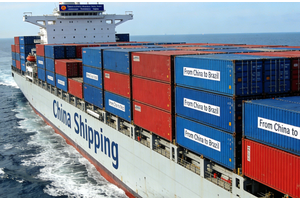
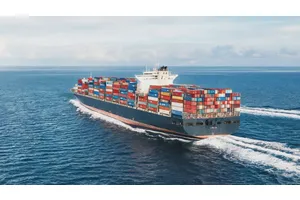
Sea freight is the workhorse of China–Brazil trade and the cheapest option per kilogram for anything over a few cubic meters. How fast it moves depends on whether you ship a full container or share one.
FCL (Full Container Load) Transit Times
A Full Container Load (FCL) gives you a dedicated container and the fastest ocean routing — usually a direct or single-transshipment sailing.
| Origin Port (China) | Destination Port (Brazil) | Typical FCL Transit |
|---|---|---|
| Shenzhen | Santos | 30–34 days |
| Shanghai | Santos | 32–36 days |
| Ningbo | Paranaguá | 34–38 days |
| Shanghai | Navegantes | 35–40 days |
| Qingdao | Rio de Janeiro | 33–37 days |
Direct sailings from Shenzhen's Yantian terminal to Santos typically run 30–34 days on carriers like COSCO, MSC, CMA CGM, and Maersk. Routes that transship through Singapore, Algeciras (Spain), or Lisbon (Portugal) add another 7–14 days to the journey.
LCL (Less than Container Load) Transit Times
Less than Container Load (LCL) consolidates your cargo with other shippers' freight, which adds two extra steps: consolidation in China (3–5 days) and deconsolidation at a bonded warehouse in Brazil before clearance. Expect LCL to run 5–10 days slower than FCL — roughly 35–55 days port-to-port.
The hidden cost of LCL isn't only the extra days. Brazilian terminals charge a CFS handling fee (Taxa de Capatazia), storage fees (Armazenagem) once the free period ends, and administrative release fees — together adding USD 200–500 to a small LCL shipment, and more if customs holds the cargo for inspection.
Real-Life Scenario: A furniture importer in Belo Horizonte asked us to switch a recurring 9 CBM LCL order to a 20GP FCL by adding two more product SKUs. The container filled to roughly 20 CBM, the transit time dropped by six days (no deconsolidation wait), and the per-unit landed cost fell — even after carrying the extra inventory. The break-even is usually around 13–15 CBM; above that, pricing a full box is almost always the better call.
Air Freight Time from China to Brazil
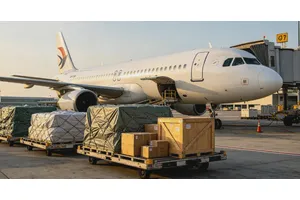
When the deadline won't wait, air freight and express courier compress weeks into days.
Air Freight Transit Times
| Service Level | China Hubs | Brazil Hubs | Transit Time |
|---|---|---|---|
| Express Air | PVG / CAN / SZX | GRU / VCP | 3–5 days |
| Standard Air | PVG / CAN / SZX / PEK | GRU / VCP / GIG | 5–8 days |
The physical flight is only 20–30 hours, but routing, connections, and ground handling stretch total airport-to-airport time to 3–8 days. Standard air commonly transships through Frankfurt, Amsterdam, Dubai, or Doha. Carriers serving the lane include Air China Cargo (with a direct PEK–GRU freighter), Qatar Airways Cargo, Turkish Cargo, and LATAM Cargo. For shipments over 1,000 kg, book 7–10 days in advance — especially in peak season, when air capacity tightens first.
Express Courier
For samples, documents, or a critical spare part, express courier (DHL, FedEx, UPS) delivers door-to-door in 3–5 business days at roughly USD 12–18 per kilogram. Note that Brazil's Remessa Conforme program now strictly enforces import duty (II) and state tax (ICMS) on these parcels, so the landed cost is higher than the freight quote suggests.
Amazon FBA Shipping Time from China to Brazil
For Amazon FBA sellers, the same split applies: air freight lands your stock at a Brazilian fulfillment center in 5–10 days door-to-door, while sea freight takes 45–60 days but slashes the per-unit cost. Sellers with a stable sales velocity usually mix both — a sea-freight base plus an air-freight top-up to avoid stockouts.
Door-to-Door vs Port-to-Port: The Real Timeline from China to Brazil
This is where most transit-time confusion lives. There are three distinct delivery boundaries, and each stacks a different set of legs:
- Port-to-Port: origin port to destination port only — you handle pre-carriage and post-clearance delivery yourself.
- Door-to-Door: from the supplier's door to your door, but duties and taxes are still on your account (DDU-style).
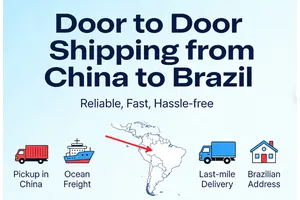
- DDP (Delivered Duty Paid): the forwarder handles everything — export clearance, freight, Brazilian import clearance, duties and taxes, and final delivery.
Here's how a real door-to-door FCL shipment from Shenzhen to São Paulo via Santos actually played out:
| Stage | Duration | Cumulative |
|---|---|---|
| Pickup & export customs (Shenzhen) | 3 days | Day 3 |
| Ocean transit (direct, COSCO) | 32 days | Day 35 |
| Berth wait at Santos (congestion) | 2 days | Day 37 |
| Unloading & Siscomex filing | 2 days | Day 39 |
| Customs inspection (Yellow channel) | 8 days | Day 47 |
| Tax payment & release | 2 days | Day 49 |
| Inland trucking to São Paulo | 1 day | Day 50 |
Total: 50 days door-to-door. Always budget 45–60 days for sea freight door-to-door to Brazil.
On DDP: it's the most convenient option for first-time importers and e-commerce sellers without a local team, but it isn't always available in Brazil. Only a locally registered entity holding a RADAR license can act as the importer of record and pay ICMS — so confirm your forwarder has a legitimate Brazilian partner before committing.
Transit Time from China to Santos & Other Major Brazilian Ports
Not all Brazil routes are equal. Santos is Latin America's largest container port and the default gateway, but routing everything through it often adds unnecessary inland trucking. Here's the broader picture:
| China Port | Brazil Port | FCL Transit |
|---|---|---|
| Shenzhen / Guangzhou | Santos | 30–40 days |
| Shanghai / Ningbo | Santos | 32–45 days |
| Xiamen / Qingdao | Santos / Paranaguá | 35–45 days |
| Tianjin | Santos / Rio de Janeiro | 40–50 days |
| Shenzhen / Shanghai | Rio de Janeiro / Itajaí | 35–50 days |
Choosing the right destination port shortens your inland leg: southern Brazil (Paraná, Santa Catarina) is better served via Paranaguá, Itajaí, or Navegantes; the northeast via Suape or Salvador.
Origin matters just as much. Because DTFU Logistics operates across all major Chinese ports — Shenzhen, Shanghai, Ningbo, Qingdao, Guangzhou, and more — we route your cargo from the port closest to your supplier, trimming 1–3 days of origin handling and inland trucking off the front end of the timeline.
5 Factors That Delay Shipping Time from China to Brazil
1. Brazilian Customs (Siscomex) Inspections
Brazil's Receita Federal assigns every import declaration to one of four Siscomex inspection channels:
| Channel | Portuguese | Inspection Level | Typical Release |
|---|---|---|---|
| Green | Canal Verde | Automatic clearance | 1–2 days |
| Yellow | Canal Amarelo | Document review only | 3–7 days |
| Red | Canal Vermelho | Physical + document | 7–20+ days |
| Gray | Canal Cinza | Full anti-fraud audit | 30–60+ days |
How to avoid it: confirm your RADAR license before shipping, get your NCM codes (Brazil's HS codes) verified in advance, and work with a licensed Brazilian customs broker (despachante aduaneiro) from the start. A single NCM error can trigger a Red channel and fines of up to 100% of the customs value difference.
2. Port Congestion
Santos and Paranaguá congest during the agricultural export season (roughly March–August), adding 2–5 days of anchorage waiting. How to avoid it: prefer direct sailings over transshipment and avoid scheduling arrival right in the peak window.
3. Peak Seasons & Holidays
Chinese New Year (Jan/Feb) and Golden Week (Oct) cause factory closures and rolled cargo; Brazil's Carnival (Feb/Mar) slows customs and trucking. How to avoid it: stop shipping three weeks before Chinese New Year and avoid arrivals during Carnival week.
4. Documentation Mismatches
Brazilian customs is unforgiving about paperwork. How to avoid it: ensure your CNPJ, commercial invoice, packing list, and bill of lading align exactly — quantities, weights, NCM codes, and consignee details must match across every document.
5. Regulatory Approvals (ANVISA / MAPA / INMETRO)
Food, cosmetics, medical devices, and pharmaceuticals need ANVISA approval (+5–15 business days); agricultural goods and wooden packaging need MAPA certification; electronics and toys may need INMETRO certification. How to avoid it: confirm your category's certifications before booking, not after the container has sailed.
How to Choose a Freight Forwarder for Reliable China-to-Brazil Shipping
A good forwarder is the difference between a 50-day delivery and a 65-day one. When you're comparing partners for this lane, weigh four things:
- Credentials: look for FIATA and IATA certifications — the international stamps of a professional, compliant operator.
- Direct carrier contracts: forwarders with direct contracts to COSCO, MSC, CMA CGM, and major airlines can secure space and faster routings in peak season, instead of buying second-hand rates.
- End-to-end visibility: real-time tracking across the ocean leg and the Brazilian customs leg — where most tracking feeds go dark.
- Brazil clearance capability: a partner with a licensed local broker and RADAR experience who can monitor Siscomex directly.
This is exactly where DTFU Logistics fits. Founded in 2014 and headquartered in Shenzhen with a network serving 120+ countries, we hold dual FIATA and IATA certifications and direct contracts with major carriers — so we lock in competitive rates and secured space even in peak season. Our 24/7 customer service and dedicated account managers build a custom China-to-Brazil plan around your deadlines and budget, and our tracking platform keeps you informed at every milestone, including the customs phase. With safe warehousing and comprehensive cargo insurance, we cover the full journey from supplier to your door.
Our Industry Insight: We never sell a single mode. We'll tell you honestly when sea freight makes sense and when the air premium is worth it — because a transparent recommendation you can plan around is worth more than a faster headline that falls apart at Brazilian customs.
FAQs
How long does sea freight take from China to Brazil?
30–45 days port-to-port for FCL (35–55 days for LCL), and 45–65 days door-to-door once customs and inland trucking are included.
How long does air freight take from China to Brazil?
3–8 days airport-to-airport, or 5–12 days door-to-door.
Why is customs clearance in Brazil so slow?
Brazil's Siscomex system applies strict document verification, high tariffs, and complex taxes (II, IPI, PIS, COFINS, ICMS). Any discrepancy triggers a manual inspection that can add weeks.
Is there a direct sea route from China to Brazil?
Yes — direct sailings run from Shanghai, Shenzhen, and Ningbo to Santos, Paranaguá, and Rio de Janeiro in 30–35 days. Transshipment routes take 40–50+ days.
How can I speed up shipping from China to Brazil?
Pre-verify NCM codes and RADAR, use direct (not transshipment) sailings, ship outside peak windows, and keep all four documents perfectly aligned.
What is the cheapest way to ship from China to Brazil?
Sea freight FCL is cheapest per kilogram for full containers; LCL suits smaller volumes. Air freight is faster but costs several times more — the right choice depends on how much a delay costs you.
Conclusion
Shipping time from China to Brazil runs from 3 days by express courier to 65 days by door-to-door sea freight — and the deciding variable is almost never the ocean crossing. It's Brazilian customs, congestion, and documentation. Plan the full door-to-door number, pre-clear your NCM codes and RADAR, and pick a forwarder with the credentials and carrier contracts to hold the timeline.
Want a precise China-to-Brazil timeline and rate for your specific cargo and ports? Contact DTFU Logistics today, and our team will map a customized routing with a transparent, no-hidden-fee quote.