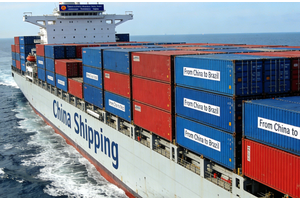
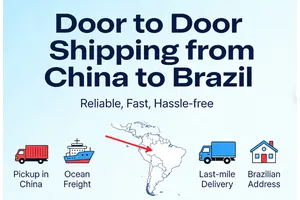
If you're sourcing products from China and need them delivered to Brazil, you've probably already discovered a frustrating truth: the number you see on a freight quote is rarely the number you actually pay. In 2026, shipping cost from China to Brazil has been on a wild ride — container rates collapsed to around $1,000 per 40-foot container in January, only to rebound past $4,000 by May and surge toward $6,000+ during the peak summer months. And that's just the ocean freight. Once you factor in Brazil's uniquely complex import tax system, port charges, and last-mile delivery, your actual total landed cost can easily run 60% to 100% above the CIF value of your goods.
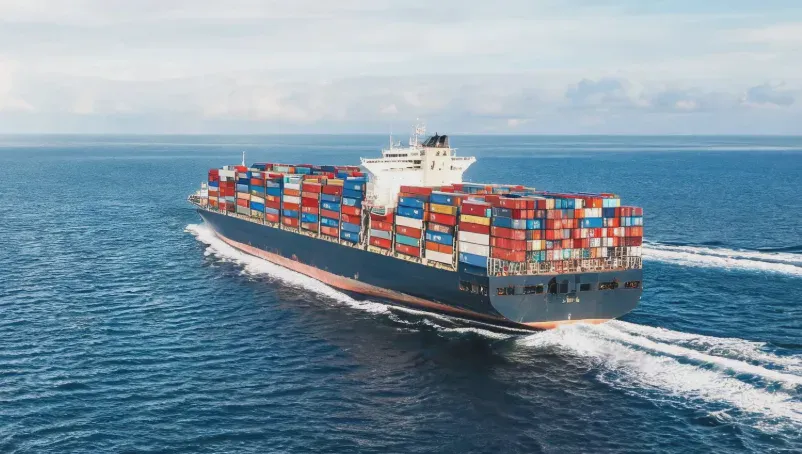
This guide breaks down exactly what you'll pay to ship from China to Brazil in 2026 — across every major shipping mode, from every major Chinese port, with a clear explanation of Brazil's cascading import taxes that most freight forwarders gloss over. Whether you're a first-time importer testing the market with a few cubic meters of LCL cargo or an established business shipping full containers every month, you'll find the numbers, the formulas, and the practical strategies to budget accurately and avoid the hidden fees that eat into your margins. For a complete overview of DTFU's China-to-Brazil freight solutions — covering sea, air, and door-to-door services — visit our dedicated Shipping From China to Brazil page.
Sea Freight Cost from China to Brazil: FCL & LCL Container Shipping Rates (2026)
Sea freight is the backbone of China–Brazil trade, handling the vast majority of commercial cargo between the two countries. It's the most cost-effective option for shipments above 2 cubic meters, but the pricing structure differs significantly depending on whether you book a full container or share space with other importers. For a focused breakdown of ocean freight pricing, transit routes, and carrier options, see our detailed Sea Shipping cost from China to Brazil analysis.
FCL (Full Container Load) Shipping Rates
When you book FCL, you're renting an entire container for your exclusive use. The container is sealed at your supplier's facility and remains sealed until it reaches your designated Despachante Aduaneiro (licensed customs broker) in Brazil. This gives you better security, faster transit, and — above a certain volume threshold — a lower per-unit shipping cost.
Here are the current (August 2026) market rate ranges for FCL shipments from major Chinese ports to Brazil:
| Route | 20GP (20ft) | 40GP (40ft) | 40HQ (40ft High Cube) | Transit (Port-to-Port) |
|---|---|---|---|---|
| Shanghai → Santos | $2,500–$3,200 | $3,200–$4,100 | $3,400–$4,400 | 28–35 days |
| Shenzhen/Yantian → Santos | $2,550–$3,300 | $3,100–$4,200 | $3,300–$4,500 | 26–33 days |
| Ningbo → Santos | $2,600–$3,400 | $3,300–$4,400 | $3,500–$4,700 | 30–38 days |
| Guangzhou/Nansha → Paranaguá | $2,600–$3,400 | $3,200–$4,300 | $3,400–$4,600 | 30–38 days |
| Qingdao → Rio Grande | $2,800–$3,600 | $3,600–$4,600 | $3,800–$5,000 | 34–42 days |
| Tianjin → Itajaí | $2,900–$3,700 | $3,700–$4,800 | $3,900–$5,200 | 34–45 days |
⚠️ Market Alert (August 2026): Maersk has announced a Peak Season Surcharge (PSS) of $1,000 per 20ft and $2,000 per 40ft on Far East → East Coast South America routes, effective August 2026. Most major carriers are expected to follow with similar surcharges. These rates also exclude BAF (Bunker Adjustment Factor) and potential GRI (General Rate Increases), which can add 10–30% to the base rate. Always request an all-in quote before confirming your booking.
A 20ft container holds approximately 33 cubic meters (CBM) or 28 metric tons of cargo. A 40ft High Cube (40HQ) holds about 76 CBM and is the workhorse for most commercial shipments — it offers the best per-CBM economics when you're shipping more than 25 CBM.
LCL (Less than Container Load) Pricing Per CBM
For shipments under 15 CBM, LCL (Less than Container Load) lets you share container space with other importers. You pay only for the cubic meters you use, rather than a flat container rate. However, LCL involves more handling — your cargo is consolidated at a CFS (Container Freight Station) in China and deconsolidated at another CFS in Brazil — which adds both time and destination fees.
| Origin Port | Destination Port | Rate (per CBM) | Transit (Door-to-Door) |
|---|---|---|---|
| Shanghai | Santos | $120–$220 | 38–48 days |
| Shenzhen | Santos | $100–$200 | 35–45 days |
| Ningbo | Paranaguá | $120–$210 | 38–50 days |
| Guangzhou | Itajaí | $90–$180 | 37–48 days |
| Qingdao | Rio de Janeiro | $130–$250 | 40–52 days |
But here's what most first-time importers miss: the headline per-CBM rate is just the starting point. LCL shipments incur additional costs at the destination that FCL shipments largely avoid:
- CFS deconsolidation fee: $20–$35 per CBM
- THC (Terminal Handling Charge): $80–$200 per Bill of Lading
- Customs brokerage (Despachante): $150–$350 per shipment
- SISCOMEX/DUIMP filing fee: $30–$60 per import declaration
- Port storage: $10–$30 per CBM per day (free period typically only 3–7 days)
In real terms, a 5 CBM LCL shipment from Shenzhen to São Paulo with a headline rate of $100/CBM ($500 ocean freight) will actually cost around $400–$420/CBM all-in by the time you add origin pickup, CFS receiving, export declaration, B/L issuance, deconsolidation, brokerage, and last-mile trucking. This brings the logistics subtotal to roughly $2,000–$2,100 — before a single real of Brazilian tax is paid.
The FCL vs. LCL Break-Even Decision
The break-even point where FCL becomes cheaper than LCL is typically between 12 and 15 CBM. At 12 CBM with a $100/CBM LCL rate, your ocean freight is $1,200 — but with all destination fees, the total logistics bill approaches $2,300–$2,500. A 20ft FCL from Shenzhen to Santos at $2,550–$3,300 starts to look very competitive at this volume, and comes with faster transit and lower damage risk.
Rule of thumb:
- Under 10 CBM: LCL wins on price
- 10–15 CBM: Get quotes for both LCL and 20ft FCL
- Above 15 CBM: FCL almost always wins on both price and transit time
- Above 25 CBM: 40HQ offers the lowest per-CBM cost on the market
Sea Freight Transit Times: What to Expect
Ocean transit from China to Brazil typically takes 25 to 45 days port-to-port, depending on your specific port pair and whether you book a direct or transshipped service:
| Route | Direct Service | Transshipment | Notes |
|---|---|---|---|
| Shanghai → Santos | 28–33 days | 35–45 days | Most frequent sailings |
| Shenzhen → Santos | 26–31 days | 33–42 days | ZIM Falcon: Yantian→Santos in ~26 days |
| Shanghai → Paranaguá | N/A | 35–51 days | Terminal congestion can add 5–10 days |
| Shanghai → Rio de Janeiro | N/A | 40–45 days | Mostly transshipment via Singapore/Colombo |
| Qingdao → Suape/Fortaleza | N/A | 50–55 days | Requires transshipment via Santos |
The fastest direct China→Brazil service is ZIM's Falcon express line — Shenzhen (Yantian) to Rio de Janeiro in 24 days and Santos in 26 days. If transit speed is critical for your supply chain, this is the service to ask your forwarder about.
Door-to-door sea freight (including pickup, export clearance, ocean transit, import clearance, and last-mile delivery) adds 10–15 days to port-to-port times, bringing FCL door-to-door to 35–50 days and LCL door-to-door to 40–55 days.
Air Freight & Express Shipping Cost from China to Brazil Per KG
When ocean transit is too slow for your inventory needs, air freight and express courier services offer dramatically faster delivery at a higher price point. The right choice between them depends on your shipment weight, urgency, and destination in Brazil.
Air Freight Rates by Weight Tier
Air freight pricing scales with volume — the more you ship, the lower your per-kilogram rate. Rates also vary by destination airport, with São Paulo/Guarulhos (GRU) and Campinas/Viracopos (VCP) being the primary entry points for air cargo in Brazil.
| Weight Tier | São Paulo (GRU) | Campinas (VCP) | Transit (Door-to-Door) |
|---|---|---|---|
| 100–299 kg | $5.90–$10.50/kg | $5.50–$10.50/kg | 7–12 days |
| 300–999 kg | $4.60–$8.50/kg | $4.80–$9.50/kg | 6–10 days |
| 1,000 kg+ | $4.00–$7.50/kg | $4.20–$7.80/kg | 5–9 days |
Air freight is charged on chargeable weight — the greater of actual (gross) weight and volumetric weight. Volumetric weight is calculated as: (Length × Width × Height in cm) ÷ 6,000. If you're shipping lightweight but bulky items (like furniture or packaging materials), your volumetric weight can far exceed your actual weight, significantly increasing your air freight bill.
Express Courier: Best for Samples, Documents & Small Shipments
For shipments under 100 kg — product samples, legal documents, emergency spare parts — express courier services (DHL, FedEx, UPS, TNT) offer the fastest door-to-door delivery at $9–$20 per kilogram, with transit times of 3–7 days. Express services include simplified customs clearance for low-value shipments, making them the most convenient option for small, non-commercial consignments.
However, express becomes prohibitively expensive above 100 kg. At that point, consolidating your shipment into air freight with a forwarder typically cuts your per-kilogram cost by 30–50%.
Air Freight vs. Sea Freight: A Cost-Benefit Comparison
To put the cost-speed trade-off in perspective, let's compare a real-world scenario:
| Factor | Sea Freight (LCL) | Air Freight |
|---|---|---|
| Shipment: 500 kg, 3 CBM electronics | ||
| Freight cost | ~$450–$600 (at $150–$200/CBM all-in) | ~$3,000–$5,000 (at $6–$10/kg) |
| Transit time (door-to-door) | 40–55 days | 7–12 days |
| Inventory carrying cost (45 days vs. 10 days) | Higher — capital tied up ~5 extra weeks | Lower — faster turnover |
| Damage/exposure risk | Longer handling chain, more touch points | Shorter transit, fewer handling stages |
The decision framework is straightforward: if your product has a high value density (value per kilogram — think electronics, medical devices, fashion) and urgent restocking needs, air freight's premium is easily justified by faster inventory turnover and lower carrying costs. If you're shipping lower-value, bulkier goods (furniture, machinery, construction materials), sea freight is the only economically viable option. For a complete guide to air cargo options, airline partnerships, and express consolidation services, read our Air Shipping from China to Brazil overview.
Door to Door Shipping Cost from China to Brazil
Many importers searching for door to door shipping want the simplest possible experience: one forwarder, one quote, cargo collected in China and delivered to their door in Brazil. That service exists — but what it's called in Brazil is critically important, and getting the terminology wrong can mean the difference between a smooth shipment and a container stuck in legal limbo.
⚠️ DDP to Brazil Is Legally Prohibited — Here's What You Need to Know
Let's address this directly because a surprising number of freight forwarders either don't know this or deliberately obscure it: true DDP (Delivered Duty Paid) is not legally possible for commercial imports into Brazil.
Brazil's Receita Federal (federal revenue service) requires that the importer of record be a legally registered Brazilian entity holding a valid CNPJ (Cadastro Nacional da Pessoa Jurídica — National Registry of Legal Entities) tax ID and an active RADAR import license. All import duties, taxes, and fees must be paid directly by this registered entity through Brazil's SISCOMEX electronic customs system — a third-party forwarder cannot legally pay these taxes on your behalf.
Any freight forwarder who advertises "DDP shipping to Brazil" without explaining this legal restriction is waving a red flag. What they're often offering is something closer to DAP with informal (and potentially risky) workarounds.
The Legal Alternative: DAP (Delivered at Place)
DAP (Delivered at Place) — also commonly referred to as DDU (Delivered Duty Unpaid) — is the compliant, practical door-to-door model for Brazil. Under DAP terms, your freight forwarder handles:
- Factory pickup from your Chinese supplier
- Export customs clearance in China
- International freight (sea or air)
- Import customs clearance coordination via a licensed Brazilian Despachante Aduaneiro
- Last-mile truck delivery to your final destination in Brazil
What's not included (and must be paid by you as the importer):
- Import duties (II — Imposto de Importação)
- Industrial products tax (IPI)
- State VAT (ICMS)
- Federal social contributions (PIS/COFINS)
- Maritime additional freight tax (AFRMM)
The forwarder coordinates the entire process, but the tax payments flow through your Brazilian entity's SISCOMEX account — fully compliant, fully transparent.
Door-to-Door DAP Cost Ranges by Mode
| Shipping Mode | DAP Cost Range (All-Inclusive, Excluding Import Taxes) | Transit (Door-to-Door) |
|---|---|---|
| Sea LCL DAP | $130–$350 per CBM | 40–55 days |
| Sea FCL 20ft DAP | $3,500–$5,500 per container | 35–50 days |
| Sea FCL 40ft/HQ DAP | $5,500–$8,500 per container | 35–50 days |
| Air DAP | $6–$12 per kg | 7–12 days |
These DAP quotes typically include origin pickup, export clearance, international freight, destination THC, deconsolidation (for LCL), customs brokerage coordination, and last-mile delivery to your door. Always confirm the line-item breakdown with your forwarder — a lump-sum "all-in" number without detail is the second red flag to watch for. For a step-by-step walkthrough of how door-to-door shipping works from factory to final delivery in Brazil, see our Door to Door Shipping from China to Brazil guide.
DAP vs. FOB: Which Incoterm Delivers Better Value?
New importers often gravitate toward FOB (Free on Board) because the per-unit ocean freight quote looks significantly lower than a DAP rate. But here's the catch: under FOB, you — the buyer — take responsibility for everything from the moment cargo crosses the ship's rail in China. That means:
- You arrange and pay for ocean freight (often at higher spot rates than a forwarder's contract rates)
- You coordinate and pay for Brazilian import clearance, all duties, and all taxes
- You manage last-mile trucking from the port to your warehouse
- You bear the risk and cost of any port storage or demurrage if clearance is delayed
For importers who already have an established logistics operation in Brazil with a trusted Despachante and consistent shipment volumes, FOB offers control and, at scale, potentially lower costs. For everyone else — especially first-time and small-to-medium importers — DAP's predictability and reduced administrative burden typically deliver better total value, even if the headline quote is higher. The Incoterm you choose has a massive impact on your total costs and risk exposure — our DDP vs FOB: Which Option Saves Time and Reduces Hassle comparison walks through the trade-offs in detail.
Import Tax & Shipping Cost from China to Brazil
If there's one section of this guide that can save you thousands of dollars in unpleasant surprises, it's this one. Brazil's import tax system doesn't simply add percentages together — it compounds them in a cascading (or "stacked") calculation where each tax becomes part of the base for the next. Understanding this total landed cost formula is not optional for anyone importing into Brazil.
Brazil's Cascading Tax System: 6 Layers Explained
Here are the six tax layers applied to virtually every commercial import into Brazil, in the order they're calculated:
| Order | Tax | What It Stands For | Calculated On | Typical Rate |
|---|---|---|---|---|
| 1 | II | Imposto de Importação (Import Duty) | CIF Value (goods + freight + insurance) | 0%–35% (most manufactured goods: 10%–18%) |
| 2 | IPI | Imposto sobre Produtos Industrializados | CIF + II | 0%–15% |
| 3 | PIS | Programa de Integração Social | CIF | 1.65% or 2.1% |
| 4 | COFINS | Contribuição para o Financiamento da Seguridade Social | CIF | 7.6% or 9.65% |
| 5 | ICMS | Imposto sobre Circulação de Mercadorias e Serviços | (CIF + II + IPI + PIS/COFINS + Other) ÷ (1 − ICMS Rate) × ICMS Rate | 7%–25% (varies by state) |
| 6 | AFRMM | Adicional ao Frete para Renovação da Marinha Mercante | Ocean freight cost | ~8%–25% |
⚠️ The ICMS "Por Dentro" Trap
The most counterintuitive — and expensive — element of Brazil's tax system is the ICMS "por dentro" (inside-the-base) calculation. Unlike a normal VAT that's calculated as a straightforward percentage on top of the taxable amount, Brazil's ICMS includes itself in its own tax base. This means an 18% nominal ICMS rate is effectively a ~22% tax on the pre-tax value.
The formula is: ICMS = [Taxable Base ÷ (1 − ICMS Rate)] × ICMS Rate
This quirk adds roughly 2–5 percentage points of effective tax rate compared to what you'd expect from the nominal rate alone — a tax-on-tax effect unique to Brazil's system.
Total Landed Cost Walkthrough: A Real Example
Let's calculate the actual landed cost for a representative shipment:
Scenario: 5 CBM of consumer electronics from Shenzhen to São Paulo
- CIF Value: $10,000 (goods $8,500 + freight/insurance ~$1,500)
- II Rate: 20% (typical for consumer electronics)
- IPI Rate: 10%
- ICMS Rate: 18% (São Paulo state)
| Cost Layer | Calculation | Amount |
|---|---|---|
| ① CIF Value | — | $10,000.00 |
| ② II (20% of CIF) | $10,000 × 0.20 | $2,000.00 |
| ③ IPI (10% of CIF + II) | $12,000 × 0.10 | $1,200.00 |
| ④ PIS/COFINS (11.75% of CIF) | $10,000 × 0.1175 | $1,175.00 |
| ⑤ ICMS (18% "por dentro" of ①+②+③+④) | ($14,375 ÷ 0.82) × 0.18 | $3,155.49 |
| ⑥ AFRMM (~8% of ocean freight ~$500) | $500 × 0.08 | $40.00 |
| ⑦ Logistics subtotal (LCL all-in from Section 2) | ~$2,060.00 | $2,062.00 |
| Total Landed Cost | $19,632.49 |
Takeaway: On a $10,000 CIF shipment, the total landed cost is approximately $19,600 — roughly 196% of the CIF value. The import taxes alone ($7,570) amount to nearly 76% of the CIF value. This is not an extreme scenario; it's a typical one for many product categories imported into Brazil.
Total Landed Cost Formula Template
To estimate your own total landed cost, use this formula:
Total Landed Cost = Freight All-In (origin + ocean + destination fees)
                  + II (CIF × II_rate)
                  + IPI ((CIF + II) × IPI_rate)
                  + PIS/COFINS (CIF × 0.1175)
                  + ICMS ((CIF + II + IPI + PIS_COFINS) ÷ (1 - ICMS_rate) × ICMS_rate)
                  + AFRMM (ocean_freight × 0.08)
Replace the rate variables with your product's specific NCM code rates (obtainable from a Brazilian customs broker) and plug in your shipment's CIF value.
Brazil Customs Clearance: Documents & The 4 Inspection Channels
Every import into Brazil goes through SISCOMEX / DUIMP, the federal electronic customs platform, and is assigned to one of four inspection channels:
| Channel | Frequency | What Happens | Clearance Time |
|---|---|---|---|
| 🟢 Green | ~60% | Automatic release — no inspection | 1–2 days |
| 🟡 Yellow | ~15% | Document review only | 2–5 days |
| 🔴 Red | ~20% | Full document review + physical cargo inspection | 5–15 days |
| ⚫ Grey | ~5% | Full audit + anti-fraud investigation | 20–120+ days |
The channel is assigned algorithmically based on factors including NCM code, importer compliance history, declared value patterns, and country of origin. Staying in the Green channel is largely within your control — here are 7 proven strategies to maximize your odds:
- Pre-verify NCM codes with a Brazilian broker at least 10 days before shipping. Incorrect NCM classification is responsible for roughly 70% of customs delays in Brazil.
- Declare accurate values. Brazil's Receita Federal is aggressive about undervaluation — fines range from 100% to 500% of the declared cargo value.
- Use detailed product descriptions — include model numbers, materials, and technical specifications. Vague descriptions ("electronics" vs. "Bluetooth 5.3 wireless earbuds, model X200") are a reliable trigger for Yellow or Red channel.
- Ensure your CNPJ appears on every document — Commercial Invoice, Packing List, and Bill of Lading. A missing CNPJ = automatic rejection.
- ISPM-15 certify all wood packaging. Pallets and crates must be heat-treated and stamped on two opposing sides.
- Obtain Import Licenses (LI) before vessel departure for regulated products (electronics, medical devices, food, cosmetics, toys).
- Appoint a backup Despachante before cargo arrives. If your primary broker is unavailable when your container docks, you start accruing $25–$60/day in port storage fees within days.
Required Documents Checklist
- Commercial Invoice — must include CNPJ, detailed product descriptions in Portuguese, 8-digit NCM codes, Incoterm, and CIF value
- Packing List — weights must match the Bill of Lading's VGM within 1% tolerance
- Original Bill of Lading — Brazil does not accept telex release or electronic B/Ls; the physical original is mandatory
- Import License (LI) — if applicable to your product category
- Certificate of Origin — for Mercosur preferential tariff eligibility
- Product Certifications — INMETRO (electronics, appliances, toys), ANATEL (telecom/wireless equipment), ANVISA (cosmetics, food, pharmaceuticals) — certification lead times are typically 3–6 months
Container Shipping Cost from China to Brazil by Origin Port: Shanghai, Shenzhen, Ningbo & More
While the overall China-to-Brazil freight market moves in the same direction, rates vary meaningfully between departure ports. Southern Chinese ports (Shenzhen, Guangzhou) tend to offer slightly lower rates and more direct sailings to Brazil, while northern ports (Qingdao, Tianjin) carry higher base rates but may save you inland trucking costs depending on where your suppliers are located. As part of our broader Shipping From China to Americas network, we offer regular sailings to every major Brazilian port — and to destinations across South, Central, and North America.
FCL Rate Comparison: 7 Chinese Ports → Brazil
| Origin Port | 20ft FCL Range | 40HQ FCL Range | Best For | Notable Advantage |
|---|---|---|---|---|
| Shanghai | $2,500–$3,200 | $3,400–$4,400 | Yangtze River Delta suppliers | World's largest port — most frequent sailings |
| Shenzhen (Yantian/Shekou) | $2,550–$3,300 | $3,300–$4,500 | Pearl River Delta suppliers | ZIM Falcon express service (24–26 days) |
| Ningbo | $2,600–$3,400 | $3,500–$4,700 | Zhejiang/Jiangsu suppliers | Often $100–$300 lower than Shanghai |
| Guangzhou (Nansha) | $2,600–$3,400 | $3,400–$4,600 | Guangzhou/Foshan factories | Closest port for Pearl River Delta inland factories |
| Qingdao | $2,800–$3,600 | $3,800–$5,000 | Northern China (Shandong, Hebei) | Strong coverage for machinery & heavy industry |
| Tianjin | $2,900–$3,700 | $3,900–$5,200 | Beijing/Tianjin/Hebei region | Major port for steel & heavy equipment |
| Xiamen | $2,700–$3,500 | $3,500–$4,800 | Fujian province suppliers | Good for stone, ceramics & consumer goods |
Port selection rule: If your supplier is in Guangdong, shipping from Shenzhen or Guangzhou virtually always wins — inland trucking from Dongguan to Shanghai would add $500–$800. If your supplier is in Zhejiang, compare Ningbo and Shanghai rates for any given month (Ningbo often runs $100–$300 cheaper). If you're in Shandong or further north, Qingdao is your natural departure point despite marginally higher ocean rates.
Destination Ports in Brazil: Choosing the Right Entry Point
Brazil has multiple container ports, each serving distinct economic regions with different cost implications:
| Port | State | ICMS Rate | Best For | Notes |
|---|---|---|---|---|
| Santos | São Paulo | 18% | São Paulo industrial region; ~40% of Chinese imports | Busiest port; prone to congestion in peak months |
| Paranaguá | Paraná | 18% | Southern Brazil (PR/SC/RS); machinery, furniture, auto parts | Lower THC than Santos |
| Itajaí/Navegantes | Santa Catarina | 17% | Textiles, footwear, consumer goods | Strong alternative when Santos is congested |
| Rio de Janeiro | Rio de Janeiro | 19–20% | Rio de Janeiro state | Mostly transshipment; fewer direct services |
| Rio Grande | Rio Grande do Sul | 18% | Far south; agricultural equipment, industrial goods | Longest transit from China |
| Suape | Pernambuco | 18% | Northeast Brazil | Requires transshipment via Santos |
You can save 1–3 percentage points on ICMS by routing cargo through a lower-tax state — for example, entering through Itajaí (SC, 17%) instead of Rio de Janeiro (RJ, 19–20%). Factor this against any additional inland trucking cost to your final destination.
Cheapest Way to Ship from China to Brazil
Finding the cheapest way to ship from China to Brazil starts with matching your shipment profile to the right transport mode, then layering on optimization tactics that compound over multiple shipments.
Shipping Mode Selection: A Decision Framework
| Your Shipment Profile | Cheapest Mode | Why |
|---|---|---|
| < 2 CBM, < 100 kg | Express courier or air freight | LCL minimum charges + destination fees often exceed courier cost for tiny shipments |
| 2–10 CBM | LCL sea freight | Per-CBM ocean rates beat air; volume too low to justify a full container |
| 10–15 CBM | Compare LCL vs. 20ft FCL | Break-even zone — get both quotes every time |
| 15–25 CBM | 20ft FCL | Flat container rate wins over per-CBM LCL pricing |
| 25+ CBM | 40ft HQ FCL | Lowest per-CBM cost; best overall value for large shipments |
8 Proven Strategies to Lower Your China–Brazil Shipping Costs
1. Multi-Supplier Consolidation (Save up to 33%)
Three separate 3 CBM LCL shipments from three different suppliers each cost roughly $900 in logistics fees (including duplicate export declarations, CFS minimums, and three separate brokerage fees). Consolidate all three suppliers into one 9 CBM shipment at a single CFS and your total drops to approximately $1,800 — a 33% saving by eliminating redundant fees. Your forwarder should be able to coordinate this if they have consolidation capability.
2. Ship During Off-Peak Season (November–April)
Ocean freight rates on the China–Brazil route follow a predictable seasonal pattern: they're lowest from November through April, begin climbing in May, peak from June through October, and spike most aggressively in August–September ahead of Brazil's Black Friday and Christmas retail seasons. If your inventory planning allows it, booking during the low season can save 20–40% on base ocean freight rates alone.
Note: Chinese New Year (typically late January to mid-February) creates a 2–3 week window of extremely tight capacity immediately before the holiday, followed by a 1–2 week lull during the holiday itself. Rates spike ~15–25% in the two weeks before CNY, then drop sharply once factories close.
3. Book 3–4 Weeks in Advance During Peak Season
Carriers systematically raise spot rates as vessel departure dates approach and available capacity shrinks. Booking 3–4 weeks ahead during June–October locks in rates before the final pre-sailing price surge and significantly reduces your risk of a rolled booking (where your container is bumped to a later vessel due to overbooking).
4. Favor 40HQ Over 20GP When Possible
As of mid-2026, the 40HQ market on the China–Brazil route is notably more favorable than the 20GP market. In May 2026, 20GP rates spiked 59% month-over-month due to equipment repositioning issues in the South Atlantic, while 40HQ rates rose a more modest 9%. If your cargo volume exceeds 25 CBM, a 40HQ almost always delivers superior per-unit economics.
5. Optimize Packaging to Reduce Chargeable Volume
For both LCL and air freight, your cost is directly proportional to cargo volume. Replacing rigid packaging with collapsible alternatives, nesting products where possible, and eliminating unnecessary void fill can reduce your CBM by 10–20% — a direct 10–20% cut to your freight bill. For high-volume importers, even a 5% packaging optimization pays for itself within one or two shipments.
6. Negotiate Long-Term Contracts (10+ Containers/Year)
If you're shipping 10 or more containers annually, you have leverage. Long-term service contracts with carriers (negotiated through your freight forwarder) typically secure rates 10–20% below prevailing spot market levels, plus guaranteed space allocation during peak season — which alone can be worth the commitment when the alternative is paying 30% spot premiums or losing two weeks of sales to a rolled booking.
7. Verify NCM Codes Before Every Shipment
An incorrect NCM classification can cost you an extra 6–10 percentage points in import duty (II) — on a $50,000 CIF shipment, that's $3,000–$5,000 in unnecessary tax. Have a Brazilian Despachante review your NCM codes against your product specifications before your first shipment and whenever your product line changes. The broker's review fee (~$100–$200) is trivial compared to the tax savings.
8. Choose a Lower-ICMS Entry State
Brazil's ICMS rates vary by state. Routing your cargo through a lower-ICMS state for customs clearance (where you have a business presence or can establish one) can save 1–3 percentage points on one of your largest tax line items:
| State | ICMS Rate | Annual Savings on $500K CIF (vs. 20% ICMS) |
|---|---|---|
| Santa Catarina (SC) | 17% | ~$4,000–$6,000 |
| Espírito Santo (ES) | 17% | ~$4,000–$6,000 |
| São Paulo (SP) | 18% | ~$2,500–$4,000 |
| Minas Gerais (MG) | 18–19% | ~$1,500–$3,500 |
| Rio de Janeiro (RJ) | 19–20% | Baseline |
Common Cost Pitfalls to Avoid
- Port storage & demurrage ($25–$60/day): Free time at Brazilian ports is typically only 3–7 days. Have your Despachante ready before cargo arrives — every day of delay is expensive.
- Co-loading risk (LCL only): If any other importer's cargo in your shared container is flagged for Red or Grey channel inspection, the entire container is held — including your fully compliant shipment. This is an unavoidable risk of LCL that FCL eliminates.
- Undervaluation penalties: Brazilian customs matches declared values against international trade databases. Under-declaring to reduce II triggers fines of 100–500% of the cargo's actual value.
- Non-compliant wood packaging: Pallets or crates without ISPM-15 stamps are rejected at the port, forcing expensive on-site repacking or return shipment.
Amazon FBA & E-commerce Shipping from China to Brazil
Brazil is Latin America's largest e-commerce market, with Amazon Brazil (amazon.com.br), Mercado Livre, and Shopee competing fiercely for consumers. For cross-border sellers sourcing from China, the logistics challenges are the same — but the urgency, shipment profiles, and compliance requirements are distinct.
Amazon FBA Brazil: What Sellers Need to Know
Selling through Amazon FBA Brazil means shipping inventory from your Chinese supplier directly to Amazon's Brazilian fulfillment centers. Amazon's FBA program in Brazil currently operates warehouses primarily in the São Paulo region. Key requirements include:
- FBA-compliant labeling: Each unit must carry an Amazon barcode (FNSKU) label
- Palletizing standards: Pallets must meet Amazon's size, weight, and material specifications
- Advance shipment notification: Inbound shipment plans must be created in Seller Central before dispatch
- Import tax on FBA inventory: Even sub-$50 parcels shipped via FBA are subject to Brazil's standard import tax rates — the $50 de minimis exemption that applies to some cross-border e-commerce channels does not exempt FBA shipments from II, IPI, PIS/COFINS, or ICMS
FBA inbound shipping costs from China to Brazil:
| Method | Cost Range | Transit to Amazon FC |
|---|---|---|
| LCL sea + truck delivery | $200–$350/CBM | 45–60 days |
| FCL sea + truck delivery | $3,500–$5,500 (20ft) / $5,500–$8,500 (40HQ) | 40–55 days |
| Air freight + express injection | $6–$10/kg | 8–14 days |
E-commerce Logistics for Mercado Livre, Shopee & Independent Stores
For sellers on Mercado Livre (which operates its own fulfillment network, Mercado Envios Full) or running independent Shopify stores targeting Brazilian consumers, the most cost-efficient model is typically:
- Bulk import via LCL sea freight (monthly or quarterly restocking)
- Store inventory in a Brazilian 3PL warehouse (third-party logistics provider in São Paulo or a free-trade-zone-adjacent location)
- Fulfill orders domestically via Correios (Brazilian postal service) or local carriers
This hybrid model avoids the high per-unit cost of cross-border air freight on every order while keeping inventory close to customers for fast domestic delivery.
Advice for small businesses and first-time sellers: Start with a 1–3 CBM LCL test shipment. Validate your product's NCM classification, applicable certification requirements (INMETRO, ANATEL, ANVISA), and actual total landed cost before committing to larger volumes. The cost of getting compliance wrong on a full container is exponentially more painful than learning the same lesson on a small test shipment.
How to Choose a Reliable Freight Forwarder for China-Brazil Shipping
After 12 years of coordinating China–Brazil freight for clients ranging from first-time importers to multinational manufacturers, here's what separates the forwarders who save you money from the ones who cost you far more than their quote suggests. As explored in our analysis of The Strategic Role of Freight Forwarders in Modern Supply Chains, choosing the right logistics partner affects everything from landed costs to inventory velocity — especially in complex markets like Brazil.
7 Non-Negotiable Qualities to Look For
| Quality | Why It Matters |
|---|---|
| 1. Brazil-specific expertise | A forwarder who knows Brazil has local CNPJ partners, understands RADAR license tiers, can pre-verify NCM codes, and navigates SISCOMEX/DUIMP without hesitation. A generalist forwarder who "also ships to Brazil" typically learns these lessons on your cargo. |
| 2. Weekly LCL consolidation | Forwarders who consolidate LCL weekly get your cargo on a vessel within 3–4 days of CFS check-in. Those consolidating monthly may hold your cargo for 2–3 weeks waiting to fill a container. |
| 3. Multi-port China coverage | Your suppliers' locations should dictate your departure port — not your forwarder's office location. A forwarder with coverage across Shenzhen, Shanghai, Ningbo, and Qingdao lets you optimize on port proximity. |
| 4. Transparent, line-item pricing | All-in quotes are useful for budgeting, but you should always receive a breakdown showing base freight, BAF, PSS, THC, CFS fees, documentation charges, and brokerage. If a forwarder can't or won't provide this, they're either hiding fees or don't fully understand the cost structure themselves. |
| 5. DDP honesty | A trustworthy forwarder will tell you clearly: true DDP is not legal for commercial imports into Brazil, and the compliant alternative is DAP with duties and taxes paid through your CNPJ. A forwarder who waves away this concern with "don't worry, we handle everything" is a liability waiting to happen. |
| 6. Industry credentials | Look for FIATA (International Federation of Freight Forwarders Associations) and IATA (International Air Transport Association) certifications. These are independently verified and require professional standards that uncertified forwarders haven't demonstrated. |
| 7. Real-time tracking & dedicated support | Your forwarder should provide an online platform where you can see cargo status at each milestone — not just a tracking number you paste into a carrier website. A dedicated account manager (not a rotating pool of customer service agents) means one person who knows your shipment history and can act instantly when something goes wrong. |
Why DTFU Logistics Is Your Trusted Partner for China–Brazil Shipping
At DTFU Logistics, we've been managing China-to-Brazil freight since our founding in 2014. Here's what that experience means for your shipments:
- FIATA & IATA dual-certified — independently verified professional standards for both ocean and air freight
- Direct contracts with major carriers — Maersk, MSC, COSCO, CMA CGM, Hapag-Lloyd — securing competitive rates and guaranteed space allocation, even during peak season
- Full coverage across 7 major Chinese ports — Shenzhen, Shanghai, Ningbo, Guangzhou, Qingdao, Tianjin, and Xiamen — so your departure port always matches your supplier's location, not our office
- Established Despachante network across Brazil — trusted customs brokerage partners at Santos, Rio de Janeiro, Paranaguá, and Itajaí, fluent in DAP documentation and SISCOMEX clearance
- 24/7 online cargo tracking platform — real-time visibility from factory pickup to final delivery, supported by a dedicated account manager who knows your business
- Comprehensive cargo insurance — all-risk coverage at 0.3%–0.8% of cargo value, because a 30-day ocean voyage in a shared container without insurance is a risk no importer should take. For a full explanation of coverage types, premium calculations, and the claims process, see our guide to Shipping container insurance cost for shipments from China.
Whether you're shipping your first 3 CBM LCL test order to São Paulo or managing monthly 40HQ FCL shipments to multiple Brazilian states, we'll help you build a logistics plan that's transparent, compliant, and optimized for your bottom line.
FAQs
How much does it cost to ship a container from China to Brazil?
In 2026, a 20ft container costs $2,500–$5,500 and a 40ft/HQ container costs $3,000–$5,800 in base ocean freight, depending on the specific port pair, carrier, and season. These rates exclude Brazilian import taxes (which can add 60–100%+ to your CIF value) and destination-side charges (THC, brokerage, storage, last-mile trucking). For a complete all-in estimate, refer to the Total Landed Cost walkthrough in Section 5.
How long does sea freight take from China to Brazil?
Sea freight port-to-port transit from China to Brazil takes 25–45 days depending on the route: Shenzhen to Santos is fastest at 26–33 days on direct services (ZIM Falcon: ~26 days); Shanghai to Santos takes 28–35 days; northern ports (Qingdao, Tianjin) take 34–45 days. Door-to-door sea freight (including pickup, customs at both ends, and last-mile delivery) typically takes 35–55 days for FCL and 40–60 days for LCL.
What is the cheapest shipping method from China to Brazil?
For large shipments (15+ CBM), FCL sea freight is the cheapest per-unit option. For medium shipments (2–15 CBM), LCL sea freight is most economical. For very small shipments (under 2 CBM and under 100 kg), express courier or air freight can actually be cheaper than LCL sea freight once destination minimum charges and handling fees are accounted for.
What documents are required for shipping from China to Brazil?
The minimum document set includes: Commercial Invoice (with CNPJ, detailed product descriptions in Portuguese, and 8-digit NCM codes), Packing List (weights must match B/L VGM within 1%), Original Bill of Lading or Air Waybill (telex/electronic release not accepted in Brazil), Import License (if required for your product category), and Certificate of Origin (for Mercosur tariff preferences). Regulated product categories also require INMETRO, ANATEL, or ANVISA certifications.
How much are Brazil import duties and taxes?
Total Brazilian import taxes typically range from 60% to over 100% of the CIF value, depending on the product's NCM classification. The main components are: II (Import Duty, 0–35%), IPI (0–15%), PIS/COFINS (~11.75%), ICMS (state VAT, 7–25%), and AFRMM (~8–25% of ocean freight). These taxes compound sequentially — each tax becomes part of the base for subsequent taxes — which is why the effective tax rate is significantly higher than the sum of the nominal rates.