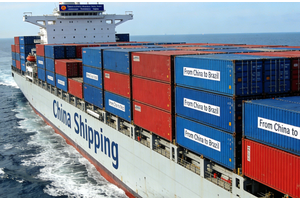
Shipping from Shanghai to Brazil starts in the world's busiest container port and ends at the most congested one — and the distance between those two realities is where most importers lose money. The ocean leg itself is dependable: a direct sailing from Yangshan to Santos runs 32–36 days at 2026 rates of $1,800–$3,500 for a 20ft container and $2,500–$4,800 for a 40ft. What turns a routine booking into a 60-day ordeal is the machinery on the Brazilian side: the Siscomex registration and RADAR license that must exist before customs will process you, the import license (LI) that certain goods need before the vessel can even depart, and the tax stack — II, IPI, PIS/COFINS, ICMS — that can add 60–100% of your cargo value on top of the freight.
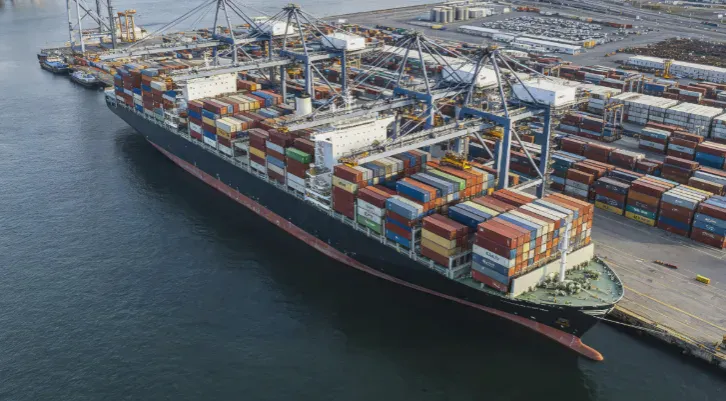
This guide covers the Shanghai end properly — the Yangshan and Waigaoqiao terminals, the Yangtze River Delta supply base, and the sailing schedules DTFU actually books on this lane — then walks through the Brazilian compliance and congestion reality the way a forwarder who runs this corridor weekly would explain it. The gateway options are summarized on our shipping from China to Brazil page; this guide goes deeper on the Shanghai side specifically.
Shipping from Shanghai to Brazil: Why the Yangtze River Delta Is the Right Gate
Shanghai is not just a port; it is the export gateway for the densest manufacturing region in China. The cargo Brazil actually buys — electronics, machinery, auto parts, home appliances, textiles, and lighting — is manufactured within a few hours of the port: Suzhou and Wuxi (electronics and machinery), Ningbo's hinterland (auto parts and small appliances), Nanjing and Changzhou (chemicals and textiles), Hangzhou (e-commerce goods). When your suppliers sit in that arc, Shanghai means one consolidation point instead of three separate inland hauls.
The economics follow the geography. Cargo from Suzhou or Wuxi reaches our Yangtze River Delta consolidation warehouse by truck in 1–2 hours; the same cargo would need a full day of inland trucking to reach Shenzhen. For factories along the Yangtze, feeder barges move containers downriver to Shanghai at roughly half the trucking cost. One export declaration, one booking, one vessel — that is the Shanghai advantage, and it is why the port moves more container volume than any other on earth.
Yangshan vs Waigaoqiao: How Shanghai Ports Actually Load Brazil-Bound Cargo
Shanghai's container terminals split into two distinct realities, and which one handles your cargo matters for cut-off times and rollover risk:
| Terminal | What It Handles | Impact on Brazil Bookings |
|---|---|---|
| Yangshan deep-water port | Mainline mega-vessel calls, including most direct Brazil services | Deep draft handles 20,000+ TEU ships; automated Phase 4 cranes keep berth times short |
| Waigaoqiao | Feeder vessels, domestic cabotage, smaller export lots | Tighter berth windows; cargo often feeders to Yangshan for the mainline |
Direct Brazil services load at Yangshan. The practical consequences: cargo must arrive at the Yangshan terminal by the vessel cut-off, usually 24–48 hours before departure, and the road crossing from the mainland to the island port can back up in bad weather. We schedule container stuffing and customs inspection so the box is at the yard a full day before cut-off — a rollover at origin quietly adds 7–14 days to your transit while you wait for the next sailing. One discipline that matters more on this lane than most: verified gross mass (VGM). Brazilian-bound services enforce VGM strictly, and a container without a verified weight can be refused at the gate.
Booking lead time is the other Shanghai-side discipline. Direct Brazil services run on weekly rotations with finite slot allocations, and in the Q3–Q4 peak those slots sell out two to three weeks ahead. We book space for regular clients as soon as the cargo volume is confirmed, rather than waiting for the container to be stuffed — the booking costs nothing to adjust, and the slot is the hard asset. First-time importers who book a week before their target sailing are the ones who discover that "weekly service" means "next week, maybe."
Shanghai to Santos Shipping Cost: 2026 FCL and LCL Rates
| Shipping Method | 2026 Rate | Transit Time |
|---|---|---|
| 20ft container (FCL) | $1,800–$3,500 | 32–36 days (direct) |
| 40ft / 40HQ container (FCL) | $2,500–$4,800 | 32–36 days (direct) |
| LCL (per CBM) | $80–$150 | 35–55 days |
| Air freight | $6.50–$12.00 per kg | 3–8 days |
| Express courier | $12–$18 per kg | 3–5 business days |
The ranges above are port-to-port and exclude the Brazilian side: destination THC, armazenagem (storage), brokerage, and the tax stack. Two seasonal rules apply: the Q3–Q4 peak — driven by Brazil's own agribusiness export surge and the pre-year-end import rush — typically adds 15–25% to base rates and stretches berth waits at Santos, and the weeks around Chinese New Year tighten capacity in the Q1 window. The cheapest booking window on this lane is usually Q2, between the post-holiday lull and the peak. For the full China-wide comparison, our sea shipping cost from China to Brazil guide has the complete matrix.
Shanghai to Brazil Transit Time: Sailings, Routes, and the 32–36 Day Baseline
| Route | Port-to-Port Transit | Notes |
|---|---|---|
| Shanghai → Santos (direct) | 32–36 days | Mainline services via COSCO, MSC, CMA CGM, Maersk |
| Shanghai → Santos (transshipment) | 39–50 days | Via Singapore or Algeciras; +7–14 days |
| Shanghai → Paranaguá | 34–38 days | Agribusiness gateway; seasonal weather delays |
| Shanghai → Navegantes | 35–40 days | Efficient clearance, growing import share |
| Shanghai → Rio de Janeiro | 33–37 days | Southeastern distribution hub |
Direct is the default recommendation for Brazil: the transshipment saving is rarely worth the added 7–14 days and the second port's congestion risk. LCL adds 5–10 days over FCL because of consolidation at origin and deconsolidation at a bonded warehouse in Brazil before clearance can start. The full door-to-door picture — origin handling, ocean, clearance, and inland delivery — typically lands at 45–65 days, and the leg-by-leg math is in our shipping time from China to Brazil guide. For planning purposes: direct FCL to Santos, add two weeks, and you have the honest door-to-door number. The port-by-port cost baseline for every Chinese gateway, not just Shanghai, sits in our sea shipping from China to Brazil guide.
Siscomex and the LI Import License: What Must Be Ready Before Your Vessel Departs
Brazil's import system is not something you can improvise at the port. The importer of record must be registered in Siscomex with a CNPJ and an active RADAR license — the tracking status that gates all import declarations. RADAR has three tiers: Express (up to $50,000 per six months), Limited (up to $150,000 per six months), and Unlimited. Your forwarder or Brazilian broker applies on your behalf; without an active RADAR status, the goods cannot be declared, period.
Beyond registration, certain goods need an import license (LI — Licença de Importação) before shipment: electronics and telecom equipment, medical devices, chemicals, and goods subject to health or safety control. The LI is filed through Siscomex and must be approved before the vessel departs China — not after arrival. The same logic applies to agency pre-authorizations: ANVISA for health and cosmetics products, INMETRO for electronics and safety-certified goods. A shipment that arrives in Santos without its LI approved sits at the terminal on demurrage while the license processes, which is why we run a compliance checklist on every Brazil booking before the container is even stuffed.
| Registration / License | When Required | Lead Time to Arrange |
|---|---|---|
| RADAR (Siscomex) | All commercial imports | 1–3 weeks for new importers |
| LI import license | Regulated goods (electronics, medical, chemicals) | 5–20 business days |
| ANVISA / INMETRO certification | Health, cosmetics, electronics, safety goods | 2–8 weeks |
| NCM classification review | Every shipment | 1–2 days (do it pre-departure) |
Brazil Import Taxes from China: The Custo Brasil Stack, Worked Out
Brazil's import taxation is cumulative — each tax is calculated on the base that includes the previous ones — which is why the total so often surprises first-time importers. The stack on a $25,000 CIF shipment at typical rates:
| Tax | Rate (Typical) | Calculated On | Amount |
|---|---|---|---|
| II (import duty) | 20% | CIF value | $5,000 |
| IPI (industrialized products) | 10% | CIF + II | $3,000 |
| PIS/COFINS (federal contributions) | ~10.68% | CIF + II + IPI | $3,524 |
| ICMS (state VAT, São Paulo) | 18% | Base including all of the above (in-base math) | ~$8,016 |
| Total taxes | ~$19,540 |
The ICMS line is the one that confuses everyone: the rate applies to a base that already includes the ICMS itself, so the effective burden is roughly rate ÷ (1 − rate) of the pre-ICMS base. Add the freight, brokerage, and terminal charges, and the landed cost lands at roughly 1.8× the CIF value — consistent with the "Custo Brasil" reality that total tax burden runs 60–100%+ of CIF for most consumer goods. The NCM code (Brazil's 8-digit HS extension) sets the II rate and the license requirements, so the classification check we run before departure is not paperwork theater — it is the difference between a 20% and a 35% duty line.
Operational insight: across the Brazil shipments we handle, the single most expensive mistake is the one made in China: a supplier's HS code that does not match the Brazilian NCM classification. The supplier classifies for export; Brazil taxes for import, and the two systems disagree on products constantly. We have seen a misclassified NCM add 15 points of II and trigger an LI requirement the importer never knew existed — a double hit that a 30-minute pre-departure review by a Brazilian despachante would have caught. On this lane, the pre-check is not optional.
Santos Port: The Congestion Reality Behind the Rate
Santos handles roughly 30% of Brazil's container traffic and is the default gateway for São Paulo state — the country's largest consumer market. It is also a port where schedule reliability is a seasonal sport. In the Q3–Q4 peak, the agribusiness export surge fills terminal capacity and vessels wait for berths; container dwell times stretch; and the free-time window — typically 7–14 days — starts running the moment the container is discharged, whether or not customs has released it.
The math of a delay: demurrage and detention at Santos commonly run $100–150 per day after free time expires, and terminal storage (armazenagem) compounds on top. A two-week red-channel inspection on a misclassified shipment can therefore add $2,000–4,000 in charges before the container even leaves the terminal. Two habits protect you. First, negotiate 21–30 days of combined free time in the booking contract — most carriers grant it on Brazil lanes, and it covers the inspection scenario. Second, for cargo not bound for São Paulo, compare Paranaguá, Navegantes, or Itajaí: they clear faster, and Navegantes in particular has built a reputation for efficient import processing that avoids the Santos queue entirely.
The channel system itself is worth understanding before you ship. Brazilian customs parameterizes each declaration into green, yellow, or red: green releases automatically, yellow triggers a document review, and red means a physical inspection that routinely runs 20+ days with storage accruing the whole time. The channel is selected by algorithm based on importer history, declared values, and NCM consistency — so the importers who clear green consistently are the ones whose documentation is flawless, and the ones who hit red are frequently the ones who skipped the pre-departure review. First-time importers should expect at least a yellow channel on their early shipments and plan the schedule accordingly.
Operational insight: once your container clears Santos, the inland leg has its own quirk — the Serra do Mar escarpment highway between the port and São Paulo city requires specialized carriers, and the climb adds 1–2 days plus a trucking premium. We book the Serra do Mar leg at the same time as the ocean booking, so the truck is waiting when customs releases the cargo. Importers who arrange inland transport after arrival routinely lose another 2–4 days waiting for truck availability in the peak.
Door-to-Door and DAP Shipping from Shanghai to Brazil
True DDP is legally murky for most commercial cargo into Brazil, because the importer of record must declare the taxes under its own CNPJ — which is why the compliant structure on this lane is DAP (Delivered at Place): we handle pickup in the Yangtze River Delta, ocean freight, and delivery to your door, while your licensed Brazilian despachante settles the II, IPI, PIS/COFINS, and ICMS under your registration. A full door-to-door FCL from Shanghai to a São Paulo warehouse runs 45–60 days end to end, broken down like this:
| Leg | Duration |
|---|---|
| Pickup, consolidation & export clearance (Shanghai) | 3–5 days |
| Ocean transit (Yangshan → Santos, direct) | 32–36 days |
| Berth wait & discharge at Santos | 1–3 days |
| Siscomex clearance (green channel typical) | 2–5 days |
| Serra do Mar trucking to São Paulo warehouse | 1–2 days |
| Total door-to-door | ~45–60 days |
LCL into Brazil carries its own hidden cost: terminals charge CFS handling (capatazia), storage, and administrative release fees that together add $200–500 to a small shipment — and more if customs holds the cargo. Above roughly 13–15 CBM, a full container is almost always the better call on this lane, both on cost per unit and on total days.
For Amazon FBA sellers and e-commerce operators using Brazilian fulfillment centers, the same DAP structure applies: DTFU consolidates your FBA cartons in Shanghai, ships them direct to Santos, and hands the clearance to your registered Brazilian entity or licensed broker so the ICMS credit stays clean on your books. The service chain is the same one we run across the China to Americas network, with every container tracked from the Yangshan gate to the delivery dock — the same 24/7 cargo tracking view we hand every client on the lane.
One cargo-care note belongs in any Shanghai–Brazil plan: the 32-day crossing crosses the equator twice, and the temperature swing produces heavy container condensation — "container rain" — that damages cartons and rusts machinery. The standard countermeasures cost almost nothing: ISPM-15 compliant pallets, heavy-duty export cartons, and 6–8 desiccant bags hung inside a 40ft container before sealing. We include desiccant discipline in every Brazil container we pack, and it is the difference between a claim-free delivery and a moisture-damage dispute three weeks after arrival.
Air Freight from Shanghai (PVG) to Brazil
When 45 days is too long, air freight from Shanghai Pudong (PVG) reaches Guarulhos (GRU) or Viracopos (VCP) in 3–8 days. There is no dedicated China–Brazil freighter service on a daily basis; most cargo transits through Doha, Frankfurt, Amsterdam, or Dubai, which is why the "flight time" of 20–30 hours becomes a 3–8 day door-to-door reality. 2026 tiers:
| Weight Bracket | Rate (per kg) | Transit |
|---|---|---|
| 45–100 kg | $9.50–$12.00 | 3–6 days |
| 100–300 kg | $8.00–$10.50 | 4–7 days |
| 300–1,000 kg | $7.00–$9.00 | 4–8 days |
| 1,000+ kg | $6.50–$8.00 | 5–8 days |
Air charges on the greater of actual or volumetric weight (1 CBM ≈ 167 kg for air). One e-commerce note: Brazil's Remessa Conforme program now enforces II and ICMS on inbound parcels at the point of entry, so the landed cost of express shipments is higher than the freight quote suggests — budget the taxes when pricing air or courier options. The carrier and routing detail for this lane is in our air shipping from China to Brazil guide.
FAQ: Shipping from Shanghai to Brazil
1. How much does it cost to ship a 20ft container from Shanghai to Brazil?
$1,800–$3,500 port-to-port to Santos in 2026. Add destination THC, brokerage, and the tax stack (II, IPI, PIS/COFINS, ICMS) for the landed cost — often 60–100% of the cargo value on top.
2. How much does a 40ft container cost from Shanghai to Brazil?
$2,500–$4,800 port-to-port. Above roughly 30 CBM the 40ft delivers the lowest cost per CBM on the lane.
3. How long does sea freight take from Shanghai to Santos?
32–36 days on direct sailings. Transshipment via Singapore or Algeciras adds 7–14 days. Door-to-door totals run 45–60 days.
4. What are the import taxes from China to Brazil?
II (import duty) at 10–35%, IPI at 0–15%, PIS/COFINS at roughly 9.25–11.75%, and state ICMS at 17–25%. They compound cumulatively — a typical consumer shipment totals 60–100%+ of CIF.
5. What is LCL shipping cost from Shanghai to Brazil?
$80–150 per CBM, plus Brazilian CFS charges of roughly $200–500 per shipment. LCL runs 35–55 days and adds 5–10 days over FCL.
Ship from Shanghai with a Forwarder Who Knows Both Ends
If your suppliers sit in the Yangtze River Delta — Suzhou, Wuxi, Nanjing, Hangzhou, or Shanghai itself — send your cargo details to DTFU Logistics and we will quote the lane the way it actually runs: YRD consolidation at our Shanghai hub, a direct Yangshan booking to Santos or your preferred Brazilian port, the LI and Siscomex compliance check completed before the vessel departs, and clearance through our licensed Brazilian despachante with the full tax math modeled up front. The quote covers the ocean leg and the Brazilian side, itemized line by line.