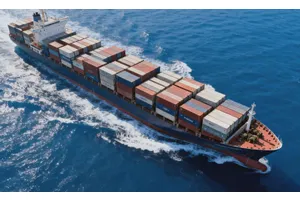
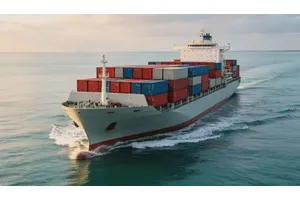
20ft and 40ft shipping from China to Morocco is not a size question — it is a density question. A 20ft container costs roughly $2,100–$2,700 on the 2026 lane and carries about 28 usable CBM; a 40ft costs $3,500–$4,600 and carries about 58 CBM; a 40ft high cube adds another 10 CBM for a few hundred dollars more. Dense, heavy cargo — ceramic tiles, hardware, machinery — belongs in a 20ft; voluminous, light cargo — furniture, textiles, lighting — belongs in a 40HQ. Pick wrong in either direction and you pay: too small, and LCL rates eat the margin; too large, and you are shipping air.
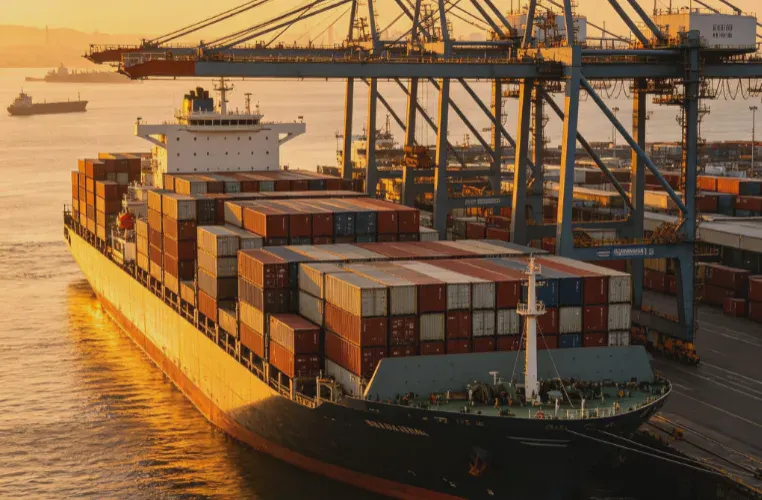
This guide gives you the decision framework — the kg/CBM math and the LCL break-even — with the 2026 port-by-port rates we book across Shenzhen, Guangzhou, Shanghai, and Ningbo to Casablanca and Tanger Med, plus the Morocco customs reality that applies to every container regardless of size: tiered import duty, a 20% VAT layer, and the verification-of-conformity regime that trips up importers who priced only the freight. For the route-level picture — services, pickup coverage across China, and how the door-to-door process runs end to end — start on our Shipping From China to Morocco page; this guide is the container math underneath it.
The Container Decision in One Table
| Container | Usable Capacity | 2026 Port-to-Port Rate | Best For |
|---|---|---|---|
| 20ft (20GP) | ~28 CBM, ~21–28t payload | $2,100–$2,700 | Dense cargo: tiles, hardware, machinery, steel |
| 40ft (40GP) | ~58 CBM, ~26t payload | $3,500–$4,600 | Standard retail volume at the best per-CBM rate |
| 40ft High Cube (40HQ) | ~68 CBM, taller door | 40GP + $100–200 | Bulky light cargo: furniture, textiles, lighting, toys |
A 40ft costs roughly 1.6–1.8× a 20ft while carrying about 2× the volume — so the per-cubic-meter number, not the headline price, should drive your decision. Cargo above 30 CBM belongs in a 40ft on unit cost; below that, a 20ft is usually the disciplined choice; under roughly 15 CBM, LCL (Less than Container Load) becomes the leading option. Morocco imports pull in both density directions — construction materials on one side, furniture and consumer goods on the other — so the rule matters more here than on single-cargo lanes.
Cargo Density: The kg/CBM Framework That Picks Your Container
The deciding rule is simple: a 20ft is for cargo that is heavy for its volume; a 40ft is for cargo that is voluminous for its weight. The boundary sits in the 300–400 kg/CBM band, and the practical thresholds look like this:
| Cargo Type | Typical Density | Container Pick |
|---|---|---|
| Ceramic tiles, granite, stone | 800–1,500 kg/CBM | 20ft — weight limit hits before volume |
| Machinery, auto parts, hardware | 500–1,200 kg/CBM | 20ft — dense and heavy |
| Furniture, household goods | 150–300 kg/CBM | 40ft or 40HQ — volume fills first |
| Textiles, garments, packaging | 80–200 kg/CBM | 40HQ — extra height is nearly free |
| Electronics, appliances | 200–400 kg/CBM | 20ft or 40ft — depends on total volume |
Run your own numbers: divide total weight (kg) by total volume (CBM). Above roughly 400 kg/CBM, price the 20ft first — a 24 CBM load at 900 kg/CBM weighs 21.6t, near a 20ft's payload ceiling and wasting most of a 40ft's space. Below 300 kg/CBM, price the 40HQ — a 45 CBM furniture load at 180 kg/CBM weighs just 8.1t, and the high cube's extra height fits tall sofas without re-stacking.
Two real-style examples make it concrete. A Casablanca building-materials importer moving ceramic tiles from Foshan at 1,000 kg/CBM has one viable option: a 20ft loaded near its weight ceiling — a 40ft would carry the same tonnage at nearly double the price. A furniture brand importing sofas for the Rabat and Marrakech market should book a 40HQ: the cargo fills 48 of 68 usable CBM, the premium over a 40GP is $100–200, and the alternative is a second container. Same lane, completely different boxes — the density math picked both. Tile and stone importers can take the weight planning further — palletising, payload limits, and the packaging that protects edges on a 20ft — in our Shipping Building Materials from China guide.
One caution on the 20ft: the payload ceiling. Dense cargo reaches the 21–28t limit quickly, and overweight containers face rollovers, carrier surcharges, and terminal refusal at discharge — if your density exceeds ~900 kg/CBM, confirm the payload math before booking. The ceiling works in reverse for the 40HQ: its 26t payload is rarely binding, which is why voluminous light cargo should never be squeezed into a heavier-rated smaller box out of habit.
20ft and 40ft Container Shipping Cost from China to Morocco (2026)
The table below is the 2026 port-to-port base ocean freight we book on the lane — before destination THC, clearance, duty, VAT, and inland delivery, which we break out in the landed-cost section:
| Origin Port | 20GP | 40GP | 40HQ |
|---|---|---|---|
| Shenzhen / Guangzhou | $2,100–$2,600 | $3,800–$4,400 | $3,900–$4,500 |
| Shanghai | $2,300–$2,700 | $4,000–$4,500 | $4,100–$4,600 |
| Ningbo | $2,200–$2,600 | $3,900–$4,400 | $4,000–$4,500 |
Three patterns matter. First, southern China (Shenzhen and Guangzhou) prices the lane lowest — the Pearl River Delta's export volume keeps slot costs tight, and sailings to Tanger Med run 25–30 days direct. Second, northern ports (Qingdao, Tianjin) cost 10–20% more and add a transshipment leg, so suppliers in Shandong are often better off trucking to Shanghai. Third, destination moves the number more than origin: the same 40GP from Shenzhen is roughly $200–400 cheaper to Tanger Med than to Casablanca, which is served mostly by feeder vessels. These are port-to-port base numbers; the Cost of shipping Container from China to Morocco post lines up the same lane across LCL and full-service levels so you can benchmark any quoted rate.
The 40ft high cube is the quiet money-saver on this lane: about 68 usable CBM versus 58 for a standard 40GP — more space for a premium of only $100–200. On a Shanghai–Casablanca 40GP at $4,200 the per-CBM cost is roughly $72; the 40HQ at $4,350 drops it to about $64. If you are weighing the high-cube upgrade on other lanes as well, our High cube shipping container cost from China guide shows when the extra height actually pays for itself.
Cost of Shipping a Container to Casablanca vs Tanger Med
Most importers default to Casablanca because it is Morocco's commercial capital. That default can quietly cost you. Tanger Med sits on the Strait of Gibraltar — Africa and the Mediterranean's largest container port, over 10 million TEU a year — and every major carrier (MSC, Maersk, CMA CGM, COSCO, Hapag-Lloyd) calls there with direct Asia services. Casablanca is closest to the Casablanca–Rabat consumption belt, but it is a secondary call fed by smaller vessels, with fewer sailings and real congestion risk in peak windows. The comparison is a total-cost exercise, not a freight-rate one:
| Scenario (40GP) | Ocean Freight | Inland Trucking | Total |
|---|---|---|---|
| Shenzhen → Tanger Med, truck to Casablanca | $3,600 | $450–$600 | $4,050–$4,200 |
| Shenzhen → Casablanca (direct call) | $3,900 | $150–$250 | $4,050–$4,150 |
They land close, so the tiebreaker is reliability: Tanger Med's direct frequency means fewer delays, and containers can sit at Casablanca an extra 5–7 days during Ramadan and pre-Eid import surges. The working rule: warehouses in Casablanca, Rabat, or Marrakech → Casablanca wins by a small margin on total cost; northern Morocco, regional distribution, or schedule-sensitive cargo → Tanger Med. Ask the cost-of-shipping-to-Casablanca question by all means — just make sure the inland leg is in the answer. And if your plan is a wider Maghreb book — a Morocco warehouse plus customers in neighbouring markets — Tanger Med's hub position lets you bundle onward service with our dedicated Shipping From China To Algeria and Shipping From China To Tunisia routes in one programme.
Container Shipping Time from China to Morocco
| Route | Port-to-Port | Notes |
|---|---|---|
| Shenzhen / Guangzhou → Tanger Med (direct) | 25–30 days | Mainline service, most reliable |
| Shenzhen / Guangzhou → Casablanca | 30–38 days | Usually via Tanger Med feeder |
| Shanghai / Ningbo → Tanger Med (direct) | 28–32 days | Frequent weekly departures |
| Shanghai / Ningbo → Casablanca | 32–40 days | Feeder adds 3–6 days |
| Qingdao / Tianjin → Tanger Med | 33–40 days | Transshipment via Shanghai/Ningbo |
Two routing factors stretch or compress those numbers. During the 2024–2025 Red Sea disruption some carriers routed Asia–Mediterranean cargo around the Cape of Good Hope, pushing headline transits toward 50–55 days; most mainline carriers have now resumed Suez transits, but routing can shift with risk levels — confirm the actual routing at booking time. LCL adds another 7–10 days for consolidation at origin and deconsolidation at a Casablanca or Tanger warehouse before clearance can begin.
For time-boxed shipments — a retail launch, a construction deadline, a restock ahead of Ramadan — the direct booking is the schedule. The same logic applies to container size: one direct 40HQ carrying the whole order beats two LCL consignments that clear separately, because a full container clears once, devans once, and delivers once. And for consignments that genuinely cannot wait out 25–40 days at sea — an urgent sample, a part holding up production — air freight collapses the lane to days, and our Air Shipping from China to Morocco post compares the kilo economics when speed outranks the box.
Morocco Customs Clearance: Import Duties, VAT & What a Container Really Costs
The tax structure
Duties and taxes are calculated on the CIF value (Cost, Insurance, Freight) of your goods — not on the freight alone:
| Tax Component | Rate | Applied On |
|---|---|---|
| Import Duty (Droit d'Importation) | 2.5%–40% | CIF, by HS code |
| Parafiscal Import Tax (TPI) | 0.25% | CIF |
| VAT (TVA) | 20% | CIF + Import Duty + TPI |
Effective tax burdens by category give the real picture: industrial machinery around 23%, electronics and auto parts roughly 32–41%, furniture and household goods about 50%, and textiles and garments 50–56%. On a $30,000 CIF furniture container at 25% duty, the bill is $7,500 duty plus $225 parafiscal, then 20% VAT on the $37,725 total — near $15,000 of tax on a box that cost roughly $4,500 to ship. That number, not the ocean freight, is usually the largest line on a landed-cost statement.
Compliance certificates and documents
Since February 2020, Morocco has enforced Verification of Conformity (VoC) for regulated categories — electronics, toys, building materials, and certain automotive parts — requiring a Certificate of Conformity (CoC) from SGS, Bureau Veritas, or TÜV Rheinland before goods leave China. Skip it and your container arrives, customs flags it, and you face re-export, destruction, or slow retroactive certification while demurrage accrues. Budget $300–$2,000 and two to four extra weeks if your product is in scope. Wireless and Bluetooth devices add an ANRT type-approval step; lithium batteries need UN38.3 and MSDS documentation.
The documentation stack for any container: a commercial invoice (in French or bilingual, with HS codes and the buyer's Moroccan tax ID — the NIF or ICE), a packing list, a bill of lading whose consignee is a Morocco-registered entity, a certificate of origin (a CCPIT-issued FORM A can qualify for preferential duty), and — for every commercial import — an Engagement d'Importation filed by the buyer through their Moroccan bank on the PortNet single-window platform. Getting the invoice language or tax ID wrong is the most common reason a container sits while the clearance clock runs.
Operational insight: the demurrage stories we see on Morocco container shipments are rarely about customs delay — they are about the free-time window and a paperwork mismatch. The terminal grants roughly 7–14 days of free demurrage and 7–10 days of container detention, then charges $50–150 per day after that, and the clock runs whether the container is cleared or not. We file the PortNet declaration while the vessel is at sea, confirm the consignee's NIF against the commercial invoice in French before the ship sails, and book the delivery truck the day the container is released, so the box moves before free time burns.
A Real Landed-Cost Example: 20ft vs 40ft Door-to-Port
The headline ocean rate is typically only 55–65% of what a container costs by the time it clears Casablanca. Two representative 2026 bookings show the full stack:
| Cost Layer | 20ft Tiles (Shenzhen → Casablanca) | 40HQ Furniture (Shanghai → Casablanca) |
|---|---|---|
| Ocean freight | $2,400 | $4,500 |
| ORC / origin THC + BAF | $300–$400 | $450–$550 |
| Export clearance + documents | $120–$180 | $120–$180 |
| Destination THC (DTHC) | $250–$350 | $250–$350 |
| PortNet filing + customs broker | $180–$280 | $180–$280 |
| Freight & port total | ~$3,300–$3,600 | ~$5,500–$5,850 |
| Import duty + parafiscal | ~$1,200 (tiles ~2.5–17.5%) | ~$6,300 (furniture ~25%) |
| VAT at 20% | ~$1,300 | ~$2,800 |
| Total landed cost | ~$5,800–$6,100 | ~$14,600–$15,000 |
Two takeaways. The 20ft tile shipment keeps its tax bill low because industrial materials attract modest duty — a genuinely cheap way to move dense cargo. The furniture 40HQ carries a heavy load at 25% duty plus VAT, which is why HS-classification accuracy and a valid certificate of origin matter more than shaving $100 off the ocean rate. In both cases freight was less than half the landed total — a quote that stops at the port-to-port number is not a quote you can budget on. Add marine cargo insurance at 0.3–0.5% of declared value; on a $50,000 shipment that is $150–250, and on the Tanger Med feeder leg it is the cheapest protection you will buy — our Shipping container insurance cost for shipments from China guide explains how the premium is priced across cargo types.
Door-to-Door Container Shipping from China to Morocco: DDP vs DAP
Door-to-door service to Morocco works — factory pickup, export clearance, ocean freight, customs handling, delivery to your warehouse — and our Door to Door Shipping from China to Morocco page walks through the full scope of that service. But the Incoterm matters more here than on almost any other lane.
The DDP caveat. Morocco operates strict foreign exchange controls. Import duty and VAT must be paid by a Morocco-registered entity holding a valid tax ID, and the Engagement d'Importation must be filed by the buyer through a Moroccan bank on PortNet. A foreign exporter or forwarder cannot legally pay Moroccan VAT on behalf of a Moroccan business under a standard DDP (Delivered Duty Paid) structure — which is why true all-in DDP is generally not viable for B2B containers into Morocco, and is limited to B2C parcels moving by express courier (DHL, FedEx, UPS).
The compliant alternative is DAP. Under DAP (Delivered at Place), the forwarder handles everything from factory pickup through ocean freight, clearance coordination, and final delivery to your door — while your Moroccan entity pays the duty and VAT through its own NIF and bank. That is the legally clean, genuinely door-to-door model, and it is the structure our licensed Moroccan broker network executes. If a forwarder quotes a B2B "DDP all-in" container rate to Morocco, ask one question: which registered Moroccan entity pays the VAT, and through which bank and NIF? A vague answer means the quote is a risk, not a saving. If you already have a Moroccan customs broker, combining FOB (Free on Board) pricing with their brokerage gives you direct control of the clearance side — the choice is about who you trust with the paperwork, not about which is cheaper. The same Incoterm reasoning plays out on every China lane, which is why our DDP vs FOB: Which Option Saves Time and Reduces Hassle comparison is worth a read before you commit to a term.
7 Ways to Reduce Container Shipping Cost from China to Morocco
- Choose the gateway deliberately. Casablanca or Tanger Med should follow your warehouse location and a total-cost comparison — not habit.
- Consolidate suppliers into one FCL. A Marrakech furniture brand sourcing from three Foshan factories saved roughly 20% by combining three LCL loads into one 20GP packed at a Shenzhen warehouse, while eliminating CFS deconsolidation fees and split-arrival risk.
- Time the booking window. Avoid Chinese New Year (rates up 20–40%), the Q4 holiday season, and the weeks before Ramadan. Book 3–4 weeks ahead in the March–May or mid-August to mid-September windows.
- Get the HS code right the first time. A wrong classification triggers reclassification, back duties, penalties, higher inspection rates, and demurrage — thirty minutes of verification can save thousands.
- Optimize packaging for volume. For furniture, textiles, and plastics, wasted space is money spent shipping air — knock-down flat-pack cuts volume 40–60%.
- Build one long-term forwarder relationship. Regular volume earns rate agreements that hold through peak season, and a forwarder who knows your product pre-empts problems a new provider will not see.
- Budget landed cost, not ocean freight. Base freight is roughly 60% of the total. If a quote looks suspiciously cheap, ask for the itemized breakdown — destination THC, PortNet fees, and the tax layers above — and treat an inability to itemize as your answer.
FAQs
1. How much does a 20ft container cost from China to Morocco?
Port-to-port base freight runs $2,100–$2,700 in 2026 from southern and eastern Chinese ports to Casablanca or Tanger Med. Landed cost at the port — freight, port fees, duty, and VAT — typically reaches $5,500–$6,500 depending on your goods' duty rate.
2. How much does a 40ft container cost from China to Morocco?
$3,500–$4,600 port-to-port for a 40GP, and roughly $100–200 more for a 40HQ, which adds about 10 usable CBM. A Shanghai–Casablanca 40GP benchmark sits around $4,000–$4,500.
3. Should I ship a 20ft or 40ft container to Morocco?
Compute your cargo density (kg ÷ CBM). Above ~400 kg/CBM, price the 20ft first; below ~300 kg/CBM, price the 40HQ; in between, compare per-CBM rates. Volume above 40 CBM almost always favors the 40ft.
4. How long does container shipping from China to Morocco take?
25–30 days direct from Shenzhen/Guangzhou to Tanger Med; 30–38 days to Casablanca via feeder; 28–32 days from Shanghai/Ningbo to Tanger Med. LCL adds 7–10 days for consolidation and deconsolidation.
5. What import duty and VAT will I pay in Morocco?
Import duty of 2.5%–40% by HS code, a 0.25% parafiscal tax, and 20% VAT on CIF plus duty plus parafiscal. Effective burdens range from ~23% on machinery to ~50–56% on textiles and furniture.
6. What documents do I need to import a container into Morocco?
A commercial invoice in French (with HS codes and the buyer's NIF/ICE), packing list, bill of lading naming a Morocco-registered consignee, certificate of origin (FORM A for preferential rates), a CoC if your product falls under VoC, and an Engagement d'Importation filed via PortNet through your Moroccan bank.
7. What is the cheapest time to ship a container to Morocco?
The March–May and mid-August to mid-September windows offer the best rates. Avoid Chinese New Year, the Q4 peak, and the weeks before Ramadan, when rates climb 10–25% and both ports slow down.
8. What is the cheapest port to ship to in Morocco?
Tanger Med for freight and speed — $200–400 cheaper per container with direct sailings; Casablanca only when your warehouse sits in the Casablanca–Rabat belt and the inland trucking saving closes the gap.
Get Your Container-Size Recommendation for Morocco
Send your cargo details — commodity, total weight, total volume, and origin city — and DTFU Logistics will come back with the container the density math dictates: 20ft, 40ft, or 40HQ, priced across Shenzhen, Guangzhou, Shanghai, and Ningbo to both Casablanca and Tanger Med, with the transit option, your Morocco duty and VAT projection, and the PortNet and CoC checks handled before the vessel sails. We are a FIATA- and IATA-accredited forwarder serving importers in 120+ countries, tracking every container through discharge and delivery with 24/7 visibility. Ask for the itemized quote — that is the number you can actually budget on.