If you're importing goods from China to Morocco, the single most important question you need answered before placing an order is this: how long does shipping from China to Morocco actually take? Get the timeline wrong, and you're looking at empty warehouse shelves, missed seasonal sales windows, or demurrage fees stacking up at Casablanca port.
This guide gives you exact shipping time from China to Morocco across every method — sea freight (FCL & LCL), air freight, and express courier — broken down by specific Chinese and Moroccan port pairs. If you're new to this trade lane, our dedicated Shipping from China to Morocco service page covers the full range of freight options available. You'll also get a door-to-door timeline breakdown by Incoterm, the 8 factors that can delay your shipment, seven proven strategies to cut transit time, and real case data from shipments we've handled. No vague ranges. No recycled blog content. Just actionable numbers you can plan around.
How Long Does Sea Freight Take from China to Morocco?
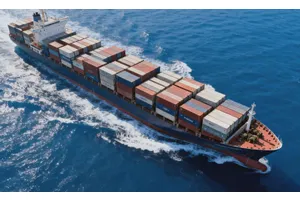
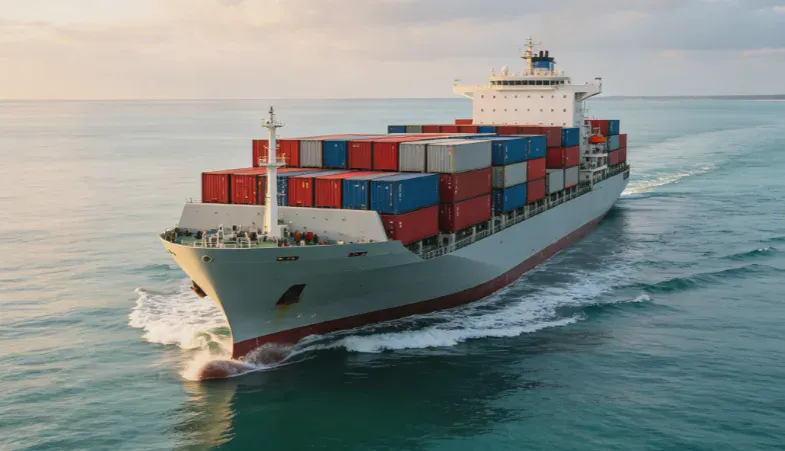
Sea freight is the backbone of China-Morocco trade, handling the vast majority of commercial cargo. But transit time varies significantly depending on whether you ship FCL (Full Container Load) or LCL (Less than Container Load) , and which ports you're moving between.
FCL vs LCL Shipping Time — Which One Should You Choose?
FCL (Full Container Load) means you book an entire container exclusively for your cargo. Because there's no consolidation step, FCL is the faster sea freight option:
- Transit time: 25–35 days port-to-port from major Chinese ports to Casablanca or Tanger Med
- Container options: 20ft (~28–33 CBM), 40ft (~56–67 CBM), 40HQ (~68–76 CBM)
- Best for: Shipments over 15 CBM; cargo that shouldn't share space with other shippers' goods
LCL (Less than Container Load) means your goods share a container with other importers' cargo. You only pay for the space you use, but the consolidation process adds time:
- Transit time: 28–39 days port-to-port
- Why it's slower: Consolidation at the origin CFS (Container Freight Station) adds 3–5 days; deconsolidation at the destination CFS adds another 2–4 days
- Best for: Shipments between 1–15 CBM; importers testing new suppliers or products without committing to a full container
How to decide: If your shipment exceeds 15 CBM and timing matters, FCL is almost always the better choice — you'll save 5–10 days and pay less per unit. For smaller volumes, LCL is cost-effective, but build the extra consolidation time into your planning.
DTFU Tip: Our consolidation warehouse in Shenzhen helps LCL shippers cut wait times by up to 2 days by grouping shipments on the same sailing schedule. Smaller importers don't have to accept slow consolidation as a given.
Container Transit Time to Casablanca & Tanger Med — Full Port-by-Port Matrix
Your choice of Chinese origin port and Moroccan destination port has a direct, measurable impact on transit time. The table below shows real-world FCL and LCL windows based on current carrier schedules (mid-2026):
| Chinese Port | → Casablanca (FCL) | → Casablanca (LCL) | → Tanger Med (FCL) | → Tanger Med (LCL) |
|---|---|---|---|---|
| Shanghai | 28–35 days | 31–38 days | 26–33 days | 29–36 days |
| Ningbo | 29–36 days | 32–40 days | 27–34 days | 31–38 days |
| Shenzhen (Yantian/Shekou) | 30–38 days | 34–41 days | 27–34 days | 30–37 days |
| Guangzhou (Nansha) | 28–35 days | 32–39 days | 26–33 days | 30–37 days |
| Qingdao | 35–42 days | 38–46 days | 33–40 days | 36–44 days |
| Tianjin | 36–45 days | 40–50 days | 34–42 days | 38–46 days |
Shanghai → Casablanca is the most established route, with the highest sailing frequency (2–3 departures per week) and occasional direct-service options via CMA CGM and Maersk. Shenzhen departures benefit from dense carrier networks in the Pearl River Delta; shipments via Yantian and Shekou can reach Tanger Med in as little as 27 days FCL. Northern ports (Qingdao, Tianjin) add 7–15 days versus southern departures due to the extra feeder-leg to mainline hubs like Shanghai or Busan.
Casablanca vs Tanger Med — Which Moroccan Port Is Faster?
Tanger Med consistently outperforms Casablanca on transit time — typically 3–5 days faster on equivalent routes — thanks to its position at the Strait of Gibraltar and modern deep-water infrastructure. It's Africa's largest container port and a major transshipment hub, meaning more carrier calls and higher schedule frequency.
Casablanca remains Morocco's commercial heart and the primary destination for domestic consumption. The port handles the bulk of the country's imports, but it's more susceptible to congestion — expect 3–7 additional days during peak import periods (September–November).
Which port should you choose? If your final destination is Casablanca, Marrakech, or central Morocco, Casablanca port is your best option despite slightly longer transit — the savings on inland trucking offset the port delay. If your goods are destined for northern Morocco (Tangier, Tetouan, Rabat) or will be transshipped deeper into North Africa, Tanger Med is the clear winner on both speed and cost. For importers also serving neighboring markets, we offer dedicated shipping from China to Algeria and shipping from China to Tunisia with comparable transit windows on the North African lane.
Air Freight Transit Time & Express Shipping to Morocco
When sea freight's 30+ day timeline won't work, air freight and express courier services fill the gap — at a premium.
Standard air freight moves cargo on scheduled passenger and freighter aircraft to Mohammed V International Airport (CMN) in Casablanca, Morocco's primary air cargo gateway:
- Transit time: 3–7 days airport-to-airport
- Major departure airports: PVG (Shanghai), CAN (Guangzhou), SZX (Shenzhen), PEK (Beijing)
- Key carriers: Royal Air Maroc (direct from Beijing), Qatar Airways (via Doha), Emirates SkyCargo (via Dubai), Turkish Cargo (via Istanbul), Air China
- Cost: $4.00–$8.00 per kg — charged on the greater of actual or volumetric weight (L×W×H÷6000)
Express courier (DHL, FedEx, UPS) is the fastest shipping method from China to Morocco:
- Transit time: 2–5 days door-to-door
- Best for: Samples, documents, small parcels under 50 kg, urgent B2C e-commerce orders
- Cost: $8.00–$15.00 per kg — significantly more expensive than standard air freight
Here's how air freight and express stack up for a typical shipment:
| Criteria | Standard Air Freight | Express Courier |
|---|---|---|
| Transit time | 3–7 days airport-to-airport | 2–5 days door-to-door |
| Cost per kg | $4.00–$8.00 | $8.00–$15.00 |
| Best for | Shipments 50–500+ kg | Shipments under 50 kg |
| Customs handling | Requires broker or forwarder | Included in service |
| Tracking | Airway Bill (AWB) tracking | Real-time door-to-door tracking |
For consolidated shipments over 100 kg, standard air freight achieves near-express speeds at 40–60% lower cost — the sweet spot for importers who need urgency without paying courier premiums. For a deeper breakdown of air cargo options, see our dedicated guide on air shipping from China to Morocco.
DTFU Advantage: Our direct contracts with Royal Air Maroc, Qatar Airways, and Emirates secure priority space allocation even during peak cargo seasons — meaning your air freight doesn't get rolled to the next flight when capacity tightens.
Door-to-Door Shipping Time from China to Morocco
Port-to-port times only tell part of the story. If you need goods delivered to your warehouse, shop, or fulfillment center in Morocco, the door-to-door shipping time includes every step from factory pickup to final handover. For a complete breakdown of costs and service options, refer to our door to door shipping from China to Morocco guide.
Step-by-Step Door-to-Door Timeline (Sea Freight)
| Stage | Duration | What Happens |
|---|---|---|
| 1. Supplier pickup & origin handling | 1–3 days | Truck collects goods from factory; cargo delivered to forwarder's warehouse or port CFS |
| 2. China export customs clearance | 1–3 days | Export declaration filed with China Customs; documents verified; goods cleared for departure |
| 3. Ocean transit (main leg) | 25–35 days | Container loaded onto vessel; sea passage including any transshipment stops |
| 4. Morocco import customs clearance | 2–7 working days | ADII (Morocco Customs) reviews declaration via Portnet; duties/VAT assessed and paid; goods released |
| 5. Final-mile delivery | 1–5 days | Truck transport from port to consignee address (varies by distance: Casablanca city ≈ 1d; Marrakech ≈ 2d; inland cities ≈ 3–5d) |
| Total door-to-door (sea) | 30–55 days | Sum of all stages above |
For air freight door-to-door, the total shrinks to approximately 5–12 days, with the ocean leg replaced by a 3–7 day flight. For express courier, door-to-door takes just 2–5 days.
How Incoterms Affect Your Total Transit Time
The Incoterms 2020 rule you negotiate with your supplier directly impacts how much of this timeline falls under your control — and how long the total journey takes:
- EXW (Ex Works): You handle everything from the factory gate. Longest timeline, most coordination required. Expect 3–5 additional days for arranging pickup and export clearance versus FOB.
- FOB (Free on Board): Supplier delivers goods to the named Chinese port and handles export clearance. Your forwarder takes over from there. Saves 1–2 days on origin logistics.
- CIF (Cost, Insurance, Freight): Supplier arranges ocean freight to the Moroccan port. Convenient, but you lose visibility on carrier choice and scheduling.
- DAP (Delivered at Place): Forwarder handles everything through to your Moroccan address — excluding duties and taxes. This is the recommended door-to-door option for B2B importers, as it avoids the complications of DDP under Moroccan customs law.
- DDP (Delivered Duty Paid): Theoretically the simplest — seller handles everything including Moroccan import duties. In practice, true DDP is difficult for B2B shipments to Morocco because customs requires the consignee to hold a registered Tax ID and personally file the Engagement d'Importation (Import Commitment) via Portnet. For commercial imports, DAP is almost always the safer and faster choice. If you're weighing Incoterms for your shipment, our DDP vs FOB comparison breaks down which option saves more time and reduces hassle on the ground.
What Affects Shipping Time from China to Morocco?
Even with a solid plan, multiple external shipping delay factors can push your actual delivery date well past the estimates above. Here are the eight most significant ones on the China-Morocco route in 2026:
1. Red Sea / Suez Canal Disruptions
Since late 2023, security concerns in the Red Sea have forced major carriers to reroute vessels around the Cape of Good Hope instead of through the Suez Canal. This adds 7–12 days to China-Morocco transit times and $500–$1,500 per container in additional fuel and operational costs. For the latest developments on this evolving situation, read our update on Red Sea shipping returning under tight security in 2026.
2. Port Congestion
Casablanca port is Morocco's busiest import gateway, and during peak periods (September–November), berthing delays can add 3–7 days. Tanger Med, with its modern deep-water berths and automated handling, is significantly more congestion-resilient.
3. Transshipment vs Direct Sailings
Most China-Morocco routes require at least one transshipment — typically at Tanger Med, Algeciras (Spain), Singapore, or Port Klang (Malaysia). Each transfer adds 2–5 days. On select lanes (Shanghai → Tanger Med), direct sailings are available and cut total transit by 5–10 days. Ask your forwarder to specifically monitor for direct-service windows.
4. Seasonal Demand
Peak shipping seasons strain capacity across the supply chain. The September–November pre-holiday rush (Christmas, Black Friday inventory buildup) is the most intense window — vessels book full, rates surge 20–50%, and even confirmed bookings can get rolled. Pre-Ramadan and pre-Chinese New Year periods create secondary peaks with similar dynamics.
5. Customs Clearance Efficiency
Incomplete or inaccurate documentation is the #1 cause of customs holds in Morocco. Commercial invoices must be in French with correct HS codes. Packing list weights and dimensions must match the Bill of Lading exactly. Any discrepancy triggers a manual review that can add 3–7 working days.
6. Product Type & Required Certifications
Regulated products — electronics, toys, auto parts, certain machinery — require VoC (Verification of Conformity) or CMIM certification under Morocco's IMANOR standards (Law 24-09). If your goods fall under these categories, factor in an additional 3–10 days for certification processing before customs will release the shipment. Ship without the certificate, and your cargo sits at the port accumulating storage fees.
7. Weather & Force Majeure
Typhoon season in the South China Sea (May–November) can delay vessel departures from Shenzhen, Guangzhou, and Hong Kong by 1–3 days. Winter storms in the North Atlantic (December–February) occasionally disrupt approaches to Tanger Med and Casablanca.
8. Carrier Schedule Frequency
Routes with 2–3 sailings per week (Shanghai/Ningbo to Tanger Med) are resilient: miss one cutoff, and the next vessel departs in 3–4 days. Routes with 1 sailing every 10–14 days (Qingdao/Tianjin to Casablanca) are far more fragile — missing the cutoff means a two-week delay your business may not be able to absorb.
Fastest Shipping Method from China to Morocco
If your shipment is time-sensitive, here are seven proven tactics to get your goods from China to Morocco faster — without necessarily paying air freight rates:
1. Choose the Optimal Port Pair
Routing through Tanger Med instead of Casablanca saves 3–5 days. Departing from Shenzhen or Guangzhou rather than Qingdao or Tianjin saves 7–15 days. For maximum speed, the Shenzhen → Tanger Med lane delivers FCL transit as fast as 27 days.
2. Book Direct Sailings When Available
Direct services from Shanghai or Ningbo to Tanger Med cut 5–10 days off transshipment routings. Availability varies by season — ask your forwarder to actively monitor direct-sailing windows and flag them when they open.
3. Submit Customs Documents Before Vessel Arrival
Pre-clearance via Portnet — Morocco's national single-window trade platform — allows customs to begin processing your import declaration while the vessel is still at sea. When the container arrives, it can clear in 24–48 hours instead of 3–5 working days. Requires: French-language commercial invoice, accurate HS codes, Certificate of Origin, and Import Commitment all submitted in advance.
4. Consolidate LCL Shipments into One FCL
If you regularly ship multiple LCL consignments from different suppliers, consolidating them at your forwarder's warehouse into a single FCL container eliminates consolidation and deconsolidation delays — saving 5–10 days on total transit.
5. Ship Before the Rush — Not During It
Book your shipment 4–6 weeks before the peak, not during the 2-week window immediately preceding Chinese New Year, Ramadan, or the September–November holiday season. During peak windows, even confirmed bookings aren't guaranteed — carriers overbook and roll cargo to later sailings.
6. Consider Rail-Sea Multimodal
An emerging option for China-Morocco shipping: rail freight from Chengdu or Chongqing to European hubs (Hamburg, Duisburg), then short-sea feeder service through the Mediterranean to Tanger Med. Total transit: approximately 20–28 days — faster than pure sea freight, at roughly 30–40% lower cost than air freight. For a detailed comparison, see our analysis of sea vs rail freight speed and reliability from China. This route is still maturing, but for time-sensitive shipments that don't justify air freight's premium, it's worth exploring.
7. Partner with a Forwarder That Knows the Lane
A freight forwarder with dedicated China-Morocco experience doesn't just book cargo — they pre-empt delays. They know which carriers offer direct sailings, how to structure documentation for fast Portnet clearance, when to route through Tanger Med vs Casablanca, and which products need VoC certification before departure. That expertise directly translates to shorter transit times. For more on what a skilled forwarder brings to your supply chain, read our overview of the strategic role of freight forwarders in modern supply chains.
DTFU's promise: With FIATA and IATA dual certification, direct carrier contracts, and a dedicated Morocco trade-lane team, we help importers consistently beat average transit times. Every client gets a dedicated account manager who proactively monitors your shipment and flags potential delays before they happen.
Peak Season & Customs Clearance: Planning Your Morocco Shipment Timeline
Timing your shipment correctly is as important as choosing the right shipping method. A well-timed FCL shipment often arrives faster than a poorly-timed air freight one — because during peak congestion, even air cargo faces backlogs.
Annual Peak Season Calendar for China → Morocco Shipments
| Period | What's Happening | Impact on Transit Time | Recommended Action |
|---|---|---|---|
| Jan–Feb | Chinese New Year | Factories close 2–4 weeks; ports operate at reduced capacity | Ship BEFORE mid-January or wait until late February |
| Mar–Apr | Ramadan | Moroccan working hours reduced; customs processing slows 1–3 days | Allow 3 extra days for clearance; avoid last-minute shipments |
| May–Aug | Stable period | Normal operations at both ends | Best window for large-volume shipments |
| Sep–Nov | Pre-holiday peak | Rates surge 20–50%; vessels heavily booked; Casablanca congestion peaks | Book 4–6 weeks ahead; route through Tanger Med if possible |
| December | Year-end rush | Holiday closures in both China and Morocco; skeleton staff at customs | Ship by early December or defer to January |
Morocco Customs Clearance — Step-by-Step Timeline
Morocco uses Portnet, a national single-window system that links importers, customs (ADII), banks, and port authorities. Here's how the clearance timeline breaks down for a compliant shipment:
| Step | Duration | Details |
|---|---|---|
| 1. Document submission via Portnet | 24–48 hours | Importer or customs broker files the Engagement d'Importation, commercial invoice, packing list, B/L, and Certificate of Origin |
| 2. Customs review & valuation | 1–3 working days | ADII verifies HS codes, declared value, and document consistency |
| 3. Physical inspection (if selected) | +2–5 working days | Roughly 10–15% of shipments are randomly selected or flagged for inspection |
| 4. Duty/VAT payment & release | 1–2 working days | Payment processed; goods released for delivery |
| Total typical clearance | 2–5 working days | For fully compliant shipments without inspection |
Three common customs pitfalls to avoid:
- HS code mismatches between your commercial invoice and what customs determines — this triggers a valuation audit
- Missing Certificat de Conformité for regulated products — the shipment won't be released until certification is obtained, which can mean 2+ weeks of port storage fees
- Undervalued declarations — Moroccan customs cross-references declared values against their database; discrepancies lead to re-valuation, penalties, and extended holds
Real Case Study: DTFU's Actual China to Morocco Transit Times
The numbers above are useful benchmarks, but here's what they look like in practice — two real shipments we handled for Morocco-bound importers in 2026.
Case 1 — FCL Sea Freight: Shenzhen → Marrakech (34 Days Door-to-Door)
Client: Moroccan building materials importer sourcing ceramic tiles from Foshan.
Shipment: 1×40HQ container, 26 tons.
| Stage | Duration |
|---|---|
| Factory pickup (Foshan → Shenzhen Yantian) | 1 day |
| China export customs clearance | 2 days |
| Ocean transit (Shenzhen → Tanger Med → Casablanca) | 26 days |
| Morocco import customs clearance | 3 days |
| Final truck delivery (Casablanca → Marrakech) | 2 days |
| Total door-to-door | 34 days |
The industry average for this route is 38–45 days. We beat it by pre-submitting all Portnet clearance documents while the vessel was still at sea, so customs processing began immediately upon arrival. No physical inspection was triggered, and the container was released for delivery on day 3.
Case 2 — Air Freight: Guangzhou → Casablanca (6 Days Door-to-Door)
Client: Moroccan electronics distributor needing urgent restock of smartphone accessories ahead of a promotional campaign.
Shipment: 850 kg consolidated, 4 pallets.
| Stage | Duration |
|---|---|
| Supplier pickup (Guangzhou) | 1 day |
| China export customs clearance | 1 day |
| Air transit (CAN → DOH → CMN via Qatar Airways) | 2 days |
| Morocco import customs clearance | 1.5 days |
| Local delivery (Casablanca) | 0.5 days |
| Total door-to-door | 6 days |
The client needed the stock within 10 days for a scheduled promotion. Standard air freight delivered in 6 days at roughly $5.80/kg — versus an express courier quote of $12.50/kg for 5-day delivery. By consolidating into air freight rather than splitting across multiple express shipments, the client saved approximately $5,700 while arriving with a day to spare.
What these cases prove: Average transit times are just that — averages. With proper planning, experienced freight partners, and proactive document management, actual delivery consistently outperforms the "typical" ranges quoted online.
Frequently Asked Questions
How long does sea freight take from China to Morocco?
25–35 days port-to-port for FCL from major Chinese ports (Shanghai, Shenzhen, Ningbo, Guangzhou) to Casablanca or Tanger Med. LCL adds 5–10 days for consolidation and deconsolidation at both ends.
What is the fastest shipping method from China to Morocco?
Express courier (DHL, FedEx, UPS) delivers door-to-door in 2–5 days — the absolute fastest option. Standard air freight follows at 3–7 days airport-to-airport, at roughly 40–60% lower cost per kilogram.
How much does it cost to ship a container from China to Morocco?
A 20ft container ranges from $1,900–$2,600 (off-peak) and a 40ft container from $3,600–$4,600, though rates fluctuate with season, fuel prices, and market conditions. For the latest pricing breakdown, check our shipping cost from China to Morocco and cost of shipping a container from China to Morocco guides. Rates can shift significantly quarter to quarter — always request a current quote before budgeting.
Can I ship door-to-door from China to Morocco?
Yes. Door-to-door services (DAP or DDP) handle the entire journey: supplier pickup, China export clearance, international transport, Morocco import clearance, and final delivery. Sea freight door-to-door typically takes 30–55 days; air freight door-to-door takes 5–12 days.
Which Chinese port is fastest for shipping to Morocco?
Shenzhen (Yantian/Shekou) and Guangzhou (Nansha) offer the fastest transit — as quick as 27 days FCL to Tanger Med — thanks to high carrier density and southern geographic position. Shanghai and Ningbo follow closely; northern ports add 7–15 days.
What documents are required for customs clearance in Morocco?
Commercial invoice (in French, with 10-digit HS codes), packing list, Bill of Lading or Airway Bill, Certificate of Origin, and the Engagement d'Importation filed via Portnet. Regulated products (electronics, toys, auto parts) additionally require a Certificat de Conformité (VoC/CMIM) under IMANOR standards.