Navigating customs regulations, high tariffs, and unpredictable local handling can make importing into North Africa a nightmare. If you are struggling with hidden demurrage fees or confused about whether you can actually ship DDP, you are not alone. Shipping From China to Morocco requires precise planning, the right Incoterms®, and a deep understanding of local compliance. This comprehensive guide breaks down costs, transit times, and the reality of DDP versus DAP, giving you the exact strategies needed to streamline your supply chain.
Key Takeaways:
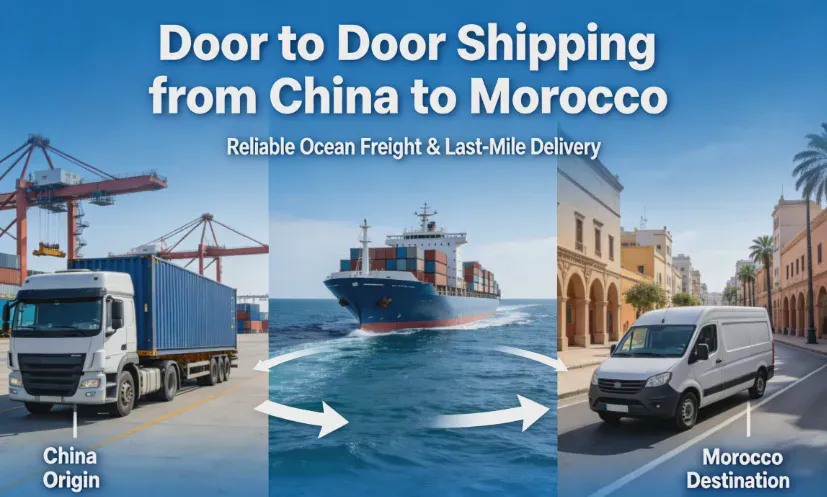
- Door to Door Shipping from China to Morocco simplifies logistics, but true DDP for B2B is highly complex due to strict Moroccan customs regulations.
- DAP (Delivered at Place) is the recommended and safest Incoterm for Moroccan B2B imports, placing tax and duty clearance responsibilities on the buyer.
- Transit times average 35-45 days for sea freight to Casablanca or Tanger Med, and 5-7 days for air freight.
- Using Portnet and having a reliable local "Transitaire" (customs broker) is essential to avoid demurrage at Moroccan ports.
- DTFU International Logistics provides end-to-end solutions, optimizing your supply chain from Chinese factories directly to your Moroccan warehouse.
Door to Door Shipping from China to Morocco: DDP vs. DAP Explained
Choosing the right shipping term dictates who handles Moroccan customs clearance and pays the final taxes.
Why True DDP is Challenging for B2B Moroccan Imports
Can you ship DDP to Morocco? For commercial B2B shipments, true DDP (Delivered Duty Paid) is extremely challenging and often impossible. Moroccan customs strictly requires the consignee (the Moroccan importing company) to be registered with a valid Tax ID and to handle the 'Engagement d'Importation'. Because a foreign Chinese supplier cannot legally pay the Moroccan TVA (VAT) and duties on behalf of a local business without a registered entity, true DDP is typically limited to small e-commerce or B2C courier parcels.
In our experience at DTFU International Logistics handling North African routes, we frequently rescue B2B shipments stalled at Casablanca because an overseas supplier attempted true DDP. The cargo is ultimately delayed for weeks because the supplier didn't realize the consignee must legally hold an active Tax ID to clear customs, accumulating heavy port storage fees.
DAP (Delivered at Place): The Safest Door-to-Door Option
What is the best alternative to DDP? DAP (Delivered at Place) is the safest and most standard door-to-door option for Morocco. Under DAP, your forwarder handles the export from China, the main freight (sea or air), and the final delivery to your warehouse. However, the Moroccan buyer remains responsible for completing the import Customs Clearance and paying the local TVA and duties. This ensures legal compliance and prevents costly delays.
How Much Does Door to Door Shipping from China to Morocco Cost?
Understanding the complete cost structure is crucial to maintaining your profit margins.
Freight, Local Handling, and Last-Mile Trucking Breakdown
The total cost of your shipment goes beyond just the ocean or air freight. A standard Door to Door Shipping (DAP) quote includes:
- Origin Charges: Pickup in China, export clearance, and port handling.
- Main Freight: Sea freight to Casablanca/Tanger Med or air freight to CMN.
- Destination Handling: Terminal Handling Charges (THC) at the Moroccan port.
- Last-Mile Trucking: Inland transport from the port to your facility in cities like Rabat, Marrakesh, or Fez. Local Tip: Trucking rates and availability fluctuate wildly in Morocco during the agricultural harvest season or Ramadan. Delivery to established industrial zones like Aïn Sebaâ (Casablanca) or the Tanger Free Zone (TFZ) is generally smooth, but expect delays and higher costs for inland cities south of Marrakesh.
Note: For accurate planning, always ask your forwarder to itemize destination handling fees, as these can vary significantly between shipping lines.
Navigating Moroccan TVA (VAT) and Import Duties
How much are import taxes in Morocco? According to the Administration des Douanes et Impôts Indirects (ADII), Morocco applies a standard TVA (Value Added Tax) of 20% on most imported goods. Additionally, import duties range from 2.5% to 40% depending on the product's 10-digit HS Code. These taxes are calculated based on the CIF (Cost, Insurance, and Freight) value. We highly recommend verifying your exact classifications against the ADII tariff database (TARIC); in our daily operations, we see that a single misclassified digit can trigger a 15% duty spike or a mandatory physical inspection via the "Canal Rouge" (Red Channel).
How to Avoid Demurrage Fees at Casablanca and Tanger Med
Port congestion at Casablanca can lead to severe demurrage (late container return) and port storage fees—which can easily exceed $50–$100 per container, per day once your free time expires. To avoid these traps:
- Pre-clearance: Ensure all documents are uploaded to the Portnet system before the vessel arrives.
- Request Extended Free Time: Ask your freight forwarder (like DTFU) to negotiate 14 to 21 days of combined free time at the destination port.
- Swift Unloading: Have your warehouse ready to receive and unload the container immediately upon arrival.
Transit Times: Sea Freight vs. Air Freight to Morocco
Selecting the right transport mode depends entirely on your urgency and budget.
Sea Freight (FCL & LCL): 35-45 Days to Casablanca or Tanger Med
Sea Freight is the most cost-effective option for bulky commercial cargo.
- FCL (Full Container Load): Typically takes 35 to 45 days from major Chinese ports (Shenzhen, Ningbo, Shanghai) to Casablanca or Tanger Med. From a strategic standpoint, Tanger Med is a modern, deep-water transshipment hub with faster vessel turnarounds, but it's 300km away from the commercial heart of Casablanca. Port of Casablanca is closer to the main consumer markets but suffers from chronic congestion and slower offloading.
- LCL (Less than Container Load): Adds roughly 5-7 days for consolidation in China and deconsolidation at the Moroccan destination.
Air Freight to CMN (Mohammed V): 5-7 Day Delivery
For high-value or urgent goods, Air Freight directly to Mohammed V International Airport (CMN) in Casablanca takes approximately 5 to 7 days for a standard door-to-door delivery. This includes time for origin processing and destination clearance.
Express Courier (DHL/FedEx/UPS): Fastest Door-to-Door Option
If you need delivery in 3 to 5 days, express couriers offer the fastest and most seamless door-to-door service. This is the only reliable method where DDP is routinely possible for small, low-value, or sample shipments.
| Shipping Method | Estimated Transit Time | Best For | Cost Level |
|---|---|---|---|
| Sea Freight (FCL) | 35 - 45 Days | Large commercial volumes | Low |
| Sea Freight (LCL) | 40 - 50 Days | Medium volumes (1-15 CBM) | Low-Medium |
| Air Freight | 5 - 7 Days | High-value, urgent cargo | High |
| Express Courier | 3 - 5 Days | Samples, documents, B2C | Very High |
Step-by-Step: How to Ship Door to Door to Morocco
A smooth logistics process requires proactive preparation.
Preparing Essential Documents: Commercial Invoice & Packing List
Moroccan customs are notoriously strict regarding paperwork. Your Commercial Invoice and Packing List must be meticulously detailed. Ensure the invoice clearly states the Incoterm (e.g., DAP Casablanca), the exact HS Codes, and matches the physical cargo perfectly. Furthermore, Moroccan customs require original, signed, and stamped commercial invoices; digital copies are often rejected for formal B2B clearance. Discrepancies in gross weight between the Packing List and the Bill of Lading are the #1 cause for customs holds.
Crucial Local Requirement: Does your product require CMIM certification? For industrial products, electronics, and toys, you must comply with IMANOR (Institut Marocain de Normalisation) regulations and apply the Cم (CMIM) mark before shipping from China. Goods arriving without proper conformity certificates are routinely blocked from entering the Moroccan market.
Obtaining EUR.1/CO for Reduced Moroccan Tariffs
While a standard Certificate of Origin (CO) is required, if your goods qualify under specific trade agreements, ensuring the correct origin documentation can significantly lower your import duties. Always verify the latest bilateral trade agreements between China and Morocco with your broker.
Moroccan Customs Clearance: Avoiding Door Delivery Delays
The final hurdle in door-to-door shipping is local customs clearance.
The Role of Portnet and 'Engagement d'Importation'
What is Portnet? Portnet is Morocco's National Single Window for foreign trade. Every commercial import requires an 'Engagement d'Importation' (Import Commitment) to be filed through this electronic system, linked to your local bank. Our on-the-ground team in Morocco notes that Portnet processing can take 24-48 hours even when documents are flawless. A missing Commercial Invoice or an unmatched weight on the Bill of Lading will trigger an automatic rejection, completely halting your shipment.
Foreign Exchange Controls: Morocco has strict currency controls regulated by the Office des Changes. Your local bank will not release the foreign currency to pay the Chinese supplier unless the 'Engagement d'Importation' is correctly domiciled in Portnet. This means you cannot simply wire money for imports without customs-approved documentation.
Choosing a Reliable Forwarder with "Transitaire" Connections
Success in Morocco relies on local expertise. You need a forwarder backed by a strong "Transitaire" (certified Moroccan customs broker). DTFU International Logistics partners with top-tier transitaires in Casablanca and Tanger Med, ensuring your goods clear customs swiftly and are handed over to reliable inland trucking networks for final delivery.
FAQs
How long does sea freight take from Shenzhen to Casablanca?
Sea freight from Shenzhen to Casablanca typically takes between 35 and 45 days, depending on the shipping line, transshipment routes, and port congestion.
What is the current cost of a 40ft container to Tanger Med?
Freight rates fluctuate based on seasonality and global market conditions. For the most accurate and current door-to-door DAP rates for a 40ft container to Tanger Med, contact DTFU International Logistics for a tailored quote.
Can I ship DDP to Morocco for e-commerce or B2C parcels?
Yes. While B2B DDP is highly restrictive, you can successfully ship DDP for small e-commerce parcels (like Amazon FBA Shipping from China) or samples using express couriers (DHL, FedEx), as they handle the simplified clearance on behalf of the consumer.
How do customs delays at Port of Casablanca affect total transit time?
Customs holds or Portnet documentation errors at Casablanca can easily add 1 to 2 weeks to your total transit time, rapidly accumulating demurrage fees. Pre-clearing documents is essential.
Do I need a local company entity to import goods into Morocco?
Yes, for commercial (B2B) shipments, you must have a registered Moroccan business entity with a valid Tax ID to complete the 'Engagement d'Importation' and legally clear the goods through customs.
Ready to streamline your supply chain to North Africa? Navigating Moroccan customs doesn't have to be a headache. Partner with DTFU International Logistics for reliable, transparent, and expert Door to Door Shipping from China to Morocco. Contact us today for a customized DAP quote and let our experts handle the heavy lifting.