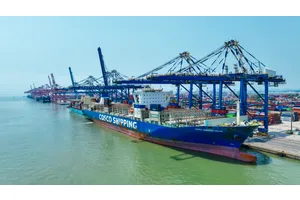
Are you trying to find a freight forwarder from China to Nigeria you can trust with a full container? This guide shows how to verify one on both sides of the lane, what a 2026 quote should contain line by line, which documents decide whether your cargo clears at Lekki or sits at Apapa, and the payment structure that keeps a first shipment safe.
Nigeria is not a lane where the cheapest quote wins, because the cheapest quote is usually the one with the shortest scope. Two forwarders can both say "China to Lagos, all in" and be selling different products: one a port-to-port ocean rate, the other a landed container. The gap is not margin — it is how many links of the chain each is willing to carry.
What a Freight Forwarder from China to Nigeria Is Actually Responsible For
A forwarder on this lane sells seven layers of work. Most quotes price the first four and quietly abandon the last three.
| Layer | What it covers | What breaks when nobody owns it |
|---|---|---|
| 1. Supplier pickup and consolidation | Trucking from factories in Guangzhou, Foshan, Yiwu, Dongguan into one warehouse; counting, measuring, re-palletising | Three suppliers, three cargo-ready dates, one missed vessel |
| 2. Export declaration in China | Customs declaration, licence checks, MSDS and UN38.3 for batteries, fumigation for timber | Container gated in without a declaration, rolled to the next sailing |
| 3. Space with the carrier | Booking, equipment, cut-off discipline, BAF and peak surcharge locked | Rolled at the port, or a 40HQ substituted for a 40GP |
| 4. Main carriage | Ocean to Lekki, Apapa, Tin Can or Onne, or air to Lagos (LOS) | Nothing — this is the only part that runs itself |
| 5. Destination agency and brokerage | A licensed Nigerian agent filing on B'Odogwu, answering queries, releasing the container | Cargo arrives and nobody can clear it in your name |
| 6. Port to door | Trucking, barge evacuation, bonded terminal handling | Container sits while storage and demurrage accrue |
| 7. Insurance and claims | Marine cover from warehouse to warehouse, survey, settlement | A damaged or short shipment with no recoverable claim |
So the first move when comparing quotes is to find where each one stops. A rate that ends at "Lagos port" hands you layers 5, 6 and 7 plus every naira of demurrage. Layer 5 cannot be done by a Chinese company alone — it needs a licensed Nigerian agent, which is why "who clears it there?" belongs at the start of the conversation, not the end.
How to Verify a Freight Forwarder from China to Nigeria Before You Pay
Verification is four checks, and each produces a document or a name you can hold.
Legal identity. Ask for the business licence behind the trading name and match the registered name across the quotation, invoice, bank instruction and bill of lading. The unified social credit code is checkable, and a company that issues its own bill of lading should hold an NVOCC filing. A forwarder whose invoice comes from Company A while payment goes to Company B or to an individual has just told you how a claim will be handled.
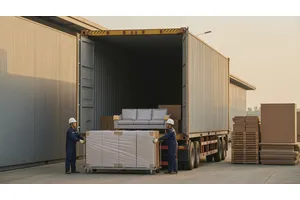
Physical capability on the China side. A lane-active forwarder has a warehouse you can walk through on a video call, with your cartons on the floor. Ask for the address and the name of the person who will inspect your goods. Someone who cannot show a consolidation floor is reselling space they buy weekly from someone else — workable for FCL, risky for LCL where your cargo is co-loaded with strangers.
A named Nigerian agent. The reply should be a company name, a contact person, and the agent's registration with the Council for the Regulation of Freight Forwarding in Nigeria plus an NCS licence. The unlucky pattern on this lane is a forwarder who names the agent only after the vessel sails, when the clearing fee belongs to whoever answers the phone at the terminal.
Liability. Ask for the insurance certificate with your commodity and route described, and confirm who the assured is. Cover arranged under CIF protects the shipper's interest, not automatically yours.
| Red flag | What it usually means |
|---|---|
| Payment requested to a personal account or an unrelated company | No recoverable counterparty if the shipment fails |
| A quote 25–30% below three others, with no scope note | Destination charges, levy or clearance have been left out |
| Cannot name the Nigerian agent before booking | Your container will be handed to a port broker you never vetted |
| "Guaranteed 20 days door-to-door to Lagos" | No carrier on this lane delivers that; you are being sold a sailing date |
| Still quoting 1% CISS on the FOB value | They are working from a 2024 template and have not filed a declaration since |
| Refuses to send a draft bill of lading before departure | You have no visibility on title until the goods are already at sea |
What Does a Freight Forwarder from China to Nigeria Cost in 2026?
The numbers below are port-to-port ocean freight for Q4 2026 — the bands DTFU is quoting on real bookings out of Shenzhen, Ningbo and Shanghai this quarter. They exclude origin handling, destination charges and duty, which are itemised underneath; our container cost guide breaks the same lane down port by port.
| Mode and equipment | Rate (USD) | Scope of the number | Notes |
|---|---|---|---|
| 20ft (20GP) | 3,300 – 4,500 | Port-to-port, Lagos gateways | Heavy cargo, machinery, tiles |
| 40ft (40GP) | 4,300 – 5,800 | Port-to-port, Lagos gateways | Best cost per CBM above 20 CBM |
| 40ft high cube (40HQ) | 4,500 – 6,000 | Port-to-port, Lagos gateways | 68 CBM usable, e-commerce and furniture |
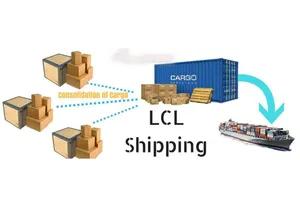
| LCL | 110 – 165 per CBM | Port-to-port, minimum 1 CBM | Watch destination un-stuffing and handover fees |
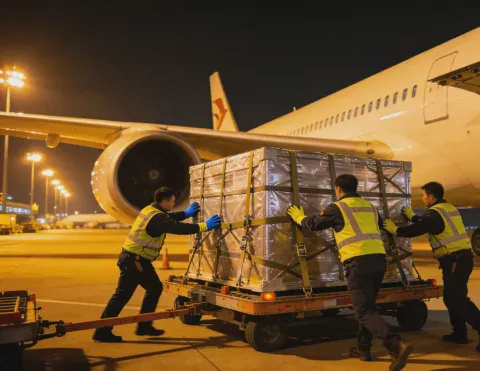
| Air freight | 4.20 – 6.50 per kg | Airport-to-airport, over 100 kg | Qatar, Emirates at the top; Ethiopian, EgyptAir cheaper |
| Express courier | 9 – 13 per kg | Door-to-door, duties often extra | Parcels and samples only |
The lines that turn a rate into a landed cost:
| Charge | Typical range | Who bills it |
|---|---|---|
| China origin handling, export declaration and THC | 250 – 480 per container | Forwarder or co-loader |
| Bunker, currency and peak-season surcharges | Already inside the ocean rate above | Carrier |
| Destination terminal handling (Apapa, Tin Can, Lekki) | 350 – 700 per container | Terminal operator |
| NPA storage after free days | Naira, rising in tiers | Terminal / NPA |
| Shipping-line demurrage after free time | 40 – 75 per container per day | Carrier |
| Clearing agent fee | 120 – 300 per container | Nigerian agent |
| Delivery, Lagos metro | 250 – 600 | Trucker |
| Delivery, Aba or Onitsha | 700 – 1,200 | Trucker |
| Delivery, Abuja | 1,100 – 1,800 | Trucker |
Take a 40HQ bought FOB at 12,000 USD, shipped at 5,000 USD with insurance at 0.3%. CIF value: 17,036 USD. The statutory stack looks like this:
| Statutory charge | Basis | Amount (USD) |
|---|---|---|
| Import duty at 20% | CIF value | 3,407 |
| VAT at 7.5% | CIF plus duty | 1,533 |
| Import levy at 4% | FOB value | 480 |
| ECOWAS levy at 0.5% | CIF value | 85 |
| Total | 5,506 |
That is 32% of the CIF value before the container leaves the terminal — which is why a quote that leaves duty to you is not cheap once the assessment lands. Add terminal handling, the agent and trucking into Lagos and the box lands around 24,000 to 24,800 USD.
One caveat before you budget: the 4% import levy replaced the 1% CISS and the 7% collection fee under the Customs Service Act 2023, was suspended in 2025, and has been reinstated for 2026 with manufacturers exempted. Duty and VAT did not move, but that levy line will differ from a quote dated last year.
How to Read a China to Nigeria Freight Quote Line by Line
Three quotes for the same 40HQ will rarely share a structure, so normalize them before you compare the totals.
| Element | Quote A: port-to-port | Quote B: "all in to Lagos" | Quote C: DDP to your warehouse |
|---|---|---|---|
| Ocean freight | Yes | Yes | Yes |
| China origin charges | Usually excluded | Sometimes bundled | Included |
| Destination THC | Excluded | Included | Included |
| Clearing agent and duty | Excluded | Agent only | Included |
| Delivery | Excluded | Lagos metro only | Included |
| Demurrage risk | Yours | Yours after free time | Forwarder's |
| Importer of record | You | You | The forwarder's entity |
Five lines belong in every Nigeria-bound quote, and if one is missing, assume it is missing from the price too: origin charges and export declaration; ocean freight with its surcharge basis; destination terminal handling and NPA charges; clearance, documentation and the levy; and delivery with a named incoterm. Ask every forwarder for those five lines and the comparison becomes arithmetic.
There is also a quick staleness test that costs nothing. Ask: "the 1% CISS was replaced — what is the levy now, and what is it charged on?" A forwarder filing declarations this month answers 4% on FOB and mentions the reinstatement. A reseller repeats 1% CISS from an old template and then adds it to the wrong value. The same question about the customs exchange rate exposes the next layer: duty converts at the CBN rate on the assessment day, not the rate on the day you paid your supplier.
Which Documents Your Forwarder Must Own: Form M, SONCAP and the PAAR
Nigerian clearance is a sequence, not a pile of papers, and the sequence decides whether your container is assessed in days or examined in weeks. The document trail below is the one our customs clearance team works from on Lagos-bound cargo.
| Document | Who obtains it | When | Typical cost | Without it |
|---|---|---|---|---|
| TIN and CAC registration | Importer | Before the order | Statutory fees | No Form M can be opened |
| Product Certificate (SONCAP) | Supplier, through an accredited body | Before Form M | 500 USD (PC1), 1,000 USD (PC2), 2,000 USD (PC3) | Form M cannot be processed for regulated goods |
| Form M | Importer, through an authorised dealer bank on the trade portal | Before the goods ship | Bank processing fee | No foreign exchange, no legal import |
| Commercial invoice, packing list, CCVO | Supplier | With the shipment | Minimal | Valuation query on arrival |
| Bill of lading | Carrier, issued through the forwarder | After departure | Included | Nothing to clear against |
| SONCAP Certificate (SC) | Supplier, per shipment | Before clearance | 350 USD per certificate | Regulated goods held at the port |
| PAAR | Bank and Customs, from the final documents | After arrival, before assessment | Included in clearance | No duty assessment, no release |
| NAFDAC permit | Importer, for food, drugs, cosmetics | Before shipment | Varies by product | Prohibited from clearance |
Two rules matter more than the rest.
First, Form M before the vessel sails. A forwarder who books space before your Form M is approved is gambling with your cargo; if the Form M is rejected or amended, the container is already on the water and the correction has to be made against a live manifest. The best operators on this lane refuse to confirm a booking without the approved Form M number in hand.
Second, the system name is a competence marker. Since 2025 the Form M, the PAAR, the declaration, the assessment and the release all run electronically on the Nigeria Customs Service's Unified Customs Management System, known as B'Odogwu. The NCS's own 2026 valuation guide describes exactly that flow, and it also states the legal basis: value is transaction value under Section 69 of the Customs Service Act 2023, arbitrary or minimum values are prohibited, and you can challenge a valuation without a penalty. A forwarder who has never heard of B'Odogwu is not filing your declaration — someone else is.
How Long Does Shipping from China to Nigeria Take, Port by Port
Ocean transit is the easy half; the days that surprise importers come after the vessel berths, which is why these totals run past the sailing time. The shipping time guide tracks the lane month by month.
| Origin | Nigerian gateway | Ocean transit | Door-to-door FCL | Door-to-door LCL |
|---|---|---|---|---|
| Shenzhen (Yantian), Guangzhou (Nansha) | Lekki | 30 – 35 days | 38 – 45 days | 48 – 55 days |
| Shanghai, Ningbo | Lekki | 32 – 38 days | 40 – 48 days | 50 – 58 days |
| Shenzhen, Guangzhou | Apapa or Tin Can | 35 – 40 days | 45 – 52 days | 55 – 62 days |
| Qingdao, Tianjin | Lagos (Apapa or Tin Can) | 35 – 42 days | 48 – 55 days | 58 – 65 days |
| Shanghai, Ningbo | Onne (Port Harcourt) | 45 – 55 days | 55 – 65 days | Not advised |
| Any Chinese hub by air | Lagos (LOS) | 3 – 5 days | 5 – 8 days | Not applicable |
The port you book changes both the time and the risk. Lekki Deep Sea Port now handles more than 40% of Nigeria's container traffic, works on an automated gate and truck-appointment system, and clears in roughly 5 to 10 days — its draft takes vessels Apapa cannot berth. Apapa and Tin Can remain the volume gateways, but the Oshodi-Apapa corridor is the bottleneck, and experienced operators evacuate by barge to the Ikorodu bonded terminal instead of queueing trucks. Onne only makes sense for eastern destinations such as Aba and Onitsha.
Anything routed through Singapore, Port Klang, Colombo, Tangier or Jebel Ali adds 7 to 10 days and one more place for a container to be rolled.
Nigeria-Side Charges That Sink a Cheap Quote
Every item below is billed in Nigeria, after the freight you already agreed, and none appears in a port-to-port rate.
| Charge | Typical range | The trap |
|---|---|---|
| Destination terminal handling | 350 – 700 per container | Quoted as "included" by forwarders who then bill it on arrival |
| NPA and terminal storage | Naira, tiered after free days | Starts before your agent has the PAAR |
| Shipping-line demurrage | 40 – 75 per container per day | Free time of 5–7 days is standard; 14–21 days is negotiable |
| Clearing agent fee | 120 – 300 per container | Two agents in the chain, two fees |
| Examination and query handling | 80 – 250 when a query is raised | Caused by invoice values that do not match the Form M |
| Trucking, Lagos metro | 250 – 600 | Peak-hour and weekend surcharges appear on the invoice |
| Barge evacuation to Ikorodu | 250 – 450 | Cheaper than a week of demurrage, and almost never quoted |
| Customs exchange-rate movement | Up to 3–5% of the duty bill | Assessment rate differs from the rate you budgeted |
Free time is the one line you can negotiate before booking, and almost nobody does. Ask for the allowance in writing, per container, at the port you are actually booking.
Eight Questions That Separate a Real Forwarder from a Reseller
Ask these before you sign, and score the answers rather than the price. They are the same eight DTFU puts to a new destination agent before the first container.
- Which levy replaced the 1% CISS, and what is it charged on? Expect 4% on FOB, reinstated for 2026, with manufacturer exemptions.
- Which system will you file the Form M and the PAAR on? Expect B'Odogwu, the NCS Unified Customs Management System.
- What is today's customs exchange rate, and who sets it? Expect the CBN official rate applied on the assessment day, and a clear statement that Customs does not set it.
- Which agent clears, and what is their CRFFN registration and NCS licence? Expect a company name, not "our partner in Lagos".
- Under DDP, whose name is on the Form M and the PAAR? Expect theirs. That is the trade-off: no paperwork and no title until delivery. Ask what proof of import you receive.
- Which gateway will you book, and why? Expect a reason tied to draft, berth or destination.
- How many free days will I have at destination, in writing? Expect a number per container and per line.
- If the container goes over free time because your agent was slow, who pays? Expect a written answer before booking, not a promise after.
Answer six cleanly and the forwarder is worth a trial shipment. Answer two and talk about relationships, and it is a broker for someone else's licence.
Payment Terms: Structuring a First Shipment Safely
The commercial structure protects you more than any clause.
Pay 30–50% at booking and the balance against a copy of the bill of lading, never 100% up front to a forwarder you have not shipped with. Payment goes to the company account whose name matches the invoice, against a debit note carrying the booking or bill-of-lading number.
Control the bill of lading: consignee your company, or "to order" with you as notify party, and the draft in your hands before the vessel departs. Under DDP the forwarder is consignee and importer of record, which is why DDP feels frictionless and why you hold no title until the box reaches your gate — a fair trade for a first order, a bad habit for a business that will need its own Form M history.
Insure before departure, on the full CIF value plus duty, and ask for the policy rather than a line in the quote — the container insurance guide shows what cover should cost on this lane. Where the order justifies it, route payment through a letter of credit opened against the Form M, and keep the invoice value consistent with what you declared: an invoice that disagrees with the Form M is the fastest way to turn a routine assessment into a physical examination.
Frequently Asked Questions
How much does a freight forwarder charge from China to Nigeria? For a 40HQ from Shenzhen to Lagos the service fee on top of freight is 900 to 1,600 USD, covering origin handling, documentation, clearance and Lagos delivery. Ocean freight runs 4,300 to 5,800 USD; duty and VAT are separate.
Should I use a Chinese forwarder or a Nigerian one? A Chinese forwarder controls origin, space and consolidation; a Nigerian forwarder controls clearance. The strongest offer is a China-based operator with a named, licensed Nigerian agent, so one party owns the whole chain instead of each blaming the other at the terminal.
Do I need a Form M before the goods ship? Yes. The Form M is opened through an authorised dealer bank before shipment, and the PAAR is generated from the final documents afterwards. Booking before the Form M is approved is the most common self-inflicted delay we see on this lane.
Can my cargo be cleared without SONCAP? Not if the product is on the SON regulated list. A Product Certificate is needed to process the Form M, and a SONCAP Certificate is needed per shipment before clearance. Budget 500 to 2,000 USD for the product certificate depending on route, and 350 USD per shipment certificate.
What is the difference between CIF and DDP on this lane? CIF ends at the Nigerian port with duty and clearance still yours; DDP vs FOB is the trade-off in full. CIF is cheaper on paper and you own the compliance; DDP costs more and you trust one company with everything.
How long does door-to-door shipping to Lagos take? 38 to 45 days for FCL through Lekki, 45 to 52 through Apapa or Tin Can, 48 to 55 for LCL, and 5 to 8 by air — the door-to-door guide breaks down where those days go. Add 7 to 10 days for any transshipment routing.
What happens if my container misses free time? Demurrage accrues at roughly 40 to 75 USD per container per day with the carrier, and NPA storage separately in naira. Ten days over can cost more than the difference between the cheapest and the best quote.
Can I ship electronics and batteries to Nigeria? Yes, with the paperwork done: MSDS and UN38.3 test summaries for lithium batteries, correct declaration at origin, and a carrier that accepts dangerous goods — the air freight guide covers the battery rules. Undeclared batteries are the fastest route to a fine and a two-week hold at Lagos airport.
Will my forwarder pay the duty for me? Under DDP, yes, and it is in the price. Under CIF, no — you or your agent pays through the assessment. Either way, ask to see the assessment figure: it reconciles the levy, the duty rate and the exchange rate used.
Do I need to inspect my goods in China first? For a first order with a new supplier, yes. An inspection at the consolidation warehouse costs a fraction of a container and catches the two failures that cannot be fixed in Lagos: quantity shortfalls, and goods that do not match the certificate your SONCAP papers describe.
Choosing the Forwarder, Not the Rate
The rate you are quoted on this lane is a snapshot of a market that moves weekly; the forwarder decides whether your container is assessed in five days or examined in three weeks. Verify the entity, name the Nigerian agent, insist on the Form M sequence, and make the quote show its five lines.
If you want your next Nigeria shipment priced against the table above — origin port, gateway, HS codes and a delivery address — send us the cargo details and DTFU will come back with a quote that shows the levy, the free time and the destination charges instead of hiding them. Our lane team handles the Lekki and Apapa gateways weekly, and the shipping from China to Nigeria overview covers the routing side if you are still choosing a gateway.