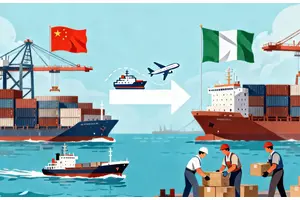
Importing goods to West Africa's largest economy is highly profitable, but navigating the logistics can quickly drain your margins. In our 10+ years of managing China-Africa supply chains at DTFU International Logistics, we've seen trade volume between China and Nigeria continually expand—especially in machinery, electronics, and textiles. However, the biggest pain points for importers remain unpredictable customs fees, Naira exchange rate volatility driven by Central Bank of Nigeria (CBN) policies, and severe delivery delays at local ports like Apapa.
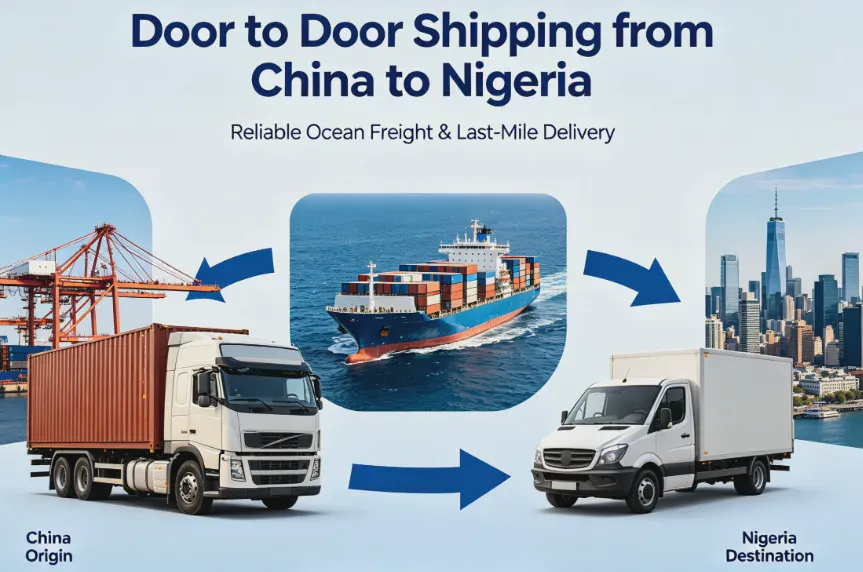
Door-to-door shipping from China to Nigeria solves this by providing an all-inclusive service that handles everything from supplier pickup in manufacturing hubs like Guangzhou and Yiwu to final delivery at your warehouse in Lagos, Kano, or Abuja.
Key Takeaways:
- Timeframes: Air freight takes 5-7 days, while sea freight takes 40-55 days to reach Nigerian local markets, heavily dependent on Apapa port congestion.
- Customs Hurdles: DDP services allow importers to bypass complex Form M, PAAR, and NAFDAC bureaucratic bottlenecks.
- Consolidation: Combining shipments from multiple Chinese suppliers in Shenzhen or Guangzhou drastically reduces your per-CBM freight costs.
How Much Does Door-to-Door Shipping Cost from China to Nigeria?
The cost of door-to-door shipping depends heavily on the freight mode (air vs. sea), cargo volume (CBM or KG), and the Incoterms chosen for the final mile. As of early 2026, shipping rates remain dynamic, but choosing the right service structure is the key to cost control.
DDP vs. DAP (DDU): Which Door-to-Door Option is Cheaper?
Which option is cheaper? DAP appears cheaper upfront, but DDP is almost always more cost-effective and predictable overall.
DDP (Delivered Duty Paid) and DAP (Delivered at Place, formerly DDU) are the two main ways to structure a door-to-door shipment.
Under DAP, the forwarder delivers the goods to your Nigerian address, but you are responsible for paying import duties, 7.5% VAT, and other levies to the Nigeria Customs Service (NCS). Under DDP, the forwarder quotes an all-inclusive rate covering freight, local handling, and all customs duties. We strongly recommend DDP for Nigeria to avoid unexpected port delays, unofficial checkpoint fees, and inflated tax assessments.
Sea Freight vs. Air Freight: LCL and FCL Cost Comparison
Sea freight is the most economical choice for bulky goods, while air freight is strictly for high-value or urgent shipments.
| Freight Mode | Pricing Unit | Estimated Cost Range (2026) | Best For |
|---|---|---|---|
| Air Freight (DDP) | Per KG | $6.50 - $9.00 / KG | Electronics, urgent spares, high-margin fashion |
| Sea Freight LCL (DDP) | Per CBM | $250 - $350 / CBM | Mixed wholesale goods, machinery, building materials |
| Sea Freight FCL (DAP/DDP) | Per Container | Varies by port & contract | Large volume importers, project cargo |
Note: Rates are subject to seasonal fluctuations (especially before Chinese New Year) and global fuel surcharges. Specific numerical rates should be used for reference only.
Hidden Fees & Currency Fluctuations
When evaluating quotes, be acutely aware of the "Naira to RMB/USD" exchange rate spread. We frequently rescue importers whose cargo was held hostage by "cheap" forwarders who suddenly inflated the final invoice due to currency shocks. A trustworthy forwarder will offer transparent pricing that absorbs minor currency fluctuations and explicitly states whether local trucking fees (e.g., from Lagos to Kano) are included or billed separately based on the delivery zone. Always demand a written breakdown of what is excluded from the DDP rate.
How Long Does It Take to Reach Lagos, Abuja, or Kano?
Transit times vary drastically depending on the chosen mode of transport, the specific shipping line routing (direct vs. transshipment), and the efficiency of the clearance process at the port of entry (like Apapa or Tin Can Island).
Sea Freight Delivery Times: Direct vs. Transshipment
Sea freight door-to-door delivery typically takes 40 to 55 days from Chinese ports (like Shanghai, Ningbo, or Shenzhen) to a final address in Lagos.
The ocean transit itself takes about 35-40 days via direct routes (e.g., offered by carriers like Maersk or CMA CGM). However, transshipment routes (stopping in hubs like Singapore or Pointe-Noire) can add 10-15 days. The "last mile" is where severe delays happen. Gridlock at Lagos ports, terminal handling inefficiencies, and navigating Nigerian roads can add another 7-15 days. Deliveries to inland cities like Abuja, Port Harcourt, or Kano will require an additional 3-7 days of domestic trucking.
Air Freight Express Delivery Times to Local Markets
Air freight door-to-door takes 5 to 7 days from departure in China to delivery in Nigeria.
Flights usually land at Murtala Muhammed International Airport (LOS) in Lagos. Because air freight is typically cleared through specialized express channels, customs processing is much faster (usually 1-2 days). This makes it ideal for fast-moving consumer goods heading straight to tech hubs like Computer Village or major trading centers like Alaba International.
The China to Nigeria Door-to-Door Process: Avoiding Customs Traps
Nigeria's import regulations are notoriously strict and constantly evolving. A true door-to-door service manages these compliance hurdles on your behalf, preventing cargo confiscation and heavy demurrage charges.
Bypassing the Form M and PAAR Nightmare with DDP Services
Yes, utilizing a specialized DDP door-to-door service allows many importers to bypass the direct processing of Form M and PAAR.
Standard commercial imports into Nigeria require opening an e-Form M via an authorized Nigerian bank and obtaining a Pre-Arrival Assessment Report (PAAR) from the Nigeria Customs Service (NCS) before the goods even leave China. This process, integrated with the NICIS II system, is highly bureaucratic and prone to delays. Experienced forwarders offering DDP services utilize their own established trading companies and bulk clearance channels to handle the import documentation and exact HS Code classifications, meaning you just pay the flat fee and wait for your goods.
SONCAP and NAFDAC Compliance
Even with DDP, certain regulated products require strict certification:
- SONCAP: The Standards Organisation of Nigeria requires a Product Certificate (PC) and a SONCAP Certificate (SC) for most manufactured goods, electronics, and machinery. Without this, goods cannot clear customs.
- NAFDAC: If you are importing food, cosmetics, or pharmaceuticals, the National Agency for Food and Drug Administration and Control must approve the shipment.
Your forwarder must ensure these items meet safety standards and hold the correct paperwork before leaving China to avoid massive fines upon arrival in Lagos.
Cargo Consolidation in China: Save Money Before Shipping
Consolidation is the secret weapon for small to medium-sized Nigerian importers sourcing from multiple factories on platforms like Alibaba, 1688, or from physical markets in Yiwu.
Why Consolidating Multiple Suppliers' Goods Reduces Your Freight Rate
Consolidation lowers your rate by converting several small, expensive shipments into one larger, cheaper shipment. LCL (Less than Container Load) rates drop significantly as your total CBM (Cubic Meters) increases. Instead of paying base fees for five different 1 CBM shipments, you pay a much lower per-CBM rate for a single 5 CBM shipment.
Free Warehousing Strategies in Guangzhou, Yiwu, and Shenzhen
Top freight forwarders provide a local Chinese address (usually in logistics hubs like Guangzhou, Yiwu, or Shenzhen) where your suppliers can send goods. The forwarder will store these items in their warehouse—often offering 15 to 30 days of free storage—until all your orders arrive. They then repack, consolidate, and ship everything out under a single Bill of Lading.
Cargo Insurance and Damage Control for the "Last Mile"
The journey doesn't end at the Lagos port. The inland transportation across Nigeria poses its own set of unique risks, from poor road infrastructure to weather exposure during the rainy season.
Does Door-to-Door Shipping Cover Lost or Damaged Goods in Transit?
Standard door-to-door freight quotes do not automatically include comprehensive cargo insurance. Under international maritime law (like the Hague-Visby Rules), a carrier's liability is severely limited—often to just 2 SDR (Special Drawing Rights) per kilogram, which barely covers a fraction of commercial goods' value. You must explicitly request and purchase "All-Risk" cargo insurance (typically 0.3% to 0.5% of the commercial invoice value) to protect against loss, theft, water damage, or rough handling, especially during the volatile final-mile trucking phase on Nigerian highways.
Proper Packaging for Fragile Goods on Nigerian Roads
Road conditions from Lagos to inland destinations like Kano or Enugu can be extremely rough. Goods must be packed for maximum durability. We recommend palletizing loose cartons, using heavy-duty export-grade corrugated boxes, wrapping goods in moisture-proof plastic, and applying stretch wrap and banding to prevent shifting during transit.
Why Choose DTFU as Your China to Nigeria Freight Forwarder?
Finding a reliable logistics partner is critical to maintaining your supply chain efficiency. DTFU International Logistics specializes in the China-Africa trade lane, moving thousands of TEUs annually.
Dedicated Customs Clearance Network in Lagos
We leverage deep-rooted relationships with Licensed Customs Agents (LCAs) and port officials in Lagos. This ensures your cargo moves through the red tape of Apapa and Tin Can Island swiftly, minimizing port storage fees, demurrage, and customs clearance delays.
Transparent All-in-One DDP Pricing
We offer preferential contract rates and pricing models that are well below market average. With DTFU, our DDP quotes are fully transparent—no hidden terminal handling charges, no surprise customs assessments, and no "last-minute" trucking fees. You pay one flat fee, and we deliver to your door.
FAQs
What is the minimum weight for door-to-door air freight to Nigeria?
Most freight forwarders require a minimum of 10 KG to 21 KG for commercial door-to-door air freight. Anything lighter is usually better suited for traditional express couriers like DHL or FedEx, though their rates will be significantly higher per KG.
How do I calculate CBM for sea freight to Lagos?
CBM (Cubic Meter) is calculated by multiplying the Length x Width x Height of your carton in meters. For example, a box measuring 0.5m x 0.5m x 0.5m equals 0.125 CBM.
Can DTFU deliver directly to Alaba International Market or Trade Fair?
Yes. A complete door-to-door service includes final mile delivery directly to specific commercial zones, warehouses, or shops within major markets like Alaba International, the Lagos Trade Fair Complex, or Computer Village.
Are there restricted items for door-to-door import to Nigeria?
Yes. The Nigeria Customs Service strictly prohibits certain items, including specific types of textiles, bagged cement, and certain pharmaceuticals. Always consult your forwarder's restricted items list before purchasing goods in China.
Can I ship power banks and lithium batteries to Lagos?
Yes, but they are classified as Dangerous Goods (DG). You cannot ship batteries via standard air freight channels without proper documentation. You must provide a Material Safety Data Sheet (MSDS) and UN38.3 test report. Specialized DDP sea freight channels or DG-certified air freight services are required for safe and legal transport.
Does the DDP price include NAFDAC clearance for food and cosmetics?
No. Standard DDP quotes cover general cargo duties and VAT. Regulated items requiring NAFDAC (National Agency for Food and Drug Administration and Control) permits require specialized clearance procedures. You must inform your forwarder in advance if your cargo includes food, supplements, or cosmetics to get an accurate quote and avoid confiscation.