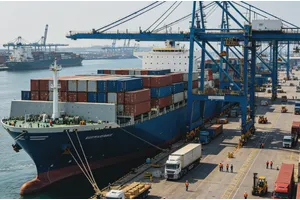
Every week, a trader in Kabul asks us the same question: what is the cheapest shipping from China to Afghanistan? And every week, the honest answer surprises them — because the cheapest quote is almost never the cheapest shipment. We have seen two importers pay for the same 20ft container of LED lighting from the same Shenzhen factory, with one landing it for around $2,000 and the other paying more than $4,500. Same cargo, same origin, same destination city. The difference was route choice, documentation discipline, and knowing where the money leaks on a landlocked-country shipment.
Afghanistan has no seaport, so every sea shipment becomes two shipments: an ocean leg to a transit port — Karachi in Pakistan or Bandar Abbas in Iran — and an inland trucking leg across the border to Kabul, Kandahar, Jalalabad or Herat. That second leg is where cheap budgets die. This guide is built around one idea: cheapest means lowest landed cost, not lowest freight rate. We walk through the routes, the per-cubic-meter math, the customs costs, the hidden fees, and the exact habits that cut 15–30% off a real China–Afghanistan freight budget. The rates below are the ranges we actually quote on this lane in 2026 — not the outdated price sheets most blogs recycle.
Why the Cheapest Shipping Quote from China to Afghanistan Is Rarely the Cheapest Route
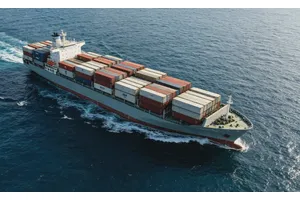
Here is the trap that burns first-time importers: a forwarder quotes "20ft to Karachi for $1,500" and it sounds like a bargain. Then the real costs arrive — inland trucking Karachi to Kabul, transit formalities, border delays, Afghan customs — and the same shipment that was supposed to cost $2,000 lands at $4,000+. The ocean leg to the transit port is typically only 40–50% of the total cost on this lane. The rest is everything that happens after the ship docks.
| Cost component | Typical share of a 20ft shipment to Kabul |
|---|---|
| Ocean freight (China → Karachi/Bandar Abbas) | 35–50% |
| Origin charges (THC, export clearance, docs) | 5–8% |
| Transit bond & in-transit formalities | 3–6% |
| Inland trucking (transit port → Kabul) | 30–40% |
| Afghan customs duty & broker fees | 5–12% |
| Buffer for delays (demurrage, border holds) | 0–15% |
When you compare quotes, compare the total landed price to your Afghan address, not the ocean rate. That is the first rule of cheap shipping to a landlocked country, and it is the rule almost every online freight calculator gets wrong — calculators stop at the port. Our shipping from China to Afghanistan overview page shows the full-lane picture; this guide goes deeper on the budget side specifically.
The second rule: route choice is a budget decision, not a trivia question. Your final destination inside Afghanistan decides which transit port is cheapest. Kabul-bound cargo is almost always cheaper via Karachi; Herat-bound cargo is usually cheaper via Bandar Abbas. Force a forwarder to justify the routing, and watch your landed cost drop.
Karachi–Torkham vs Bandar Abbas–Islam Qala vs Air: Cheapest Shipping Routes from China to Afghanistan Compared
Four realistic ways to move cargo from China into Afghanistan exist. Here is how they compare on price, time, and risk — using the 2026 rate ranges we book on this lane (consistent with our sea shipping cost from China to Afghanistan guide):
| Route | Typical 20ft cost (China → transit port) | Transit time (ocean) | Inland leg | Total time to Kabul/Herat | Risk profile |
|---|---|---|---|---|---|
| Shenzhen → Karachi → Torkham → Kabul | $1,200–$1,800 | 18–25 days | $1,500–$3,500 trucking, 10–20 days | 40–60 days | Torkham congestion; APTTA paperwork |
| Shenzhen → Karachi → Chaman → Kandahar | $1,200–$1,800 | 18–25 days | Similar trucking band | 40–60 days | Best for Kandahar; Chaman smaller crossing |
| Shanghai → Bandar Abbas → Islam Qala → Herat | $1,500–$2,200 | 22–30 days | Trucking to Herat, often smoother | 40–60 days | Best for western Afghanistan; Iran sanctions paperwork |
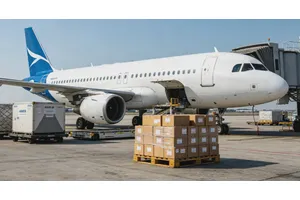
| Air freight (any Chinese hub → Kabul) | $4.50–$9.00/kg | 1–2 days flying | Airport delivery | 7–10 days | Fastest; cost per kg 5–10× sea |
A 20ft container from Chinese ports to a transit port runs $1,500–$2,200 on the China-wide lane, with Shenzhen–Karachi at the bottom of that band and Shanghai–Bandar Abbas at the top; a 40ft runs $2,400–$3,200. Those are port-to-port numbers — the inland leg is where the real spread lives. Karachi-to-Kabul trucking alone runs $1,500–$3,500 depending on border security, fuel, and season, which is why the total landed cost of a 20ft container to Kabul typically lands between $3,000 and $4,500.
Two routing realities worth knowing before you book:
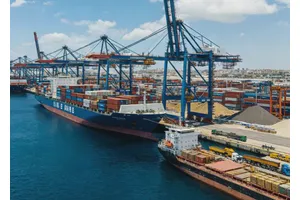
- Karachi (via Port Qasim or KICT) is the volume route. It runs under the Afghanistan–Pakistan Transit Trade Agreement (APTTA), with bonded trucking through Torkham (for Kabul/Jalalabad) or Chaman (for Kandahar). It is usually the cheapest option for eastern and central Afghanistan — when the border is moving.
- Bandar Abbas is the reliability route for the west. Cargo for Herat and Farah often moves via Islam Qala with fewer transit formalities and less congestion than Torkham, which is why forwarders route western Afghan cargo through Iran even when the ocean leg costs a few hundred dollars more. For deeper context on the Iran-side lane, see our sea shipping from China to Iran guide.
LCL vs FCL vs Trucking: What Is Cheapest per CBM for Small Afghan Importers
The cheapest method depends on your volume. The break-even point on this lane is around 13–15 CBM: below that, LCL (sharing a container) usually wins on price; above that, a full container wins decisively.
| Method | Cost structure | Cheapest when | The catch |
|---|---|---|---|
| LCL (shared container) | Per CBM ocean + per-shipment charges | Under ~15 CBM | Deconsolidation at Karachi adds days and fees; small LCL shipments can end up paying near-FCL rates after all charges |
| FCL 20ft | Flat rate (~$1,500–$2,200 ocean leg) | 15–28 CBM | Paying for space you do not use if cargo is light |
| FCL 40ft | Flat rate (~$2,400–$3,200 ocean leg) | 28 CBM+ | Axle-weight limits on the inland leg can force splitting into two trucks (24–26 t cargo cap) |
| TIR truck (road, China → Central Asia) | Per truck | Mid-size urgent cargo | Route via Central Asia adds days; best for specific corridors |
The 40ft trap deserves emphasis because it is the most expensive mistake on this lane: Pakistani transport authorities enforce strict axle-weight limits on trucks bound for Torkham. If a fully loaded 40ft container exceeds roughly 24–26 tons of cargo weight, it must be split into two trucks — instantly doubling your inland freight cost and killing the per-cubic-meter advantage that made the 40ft attractive in the first place. If your cargo is dense (tiles, machinery, steel), run the weight math before booking a 40ft.
For small shipments, the LCL math also needs care. The ocean rate per CBM looks cheap, but LCL cargo must be consolidated in China, deconsolidated at a Karachi CFS, and re-trucked — and the handling fees plus transit paperwork can push the effective cost per CBM near an FCL rate. Our rule of thumb for Afghan traders: if you will ship more than 12–15 CBM in a year, consolidate into one FCL and save the difference.
How Yiwu and Guangzhou Traders Actually Consolidate Cargo for Afghanistan
Afghanistan's import trade from China runs through a very specific channel that most freight articles never mention: the Afghan merchant community in Yiwu and Guangzhou. Walk through the small-commodity markets of Yiwu — the world's largest small-commodities wholesale hub — and you will find Afghan traders buying lighting, kitchenware, textiles, footwear, and construction hardware in small lots from dozens of different suppliers: 200 LED bulbs here, 500 meters of fabric there, a pallet of teapots somewhere else.
No single supplier produces enough for a full container, which is why the trade runs on consolidation. The practical pattern that works:
- Buy from multiple suppliers, consolidate once. Ship everything to one consolidation warehouse in Yiwu or Shenzhen over a 2–3 week window, then load one FCL. This converts 8–12 separate LCL shipments into a single container — one ocean bill, one transit bond, one inland truck. The savings are 20–35% versus shipping each order separately. DTFU runs consolidation warehouses for exactly this pattern in Shenzhen, Yiwu, and Guangzhou — we see this buying style every single week.
- Plan around the market calendar. Yiwu's sourcing seasons are tied to Afghan import cycles: Ramadan-related goods move 6–8 weeks before the holy month (clearance slows at both Pakistani and Afghan customs during Ramadan), and pre-winter goods for the Salang Pass window must be booked before October, when mountain weather starts closing crossings.
- Pack for the truck, not just the ship. Cargo heading inland gets loaded and unloaded at least twice more than a coastal shipment. Export-grade cartons, proper pallets, and lashing are not optional — we consistently see cheap packaging arrive as damaged stock and disputes that cost more than the freight saved.
Afghanistan Import Duty and Customs Costs: What the 5% Average Hides
Afghanistan's average import duty is often quoted as around 5%, and it is true — as an average. The reality is a tiered tariff applied by the Afghan Customs Department (ACD) through the ASYCUDA World system, and the rate depends entirely on your HS code:
| Cargo category | Typical Afghan import duty |
|---|---|
| Basic foodstuffs, agricultural inputs, medicines | 0–2.5% |
| General consumer goods (textiles, plastics, hardware) | 5–10% |
| Vehicles, machinery, some electronics | 10–20% |
| Luxury goods, tobacco, alcohol (heavily restricted) | 20–50%+ |
Worked example: a Kabul importer brings in $8,000 (CIF) of plastic housewares with an HS code at 7% duty. Duty = $560. Add customs broker fees and terminal handling at the inland depot (typically $150–$400 for an FCL), and the customs line for this shipment is roughly $710–$960 — before inland trucking. Undervaluing the invoice to cut duty is the fastest way to a red-channel inspection and fines; ACD cross-references value databases and your declared value must match your payment trail.
Two documentation rules decide whether your customs bill stays cheap:
- The commercial invoice and packing list must state the cargo is "in transit to Afghanistan." If Pakistani or Iranian customs cannot see the transit destination, the shipment gets flagged, inspected, and charged local duties — weeks of delay and thousands in storage fees. This single line of text is the most valuable free thing on this lane.
- File the transit bond (Ilm-o-Khabar) correctly at the transit port. Under APTTA, cargo transiting Pakistan is exempt from local import duties — but only if the transit declaration and bank guarantee are filed properly at discharge. Your forwarder's Karachi or Bandar Abbas agent handles this; ask which agent they use before booking, because an inexperienced transit agent is a delay factory.
For the full China-side clearance picture, see our customs clearance service page.
Hidden Costs That Quietly Double a Cheap China–Afghanistan Freight Bill
The gap between a cheap quote and a cheap shipment is almost always one of these five hidden costs:
- Torkham congestion. The border crossing is the single most unpredictable point on the lane. When it backs up — and it does, especially before Ramadan and in Q4 — containers wait days at the border while demurrage and detention run. A $50/day detention charge on a 10-day wait is $500 that no quote shows.
- Weighbridge surprises. Pakistani authorities weigh trucks at multiple checkpoints. A container over the axle limit is ordered off, split, or fined — and the re-trucking is billed to you at emergency rates. Weigh your cargo at the factory, not at the border.
- Transit bond and bank guarantee fees. The transit bond for APTTA cargo carries a cost, and if your forwarder uses a third-party guarantee, there is a fee for that too — typically $100–$300 per container, invisible in the ocean quote.
- Afghan customs broker fees at the inland depot. Clearance happens at bonded depots in Jalalabad, Kabul, or Kandahar, and the local broker's fees, terminal handling, and depot storage are all paid at destination. First-time importers routinely budget $0 for this and pay $200–$500.
- War-risk and political-risk surcharges. Carriers and insurers add surcharges for the region; these wax and wane with the security picture. They are legitimate, but they must appear in the quote — a "cheap" quote that omits them is not cheap, it is incomplete. Marine cargo insurance on this lane is worth every cent given the multiple handlings; our guide to shipping container insurance cost for shipments from China explains what coverage actually protects.
Real Budget Breakdown: Why One Importer Paid $2,000 and Another Paid $4,500 for the Same 20ft Container
Two real shipments, same commodity (LED lighting), same 20ft container, same Shenzhen origin, both delivered to Kabul. The importer on the left planned the lane; the importer on the right booked the first cheap quote they found.
| Cost item | Importer A (planned) | Importer B (reactive) |
|---|---|---|
| Ocean freight Shenzhen → Karachi (20ft) | $1,450 | $1,550 |
| Origin charges (THC, export clearance, docs) | $210 | $240 |
| Transit bond & in-transit filing (APTTA) | $150 | $320 (rush agent fee) |
| Inland trucking Karachi → Kabul | $1,900 | $2,150 |
| Weighbridge/split re-trucking | $0 (weighed before stuffing) | $950 (over axle limit, split into two trucks) |
| Border delay demurrage/detention | $0 (pre-filed documents, cleared in 2 days) | $480 (7 days at Torkham, missing transit stamp) |
| Afghan duty (~7%) + broker + depot fees | $560 + $220 | $560 + $380 (red-channel inspection fee) |
| Total landed to Kabul | ~$4,490 | ~$6,630 |
The point is not that Importer A's route was exotic — it is that the same nominal "cheap" option cost 47% more when the hidden items went unmanaged. Every dollar of that $2,140 gap was avoidable: pre-weighing, pre-filed transit documents, a real agent at Karachi, and buffer free time negotiated before booking.
7 Ways to Cut 15–30% from Your Cheapest Shipping Cost from China to Afghanistan
These are the tactics we apply to every Afghan shipment we handle, in rough order of impact:
- Negotiate 14–21 days of combined demurrage and detention free time at the transit port before you book. This is the single cheapest insurance on the lane — border delays happen, and free time turns a $2,000 surprise into $0.
- Pre-file every transit document before the vessel sails. "In transit to Afghanistan" on the invoice and packing list, transit bond arranged, Ilm-o-Khabar filed by the transit agent in advance. Documents that wait cost money; documents that are ready cost nothing.
- Weigh the cargo before stuffing and keep a weighbridge certificate. A 40ft over ~24–26 tons of cargo gets split on the Pakistani side — one hour of weighing in China saves $1,000 of re-trucking in Pakistan.
- Consolidate suppliers into one FCL. Multiple LCL shipments = multiple sets of handling fees and transit paperwork. One consolidated container from a Shenzhen or Yiwu warehouse cuts 20–35% off the total bill for small-lot buyers.
- Book off-peak. Rates spike in the weeks before Chinese New Year (January/February), during Ramadan, and in the Q4 rush. Cargo that can wait two weeks to sail outside those windows pays meaningfully less — we consistently see 10–20% swings on the China–Karachi leg alone.
- Match the transit port to the destination city. Karachi for Kabul/Jalalabad/Kandahar, Bandar Abbas for Herat and the west. The wrong pairing adds days and dollars on the inland leg that no ocean saving can recover.
- Ship winter cargo before October. Snow closes the Salang Pass and inflates trucking rates across the north in winter; heavy goods for northern Afghanistan should move before the mountain window shuts. A full door-to-door shipping arrangement handles the inland leg with local trucks that know the seasonal reality — and the tracking that follows the cargo from the Chinese factory to the Kabul depot.
FAQs
1. What is the cheapest way to ship from China to Afghanistan?
Sea freight to Karachi (for Kabul/Jalalabad/Kandahar) or Bandar Abbas (for Herat), then bonded trucking across the border, is the cheapest method for anything over about 1 CBM. LCL under 15 CBM, FCL above it. Air freight is 5–10× more expensive per kilo and only makes sense for urgent, high-value cargo.
2. How much does a 20ft container cost from China to Afghanistan?
The ocean leg to a transit port runs $1,500–$2,200. Total landed to Kabul, including inland trucking, transit formalities, and Afghan duty, typically lands between $3,000 and $4,500 depending on border conditions and season.
3. How much does a 40ft container cost from China to Afghanistan?
The ocean leg runs $2,400–$3,200. Watch the inland leg: a fully loaded 40ft can exceed Pakistani axle-weight limits (roughly 24–26 t of cargo), forcing a split into two trucks that doubles inland cost.
4. How long does cheap sea shipping to Afghanistan take?
Ocean transit 18–30 days to the transit port, 5–10 days port clearance and transit preparation, then 10–20 days inland trucking — 40–60 days door-to-door in total. Winter weather at Salang Pass can add 7–10 days.
5. How much is air freight from China to Afghanistan?
Roughly $4.50–$9.00/kg depending on weight band and season, with 7–10 days door-to-door via Kabul. Below ~50 kg, express couriers are usually the better deal.
6. What documents do I need for a cheap China–Afghanistan shipment?
Commercial invoice and packing list explicitly marked "in transit to Afghanistan," Bill of Lading, transit bond/Ilm-o-Khabar filing at the transit port, and Afghan import declaration via ASYCUDA World. Missing the transit wording is the #1 cause of expensive delays.
7. When is the cheapest time to ship from China to Afghanistan? Outside the pre-Chinese New Year window (January/February), Ramadan, and the Q4 rush. The quiet months — typically March through May and September — offer the best combination of ocean rates and border throughput.
8. How do I choose a forwarder for cheap shipping to Afghanistan?
Ask three questions: which Karachi or Bandar Abbas agent handles the transit bond, what destination charges appear at the Afghan depot, and what free time is included at the transit port. A forwarder who cannot answer all three will not deliver the cheap landed cost they quoted — it is why DTFU itemizes every line of its Afghanistan quotes before booking. For guidance on the buying side, our guide to finding a freight forwarder you can trust covers what separates operators from brokers.
Get a Budget Quote for Your China–Afghanistan Shipment
The cheapest shipping from China to Afghanistan is a route decision, a documentation discipline, and a negotiation — not a magic rate. Get those three right and a 20ft container lands in Kabul for $3,000–$4,500 with the transit leg protected by negotiated free time and pre-filed paperwork. Get them wrong and the same container costs $6,000+ and six extra weeks.
DTFU Logistics has run the China–Afghanistan lane since 2014, with agent networks at both Karachi and Bandar Abbas, consolidation warehouses in Shenzhen, Yiwu, and Guangzhou, and the border paperwork handled before your cargo leaves the factory. Send us your cargo details — commodity, volume, weight, and the Afghan destination city — and we will quote the route that is actually cheapest for your address, with every line item on the table: ocean, transit bond, inland trucking, and Afghan customs.